
Experts Matter. Find Yours.
Connect for media, speaking, professional opportunities & more.
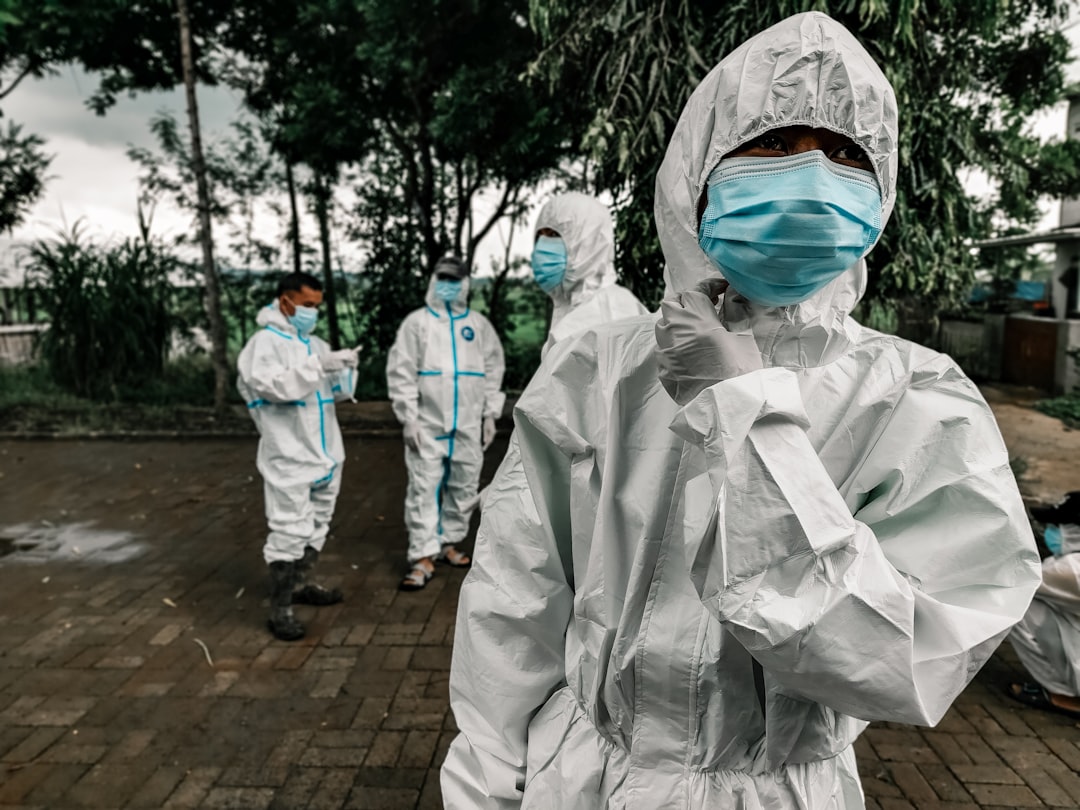
ExpertSpotlight: Ebola: What It Is, How It Spreads, and Whether the Public Should Be Concerned
Few diseases in modern history have generated the level of fear associated with Ebola. With graphic symptoms, high mortality rates, and images of overwhelmed treatment centres etched into public memory, Ebola became synonymous with the dangers of global outbreaks long before COVID-19 reshaped how the world thinks about pandemics. But what exactly is Ebola? Where did it come from? How dangerous is it today? And should the public still be worried? A Deadly Virus with a Modern Legacy Ebola virus disease was first identified in 1976 during simultaneous outbreaks in what is now the Democratic Republic of the Congo and South Sudan. The virus was named after the nearby Ebola River, and from the beginning it proved exceptionally dangerous, capable of causing severe hemorrhagic fever with fatality rates that have ranged from 25 to 90 percent depending on the outbreak and available medical care. For decades, Ebola outbreaks were typically isolated to remote regions of Central and West Africa. That changed dramatically in 2014 when the largest Ebola outbreak in recorded history spread through Guinea, Liberia, and Sierra Leone, infecting more than 28,000 people and killing over 11,000. The crisis exposed major weaknesses in global health preparedness and demonstrated how quickly infectious diseases can overwhelm healthcare systems and destabilize economies and communities. The outbreak also fundamentally changed international public health policy. Governments, hospitals, and health organizations around the world began investing more heavily in infectious disease surveillance, emergency response planning, quarantine procedures, and vaccine development. What Ebola Actually Does to the Body Ebola begins much like many common viral illnesses, which can make early detection difficult. Initial symptoms often include: Sudden fever Severe fatigue Muscle pain Headache Sore throat As the disease progresses, patients may develop: Vomiting and diarrhea Rash Liver and kidney impairment Internal and external bleeding Multi-organ failure The virus attacks the immune system and damages blood vessels and organs, often leading to shock and death in severe cases. Patients who survive can still face long-term complications including joint pain, neurological problems, eye disorders, and ongoing fatigue months or even years later. How Ebola Spreads - And How It Does Not One of the most important public health facts about Ebola is that it does not spread through the air like influenza or COVID-19. Transmission occurs through direct contact with: Blood or bodily fluids of infected individuals Contaminated needles or medical equipment Infected animals Surfaces contaminated with infectious fluids This means Ebola is highly contagious in healthcare settings and among close family caregivers without proper protective equipment, but far less transmissible in casual public settings than many people assume. Funeral practices involving direct contact with deceased individuals have also historically contributed to outbreaks in some regions, making culturally sensitive public health education critically important during containment efforts. Treatments and Vaccines Have Changed the Outlook For years, Ebola was viewed almost as a death sentence. That perception has begun to change. Major advances in medicine and outbreak response have significantly improved survival rates, including: Rapid testing and surveillance systems Specialized isolation units Improved supportive care and hydration Monoclonal antibody treatments Effective vaccines for certain Ebola strains The development of the rVSV-ZEBOV vaccine represented a major breakthrough and has helped contain several recent outbreaks before they expanded into international crises. Global health organizations are now far better equipped to identify and isolate cases quickly compared to the early years of Ebola response. Should the Public Be Worried? Ebola remains a serious and deadly disease, but experts generally emphasize that widespread public panic is not warranted. Most outbreaks remain geographically limited and are aggressively monitored by national governments, the World Health Organization, and international health agencies. Countries with advanced healthcare systems also have far stronger infection prevention and containment capabilities than existed during earlier outbreaks. Still, Ebola continues to command attention because it highlights how interconnected global health has become. International travel, fragile healthcare systems, political instability, climate pressures, and human interaction with wildlife all increase the risk of future outbreaks of emerging infectious diseases. In many ways, Ebola serves as both a warning and a lesson: deadly viruses can emerge unexpectedly, but rapid science, coordinated public health measures, and global cooperation can dramatically reduce their impact. The world’s experience with Ebola helped shape many of the outbreak response systems now used to confront emerging diseases today, and public health experts continue to view it as one of the clearest examples of why pandemic preparedness remains essential. Connect with an expert:


Beyond the Recipe: Rebecca Sharpless Explores the Hidden History of Southern Baking
Recently published stories exploring the history of baking traditions are shedding light on how many beloved holiday treats are rooted in centuries of trade, survival and innovation. According to Rebecca Sharpless, professor of history in Texas Christian University’s AddRan College of Liberal Arts, staples like gingerbread and fruitcake carry surprisingly deep historical connections, from medieval spice routes to 19th-century preservation methods that allowed cakes to survive nearly year-long journeys. Sharpless, whose upcoming book People of the Wheat examines the history of wheat culture in North Texas, says many foods now associated with “traditional” Southern baking are actually far more modern than people realize. From red velvet cake to pecan pie, marketing and industrial food production played a major role in shaping today’s culinary traditions. Her research also highlights the social and economic realities behind baking history, including how access to ingredients like wheat and sugar once reflected class, geography and race. The full article and interview is attached below - and if you're a baker, a foodie or a journalist looking to know more about this popular topic - it's a must read. For journalists exploring food history, holiday traditions, agriculture, or the cultural roots of Southern cuisine, Sharpless offers expert insight into how everyday recipes reveal larger stories about migration, labor, trade and identity. And if you're looking to connect with Rebecca Sharpless, simply contact Holly Ellman, Associate Director of Communication, today at h.ellman@tcu.edu.


Gritty like his city: How the Philadelphia Flyers' mascot went from punchline to sensation
How did Gritty, the fluffy, orange, menacing whatchamacallit that backs the Philadelphia Flyers, go from a punchline when he was rolled out in 2018 to one of sports' most well-known and beloved mascots? The University of Delaware's Matt Robinson took a shot, and scored, with some answers. Robinson, a professor of sport management at UD's Lerner College of Business & Economics, said Gritty embodies the tough attitude that Philadelphia is known for. Also, some of his bizarre features and personality traits go straight to the heart of the demeanor and history of the Flyers, who are currently battling their way through the NHL playoffs. Those are among the ingredients that go into marketing and launching a successful mascot. Robinson can discuss the following: • Why some mascots take off and others flop. After his launch, Gritty was ridiculed as a concept on late night TV and "Saturday Night Live." But he was still garnering billions of views on social media and millions in earned media for the franchise. The Flyers kept pushing the concept despite its early unpopularity, which led to his eventual success. "Any public relations is good public relations," Robinson said. • Mascots need to be authentic. Gritty embodies the team he represents and the city that team plays in. Robinson noted Philadelphia's "grit" and love of players who play hard, like the Broad Street Bullies – the nasty group of Flyers' players who led the team to two Stanley Cup wins in the 1970s. • The best mascots transcend sports. Robinson pointed to the film and character "Rocky," whose statue sits in the front of the city's Art Museum, as well as the city's reputation as one with a bit of an edge. "We're the ones who threw snowballs at Santa Claus," Robinson said, referring to the infamous 1968 incident when Philadelphia Eagles fans pelted Kris Kringle from the stands. • Players and coaches come and go, but the mascot stays the same. Mascots can be part of ticket sales and community engagement in the offseason, when players may not be in the city or moving to another via free agency. • Mascots offer an attachment point for fans that is not sport related. Kids respond to mascots and, from there, connection with the team, players and the sport can grow. To contact Robinson directly for an interview, visit his profile and click on the "contact" button. Interested reporters can also email MediaRelations@udel.edu.


U.S. National Debt: How to Stop the Bleeding
The U.S. national debt exceeding the size of the American economy is a dubious milestone that has sparked alarm and confusion among policymakers who are asking how worried they should be and what can be done to stop the bleeding. David Primo, a political scientist and professor of business administration at the University of Rochester and a fiscal policy expert who has testified before Congress on the national debt, says Americans should be very concerned about the debt and, at the same time, know there is a solution. “The federal budget outlook is grim and threatens the economic future of the United States,” says Primo, the author of Rules and Restraint: Government Spending and the Design of Institution (University of Chicago Press). “If Congress waits to act, Americans will need to give up a bigger piece of the nation’s economic pie to stabilize the country’s finances.” Primo says a solution lies in a constitutional amendment restraining the federal budget. Specifically, such an amendment would clearly define spending and revenue, set spending limits based on a multiyear period, and allow for waiving the limit only with a large supermajority in Congress. “As it stands, Congress is constitutionally incapable of tying its own hands, making it difficult for legislators to implement durable changes to the federal budget,” Primo says. Recent data show the national debt has crossed 100% of the GDP threshold — roughly $31.27 trillion versus $31.22 trillion in economic output — marking the highest peacetime level in U.S. history. The Congressional Budget Office has projected that debt levels, if left unchecked, could reach 181% of GDP in the next 30 years. Primo says delaying implementing a solution raises the risk of increased interest rates, which would, in turn, reduce investment and, ultimately, economic growth. For journalists covering deficits, tax policy, and the long-term economic outlook, Primo offers key expertise and a clear lens on: • The implications of national debt exceeding GDP • Constitutional and institutional approaches to fiscal reform • Fiscal policy and political incentives “The United States is in precarious fiscal health,” Primo told Congress in 2023. “In the absence of a constitutional amendment, I fear it will take a fiscal crisis before Congress acts. Nobody wants that.” Connect with Primo by clicking on his profile.



Get Over It: Pluto Isn't A Planet!
Put down the protest signs already. Retire the “Save Pluto” pins. Step away from the planetary outrage. Seriously. So says University of Rochester astrophysicist Adam Frank in his latest column in Forbes. Frank explains that the real story behind Pluto being stripped of its planetary status in 2006 isn’t about what Pluto lost, but what scientists found. Pluto made news recently when NASA Administrator Jared Isaacman replied to a Florida girl’s handwritten plea to restore Pluto’s designation as a planet, saying he supported such a move. Frank has one word for Isaacman: Stop! “Now Isaacman seems like a good guy and I sure don’t want to make little kids cry,” Frank writes. “Still, there’s an amazing science reason why Pluto got kicked out of the planet club.” For decades, Frank explains, we thought the solar system ended with the nine familiar planets, with Pluto being the most distant. But beyond Neptune lies the Kuiper Belt, a vast expanse filled with icy remnants from the birth of the solar system. These objects are essentially the leftover building blocks of planets. Pluto, it turns out, is one of them. That matters because this cosmic debris holds crucial clues about how planets form. Studying Pluto and its neighbors helps scientists understand the origins of Earth and the potential for life elsewhere in the universe. So, Pluto isn’t an outcast; it’s a key witness to our cosmic history. It belongs to a newly understood class of worlds that are central to modern astronomy. Rather than mourn Pluto’s status and push for restoring its former title, Frank suggests we celebrate its reclassification as the moment astronomers realized the solar system is far richer than they had ever imagined. If you’re a journalist looking for an expert to talk about Pluto — or planets and worlds formerly known as planets — Frank is your scholar. He is a frequent contributor to the likes of CNN, The New York Times, The Atlantic, and MSNBC, and can help your audience make sense of our vast universe.

Remembering the Ludlow Massacre of 1914
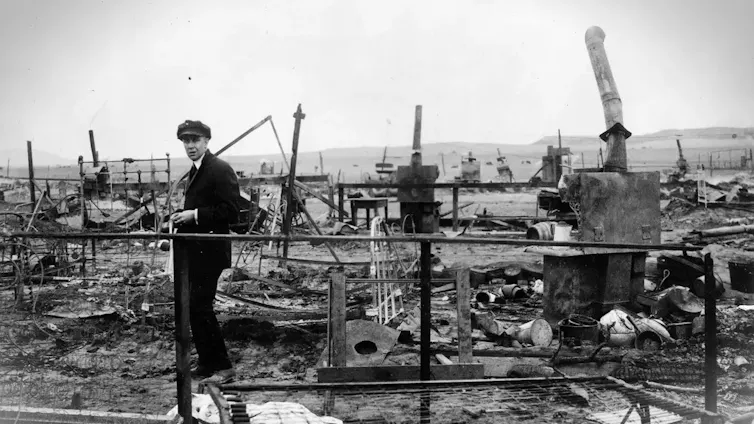
Mary Anne Trasciatti, Hofstra University’s director of the Labor Studies Program and professor of rhetoric, is referenced in an article on the website Counter Punch about how a dispute for fair wages and safer working conditions led to the 1914 massacre of 25 miners and family members in Ludlow, Colorado. The author, Robert Forrant, notes that he and Dr. Trasciatti co-edited “Where Are the Workers,” a collection of essays written by labor historians and archivists that explore nationwide efforts to bring the history of labor and working people into mainstream narratives of U.S. history. The Ludlow Massacre, he says, is one of the most dramatic and deadly of those stories.


Inside the Italian art heist: Experts explain the global fight to protect cultural heritage
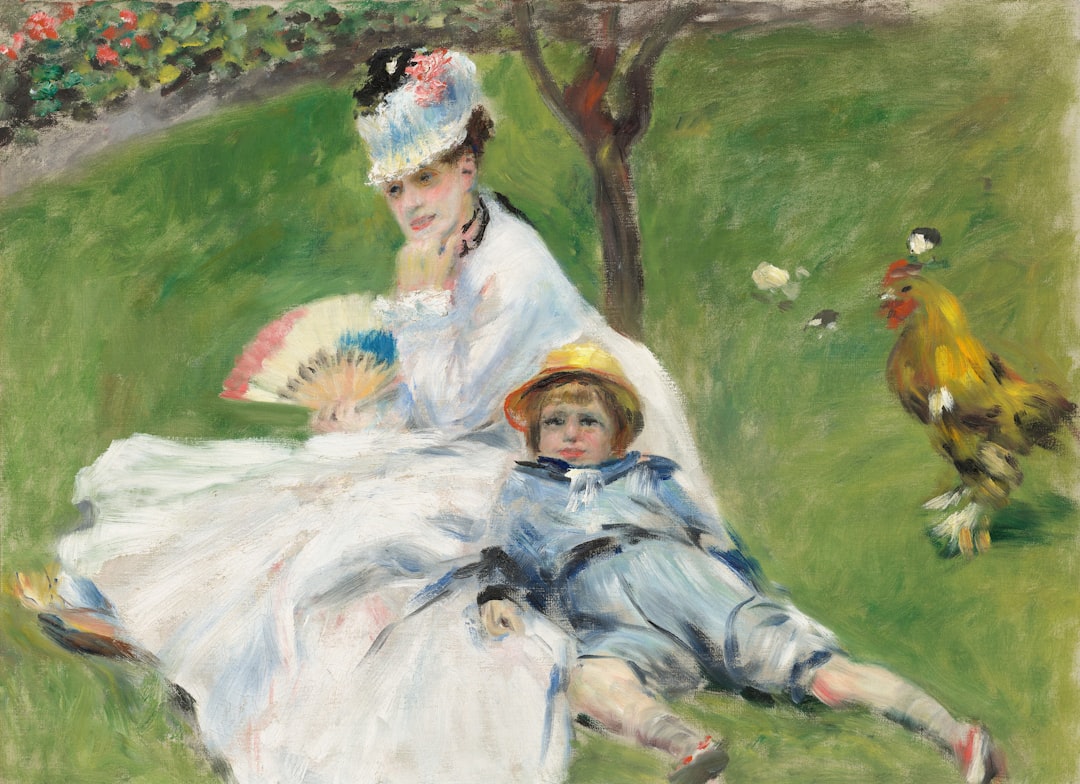
A lightning-fast art heist in Italy has reignited global concerns about museum security and the protection of cultural heritage. As investigators search for stolen works by some of history’s most celebrated artists, University of Delaware experts are available to help journalists unpack the broader implications. Earlier this month, thieves executed a highly coordinated robbery at the Magnani-Rocca Foundation, stealing paintings by Pierre-Auguste Renoir, Paul Cézanne and Henri Matisse in a matter of minutes. Authorities say the operation was swift, targeted and likely premeditated – highlighting the evolving sophistication of art crime. The theft adds to a growing pattern of high-value art crimes across Europe, raising urgent questions about how institutions safeguard collections and what happens when culturally significant works disappear into illicit markets. UD experts are available to provide context, analysis and on-the-record commentary: Debra Hess Norris Chair, Department of Art Conservation A globally recognized leader in art conservation, Norris specializes in the protection, preservation and recovery of cultural heritage. She can speak to: How museums assess and mitigate security risks What happens after a major art theft The challenges of recovering stolen works in international markets How conservation science supports authentication and repatriation Jessica Horton Associate Professor of Art History Horton’s research examines global art histories and the movement of cultural objects across borders. She can discuss: Why stolen artworks matter beyond their monetary value Cultural ownership, repatriation and ethical considerations How art theft disrupts historical narratives and public access The broader cultural consequences of illicit art trafficking While headlines focus on the dramatic nature of art heists, the deeper story is about the fragility of cultural heritage – and the global effort required to protect it. To speak with Norris or Horton, email mediarelations@udel.edu.

From Saint to Shamrocks: How St. Patrick’s Day Became the World’s Biggest Irish Party
Every March 17, cities around the world turn green as millions celebrate St. Patrick’s Day with parades, music, traditional foods, and a strong dose of Irish pride. But the origins of the holiday trace back more than 1,500 years to St. Patrick, the 5th-century missionary credited with bringing Christianity to Ireland. Over time, the feast day commemorating Ireland’s patron saint evolved into a broader celebration of Irish heritage, folklore, and culture. Many of today’s traditions, wearing green, shamrocks, lively parades, and even the association with leprechauns — developed centuries later, particularly as Irish immigrants in North America began celebrating their heritage publicly. In fact, some of the world’s biggest St. Patrick’s Day traditions, including massive parades and even dyeing rivers green, originated in the United States and Canada rather than Ireland itself. From the real history of St. Patrick to the myths, symbols, and global traditions that followed, historians and cultural experts can help unpack how this ancient religious observance transformed into one of the world’s most recognizable cultural celebrations. ExpertFile connects journalists with historians, cultural scholars, and experts in Irish heritage who can provide insight on topics including: The real story of St. Patrick and his mission in Ireland How shamrocks, leprechauns, and the color green became iconic symbols Why parades and public celebrations grew in North America How Irish immigration shaped the modern holiday The cultural and economic impact of St. Patrick’s Day celebrations worldwide Journalists looking for fresh angles on the history, traditions, and cultural significance of St. Patrick’s Day can connect with experts available through the ExpertFile platform. Our experts can help! Connect with more experts here: www.expertfile.com

Georgia Southern University expert available to provide geopolitical analysis on the Iran war
The Middle East has entered an active state of war marked by a cycle of retaliatory strikes across Iran and the Persian Gulf. Three major uncertainties now dominate the global outlook: the long-term survival of the Iranian government, the fate of Iran’s nuclear infrastructure, and the security of critical oil transit routes. Georgia Southern University Professor of Political Science and International Studies Jacek Lubecki, Ph.D., is available to speak about the military operation in Iran and its implications for regional stability and global security. Lubecki is an expert in comparative politics and military security studies, with a focus on the Middle East and Eastern Europe, particularly Poland. His research examines terrorism, counterinsurgency and military strategy. His work has been published in journals including Europe-Asia Studies, East European Politics and Societies, The Polish Review, The New Ukraine and The Armchair General. He has co-authored several books, including Globalization, Nationalism, and Imperialism: A New History of Eastern Europe (2023), which examines domestic and global security challenges, and Defending Eastern Europe: The Defense Policies of New NATO and EU Member States (2021). Lubecki speaks Polish, English, French, Russian, Spanish, Italian, German and Arabic with varying levels of fluency. Lubecki is available for interviews in person at Georgia Southern’s Statesboro Campus or virtually.



U.S. Has a “Checkered History” of Toppling Authoritarian Regimes
In a Newsday article about Long Island Iranian-Americans’ reactions to recent developments involving Iran’s leadership, Dr. Paul Fritz, associate professor and chair of Hofstra’s Department of Political Science, discussed the history of the United States toppling authoritarian regimes, which, he said, rarely leads to new democracies or stable leadership without extensive American support. “The Trump administration is banking on the people rising up and demanding some change to the regime,” Dr. Fritz said. “Foreign imposed regime change doesn’t work very often.”
