
Experts Matter. Find Yours.
Connect for media, speaking, professional opportunities & more.
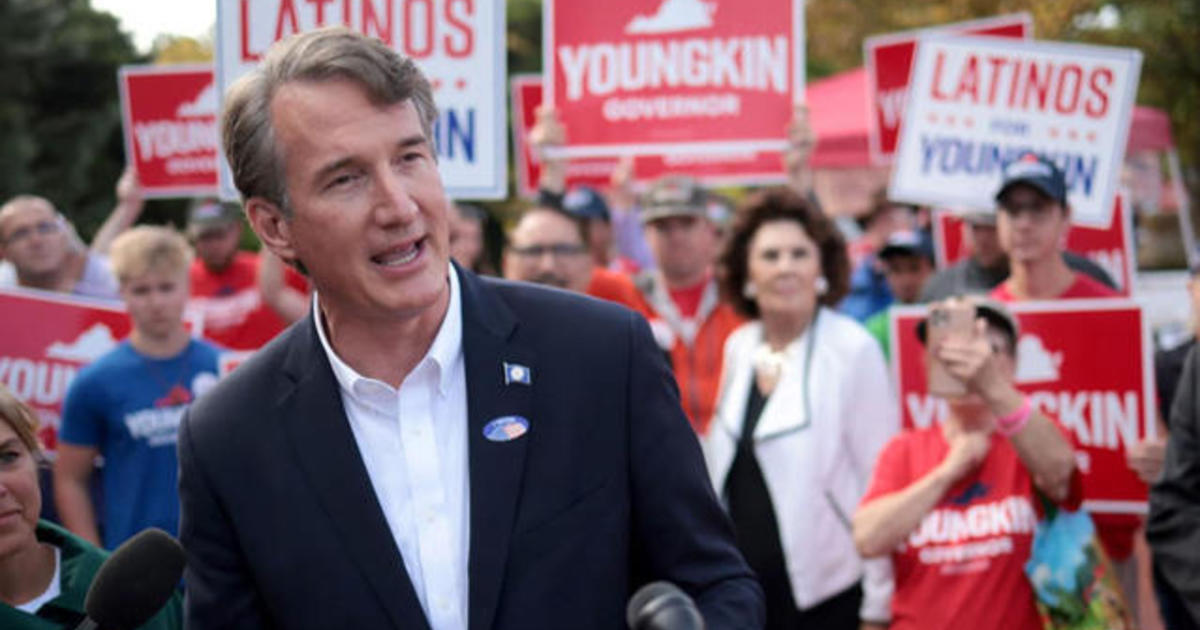
Tomorrow's Election Day, and it’s all eyes on Virginia!
In what is shaping up to be one of the most contested gubernatorial races in recent history, it’s all coming down to Election Day. Media from across the country are all watching and trying to get all the expert insight they can on why this election is so important and what winning or losing could mean for not just the state – but the mid-term elections coming up next November. UMW’s Stephen Farnsworth is the ‘go-to’ for major media outlets across America and for international media following U.S. and Virginia politics. Recently, CBS News called on him to lend his expertise on just where this race sits. "The race for governor in Virginia is in its final stretch with just two weeks to go before Election Day. Former Governor Terry McAuliffe, the Democratic candidate, and Republican nominee Glenn Youngkin have clashed on several issues related to schools from charter schools to vaccine mandates for teachers and students. Stephen Farnsworth, director of the Center for Leadership and Media Studies at the University of Mary Washington, joins CBSN AM to discuss." October 19 - CBS News Dr. Stephen Farnsworth is a sought-after political commentator on presidential politics. He has been widely featured in national media, including The Washington Post, Reuters, The Chicago Tribune and MSNBC. If you are a reporter covering Virginia's gubernatorial race, simple click on his icon to arrange an interview today.



Presidential plantations – are they leaving out slavery when telling the story of America’s history?
The presidential plantations once belonging to George Washington, Thomas Jefferson, James Madison and James Monroe are picturesque destinations for tourists who want to learn more about these Founding Fathers from Virginia. But these museums often fail to adequately tell the stories of the enslaved people who lived and toiled there. UMW Professor of Geography Stephen Hanna's research on the topic was recently highlighted in Northern Virginia Magazine. Do plantation museums do justice to the memory of the enslaved? Local professor Stephen Hanna wanted to find out, so in 2014 he joined a team of researchers associated with TourismRESET, a world-wide network of scholars who study and challenge social inequity in tourism. Hanna, who teaches geography at the University of Mary Washington in Fredericksburg, received a grant from the National Science Foundation, enabling him to lead undergraduate students through multi-year research on how narratives and exhibits about enslaved populations and slavery were presented or absent at 15 different plantation sites. The goal was to present their findings to museum managers and thus facilitate more historically accurate and meaningful tours. His team is in the final stages of publishing a book summarizing their data and findings, to be released in March 2022. The full article is attached below and is well worth the complete read. If you are a journalist covering this critical topic about American history, then let us help with your questions and stories. Dr. Hanna is available to speak with media regarding this topic. Simply click on his icon to arrange an interview.

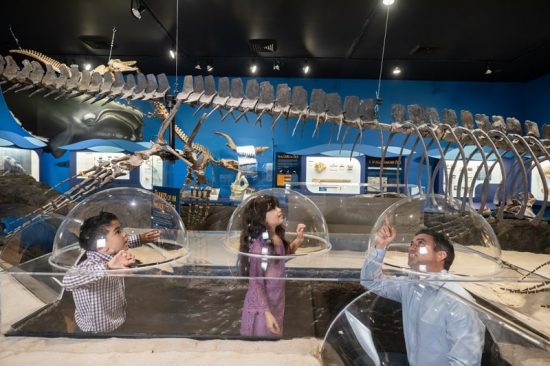
Georgia Southern University Museum reopens just in time to celebrate Earth Sciences Week
After nearly three years and following extensive architectural renovations, the Georgia Southern Museum, one of the longest-standing educational centers on the University's Statesboro Campus, has reopened. "It has been a long project, but well worth the journey," said Georgia Southern Museum Director Brent Tharp, Ph.D. "The upgraded facility and newly designed galleries represent a new era for the museum. Visitors will still find old friends, like the mosasaur, but exhibited in new more exciting ways, and will make new discoveries with never before exhibited artifacts in expanded permanent exhibits preserving the area's culture. We are really excited to be back open to the public." The Georgia Southern Museum serves as the premier institution interpreting the natural and cultural history of Georgia's coastal plain. The museum displays permanent exhibits and changing exhibits curated by the University's faculty and students, and provides a place where researchers can explore its collections and students of all ages can learn. As part of its reopening celebration, the Museum will recognize Earth Sciences Week with events featuring social media videos and interactive displays by Georgia Southern students, faculty and alumni. Highlighted events for Earth Sciences Week include: Oct. 12 - Earth Observation Day Oct. 13 - National Fossil Day Oct, 14 - Geoscience for Everyone Day Oct. 15 - Geologic Map Day Oct. 16 - International Archaeology Day Admission to the museum is $4 per person; however, for a limited time the museum also will accept donations for admission. Children 3 years of age and younger, museum members, and Georgia Southern students receive free admission. If you’re a journalist looking to cover Earth Sciences Week or talk to any of the many experts at the museum – then let us help. The researchers behind this study are available, simply reach out to Georgia Southern Director of Communications Jennifer Wise at jwise@georgiasouthern.edu to arrange an interview today.


Japan House: Fifty Years Ago Today
Joshua W. Walker, Ph.D., President and CEO, Japan Society This September we're celebrating the 50th anniversary of Japan House, Japan Society's landmarked headquarters building. Let's jump in our time machine and go back to 1971, when Japan Society was only 64 years old. At that time, U.S.-Japan relations were deeply embroiled in trade frictions while the ending of the U.S. embargo of China had just begun to impact East Asia. 1971 snapshots In the United States: Richard M. Nixon is President; Apollo 14 lands on the moon; massive protests are held throughout America against the Vietnam War; Walt Disney World opens in Orlando, Florida; Joe Frazier defeats Muhammad Ali in 15 rounds at Madison Square Garden; the first Starbucks opens in Pike Place Market, Seattle. In Japan: Eisaku Sato is Prime Minister; the U.S. and Japan sign an accord to return Okinawa to Japan; NHK TV implements colorization of all programs; Kamen Rider TV series begins broadcasting; the 48th reigning Sumo champion Yokozuna Taihō announces his retirement; McDonald's opens its first store in Ginza, Tokyo; Nissin creates the first "cup noodle." Japan House Meanwhile in New York City, Japan Society had occupied eight different locations since its founding in 1907, and by the mid-1960s, a dedicated building had become necessary to house the Society's rapidly expanding initiatives. Japan Society President John D. Rockefeller 3rd made a very generous pledge by donating the land for the building site and Japanese modernist architect Junzo Yoshimura was confirmed to design the building. On September 16, 1969, John D. Rockefeller 3rd and Japanese Foreign Minister Kiichi Aichi broke ground at a formal ceremony. Construction proceeded on schedule and staff moved in during the spring of 1971, with Executive Director Douglas Overton noting, "Each day we have found some new and delightful feature which has come off the drawing board as an unexpectedly brilliant success. Japan House will be a national important building worthy of its high purposes." Opening Week—five star-studded days of celebratory events—began on September 13, 1971 with Their Imperial Highnesses Prince and Princess Hitachi at the ceremonies. The Prince brought Japan's best wishes to the Society "for a new chapter, both rich in content and wide in scope." The Gallery opened its first exhibition, Rimpa: Masterworks of the Japanese Decorative School and the Tokyo String Quartet performed in the new auditorium. Junzo Yoshimura wrote about Japan House, "People the world over used to build their houses with local and traditional materials. Today, however, contemporary buildings all over the world use the same basic materials—concrete, steel and glass—yet different characters and nationalities can still be perceived among them. In designing Japan House I have tried to express in contemporary architecture the spirit of Japan." With the formal opening of the Society's headquarters a new era had begun. Their Imperial Highnesses Prince and Princess Hitachi and Japan Society chairman John D. Rockefeller 3rd view the first Japan Society Gallery exhibition Rimpa: Masterworks of the Japanese Decorative School. Photo © Thomas Haar. The next 50 years Fifty years later, we are at another inflection point. The novel coronavirus pandemic has taught us just how interconnected we are as a global community while placing new importance on our homes and transforming the nature of work. This unprecedented global crisis has also illuminated the strengths and weaknesses of our organization, providing new opportunities for envisioning the future. Just as the opening of Japan House shaped the Society's last 50 years, today we are reimagining how we use our space, from the physical to the digital, forging broader connections or kizuna for U.S.-Japan and for the world. We embrace our mission for the years to come, reaching out far beyond our building, to our city, country, and world as we seek to connect American and Japanese people, cultures, and societies through a global lens. Like a hike up Mt. Fuji, Japan Society’s nearly 115-year-long journey itself defines us far more than our current destination. Beginning in 1907, the first iteration of Japan Society focused on business relations between the U.S. and Japan. For its 1952 post-Occupation reconstitution under the leadership of John D. Rockefeller 3rd, the Society dedicated itself to arts, culture, and education, with an emphasis on supporting Japanese students in New York as well as spreading the word about Japan through significant cultural milestones such as partnerships with The Metropolitan Museum of Art and Lincoln Center, with traveling exhibitions and outreach on both sides of the Pacific. With the opening of Japan House in 1971, politics was reintroduced into the mix, the business and policy communities energized, and Japanese popular culture landed large—nearly 50,000 people came to the Grand Sumo Tournament at Madison Square Garden co-sponsored by Japan Society and the Asia Society in 1985! Today at Japan House we present Japan and U.S.-Japan as a way to engage with history and tradition, on the one hand, and innovation and the future on the other. As in 1971, the time to act is now and our opportunities are as great as the challenges of 2021. It's up to us to work together on new, critical connections to take us through the next 50 years. I'll be there with you. Joshua Walker (@drjwalk) is president and CEO of Japan Society. Follow Japan Society on Twitter, Instagram, Facebook, and LinkedIn. The views expressed in this article are the writer's own.


History was made at Arlington – and UConn’s expert was recruited to help with national news coverage
For the first time in the 84 years that soldiers have stood watch over the Tomb of the Unknowns at Arlington National Cemetery, the duty was carried out by three women. UConn's Micki McElya, a professor in the Department of History and the author of The Politics of Mourning: Death and Honor in Arlington National Cemetery, offered her perspective and insight into the significance of the moment: The images of the three female soldiers were a “visual marker” of the often unrecognized sacrifices that women and other marginalized people in the United States have made for the military, Professor McElya said. “Women have served either officially or unofficially in every single war this country has ever waged, but they have never been drafted,” she said. “So if we want to talk about sacrifice and honor, women have done that because they wanted to.” The changing of the guard was also an important moment in military history, one that showed that women are serving in “the most revered positions,” said Kara Dixon Vuic, a professor of war, conflict and society in 20th-century America at Texas Christian University in Fort Worth. “These are the rituals that the nation holds dear,” she said. “Some might call it militaristic and some might say it represents the best of us. But to have women at the heart of it, whatever your perspective is, is important because it shows that women are at the heart of these debates now.” If you are a journalist covering the historic aspects of this occasion or other events taking place, then let our experts help with your stories. Professor McElya is an expert in the histories of women, gender, sexuality, and race in the U.S., with a focus on politics and memory. She’s available to speak with media regarding these topics – simply click on her icon now to arrange an interview today.


Misinformation expert on YouTube ban on false information on vaccines
Lisa Fazio, associate professor of psychology and human development, is available for commentary on YouTube's ban on vaccine misinformation. Lisa is an expert in misinformation and false news, studying how people learn, interpret and remember information. She can speak to YouTube's history as a vector for misinformation and other points related to the topic, including: The importance of finding trusted sources and how it's even harder than normal to tell what is a reliable source, especially as so many personal accounts are floating around Misinformation and mixed messages sent from politicians and government officials on vaccine implications The dangers of so many "experts" talking publicly about vaccines, particularly around the periphery of their expertise and the damage that has been done, particularly during the pandemic


International security scholar's thoughts on Biden, military decision-making in Afghanistan
Baylor University's Peter Campbell, Ph.D., associate professor of political science, penned a column for City Journal, in which he discusses who deserves scrutiny following the U.S. withdrawal from Afghanistan. Getty Images In a column published Sept. 23 in City Journal, international security scholar Peter Campbell, Ph.D., associate professor of political science at Baylor University, explained the civilian-military dynamic in the United States and argued that President Biden -- not the U.S. military -- should shoulder the blame for what Campbell described as the president's "ill-conceived plan for withdrawing U.S. troops." During the withdrawal in August, many dozens of people were killed in a terrorist bombing, including 13 U.S. soldiers. Also, more than 100,000 people were airlifted from the country. Right now, we can only speculate about precisely what advice Biden’s military advisors shared with him, but it’s unlikely that American military leaders would have sanctioned on their own the accelerated withdrawal that the president demanded. My years of studying military history and military doctrine have taught me that fighting withdrawals are among the most difficult military operations to undertake, even for a highly disciplined and well-trained military force. Moreover, the Afghanistan withdrawal was to take place during the active fighting season, when favorable weather tends to increase the tempo of Taliban operations. The Afghan government requested that Biden delay the withdrawal until the winter, when conditions reduce the mobility of forces in the region. Wedded to his timeline, the president refused. In the column, Campbell wrote that America and the international community should not be left to speculate as to what advice the president received prior to his decision. He called for U.S. Congressional committees to investigate. "Americans deserve to know exactly what the military and the intelligence community told the president," he wrote. ABOUT PETER CAMPBELL, Ph.D. Peter Campbell, Ph.D., associate professor of political science at Baylor University, is a scholar on international security, civil-military relations, insurgency and counterinsurgency, the just war tradition, and cyber warfare. He is the author of Military Realism: The Logic and Limits of Force and Innovation in the U.S. Army, published by University of Missouri Press.


Aston University Professor Patricia Thornley elected Fellow of The Royal Academy of Engineering
• Professor Patricia Thornley joins a total of 69 leading engineers from around the world to the Fellows of the Royal Academy of Engineering • Each individual recognised for their outstanding and continuing contributions to their profession • Patricia Thornley is the Director of the Energy and Bioproducts Research Institute (EBRI) at Aston University Professor Patricia Thornley from Aston University has joined the Royal Academy of Engineering as a Fellow. The Director of the Energy and Bioproducts Research Institute, which is based at the University, joins a total of 69 leading figures in the field of engineering and technology to the Fellowship of the Royal Academy of Engineering this week. The group consists of 60 Fellows, four International Fellows and five Honorary Fellows, with each individual having made exceptional contributions to their sectors in their own way, as innovation leaders, inspiring role models, or through remarkable achievements in business or academia. This year’s new Fellows are the first to reflect the Academy’s Fellowship Fit for the Future initiative announced in July 2020, to drive more nominations of outstanding engineers from underrepresented groups ahead of its 50th anniversary in 2026. This initiative will see the Academy strive for increased representation from women, disabled and LGBTQ+ engineers, those from minority ethnic backgrounds, non-traditional education pathways and emerging industries, and those who have achieved excellence at an earlier career stage than normal. These new Fellows will be admitted to the Academy, which comprises nearly 1,700 distinguished engineers, at its AGM on 22 September. In joining the Fellowship, they will add their capabilities to the Academy’s mission to create a sustainable society and an inclusive economy for all. Sir Jim McDonald FREng FRSE, President of the Royal Academy of Engineering, said: “Our Fellows represent the best of the best in the engineering world, and we welcome these 69 excellent and talented professionals to our community of businesspeople, entrepreneurs, innovators and academics. “This year’s new Fellows are the most diverse group elected in the history of our institution. The engineering profession has long suffered from a diversity shortfall and the Academy is committed to changing that, including by ensuring that our own Fellowship community is as inclusive as it can be. It is well established that diverse organisations tend to be more agile and more innovative, and as the UK’s National Academy for engineering and technology, we have a responsibility to reflect the society we serve in addressing the shared challenges of our future.” Professor Thornley added: “It is such an honour to be admitted to the Academy and be able to represent Aston University, EBRI and females within engineering, and I look forward to working with the Royal Academy of Engineering in the future.”


U.S. historian and immigration expert on Afghan refugees in the U.S.
Paul Kramer, associate professor of history, is available for commentary on the arrival of Afghan refugees in the U.S. Paul is an expert in the history of immigration and related policies in the U.S. and can discuss: Historical parallels: The U.S. has a long history of opening up its refugee admissions to its allies in context of geopolitical conflict, especially during the Cold War, and a history of tension and ambivalence about refugee admissions, sometimes fearing refugees are spies for U.S. opponents, largely due to discrimination based on race and religion The rationale: The move is partly out of a sense of moral obligation, and partly out of strategic interest (if the U.S. doesn't admit refugees who helped the county abroad, it undermines U.S. foreign policy) Pros and cons: The upside is that many vulnerable people can escape immediate harm (theoretically), and the downside is that many of these vulnerable people who are not seen as U.S. allies can get shut out for foreign policy reasons

UCI scholars discuss how 9/11 changed America
In recognition of the 20th anniversary of the Sept. 11, 2001, terrorist attacks in the U.S., we asked UCI scholars a single question: How did 9/11 change America? They responded according to their expertise – which ranges from collective trauma, media, air travel, foreign relations, false narratives, political divisiveness, and the war on terror. Contact Tom Vasich at 949-285-6455, tmvasich@uci.edu, to arrange interviews. Roxane Cohen Silver, Distinguished Professor of psychological science, public health and medicine E. Alison Holman, professor of nursing Topic: Media and collective trauma Quote: “The Sept. 11 terrorist attacks – which hijacked our television screens that Tuesday morning as people who sought to do us harm hijacked four airplanes – captured people’s attention throughout the days and weeks that followed. It also ushered in 24/7 media attention to what has become known as a “collective trauma,” transmitting the horrible events of that day throughout the country and, indeed, throughout the world in a matter of seconds. …The 9/11 attacks were tragic for American residents, but they also taught us that the media can broadcast distress alongside the news it’s covering.” Jan K. Brueckner, Distinguished Professor of economics Topic: Air travel Quote: “In response to the revenue shock of 9/11 and to new competition from low-cost carriers, the major airlines behaved conservatively in adding back capacity as traffic returned, so that the carriers eventually offered fewer seats to an ultimately larger number of passengers, leading to fuller flights and today’s less comfortable flying experience. Even though 9/11 is long past, the airline industry continues to operate in a climate of fear of terrorism from the air.” Erin Lockwood, assistant professor of political science Topic: U.S. foreign policy Quote: “The attacks – and the U.S. response – set in motion decades of war, anti-Arab and anti-Islamic bias and violence, and a willingness to sacrifice military and civilian lives and civil liberties for the perception of security. As we mark the withdrawal of U.S. forces from Afghanistan this month, it’s all too apparent that many of those trends continue to reverberate today.” David Kaye, clinical professor of law Topic: National security Quote: “Despite my hopes for something better that might emerge, the attacks reinforced a cult of national security that the United States transformed into the torture of terrorism suspects, drone warfare, the invasion of Iraq, Guantanamo Bay’s indefinite detentions, anti-Muslim discrimination at home and the emergence of the contemporary surveillance state. … The predominance of national security as an ideology and apologia remains among the most significant legacies of that day, a feature of American political life that continues to constrain creativity and a return to normalcy in American law and policy.” Matthew Beckmann, associate professor of political science Topic: War on terror Quote: “To understand the legacy of 9/11 is to define the legacy of George W. Bush. For after the deadliest terrorist attacks on U.S. soil in our nation’s history, American citizens and lawmakers gave President Bush broad support and broader authority to wage the “war on terror” as he saw fit. … Twenty years after the attacks, having seen those lofty aspirations dashed in Afghanistan and Iraq, disregarded in Guantanamo Bay and black site prisons, and discounted even by our staunchest allies, the biggest legacy of Sept. 11 for the United States is that the “shining city on a hill” has less luster and a shorter reach.” David Theo Goldberg, professor of comparative literature Topic: Rise of false narratives Quote: “The events of 9/11 lent themselves to make-believe. The smoke hadn’t yet cleared when conspiracies began to abound, from “weapons of mass destruction” to “the deep state.” That the Trump administration adopted this as its own playbook while insisting on “draining the swamp” required cooking the rules. … Fabrication had become the rule book of the game. Invention and inventedness, disruption and innovation fueled the movement. The “truth” was, well, oh so yesterday.”
