
Experts Matter. Find Yours.
Connect for media, speaking, professional opportunities & more.

Impeachment and what follows? Let our experts help if you are covering!
For President Donald Trump…he’s living in interesting times. There’s an irony to that statement, as the so-called Chinese proverb ‘May you live in interesting times’ which has been purported as a centuries old curse on the English has no actual source or history. It too is fake news. But painfully accurate in these times of political turmoil in Washington. What’s not fake is the talks of impeachment. The issue has traction and it looks as if the first steps of the process will soon move forward. The President and his supporters are digging in and pushing back. This will be an issue that dominates the headlines for months, if not longer. It may even stretch into the election cycle for 2020. There will be results, consequences and reactions each step along the way. The President has even indicated the division will be akin to civil war. While not likely, the splitting of the American voter will deepen and it will be interesting to see, once all the dust has settled, who benefits at the ballot box in 2020. If you are a reporter covering this topic – that’s where our experts can help. Mark Caleb Smith is the Director of the Center for Political Studies at Cedarville University. Mark is available to speak with media regarding Trump, impeachment and the upcoming election. Simply click on his icon to arrange an interview.



Until now, it seemed no scandal could stick to President Donald Trump. But after a whistleblower came forward after an awkward conversation between President Trump and Ukrainian President Volodymyr Zelenskiy – it seems Trump may have finally crossed the line. His request for an investigation by a foreign power into a political, opponent may have been illegal. Trump repeatedly Ukrainian President Volodymyr Zelenskiy to work with Attorney General William Barr and Rudy Giuliani, Trump’s personal lawyer. At one point in the conversation, Trump said, “I would like for you to do us a favor.” The president’s words set the parameters for the debate to come — just the fourth impeachment investigation of an American president in the nation’s history. The initial response highlighted the deep divide between the two parties: Democrats said the call amounted to a “shakedown” of a foreign leader, while Trump — backed by the vast majority of Republicans — dismissed it as a “nothing call.”… Pelosi announced the impeachment probe on Tuesday after months of resistance to a process she has warned would be divisive for the country and risky for her party. But after viewing the transcript on Wednesday, Pelosi declared: Congress must act.” September 25 – Associated Press This will only be the fourth time in history an impeachment investigation has taken place - and odds are it will dominate the Washington scene for months. But there are a lot of questions to be asked: How long will this take? What does it take to actually succeed? If Trump is impeached by Congress – will the Senate follow? Could he actually be removed from office? And, is this a risk for Democrats who could feed into the Trump narrative of another failed attempt at a witch hunt? There are a lot of questions and that’s where our experts can help. Dr. Stephen Farnsworth is professor of political science and international affairs at the University of Mary Washington. A published author and a media ‘go-to’ on U.S. politics, he is available to speak with media regarding this topic. Simply click on his icon to arrange an interview.



Can Understanding the History of Drug Addiction Help Address the Opioid Epidemic?
According to the National Institute on Drug Abuse, more than 130 people die every day after overdosing on opioids. Lives have been lost, families shattered, and billions spent as experts, elected leaders, health care professionals, and law enforcement officials try to address the country's opioid epidemic. A professor at Rensselaer Polytechnic Institute can help shed light on the forces at work in this crisis and its history. Professor Nancy Campbell is an expert is in the history of science, technology, and medicine as it relates to drug policy and the social significance of drugs. She is a professor and head of the Department of Science and Technology Studies (STS) in the School of Humanities, Arts and Social Sciences at Rensselaer Polytechnic Institute. "We found her to be one of the most knowledgeable people on the history of opioids and how that history fits into the context of today’s problem," reporters for CBS 6 News in Albany wrote of Campbell. In a recent interview with the station, Campbell discussed her extensive research on the history of drug addiction, as well as her approach to educating students about it. “I actually want my students to go out of the class, knowing more about where our current opioid epidemic came from, the endemic that it built upon and also knowing more about drug markets and the social aspects,” Campbell said. August 15 – CBS 6 News Are you a reporter covering the opioid crisis and need to know what’s being done and what more needs to be done? Let our experts help with your questions. Campbell is available to speak to media regarding the opioid crisis and the history of drug addiction – simply click on her icon to arrange an interview.


Meet Your Newest Job Recruiter, the Algorithm – let our experts explain
Equal employment opportunities may not be part of a computer’s calculations, but one engineer from is trying to change that. When you apply for a job, chances are your resume has been through numerous automated screening processes powered by hiring algorithms before it lands in a recruiter’s hands. These algorithms look at things like work history, job title progression and education to weed out resumes. There are pros and cons to this – employers are eager to harness the artificial intelligence (AI) and big data captured by the algorithms to speed up the hiring process. But depending on the data used, automated hiring decisions can be very biased. “Algorithms learn based on data sets, but the data is generated by humans who often exhibit implicit bias,” explains Swati Gupta, an industrial engineering researcher at Georgia Tech who’s work focuses on algorithmic fairness. “Our hope is that we can use machine learning with rigorous mathematical analysis to fix the bias in areas like hiring, lending and school admissions.” But as algorithms harness speed and efficiency – how can they be adjusted to include and consider race, gender and other human factors? It’s an area Dr. Gupta has been researching and refining. If you are a reporter or journalist looking to cover this topic – that’s where our experts can help. Dr. Swati Gupta is an Assistant Professor in the H. Milton Stewart School of Industrial and Systems Engineering at Georgia Tech. Dr. Gupta is an expert in the areas of optimization, machine learning, and bias and fairness within the AI sphere. She is available to speak with media regarding this topic - simply click on her icon to arrange an interview.



It was 400 years ago this August that the first enslaved people arrived on the shores of North America, changing forever the direction of history. “These men and women had been stolen from their homes in Africa, forced to board a ship, and sailed for months into the unknown. The first Africans in an English colony, their arrival is considered by many historians to be the beginning of a 400-year story filled with tragedy, endurance, survival, and a legacy of resilience, inequality, and oppression.” National Geographic, Aug. 13 The history of slavery and the journey from chains to freedom to equality has been a long one and there is still so much to learn and tell. Even today, how are African American communities negatively affected by this event? Is the topic taught and covered in U.S. children’s education? What role did the enslaved play in the building of our country and is that role recognized? What would America look like today without the slave trade? Do reparations work and how would they be decided? This is an important and sensitive topic – and if you are a journalist covering the history of slavery, that’s where our experts can help. Professor Seretha Williams is an expert in Africa and African diaspora, digital humanities, and digital publication. Williams is also the co-editor of Afterimages of Slavery, Essays on Appearances in Recent American Films, Literature, Television, and Other Media. She is available to speak with media regarding this historic moment – simply click on her icon to arrange an interview.


Preacher Archives Add New Element to Baylor University’s Black Gospel Music Restoration Project
The Black Gospel Music Restoration Project at Baylor University is preserving more than just gospel music. In the past few years, Baylor journalism professor and former Billboard gospel music editor Robert Dardenand a team from the Baylor Libraries have undertaken the project of restoring and preserving recorded sermons from black preachers in addition to the gospel music. While both are equally important to preserve, finding sermons to preserve comes with a unique set of challenges. Darden said the idea for preserving sermons started about four years ago, when the BGMRP team was in contact with the daughter of the Rev. Dr. Marvin Griffin, former pastor of New Hope Baptist Church in Waco. Griffin was a renowned Civil Rights leader in Central Texas and boasts a list of significant firsts, including first black man to earn a degree from Southwestern Baptist Theological Seminary and first African-American president of the Austin Independent School District board of directors. Darden said somebody mentioned in passing that they kept Griffin’s sermons and said he ought to hear them because they are full of music. “All black preachers sing, and all black singers preach,” Darden said. “That got me thinking – nobody has been collecting the black preaching from the Civil Rights movement, other than Dr. King. All these incredible heroes who were preaching around the rest of the country, there’s not a collection of their work. So, I met with the other folks in the Black Gospel project, and we agreed that in addition to the music, we ought to be trying to collect preaching.” Many of these sermons had been recorded on vinyl, and Darden said some have even speculated that it was black preaching that started black gospel music in the 1930s. He said some records that were just a black preacher preaching for two and a half minutes on each side sold half a million copies – even during the Great Depression. Digitizing sermons from different formats When the BGMRP was founded in the Baylor Libraries in 2005, the bulk of incoming materials focused on recorded gospel music. Over the ensuing decade, the BGMRP team realized they already had hundreds of vinyl LPs from famous preachers in their collection. Shortly after, they started receiving sermons in many different formats. Darryl Stuhr, associate director of the Libraries’ digital preservation services, consulted with Darden and together they decided they needed a collection to show to preachers and their families who were not familiar with the projects, in hopes of convincing them to trust the project with their sermons long enough to digitize them. Darden worked with two in particular – the Rev. E.E. Jones in Shreveport, Louisiana, and the Rev. Clay Evans in Chicago, who is still preaching at 93-years-old. “Evans) was one of only two preachers who helped Dr. King in Chicago during those really rough times, and they had collected video cassettes of him back into the ‘70s,” Darden said. “That’s the good news. The bad news is they kept them in unairconditioned or unheated warehouses.” Darden said the BGMRP spent lots of money getting these cassettes stabilized enough to play them even just one time so they could be digitized. Using technology at the Libraries’ Riley Digitization Center, audiovisual digitization staffers Stephen Bolech, Travis Taylor and Hannah Engstrom are able to rescue the recorded sermons from other formats as well, including videocassette, film and digital audio tape. The wide range of formats the BGMRP team can work with means a greater number of sermons can be saved, Stuhr said. “They’re not all in the best condition, but they’re just thrilling because (Evans’ church) is one of the largest historic African-American churches in just full 1970s regalia. We got (Jones and Evans) and we’ve been using those to approach other preachers and their families now. This is already the largest collection in the country, and we just started,” Darden said. Recently, Darden got a call from PBS. Dr. Henry Louis Gates of the TV series “Finding Your Roots,” whom Darden quotes in his books, will have a new six-part series on the history of African-American churches in America debuting in 2020. Darden said they contacted him about providing materials for the show and contacts of people. The BGMRP already has made hundreds of copies for PBS and is communicating about how they can help. “I’m hoping they’re going to come down and do some filming here as well, because a lot of the stuff we have is old bulletins and the sheet music – we just have everything. Sure, we can digitize it, but if they came down, they could array it in such a way from an artistic standpoint,” Darden said. Search continues Darden got together with some of the “preaching folks” at Baylor and put together a top 10 wish list of influential black preachers of the past 50 years whose sermons they would like to digitize. “I just think God put me in a place where I could facilitate, rather than me initiate, and it was God’s idea apparently, because it wouldn’t have worked this well otherwise,” Darden said. Darden said new vinyls continue to come in every few days, and it is like Christmas for him to go see what is new. “I don’t mind not knowing every artist or every preacher – there’s hundreds and thousands of them,” he said. “But what scares me is when I pull a piece of vinyl out and it’s a label that I don’t know, which means there’s another whole line of that label that we’ve never heard of. So here we’re sitting 15 or so years into this project, and I don’t know if we have 1 percent of what’s out there – 10 percent? There’s no database. Nobody knows.” “It’s unlike every other kind of music. Nobody ever made a discography of gospel music,” Darden said. “So, whether we mean to or not, we’re actually putting that together as well. Trying to figure out how many Andraé Crouch albums, how many James Cleveland, how many Rosetta Tharpe, and now with preaching, it could go on forever. It’ll be going, hopefully, long after I’m gone.” For more information or to learn how to donate materials, visit the Black Gospel Music Restoration Project at www.baylor.edu/library/gospel or email digitalcollectionsinfo@baylor.edu.


Baylor’s Jeff Levin Named a Fellow of Prestigious International Society
Baylor scientist Jeff Levin, Ph.D., M.P.H., has been invited to become a Fellow of the prestigious International Society for Science and Religion (ISSR), a multidisciplinary learned society based at Cambridge University. Founded in 2002, ISSR is the world’s preeminent scholarly organization devoted to the intersection of science and religion. The Society has only about 200 Fellows, mostly from the physical and biological sciences, philosophy, history and theology. Levin is one of the few Fellows with a background in the biomedical sciences. Levin, an epidemiologist and religious scholar, holds a distinguished chair at Baylor, where he is University Professor of Epidemiology and Population Health, professor of medical humanities and director of the Program on Religion and Population Health at the Institute for Studies of Religion. He also serves as adjunct professor of psychiatry and behavioral sciences at Duke University School of Medicine and as an affiliated member of the Center for Medical Ethics and Health Policy at the Baylor College of Medicine. Levin is a founding father of the field of research devoted to the influence of religious faith and spirituality on physical and mental health. He has been conducting studies on this subject since the early 1980s. He came to Baylor in 2009. Levin’s work “is the culmination of a lifetime of diligent scholarship, for which he is rightly renowned worldwide, said Stephen G. Post, director of the Center for Medical Humanities, Compassionate Care and Bioethics at Stony Brook University, and an ISSR Fellow. “It is hard to imagine that any one scholar could have made such a pioneering contribution across this interface, but Jeff has been digging deep for nearly 40 learned years,” Post said. Levin’s colleagues at Baylor were excited to hear about this honor. “This is an amazing honor for a world-class scholar. This recognition is a true testament to his many important publications and remarkable career,” said Byron Johnson, Ph.D., co-director of ISR and Distinguished Professor of the Social Sciences. Among the ISSR’s distinguished Fellows are several Templeton Prize laureates, Gifford lecturers and leading academic scientists and theologians in Europe and North America. “I never expected this and wasn’t sure I was even on their radar,” Levin said. “The science and religion field has become a major intellectual endeavor, but the subject of religion and health up to now has not really been acknowledged by the field or accepted in it. So this is a first—an honor for me, for sure, but also recognition of the work that so many of my colleagues and I have been doing since the 1980s.” Levin has been published in more 220 scholarly publications, including 11 books. His most recent book is “Religion and Medicine: A History of the Encounter Between Humanity’s Two Greatest Institutions,” forthcoming this fall from Oxford University Press. ABOUT BAYLOR UNIVERSITY Baylor University is a private Christian University and a nationally ranked research institution. The University provides a vibrant campus community for more than 17,000 students by blending interdisciplinary research with an international reputation for educational excellence and a faculty commitment to teaching and scholarship. Chartered in 1845 by the Republic of Texas through the efforts of Baptist pioneers, Baylor is the oldest continually operating University in Texas. Located in Waco, Baylor welcomes students from all 50 states and more than 90 countries to study a broad range of degrees among its 12 nationally recognized academic divisions. ABOUT THE BAYLOR INSTITUTE FOR STUDIES OF RELIGION Launched in August 2004, the Baylor Institute for Studies of Religion (ISR) initiates, supports and conducts research on religion, involving scholars and projects spanning the intellectual spectrum: history, psychology, sociology, economics, anthropology, political science, epidemiology, theology and religious studies. The Institutes mandate extends to all religions, everywhere, and throughout history, and embraces the study of religious effects on prosocial behavior, family life, population health, economic development and social conflict.

It was a train running full speed and showed no signs of stopping – but America’s economy hit a bump last week and it sent a lot of people from Wall Street and beyond into a panic. The 800-point drop in the Dow Jones seemed to be the first sign of another severe recession. But before everyone cashes out, experts from Western Governors University are hoping we take a look back through the ages before rushing to worry. “What does history teach us? Even before the Great Depression of the 1930s, Nicolai Kondratieff discovered that the capitalist economy, going back to the 18th century was characterized by waves, or business cycles,” says Dr. Rashmi Prasad, Dean and Academic Vice President of Western Governors University's College of Business. “The Federal Reserve, under leadership of Ben Bernanke, claimed that while the business cycle had not been repealed, a ‘Great Moderation’ had emerged in the world post-1982. Independent central banking and the rise of the service economy were among the reasons cited. In a great irony of history, Bernanke was front and center as Chairman of the Federal Reserve during the ‘Great Recession’ of 2008-2009. Business cycles seem to be inevitable for capitalist economies. Will we return to the Great Moderation of 1982-2007, or are we in a new period of regular Great Recessions? Central Banks stabilize and soften the down-cycles of recessions, but the price of managing the Great Recession of 2008-09 has been the dramatic expansion of central bank balance sheets–no new investment cycles–property or finance often leads to recession.” So, where do we stand and what can we expect in the short-term? Prasad adds this perspective: “Conventional economic thinking indicated inflation by now, which may have added to interest rates and constrained the amount of debt that was sustainable. Rapidly rising interest rates posed the risk of a deep and extended downturn. If interest rates can be managed and kept low, then the next down-cycle could be shallowed and prolonged as monetary policy has little scope and fiscal deficits are already very high. Risks for a major downturn exist in extremely high debt levels and central bank balance sheets, but still may be a decade or two away, awaiting triggers that we cannot yet predict.” Are you a journalist covering the economy and do you need expert perspective and opinion for your stories? That’s where Western Governor’s University can help. Dr. Rashmi Prasad is Dean and Academic Vice President of Western Governors University's College of Business. He is an expert in the fields of economic and financial data and business analytics. Dr. Prasad is available to speak with media regarding the state of America’s economy – simply click on his icon to arrange an interview.

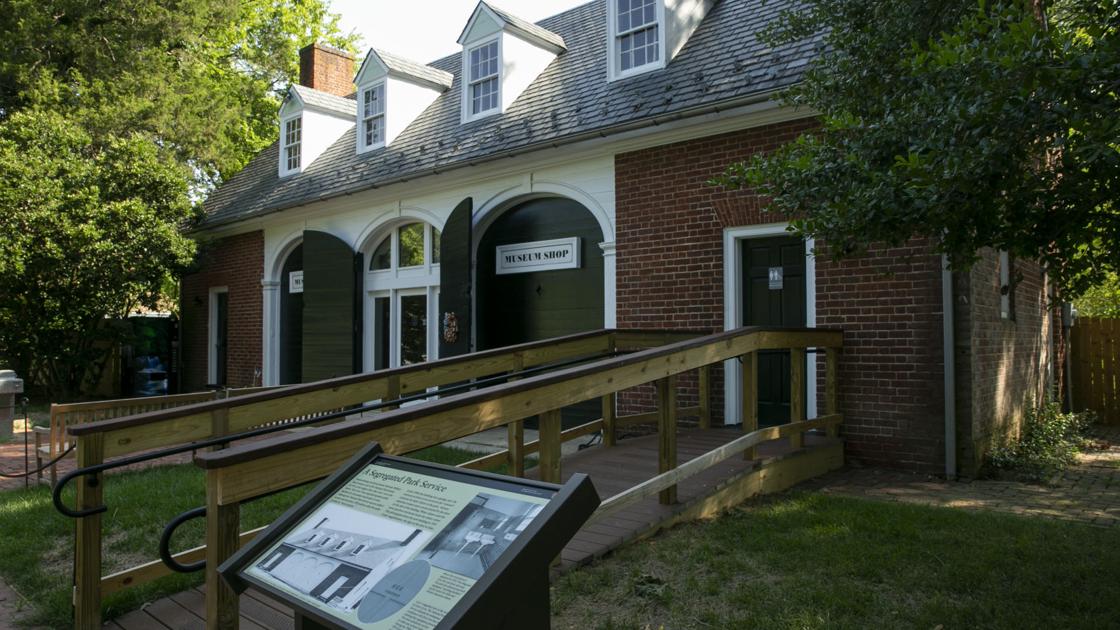
Racial segregation and National Parks – UMW experts are lending their expertise to the project
It’s a time of American history that is still raw and painful – segregation. It is, however, even more important to remember and preserve these moments so the country can move forward and learn from its past. It’s a project that University of Mary’s Washington’s Erin Devlin has taken on in collaboration with federal government. “The National Park Service has installed a wayside exhibit outside the Fredericksburg Battlefield Visitor Center on the history of segregation at Fredericksburg and Spotsylvania National Military Park. The exhibit highlights a former garage that in the 1930s and 1940s housed segregated restrooms for African American visitors. One of those restrooms is still in use and retains the original tile and fixtures. The larger building is now the park’s gift shop and bookstore. The new exhibit was a collaborative effort between the National Park Service and the University of Mary Washington to highlight surviving historic resources related to the local and national story of racial segregation at national parks. Erin Devlin, assistant professor of history and American studies at UMW, is working with the NPS to develop a historic resource study that will examine the practice of racial segregation in Virginia’s national parks during the first half of the 20th century.” August 06 – Fredericksburg.com Are you a journalist covering American history, or the place racial segregation has played in our country’s history? If so – let our experts assist with your stories. Erin Devlin's research focuses on race, public memory, and social justice, and she offers courses in both history and American studies. She is currently working on a historic resource study with the National Park Service focused on segregation and African-American visitation in Virginia’s national parks. Dr. Devlin is available to speak with media regarding this topic – simply click on her icon to arrange an interview.


University of Rochester's John Covach gives perspective on Beatles Abbey Road Anniversary
September 26 marks the 50th anniversary of the worldwide release of the Beatles’ Abbey Road. While Let It Be was released in 1970, most of the tracks on that album were recorded earlier, making Abbey Road the band’s last album project. John Covach, director of the Institute for Popular Music at the University of Rochester, coauthor of What’s That Sound: An Introduction to Rock and Its History, and Beatles academic expert, notes: “It’s definitely the Beatles’ last statement. You’ve got a band that’s breaking up and everyone knows they’re breaking up. They’re arguing with each other, suing each other, and it’s ugly and goes against the band’s legacy. This all happens in 1969, so they decide to go back into the studio and do one last record to leave on a high note, which is Abbey Road. And there’s this moment where they come out with this album that it’s back to form; just a fantastic Beatles project after the last project had failed. Abbey Road is the group playing together, singing together, and working together in a way that they haven’t really done for some time and putting their personal differences aside.” The University of Rochester’s Institute for Popular Music and Eastman School of Music will host The Abbey Road Conference, from September 27 to 29. The conference will feature speakers Ken Townsend, recording engineer and former Abbey Road manager; Andy Babiuk, author of Beatles Gear, Walter Everett, author of The Beatles as Musicians; and Kenneth Womack, author of Maximum Volume: The Life of Beatles Producer George Martin.

