
Experts Matter. Find Yours.
Connect for media, speaking, professional opportunities & more.
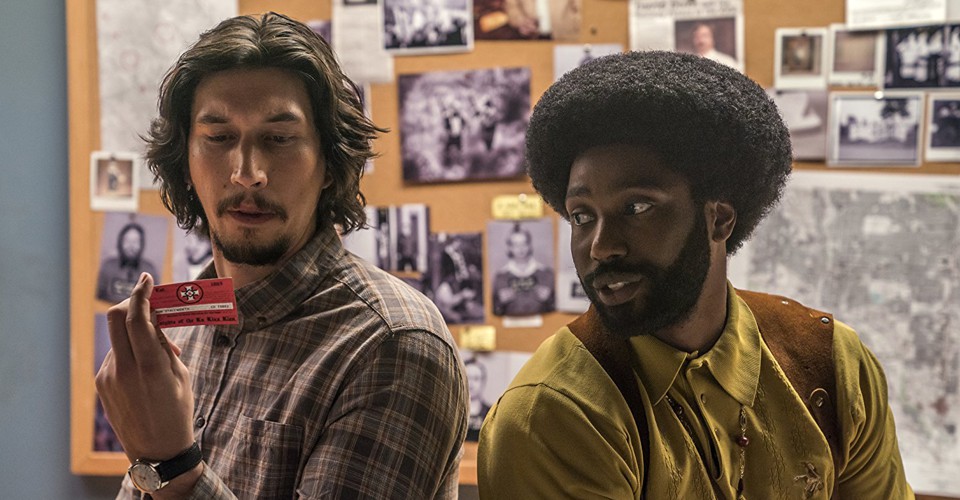
Spike Lee's Cinematic Alchemy of Past and Present is a Warning About the Future
Nearly a year to the day after White Nationalists marched in Charlottesville, the film “BlacKkKlansman” is released. Spike Lee's film is both a representation of a real-life story of an African-American detective who infiltrated and exposed the Ku Klux Klan in the 1970s and as an ideological vehicle for critique of our current social and political moment, says Matthew Hughey, associated professor of sociology at UConn. Together, “BlacKkKlansman” conveys a multi-part message. First, it is cinematic alchemy of the past and present—revealing what has and has not changed over the past half-century in order create a warning about the future. It recalls philosopher George Santayana’s saying “those who cannot learn from history are doomed to repeat it.” Second, the film eviscerates both American naiveté and intentional hypocrisy regarding racism and racial inequality. The film shines a bright light on the dark methods people use to dress up racism, nativist xenophobia, and hatred as “pride and patriotism,” and the madness deployed to rationalize police brutality and murder as little more than “law and order.” Third, and perhaps most importantly, the film deconstructs the “bad apple” theory of racism. Racism does not exist within the hood-wearing, swastika-sporting, epithet-spewing ignoramus alone, but exists in a systemic orchard that segregates and privileges whiteness economically, politically, and socially regardless of individual intention, worldview, or behavior. In the end, Lee’s film leads us to the conclusion that if “we are all Charlottesville” then “we are all Klansman,” too, says Hughey. Source:


Misreporting in securitized loans
Nonagency mortgage-backed securities (MBSs) and collateralized debt obligations (CDOs) derived from MBSs and their role in the recent financial and housing crisis remain a subject of discussion. An MBS is an asset-backed security secured by a mortgage or grouping of mortgages. Non-agency MBSs are not guaranteed by any government-sponsored organization, such as Freddie Mac or Fannie Mae, or the federal government. According to research from Gonzalo Maturana, assistant professor of finance, and John Griffin (U of Texas), the complexity of these structured products made it difficult to learn the true value of the underlying assets. They analyzed “apparent fraud among securitized nonagency loans, looking at unreported second liens, owner occupancy misreporting, and appraisal overstatements.” The study data comes from Lewtan’s ABSNet Loan and HomeVal data sets, along with DataQuick’s Assessor and History files, for the time period between January 2002 and December 2011. The researchers discovered that “48% of loans exhibited at least one indicator of misrepresentation.” The level of misreporting was similar for low- and full-documentation loans. Also, loans with a misreporting were 51% more likely to be delinquent. Maturana and Griffin’s research points to apparent fraud by loan originators and MBS underwriters, and it also suggest that MBS underwriting banks were aware of some of the MBS representations at issuance. Source:


6 Facts We Learned Working with Migrants and Refugees Around the World Working with migrants and refugees is our business at Catholic Relief Services. CRS was founded in 1943 to assist refugees during World War II. Seventy-five years later, we are still coming to the aid of people escaping conflict, violence and natural disasters. While CRS doesn’t resettle refugees in the United States (these programs are run by the Catholic Church’s Migration and Refugee Service and Catholic Charities), our rich history has taught us valuable lessons on how to best help families fleeing crisis. 5. Adults Need Work and Income. We know from experience that people find pride and purpose in helping earn an income for their families, no matter how small. Refugees and migrants are looking for a hand-up, not a handout and being integrated with their host communities benefits everyone. Caroline Brennan is the Emergency Communications Director for Catholic Relief Services. In her role, she travels to and/or works in areas facing natural or man-made emergencies. See her contact information at the bottom. 6. The Poorest Countries House the Most Refugees and Migrants. Although media stories can give the impression that the U.S. is swamped with migrants, the reality is that 85% of the world’s refugees are in the developing world. The country with the largest refugee population is Turkey, with almost 3 million. One in 3 people in Lebanon is a refugee. The Bidi Bidi Refugee Camp in Uganda alone is home to 229,000 South Sudanese who have fled civil unrest. Richer nations like the U.S. should look at the lessons of how these countries with far fewer resources welcome and host refugees. Caroline Brennan is the Emergency Communications Director for Catholic Relief Services. In her role, she travels to and/or works in areas facing natural or man-made emergencies. See her contact information at the bottom. The experts at Catholic Relief Services are available to help with any media coverage or insight that is required regarding this ongoing news story and issue that is continuing in America. Simply click on any of their icons to arrange a time for an interview. Source:

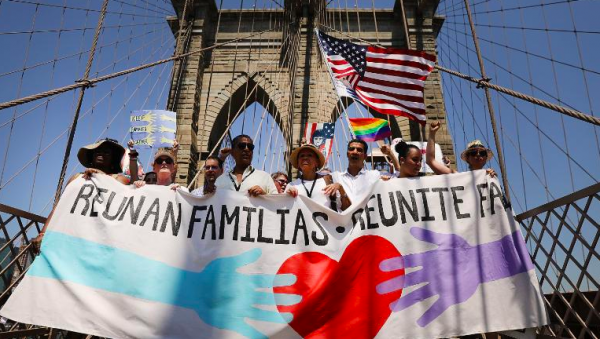
6 Facts We Learned Working with Migrants and Refugees Around the World - Facts 3 and 4 Working with migrants and refugees is our business at Catholic Relief Services. CRS was founded in 1943 to assist refugees during World War II. Seventy-five years later, we are still coming to the aid of people escaping conflict, violence and natural disasters. While CRS doesn’t resettle refugees in the United States (these programs are run by the Catholic Church’s Migration and Refugee Service and Catholic Charities), our rich history has taught us valuable lessons on how to best help families fleeing crisis. 3. Support the Family. The family unit provides the primary support for children during the traumatic refugee experience -- whether it is witnessing violence or crossing a desert on foot. CRS focuses on keeping families together. This means housing a family together and using any services provided – from trauma counseling to income generation – to boost family cohesion. Shannon Senefeld is a global development expert at CRS. She has published and presented extensively on international children’s issues and the importance of strengthened family care for children’s development. See her contact information at the bottom. 4. Kids Need School and Play. CRS is dedicated to keeping up children’s education, to provide stability and normality and give them hope for the future so they can be productive citizens wherever they end up. Kids need to be kids, too. Whether they are in a camp or any sort of migrant or refugee holding center they need a space to play. Caroline Brennan is the Emergency Communications Director for Catholic Relief Services. In her role, she travels to and/or works in areas facing natural or man-made emergencies. See her contact information at the bottom. The experts at Catholic Relief Services are available to help with any media coverage or insight that is required regarding this ongoing news story and issue that is continuing in America. Simply click on any of their icons to arrange a time for an interview. Source:
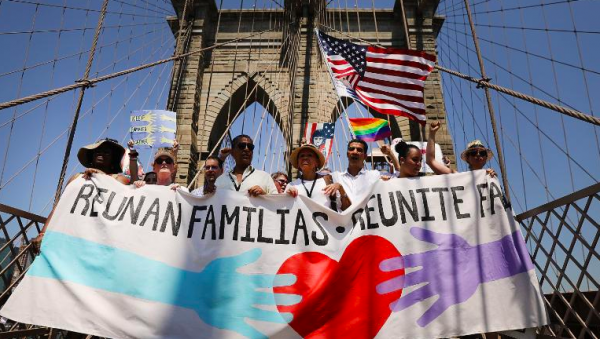
6 Facts We Learned Working with Migrants and Refugees Around the World: Facts 1 and 2 Working with migrants and refugees is our business at Catholic Relief Services. CRS was founded in 1943 to assist refugees during World War II. Seventy-five years later, we are still coming to the aid of people escaping conflict, violence and natural disasters. While CRS doesn’t resettle refugees in the United States (these programs are run by the Catholic Church’s Migration and Refugee Service and Catholic Charities), our rich history has taught us valuable lessons on how to best help families fleeing crisis. 1. People Do Not Want to Leave Their Homes. An astonishing 1 in 110 people have been forced to flee their home (UNHCR). They only do that when they feel they have no other choice. Most people the world over give the same reason for starting their perilous journey across borders -- violence. That’s true for millions fleeing conflict in South Sudan and for tens of thousands fleeing gang violence in Central America. Most often, people flee to other parts within their country first. Only when they see no other option do people leave their country. Rick Jones is the agency's Youth and Migration Advisor in Latin America and the Caribbean. He also specializes in issues affecting Central American migration, including gang violence, poverty, and internal displacement. See his contact information at the bottom. 2. Don’t Separate Families. Based on extensive experience with refugees and migrants, CRS agrees with the criticism of the former U.S. policy of separating children from their parents. Decades of research shows that this is so traumatic for children it can lead to long-term psychological, and even physical damage. Shannon Senefeld is a global development expert at CRS. She has published and presented extensively on international children’s issues and the importance of strengthened family care for children’s development. See her contact information at the bottom. The experts at Catholic Relief Services are available to help with any media coverage or insight that is required regarding this ongoing news story and issue that is continuing in America. Simply click on any of their icons to arrange a time for an interview. Source:

Independence Day: Baylor’s Benjamin Franklin Scholars Bring Light to Complex Figure
Founding Father Benjamin Franklin was a complex man. Among his many roles, he was a businessman, entrepreneur, inventor, journalist, author, printer, editor, politician, postmaster, statesman, ambassador and signer of the Declaration of Independence. And even with a treasure trove of accomplishments, sometimes the Franklin legends are bigger than Franklin the man – and it’s taken an army of historians and scholars throughout the centuries to sort it out. As July 4 Independence Day approaches, Baylor University's two Franklin scholars share different perspectives of Franklin, his faith and his business acumen: • Thomas Kidd, Ph.D., Distinguished Professor of History and associate director of Baylor’s Institute for Studies of Religion • Blaine McCormick, Ph.D., associate professor and chair of the management department in Baylor’s Hankamer School of Business Both have penned Franklin books and both have been featured nationally for their research on the Founding Father. Kidd’s 2017 book, “Benjamin Franklin: The Religious Life of a Founding Father,” has received high marks for its analysis of Franklin’s beliefs. From his Puritan upbringing to deism, skepticism and more, the book explores the influences and evolution of faith throughout Franklin’s life. “In today’s polarized political and religious environment, some pundits seek to remake the Founding Fathers in their own image. Benjamin Franklin’s example reveals that the historical truth is often more complicated,” Kidd wrote in a column for The Wall Street Journal. McCormick, who wrote “Ben Franklin: America’s Original Entrepreneur,” discovered a passion to study the Founding Father after listening to an audiobook of Franklin’s autobiography. “Franklin could do things as a statesman, and understand things, and achieve things as a statesman, because he had achieved things in the marketplace first,” he said. “I’ve yet to find a better book for businesspeople to learn about how to run a business in the American Experiment. He wrote the autobiography to help train people in the life of business. Many of the principles are still very robust.” And the way he shared those principles (many of which have been misquoted and made into memes through the decades) is important, McCormick said. “Franklin used sentences no longer than a Tweet to train generations of colonial businesspeople,” he said. “They were short. They were memorable. They were high-impact.” Source:


In his letter to Kim Jong Un and related statements, President Trump made not-so-veiled threats regarding U.S. military capabilities. Thus, many are asking: Is the Trump Administration, staffed with former military officers in prominent cabinet positions, chomping at the bit to unleash America’s military might? International security scholar Peter Campbell, Ph.D., is watching the situation. “Trump's cancellation gives both sides opportunity to claim that they pursued all diplomatic means. The conflict now enters a more dangerous phase because an opportunity to step back from the brink has been lost and diplomatic efforts have been somewhat discredited,” he said. “Trump’s comments regarding superior U.S. nuclear capability might be interpreted as a precursor to escalation, although the letter's tone was much less inflammatory than his earlier rhetoric.” Campbell said history – and, ironically, Trump’s staff of former U.S. military leaders in key positions – sides with those who prefer diplomacy over force. “The prominent role of former military officers has caused some to worry that the Administration is anxious to go to battle. This idea is problematic because it does not take into account that U.S. military leaders have often been more hesitant than their civilian superiors to use force,” he said. “As former Secretary of Defense Robert Gates wrote of his Cold War experiences under Presidents Reagan and George H. W. Bush: ‘In more than 20 years of attending meetings in the Situation Room, my experience was that the biggest doves in Washington wear uniforms.’ This makes sense because military officers often have an intimate understanding of how the decision to use force leads to major uncertainty and is plagued with often insurmountable friction and the fog of war. Gates observed: ‘Our military leaders have seen too many half-baked ideas for the use of military force advanced in the Situation Room by hairy-chested civilians who have never seen combat or fired a gun in anger.’ Thus, the fact that Trump has former military officers in his inner circle should decrease, rather than increase, fears of an ill-conceived use of military force to resolve this crisis. Secretary of Defense James Mattis made explicit mention of the key role diplomats are playing in the unfolding crisis. Numerous commentators have pointed out the immense influence that Mattis has in the current administration. This should calm rather than incite fears of a military solution." Source:


Definitely …Maybe? Donald Trump’s planned sit-down with Kim Jun Un
It was diplomacy that was almost out of a movie. Two bitter leaders, both unpredictable and avowed enemies who seemed on the brink of war … until suddenly they are friends, complimenting each other and arranging a meeting of historic proportions. There was even talk of a Nobel Prize. It seemed too good to be true. And now the world is back to reality. The surprisingly insta-warm relationship between American and North Korea seems to have once again chilled. And now it’s a battle of statements over who has upset who and why. According to North Korean media, Choe Son Hui, a vice-minister in the North Korean Foreign Ministry, said the summit is being reconsidered. And annihilation may follow. "Whether the US will meet us at a meeting room or encounter us at nuclear-to-nuclear showdown is entirely dependent upon the decision and behavior of the United States," Choe said. Vice President Pence responded in the media with a veiled threat of his own. "There was some talk about the Libya model," Pence told Fox News "As the President made clear, this will only end like the Libya model ended if Kim Jong Un doesn't make a deal." So where are we now? What’s next? Is this relationship over before it even started? Experts from the University of Connecticut may have some insight and deeper understanding of this issue. Alexis Dudden is a Professor of History specializing in modern Japan and Korea, and international history at the University of Connecticut. Dudden stresses the importance of understanding the complexity of modern Korea-Japan relations to better appreciate Korean resistance to U.S. demands. South Korea is a country where one in six families is directly affected by the North-South divide. It is “imperative that Washington planners take seriously South Korean desires for renewed engagement,” Dudden says. Professor Dudden is available to speak with media regarding the ongoing talks and threats between North Korea and America. Simply click on her icon to arrange an interview. Source:

New Star Wars, Same Political Landscape?
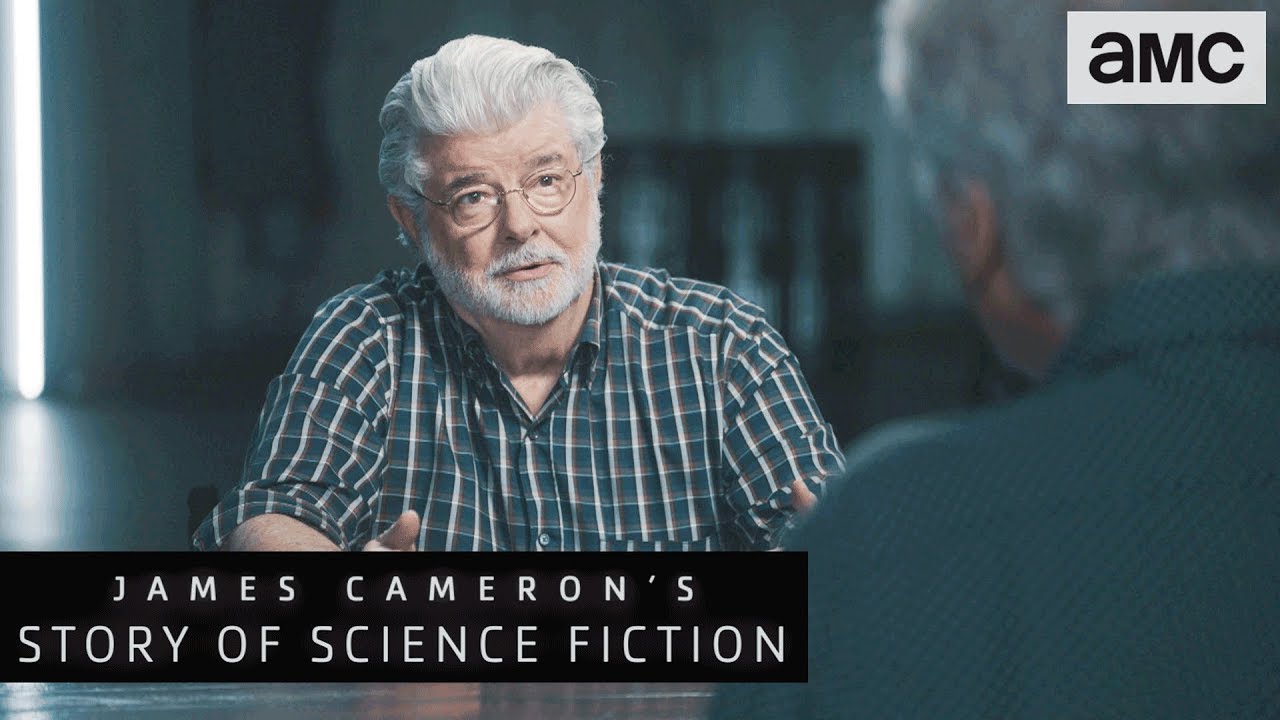
There’s been an enormous amount of hype leading into this Friday’s release of Solo: A Star Wars Story. Will the 10th installment of what is the most valuable franchise in film history live up to the lofty expectations of both fans and film executives? What does this latest epic tell us about current events here on Earth? The politics of Star Wars has proved to be an enduring fascination to many throughout the past 40 years. Equating current political events to the Star Wars saga is where the experts From the University of Connecticut can help. Stephen Dyson has dissected the politics of the "Game of Thrones," "Star Trek" and previous editions of "Star Wars." He can "read between the lines" of the movie dialogue and equate on-screen dialogue to what's happening now in the United States. Source:


Baylor Black Gospel Music Expert Pens Dallas Morning News Column Remembering MLK
Robert Darden, professor of journalism, PR and new media at Baylor University, is a gospel music expert. He penned this column to commemorate the death of Martin Luther King, Jr. and to remember the music that carried people through the grief of the time. He writes: "In the days of rage and grief that followed the assassination of the Rev. Martin Luther King Jr. in Memphis on April 4, 1968, many Americans found, at least for a time, relief in music. Rosa Parks, whose brave stand on a Montgomery, Ala., bus just 13 years earlier was the inciting incident in the slow build of the civil rights movement after World War II, watched as Detroit erupted in violence. She sat in her room playing Sam Cooke's "A Change is Gonna Come" over and over. She said the song 'saved her sanity.'" Darden is the author of two dozen books, most recently: Nothing But Love in God’s Water, Volume II: Black Sacred Music from Sit-In to Resurrection City (Penn State University Press, 2016); Nothing But Love in God’s Water, Volume I: Black Sacred Music from the Civil War to the Civil Rights Movement (Penn State University Press, 2014); Jesus Laughed: The Redemptive Power of Humor (Abingdon Press, 2008); Reluctant Prophets and Clueless Disciples: Understanding the Bible by Telling Its Stories (Abingdon Press, 2006); and People Get Ready! A New History of Black Gospel Music (Continuum/Bloomsbury, 2004). He founded the Black Gospel Music Restoration Project, the world’s largest initiative to identify, acquire, digitize, categorize and make accessible gospel music from gospel’s Golden Age (1945-1970). The BGMRP provides the gospel music for the Smithsonian’s new National Museum of African American History & Culture. Source: