
Experts Matter. Find Yours.
Connect for media, speaking, professional opportunities & more.

Intermittent fasting is not for everyone
Intermittent fasting is a popular trend that is not without risk. The goal of intermittent fasting is to put your body in a state of ketosis where fats and ketones will be utilized, instead of carbohydrates. However, the process that occurs within your body when food is restricted is complicated. There is no set length of time that is needed in order for intermittent fasting to be successful, which may be confusing if you are not sure how long to fast or when to stop. It is important to listen to your body during this time as intermittent fasting is not for everyone. During the time of fasting, individuals may be prone to dehydration and hypoglycemia, or experience other adverse effects if trying to fast while on prescription or other medications. It isn’t just the medically fragile individuals who shouldn’t fast. Teenagers or those with altered metabolic rates (such as hypo and hyperthyroidism) may be putting more stress on the body than it can handle, resulting in a wide variety of symptoms: inability to concentrate, nausea, vomiting, headache, irritability, fatigue, fainting. Also, it is never a good idea to restrict calories during a time when your body is trying to grow or trying to heal. Anyone who gets irritable and symptomatic when skipping meals should not attempt to fast for prolonged periods of time. There are many different ways to fast and many different ways to eat during fasting. Prior to restricting calories for any reason, make sure that your body can handle the stress of not eating or limiting calories. I suggest consulting with a nutritionist who can work with you to help create a fasting plan that is best for your body and for your unique health history. A nutritionist can individualize an eating plan to make sure that you are maximizing your caloric intake with high density foods during the times when food is being restricted. Most importantly: Listen to your body! If something doesn’t feel right, then don’t do it or stop what you are doing. Source:

Misleading our children – is revisionist history harming the education of our nation’s students?
It’s astounding and almost as if it’s a scene from a movie – meddling, mid-level politicians trying to revise and alter curriculums to ensure children in classrooms are only getting certain points of few and perspectives when it comes to key moments in American history. It’s a level of petty-propaganda usually associated with paranoid regimes in far-away countries. But these days, it’s a homegrown problem. In Texas, the state Board of Education is being slammed for altering facts, twisting perspectives and intentionally omitting moments in history from it’s curriculum. According to USA Today, “The state is considering revisions to the 2010 standards, which a group of academics slammed in a report Thursday. Among their complaints: lessons downplaying slavery as the Civil War's cause, exaggerating the influence of Moses on U.S. democracy and applauding the National Rifle Association and Newt Gingrich's Contract with America. "The quibble over wording here could not be more misleading," said Emile Lester, a report co-author and political science professor at the University of Mary Washington in Virginia.” So how does this happen and how is it allowed in modern America? And how common is this throughput the country? Is it a matter of too much power in the hands of those with an agenda or a reflection on an education system in a sate of neglect by elected officials? There are a ton of questions that need to be asked. That’s where an expert from at the University of Mary Washington can help. Dr. Emile Lester, associate professor of political science at the University of Mary Washington, an expert in church and state issues is available to speak with media regarding this issue. Simply click on Emile’s icon to arrange an interview. Source:



Prose, prayers, palindromes and 45 presidents
If there’s one thing Colin Rafferty – a University of Mary Washington associate professor of English and teacher of creative nonfiction – knows better than prose, it’s the United States’ 45 presidents. His current manuscript, a collection of essays about each of them, includes pieces that range from “The Fear” about Martin Van Buren and “Bully” about Theodore Roosevelt to “What They Said About Him” about Barack Obama and “The Imagineer Considers Tomorrow” about Trump. Written as palindromes, death songs, prayers, movie scripts and more, Rafferty’s work has appeared in such prestigious publications as Brevity, Cobalt, Juked, Parcel and Waxwing, and he was recently featured on the Virginia Public Radio’s With Good Reason for a segment on “Getting to Know the Presidents.” “Reading and writing about the presidents has let me explore both American history and the expansiveness of creative nonfiction,” said Rafferty, who read a biography of each president before penning his essays. Colin is available to speak with media about his work and about President's Day. Simply click on his icon to arrange an interview. Source:


Robert F. Darden, professor of journalism and founder of Baylor’s Black Gospel Music Restoration Project, treasures the rich sounds of Christmas spirituals, which differ from Christmas carols. “So many of the spirituals are written in what has been performed as and what scholars call the ‘eternal now,’” Darden said. “If you read the lyrics as they were transcribed, many of them are in the present tense.” To illustrate his point, Darden referenced the spiritual “Were You There?” in which the lyrics read, “It causes me to tremble.” Darden said that since slaves in America were not book-educated and struggled with the concept of time, the Bible was a contemporary account of what was going on for them. In their minds, they conflated Abraham in the Bible with Father Abraham Lincoln who was going to free them, and associated Harriett Tubman with Moses and the Ohio River with the Jordan River. Darden said the powerful resonance in these spirituals is unmatched because of the passion of the people who sang them. “When you hear the Christmas spirituals, you’re hearing people who (believe) this is a real live event,” Darden said. “Go tell it on the mountain that Jesus Christ is born, not was born. That gives them more of an immediacy and a power than songs that are in the past tense.” Darden also said that slaves had a more intimate understanding of the nativity story because they identified with the conditions into which Christ was born. They understood what it was like to come from a foreign land to a place where they were despised and enslaved in the same way that Christ was born as a refugee child with people seeking to kill him. “The spirituals reflect a people who believe they’re in the middle of the Bible story. I think that gives them a power that’s hard for others to match and why the Gospel artists, who would later record these songs, tried to capture that and keep that immediacy and intimacy that I think a lot of Christmas carols don’t have,” Darden said. Darden said the modern world still needs Christmas spirituals. While commercialism gets people excited and inspired for the holidays, people in 2017 need something that will help them reflect on what truly matters about the season. They need something that will not only remind them of history but will also evoke the sensation of gratitude for a needed savior. “By noticing and listening to the words of the spirituals, you see how they focused on what really matters," he said. Source:


Done in by digital? What will the sale of Time mean for the industry?
On Monday, a once mighty media juggernaut was sold off for $2.8 billion dollars. Time Inc. – the publisher of Time, Fortune, Sports Illustrated and People was now property of the Meredith Corporation. The Des Moines, Iowa-based company better known for its Better Homes and Gardens, Family Circle, Parents and Family Fun magazines. It’s a bitter and sad end for Time. The company was once the industry leader in magazines and world-respected periodicals. The magazines were’ must-reads’ for the informed. But times have changed, and Time never did catch on or catch up with the digital wave that has transformed journalism as we know it. So, what will all of this mean? Can the world of print media survive and adapt to changing times and tastes? As well, with shrinking circles of media ownership – will regulators let this sale proceed? And what will this mean for the many journalists? More job cuts and shrinking news rooms? Will they move from NYC to Iowa? Has the lustre and allure of being a New York based journalist lost its shine? There are a lot of questions that still need to be addressed and answered. That’s where the experts from Cedarville University can help. Dr. Marc Clauson is a professor of history and law at Cedarville. Marc is an expert in the fields of anti-trust regulation and the economic impact of mergers and takeovers like this. Dr. Clauson is available to speak with media – simply click on his icon to arrange an interview. Source:


What Makes Horror Movies Scary? “We do,” Says Baylor Film Expert
The best scary movies adapt to society’s current fears and turn current cultural, social and political preoccupations into elements of horror, says a Baylor University film historian and an expert on the horror film genre. “We are the monster,” said James Kendrick, Ph.D., associate professor of film and digital media in Baylor’s College of Arts & Sciences. Kendrick has authored three books: Darkness in the Bliss-Out: A Reconsideration of the Films of Steven Spielberg; Hollywood Bloodshed: Violence in the 1980s American Cinema; and Film Violence: History, Ideology, Genre. The themes of horror films have changed and developed over the years to capture the zeitgeist and adapt to societal fears, Kendrick said. However, as elements of fear transform with society, the elements of horror films remain. “Character and story, atmosphere and the monster,” Kendrick said. “That’s all you really need. Interesting, engaging characters in an effective setting pitted against some kind of monstrosity. That is the core of the genre, and anything and everything else grows from and functions to support those three elements.” The audience must be able to relate to characters and feel a sense of empathy for them, he said. The atmosphere must engage the audience and provide an effective platform for fear. Source:


Baylor Horror Film Expert Lists 10 Movies 'Everyone Should See'
October brings pumpkin spice, changing leaves, cooler temperatures and Halloween. And Halloween, of course, brings horror films. James Kendrick, Ph.D., associate professor of film and digital media in Baylor University’s College of Arts & Sciences, is a Hollywood film historian and an expert on cult and horror films. While horror is not everyone’s favorite genre, Kendrick says, horror films are known to have a universal appeal. “We all know what it means to be frightened, to feel dread, to want to look away,” Kendrick said. “On some level we all fear death and are aware of our human mortality, and the best horror films engage that fear in complex and challenging ways.” In honor of Halloween, Kendrick has developed a list of 10 horror classics he says “everyone should see.” 1. Nosferatu (F.W. Murnau, 1922) 2. The Bride of Frankenstein (James Whale, 1935) 3. Cat People (Jacques Tourneur, 1942) 4. Psycho (Alfred Hitchcock, 1960) 5. Night of the Living Dead (George A. Romero, 1968) 6. The Exorcist (William Friedkin, 1973) 7. Suspiria (Dario Argento, 1977) 9. The Shining (Stanley Kubrick, 1980) 10. The Babadook (Jennifer Kent, 2014) James Kendrick, Ph.D., serves as associate professor of film and digital media in Baylor University’s College of Arts & Sciences. Kendrick’s primary research interests are post-Classical Hollywood film history, violence in the media, cult and horror films, media censorship and regulation and cinema and new technologies. He has authored three books: Darkness in the Bliss-Out: A Reconsideration of the Films of Steven Spielberg, Hollywood Bloodshed: Violence in the 1980s American Cinema and Film Violence: History, Ideology, Genre. In addition to this, he is also the film and video critic for the website Qnetwork.com. Kendrick is a member of the Society for Cinema and Media Studies, the University Film and Video Association and the Online Film Critics Society. Source:

These days, it doesn’t take much to turn a civil conversation into a full-blown catastrophe. Just mention the words “climate change” and feathers can start to ruffle. But it doesn’t have to be that way, says Dan Peppe, Ph.D., climate change expert and associate professor of geosciences at Baylor University. His research focuses on understanding how plant and animal communities have responded to changes in climate throughout Earth’s history. “Climate change is a fundamentally important issue to our society and is vital for us to have open and honest discussions about it and its potential impacts,” Peppe said. He said the best place to start such a dialogue is with scientific observation. Have a discussion about increases in temperature, he said. Understand what scientists are saying about those temperature changes and their effects. The trick to keeping this cordial? Keep politics out. “All of this conversation is a scientific one based on observation, and as such, shouldn't be a political one,” he said. “Once that baseline is established, we can then begin a conversation of the many possible ways to address those risks.” Peppe said there is often more than one solution to issues of climate change, but people need to listen to each other. “Hopefully there can be a respectful and civil conversation around those potential solutions,” he said. As part of Earth Science Week, Peppe is taking part in the Earth Science Symposium at The Mayborn Museum in Waco, Texas, where he will moderate a panel discussion on climate change. Panelists will discuss the science of climate change, the risks associated with it, and some of the potential solutions. “We hope that this will be a really productive discussion, and one in which the audience can participate,” Peppe said. Source:

Will Sept. 25 be Kurdish Independence Day?
On Sept. 25, a lot of the world’s important eyes will be watching the results of a referendum few have heard about. The Kurdistan Region of Iraq (KRI) is finally holding a referendum on its independence. It’s a referendum many object to – including those in Baghdad and in the United States. There are concerns that this path to independence will not be a smooth one and could further destabilize this already tumultuous region. Efforts and negotiations are ongoing in hopes that this historic vote can be delayed or even postponed. The stakes in this are high. In this region, relationships between the Kurds and Turkey are not good. Separating from Iraq could also see consequences. The threat of violence is very real and who will be there to support an independent KRI is also in question. There are many pieces at play. This involves a century of history, territory and tribalism all in an area that cannot afford another conflict. So, will the referendum take place even though Iraq's Supreme Court on Monday ordered the suspension of the referendum? If it does, what will be the outcome? Can America not support a group of people using democracy to determine its own fate? Are the costs of preventing this referendum worth it in the long run? How will the referendum affect politics in the Middle East and globally? Missouri State University’s Dr. David Romano, an expert in Middle Eastern politics, particularly the Kurdish region, is available to provide his insights on this complex and developing issue. He has been contributing to international discussion on this topic in his weekly column on Rudaw. Romano spent six months last year in Iraqi Kurdistan, behind the lines near Mosul. He believes the time is right for Kurdish independence. It’s also relevant to American interests due to the oil market and the international political landscape. Click on his icon to arrange an interview. Source:

Baylor Gospel Expert: MLK’s ‘I Have a Dream’ Inspired Response from Black Gospel Artists
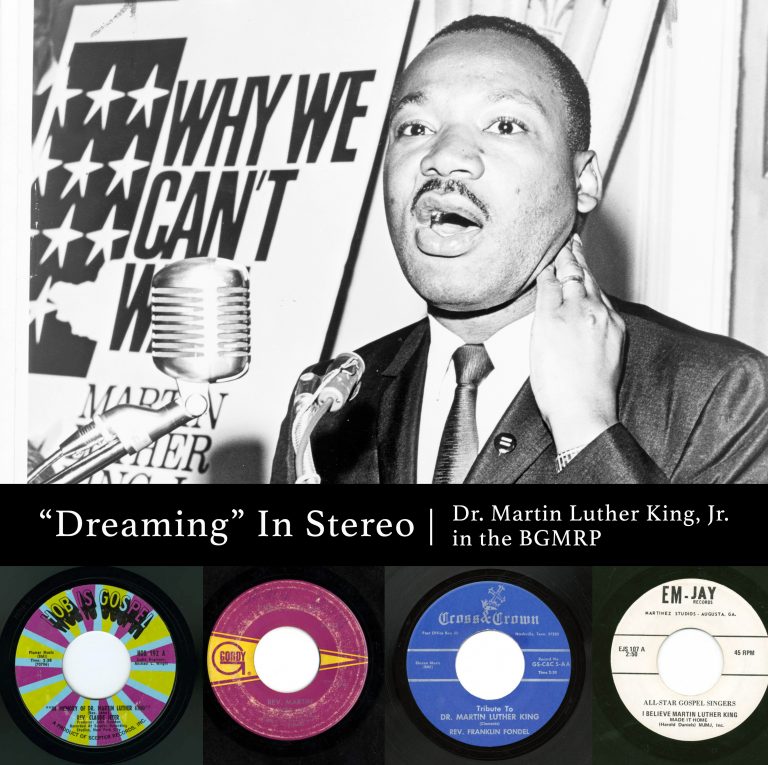
Fifty-four years ago this week. On Aug. 28, 1963, from the steps of the Lincoln Memorial in Washington, D.C., Dr. Martin Luther King Jr. delivered “I Have a Dream” – one of the most iconic speeches in American history and a defining moment of the Civil Rights Movement. For black gospel artists recording in the years after 1963, King’s speech was fertile ground for creative expression, said Robert Darden, professor of journalism and founder and director of Baylor’s Black Gospel Music Restoration Project (BGMRP). “These artists responded by creating songs that sampled portions of Dr. King’s recorded audio, drew inspiration from his words or supported the Civil Rights Movement in the wake of its delivery,” Darden said. Darden founded Baylor’s Black Gospel Music Restoration Project more than a decade ago in an effort to identify, acquire, preserve, digitize and catalog recordings from the black gospel music tradition. This music, from the Golden Age of Gospel from 1945 to 1975, was quickly vanishing as albums made the transition to CDs. Through the work of the Baylor Libraries’ Digital Projects Group, recordings from the BGMRP are available online in the Baylor Libraries Digital Collection, and in some cases includes other materials, such as taped interviews, photographs, press packets, tour books and programs, newspaper and magazine clippings, and sheet music. Music from the BGMRP also has been included in a permanent exhibit featuring African-American musical history at the Smithsonian Institution’s National Museum of African American History and Culture. Source: