
Experts Matter. Find Yours.
Connect for media, speaking, professional opportunities & more.

Lighting the Night: The History and Meaning of the Jack-o’-Lantern
No Halloween is complete without the warm flicker of a Jack-o’-Lantern glowing from porches and windowsills. But long before it became a symbol of trick-or-treating and fall décor, the carved pumpkin had deep roots in folklore, superstition, and the immigrant experience that shaped North American culture. From Folklore to Flame The story begins in Ireland, where early Jack-o’-Lanterns were not pumpkins at all, but turnips and beets. The tradition sprang from an old Irish folktale about “Stingy Jack,” a clever but dishonest man who tricked the Devil and was doomed to wander the Earth with only a burning coal inside a hollowed-out turnip to light his way. People began carving their own “Jack’s lanterns” to ward off wandering spirits and evil forces during Samhain, the Celtic festival marking the end of the harvest and the beginning of winter. When Irish and Scottish immigrants brought this tradition to North America in the 19th century, they discovered that the native pumpkin—larger, softer, and easier to carve—was the perfect replacement. The transformation from turnip to pumpkin turned a small superstition into a dazzling new folk art. The American Reinvention By the mid-1800s, Jack-o’-Lanterns had become a staple of Halloween celebrations in the United States. Newspapers of the era described “pumpkin lanterns” lighting up autumn gatherings, and by the early 20th century, the smiling (and sometimes sinister) carved pumpkin was the defining symbol of the holiday. Over time, the tradition evolved from scaring away spirits to creating community and creativity. Towns began holding carving contests, families passed down patterns and designs, and pumpkin patches and Halloween festivals turned the once-humble lantern into an essential piece of American seasonal culture. A Symbol Beyond Scares Today, Jack-o’-Lanterns carry layered meanings: they celebrate harvest, creativity, and folklore while keeping a touch of the supernatural alive. In many ways, they embody the blend of ancient myth and modern celebration that defines Halloween itself—where fear meets fun, and the flicker of a candle becomes both decoration and tradition. Whether whimsical or eerie, the glowing face of a Jack-o’-Lantern continues to connect generations to an age-old story about light overcoming darkness—a reminder that even the spookiest traditions began with a spark of human imagination. Connect with our experts about the folklore, cultural history, and enduring legacy of the Jack-o’-Lantern. Check out our experts here : www.expertfile.com


Understanding and predicting extreme weather in a changing climate
Kelsey Malloy is an assistant professor of climatology in the University of Delaware’s Department of Geography and Spatial Sciences, where she leads the Malloy Climate Research Group. Her research seeks to understand predictable climate variability and how large-scale climate patterns shape local weather and drive extreme events such as tornado outbreaks, floods and severe storms. Malloy’s research advances the predictability and understanding of severe weather in the United States and beyond. Her studies, published in Monthly Weather Review, Weather and Forecasting and Earth’s Future, have shed light on the climate signals influencing tornado activity and Great Plains rainfall. A member of the U.S. CLIVAR Predictability, Predictions, and Applications Interface Panel, Malloy also teaches courses in meteorological analysis and climatology, preparing the next generation of atmospheric scientists. In November 2025, Malloy will share her passion for climate science at TEDxUniversityofDelaware, using storytelling to illustrate climate’s enduring fingerprint on human history and experience. To speak with Malloy about the weather, email mediarelations@ude.edu.


Pumpkins have become a ubiquitous part of the autumn landscape. How exactly did that happen? Cindy Ott, associate professor of history at the University of Delaware and author of Pumpkin: The Curious History of an American Icon, has been featured twice on NPR this fall to discuss just that. On Morning Edition, she explored the evolution of the jack-o’-lantern – from Celtic folklore to the playful, child-friendly Halloween decorations of today – highlighting how pumpkins became symbols of rural life and harvest traditions. On All Things Considered, Ott traced the word “pumpkin” and the plant itself from Indigenous cultivation in the Americas to its status as a beloved autumn icon, showing how pumpkin imagery and nostalgia help sustain small family farms. Journalists covering food history, cultural traditions, seasonal trends or rural life will find Ott’s insights compelling, blending rigorous research with engaging storytelling. She can speak on pumpkins, jack-o’-lanterns, the cultural power of seasonal foods and how historical symbolism continues to shape modern American practices. Ott can be reached by emailing mediarelations@udel.edu.

Stepping Away from the Crown: Royals Giving Up Titles and Duties
Just last week, Prince Andrew announced that he would relinquish his title of Duke of York and other honours, citing that the ongoing allegations against him had become a distraction to the work of the royal family. He asserted this step was taken with the King’s agreement, stating he will no longer use the titles conferred upon him—even as he continues to deny any wrongdoing. A Legacy of Abdication and Renunciation Throughout royal history, stepping back from royal life or formally abdicating has taken many forms. The dramatic abdication of King Edward VIII in 1936—who gave up the British throne to marry Wallis Simpson—remains one of the most famous examples. Other monarchs, like Queen Christina of Sweden and Emperor Charles V, also renounced power to pursue personal convictions. Today’s examples are often more nuanced: royals “stepping down” from duties while retaining birthright status. The case of Prince Andrew fits in this evolving pattern of royal redefinition. Why Royals Leave (or Are Pushed Away) Motivations are diverse: personal choice, scandal, pressure, health, or changing views of leadership. Historically, abdications often responded to political crises. Now, with the monarchy under constant media and public scrutiny, stepping back can be seen as damage control or a bid for personal freedom—particularly in cases involving controversy. The Constitutional and Symbolic Ripples When a royal gives up titles or duties, multiple questions emerge: What role remains? (In Andrew’s case, he loses the Duke title but retains his princely status.) How does the monarchy manage public perception, continuity, and precedence? What are the implications for funding, patronages, and official duties? Such departures also force the institution to grapple with legacy, relevance, and the tension between duty and humanity. Monarchy in the Age of Transparency The modern era demands more from monarchy than ever before: accountability, relevance, and adaptability. When royals step aside—voluntarily or under pressure—it reshapes how the public sees royal duty. These shifts reflect broader questions: what role should individuals born into monarchy play? Can institutions evolve while retaining symbolic continuity? Connect with our experts about the history, symbolism, and modern evolution of royal abdications and withdrawals. To see our full database of experts, visit: www.expertfile.com

With the opening of a new cardiology practice at its Wilmington campus, ChristianaCare is bringing life-saving treatment for peripheral artery disease (PAD) closer to home for people who live in and around the city of Wilmington. Peripheral artery disease happens when plaque builds up in the arteries and limits blood flow to the legs. This can cause pain, cramping and difficulty walking. If left untreated, it can lead to serious problems like limb loss, heart attack or stroke. “We’re on a mission to improve the heart and vascular health of our community, and one of the key ways we do that is to identify where people need access to care and ensure that it’s convenient, high-quality and accessible. ChristianaCare’s expansion of cardiology services to the Wilmington campus has made it easier for patients in Wilmington and the surrounding community to receive excellent heart and vascular care,” said Kirk Garratt, M.D., MSc, medical director of the Center for Heart and Vascular Health. “Importantly, it’s part of a multi-disciplinary effort to bring a focus on PAD that includes vascular surgery and interventional radiology. We’re expanding those services in the Wilmington community, too.” In Delaware, an estimated 45,000 to 50,000 people are living with PAD. The condition is more common among older adults and those with diabetes, high blood pressure or a history of smoking, all of which are widespread in the state. Because symptoms can be subtle, many people may not know they have it. That’s why awareness and early diagnosis are so important. Anyone who experiences leg pain, numbness or slow-healing sores should talk with their doctor. A simple test can measure blood flow, and with the right treatment or lifestyle changes, people can ease symptoms and lower their risk of serious complications. The new practice, located in the Gateway Building at Wilmington Hospital, 501 West 14th Street, 4th Floor, offers convenient access to diagnosis and treatment in the heart of the city. The practice is open on Wednesdays from 8 a.m. to 12 p.m., and hours will be adjusted based on patient demand. Meet the Cardiologist: Dr. Vikashsingh Rambhujun Board-certified interventional cardiologist Vikashsingh Rambhujun, MBBS, has cared for ChristianaCare patients for more than a decade and now sees patients at the Wilmington practice. Rambhujun earned his medical degree from SSR Medical College in Mauritius. He completed his residency in internal medicine at the NYU Grossman Long Island School in New York and did his fellowship in cardiovascular medicine and interventional cardiology at ChristianaCare. Rambhujun also spent a year doing interventional cardiology and endovascular medicine and interventions at Yale University Hospital in New Haven, Connecticut. His research has been published widely in medical journals. Rambhujun aims to help patients manage PAD before it becomes advanced. When appropriate, he can perform minimally invasive catheter-based procedures to open blockages in the arteries. “We have new patients with blockages that haven’t progressed to the point that they need a procedure, which is where we want to catch them,” Rambhujun said. “We can manage their cholesterol, blood pressure and other risk factors to prevent disease from progressing.” When Rambhujun began practicing in Wilmington, he made it a priority to speak at local community meetings, raising awareness about the warning signs of heart and vascular disease. His message is simple but urgent: don’t wait; seek treatment early. “We’re trying to help people keep their toes and feet,” he said. “When we treat blockages from peripheral artery disease, the difference can be dramatic,” he said. “Patients who once struggled to walk even a short distance because of pain can leave the hospital able to move freely again. Helping someone reclaim their basic freedoms to walk, stay active and enjoy life is incredibly rewarding.”


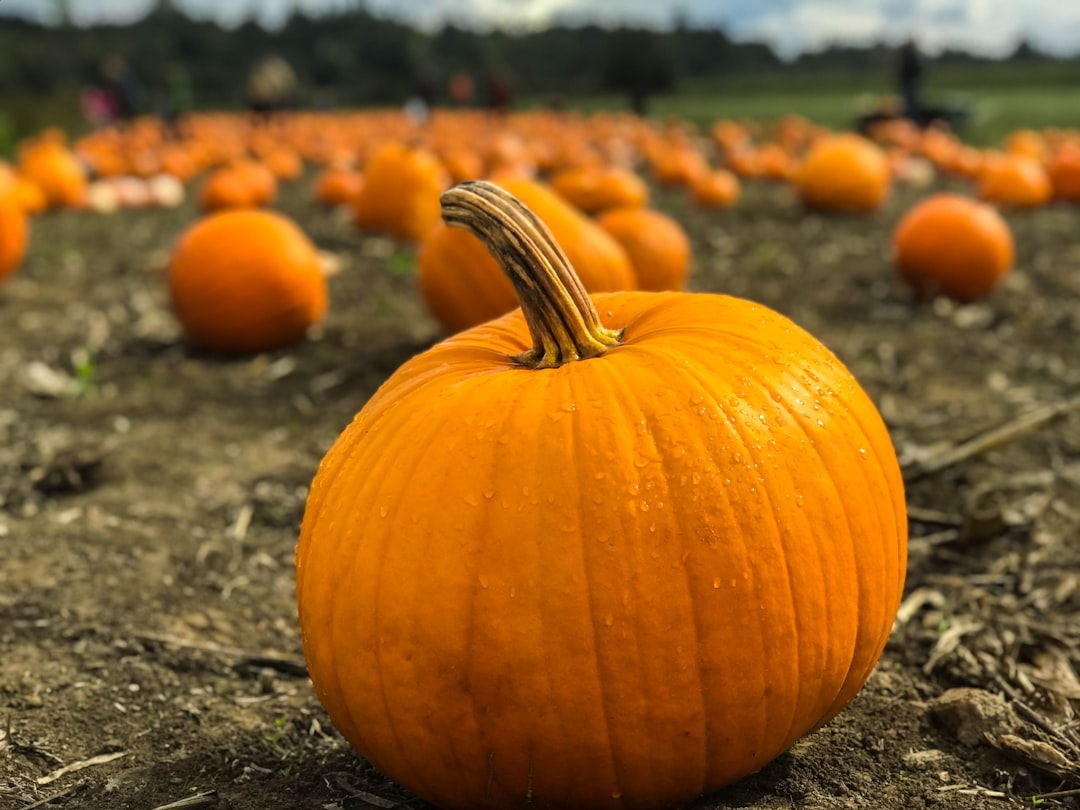
From field to festival: How pumpkins grew into an autumn symbol
Type “Halloween” into your phone’s emoji search bar, and you’ll get three icons: a skull, a ghost, and a jack-o'-lantern. The skull and ghost make sense — but how did the pumpkin carve out such a starring role in our fall celebrations? Cindy Ott, associate professor of history and material culture at the University of Delaware, has the answer. She literally wrote the book on pumpkins, exploring how this humble orange gourd grew from a survival crop to a powerful symbol of American identity and nostalgia. Today, pumpkins dominate the fall season — from pumpkin pies and soups to the ever-popular pumpkin spice latte. Ott’s research uncovers how the pumpkin’s transformation from practical produce to cultural icon reflects broader shifts in American history, values, and traditions. To schedule an interview with Professor Ott, contact MediaRelations@udel.edu.
Thanksgiving North and South: Why Canada and the U.S. Celebrate at Different Times
Every fall, both Canadians and Americans gather around the table to give thanks — but they do it more than a month apart. While the two holidays share themes of gratitude, harvest, and togetherness, they evolved under distinct historical, cultural, and seasonal circumstances that reflect each nation’s story. A Canadian Harvest of Thanks Canada’s Thanksgiving traces its roots back to 1578, when English explorer Martin Frobisher held a ceremony in Newfoundland to give thanks for safe passage across the Atlantic. Over time, the holiday blended European harvest traditions with local customs, emphasizing gratitude for the year’s bounty rather than a single historic event. Because Canada’s growing season ends earlier than in most of the United States, Thanksgiving naturally became an autumn harvest celebration held in early October. It was officially recognized in 1957, when Parliament declared the second Monday of October as a national holiday “to give thanks for the harvest and the blessings of the past year.” The American Tradition South of the border, Thanksgiving carries a different historical symbolism. The U.S. holiday traces back to 1621, when Pilgrims and the Wampanoag people shared a harvest feast in Plymouth, Massachusetts. While similar in spirit, the American version became tied more closely to the nation’s founding mythology — a story of cooperation, survival, and gratitude in the New World. Because harvests occur later in the U.S., the celebration naturally took place in late November. In 1863, during the Civil War, President Abraham Lincoln proclaimed Thanksgiving a national holiday to promote unity, setting it for the final Thursday in November. Congress later standardized the date to the fourth Thursday in 1941. Seasons, Stories, and Shared Spirit At heart, both Thanksgivings mark the same human instinct: to pause, reflect, and give thanks. Canada’s October observance reflects the rhythm of northern harvests and a gratitude rooted in nature’s cycle. The American holiday, coming later in November, intertwines with its own national narrative of endurance and unity. Despite the calendar gap, the spirit is shared — families gathering to celebrate abundance, resilience, and community, in traditions that continue to evolve on both sides of the border. Connect with our experts on the history, traditions, and cultural meanings of Thanksgiving in North America. Check them out here : www.expertfile.com

Inside the Classroom: LSU Psychologist Shares Insight on Student Attention Spans
What large changes have schools seen over the past few years regarding attention spans? "Being distracted by something in nature when trying to do a task may have been the first type of distraction, along with internal distractions, such as thinking about something else when you are trying to complete a task. Thus, distraction is not new. What’s new today is that the types of distractions are more complex and can even be individually tailored to capture someone’s attention, which can lead to more temptations to shift our attention off of one task and over to something else." What are innocuous ways students can harm their attention spans? What effect do phones have on retention ability? "One way I think that students can harm their own task progress is to believe that they can truly multitask or do more than one thing at one time. If you are completing a homework assignment and you are tempted to check your social media feed, you are causing a switch of your attentional focus. It may seem quick and somewhat harmless, but numerous studies have indicated that trying to switch back and forth between two tasks results in more errors and has the overall effect of taking longer to complete the main task. Thus, put simply, do not multitask. Set aside a time limit, say 20 or 30 minutes, to solely focus on one assignment or one study guide. Then take a break." How can a depleted attention span affect general physical and mental health in children? "Mental effort can be as tiring as physical efforts. As a field, we now understand the importance of sleep and overall health for our cognitive systems. To support the efforts of sustained attention, it is important to recognize that learning takes time and it takes energy. In terms of young children, the many processes involved in the development of the body and the mind require more sleep than older children and adults. How may fixing a memory deficit look different in a teen versus a child? "Younger children need more breaks than older children, as well as needing more sleep. However, younger children are able to maintain their focus of attention. They may need more guidance and something we call “scaffolding." This term is used to indicate that the older learners may already have a framework to use to build their knowledge, whereas younger learners are starting from scratch. Providing extra support that is relative to their age and ability helps children to perform at their maximum level." Are schools set up to most efficiently stimulate students' minds? "When I think about the classrooms of early childhood settings, such as pre-K and lower elementary schools, the classrooms are set up to encourage learning. There are brightly colored pictures and words on the walls; there are reading nooks that are comfortable and easy to reach for smaller learners; there are spaces to move the desks around the room to allow for different configurations of the space; and so forth. As children get older, the classroom spaces start to reflect these changes and allow for different interactions between the students and the material. I think about a high school science lab with tables and equipment, as compared to a history classroom with classical book titles and historical figures displayed on the walls. I believe the physical spaces of many classrooms are well-suited to match the skills and capabilities of the children as they grow, because they are designed to meet the children where they are." What tools would you recommend teachers use to help students strengthen their learning skills? "As I mentioned earlier, learning new material takes time and effort. It is important for children and adults to realize this and to allow time and space for learning. Sometimes adults can forget what it was like to learn something new for the first time, because they already have a foundation for their knowledge. Children are acquiring new information, new skills, and making new connections in their neural networks every day. We learn by associating information with things we already know, and also by making new connections. I mean this in a figurative sense, such as thinking about how one vocabulary word may relate to another one, as well as in a literal neural sense. Our brains work by making connections between neurons to create neural networks." Does knowing what kind of learner you are (audio, visual, or descriptive) help you improve your memory? "In terms of learning styles, this has been a pervasive but misleading concept. I believe it has stuck around because it is also intuitive. People have preferences. We know this, and it is very apparent in almost all aspects of life (our fashion, our food choices, etc). However, having a preference is not the same thing as being limited to learning in only one modality. In fact, research has shown that teaching new information in more than one modality is the most effective way." What has been the most surprising result from your research? "Children are incredibly capable of vast amounts of learning. I do not think we give children enough credit for the acquisition of so many skills in a relatively short amount of time. As just one example, if an adult learner has ever tried to become proficient in a second language, they will realize that it is a difficult task. However, young children can pick up a second language in a manner that seems almost effortless. This is just one example of the fantastic capabilities and flexibilities of the young mind."


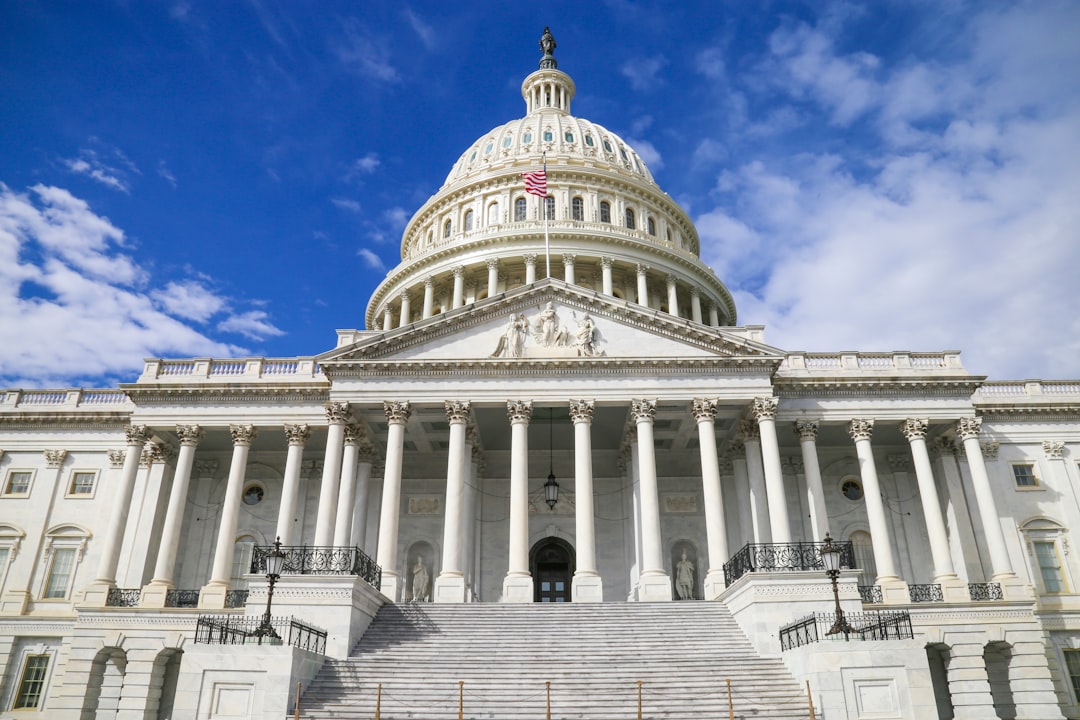
The History of Government Shutdowns in America
Few events capture Washington gridlock more visibly than a government shutdown. While rare in the nation’s early history, shutdowns have become a recurring feature of modern politics—bringing uncertainty for federal workers, disruptions to public services, and ripple effects across the economy. How It Started The modern shutdown era began in the 1970s after a new law, the Congressional Budget and Impoundment Control Act of 1974, established a formal budget process. Before then, funding disputes didn’t usually halt operations. But a key shift came in 1980, when the Carter administration’s Justice Department concluded that, without approved appropriations, agencies had no legal authority to spend money. That ruling set the stage for shutdowns as we know them today. Since then, the U.S. has endured more than 20 funding gaps, ranging from brief lapses over a weekend to the record-long 35-day shutdown of 2018–2019. Each one has highlighted the partisan battles over federal spending, immigration, healthcare, or other policy priorities. Why They Happen Shutdowns occur when Congress fails to pass, and the president fails to sign, appropriations bills or temporary funding measures known as continuing resolutions. In practice, they reflect deeper political standoffs: one branch of government using the threat of a shutdown to force concessions on controversial issues. They can be triggered by disputes over budget size, specific programs, or broader ideological fights. In many cases, the standoff ends when mounting political and economic costs make compromise unavoidable. What Gets Impacted The effects of a shutdown are immediate and wide-ranging: Federal Workforce: Hundreds of thousands of employees are furloughed without pay, while others deemed “essential” must work without immediate compensation. Public Services: National parks close, permits stall, museums shutter, and routine government operations—from food inspections to scientific research—are delayed. Economic Ripple Effects: Contractors lose revenue, local economies near federal facilities take a hit, and financial markets often react nervously. Extended shutdowns can even slow GDP growth. Citizens’ Daily Lives: From delayed tax refunds to halted small business loans, ordinary Americans feel the squeeze when government services pause. Why This Matters Government shutdowns are more than political theater—they expose the fragility of the budget process and the real consequences of partisan impasse. They highlight the dependence of millions of Americans on public services and raise questions about the cost of dysfunction in the world’s largest economy. Understanding why they happen and what’s impacted helps citizens gauge not just the politics of Washington, but also how governance—or the lack of it—touches everyday life. Connect with our experts about the history, causes, and consequences of government shutdowns in America. Check out our experts here : www.expertfile.com

The First Amendment: Foundations, Freedoms, and Why It Still Matters
The First Amendment is more than just words on paper — it’s a bedrock of American democracy. Adopted in 1791 as part of the Bill of Rights, it protects fundamental freedoms: speech, religion, press, assembly, and petition. Its influence ripples through every aspect of civic life, shaping what citizens can say, believe, hear, and demand from government. How It Started In the wake of the Revolutionary War and under the new Constitution, many Americans worried that the federal government could become too powerful — especially over individual rights. To allay those concerns, the Bill of Rights was proposed. The First Amendment was among those first protections ratified in December 1791, explicitly forbidding Congress from making laws that establish religion, restrain free speech or press, or curb the rights of people to assemble and petition their government. Over time, this compact set of protections has been tested, expanded, and clarified. Landmark court decisions and historical crises—from the Sedition Act era in the 1790s, World Wars, civil rights struggles, to modern debates—have shaped how these freedoms are understood in practice. What It Means Today For citizens, the First Amendment offers more than legal guarantees: it gives voice. It underpins political debate, dissent, journalism, artistic expression, religious diversity, protests—and it enables citizens to hold power accountable. At school, at work, on social media, in place of worship, or in the press, these freedoms allow Americans to share ideas, critique policy, and petition for change. But First Amendment rights are not unlimited. Legal doctrine has evolved to balance free speech with other social interests—such as national security, public safety, protection from defamation, or decency norms. The courts continue to adjudicate what constitutes protected speech, what kinds of regulations are permissible, and how emerging issues—like the internet, social media, and new forms of communication—fit into long-standing legal principles. Why This Matters The First Amendment remains essential because it shapes both the rights and responsibilities of citizenship. Without it, political dissent—vital to healthy democracy—can be stifled. Without free press, government actions may go unchecked. Without freedom of religion and conscience, personal beliefs may be coerced or marginalized. As society changes—through technology, demographic shifts, and cultural dialogues—these freedoms are continually negotiated. Understanding the First Amendment helps individuals understand their power and limits. It shows why protests matter, why journalism matters, why speaking up matters. It also frames why legal protection matters in areas such as whistleblowing, religious diversity, and minority rights. Connect with our experts about the history, protections, and current significance of the First Amendment for all Americans: Check out our experts here : www.expertfile.com