
Experts Matter. Find Yours.
Connect for media, speaking, professional opportunities & more.

The History Behind National Days of Mourning
A national day of mourning for Jimmy Carter, the 39th president of the United States, was held on January 9. Professor of Education Alan Singer talked to Newsday about the history of national days of mourning and how they are observed. Dr. Singer said, “There are no official criteria” for what constitutes a nationwide time to mourn or another symbolic nationwide pause. He also noted that a handful have been declared in modern American history for incidents besides the death of a president. President George W. Bush declared a national day of mourning for 9/11. In 1968, Dr. Singer said, President Lyndon B. Johnson declared national days of mourning for both Martin Luther King Jr. and Robert F. Kennedy because “they were national leaders who were assassinated.”


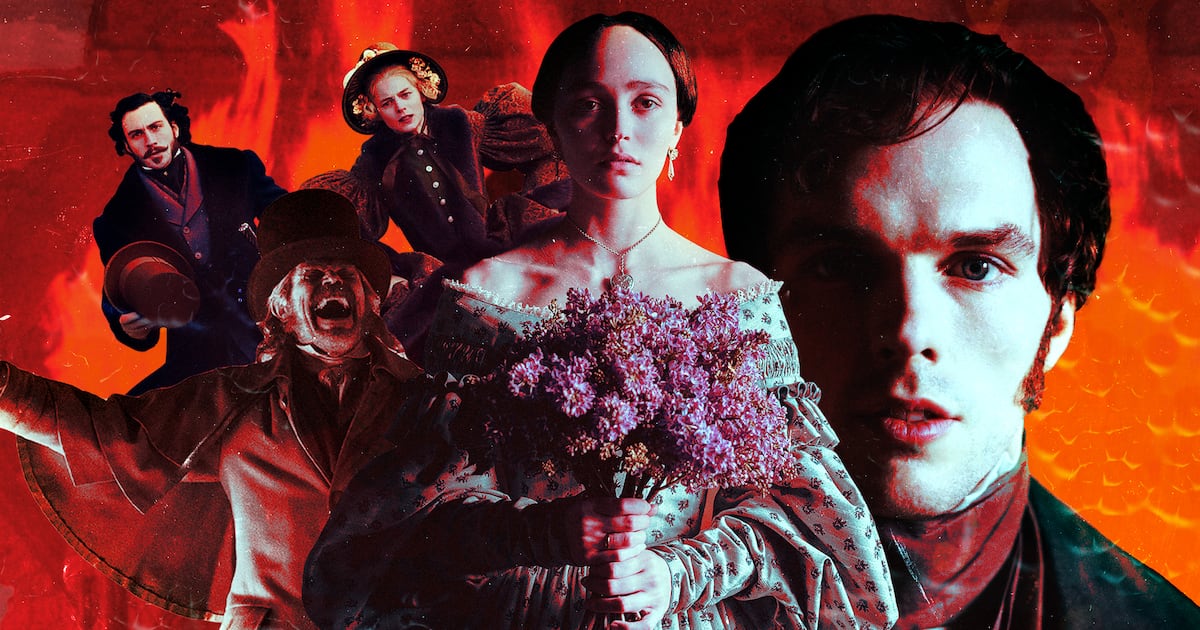
Nosferatu - Why Do Audiences Keep Coming Back for an Updated Classic?
It's the latest take on an old classic. Nosferatu took the Christmas box office by storm and might be the first time a vampire movie dominated the traditional holiday cinema season that's usually family friendly and purposely 'PG'. Even the critics agree that this new take on an old classic was worth the 'bite'. An adaptation of F.W. Murnau’s 1922 silent nightmare (which itself was based on Bram Stoker’s novel Dracula and remade once before, in 1979, by Werner Herzog), Nosferatu recounts the tale of a most devious Count: Orlok (Bill Skarsgård), who strives to reach Europe’s shores by purchasing an aged manor house by way of a deal solidified with real estate agent Thomas Hutter (Nicholas Hoult). Yet Orlok isn’t interested in seeing Germany’s tourist sights—his true goal is reuniting with Ellen Hutter (Lily-Rose Depp), Thomas’ bride, who called out to him as a girl and, in doing so, created a wicked bond that strengthens by the day. As imagined by Eggers and Skarsgård, the vampiric fiend is a towering figure of corruption and carnality who both resembles his predecessors and is a unique monster in his own right, and his reign of terror plays out via a series of lush, hypnotic set pieces that resound with unnerving malice and profane perversity. January - The Daily Beast Horror movies have always had a certain allure for audiences, but there a re a few questions to ask: What does this story have that makes it possible to be remade over and over and still stay entertaining? What is it about vampires in particular that are linked to romance? As well, why do we pay money to be scared and why is this genre so popular and lasting? If you're covering this particular film or movies in general - then let us help with your questions and stories. James Kendrick is a professor and undergraduate program director in the Department of Film & Digital Media at Baylor University, where he teaches about film theory/aesthetics, the history of motion pictures, media and society, the films of Steven Spielberg, violence in the media, and horror film. James Kendrick is available to speak with media. In fact, Nosferatu is James' favorite movie, so simply click on his icon now to arrange an interview time today.



The History and Significance of Taiwan
Taiwan’s history is a rich and complex tapestry of indigenous cultures, colonial influences, and evolving sovereignty, making it a critical subject for understanding regional and global geopolitics. From its indigenous roots to its modern status as a thriving democracy and global tech leader, Taiwan plays a pivotal role in shaping international conversations about identity, governance, and economic innovation. This topic matters to the public because of Taiwan's strategic importance in global trade, its cultural vibrancy, and its position in ongoing geopolitical tensions. Key story angles that may interest a broad audience include: The indigenous heritage of Taiwan: Exploring the rich traditions, languages, and contributions of Taiwan’s indigenous communities. Colonial and post-colonial history: Examining Taiwan’s transformation under Dutch, Spanish, Chinese, and Japanese rule and its modern implications. Taiwan’s role in global technology: Highlighting its leadership in semiconductor manufacturing and contributions to the global tech supply chain. Geopolitical significance: Analyzing Taiwan’s relationship with China, the United States, and the international community in the context of cross-strait relations. Taiwan as a democratic model in Asia: Discussing its political evolution, vibrant civil society, and significance in promoting human rights. Cultural preservation and innovation: Showcasing how Taiwan balances its traditional arts, cuisine, and festivals with contemporary innovation and creativity. Connect with an expert about Taiwan: To search our full list of experts visit www.expertfile.com


Saving the world, one yard at a time
University of Delaware professor Doug Tallamy has a simple mission: Encourage people to rid their property of invasive plants and replace them with native ones. One of the ways he's tackling it is through a concept called “Homegrown National Park,” a grassroots initiative he co-founded to offer a simple solution for the biodiversity crisis — the decline of a variety of animals, plants and numerous species. Tallamy, the TA Baker Professor of Agriculture and Natural Resources at the University of Delaware, is trying to encourage everyone to do their part to protect the planet. If invasive plants (which don’t belong in an area and can ultimately harm the ecosystem by taking away essential resources from other plants) grow out of control, then an area loses its biodiversity, the ability for multiple plant and animal species to function at once and create a rich ecosystem. Invasive species are prolific. For example, many invasive plants produce berries, which some birds eat. The birds then spread those seeds around. So, once invasive plants are in an area, they’re hard to get rid of. The idea is to replace them with native plants, which have historically belonged to a region and provide critical habitat for insects, birds and other creatures. It's an uphill climb, but Tallamy persists and is trying to save the world, one yard at a time. “Everybody has a responsibility of doing things that sustain their little piece of the earth, and there are a whole bunch of things one individual can do to help in that regard,” Tallamy said. What’s not so simple, however, is getting the Earth’s 8 billion people (or, at least, anyone with property) to do this. “We are trying to change the culture so that [replacing invasive plants with native ones] becomes the norm, not the exception,” Tallamy said. “We’re not getting rid of lawns. But we don’t need 44 million acres of them. There are now so many people on the planet that natural systems are not functioning the way they need to sustain us.” A snowball effect Much of our current plant culture revolves around colorful, aesthetically pleasing ornamental plants that don’t support the local food web. When they grow out of control, a local yard or larger region loses out on biodiversity. The natural world is all connected. For example, Tallamy said, if we lose pollinators like our native bees that transport pollen between plants, then we also lose most of our plants that produce flowers and fruits. It’s a snowball effect. “If that happens, the energy flow through our terrestrial ecosystems is almost totally disrupted, which means the food webs that support our vertebrate animals, our amphibians, our reptiles, our birds and our mammals would collapse and all those animals would disappear,” Tallamy said. “Without insect decomposers, the creatures that break down dead material, mostly plants, would rot and only bacteria and fungi would endure.” “Homegrown National Park” has generated a lot of buzz for Tallamy, who received recognition for it in October by the Massachusetts Horticultural Society. The MHS awarded Tallamy with its highest honor, the George Robert White Medal of Honor, for eminent service in the field of horticulture. Conservation in action Tallamy’s quest to “change the culture” on planting can be witnessed in the fall at UD. On a warm October afternoon, he and a group of students from the Introduction to Insect and Wildlife Field Studies (ENWC 165) course trudged out to UD Wetlands to curtail some pesky invasive plants native to Asia. Equipped with clippers, loppers and handsaws, they walked behind Worrilow Hall, part of the College of Agriculture and Natural Resources’ 350-acre campus, which includes the UD Wetlands, an area that was formerly a dairy cow pasture but transformed into wetlands in 2008 because pollution from the farm was reaching the local watershed. The wetlands were created because wetlands, by design, absorb nitrogen from runoff before it goes into waterways. They then release it as a gas into the atmosphere. But the UD Wetlands repeatedly deal with pesky invasive plants such as Porcelain-berry and Chinese elm. Over the years, UD students have stymied the species from overtaking the area. “See this? This is a good guy,” said Tallamy to the students as he held up a fallen branch. “You just want to get the Porcelain-berry off of it. They’ll grow back very well. But we want to nip [the Porcelain-berry] in the bud.” Taylor Kelly, a senior wildlife ecology and conservation major who took part in the invasive species removal, said Tallamy has helped her better understand the interconnectedness of various ecosystems. “Native plants provide so much value to our local pollinators, which add value to our local birds because they feed on pollinators, seeds, fruit and trees,” Kelly said. When native plants are in their natural environment, she added, it is a beautiful thing to see. Gardening with intention Tallamy, who began his teaching career at the University of Delaware in 1982, has published numerous research papers about entomology and written three books about native plants, insects and ecosystems, with a fourth book soon to come out. Lately, much of his career has revolved around public outreach. He often lectures across the country about native plants and their ecosystem value and is regularly quoted in outlets like The New York Times, The Washington Post and Natural History Magazine. “Dr. Tallamy is a rare scientist that is able to explain his work to everyone,” said Jake Bowman, UD professor of wildlife ecology and chair of the Department of Entomology and Wildlife Ecology. “His passion for the importance of native plants has driven a major shift in thinking.” Years ago, when Tallamy first set out to spread his messages about native plants, he anticipated a lot of pushback from horticulture enthusiasts who he thought might be resentful about being told how to choose their plants. Instead, Tallamy found that many actually embraced his ideas, including Delaware’s own Master Gardeners, a group of about 300 volunteer educators trained by UD Cooperative Extension. Among his supporters are Delaware Master Gardeners Karen Kollias, Brent Marsh and Judy Pfister, who each praised Tallamy for the impact he has had on how they garden. Kollias now “gardens with intention”— not for herself or her neighbors, but for the environment. “I was a gardener before,” she said. “Now I consider myself an ecological gardener.” After Marsh received a copy of Tallamy’s 2007 book, Bringing Nature Home, which talks about the link between native plants and native wildlife, Marsh became a Master Gardener and began planting native species in his Georgetown lawn. Today, native plants such as woodland sunflowers and oak trees adorn Marsh’s yard, and he is grateful for the value of native plants that he learned through Tallamy’s book. “Someday, maybe 20 years from now when I’m 100 years old, somebody's going to buy my house and they’re going to say, ‘Who planted all these oak trees?!’” Marsh chuckled. “Doug Tallamy changed my life.” As Tallamy has sought to simplify scientific knowledge with the general public, Pfister has utilized Tallamy’s approach to do the same. “He has a way of just making the whole thing a big circle, tying the need for a plant back to the need for a bird back to the need for a tree,” she said. Tallamy, who has been delighted by the fervor ignited by his native plants teachings, said the future of the Earth and its diverse ecosystems will in large part depend on how people treat their yards. “In the past, we asked our landscapes to do one thing, and that was, be pretty,” Tallamy said. “Now we have to ask them to do two things: be pretty and ecologically functional. That's the horticultural challenge of today.” But it’s one Tallamy believes can be achieved. Sometimes, he wishes he could speak to his 10-year-old self and tell the young boy to dig another pond for the toads to colonize. Restore. Conserve. Focus on keeping nature’s ecosystems intact, he would say. “We have to do both,” Tallamy said. “Yes, we have to conserve what’s out there, but we have to get in the mindset that we can really put a lot of it back.” Tallamy and Homegrown National Park co-founder Michelle Alfandari have created a database for people to type in their zip code and discover which native plants are best for their area.


#ExpertSpotlght: What are Most popular Christmas Traditions Around the World?
Christmas is celebrated in diverse and unique ways across the globe, reflecting cultural, historical, and spiritual influences that shape holiday traditions. From religious ceremonies to festive customs, this season highlights the shared human desire for connection, generosity, and joy. Understanding how different cultures celebrate Christmas provides a lens into global diversity and shared humanity. As the holiday season approaches, this topic invites journalists to explore traditions that captivate and inspire. Key story angles include: Regional Christmas Celebrations: Highlighting iconic traditions such as Germany’s Christmas markets, Mexico’s Las Posadas, or Japan’s Christmas Eve feasts of fried chicken. Religious and Spiritual Practices: Examining how Christian and non-Christian communities observe the holiday, including Midnight Mass, Epiphany celebrations, and adaptations in secular societies. The Evolution of Santa Claus: Tracing the history of Santa Claus from St. Nicholas to modern depictions, including variations like Ded Moroz in Russia or Sinterklaas in the Netherlands. Festive Foods and Feasts: Exploring traditional holiday dishes and drinks, such as panettone in Italy, pavlova in Australia, or tamales in Latin America. Sustainability and Modern Trends: Investigating how global movements toward eco-consciousness are reshaping Christmas traditions, from minimalist gift-giving to eco-friendly decorations. Music, Art, and Storytelling: Highlighting the role of Christmas carols, nativity plays, and folklore in preserving cultural heritage and fostering community spirit. Exploring Christmas traditions around the world offers a rich tapestry of stories that celebrate cultural diversity, historical roots, and the universal themes of love and generosity. Connect with an expert about Christmas Traditions: To search our full list of experts visit www.expertfile.com

Georgia Southern welcomes Georgia state leaders on Wexford Campus in Ireland
Georgia Southern University’s Wexford Campus in Ireland has been invigorating educational, civic, business and trade opportunities between Ireland’s southeast region and the state of Georgia since its establishment in 2022. The bicultural partnership has drawn the attention of state leaders in Georgia, prompting a recent visit to the international campus where Georgia Southern and its Irish partners welcomed the delegation. “We hosted legislators and leaders of industrial development and enterprise organizations,” said Howard Keeley, Ph.D., director of Georgia Southern’s Center for Irish Research and Teaching (CIRT). “These Georgia stakeholders believe that what Georgia Southern is doing in Ireland is important. One of the major concepts behind the Wexford Campus is that it’s a true campus, not just a study-abroad venue. So we’re pursuing several streams of activity. One is teaching and another is research. Another one is economic development, which includes internships and community engagement. We want to be in the community; therefore, to have leading constituents from a variety of industries in Georgia was very gratifying.” Among the attendees were U.S. Congressman Earl L. “Buddy” Carter; Georgia Department of Economic Development Commissioner Pat Wilson and five members of his senior staff, as well senior officials from electrical utilities, including Georgia Power; Trip Tollison, CEO of Savannah Economic Development Authority; Teresa MacCartney, chief operating officer for the University System of Georgia; and Georgia Rep. James Burchett (‘04), along with 10 additional members of the Georgia House of Representatives. “The main thing we wanted to do is show them what the student experience is like,” said Keeley. “We care about our students, and, using philanthropic funds, we’ve invested in a beautiful set of buildings, including one, built in 1886, that will house 50 students at a time. Each year, our goal is full capacity over six minimesters for a total of 300 Georgia Southern students. Historically a religious convent, that structure should open in spring 2026, after extensive remodeling. Many Georgia Southern students, including construction management and interior design majors, are gaining valuable professional skills by contributing to the endeavor.” The Wexford Campus already features the Learning Center, a historic administrative complex constructed in 1812 that has been transformed into a contemporary, high-tech educational space where students learn from local and international experts. They also present their research to peers and visiting Georgia Southern alumni while participating in high-impact experiential learning within the region. Visiting delegates were pleased to learn about the Honors College Global Scholars Program, which hosts 24 Honors College students who, taking an interdisciplinary approach, explore two themes for six weeks each spring in Ireland. This year, a prominent topic of study was sustainability in agriculture. One of Georgia Southern’s European research partners, South East Technological University Ireland, helped guide the students as they compared sustainability challenges along the coasts of Georgia and southeastern Ireland. The students drew on various research efforts, including important knowledge generated by Georgia Southern’s Institute for Water and Health. Similar integrated concepts also inform the summer and fall offerings. In 2024, they included two undergraduate global business courses, as well as the first Europe-based course from the MBA program at Georgia Southern’s Parker College of Business. One focus for the MBA students was Rosslare Europort, just south of Georgia Southern’s Wexford Campus, which has become Ireland’s fastest-growing port as multiple new direct routes to continental Europe have opened in response to Brexit. At a workshop facilitated by a top Rosslare Europort official, the MBA students explored international trade, logistics and supply chain management and the European regulatory environment. Spanning undergraduate, graduate and doctoral levels, the Wexford Campus has also provided courses in accounting, philosophy, sociology, geography, environmental biology, tourism and public health, among other disciplines. Shadowing Irish experts, population health science students from the Waters College of Health Professions focused on designing and delivering preventative-health programs, a critical matter in both Ireland and Georgia. “One of the metrics we use to measure success in Ireland is asking what makes it worthwhile for students to complete the course in Ireland as opposed to staying in the United States,” posed Keeley. “The bottom line is that we’re trying to provide a range of courses that look like Georgia Southern and that meet the degree needs, but also the employment needs in the state of Georgia. We’re always looking at how we can make our students more competitive, deepen their knowledge and give them as much hands-on experience as possible. This is really one of the things that we hope is a differentiator for us.” Notably, annual scholarships are available for the Honors College Global Scholars Program, Department of Political Science and International Studies students and Irish Studies students thanks to generous donations from alumni. In addition, philanthropic support has provided $1,000 to each participating student to offset the cost of transatlantic air travel. “The Wexford Campus’ directives exemplify Georgia Southern’s mission of providing holistic educational opportunities for our students to excel and grow,” said Annalee Ashley, Ed.D., Georgia Southern Vice President for External Affairs, Communications, and Strategic Initiatives, who participated in the trip. “Employers value global consciousness and intercultural skills when hiring, and our students who study abroad can enhance their skills, intellect and hireability in the marketplace. We are proud to serve Georgia and the entire southeastern region in this unique way, and to be supported by the state of Georgia as the University moves toward an R1 designation.” Beyond the campus, the group explored Johnstown Castle, an environmental and agricultural research center and heritage venue, as well as the Dunbrody Emigration Experience Center, whose newest permanent exhibition, Savannah Landing, is based on research by Georgia Southern students. The work highlights more than 170 years of historical ties that connect Savannah and Wexford, where hundreds boarded ships and crossed the Atlantic Ocean to arrive in Georgia’s coastal city in the mid-19th century. The centerpiece project, which was celebrated by the Irish prime minister at a ribbon-cutting in August, was made possible by $832,000 in research-grant funding, secured by the Dunbrody Center and Georgia Southern’s Center for Irish Research and Teaching. “Our guests got to experience history and understand the unique story that connects County Wexford to Savannah and, by extension, the state of Georgia,” noted Keeley. “Furthermore, they were able to see more than three-quarters of a million dollars of investment in Georgia Southern student work. That was super exciting.” The legislative group also met with Georgia Southern’s Irish partners, who shared what this relationship means to the people of Wexford and its hinterland, Southeast Ireland. “We invited all the players onto the field to strategically advance themes of education, economic development, and civic and cultural engagement,” said Keeley. “I believe they concluded that Ireland is a fit. It boasts a thriving economy that is modern, global and innovative. It’s the youngest economy in Europe in terms of workforce, and Ireland is one of the biggest investors in the U.S. economy.” Georgia Southern leadership and local Irish legislators, including four members of the Irish House of Representatives, Senator Malcolm Byrne and members of Wexford County Council, hosted Georgia’s VIPs with open arms. “They wanted to rally around us in the way that a family will rally around you,” said Keeley. “They couldn’t have done more. They totally rolled up their sleeves. It was a complete partnership hosting, and we were able to demonstrate that our network is so solid.” Wexford County Council leader Pip Breen shared opportunities for deeper connections with the Georgia delegation through the Irish nonprofit TradeBridge. Established in 2018, the entity facilitates trade and investment between the southeastern regions of Ireland and Georgia by developing new export markets and job creation opportunities. The trade corridor opens doors for southeastern Irish companies to establish a supportive base in southeastern Georgia, while also creating similar coordinates for companies based in southeastern Georgia to enter the European Union marketplace. Keeley, who was awarded the Presidential Distinguished Service Award for the Irish Abroad from the Government of Ireland in 2023, is a board member. “Georgia Southern’s footprint in southeastern Ireland is an important one for students and for the state of Georgia,” said Ga. Rep. Burchett. “The strides they are making not only allow students to participate in research in engineering, coastal sustainability, history and other important areas of study, but they also directly drive trade and investment opportunities between the southeastern regions of Georgia and Ireland. This was an amazing visit and we value our friendships within the Irish community.” Following the event, Burchett returned the hospitality with an invitation for Wexford County Council members to be recognized in person on the floor of the Georgia General Assembly in March 2025. “They very enthusiastically accepted the invitation,” Keeley shared. “I think when you’re involved in education, when you’re doing business and when you’re building out opportunities, the most important single thing is friendship and like-mindedness. You cannot achieve anything otherwise. There has to be this human-to-human connection. There has to be genuine mutual respect and mutual affection, and that was just in spades.” Georgia Southern’s Wexford Campus was featured on the national Irish TV program, “Nationwide.” You can see it here: Looking to know more, then let us help. Howard Keeley, director of Georgia Southern’s Center for Irish Research and Teaching, is available to speak with media. Simply click on his icon now to arrange an interview today.


Notre Dame Cathedral, an iconic symbol of Paris and a masterpiece of Gothic architecture, has stood for centuries as a testament to human creativity, spirituality, and resilience. This historic landmark continues to captivate global attention not only for its artistic and religious significance but also for its ability to endure and inspire amidst challenges like the devastating 2019 fire. Notre Dame matters to the public because it embodies cultural heritage, historical memory, and the ongoing effort to preserve monuments of global importance. Key story angles that may interest a broad audience include: The architectural and artistic marvels of Notre Dame: Exploring its iconic design, stained glass windows, and cultural influence on art and literature. The 2019 fire and restoration efforts: Highlighting the international response, the challenges of restoring historical structures, and the role of modern technology in reconstruction. Notre Dame's role in French and global history: Examining its significance during key historical events, including coronations, revolutions, and wartime preservation. Religious and spiritual importance: Understanding the cathedral’s role as a center for Catholic worship and its influence on interfaith dialogue. The impact of Notre Dame on tourism and local culture: Analyzing how the cathedral shapes Parisian identity and attracts millions of visitors annually. The future of Notre Dame: Discussing sustainability in historical preservation and how the restoration aligns with broader cultural and environmental goals. Connect with an expert about Notre Dame: To search our full list of experts visit www.expertfile.com

ExpertSpotlight: Origins and History of Santa Claus
Santa Claus, the beloved figure at the heart of modern Christmas celebrations, has a rich history rooted in centuries of global tradition and folklore. His story originates from Saint Nicholas, a 4th-century bishop known for his generosity, and has evolved over time through cultural influences from Europe to North America. Santa's transformation into the jolly, red-suited icon we recognize today reflects not only the blending of mythologies but also the commercialization and globalization of Christmas. Understanding Santa’s origins offers valuable insights into cultural exchange, religious traditions, and societal values. Key story angles of interest include: The historical figure of Saint Nicholas and his influence on Santa Claus How Scandinavian folklore shaped Santa's association with winter and gifts The commercialization of Santa Claus in 19th and 20th-century America Depictions of Santa across cultures, from Europe’s Sinterklaas to Russia’s Ded Moroz The role of advertising, particularly Coca-Cola, in shaping Santa’s modern image Santa Claus as a symbol of generosity and its implications for holiday consumerism Connect with an expert about the Origins and History of Santa Claus: To search our full list of experts visit www.expertfile.com

Covering the new Trump Administration - We can Help
With each day seems to come an new appointee to cabinet or significant role, a new policy twist and even the occasional walk back or withdrawal. The steps leading up to January 20, 2025 when Donald Trump resumes office as President of the United States will be getting a lot of coverage - and UC Irvine has it's own team of experts ready to lend their experience, perspective and expert opinion on what is happening. Louis DeSipio examines how democratic nations incorporate new members, including policymaking in the areas of immigration. Topics of Expertise: Foreign Affairs / NATO Immigration and Deportation Department of Education, EPA, Homeland Security, Department of Interior, NOAA, HHS and FDA Jeffrey Wasserstrom specializes in modern Chinese cultural history & world history, who has written on many contemporary as well as historical issues. Topics of Expertise: Foreign Affairs / NATO Free Speech Department of Education, EPA, Homeland Security, Department of Interior, NOAA, HHS and FDA Eric Swanson is an expert on inflation, recessions and what changes in interest rates mean for the economy. Topics of Expertise: Foreign Affairs / NATO Tariffs Impact of Downsized Government Senior's Health and Social Security Heidi Hardt is an expert on NATO, defense, security, foreign policy, organizations, the EU, UN, operations, gender, climate and change. Topics of Expertise: Foreign Affairs / NATO Climate Change Gender and LGBTQ+ Rights Tony Smith’s knowledge of politics includes Constitutional Law, the U.S. Supreme Court and election law. Topics of Expertise: Free Speech Department of Education, EPA, Homeland Security, Department of Interior, NOAA, HHS and FDA Jon Gould is a distinguished scholar in justice policy, social change and government reform. Topics of Expertise: Deregulation Gender and LGBTQ+ Rights All of these experts are available to speak with media - simply click on a profile now to arrange an interview time today.


ExpertSpotlight: The History of Presidential Pardons in America
Presidential pardons have long been a cornerstone of executive power in the United States, granting the president the ability to forgive federal offenses. Rooted in the Constitution and modeled after the British royal prerogative, this authority has sparked significant legal and ethical debates since the nation’s founding. Understanding the history and implications of presidential pardons provides insights into American governance, justice, and the balance of power. This topic presents compelling opportunities for journalists to delve into its historical and contemporary significance. Key story angles include: Origins of the Presidential Pardon: Exploring how and why the pardon power was enshrined in the Constitution, including influences from English law and debates among the Founding Fathers. The First Presidential Pardon: Detailing the story of George Washington’s 1795 pardon of participants in the Whiskey Rebellion and its impact on shaping the use of executive clemency. Controversial Pardons in History: Investigating high-profile pardons, such as those granted by Presidents Andrew Johnson, Gerald Ford, and Donald Trump, and their political and social ramifications. Legal and Ethical Perspectives: Examining what legal scholars and historians say about the scope of pardon power, including debates over its limits and potential for misuse. Pardons and Social Justice: Highlighting cases where pardons were used to address systemic injustices, such as civil rights-era convictions or drug-related offenses. Comparing Global Practices: Analyzing how the U.S. approach to executive clemency compares to pardon systems in other democracies and the broader implications for justice. The history and evolution of presidential pardons open the door to meaningful discussions about justice, accountability, and the executive branch’s influence, offering journalists a wealth of perspectives to explore. Connect with an expert about the History of Presidential Pardons in America: To search our full list of experts visit www.expertfile.com