
Experts Matter. Find Yours.
Connect for media, speaking, professional opportunities & more.

Aston University scientist to help make crop monitoring easier and cheaper
Photonics expert Dr Sergey Sergeyev to help make crop monitoring easier and cheaper with remote sensing The technology can be placed on drones and flown over crop fields to provide real-time information about crop health Remote sensing is an essential tool to provide real-time information about crops to estimate yields. An Aston University photonics expert has received a Royal Society Industry Fellowship grant to help make crop monitoring easier and cheaper with remote sensing technology. Dr Sergey Sergeyev of Aston Institute of Photonic Technologies (AIPT) has received £174,000 to improve polarimetric LIDAR, a technology that uses light to remotely observe plants. LiDAR, an acronym for Light Detection and Ranging, involves light sent from a transmitter which is reflected from objects. Devices with this technology can be placed on drones and flown over crop fields to provide real-time information about crop health to help farmers forecast the success of their crops. Polarimetric synthetic-aperture radars (SARs) and polarimetric LiDARs are the most advanced, cost-effective sensors for crop monitoring. They are often used onboard aircraft and satellites and have been in use for three decades. However, current polarimetric LIDAR systems have low spatial resolution, a slow measurement speed and use expensive components that limit their cost effectiveness. Dr Sergeyev will be working in collaboration with Salford-based digital and AI farming company Fotenix to meet farmers' need for a cost-effective solution to check if their plants are adequately watered and disease-free. The team will aim to advance recently patented AIPT technology of the polarimetric LIDAR, making it affordable for farmers in the UK and worldwide. The project, called POLIDAR, will run from 2024 to 2025. Dr Sergeyev said: “Aston University’s patented technique will be modified by using a laser emitting four time-delayed pulse trains with different states of polarisation. By comparing the input states of polarisation and states of polarisation of light reflected from plants, it will reveal information about the distance to plants and plants' leaf texture, such as water stress and pathogen infection. Unlike state-of-the-art solutions we suggest an all-fibre design with a minimum number of bulk components that reduces the footprint, cost and weight. Dr Sergeyev added: “My project's motivation is driven by the global and UK agenda on increased food production, requiring novel remote sensing approaches towards ICT farming. “As declared at the World Summit on Food Security in 2017, the growth in the world's population requires increased and more efficient agricultural production. “Remote sensing is an essential tool to systematically address the challenging task of enhanced agricultural efficiency by providing real-time information about crop traits for yield estimation.” The announcement coincides with UNESCO Day of Light which marks the role light plays in science, culture and art, education and sustainable development. It is held on 16 May every year, the anniversary of the first successful operation of a laser. ENDS World Summit on Food Security in 2017 The future of food and agriculture: Trends and challenges (fao.org) https://www.fao.org/3/i6583e/i6583e.pdf UNESCO Day of Light The International Day of Light is a global initiative that provides an annual focal point for the continued appreciation of light and the role it plays in science, culture and art, education, and sustainable development, and in fields as diverse as medicine, communications, and energy. The broad theme of light will allow many different sectors of society worldwide to participate in activities that demonstrates how science, technology, art and culture can help achieve the goals of UNESCO – education, equality, and peace. The International Day of Light is held on May 16th every year, the anniversary of the first successful operation of the laser in 1960 by physicist and engineer, Theodore Maiman. The laser is a perfect example of how a scientific discovery can yield revolutionary benefits to society in communications, healthcare and many other fields. About Aston University For over a century, Aston University’s enduring purpose has been to make our world a better place through education, research and innovation, by enabling our students to succeed in work and life, and by supporting our communities to thrive economically, socially and culturally. Aston University’s history has been intertwined with the history of Birmingham, a remarkable city that once was the heartland of the Industrial Revolution and the manufacturing powerhouse of the world. Born out of the First Industrial Revolution, Aston University has a proud and distinct heritage dating back to our formation as the School of Metallurgy in 1875, the first UK College of Technology in 1951, gaining university status by Royal Charter in 1966, and becoming The Guardian University of the Year in 2020. Building on our outstanding past, we are now defining our place and role in the Fourth Industrial Revolution (and beyond) within a rapidly changing world. For media inquiries in relation to this release, contact Nicola Jones, Press and Communications Manager, on (+44) 7825 342091 or email: n.jones6@aston.ac.uk


The Golden Spike and railroad history are not merely relics of the past; they represent pivotal moments in human innovation and connectivity that continue to shape our present and future. This event matters to the public because it commemorates the completion of the first transcontinental railroad in the United States, symbolizing unity, progress, and the spirit of exploration. Delving into this historical milestone offers numerous story angles that captivate a broad audience: The impact of railroads on westward expansion and economic growth Stories of perseverance and labor in building the transcontinental railroad Technological advancements in railway engineering and construction Cultural and social transformations brought about by the railroad Environmental implications of railroad expansion and modern-day sustainability efforts Tourism and heritage preservation initiatives centered around railroad history As we celebrate the Golden Spike and reflect on railroad history, it's an opportune time for journalists to explore these multifaceted narratives that resonate with audiences worldwide. Connect with an Expert about transportation and railroad history: Allan Zarembski Professor of Practice Civil and Environmental Engineering; Director, Railway Engineering and Safety Program · University of Delaware James Kieselburg Director · Milwaukee School of Engineering James McCommons Associate Professor · Movable Type Management Danaya Wright Professor/Director · University of Florida To search our full list of experts visit www.expertfile.com Photo Credit: Tom Barrett


300 million tonnes of rice straw are burned after harvest in Asia every year Aston University will be contributing to new international project to unlock renewable energy potential Its researchers will lead on calculating the greenhouse gas emissions savings of new systems. Aston University researchers are helping to make rice straw processing in India and the Philippines less environmentally damaging. The University will be contributing to a new international collaboration, the Renewable, Inclusive Carbon-negative Energy (RICE) project, funded by Innovate UK Energy Catalyst programme to unlock renewable energy for rice farmers. Already the University has worked with UK company Straw Innovations in the Philippines and now the two are expanding their collaboration to benefit more of the continent. Aston University working with UK company Straw Innovations and Indian enterprise, Takachar Rice straw is a crop waste byproduct and each year across Asia 300 million tonnes of it go up in smoke when burnt after harvest. This releases emissions and air pollutants that triple risks of increased respiratory diseases and accelerate climate change. India and the Philippines are the world’s second and eighth largest rice producers respectively and together they produce 130 million tonnes of both rice and straw per year. Aston University and Straw Innovations and will be collaborating with an Indian award winning small and medium sized enterprise, Takachar. The firm has developed small scale, low-cost, portable equipment which can convert agricultural waste on-site into higher value bioproducts such as fertilizer blends, chemicals and biofuels. "The company will develop a super-sized version which is 10 times bigger than their current device, make it adaptable to rice mills, and will send it to Straw Innovations, so the two firms can test out different business models for farmer adoption/benefit. Straw Innovations will also send their machines from the Philippines to India mid-project and the two countries will test out different business models for farmer adoption/benefit. And for the first time they will tap into the heat produced in the waste process to dry rice, instead of using diesel or kerosene. University researchers will lead on assessing the sustainability of the project, calculating the greenhouse gas emissions savings of the new systems introduced by Straw Innovations and Takachar. Sustainability expert Dr Mirjam Röder will also engage with the farming community and rural stakeholders to quantify how the systems can increase farmer incomes, equality of opportunity, food security and decarbonisation benefits, whilst highlighting any trade-offs. Dr Röder who is based at Aston University’s Energy & Bioproducts Research Institute (EBRI) said: “Environmentally, rice produces 48% of all global crop emissions, due to methane from flooded fields. This is halved when the straw is removed and reduced further when its carbon is stored in biochar. We are aiming for carbon negative which means removing carbon dioxide (CO₂) from the atmosphere or sequestering more CO₂ than is emitted. “Our new research leads on from our rice straw bio gas hub project with Straw Innovations, SEARCA and Koolmill and we’re pleased to be building further relationships with new partners in India. In January Biomass and Bioenergy published a paper about the topic written by Dr Röder, the director of EBRI Professor Patricia Thornley and Craig Jamieson of Straw Innovations called The greenhouse gas performance and climate change mitigation potential from rice straw biogas as a pathway to the UN sustainable development goals. Craig Jamieson from Straw Innovations said "We’ve been pioneering rice straw work with the team at Aston University for the past seven years. We're delighted to continue that strong partnership and widen it to include Takachar in this new project. “Takachar is a leader in making biochar from crop residues and our partnership with them is very strategic. We look forward to combining our new improved straw harvesting technology with their scaled-up biochar production. It will be a step change, creating a new, more efficient system for carbon negative energy and soil improvement for rural communities across Asia." Vidyut Mohan who founded Takachar said: “We are excited to partner with Aston University and Straw Innovations. “Our combined solutions can significantly move the needle in reducing crop residue collection costs and biochar production costs for carbon removal." Notes to Editors Rice straw is a crop waste byproduct and each year across Asia 300 million tonnes of it go up in smoke when burnt after harvest https://tinyurl.com/2afjhhsj To read The greenhouse gas performance and climate change mitigation potential from rice straw biogas as a pathway to the UN sustainable development goals visit https://www.sciencedirect.com/science/article/pii/S0961953424000254, Biomass and Bioenergy Volume 182, March 2024, 107072 Mirjam Röder and Patricia Thornley Energy & Bioproducts Research Institute (EBRI), College of Engineering and Physical Sciences, Aston University, Aston Triangle, Birmingham, B4 7ET, United Kingdom Craig Jamieson Straw Innovations Ltd., Lawes Open Innovation Hub, Rothamsted Research, West Common, Harpenden, HERTS, AL5 2JQ, United Kingdom https://doi.org/10.1016/j.biombioe.2024.107072 About Aston University For over a century, Aston University’s enduring purpose has been to make our world a better place through education, research and innovation, by enabling our students to succeed in work and life, and by supporting our communities to thrive economically, socially and culturally. Aston University’s history has been intertwined with the history of Birmingham, a remarkable city that once was the heartland of the Industrial Revolution and the manufacturing powerhouse of the world. Born out of the First Industrial Revolution, Aston University has a proud and distinct heritage dating back to our formation as the School of Metallurgy in 1875, the first UK College of Technology in 1951, gaining university status by Royal Charter in 1966, and becoming The Guardian University of the Year in 2020. Building on our outstanding past, we are now defining our place and role in the Fourth Industrial Revolution (and beyond) within a rapidly changing world. For media inquiries in relation to this release, contact Nicola Jones, Press and Communications Manager, on (+44) 7825 342091 or email: n.jones6@aston.ac.uk



Homes heated by human sewage could be a reality thanks to Aston University
Project to transform sewage sludge into clean water and energy awarded a share of £4.5 million by Ofwat Involves extracting energy from the waste produced during sewage and water treatment Gases obtained can be used to power engines or heat people’s homes. An Aston University project that could transform sewage sludge into clean water and energy has been awarded a share of £4.5 million by Ofwat. The University project with engineering consultancy ICMEA-UK involves extracting energy from the waste produced during sewage and water treatment and transforming it into hydrogen and/or methane. The gases can then be used to power engines or heat people’s homes. The aim is to create a sustainable and cost-efficiently run wastewater processes, plus extra energy. The initiative was one of ten winners of Ofwat’s Water Discovery Challenge, of which the Aston University scientists and two industrial partners have been awarded £427,000. Dr Jude Onwudili based at Aston University’s Energy and Bioproducts Research Institute (EBRI) is leading the team of scientists who will work with the partners to develop a trial rig to transform solid residues from wastewater treatment plants to hydrogen and/or methane. The two-stage process will involve the initial transformation of organic components in the sludge into liquid intermediates, which will then be converted to the fuel gases in a second stage. The project is called REvAR (Renewable Energy via Aqueous-phase Reforming), and Dr Onwudili will be working with lead partner and engineering consultancy company ICMEA-UK Limited and sustainable infrastructure company Costain. REVAR combines the use of hot-pressurised water or hydrothermal conditions with catalysts to achieve high conversion efficiency. The technique can treat sewage sludge in just minutes, and it is hoped that it will replace existing processes. In 2013, a Chartered Institution of Water and Environmental Management report stated that the sector is the fourth most energy intensive industry in the UK. Dr Onwudili said: “This project is important because millions of tonnes of sewage sludge are generated in the UK each year and the water industry is struggling with how to effectively manage them as waste. “Instead, they can be converted into valuable feedstocks which are used for producing renewable fuel gases, thereby increasing the availability of feedstocks to meet UK decarbonisation targets through bioenergy. “We will be taking a waste product and recovering two important products from it: clean water and renewable energy. Overall, the novel technology will contribute towards meeting UK Net Zero obligations by 2050 and ties in with the University’s purpose to make our world a better place through education, research and innovation.” The Water Discovery Challenge aims to accelerate the development and adoption of promising new innovations for the water sector. Over the next six months, winners will also receive non-financial support and will be able to pitch their projects to potential water company partners and/or investors. The 10 winning teams are from outside the water industry and were chosen because of their projects’ potential to help solve the biggest challenges facing the sector. The competition is part of the Ofwat Innovation Fund, run by the water regulator Ofwat, with Challenge Works, Arup and Isle Utilities and is the first in the water sector to invite ideas from innovators across industries. Helen Campbell, senior director for sector performance at Ofwat, said: “This competition was about reaching new innovators from outside the sector with different approaches and new ideas, and that’s exactly what the winners are doing. “The products and ideas recognised in this cross-sector challenge will equip water companies to better face challenges of the future – including achieving sustainability goals and meeting net zero targets – all while providing the highest-quality product for consumers.” ENDS A Blueprint For Carbon Emissions Reduction in the UK Water Industry The Chartered Institution of Water and Environmental Management https://www.ciwem.org/assets/pdf/Policy/Reports/A-Blueprint-for-carbon-emissions-reductions-in-the-water-industry.pdf Ofwat Innovation Fund Ofwat, the Water Services Regulation Authority for England and Wales, has established a £200 million Innovation Fund to grow the water sector’s capacity to innovate, enabling it to better meet the evolving needs of customers, society and the environment. The Innovation Fund, delivered in partnership with Challenge Works (formerly known as Nesta Challenges) and supported by Arup and Isle Utilities, is designed to complement Ofwat’s existing approach to innovation and to help deliver against Ofwat’s strategy which highlights the role of innovation in meeting many of the challenges the sector faces. About ICMEA-UK Based in Sheffield, in the North of England, ICMEA-UK is the UK arm of an established Italian innovative engineering company - ICMEA SRL. They are an innovative Engineering consultancy company, and work in partnership with a range of other organisations to provide innovative, bespoke solutions to problems where an Engineering solution is required. About Costain Costain helps to improve people’s lives by creating connected, sustainable infrastructure that enables people and the planet thrive. They shape, create, and deliver pioneering solutions that transform the performance of the infrastructure ecosystem across the UK’s energy, water, transportation, and defence markets. They are organised around their customers anticipating and solving challenges and helping to improve performance. By bringing together their unique mix of construction, consulting, and digital experts they engineer and deliver sustainable, efficient, and practical solutions. About Aston University For over a century, Aston University’s enduring purpose has been to make our world a better place through education, research and innovation, by enabling our students to succeed in work and life, and by supporting our communities to thrive economically, socially and culturally. Aston University’s history has been intertwined with the history of Birmingham, a remarkable city that once was the heartland of the Industrial Revolution and the manufacturing powerhouse of the world. Born out of the First Industrial Revolution, Aston University has a proud and distinct heritage dating back to our formation as the School of Metallurgy in 1875, the first UK College of Technology in 1951, gaining university status by Royal Charter in 1966, and becoming The Guardian University of the Year in 2020. Building on our outstanding past, we are now defining our place and role in the Fourth Industrial Revolution (and beyond) within a rapidly changing world. For media inquiries in relation to this release, contact Nicola Jones, Press and Communications Manager, on (+44) 7825 342091 or email: n.jones6@aston.ac.uk


Today is Victory in Europe Day (VE Day) - Our history #experts are here to help with your stories
Victory in Europe Day marks a monumental moment in human history, signifying the end of World War II in Europe and the dawn of a new era of peace and reconstruction. This event matters to the public as it commemorates the sacrifices made by millions and celebrates the triumph of freedom over tyranny. VE Day offers a plethora of compelling story angles that resonate with a broad audience: The human stories behind the victory: tales of courage, resilience, and sacrifice The significance of VE Day in shaping post-war geopolitics and international relations Commemorative events and ceremonies honoring veterans and their legacies Reflections on the lessons learned from World War II and their relevance today The cultural impact of VE Day on art, literature, and popular culture Continuing efforts for reconciliation and remembrance across generations As we mark Victory in Europe Day, journalists have an opportunity to delve into these rich narratives, shedding light on the enduring legacy of the Greatest Generation and the ongoing quest for peace and freedom worldwide. Connect with an Expert about WWII and Victory in Europe Day (VE Day): Colin Rafferty Associate Professor · University of Mary Washington Patrick Jung, Ph.D. Professor · Milwaukee School of Engineering Marc Gallicchio, PhD Professor and Mary M. Birle Chair in History | College of Liberal Arts and Sciences · Villanova University Kara Dixon Vuic LCpl. Benjamin W. Schmidt Professor of War, Conflict, and Society in 20th-Century America · Texas Christian University Stephen Sloan, B.B.A., M.A., PhD. Director of Institute for Oral History, Associate Professor of History · Baylor University To search our full list of experts visit www.expertfile.com Photo Credit: Galt Museum & Archives

Covering the Anniversary of the Coronation of King Charles today? Our experts can help
As we mark the anniversary of the coronation of King Charles, we delve into a pivotal moment in history that shaped the trajectory of a nation and its monarchy. This event not only carries historical significance but also holds relevance in contemporary discourse, shedding light on themes of continuity, tradition, and the evolving role of monarchy in modern society. Key story angles that may pique public interest include: Historical Reflections: Exploring the coronation ceremony's historical context, significance, and its enduring impact on the British monarchy. Monarchy in the Modern Age: Analyzing the role and relevance of monarchy in contemporary Britain amidst calls for reform and debates surrounding constitutional monarchy. Cultural Heritage and Identity: Examining how the coronation anniversary fosters a sense of national identity and pride, celebrating traditions and customs that define British heritage. Royal Legacy and Public Perception: Investigating public sentiment towards King Charles's reign, his accomplishments, challenges, and the monarchy's portrayal in the media. Societal Implications: Discussing the monarchy's influence on governance, diplomacy, and national unity, and its role in shaping perceptions of leadership and authority. Global Perspectives: Considering international reactions to the coronation anniversary, its resonance beyond British shores, and its implications for global monarchies and ceremonial traditions. Connect with an Expert about King Charles: Carolyn Harris Historian, Author, Royal Commentator, Instructor, University of Toronto School of Continuing Studies · Helen Wood Professor in Media and Cultural Studies · Aston University Rachel C. Boyle Dean of School · Leeds Beckett University Ruth McClelland-Nugent, PhD Chair History, Anthropology & Philosophy · Augusta University To search our full list of experts visit www.expertfile.com Photo Credit: Samuel Regan-Asante

Sunday is Cinco de Mayo. Do you know the history behind the day?
Celebrated annually on May 5th, Cinco de Mayo commemorates the Mexican army's victory over French forces at the Battle of Puebla in 1862. While often associated with festive gatherings and cultural celebrations, Cinco de Mayo also holds significant relevance beyond its historical origins, offering various story angles that appeal to a broad audience. Cultural significance and heritage preservation: Explore the historical context of Cinco de Mayo and its importance in Mexican culture, highlighting the traditions, food, music, and art associated with the holiday. Immigration and identity: Examine how Cinco de Mayo is celebrated in different parts of the world, particularly in the United States, and its role in shaping the Mexican-American identity and fostering cross-cultural understanding. Political implications and national pride: Investigate the political undertones of Cinco de Mayo, considering its significance in Mexican nationalism and its portrayal in international relations. Economic impact and tourism: Analyze the economic implications of Cinco de Mayo festivities, including the boost in tourism, sales of Mexican-themed products, and the commercialization of cultural heritage. Education and historical awareness: Discuss the educational value of Cinco de Mayo in schools and communities, examining how it promotes historical awareness, tolerance, and multiculturalism. Social justice and activism: Explore how Cinco de Mayo intersects with social justice movements, addressing issues such as immigration reform, cultural appropriation, and representation in media and politics. By covering these angles, journalists can provide their audiences with a deeper understanding of Cinco de Mayo beyond its surface-level festivities, fostering meaningful dialogue and engagement with the holiday's historical, cultural, and societal significance. Connect with an Expert about Cinco de Mayo: Margarita R. Ochoa Associate Professor and Associate Chair of History · Loyola Marymount University Timothy Matovina Chair, Department of Theology · University of Notre Dame Rodrigo Vargas Professor, Ecosystem Ecology and Environmental Change · University of Delaware Heather Chiero, PhD Associate Professor of History, Anthropology and Philosophy · Augusta University To search our full list of experts visit www.expertfile.com Photo Credit: Daniel Lloyd Blunk-Fernández

A monumental anniversary approaches as we commemorate the 1931 opening of the Empire State Building, an architectural marvel that has stood as an emblem of innovation and human achievement for nearly a century. Beyond its towering presence on the New York City skyline, this anniversary is a poignant moment to reflect on the enduring legacy of this iconic structure and its resonance with the public, encapsulating themes of perseverance, ingenuity, and urban development. Here are several compelling story angles that journalists may find ripe for exploration: Historical significance and architectural marvel: Delve into the fascinating backstory of the Empire State Building, exploring the engineering feats and human endeavor that brought this skyscraper to life. Evolving skyline and urban identity: Examine how the Empire State Building has shaped the cultural and visual landscape of New York City, and its enduring significance in an ever-changing metropolis. Sustainable initiatives and environmental impact: Explore the building's initiatives toward sustainability and energy efficiency, offering insights into its role as a model for sustainable urban development. Economic impact and tourism: Investigate the economic impact of the Empire State Building on local communities, tourism, and its enduring appeal as a global tourist destination. Cultural resonance and popular culture: Uncover the building's rich cultural legacy, from its appearances in film, literature, and art, to its symbolic significance in popular imagination. Preservation efforts and historical conservation: Shed light on ongoing efforts to preserve and maintain the architectural integrity and historical significance of this iconic landmark for future generations. Connect with an Expert about Architecture and the Empire State Building: Dana Cupkova Associate Professor · Carnegie Mellon University Richard Campanella Associate Dean for Research, Senior Professor of Practice - Architecture and Geography · Tulane University Eric Corey Freed Founding Principal · OrganicARCHITECT Peter Christensen Arthur Satz Professor of the Humanities and Professor of Art History · University of Rochester Dennis Shelden Director, Center for Architecture Science and Ecology (CASE) · Rensselaer Polytechnic Institute To search our full list of experts visit www.expertfile.com Photo Credit: Ben Dumond
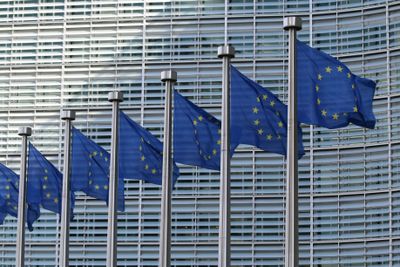
Two decades ago, the European Union welcomed ten new member states, including Cyprus, Czech Republic, Estonia, Hungary, Latvia, Lithuania, Malta, Poland, Slovakia, and Slovenia. This historic expansion not only reshaped the geopolitical landscape of Europe but also holds significance for global politics, economics, and cultural integration. Understanding this event's importance requires recognizing its impact on various fronts, from fostering regional stability to influencing trade dynamics and promoting cross-cultural exchange. Key sub-topics that may interest journalists and the public include: European Integration and Unity: Exploring how the expansion has contributed to the European Union's efforts towards unity, cooperation, and peace among member states. Economic Implications: Analyzing the economic effects of the expansion on both existing and new member states, including trade patterns, investment flows, and disparities in development. Political Dynamics: Investigating the political changes within the European Union, such as shifts in power dynamics, decision-making processes, and the challenges of governance in a larger union. Cultural Exchange and Identity: Examining the cultural exchange and diversity resulting from the inclusion of new member states, and how it has enriched the European cultural tapestry. Challenges and Achievements: Assessing the successes and ongoing challenges faced by the European Union post-expansion, including issues related to migration, integration, and institutional reforms. Future Prospects: Speculating on the future of the European Union, considering factors like potential further expansions, the rise of Euroscepticism, and the Union's role in global affairs. The 20th Anniversary of the Expansion of the European Union marks a significant milestone in the continent's history, offering journalists and the public alike a chance to reflect on the achievements, challenges, and the future trajectory of European integration. Connect with an Expert about the EU: Carolyn Dudek Professor of Political Science · Hofstra University Dr Martin Brenncke Lecturer in Law · Aston University David R. Dorondo Professor · Western Carolina University To search our full list of experts visit www.expertfile.com Photo Credit: Guillaume Périgois

Success Is Sweet: Ferrero's Crown Jewel, Nutella, Turns 60
Six decades ago, on April 20, 1964, the first jar of Nutella left Gruppo Ferrero's factory in the Italian town of Alba. In its gooey wake, the chocolate-hazelnut treat would spread across continental Europe, and then the world, like a healthy schmear on toast. Today, Nutella is the crown jewel of Ferrero's confectionary empire, propping up a business that generates roughly 17 billion euros in revenue each year. Annually, a whopping 365,000-plus tons of the stuff are sold across 160 countries, and nearly one quarter of all hazelnuts harvested are devoted to its production. Luca Cottini, PhD, is an associate professor of Italian in Villanova University's College of Liberal Arts and Sciences and an expert on modern Italian culture, history and society. He also is the author of a book on Michele Ferrero, the mastermind behind Nutella and its meteoric rise: Il fabbricante di cioccolato. To mark the iconic Italian brand's 60th anniversary, Dr. Cottini shared some thoughts on its Willy Wonka-like creator, early (accidental) origins and recipe for international success. Here's a taste: Q: According to Business Insider, a jar of Nutella is sold every 2.5 seconds—just about the time it takes to finish this sentence. How did we get so "nuts" for Nutella, anyway? Dr. Cottini: Well, much of the success of Nutella relates to its novelty, to the idea of spreadable chocolate. At one point, to think that spreading chocolate would be popular was as crazy as to predict that spreadable coffee would be a hit. The idea developed because, in the mid-to-late 1940s, Michele Ferrero's father Pietro was to combine the scarcity of cocoa in his area with hazelnuts, which was the ingredient most available in Alba. It seemed like condemnation that they should have only hazelnuts. Well, he combined them with cocoa to produce this mix—it's called "gianduja" in Italian—and he sold it. But when the Ferreros sold it in southern Italy, they had a problem: The chocolate was melting with the summer heat; and a lot of the workers in Naples, to not waste it, started to spread it on slices of bread. And it's interesting. The Ferreros have a completely non-moralistic approach to failure. You sell chocolate; it melts. This is somewhat embarrassing. But their approach was instead to see this situation as the beginning of a new idea, of a new concept. Q: Is Nutella's story unique in this respect? DC: Several Italian innovators have similar stories to the Ferreros', especially during the 1930s. [Salvatore] Ferragamo, for instance, developed the wedge shoe because there was a shortage of steel, with an embargo imposed on Italy. So, he used Sardinian cork as a replacement, and that generated the wedge shoe. [Guccio] Gucci, during a leather shortage, started using hemp and decorating the hemp with a double "G," and that became the trademark of the company. [Alfonso] Bialetti, who produced the modern coffeepot, used the only metal that was allowed during Fascism, which was aluminum, since the Partito Nazionale Fascista would not import iron or prime metals. But Bialetti took this poor, hybrid ore and made it something that could become valuable. And so, he invented the moka coffeepot in 1933, which is one of the symbols of Italian design. That’s one of the keys of the Italian model of entrepreneurship: producing objects that are not just trendy for one season, but eventually become evergreen or classic. Q: What inspired the name "Nutella?" DC: It was the product of 18 years of research. For all intents and purposes, "Nutella" first came out in 1946. It was called "SuperCrema" and, before that, "Cremalba." But in 1962, there was a law in Italy that prevented companies in the food industry from using prefixes like "super" or "extra." So, that led Ferrero—by then, under the leadership of Michele Ferrero—to figure out a new alternative to SuperCrema. At the same time, the company was expanding into Germany and France, and they needed a brand name that could be pronounced easily. So, Ferrero joined the "ella" sound from mozzarella, stella, caramella—Italian words that people could recognize—with the word "nut," like the English "nut," which gave their product an international feel. It's really a "glocal" [global and local] name. It was conceived as a very rooted enterprise with a global horizon. Q: In 1964, were Ferrero's global ambitions practical? DC: It was honestly a bit of a gamble. In 1957, the European Economic Community was established, which is the beginning of the European Union. And that same year, Michele Ferrero organized in Rome the first conference of his company, which was by then somewhat national, to plan exportation in Europe. In the Italy of the 1950s and 1960s, this was very pioneering. Michele Ferrero was actually one of the first businesspeople to export products to Germany in the 1950s, at a time when there was a lot of resentment against Italians because of everything that happened during the Second World War. So, he entered this incredibly difficult market, and still today, Ferrero and Nutella are strong. Q: What do you think accounts for Nutella's continued popularity, 60 years after its introduction? DC: Michele Ferrero thought of his products as speaking products. It's something very common to the automobile industry in Italy. This is characteristic of Ferrari and Lamborghini; they produce cars that are appealing not just because they're "super cars," but because they say something. Nutella is a food that says something. When someone puts it on the table, it compels people to jump in and share their own stories—of trying it with a friend, of having it on a hike or of taking part in "Nutella Day." Today, if you're in the market for a chocolate-hazelnut spread, you might find products that are even better than Nutella. Actually, surely better. But they will never replicate the appeal and the grasp that Nutella has. Because Nutella has that aura of storytelling and mythmaking other products simply don't have.

