
Experts Matter. Find Yours.
Connect for media, speaking, professional opportunities & more.
Part 2: How Duke University doubled their media hits by showcasing faculty
Last week we shared the first five major rules of Expert Marketing that are currently being used by Duke University to double their media hits (READ PART I). We also developed some strategies and best practices for higher education institutions to better market their experts. In this blog post, we are going to share our team’s final insights into how to better leverage your experts. Rule #6: Create Once, Publish Everywhere At one time we just had to focus on creating a news site. That’s now expanded to a multi- screen environment that requires we thread content into sites that are being accessed from desktops, mobile devices and even digital signage that is often scattered throughout the campus. Sit down with your digital team and map out how to distribute media across multiple channels such as social networks, news-feeds, homepages, faculty sites, as well as faculty profiles in your expert center or speakers bureau. Many schools still don’t have the “responsive” capability to push their news content out to mobile users. Insiders Tip: Duke applies a “create once publish everywhere” model to ensure that time-crunched journalists can easily connect with their expert commentary, whether they access the website’s desktop or mobile versions, or through a wide range of social channels. Rule #7: Get Your Expert Quotes Ready for the Real-Time News Cycle Organizing a system with your faculty to publish pre-approved expert quotes on your website can pay huge dividends, as news outlets have fewer reporters covering more territory. Many of our clients tell us they are seeing less experienced reporters who have much less time to research and interact with media departments. Having pre-approved quotes ready to go makes it much simpler for media, making you much more attractive to them. This pre-planning can minimize the strain on faculty experts during class hours. An added bonus is that it also minimizes misquotes. Insiders Tip: Duke University aims to provide daily quotes on its website by midday as part of its “news tips” section. While these quotes generally take less than one hour to produce, they have proven most effective. Almost all of their news tips have been used by the media since they started producing them in June 2014. Rule #8: Promote Your Core Areas of Expertise First With so much going on throughout the campus there are a lot of opportunities to promote a diverse range of topics to the media. However, it’s really important to identify the core topics where you have expert commentary in demand. The best media relations people have established their school as go-to sources for select topics. You should also stake your claim. What groundbreaking research can you find on the campus that relates to key news events? Think about what reporters need to communicate to their audiences. Do you have faculty who are credible, approachable and engaging on these topics? Invest the time with your team to develop a master topics list and tune this list regularly based on upcoming faculty contributions and news cycle developments. Insiders Tip: Duke University identified a number of key factors that contribute to the media take-up rate such as the degree of media interest in a story; the relative supply of experts available to media and timing considerations. While it’s impossible to control all these variables, They learned, based on trial and error, that concentrating on core topics where they have an academic focus such as politics, law and the environment generated more coverage. Rule #9: Focus your Editorial Calendar on Key Event Anniversaries It is important to get the mix right when looking for media opportunities. While it will always be to your advantage to leverage breaking news if you can mobilize your faculty experts, there is also a predefined editorial flow to the news across a calendar of special and recurring events. It’s crucial that you get some of these major opportunities on the calendar and develop a campaign to enlist faculty experts. For example, Black History Month and the Super Bowl are both annual recurring events happening in February. It’s good to map these along with other special events that are periodically staged or non- recurring such as a G8 Summit or the upcoming papal visit to the US. If you can mobilize your experts to provide value for media who need to start researching these events well in advance you increase your chances of coverage. Insiders Tip: The Duke University media relations team actively monitors upcoming anniversaries and other timely events that reporters are likely to write about. Events that have the potential to generate stories that Duke can leverage with their experts are reviewed by the communications team in twice weekly scrum meetings. Rule #10: Leverage Tools such as Twitter to Grow your Media Contacts Much of the success you will have with faculty experts hinges on your ability to take your message to the market. So it’s important to focus on grooming and growing your media contacts. Besides buying access to media lists from vendors such as Cision, PR Newswire, Marketwired and Meltwater; don’t forget about Twitter. It provides a huge opportunity to build a list of influencers and key opinion leaders. Using a simple topic and hashtag searches on Twitter, you can begin to map various clusters of people who are following specific news beats that may be relevant to your institution. Remember that media outlets tend to follow other media outlets for story angles and media sources. Having a well organized list of people that have interacted with you in the past is a large part of distributing your news faster to a larger audience. It’s important to do Twitter searches to research specific reporters you want to pitch to see where their interests lie. Insiders Tip: Duke University refines its media lists continually using Twitter. It looks at the social graph of reporters who make use its online news tips to identify other journalists to add to their database.


Sesame Street Celebrates 50 Years
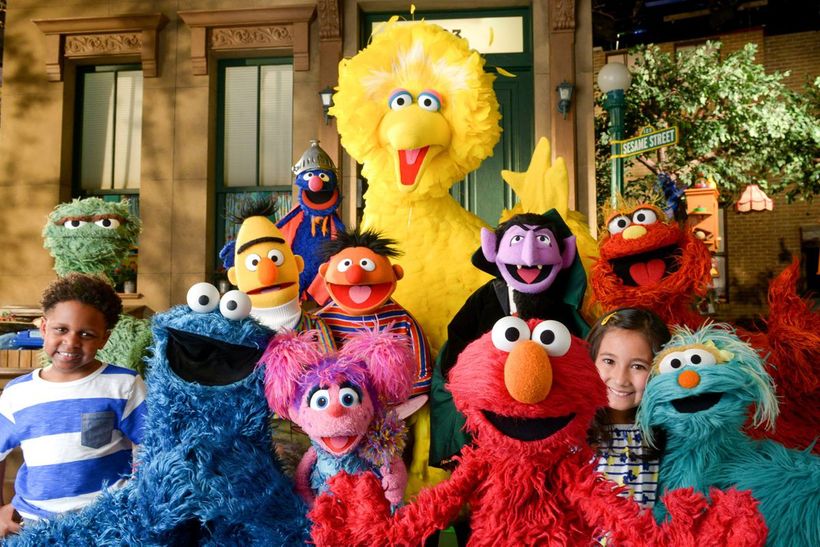
Sesame Street, the longest-running children's show in American history, recently celebrated its 50th anniversary. Villanova's Emory Woodard, PhD, Dean of Graduate Studies in the College of Liberal Arts and Sciences, spent time working at Children's Television Workshop (now Sesame Workshop), the nonprofit organization that puts on Sesame Street. He reflects back on its legacy, its important focus on diversity and what lies ahead. Concerning the Program's Legacy "Sesame Street transformed the landscape for educational television at a time when very few content producers were paying attention to quality content for children. The show has effectively reduced the school readiness gap and prepared millions for scholastic success." On Special Memories "My parents could not afford to send me to preschool but used Sesame Street to reinforce the literacy and numeracy skills they taught me. I have fond memories of learning to count with Count von Count, learning the alphabet with Cookie Monster and even getting phonetics lessons with Big Bird. I cannot tell you how much of a delight it was to have Big Bird speak at one of our Commencement Ceremonies... "Perhaps more than the literacy and numeracy skills that I learned from Sesame Street, I remember the prosocial lessons of the show. At such a formative stage, I remember learning about sharing, cooperation and appreciating the differences between people." On Sesame Street and Diversity "Sesame Street has been keenly aware of the dual audiences it engages: children and their parents. At the preschool age, parents tend to be very involved in the media diet of their children. Sesame Street has taught a generation of parents to be more sensitive to issues of diversity." On the Program's Future "I think the future is bright. With the advent of increasingly diverse content distribution platforms (e.g., Netflix, Sling, Roku, Apple TV, etc.), the demand for quality content will remain strong. The makers of Sesame Street may have to be creative in figuring out how to support the production of their high-quality content while still serving their primary mission. Nonetheless, their longevity is a testament to the good thinkers they have charting the course to ongoing success. "The partnership with HBO is an industry reality. The funding for public television remains under threat and the choice is to either fold or be financially creative. I am delighted that the makers of Sesame Street have chosen to be financially creative. Moreover, they chose to partner with an outlet that has demonstrated itself to be a purveyor of high-quality content. As long as that content is shared with platforms that are more accessible to the economically disadvantaged, I do not see this much differently than the decision to use television as a distribution platform that was not universally accessible back in the late 1960s. "Sesame Street will remain relevant as long as they remain true to their original mission of bringing literacy and numeracy skills to disadvantaged populations through high-quality content. No one is and perhaps will ever be better at it than the makers of Sesame Street."


It was a historic election in Georgia that saw changing tastes and shifting tides among voters across the state. The coverage was extensive and the experts from front and center in local and statewide media lending their expert perspectives and opinions to reports and journalists about the results. “A political science associate professor on Georgia Southern’s Armstrong Campus in Savannah says all the women who made history in Tuesday’s election overcame significant obstacles with their campaigns in Bulloch and Chatham counties. “Those three new women beat incumbents and that’s very unusual,” said Dr. Lara Wessel. “So when we see women or men beating incumbents, again we want to look to try to figure out what’s going on behind those election results. “What it says to me is that the citizens of Statesboro and the citizens of Savannah are interested in change.” Dr. Wessel adds that the five women who won elections are much more than trailblazers, they’re local proof female candidates can break through barriers that have held women out of some local political offices for centuries.” November 06 – NBC News Soon, Savannah will be welcoming four new aldermen, and two new alderman-at-large. “It’s majority progressive. It’s majority female. It’s majority community activists. A lot community activists," said Georgia Southern Associate Professor of Sociology Dr. Ned Rinalducci … “We’re going to see a shift to deal with things like affordable housing, homelessness, and less on development and tourism,” said Rinalducci. Rinalducci said the city saw a turnover back in 2015-ushering in more pro-business candidates. He said this election’s shift towards could be a sign of dissatisfaction with voters. “I think clearly there’s some discontent with the priorities of city government previous, and I think that was communicated clearly with yesterday’s election results," said Rinalducci. November 06 – ABC News The coming twelve months are going to be a busy one for political reporters across the state and country. If you are a journalist looking for political experts who can be a solid source of context and perspective for your stories – let us help. Dr. Lara Wessel and Ned Rinalducci are both available to speak to media about politics, elections and issues affecting voters. Simply click on either expert’s icon to arrange an interview. https://fox28media.com/news/local/municipal-election-draws-low-turnout-equates-to-sweeping-changes-in-savannah-races


The link between veterans coming home and racial violence in America. Our expert can explain.
There is a long history of white supremacist and white-power ideology developing out of the wars the United States has fought. In Bring the War Home: The White Power Movement and Paramilitary America (Harvard University Press, 2018), Kathleen Belew shows that, beginning in the 1970s, a small but committed number of Vietnam War veterans took the racist understanding of the Vietnamese and Asians more broadly that the U.S. military taught them and became instrumental in building the current white-power movement. These vets often did not initially know each other, but they eventually built a wide variety of organizations: the White Aryan Resistance, the latest, post-Civil Rights Era iteration of the Ku Klux Klan, various Christian Identity and white skinhead organizations, and the militia movement of the 1980s and 1990s. In his forthcoming book, Guarding the Empire: Soldier Strikebreakers on the Long Road to the Ludlow Massacre, Otterbein’s Dr. Anthony DeStefanis has found that the men who fought the Plains Indians in the late nineteenth century and who served in Cuba and the Philippines during the Spanish-American-Filipino War (1898-1902) came to understand Native Americans, Cubans, and Filipinos as formidable but racially inferior enemies. When these same men joined the National Guards in states across the country and were called out on strike duty during the late nineteenth and early twentieth century, they took what they learned on the Plains and overseas to create a racist rationale for breaking the labor strikes of a working class that was increasingly made up of southern and eastern European, Mexican, and Asian immigrants. Many of these same men also joined the Second Ku Klux Klan that emerged in the late 1910s and became a nationwide organization by expanding the targets of its hatred beyond African Americans to include Jews, Catholics, and immigrants. Racism is a many-headed hydra with multiple roots in experience at home and abroad. Some white southerners who were central in the project of creating and maintaining Jim Crow white supremacy were Confederate military veterans and it is clear that wars across the twentieth century – from Cuba and the Philippines to Vietnam – pushed some veterans into the white- power movement. Today, we know that white-power organizations concentrate on recruiting military veterans and we have seen a spike in support for these organizations among current members of the military. It’s no accident that some of these active troops and veterans served in the Iraq and Afghan Wars, where they faced a Muslim enemy with unfamiliar social and cultural practices, and who did not welcome the U.S. military presence with open arms. Clearly, we must reckon with what our wars overseas have brought back to the United States. If you are a reporter covering this topic – let the experts from Otterbein University help. Dr. Anthony DeStefanis is an associate professor of history at Otterbein University. He specializes in modern U.S. history with an emphasis on labor and the working class and immigration, race, and ethnicity. Dr. DeStefanis is available to speak with media regarding the history of racial violence in America – simply click on his icon to arrange an interview.

On August 3, 2019, a white power-inspired gunman killed 24 people and injured 22 others at a Wal-Mart in El Paso, Texas. We tend to understand mass shootings as isolated events committed by “lone wolf” gunmen who might have mental health problems, but what we know about the El Paso gunman – as well as the terrorists who carried out mass killings at the Al Noor Mosque and Linwood Islamic Center in Christchurch, New Zealand in March 2019, the Tree of Life Synagogue in Pittsburgh in 2018, and at the Emanuel African Methodist Episcopal Church in Charleston, South Carolina in 2015 – tell a different story. The evidence investigators have complied shows that these white-power terrorists had never met one another, but that they lived in an on-line world created by 4chan, 8chan, and white-power organizations’ websites, where they consumed racist ideas and propaganda that shaped their decision to kill African-Americans, Muslims, Jewish people, and Mexicans and Mexican-Americans. We also know that white-power terrorists have particular goals in mind. Message boards like 8chan reveal a competition among participants about who can top the number of people killed in the last mass shooting. There is also a strong belief expressed on-line that killing racial minorities will foment a race war and allow white-power advocates to create an all-white world. I describe these terrorists as advocates of white power because it is important to understand that “white power” and “white nationalism,” a term often used in the media to describe the perpetrators of recent mass killings and the movement that animates them, are not the same thing. White nationalism calls to mind an effort to shore up the interests of white people within the American nation as it currently exists. The white-power movement, on the other hand, imagines a transnational, Aryan nation of white people living in an all-white world after wiping out non-whites. This might sound far-fetched, but does not mean that those who carry out mass killings in pursuit of this goal are mentally ill. Rather, their actions are the result of a white-power ideology fostered and spread on-line. What is new about how white-power advocates communicate with each other is that some of it now happens on-line. Interaction between racists who never met one another, however, has a long history in the United States. Approximately 4,100 African Americans were lynched between the end of the Civil War in 1865 and the 1960s. The white perpetrators of these lynchings lived hundreds of miles apart and often did not know one another, but they were united in a collective effort to enforce Jim Crow white supremacy in the American South (I use “white supremacist” here because white southerners who carried out lynchings did not, broadly speaking, subscribe to white power as the current movement defines it: the creation of a transnational, Aryan nation of white people living in an all-white world after wiping out non-whites). Lynchings were sometimes public events that drew hundreds or thousands of people with the purpose of “teaching” southern African Americans what would happen to them if they violated the rules of Jim Crow. Southern newspapers ran stories that justified lynchings; perpetrators took pieces of flesh, body parts, and hair from lynching victims as souvenirs and passed them around; and white southerners took lynching photographs, turned them into postcards, and mailed them to friends, family, business associates, and fellow travelers in the white supremacist movement. This racist community building had the goal of creating and maintaining white supremacy and, of course, it all happened without the help of the Internet. Communication, whether on-line or through the more traditional means has played an integral role in fostering and perpetuating racial violence and hatred. If you are a reporter covering this topic – let one of our experts help. Dr. Anthony DeStefanis is an associate professor of history at Otterbein University. He specializes in modern U.S. history with an emphasis on labor and the working class and immigration, race, and ethnicity. Dr. DeStefanis is available to speak with media regarding the history of racial violence in America – simply click on his icon to arrange an interview.
Impeachment and what follows? Let our experts help if you are covering!
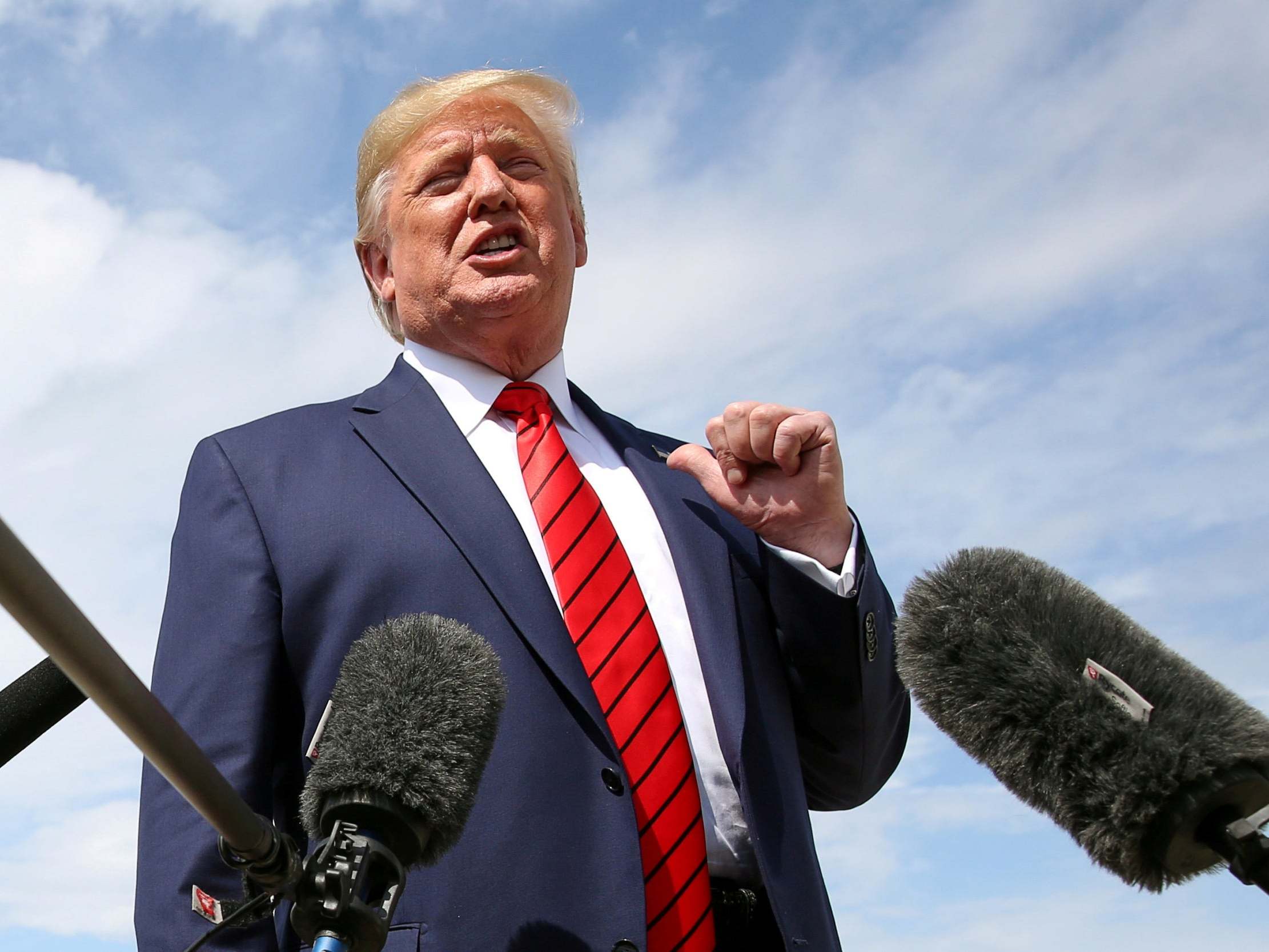
For President Donald Trump…he’s living in interesting times. There’s an irony to that statement, as the so-called Chinese proverb ‘May you live in interesting times’ which has been purported as a centuries old curse on the English has no actual source or history. It too is fake news. But painfully accurate in these times of political turmoil in Washington. What’s not fake is the talks of impeachment. The issue has traction and it looks as if the first steps of the process will soon move forward. The President and his supporters are digging in and pushing back. This will be an issue that dominates the headlines for months, if not longer. It may even stretch into the election cycle for 2020. There will be results, consequences and reactions each step along the way. The President has even indicated the division will be akin to civil war. While not likely, the splitting of the American voter will deepen and it will be interesting to see, once all the dust has settled, who benefits at the ballot box in 2020. If you are a reporter covering this topic – that’s where our experts can help. Mark Caleb Smith is the Director of the Center for Political Studies at Cedarville University. Mark is available to speak with media regarding Trump, impeachment and the upcoming election. Simply click on his icon to arrange an interview.


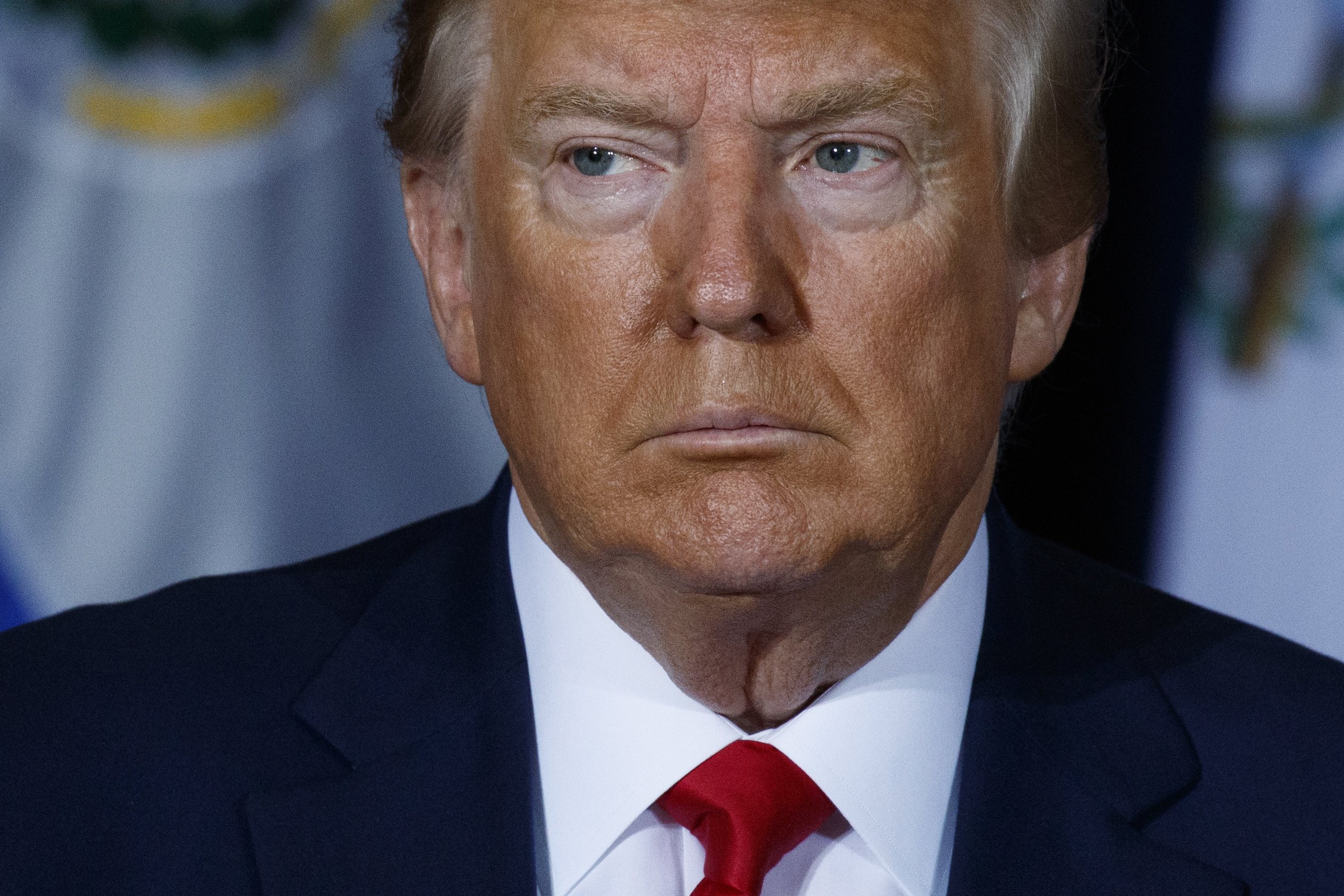
Until now, it seemed no scandal could stick to President Donald Trump. But after a whistleblower came forward after an awkward conversation between President Trump and Ukrainian President Volodymyr Zelenskiy – it seems Trump may have finally crossed the line. His request for an investigation by a foreign power into a political, opponent may have been illegal. Trump repeatedly Ukrainian President Volodymyr Zelenskiy to work with Attorney General William Barr and Rudy Giuliani, Trump’s personal lawyer. At one point in the conversation, Trump said, “I would like for you to do us a favor.” The president’s words set the parameters for the debate to come — just the fourth impeachment investigation of an American president in the nation’s history. The initial response highlighted the deep divide between the two parties: Democrats said the call amounted to a “shakedown” of a foreign leader, while Trump — backed by the vast majority of Republicans — dismissed it as a “nothing call.”… Pelosi announced the impeachment probe on Tuesday after months of resistance to a process she has warned would be divisive for the country and risky for her party. But after viewing the transcript on Wednesday, Pelosi declared: Congress must act.” September 25 – Associated Press This will only be the fourth time in history an impeachment investigation has taken place - and odds are it will dominate the Washington scene for months. But there are a lot of questions to be asked: How long will this take? What does it take to actually succeed? If Trump is impeached by Congress – will the Senate follow? Could he actually be removed from office? And, is this a risk for Democrats who could feed into the Trump narrative of another failed attempt at a witch hunt? There are a lot of questions and that’s where our experts can help. Dr. Stephen Farnsworth is professor of political science and international affairs at the University of Mary Washington. A published author and a media ‘go-to’ on U.S. politics, he is available to speak with media regarding this topic. Simply click on his icon to arrange an interview.



Can Understanding the History of Drug Addiction Help Address the Opioid Epidemic?
According to the National Institute on Drug Abuse, more than 130 people die every day after overdosing on opioids. Lives have been lost, families shattered, and billions spent as experts, elected leaders, health care professionals, and law enforcement officials try to address the country's opioid epidemic. A professor at Rensselaer Polytechnic Institute can help shed light on the forces at work in this crisis and its history. Professor Nancy Campbell is an expert is in the history of science, technology, and medicine as it relates to drug policy and the social significance of drugs. She is a professor and head of the Department of Science and Technology Studies (STS) in the School of Humanities, Arts and Social Sciences at Rensselaer Polytechnic Institute. "We found her to be one of the most knowledgeable people on the history of opioids and how that history fits into the context of today’s problem," reporters for CBS 6 News in Albany wrote of Campbell. In a recent interview with the station, Campbell discussed her extensive research on the history of drug addiction, as well as her approach to educating students about it. “I actually want my students to go out of the class, knowing more about where our current opioid epidemic came from, the endemic that it built upon and also knowing more about drug markets and the social aspects,” Campbell said. August 15 – CBS 6 News Are you a reporter covering the opioid crisis and need to know what’s being done and what more needs to be done? Let our experts help with your questions. Campbell is available to speak to media regarding the opioid crisis and the history of drug addiction – simply click on her icon to arrange an interview.


Meet Your Newest Job Recruiter, the Algorithm – let our experts explain
Equal employment opportunities may not be part of a computer’s calculations, but one engineer from is trying to change that. When you apply for a job, chances are your resume has been through numerous automated screening processes powered by hiring algorithms before it lands in a recruiter’s hands. These algorithms look at things like work history, job title progression and education to weed out resumes. There are pros and cons to this – employers are eager to harness the artificial intelligence (AI) and big data captured by the algorithms to speed up the hiring process. But depending on the data used, automated hiring decisions can be very biased. “Algorithms learn based on data sets, but the data is generated by humans who often exhibit implicit bias,” explains Swati Gupta, an industrial engineering researcher at Georgia Tech who’s work focuses on algorithmic fairness. “Our hope is that we can use machine learning with rigorous mathematical analysis to fix the bias in areas like hiring, lending and school admissions.” But as algorithms harness speed and efficiency – how can they be adjusted to include and consider race, gender and other human factors? It’s an area Dr. Gupta has been researching and refining. If you are a reporter or journalist looking to cover this topic – that’s where our experts can help. Dr. Swati Gupta is an Assistant Professor in the H. Milton Stewart School of Industrial and Systems Engineering at Georgia Tech. Dr. Gupta is an expert in the areas of optimization, machine learning, and bias and fairness within the AI sphere. She is available to speak with media regarding this topic - simply click on her icon to arrange an interview.



It was 400 years ago this August that the first enslaved people arrived on the shores of North America, changing forever the direction of history. “These men and women had been stolen from their homes in Africa, forced to board a ship, and sailed for months into the unknown. The first Africans in an English colony, their arrival is considered by many historians to be the beginning of a 400-year story filled with tragedy, endurance, survival, and a legacy of resilience, inequality, and oppression.” National Geographic, Aug. 13 The history of slavery and the journey from chains to freedom to equality has been a long one and there is still so much to learn and tell. Even today, how are African American communities negatively affected by this event? Is the topic taught and covered in U.S. children’s education? What role did the enslaved play in the building of our country and is that role recognized? What would America look like today without the slave trade? Do reparations work and how would they be decided? This is an important and sensitive topic – and if you are a journalist covering the history of slavery, that’s where our experts can help. Professor Seretha Williams is an expert in Africa and African diaspora, digital humanities, and digital publication. Williams is also the co-editor of Afterimages of Slavery, Essays on Appearances in Recent American Films, Literature, Television, and Other Media. She is available to speak with media regarding this historic moment – simply click on her icon to arrange an interview.
