
Experts Matter. Find Yours.
Connect for media, speaking, professional opportunities & more.

Real solutions to the world’s refugee crisis
Just last week, the United States announced its lowest refugee cap in history. Meanwhile, for the fifth year in a row, globally, we have reached a record number of displaced people around the world whose displacement will likely last decades. Refugees are increasingly living outside of camps in middle to low-income countries where they struggle to get their footing. At the same time, the communities that host them are burdened by the influx of a needy population and the tension that can arise when aid bypasses local organizations. Recently, a panel hosted by Catholic Relief Services invited key industry leaders to discuss these challenges and how responding agencies, governments and donors can better support the local communities in ways that promote safety, dignity, and lasting solutions. Bill O'Keefe is the Vice President for Government Relations and Advocacy with Catholic Relief Services and oversees the efforts to impact U.S. foreign policy in ways that reduce poverty overseas. Bill is available to speak to media regarding refugees and how those lasting solutions can be found. Simply click on his icon to arrange an interview. Source:


Former U.S. Attorney Available to Discuss Fallout for Trump Administration in Light of Cohen Plea
Wheaton College Professor David Iglesias, a former U.S. Attorney in New Mexico whose areas of expertise include federal prosecutions, is available for interviews regarding the fallout for the Trump administration in light of Michael Cohen’s guilty plea in federal court on 8 criminal counts, including violation of campaign finance laws. “President Trump is now in a place few presidents have ever been,” Iglesias says. “At this point, he is basically an unindicted co-conspirator to federal crimes.” “I wouldn’t call it the beginning of the end, but it’s certainly the end of the beginning.” Iglesias is an associate professor of politics and law and director of the Wheaton Center for Faith, Politics, and Economics. He can discuss topics including: -The process of presidential pardons -How federal prosecutors treat indicted persons who cooperate with information concerning the crimes of other persons, and the quid pro quo for getting an individual to cooperate with law enforcement -Guilty pleas, hung juries, and sentencing in federal court -Impeachment (What Iglesias calls “the nuclear option for removing a sitting President of the United States”), the process, and why it has happened so rarely in U.S. history -Whether a sitting president can be indicted for crimes -The importance of the rule of law (Why is America the world leader for holding all accountable for their actions? What message is being sent if wealthy and powerful people can avoid criminal exposure for their actions?) -Watergate as a precedent, and similarities/differences with the current situation -Rules of federal investigations (How do federal agencies conduct investigations? What is public and what is non-public? Why are prosecutions that are considered "political" so dangerous for law enforcement?) To request an interview with Professor Iglesias, e-mail Wheaton College Director of Media Relations LaTonya Taylor at latonya.taylor@wheaton.edu. Source:


It used to be a big deal – but has the once mighty blog gone bust?
In the days before Facebook … there were blogs. Blogs written by corporate leaders, academics, foodies, pundits and enthusiasts of every stripe. At one point, a blogger’s opinion could greenlight a film or sink a rising star. Blogs have massive influence. But those days are gone. Where blogs were once a salon for opinion and interest – the role that survived was usually as part of a larger institution’s communications strategy. It blended internal and external engagement – and it was effective. Until now, recently even Harvard acknowledged they were getting out of the blogging realm. But as blogs fade into the sunset – will the information, data and value be preserved? Should archives be created to maintain the history of these online conversations for future generations? Or, is it simply a delete and all that information is gone? Martha Burtis is the director of the digital knowledge center at the University of Mary Washington. An expert on this topic, she recently spoke with media regarding the winding down of blogs at Harvard. She is available to speak to media regarding this topic – simply click on her icon to arrange an interview. Source:


Understanding the meaning of America’s monuments
As the debate continues with what to do with Confederate monuments that dot America’s landscape, the experts from the University of Mary Washington have been lending perspective, knowledge and opinion to the conversation. Professor of Geography Stephen P. Hanna is part of a team of scholars from universities across the South who are investigating how enslavement is incorporated in the landscape and narratives of Southern plantation museums. A key part of this work is to suggest ways these museums can rework their tours and exhibits to help the public understand that slavery was central to both the lives of everybody who lived at these sites and to the development of American political and economic systems. Says Hanna: “A year after white supremacists rioted in Charlottesville, it is clear that the underlying issues related to racial justice have not gone away. African-Americans face arrest for simply being in places where whites suspect they don’t belong. Police are more likely to escalate their use of force more quickly when dealing with black Americans. In addition, both Blacks and Latinos are fighting efforts to make it harder for them to vote while Latino Immigrants have to fear deportation and family separation.” He continues: “The struggle over Confederate Memorials and the narratives presented as “history” at southern plantation museums must be seen within this context. The good news is that more people understand that statues of Robert E. Lee and costumed tour guides at plantation museums describing a romanticized version of the antebellum South don’t represent our shared past. Instead they are efforts to write a particular history that denies that our nation’s roots include enslavement of African-Americans and that slavery’s legacy includes the injustices non-whites endure today.” Dr. Hanna is available to speak with media regarding this topic. Simply click on his icon to arrange an interview. Source:


Confederate monuments: How should America preserve and remember its history?
August 12 marks one year since a deadly march in Charlottesville, Virginia, when white nationalists showed up to protest the city's plans to remove a statue of Robert E. Lee, a Confederate general. And one year later, the debates across America, particularly the South, continue about what should be done with Civil War-era monuments in town squares, public parks and other areas of high visibility. Most of the monuments were put in place decades after the end of the Civil War when whites in the South were reclaiming their dominant position socially and economically. So it’s not surprising that Confederate monuments are politically loaded. They were from the beginning, but the society in which the monuments find themselves has changed. What should be done with these monuments? Are they worthy of preservation? Should they be on display in a museum or discarded and forgotten? The pendulum is swinging very hard both ways on what to do, and that’s where the experts from the University of Mary Washington can help. Jason James, associate professor of sociology and anthropology, is a scholar of cultural memory who teaches a unique course called Practices of Memory, which focuses on the ways societies remember and forget the past through monuments and memorials, museums, film, and other media. This includes the debates over Confederate monuments and the commemoration of slavery. Jason is available to speak with media regarding this topic. Simply click on his icon to arrange an interview. Source:

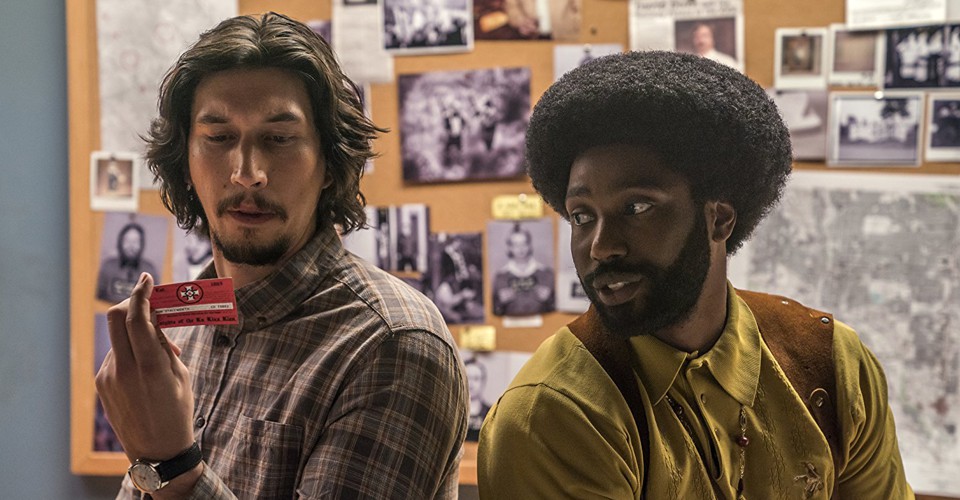
Spike Lee's Cinematic Alchemy of Past and Present is a Warning About the Future
Nearly a year to the day after White Nationalists marched in Charlottesville, the film “BlacKkKlansman” is released. Spike Lee's film is both a representation of a real-life story of an African-American detective who infiltrated and exposed the Ku Klux Klan in the 1970s and as an ideological vehicle for critique of our current social and political moment, says Matthew Hughey, associated professor of sociology at UConn. Together, “BlacKkKlansman” conveys a multi-part message. First, it is cinematic alchemy of the past and present—revealing what has and has not changed over the past half-century in order create a warning about the future. It recalls philosopher George Santayana’s saying “those who cannot learn from history are doomed to repeat it.” Second, the film eviscerates both American naiveté and intentional hypocrisy regarding racism and racial inequality. The film shines a bright light on the dark methods people use to dress up racism, nativist xenophobia, and hatred as “pride and patriotism,” and the madness deployed to rationalize police brutality and murder as little more than “law and order.” Third, and perhaps most importantly, the film deconstructs the “bad apple” theory of racism. Racism does not exist within the hood-wearing, swastika-sporting, epithet-spewing ignoramus alone, but exists in a systemic orchard that segregates and privileges whiteness economically, politically, and socially regardless of individual intention, worldview, or behavior. In the end, Lee’s film leads us to the conclusion that if “we are all Charlottesville” then “we are all Klansman,” too, says Hughey. Source:


Misreporting in securitized loans
Nonagency mortgage-backed securities (MBSs) and collateralized debt obligations (CDOs) derived from MBSs and their role in the recent financial and housing crisis remain a subject of discussion. An MBS is an asset-backed security secured by a mortgage or grouping of mortgages. Non-agency MBSs are not guaranteed by any government-sponsored organization, such as Freddie Mac or Fannie Mae, or the federal government. According to research from Gonzalo Maturana, assistant professor of finance, and John Griffin (U of Texas), the complexity of these structured products made it difficult to learn the true value of the underlying assets. They analyzed “apparent fraud among securitized nonagency loans, looking at unreported second liens, owner occupancy misreporting, and appraisal overstatements.” The study data comes from Lewtan’s ABSNet Loan and HomeVal data sets, along with DataQuick’s Assessor and History files, for the time period between January 2002 and December 2011. The researchers discovered that “48% of loans exhibited at least one indicator of misrepresentation.” The level of misreporting was similar for low- and full-documentation loans. Also, loans with a misreporting were 51% more likely to be delinquent. Maturana and Griffin’s research points to apparent fraud by loan originators and MBS underwriters, and it also suggest that MBS underwriting banks were aware of some of the MBS representations at issuance. Source:


6 Facts We Learned Working with Migrants and Refugees Around the World Working with migrants and refugees is our business at Catholic Relief Services. CRS was founded in 1943 to assist refugees during World War II. Seventy-five years later, we are still coming to the aid of people escaping conflict, violence and natural disasters. While CRS doesn’t resettle refugees in the United States (these programs are run by the Catholic Church’s Migration and Refugee Service and Catholic Charities), our rich history has taught us valuable lessons on how to best help families fleeing crisis. 5. Adults Need Work and Income. We know from experience that people find pride and purpose in helping earn an income for their families, no matter how small. Refugees and migrants are looking for a hand-up, not a handout and being integrated with their host communities benefits everyone. Caroline Brennan is the Emergency Communications Director for Catholic Relief Services. In her role, she travels to and/or works in areas facing natural or man-made emergencies. See her contact information at the bottom. 6. The Poorest Countries House the Most Refugees and Migrants. Although media stories can give the impression that the U.S. is swamped with migrants, the reality is that 85% of the world’s refugees are in the developing world. The country with the largest refugee population is Turkey, with almost 3 million. One in 3 people in Lebanon is a refugee. The Bidi Bidi Refugee Camp in Uganda alone is home to 229,000 South Sudanese who have fled civil unrest. Richer nations like the U.S. should look at the lessons of how these countries with far fewer resources welcome and host refugees. Caroline Brennan is the Emergency Communications Director for Catholic Relief Services. In her role, she travels to and/or works in areas facing natural or man-made emergencies. See her contact information at the bottom. The experts at Catholic Relief Services are available to help with any media coverage or insight that is required regarding this ongoing news story and issue that is continuing in America. Simply click on any of their icons to arrange a time for an interview. Source:
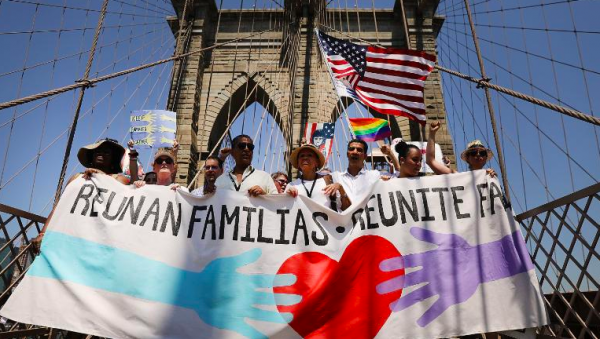
6 Facts We Learned Working with Migrants and Refugees Around the World - Facts 3 and 4 Working with migrants and refugees is our business at Catholic Relief Services. CRS was founded in 1943 to assist refugees during World War II. Seventy-five years later, we are still coming to the aid of people escaping conflict, violence and natural disasters. While CRS doesn’t resettle refugees in the United States (these programs are run by the Catholic Church’s Migration and Refugee Service and Catholic Charities), our rich history has taught us valuable lessons on how to best help families fleeing crisis. 3. Support the Family. The family unit provides the primary support for children during the traumatic refugee experience -- whether it is witnessing violence or crossing a desert on foot. CRS focuses on keeping families together. This means housing a family together and using any services provided – from trauma counseling to income generation – to boost family cohesion. Shannon Senefeld is a global development expert at CRS. She has published and presented extensively on international children’s issues and the importance of strengthened family care for children’s development. See her contact information at the bottom. 4. Kids Need School and Play. CRS is dedicated to keeping up children’s education, to provide stability and normality and give them hope for the future so they can be productive citizens wherever they end up. Kids need to be kids, too. Whether they are in a camp or any sort of migrant or refugee holding center they need a space to play. Caroline Brennan is the Emergency Communications Director for Catholic Relief Services. In her role, she travels to and/or works in areas facing natural or man-made emergencies. See her contact information at the bottom. The experts at Catholic Relief Services are available to help with any media coverage or insight that is required regarding this ongoing news story and issue that is continuing in America. Simply click on any of their icons to arrange a time for an interview. Source:
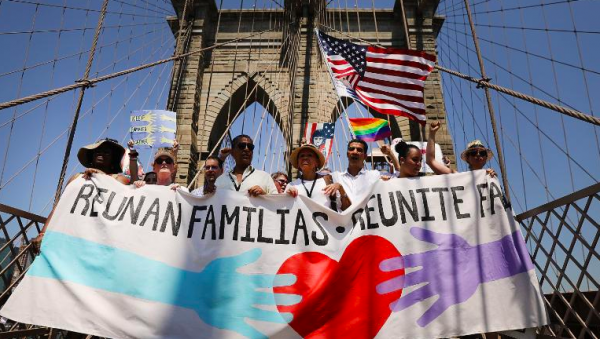
6 Facts We Learned Working with Migrants and Refugees Around the World: Facts 1 and 2 Working with migrants and refugees is our business at Catholic Relief Services. CRS was founded in 1943 to assist refugees during World War II. Seventy-five years later, we are still coming to the aid of people escaping conflict, violence and natural disasters. While CRS doesn’t resettle refugees in the United States (these programs are run by the Catholic Church’s Migration and Refugee Service and Catholic Charities), our rich history has taught us valuable lessons on how to best help families fleeing crisis. 1. People Do Not Want to Leave Their Homes. An astonishing 1 in 110 people have been forced to flee their home (UNHCR). They only do that when they feel they have no other choice. Most people the world over give the same reason for starting their perilous journey across borders -- violence. That’s true for millions fleeing conflict in South Sudan and for tens of thousands fleeing gang violence in Central America. Most often, people flee to other parts within their country first. Only when they see no other option do people leave their country. Rick Jones is the agency's Youth and Migration Advisor in Latin America and the Caribbean. He also specializes in issues affecting Central American migration, including gang violence, poverty, and internal displacement. See his contact information at the bottom. 2. Don’t Separate Families. Based on extensive experience with refugees and migrants, CRS agrees with the criticism of the former U.S. policy of separating children from their parents. Decades of research shows that this is so traumatic for children it can lead to long-term psychological, and even physical damage. Shannon Senefeld is a global development expert at CRS. She has published and presented extensively on international children’s issues and the importance of strengthened family care for children’s development. See her contact information at the bottom. The experts at Catholic Relief Services are available to help with any media coverage or insight that is required regarding this ongoing news story and issue that is continuing in America. Simply click on any of their icons to arrange a time for an interview. Source: