
Experts Matter. Find Yours.
Connect for media, speaking, professional opportunities & more.
Emil Bove’s appeals court nomination echoes earlier controversies, but with a key difference
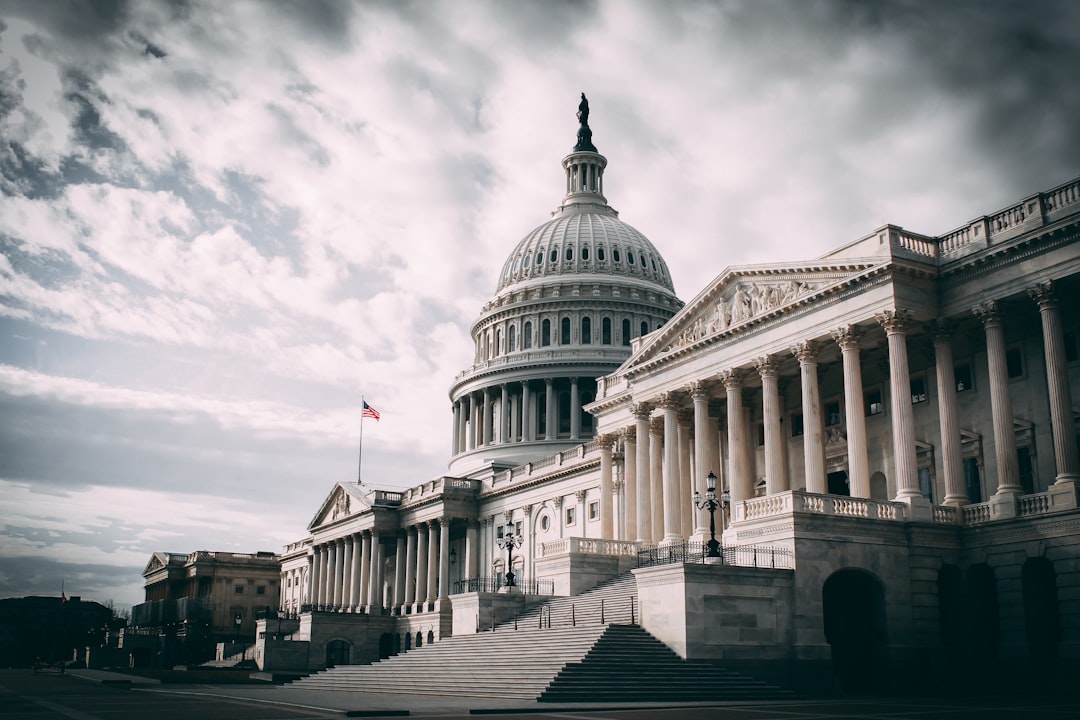
This article is republished from The Conversation under a Creative Commons license. Read the original article here. President Donald Trump’s nomination of his former criminal defense attorney, Emil Bove, to be a judge on the United States Court of Appeals for the 3rd Circuit, has been mired in controversy. On June 24, 2025, Erez Reuveni, a former Department of Justice attorney who worked with Bove, released an extensive, 27-page whistleblower report. Reuveni claimed that Bove, as the Trump administration’s acting deputy attorney general, said “that it might become necessary to tell a court ‘fuck you’” and ignore court orders related to the administration’s immigration policies. Bove’s acting role ended on March 6 when he resumed his current position of principal associate deputy attorney general. When asked about this statement at his June 25 Senate confirmation hearing, Bove said, “I don’t recall.” And on July 15, 80 former federal and state judges signed a letter opposing Bove’s nomination. The letter argued that “Mr. Bove’s egregious record of mistreating law enforcement officers, abusing power, and disregarding the law itself disqualifies him for this position.” A day later, more than 900 former Department of Justice attorneys submitted their own letter opposing Bove’s confirmation. The attorneys argued that “Few actions could undermine the rule of law more than a senior executive branch official flouting another branch’s authority. But that is exactly what Mr. Bove allegedly did through his involvement in DOJ’s defiance of court orders.” On July 17, Democrats walked out of the Senate Judiciary Committee vote, in protest of the refusal by Chairman Chuck Grassley, a Republican from Iowa, to allow further investigation and debate on the nomination. Republicans on the committee then unanimously voted to move the nomination forward for a full Senate vote. As a scholar of the courts, I know that most federal court appointments are not as controversial as Bove’s nomination. But highly contentious nominations do arise from time to time. Here’s how three controversial nominations turned out – and how Bove’s nomination is different in a crucial way. Robert Bork Bork is the only federal court nominee whose name became a verb. “Borking” is “to attack or defeat (a nominee or candidate for public office) unfairly through an organized campaign of harsh public criticism or vilification,” according to Merriam-Webster. This refers to Republican President Ronald Reagan’s 1987 appointment of Bork to the Supreme Court. Reagan called Bork “one of the finest judges in America’s history.” Democrats viewed Bork, a federal appeals court judge, as an ideologically extreme conservative, with their opposition based largely on his extensive scholarly work and opinions on the U.S. Court of Appeals for the District of Columbia Circuit. In opposing the Bork nomination, Sen. Ted Kennedy of Massachusetts took the Senate floor and gave a fiery speech: “Robert Bork’s America is a land in which women would be forced into back-alley abortions, blacks would sit at segregated lunch counters, rogue police could break down citizens’ doors in midnight raids, schoolchildren could not be taught about evolution, writers and artists could be censored at the whim of government, and the doors of the federal courts would be shut on the fingers of millions of citizens for whom the judiciary is often the only protector of the individual rights that are the heart of our democracy.” Ultimately, Bork’s nomination failed by a 58-42 vote in the Senate, with 52 Democrats and six Republicans rejecting the nomination. Ronnie White In 1997, Democratic President Bill Clinton nominated White to the United States District Court for the Eastern District of Missouri. White was the first Black judge on the Missouri Supreme Court. Republican Sen. John Ashcroft, from White’s home state of Missouri, led the fight against the nomination. Ashcroft alleged that White’s confirmation would “push the law in a pro-criminal direction.” Ashcroft based this claim on White’s comparatively liberal record in death penalty cases as a judge on the Missouri Supreme Court. However, there was limited evidence to support this assertion. This led some to believe that Ashcroft’s attack on the nomination was motivated by stereotypes that African Americans, like White, are soft on crime. Even Clinton implied that race may be a factor in the attacks on White: “By voting down the first African-American judge to serve on the Missouri Supreme Court, the Republicans have deprived both the judiciary and the people of Missouri of an excellent, fair, and impartial Federal judge.” White’s nomination was defeated in the Senate by a 54-45 party-line vote. In 2014, White was renominated to the same judgeship by President Barack Obama and confirmed by largely party-line 53-44 vote, garnering the support of a single Republican, Susan Collins of Maine. Miguel Estrada Republican President George W. Bush nominated Estrada to the Court of Appeals for the District of Columbia Circuit in 2001. Estrada, who had earned a unanimous “well-qualified” rating from the American Bar Association, faced deep opposition from Senate Democrats, who believed he was a conservative ideologue. They also worried that, if confirmed, he would later be appointed to the Supreme Court. However, unlike Bork – who had an extensive paper trail as an academic and judge – Estrada’s written record was very thin. Democrats sought to use his confirmation hearing to probe his beliefs. But they didn’t get very far, as Estrada dodged many of the senators’ questions, including ones about Supreme Court cases he disagreed with and judges he admired. Democrats were particularly troubled by allegations that Estrada, when he was screening candidates for Justice Anthony Kennedy, disqualified applicants for Supreme Court clerkships based on their ideology. According to one attorney: “Miguel told me his job was to prevent liberal clerks from being hired. He told me he was screening out liberals because a liberal clerk had influenced Justice Kennedy to side with the majority and write a pro-gay-rights decision in a case known as Romer v. Evans, which struck down a Colorado statute that discriminated against gays and lesbians.” When asked about this at his confirmation hearing, Estrada initially denied it but later backpedaled. Estrada said, “There is a set of circumstances in which I would consider ideology if I think that the person has some extreme view that he would not be willing to set aside in service to Justice Kennedy.” Unlike the Bork nomination, Democrats didn’t have the numbers to vote Estrada’s nomination down. Instead, they successfully filibustered the nomination, knowing that Republicans couldn’t muster the required 60 votes to end the filibuster. This marked the first time in Senate history that a court of appeals nomination was filibustered. Estrada would never serve as a judge. Bove stands out As the examples of Bork, Estrada and White make clear, contentious nominations to the federal courts often involve ideological concerns. This is also true for Bove, who is opposed in part because of the perception that he is a conservative ideologue. But the main concerns about Bove are related to a belief that he is a Trump loyalist who shows little respect for the rule of law or the judicial branch. This makes Bove stand out among contentious federal court nominations.



If the first few frames are any indicator of a blockbuster movie, hold the 2035 Best Picture Oscar for the Vera C. Rubin Observatory and its ambitious new 10-year project. On June 23, 2025, scientists at the state-of-the-art facility in the mountains of north-central Chile gave the public its first glimpses into the capabilities of its 8.4-meter Simonyi Survey Telescope, equipped with the world’s largest digital camera—a 3.2 megapixel, 6,600-pound behemoth that can photograph the whole southern sky every few nights. Its task is a decade-long lapse record-called the Legacy Survey of Space and Time (LSST). The first shots on that journey have left both the general public and astronomical community in awe, revealing in rich detail a mind-boggling number of galaxies, stars, asteroids and other celestial bodies. “The amount of sky it covers, even in just one image, is unprecedented,” said David Chuss, PhD, chair of the Department of Physics, who viewed the first images with colleagues at an organized watch party. “It’s such high-precision, beautiful detail,” added Kelly Hambleton Prša, PhD, associate professor of Astrophysics and Planetary Sciences. “It’s just mind-blowing.” What Makes Rubin and LSST So Unique? Simply, this revolutionary instrument, embarking on an equally revolutionary initiative, will observe half the sky to a greater depth and clarity than any instrument ever has before. Consider this: "The Cosmic Treasure Chest" image released by Rubin contains 1,185 individual exposures, taken over seven nights. Each one of those individual exposures covers 10 square degrees of night sky, which is about the same as looking up at 45 full moons positioned around one another. It may seem like a small size, but click the image yourself, and zoom in and out. The amount of sky captured in that range—enough to show roughly 10 million galaxies—is astounding. Per the Observatory, “it is the only astronomical tool in existence that can assemble an image this wide and deep so quickly.” “At the end of 10 years, Rubin will have observed 20 billion galaxies, and each night in that time frame it will generate 20 terabytes of data,” Dr. Hambleton Prša said. “And, because Rubin has so many different filters, we get to see the same objects in so many different ways.” According to Dr. Hambleton Prša and Dr. Chuss, the power and precision of the Rubin LSST, combined with the shear area of the sky that will be observed, will allow for an incredibly in-depth study of myriad objects, processes and events in ways nobody has ever studied them before. “For example, in our galaxy, we expect to observe only two supernovae per century,” Dr. Hambleton Prša said. “But we're observing 20 billion galaxies. For someone studying this phenomenon, the number of supernovae that they’re going to observe will be off the charts. It is an exquisite survey.” It will also provide insight into the universe’s oldest and most puzzling enigmas. “Rubin is able to look back into our universe at times when it was much smaller during its expansion and really address some of these incredible mysteries out there, like dark energy,” Dr. Chuss said. “We know the universe is expanding and that this expansion is accelerating. Rubin will trace the history of that acceleration and, from that, provide insight into the physics of the mysterious dark energy that appears to be driving it.” To enhance the technological capabilities of its instrument, scientists were invited to contribute towards the selection of the observing strategy of the telescope. The Rubin team took into consideration continual input from the astrophysics community, separated into what they call “science collaborations.” To achieve this, the Rubin team generated proposed simulations for collecting observations, which the science collaborations then assessed for their specific science goals. “The Rubin team then iterated with the science collaborations, taking into account feedback, to ultimately obtain the best strategy for the largest number of science cases,” Dr. Hambleton Prša said. Dr. Hambleton Prša is the primary contact for the Pulsating Star Subgroup, which is part of the Transients and Variable Stars Science Collaboration, the science collaboration that focuses on objects in the sky that change with time. She was the lead author among 70 co-authors on the roadmap for this science collaboration, underscoring the significant scale of community participation for each of these areas. Joined Under One Sky Dr. Hambleton Prša, Dr. Chuss and other members of the Astrophysics and Planetary Sciences Department and Department of Physics at Villanova have a vested interest in Rubin and the LSST project. In April, the two departments joined forces to launch The Villanova One Sky Center for Astrophysics, co-directed by the two faculty members. With goals to elevate the University's longstanding record of research eminence in astronomy and astrophysics and create opportunities for more students to access the disciplines, the Center partnered with the Rubin Observatory to help realize the mission. Both Villanova and Rubin share a similar vision on expanding access to this broad field of study. Fortuitously, the launch of The Villanova One Sky Center coincided with the initial data released from Rubin. What will result, Dr. Chuss says, will be a “truly awesome impact on both our Center and institution.” Dr. Hambleton Prša will advance her own research of pulsating stars, and Andrej Prša, PhD, professor of Astrophysics and Planetary Science and the primary contact for the Binary Star Subgroup, will broaden his study of short-period binary stars. Joey Neilsen, PhD, associate professor of Physics, will expand his research in black hole astrophysics. Becka Phillipson, PhD, an assistant professor of Physics, who recently led a proposal for Villanova to join the Rubin LSST Discovery Alliance, aims to increase the scope of her study of chaotic variability of compact objects. Dr. Chuss, who generally works on infrared and microwave polarimetry, which is “outside the wavelength ranges of Rubin” is interested in its complementarity with other observations, such as those of the cosmic microwave background—the oldest light in the universe—and the evolution of the large-scale structure of the universe. Subjects, he says, which are “exactly in the wheelhouse for Rubin.” Other faculty members are interested in topics such as how Rubin’s observations may change the knowledge of both the history and structure of our solar system and the population of Milky Way satellite galaxies. That is not to mention, Dr. Hambleton Prša points out, the daily 20 terabytes of data that will become available for students and postdoctoral researchers under their tutelage, who will be heavily involved in its analysis for their own projects and ideas. “This partnership is going to greatly increase our opportunities and elevate our profile,” Dr. Chuss said. “It will make our program even more attractive for faculty, postdocs and students to come and to share their knowledge and expertise. “Together, we will all have access to an incredible movie of this epoch of our universe, and the knowledge and surprises that come with it along the way.”





What's the True Story on the State of Tourism in Florida?
Tourism is one of the key economic drivers in Florida. The sector is responsible for approximately 10 percent of the Gross State Product (GSP), employs millions, and contributes billions to the state's economy. But how are things in the sector? It depends on the day, what you're reading or what you're watching: the industry in Florida is either booming or in a vulnerable situation. Here are two examples: Rising tariffs, visa delays, and shifting global travel trends have created a perfect storm, leading to a sharp drop in tourist numbers across Florida and several other U.S. states. The U.S. tourism industry is facing unprecedented challenges as international visitors choose alternative destinations amid political and economic shifts. According to recent data from the U.S. Travel Association, international visits to the U.S. saw a 14% decline in March, reflecting a broader global trend. However, the most significant impact has been felt among Canadian travelers, with a staggering 20.2% decrease in the number of Canadians visiting the U.S. This marks a troubling shift for the U.S., which has long relied on its neighboring country as a key source of international tourism. Florida, which has seen a decrease in tourism since the pandemic, is now facing a compounded crisis. The state, which historically attracted millions of international visitors, is seeing fewer long-term snowbirds, as well as a general decline in international arrivals. The state’s tourism sector, once a booming economic engine, is facing significant challenges. With both fewer foreign visitors and changes in local tourism trends, the state’s economy is under increasing strain. According to the World Travel & Journalism Council, the U.S. is on track to lose more than \$12 billion in international travel spending this year alone due to the decline in visitor numbers. June 06 - Travel and Tour World Whereas government officials are painting a very different picture. Florida welcomed 143 million visitors in 2024, setting a new tourism record for the state. State officials said this is the most visitors in a single year in Florida's history. The trend isn't slowing down, as more than 41 million people visited Florida in just the first three months of this year. May 21 - ABC News So there are questions that need to be answered: What is the current state of tourism in Florida? Have tariffs impacted visits from abroad? Does the high US dollar have anything to do with fewer people coming to the Sunshine State from outside of America? Has domestic travel increased with more Americans choosing Florida as a destination? If the sector is suffering from a decline in visitors, how can it adapt to be more attractive to tourists? If you are a reporter following the tourism industry - we're here to help. Peter Ricci is the Director of the Hospitality and Tourism Management program in Florida Atlantic University’s College of Business. He is a hospitality industry veteran with more than 20 years of managerial experience in segments including food service, lodging, incentive travel and destination marketing. Peter is available to speak with the media about tourism in Florida and the potential for gambling. Simply click on his icon to arrange an interview.



America Sees Another Surge in Political Violence
America has seen its share of political violence, the worst being the Civil War. But unrest is stirring once again in the hearts of Americans as her citizens are being divided by President Trump's deportation of illegal immigrants. Some see it as a solution to cut back violence and drugs in America, while others see it as a cruel, heartless act. Protests are rising up across America as those who oppose the deportation are showing their dislike. People in Ohio, Florida, Alaska and other states are participating in anti-ICE protests. Texas and California have been the most vocal about it, with LA featured on the news many times. As unlawful assembly escalated in LA, looted buildings, cars set on fire and blocked roads, President Trump sent 700 US Marines. This only frustrated state officials more who claimed they had it under control. While 338 arrests have occurred, there have been no reported deaths linked to the protests. This is not the first time LA, California, has seen political violence though, as they have dealt with Watts Riots in 1965, the 1992 Los Angeles riots and in 1997 the North Hollywood shootout. Dr. Stanely Schwartz is an expert on history and is available to speak to media regarding the protests and political violence throughout history – simply email mweinstein@cedarville.edu or text or call (937) 532-6885 to arrange an interview.


Reclaiming 'Spend': A Retirement Rebellion
June is Pride Month—a celebration of identity, resilience, and the powerful act of reclaiming. Over the years, LGBTQ+ communities have reclaimed words that once marginalized them. “Queer” used to be a slur. Now, it’s a proud badge of honor. Similarly, the Black community has transformed language once used to oppress into expressions of cultural pride and connection. So, here's a thought: What if retirees approached the word “spend” similarly? Yes, you read that right. The psychological Tug-of-War This isn't just about numbers; it’s about narratives. Most retirees have spent their entire adult lives in accumulation mode: save, earn, invest, delay gratification, rinse, and repeat. But retirement flips that formula on its head, and most people weren’t provided with a “mental user guide” for the transition. Now, instead of saving, they’re expected to spend? Without a paycheck? It triggers everything from guilt to fear to a low-grade existential crisis. The Challenge of Saving for an Extended Period Let’s get serious for a moment. The data tells a troubling story: - Canadians over 65 collectively hold $1.5 trillion in home equity (CMHC, 2023) - The average retiree spends just $33,000 per year, despite often having far more resources (StatsCan, 2022) - Nearly 70% of retirees express anxiety about running out of money—despite having significant savings (FCAC, 2022) We’re talking about seniors who could afford dinner out, a trip to Tuscany, or finally buying that electric bike—and instead, they’re clipping coupons and debating the cost of almond milk. Why? Because spending still feels wrong. I Know a Thing or Two About Reclaiming Words As a proud member of the LGBTQ2+ community and a woman who has worked in the traditionally male-dominated world of finance, I’ve had a front-row seat to the power of language, both its ability to uplift and its tendency to wound. There were many boardrooms where I was not only the only woman but also the only gay person, and often the oldest person in the room. I didn’t just have a seat at the table; I had to earn, protect, and sometimes fight to keep it. I’ve learned that words can be weapons, but they can also be amour—if you know how to use them. Reflect on Your Boundaries Take a moment. Have you ever felt prejudged, marginalized, or dismissed? Perhaps it was due to your gender, sexuality, accent, skin colour, culture, or age. It leaves a mark. One way to preserve your dignity is by building a mental toolkit in advance. Prepare a few lines, questions, or quiet comebacks you can use when someone crosses the line—whether they intend to or not. Here are five strategies that helped me stand tall—even at five feet nothing: 1. Humour – A clever remark can defuse tension or highlight bias without confrontation. 2. Wit – A precisely timed comeback can silence a room more effectively than an argument. 3. Over-preparation – Know your stuff inside and out. Knowledge is power. 4. Grace under fire – Not everything deserves your energy. Rise above it when it matters. 5. Vulnerability – A simple “Ouch” or “Did you mean to hurt me?” can be quietly disarming—and deeply human. Let’s Talk About Microaggressions The term microaggression may sound small, but its effects are significant. These are the subtle, often unintentional slights: backhanded compliments, dismissive glances, and “jokes” that aren’t funny. They quietly chip away at your sense of belonging. Dr. Robin DiAngelo’s book White Fragility is a brilliant read on this topic. She explains how early socialization creates bias— “Good guys wear white hats. Bad guys wear black hats.” These unconscious associations become ingrained from an early age. Some people still say, “I’m not racist—I have a Black friend,” or “I’m not homophobic—my cousin is gay.” The truth? Knowing someone from a marginalized group doesn’t exempt you from unconscious bias. It might explain the behaviour, but it doesn’t excuse it. And no, there is no such thing as reverse discrimination. Discrimination operates within systems of power and history. When someone points out a biased comment or unconscious microaggression, they’re not discriminating against you—they’re holding up a mirror. That sting you feel? It’s not oppression. It’s shame—and it’s warranted. It signals that your intentions clashed with your impact. And that’s not a failure; it’s an invitation to grow. Calling it “reverse discrimination” is just a way to dodge discomfort. But real progress comes when we sit with that discomfort and ask: Why did this land the way it did? What am I missing? Because the truth is, being uncomfortable doesn’t mean you’re being attacked. It often means you’re being invited into a deeper understanding—and that’s something worth showing up for. Let’s Reclaim 'Spend' What if we flipped the script? What if spending in retirement was viewed as a badge of honour? Spending on your grandkids’ education, your bucket list adventures or even a high-end patio chair should not come with any shame. You’ve earned this. You’ve planned for this. It’s time to reclaim it. Let’s make “spend” the new “thrive.” Let’s make super-saver syndrome a thing of the past. Let the Parade Begin Imagine it: a Seniors’ Spend Parade. Golden confetti. Wheelchairs with spoilers. Luxury walkers with cupholders and chrome rims. T-shirts that say: - “Proud Spender. Zero Shame.” - “I’m not broke—I’m retired and woke.” - “My equity funds my gelato tour.” Dreams Aren’t Just for the Young What’s the point of spending decades building wealth if you never enjoy it? Reclaiming “spend” isn’t about being reckless—it’s about being intentional. So go ahead—book the trip. Upgrade the sofa. Take the wine tour. You’re not being irresponsible; you’re living the life you’ve earned. And if anyone questions it? Smile and say: “I’m reclaiming the word spend. Care to join the parade?” Sue Don’t Retire…Rewire! 8 Guilt-Free Ways to Spend in Retirement A checklist to help you spend proudly, wisely, and joyfully: ☐ Book the Trip – Travel isn’t a luxury; it’s a memory maker. ☐ Upgrade for Comfort – That recliner? That mattress? Worth every penny. ☐ Gift a Down Payment – Help your kids become homeowners. ☐ Fund a Grandchild’s Dream – Tuition, ballet, a first car—you’re building a legacy. ☐ Outsource the Chores – Pay for help so you can reclaim your time. ☐ Invest in Wellness – Healthy food, massage therapy, yoga. Health is wealth. ☐ Pursue a Passion – From pottery to piloting drones, go for it. ☐ Celebrate Milestones – Anniversaries, birthdays… or Tuesdays. Celebrate always! Want More? If this speaks to you, visit www.retirewithequity.ca and explore more: - From Saver to Spender: Navigating the Retirement Mindset - Money vs. Memories in Retirement - Fear Of Running Out (FORO) Each piece explores the emotional and psychological aspects of retirement—the parts no one talks about at your pension seminar.


What is Immigration and Customs Enforcement (ICE)?
Immigration and Customs Enforcement (ICE), one of the most controversial federal agencies in the United States, plays a central role in enforcing immigration laws and maintaining national security. Created in the aftermath of 9/11 as part of the Department of Homeland Security (DHS), ICE was established to consolidate and streamline immigration enforcement. Over the past two decades, it has become a lightning rod for political and ethical debate—raising urgent questions about border control, civil liberties, and immigration reform. As the national conversation around immigration intensifies, understanding the origins, structure, and impact of ICE remains critically important. Key story angles include: The Origins of ICE Post-9/11: Tracing the agency’s creation in 2003 under DHS and its intended role in counterterrorism and immigration enforcement. How ICE Operates Today: Breaking down ICE’s structure, including Enforcement and Removal Operations (ERO) and Homeland Security Investigations (HSI). Controversies and Public Backlash: Investigating high-profile incidents, including family separations, detention center conditions, and deportation raids that have sparked widespread protest. The Politics of Immigration Enforcement: Exploring how ICE has become a partisan issue, with calls for its reform, defunding, or abolishment emerging from activists and lawmakers. The Human Impact of ICE Actions: Highlighting stories of immigrants, asylum seekers, and communities affected by ICE policies and practices. Future of Immigration Enforcement: Examining policy proposals for reforming ICE, improving transparency, and addressing legal and ethical concerns in a changing demographic landscape. As immigration remains one of the most urgent and divisive issues in American politics, ICE stands at the heart of the debate—making its history, purpose, and evolving role a vital topic for journalists and the public to understand. Connect with our experts about the origins and role of ICE : Check out our experts here : www.expertfile.com


Since its creation in 1792, the penny has had a notable role in American currency. But 2026, will mark the end of the one cent after 233 years. In June of 2025, the U.S. Treasury made its final order for penny blanks. The U.S. Mint stated that it's lost $85.3 million on the 3.2 billion pennies they produced in the 2024 fiscal year. It is estimated that the government will save $56 million annually once the production of the penny stops. The penny was one of the first coins produced by the U.S. Mint in 1792 and was originally designed by Benjamin Franklin. Since then, the penny has been used to mark significant events in American history as its design has changed over the years. The penny, starting in 1857, has been the smallest form of currency used in America. Now the nickel will become the smallest coin to be used in cash purchases. With this change it is expected that getting your exact change will become difficult, causing businesses to either round up or round down to the nearest five cents. Dr. Jared Pincin is an expert on economics and is available to speak to media regarding penny production and the economy – simply click on his icon or email mweinstein@cedarville.edu to arrange an interview.


Why Your Experts Might Not Show Up in Google AI Overviews — And How to Fix It
The way we find expert information online is changing fast. With the rise of Google’s AI-generated overviews (formerly called Search Generative Experience), the top spot on the search page no longer goes to the highest-ranking blue link. Instead, AI now summarizes answers using a blend of machine learning, structured data, and trust signals—pulling directly from a variety of select sources across the web. If institutions—whether academic, healthcare, corporate or others—aren't aligning its expert content with these new rules of discovery, your experts may be left out of the conversation altogether. Don't miss being featured in media stories, invited to speak at events, or approached for business and collaboration opportunities. This is the moment to double down on structured data and transparent authorship—because AI-first search is rewarding expert clarity, not just content volume. The following provides a quick breakdown as to how AI Search, Google’s EEAT principles, and Schema.org structured data work together—and what you can do to ensure your expert content...and your experts, gets surfaced, cited, and trusted. What Is EEAT and Why It Matters in AI Search EEAT stands for Experience, Expertise, Authoritativeness, and Trustworthiness—the core framework Google uses to evaluate whether content is reliable and deserves to rank, especially in high-stakes areas like health, education, and finance. In AI-powered summaries, Google doesn’t just look at keywords—it looks for: Real people with demonstrable credentials Clear affiliations with reputable institutions Consistent authorship and transparency Trust signals like citations, bios, and professional history EEAT in Action: Why Schema Markup Is Your AI SEO Power Tool EEAT signals work best when they’re machine-readable—that’s where Schema.org structured data comes in. It acts as a translator between your content and Google’s AI. Schema tags are pieces of structured data that help search engines understand the content and context of your web pages. They translate human-readable information—like author names, job titles, and article types—into machine-readable signals that boost visibility AI overviews and search results. Implementing Schema helps ensure your expert content is eligible for inclusion in AI overviews. Key schema types include: {Person} – for expert bios {ScholarlyArticle}, {Article}, {FAQ} – for authored content {Organization}, {MedicalOrganization}, {EducationalOrganization} – to establish credibility {sameAs} – to reinforce expertise by connecting external profiles (LinkedIn, ORCID, Google Scholar) Schema in Action: AI Overviews Favor Structured, Credible Expert Content Google’s AI overviews are designed to synthesize trustworthy sources—not just surface-level blog posts or SEO-churned pages. That means expert content that is: Authored by named individuals with clear credentials Structured for readability and machine parsing Linked to institutional authority and trust domains If your experts don’t meet these criteria—or if Google’s crawlers can’t understand the relationships between person, organization, and content—your insights may never reach the surface of the AI summary box. How ExpertFile Optimizes for AI-Driven Search AI search is no longer just about keywords—it’s about credibility, structure, and clarity. Institutions that invest in properly structured expert content will not only rank better—they’ll become the source quoted in the next generation of search. ExpertFile is purpose-built to maximize visibility and trust in this new era of AI search. Here’s how: Structured Expert Profiles: Every expert has a dedicated page with rich Person schema, bios, credentials, affiliations, and publication history. Schema-Tagged Content: Articles, media spotlights, and FAQs are marked up using Schema.org types like ScholarlyArticle, FAQPage, and Article. Institutional Credibility: Profiles are embedded within .edu, .org, or corporate domains—reinforcing trust with Google’s algorithms. Cross-Linked Authority: Integration with Google Scholar, LinkedIn, and ORCID ensures a 360° trust profile across the web. Mobile-Ready & Indexed: ExpertFile content is fully indexable and distributed across web and mobile platforms—supporting discoverability everywhere AI pulls from. With ExpertFile, your experts are not just listed—they’re positioned, structured, and ready for the AI spotlight. Learn more about how ExpertFile helps organization's benefit in the new era of AI.


Remembering the Tiananmen Square Crackdown in 1989
The anniversary of the Tiananmen Square crackdown on June 4, 1989, marks one of the most pivotal and censored events in modern Chinese history. What began as a peaceful student-led demonstration demanding political reform, freedom of expression, and anti-corruption measures, ended in a violent military response that shocked the world. The Chinese government's suppression of the protests, including the deaths and detentions of countless civilians, continues to shape how the nation is viewed both internally and globally. As public remembrance is restricted in China, the event remains a powerful lens through which to examine human rights, authoritarian governance, and the limits of collective memory. Key story angles include: What Led to the Protests: Exploring the economic and political climate of late-1980s China, the influence of global democratic movements, and the demands of the student protestors. The Crackdown and Casualties: Reconstructing the timeline of events, the military response, estimated death tolls, and the international reactions in real-time. Global Response and Diplomatic Fallout: Analyzing how countries responded with sanctions, condemnation, or silence—and how the crackdown affected China’s foreign relations. Censorship and Erasure in China Today: Investigating how the Chinese Communist Party has erased public memory of the event through internet censorship, media control, and surveillance. Legacy for Chinese Civil Society: Looking at how the crackdown shaped political activism, dissent, and civil rights movements in China and among the Chinese diaspora. Symbolism and Cultural Memory: Examining how iconic images, like the “Tank Man,” became global symbols of resistance, and how artists, scholars, and activists continue to commemorate the event. As China rises on the world stage, the legacy of Tiananmen Square remains a crucial marker of its internal contradictions and its contested role in global discussions on freedom, history, and accountability. Connect with our experts about Tiananmen Square and its enduring global impact: Check out our experts here : www.expertfile.com

Covering the latest developments in Iran? Our experts are here to help with your coverage.
Iran’s nuclear program remains one of the most closely watched issues in international security, diplomacy, and nonproliferation. Originally launched in the 1950s with Western support, the program has since evolved into a focal point of global concern over nuclear weapons, regional stability, and international trust. As negotiations continue to stall and enrichment capabilities increase, understanding the historical context, scientific progress, and geopolitical consequences of Iran’s nuclear ambitions is critical for public awareness. This topic provides journalists with high-impact angles spanning diplomacy, science, and security. Key story angles include: Origins and Evolution of the Program: Tracing the nuclear program from its U.S.-backed beginnings under the Shah to its secret expansion after the 1979 Islamic Revolution. The JCPOA (Iran Nuclear Deal): Examining the 2015 Joint Comprehensive Plan of Action, its successes, its unraveling after the U.S. withdrawal in 2018, and current attempts to revive it. Scientific Advances and Enrichment Capacity: Analyzing Iran’s current uranium enrichment levels, centrifuge technology, and what experts say about its "breakout time." Regional and Global Security Concerns: Investigating how Iran’s program affects Middle Eastern tensions, Israeli security policy, and broader nuclear proliferation risks. Diplomatic Stalemates and Sanctions: Reviewing the impact of international sanctions, diplomatic efforts by the EU, China, and Russia, and the political dynamics within Iran. The Risk of Escalation or Military Conflict: Exploring scenarios that could lead to open confrontation and what military analysts say about preemptive strikes or deterrence strategies. Iran’s nuclear program is not just a regional issue—it’s a global flashpoint at the intersection of science, diplomacy, and international law. Journalists covering this story have an opportunity to unpack a decades-long narrative with renewed urgency. Connect with our experts about Iran’s Nuclear Program: History, Progress, and Global Risks: Check out our experts here : www.expertfile.com