
Experts Matter. Find Yours.
Connect for media, speaking, professional opportunities & more.
Aston University turns red to highlight World Encephalitis Day
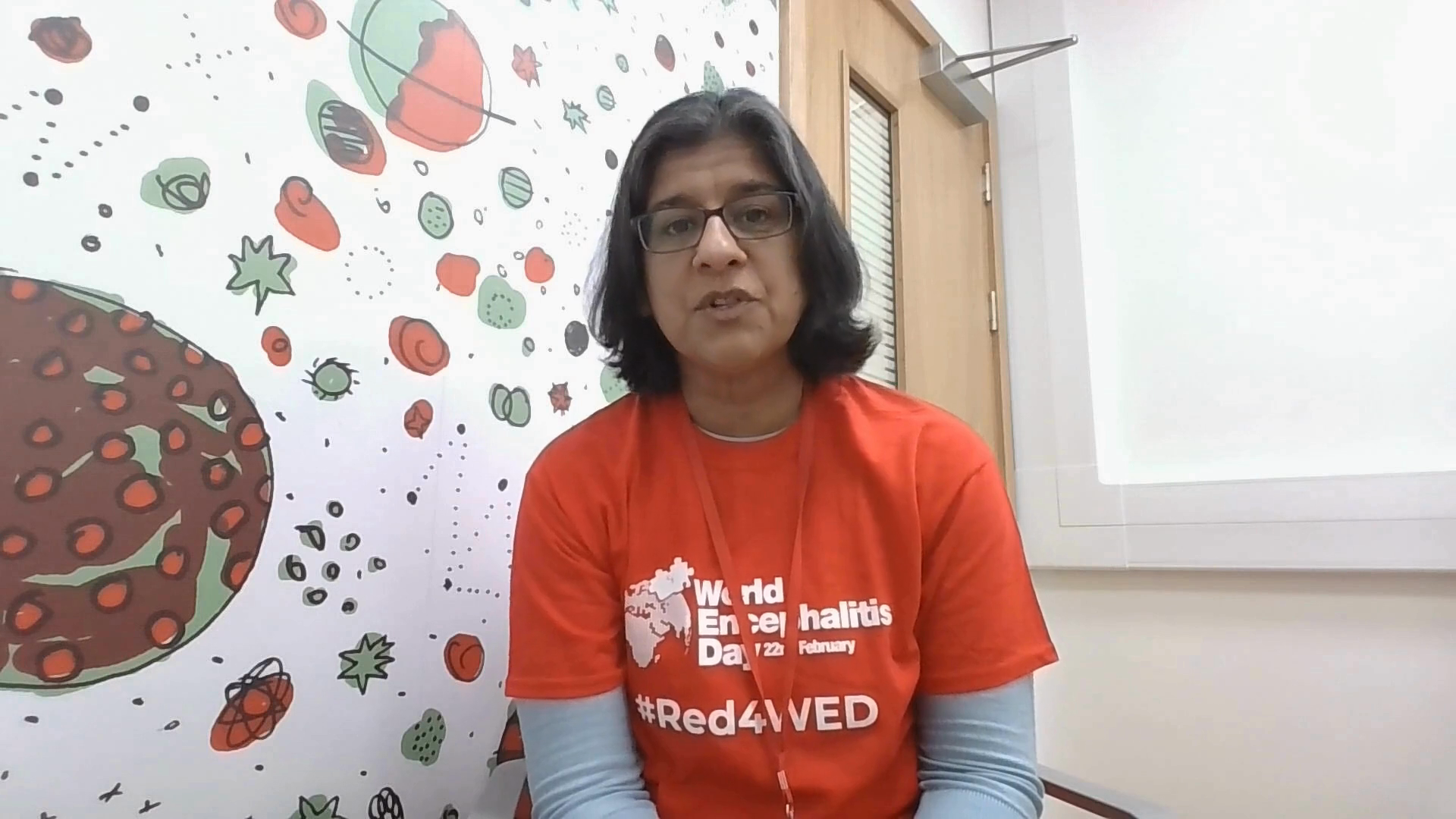
• Aston Institute of Health and Neurodevelopment (IHN) researchers support World Encephalitis Day on 22 February • Aston University library will be lit up in red – the official campaign colour • Staff and students are encouraged to wear red and tweet their photos in support of the campaign Researchers and staff at Aston Institute of Health and Neurodevelopment (IHN) are marking World Encephalitis Day (22 February) by lighting up the Aston University library on its campus near Birmingham city centre. The library will be lit up in red – the official colour of the campaign - to support and raise awareness of encephalitis and all those affected by the condition. The global awareness campaign, introduced by the charity the Encephalitis Society, is based on the theme of Code Red – an emergency alert code used in hospitals. Encephalitis is inflammation of the brain. It is caused either by an infection invading the brain or through the immune system attacking the brain in error. According to the Encephalitis Society, anyone at any age can develop the condition, with up to 6,000 cases in the UK each year and potentially hundreds of thousands worldwide. In the USA there were approximately 250,000 patients admitted to hospital with a diagnosis of encephalitis in the last decade. Researchers at Aston Institute of Health and Neurodevelopment are working closely with patients affected by the disease through their child-focused research programme. Dr Sukhvir Wright, honorary consultant neurologist at Birmingham Children's Hospital, and Wellcome Trust clinical research career development fellow at IHN, said: “IHN researchers know first-hand what children and families affected by encephalitis go through on a daily basis. That’s why we are fighting to answer the questions that matter most to this community through our work. “Our research includes, developing disease models to help try and improve treatments. We do brain imaging to identify biomarkers that might help predict outcomes and at the bedside of our patients we contribute up-to-date practical information and support for children and their families. This work is carried out closely in partnership with the Encephalitis Society.” As part of the awareness campaign IHN researchers are calling upon staff and students to show their support by wearing red on Wednesday 22 February - and share their pictures on social media. Please use the hashtags #Red4WED #WorldEncephalitisDay #TeamAston and remember to tag @Aston_IHN. For more information about Aston Institute of Health and Neurodevelopment (IHN) please visit our website.


Late last year, America was gripped with a shortage of frightening proportions and potential deadly consequences - baby formula was all but gone from store shelves and near impossible to find. Parents were panicked, newborns needed to eat and the government became desperate to source, import and distribute the baby formula to nervous mothers and children in need of nutrition. It's a topic that captured global attention and recently UMW's Sushma Subramanian - a journalist and assistant professor - looked to explain what was happening and how country's like Brazil might have found the natural way to solve this problem. Here's an excerpt from her piece in National Geographic: Five days after the early delivery of her baby last month at a municipal hospital, Talita Alves Araújo Lourenço sat in a chair while a nurse helped her express breast milk into a glass jar. Araújo, 20, had given birth at 32 weeks; she had known early delivery was likely because she had been diagnosed with preeclampsia. At first, her baby could only drink her milk through a tube, but even after developing the strength and coordination to feed from her breast, Araújo was producing too much. The nurse was helping her to empty her breasts so they would feel more comfortable and to donate the extra milk. “To know that my milk could be saving someone is very important to me,” says Araújo. While the ongoing formula shortage that began in February 2022 affected families of infants who couldn't find supplies at the store, it also renewed interest in donation of breast milk to milk banks that supply it to hospitals for vulnerable newborns. Brazil is widely considered the world’s leading example of milk banking because of a program started in the 1980s that combined promotion and training in breastfeeding with donation. The country today runs 228 of the world’s approximately 750 human milk banks. The United States, by comparison, has 28 that are members of the Human Milk Banking Association of North America. January 2023, National Geographic Magazine The rest of the article is attached and is well worth the read. If you are a journalist looking to speak with Sushma Subramanian about her latest book, then let us help. Simply click on Sushma’s icon now to arrange a time and interview. How breast milk banks could avert the next formula crisis (National Geographic) Sushma Subramanian, associate professor of journalism, published a story in National Geographic on how Brazil has become the world’s leader in breast milk banking, inspiring similar programs in other countries. https://www.nationalgeographic.com/science/article/brazil-breast-milk-banking-program-formula-crisis



Researchers find mechanical stimulation could be used to help improve balance control The findings provide new information on whole-body vibration applications Paves the way for research on the interaction between the central nervous system and peripheral muscles. Mechanical vibrations could help improve our muscles and our balance control, according to research at Aston University. Researchers in the College of Engineering and Physical Sciences have examined the effect of stimulation on muscle spindles which ‘speak’ to the central nervous system to help keep us upright and walk straight. Their results provide new perspectives on whole-body vibration applications, paving the way for future research on the interaction between the central nervous system and the peripheral muscles. The research could in future be applied to improve balance in older people and help reduce falls, this could be applied through either wearable devices or with a daily session of stimulation. Hip fractures alone account for 1.8 million hospital bed days and £1.1 billion in hospital costs every year, excluding the high cost of social care. Another potential benefit of the research is that this type of stimulation could be applied to athletes to decrease their muscle reaction times. The goal of the study was to find out if mechanical vibrations can improve the way our bodies process and react to small body oscillations. Seventeen young male and female adult volunteers aged between 20 and 28 years old stood individually on platforms, similar to vibrating plates found in gyms, which caused leg muscle contractions. Calf muscles were targeted as the muscles whose action contribute the most to maintaining a stable upright posture. The researchers stimulated their calves with a frequency of 30Hz and recorded four one-minute trials of undisturbed balance to take a baseline measure and compared the readings to measurements taken after the stimulation. After conducting the experiment, they found that their balance seemed to have improved. The research, Sensorimotor recalibration of postural control strategies occurs after whole body vibration, was led by Dr Antonio Fratini, senior lecturer in mechanical, biomedical & design engineering, and PhD student Isotta Rigoni, and has been published in Scientific Reports – Nature. Dr Fratini said: “We’re excited by our results as they could have a beneficial effect on the health and quality of life of a large number of people. “Our results indicate that whole body vibration challenges balance at first, triggering a bigger effort to control the upright stance and shifting muscle modulation toward supraspinal control, resulting in a recalibration of muscle recruitment. The neuromuscular system seems to recover from such disruption and regain control over a longer time interval.” “Indeed, while muscle recruitment and cortical effort appear unaltered over the long term, the balance seems not only restored but also improved, besides the still clearly affected calf muscles.” For more information about our research or studying in the College of Engineering and Physical Sciences please visit our website.

Aston University to celebrate 100 years of pharmacy education and research
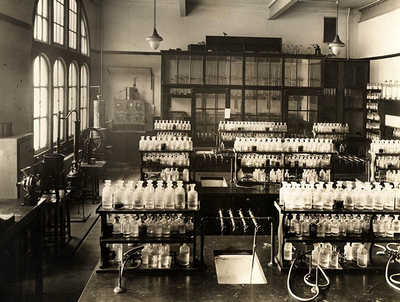
Aston Pharmacy School to celebrate 100 year anniversary during 2023 The history of teaching pharmacy at Aston University dates back to the 1890s In 2016 the Pharmacy School was awarded a Regius Professorship by HM Queen Elizabeth II. Aston University is gearing up to celebrate 100 years of pharmacy education and research this year. In 1923 the Birmingham Municipal Technical School started to offer full time pharmacy courses to applicants from the general public. The roots of pharmacy education at Aston University date back to the 1890s and more significantly to 1919 when it first started teaching the subject as part of the Chemistry department at the Birmingham Municipal Technical School - as part of a funded package of training and education for returning servicemen after the First World War. In 1923 the pharmacy training provision expanded, taking on six specialist pharmacy staff within the pharmacy section of the Department of Chemistry. That year the Technical School began to offer full time pharmacy courses open to applications from the general public. In 1926 Harry Berry was appointed as head of a separate Department of Pharmacy - following an inspection by the University of London and a positive report. This distinct identity was further cemented a year later in 1927, when Neville Chamberlain, who was the then Minister for Health, opened the new teaching facilities in the School of Pharmacy in the Birmingham Central Technical College. Since then, the University has graduated thousands of pharmacy students with more than 2700 graduates in the last 20 years. Aston University’s Pharmacy School is now recognised as one of the outstanding pharmacy schools in the UK and has been at the forefront of scientific advances over the last 100 years. Its researchers developed the $2 billion blockbuster drug Temozolomide, the leading treatment for brain tumours and it created the UK's first Masters programme for hospital pharmacists. In 2016, Aston Pharmacy School was awarded a Regius Professorship by HM Queen Elizabeth II to mark her 90th birthday. It was the first time a pharmacy school had been given the award, a rare and prestigious honour bestowed by the Sovereign to recognise exceptionally high-quality research. The first holder of the title of Regius Professor of Pharmacy at Aston University was Keith Wilson, a pharmacy academic who helped to shape current and future pharmacy education both within the UK and internationally. Dr Joe Bush, head of Aston Pharmacy School, at Aston University said: "100 years of pharmacy education is a major milestone. We are immensely proud of all our achievements, from producing exceptional graduates who make a significant contribution to the professional workforce in a variety of near-patient settings, to our research discoveries and developments which have positively impacted patient healthcare and the high quality of this research having been recognised via the award of the first ever Regius Chair for Pharmacy. “It is an honour to be a part of Aston Pharmacy School, whose humble beginnings have grown to produce world class research and exceptional graduates. I look forward to celebrating with the rest of the school over the course of the year.” Celebrations of the centenary anniversary will include a celebratory lunch for staff, former staff, students and alumni to recognise the significant contributions that the school has made in research discoveries and teaching. The school will host an exhibition about the last 100 years of pharmacy at Aston University, with a range of historical artefacts on display in the entrance to the University’s main building and there will be a social media campaign to highlight key facts about the last 100 years of pharmacy at Aston University. Did you study pharmacy at Aston University? We would love to hear from you with any stories, memories from your student days. And we would love to hear about where your pharmacy career has taken you. Please get in touch with our alumni team here.

The CRISPR Dilemma: A Road To Saving Lives Riddled with Roadblocks
The New York Times recently published an Op-Ed by Dr. Fyodor Urnov unpacking the incredible advancement and possibilities of CRISPR gene editing technology on human lives. It also addressed some of the roadblocks and challenges preventing this "not so new" technology from getting to the finish line of promise. Dr. Eric Kmiec, the director of ChristianaCare's Gene Editing Institute, whose unparalleled research has led to over 18 patents that have advanced medical research, also shared his concern in a follow-up letter published by the New York Times about the many roadblocks standing in the way of life-saving opportunities with gene editing and CRISPR technology. Dr. Kmiec (above) in the lab "If we were able to safely and effectively approve a COVID vaccine in a year, we must do the same by pooling public and private funds and seek ways to speed science. Why can’t we support the most promising solutions to some of the longest running and most intractable of cancers or rare diseases?" The advancement of gene editing has not only been stalled by the outdated processes of medical reviews and policies, but many have introduced political and religious barriers. The idea of "playing God" or even Dr. Frankenstein when people hear the term "gene editing" raises ethical questions based on a lack of understanding. Some of these concerns are shared in this recent article in Futurism. Ask one of the 100 people afflicted with a gene defect that could cost them their lives at age 7 and the perspective may be a little different. Nature makes mistakes, often imperfect, and impacted by the ever-changing landscape, impacted by external factors that are either known or unknown. Gene editing, simply put, can fix typos in genes that have experienced a glitch. As Dr. Kmiec puts it, "It allows us to correct mutations that are inbred in the genome, it's correcting nature's mistakes — and nature does make a bunch of mistakes." Whether gene editing fits into a belief system or is too otherworldly for some to grapple with, Dr. Kmiec asserts that speeding up the delays put onto science by process, politics or fear will result in saving lives, saving pain and advancing possibility. Dr. Urnov agrees, "Scientists owe them and their families honesty about the chasm between a test tube in a lab and an IV line in a hospital. The greatest obstacles are not technical but legal, financial and organizational." Gene editing is a pioneering technology that can help humans, plants and animals alike. When it comes to putting it into action, at the very least, if science is there to help, everyone should have the choice to use it.



ChristianaCare among the top 1% of more than 4,500 hospitals nationwide For the third consecutive year, ChristianaCare has earned Healthgrades America’s 50 Best Hospitals Award™ and is among the top 1% of more than 4,500 hospitals assessed nationwide for consistent, year-over-year superior clinical performance. ChristianaCare’s Christiana Hospital and Wilmington Hospital are the only hospitals in Delaware to receive the America’s 50 Best Hospitals recognition. “At ChristianaCare, we are committed to being exceptional today and even better tomorrow. This recognition as one of America’s 50 Best Hospitals is a testament to the incredible work that our caregivers do every day to ensure safe, high-quality care and an outstanding experience for our patients,” said Janice E. Nevin, M.D., MPH, president and CEO. “I am deeply grateful for our extraordinary caregivers and for the trust we’ve earned from the communities we are privileged to serve.” ChristianaCare also received the following distinctions from Healthgrades: America’s 100 Best Hospitals for Cardiac Care Award™ for 2 years in a row (2022-2023). America’s 100 Best Hospitals for Coronary Intervention Award™ in 2023. America’s 100 Best Hospitals for Gastrointestinal Surgery Award™ for 12 years in a row (2012-2023). America’s 100 Best Hospitals for Spine Surgery Award™ for 10 years in a row (2014-2023). America’s 100 Best Hospitals for Joint Replacement Award™ for 8 years in a row (2016-2023). America’s 50 Best Hospitals for Surgical Care for 2 years in a row (2022-2023). “Achieving the prestigious Healthgrades recognition year after year after year only occurs when you have a workforce whose standard is care that is safe and of the highest quality,” said Kert Anzilotti, M.D., MBA, chief medical officer of ChristianaCare. “This recognition belongs to all the members of our clinical team, who hold themselves to the highest professional standards.” Healthgrades evaluated patient mortality and complication rates for 31 of the most common conditions and procedures at nearly 4,500 hospitals across the country to identify the top-performing hospitals. This year’s analysis revealed significant variation between America’s Best 50 Hospitals and hospitals that did not receive the distinction. In fact, if all hospitals performed similarly to America’s 50 Best, more than 150,000 lives could potentially have been saved. Patients treated for heart failure at ChristianaCare and other 2023 America’s 50 Best Hospitals have, on average, a 22.8% lower risk of dying than if they were treated at a hospital that did not receive the award.* “We’re proud to recognize ChristianaCare as one of America’s 50 Best Hospitals for 2023,” said Brad Bowman, M.D., chief medical officer and head of Data at Healthgrades. “As one of America’s 50 Best Hospitals, ChristianaCare consistently delivers better-than-expected outcomes for the patients in their community and is setting a high national standard for clinical excellence.” Visit www.Healthgrades.com/quality/americas-best-hospitals for an in-depth look at ChristianaCare’s performance and profile to explore its highest quality care. Consumers also can visit Healthgrades.com for more information on how Healthgrades measures hospital quality, and access the complete methodology here. A patient-friendly overview of the complete methodology is available here. *Statistics are based on Healthgrades analysis of MedPAR data for years 2019 through 2021 and represent three-year estimates for Medicare patients only.


Award jointly given to President and CEO Dr. Janice Nevin and Chief Digital and Information Officer Randy Gaboriault ChristianaCare has earned the Transformational Leadership Award for excelling in its development and deployment of transformational information technology that improves the delivery of care and streamlines administrative services. Presented by the College of Healthcare Information Management Executives (CHIME) and the American Hospital Association, the award is jointly bestowed to Janice Nevin, M.D., MPH, ChristianaCare’s president and CEO, and Randy Gaboriault, MS, MBA, ChristianaCare’s chief digital and information officer and senior vice president. “Their trailblazing commitment to rapid transformation has set an example for the entire industry in how to pursue a leadership vision with determination, brilliant planning and courage to overcome all challenges,” said CHIME President and CEO Russell P. Branzell. Under the leadership of Nevin and Gaboriault, ChristianaCare has created and deployed new organizational, digital capabilities for both patient and caregiver. Using voice-enabled technology, ChristianaCare HomeHealth patients can interact with an internally developed Alexa capability to guide them through their personalized daily therapy regimens. Similarly, ChristianaCare recently launched the ability for in-house postpartum patients to use an Amazon Echo device to ask questions, request help or communicate with their care team. Taking voice and digital capabilities further, in February 2022, ChristianaCare deployed an innovative tool called Moxi, a collaborative robot – or “cobot” – that can assist in the hospital by making deliveries and performing other non-clinical tasks so that nurses and other clinical caregivers can spend more time focused on what they do best: caring for patients. “Randy is a phenomenal leader, with a relentless focus on creating a culture of innovation for impact, solving for the most complex problems and delivering significantly improved outcomes,” Nevin said. “His work has made ChristianaCare a model for how transformative technology can help to create health so that every person can flourish.” ChristianaCare continues to be recognized for leading innovation in the health care industry. The organization was recently recognized by CHIME’s Most Wired program with Performance Excellence Awards in its acute and ambulatory categories. That level is reserved only for organizations that are considered leaders in health care technology who “actively push the industry forward” and are “realizing meaningful outcomes, including improved quality of care, improved patient experience, reduced costs and broader patient access to healthcare services.” “Under Dr. Nevin’s extraordinary leadership, we have made an intentional commitment to placing technology at the center of all our initiatives to enable our caregivers to best serve our patients,” Gaboriault said. “That commitment, reinforced by our organization’s core behavior to continuously look for new ways to innovate, means that we are able to introduce and leverage robotic nursing assistants in a way that drives meaningful value for both patients and providers. And because our caregivers embrace change, we are confident that we will be using our cobots to assume more tasks in the future, and enable our nurses to devote even more of their precious time to direct patient care.”


ChristianaCare Named a Most Wired Health Care Technology Leader for 7th Consecutive Year
For the seventh consecutive year, ChristianaCare has earned the “Most Wired” designation from the College of Healthcare Information Management Executives (CHIME), which assesses how effectively health care organizations apply core and advanced technologies to improve health and care in their communities. Among the more than 38,000 organizations surveyed by CHIME, ChristianaCare ranked above peers in categories such as analytics and data management, population health, infrastructure and patient engagement. The survey assessed the adoption, integration and impact of technologies in health care organizations at all stages of development, from early development to industry leading. “At ChristianaCare we are curious and continuously looking for ways to innovate,” said ChristianaCare President and CEO Janice E. Nevin, M.D., MPH. “Embedding that behavior in our organization has led to brilliant planning and extraordinary execution of new, technology-enabled models of care as our patients demand greater service and convenience, including greater access from home.” ChristianaCare was recognized with a Performance Excellence Award for Most Wired’s acute and ambulatory categories. That level is reserved only for organizations that are considered leaders in health care technology who “actively push the industry forward” and are “realizing meaningful outcomes, including improved quality of care, improved patient experience, reduced costs, and broader patient access to healthcare services.” “We are on the cutting edge of health care innovation, yet we have only scratched the surface of digital care,” said Randy Gaboriault, MS, MBA, chief digital and information officer at ChristianaCare. “We have embarked on building a digital distribution network of health care that strengthens every day. And we are guiding a digital thread that weaves together all the components in and outside the walls of the hospital and provider’s office to improve the health of every person we touch.” The Most Wired recognition highlights ChristianaCare’s success in the launch of the Hospital Care at Home program, which is transforming the very nature of how acute care is delivered, as well as the creation of digital platforms that radically improve the patient experience. Launched in December 2021, ChristianaCare’s Hospital Care at Home program offers the highest level of in-home acute care in Delaware. The program combines virtual and in-person care provided by a team of physicians, nurse practitioners, registered nurses and other providers, and has to date cared for more than 200 patients. These in-person and virtual visits from the health care team mean that a patient doesn’t need to leave home to get better. Virtual technology and home health equipment brought into the patient’s home ensure around-the-clock monitoring and care that mirror a traditional hospital setting. ChristianaCare’s digital patient engagement capabilities have streamlined nearly every aspect of the patient experience. Through these digital tools, the registration, check-in and intake of patients are becoming more streamlined, improving both patient experience and efficiency at ChristianaCare practices. The digital platform also enables patients to self-schedule appointments, easily complete their medical histories and check in to appointments by simply scanning a QR code with their digital device. “These digital offerings have placed our patients in the driver’s seat,” said Lynne McCone, MBA, chief applications officer and vice president of IT at ChristianaCare. “The benefits of a conducive, consistent patient journey and experience in turn improves practice operations and efficiency and dismantles administrative burdens for both patients and caregivers. It’s a huge win for consumers, patients and providers.” The Digital Health Most Wired survey and recognition program serves as a comprehensive “digital health check-up” for health care organizations across the world, according to CHIME. As success in digital health increasingly determines the quality of patient care, the scope of the CHIME Digital Health Most Wired survey reflects the progress of leading health systems, like ChristianaCare, as they reinvent health care for a new century. “We are proud to honor your team’s exceptional dedication to excellence in digital health,” said CHIME President and CEO Russell P. Branzell of ChristianaCare. “Your pioneering performance in the industry inspires other organizations by example. Patients in communities around the world receive better care when you drive change through digital transformation, as you have proven through your success in this rigorous program.”

What Are Cardiac Arrest and Heart Attack?
Fast Action Saves Lives. When Buffalo Bills safety Damar Hamlin collapsed during an NFL game against the Cincinnati Bengals, it brought urgency to knowing signs of a cardiac arrest and what to do in case of a medical emergency involving the heart. It’s a common misunderstanding that cardiac arrest and heart attack are the same. They are different, but both are very serious heart problems and require fast action to save lives. "I think the very best bit of news for Mr. Hamlin is that the emergency medical technicians got to him very quickly." Heart attack and other conditions, including a rare type of trauma called commotio cordis, may disrupt the heart’s rhythm and lead to cardiac arrest. Commotio cordis can occur from a severe blow to the chest as in a sports injury. What is cardiac arrest? Cardiac arrest happens when the heart malfunctions and stops beating unexpectedly. Cardiac arrest is triggered by an electrical malfunction in the heart that causes an irregular heartbeat known as arrhythmia. The heart’s cardiac conduction system – or “electrical” system – is a specialized network of heart cells that keeps it beating regularly and effectively. With the heart’s pumping action disrupted, it cannot pump blood to the brain, lungs or other organs. Cardiac arrest often happens to people who didn’t know they had a heart problem. Symptoms of cardiac arrest Seconds after a cardiac arrest, a person becomes unresponsive, is not breathing or is only gasping. Death can occur within minutes if the victim does not receive treatment. Causes of cardiac arrest Cardiac arrest can run in families. People who have a family history of sudden cardiac death have a higher risk for sudden cardiac death. Other health problems can increase the chance of a deadly heart rhythm including: Heart disease (coronary artery disease). A heart attack. Heart failure. Hypertrophic cardiomyopathy. This makes the heart thicker and larger than normal. Blow to the chest that disrupts the heart rhythm as in commotio cordis. Speak with your health care provider to learn if you have a health problem that raises your risk of cardiac arrest; treatment of that problem may help lower your risk. Medicine often can control the heart rhythm. Helping someone having a cardiac arrest Cardiac arrest can be reversible in some victims if treated within a few minutes. Health professionals, family or friends and even strangers may be able to help a person right away who has cardiac arrest. First, call 911 and start CPR right away. Click here for CPR basics, including videos. Then, if an Automated External Defibrillator (AED) is available, use it as soon as possible. AEDs are often available in airports, malls, and other public places. Click here for how to use an AED. If two people are available to help, one should begin CPR immediately while the other calls 911 and finds an AED. In the ambulance and hospital, the person will receive emergency care. This care keeps the heart and lungs working to prevent damage to the body due to lack of oxygen. Doctors will try to find the cause of the cardiac arrest to prevent another one. AEDs are portable, life-saving devices designed to treat people experiencing sudden cardiac arrest, a medical condition in which the heart stops beating suddenly and unexpectedly. What is a heart attack? A heart attack occurs when blood flow to the heart is blocked. A heart attack is a circulation problem with the heart. A heart attack occurs when part of the heart muscle does not get enough blood and oxygen. This part of the heart starts to die. Symptoms of a heart attack The most common symptom of a heart attack is chest pain or pressure. Some people describe it as discomfort, squeezing, or heaviness in the chest. Other symptoms may be immediate and may include intense discomfort in the chest or other areas of the upper body, shortness of breath, cold sweats, nausea or vomiting. Some people feel symptoms in other parts of their upper body such as: Pain or discomfort in your back, jaw, throat, upper belly or arm. Sweat, feeling sick to your stomach or vomiting. Trouble breathing. Feeling lightheaded or suddenly weak. A racing or fluttering heartbeat. More often, though, heart attack symptoms start slowly and persist for hours, days or weeks before a heart attack. Unlike with cardiac arrest, the heart usually does not stop beating during a heart attack. The longer the person goes without treatment, the greater the damage. Heart attack symptoms in women can be different than men (shortness of breath, nausea/vomiting, and back or jaw pain). Address heart attack symptoms immediately Even if you’re not sure it’s a heart attack, call 911 if you have symptoms. Every minute matters. Emergency medical services staff can begin treatment when they arrive — up to an hour sooner than if someone gets to the hospital by car. These professionals also are trained to revive someone whose heart has stopped. Patients with chest pain who arrive by ambulance usually receive faster treatment at the hospital, too. Click here for CPR training classes held by the American Heart Association in your area.


Aston University launches degree in nursing starting in 2023
Nursing Studies BSc (Hons) will specialise in nursing adults Students will spend 50% of their time in work placements in the West Midlands region The nursing programme is based in Aston Medical School Aston University has launched a degree in nursing with its first intake starting its three-year course in September 2023. Approved by the Nursing and Midwifery Council (NMC), the Nursing Studies BSc (Hons) will specialise in nursing adults with a focus on community nursing, with work placements offered in hospital and community settings to best reflect where the NHS most urgently needs nurses. According to NHS Digital there are around 47,000 UK vacancies, that is a vacancy rate of 11.8% and in the Midlands region, in the first quarter of 2022 there were 9,336 nursing vacancies – making the West Midlands a hot spot for vacancies. The University is now taking applications for its first cohort of up to 40 students who will be based in Aston Medical School. They will be due to graduate in 2026, eligible to register with the Nursing and Midwifery Council as a Registered Nurse (Adult). Professor Anthony Hilton, pro-vice-chancellor and executive dean of the College of Health and Life Sciences, said: “I am delighted we now offer Nursing Studies which comes at a time when we are seeing a national shortage of nurses in the NHS and more locally in Birmingham we are seeing a significant gap in nurses trained in adult and community care settings. Nursing will be co-located within Aston Medical School to provide opportunity for truly interprofessional learning with our medical, pharmacy and wider groups of healthcare students. “We are excited to work with our local NHS Trusts to offer clinical practice education, in combination with our new state of the art health simulation facilities. We look forward to launching in 2023 and developing high quality nursing graduates to support the NHS workforce of the future.” Students will spend 50% of their time on work placements at various local hospital trusts including Sandwell and West Birmingham (with its new hospital opening in 2024), The Royal Orthopaedic Hospital NHS Foundation Trust, University Hospitals Birmingham – this includes The Queen Elizabeth Hospital, Solihull Hospital, Birmingham Heartlands and Good Hope Hospital, as well as Birmingham Community Healthcare Trust. There will also be opportunities for placements within various nursing homes, hospices and GP practices. There are significant opportunities for interprofessional learning with other healthcare students - because the nursing cohort will study some taught sessions alongside students in Aston Medical School, Pharmacy, Optometry and Audiology. New state-of-the-art healthcare simulation facilities will be used to support practical and clinical skills training. The simulation suite includes two hospital wards, a residential flat, an immersive room and high-fidelity mannequins. Jayne Murphy, programme lead adult nursing, Aston University: “Nursing is dynamic and challenging and requires a huge skill-set from specialist clinical skills to essential skills of communication, problem-solving and professionalism.” “There is no better time to start a career in nursing. The opportunities post-qualifying are endless and our students will have the potential to make a significant difference to people’s lives when they are often at their most vulnerable.” “Our nursing students will work with some truly inspirational people who will support them to be the best nurse they can be. The small cohort sizes at Aston University mean they will have a personalised experience in a supportive environment to help our students flourish during their studies and in their first post as a registered nurse.” Dr Alexander Rhys, NMC Assistant Director of Professional Practice, said: “Congratulations to Aston University which has become one of the latest education institutions approved against our standards to deliver a pre-registration nursing programme. It's vital that nursing and midwifery students receive the high-quality education they need to join our register and deliver the safe, effective and kind of care that people have the right to expect. We look forward to supporting Aston University as it educates the nurses of the future”. We are now taking applications for BA (Hons) Nursing Studies (Registered Nurse Adult Nursing) starting in September 2023. To find out more about the course or how to apply, please visit the course pages on our website. Deadline for applications is 25 January 2023.