
Experts Matter. Find Yours.
Connect for media, speaking, professional opportunities & more.

Health Professions Academic Building on the Armstrong Campus in Savannah Georgia’s only public medical school has received funding approval to open a new four-year campus in Savannah, an expansion that will provide greater access to education and training for medical students and ease the state’s ongoing shortage of physicians. The new campus of Augusta University’s Medical College of Georgia (MCG) is expected to enroll its first students on the Armstrong Campus of Georgia Southern University by Fall 2024, pending approval by the Liaison Committee on Medical Education, the accrediting body for medical schools in the U.S. and Canada. The campus will be located in the existing Armstrong Center and the Health Professions Academic Building of Georgia Southern’s Waters College of Health Professions. Located down the street from Savannah’s St. Joseph’s Hospital, it would be MCG’s third four-year campus in Georgia. The MCG educational experience is anchored at its main campus in Augusta, with another four-year campus located in Athens in partnership with the University of Georgia. “Georgia ranks 40th in the nation for both the number of active physicians and the number of primary care doctors,” Georgia House Speaker Jon Burns said. “Georgians experience this reality every day. Increasing opportunities within the University System of Georgia allows Augusta University’s Medical College of Georgia to educate and train more students and meets a clear need to make sure our communities receive better health care. Georgia needs more doctors, and I’m proud we are making this investment in our future.” The Board of Regents of the University System of Georgia (USG) on Tuesday approved $1.7 million for renovations at Georgia Southern’s Armstrong Campus to help make the new campus a reality. The money was included in the fiscal year 2024 state budget passed earlier this year by the Georgia General Assembly and signed by Gov. Brian Kemp on May 5. “We’re grateful to Governor Kemp, Speaker Burns, Lt. Gov. Jones and the General Assembly for their support in helping MCG and the university system expand one of the best public medical colleges in the nation and help get more doctors into our local communities,” USG Chancellor Sonny Perdue said. Four-year campuses provide the full spectrum of medical education, from basic sciences to clinical experiences. “This campus expansion is a momentous milestone for Augusta University and the Medical College of Georgia, standing as a testament to the unwavering support we have received from Speaker Burns, state Rep. Butch Parrish, Governor Kemp, the entire General Assembly and Chancellor Perdue,” said Augusta University President Brooks A. Keel, PhD. “Through this collaboration, we are forging a brighter future for health care in Georgia and fulfilling our shared commitment to producing more doctors for our state. I extend my deepest gratitude to all those who have championed this vision, including St. Joseph’s/Candler Health System, whose exceptional partnership has provided invaluable clinical experiences for our students. Together, we are bolstering the state’s medical community and strengthening Southeast Georgia’s access to quality health care.” MCG’s statewide educational model also has students learning at two-year, clinically focused regional campuses in every corner of the state, including the Southeast Campus, established in 2011 and based at St. Joseph’s/Candler in Savannah, and Southeast Georgia Health System in Brunswick. Other regional campuses include the Southwest Campus based in Albany and the Northwest Campus based in Rome. “This partnership with Augusta University and the Medical College of Georgia is another example of how together, the governor, our legislators, the University System of Georgia and Georgia Southern University are collaborating to meet the growing needs of Southeast Georgia,” added Georgia Southern University President Kyle Marrero. “These programs on our Savannah campus further Armstrong’s history of being a leader in training health care professionals and complement our efforts to expand nursing education and develop our future physician assistant program.” Through this partnership, Georgia Southern is providing approximately 23,000 square feet of instructional and lab space in its Armstrong Center and the Waters College of Health Professions’ Health Professions Academic Building. This includes 10,000 square feet of dedicated student group workspace and faculty and staff offices and 13,000 square feet of shared anatomy lab and large classroom space. The renovations include the creation of a new anatomy lab within the Health Professions Building, as well as minor renovations and new furniture, fixtures and equipment for the student group workspace and faculty and staff offices. The new campus would allow MCG to accept 40 more students per year, increasing its class size, already one of the nation’s largest, to 304 students per class. “As the state’s only public medical school, it is both our responsibility and commitment to produce more doctors for Georgia, and this growth in our class size is one way we can fulfill what I consider to be our most critical mission” said MCG Dean David Hess, MD. “This expansion would not be possible without the support of Governor Kemp, the Georgia Legislature, the University System of Georgia, Augusta University President Brooks Keel, and our colleagues at Georgia Southern University. I am also thankful for the unwavering support of St. Joseph’s/Candler Health System, including its CEO Paul Hinchey and chief medical officer Dr. Julia Mikell, a 1976 MCG graduate. Physicians and staff at St. Joseph’s/Candler have been exceptional educational partners, serving as a home base for our Southeast Campus, and providing rich clinical experiences for our third- and fourth-year students, for well over a decade. I know that commitment will extend to students at this new four-year campus.” “This is a sentinel event not only for the future of health care in Georgia, but also for Savannah and the region,” added Paul P. Hinchey, president and CEO of St. Joseph’s/Candler. “We have had a great relationship with MCG for more than a decade and our physicians have been instrumental as faculty in teaching third- and fourth-year students in Savannah. SJ/C has also served as a longstanding clinical site for nursing students from Georgia Southern and from the Armstrong campus. Creating a four-year medical school campus in Savannah will strengthen the medical community in Savannah and throughout Southeast Georgia. I want to thank Speaker Burns, Dr. Hess and the University System of Georgia for making this great vision a reality.” “I am excited to help build a campus that will continue MCG’s mission of educating the next generation of physicians,” said Elizabeth Gray, MD, associate dean at MCG’s Southeast Campus, based in Savannah and Brunswick. “I am confident that Georgia Southern will be an exceptional educational partner, and am excited to continue working with the leadership, physicians and staff at our longtime partners St. Joseph’s/Candler to help increase the number of physicians in this area of the state and beyond.” Interested in learning more? For more information about this exciting new development — simply reach out to Georgia Southern's Director of Communications Jennifer Wise at jwise@georgiasouthern.edu to arrange an interview today.


Aston University staff to take on zip wire challenge in aid of the Midland Met Appeal
Four University staff will take on the 160ft high zip wire challenge on 1 July 2023 The event is set to take place at the Midland Metropolitan University Hospital in Smethwick The event aims to raise awareness and funds for the Midland Met Appeal. Four Aston University staff members are set to take on a 160ft high zip wire challenge on Saturday 1 July to raise money for the Midland Met Appeal. The event is run by Your Trust Charity, the Sandwell and West Birmingham NHS Trust's registered charity will take place at the Midland Metropolitan University Hospital in Smethwick. The zip wire challenge will take place from the top of a crane positioned on-site, with a length of 220 metres and speeds of up to 35mph. The challenge will see colleagues Rosa Amato, Sarah Collins, Matilda Blackwell and Adam Basdogan taking the plunge. The event aims to raise awareness and funds for the Midland Met Appeal, a campaign to raise £2 million to fund healthcare and facilities in the new hospital. All money raised from the challenge will go directly to the appeal. Rosa said: “We are thrilled to be taking on this exciting challenge in support of the Midland Met Appeal. “It's a great opportunity for us to raise funds for a cause we are passionate about while having a lot of fun in the process. “Members of the public can show their support for the Aston University team and the Midland Met Appeal by making a donation to the Your Trust Charity's JustGiving page. “Every donation counts, and together, we can make a real difference in improving healthcare for patients in the Midlands.” For more information and to make a donation, click here.


Ana Palacios’ interview on “Eagle Eye View,” the official podcast of Georgia Southern University. Palacios discusses her research and how being a mom motivated her. Several esteemed nutrition researchers collaborated on “Effectiveness of Lactation Cookies on Human Milk Production Rates: A Randomized Controlled Trial,” which was recently published in The American Journal of Clinical Nutrition. David B. Allison, Ph.D., dean of the Indiana University School of Public Health-Bloomington (SPH-B), is among the researchers who conducted a one-month, randomized controlled trial of lactating parents of healthy babies in the same age range. Their findings revealed no evidence for an effect of consuming lactation cookies on human milk production. “Too often in the field of nutrition and food, strong beliefs—sometimes even well-reasoned conjectures based upon some scientific knowledge—are mistaken for demonstrated facts,” Allison said. “Conjecture is good, but knowing is better. We come to know about the effects of nutrition and dietary supplements through rigorous, randomized, controlled trials. Having conducted such a study on lactation cookies, we found no evidence for their effectiveness. “This does not mean that it is impossible for any lactation cookie to affect human milk production,” he continued. “This study does suggest that the cookies we studied—under the conditions we studied them—have no discernible effect. The burden of proof seems to now be on those who claim there is an effect.” The study followed 176 U.S. parents who were exclusively breastfeeding healthy two-month-old babies. One group of parents was provided a serving of commercially available lactation cookies to consume daily for a month; the other group of parents ate a serving of conventional cookies not designed to increase lactation, each day for a month. Through a weekly survey, parents reported the quantity of milk they produced after following a validated milk expression protocol using a hospital-grade breast pump, providing data that were analyzed by both the study authors and an independent statistician. These data demonstrated that the impact of consuming lactation cookies did not have a significant effect on how much milk was actually produced or perceived to be produced by the lactating parents. The authors assert that consumers should be cautious when considering the potential effect of this product, or any food and/or supplement that promotes health-promoting benefits without published, peer-reviewed scientific evidence to support its claims. As the researchers noted, these lactation cookies can contain substantial calories and sugars, which could affect postpartum weight loss efforts and related health issues. “Despite being a physician and nutrition scientist focused on early-life nutrition, I still remember how difficult breastfeeding was for me with both of my children,” said study lead author Ana M. Palacios, MD, Ph.D., assistant professor, Department of Health Policy and Community Health, Jiann-Ping Hsu College of Public Health at Georgia Southern University. “Our research highlights that lactation cookies, which include added sugars and saturated fat, may not have the said purported benefits of increasing milk production. Purchasing lactation cookies to increase milk production may pose an unnecessary cost and may have additional implications for parents, such as limiting post-pregnancy weight loss and reducing consumption of healthier foods. More research is needed to better understand what foods and nutrients can best help increase milk supply in diverse populations.” The full article, along with the list of contributing authors, is available by simply clicking the article below: Interested in learning more? For more information about this research or to speak with Ana M. Palacios — simply reach out to Georgia Southern's Director of Communications Jennifer Wise at jwise@georgiasouthern.edu to arrange an interview today.

ChristianaCare Earns Third Consecutive Apex Recognition Award for Excellence in Respiratory Care
ChristianaCare one of only nine health systems to receive the honor for three consecutive terms For exceptional care in ensuring patients are able to easily breathe during their hospital stay, ChristianaCare has earned its third consecutive Apex Award in the Acute Hospital category. Conferred by the American Association for Respiratory Care (AARC), the award recognizes ChristianaCare for its “exemplary demonstration of best practices in respiratory care.” ChristianaCare is one of only 18 health systems nationwide to earn this award and one of just nine to receive the honor for at least three consecutive terms. As a key component of hospital care, respiratory care is an important contributor to the overall quality and safety of a hospital. For patients and their families, ChristianaCare’s continuing recognition in this category is further reassurance that the health system’s quality is among the best in the nation. “At ChristianaCare, we commit to being exceptional today and even better tomorrow,” said John S. Emberger, BS, RRT-AACS, FAARC, CPHQ, director of Respiratory Care at ChristianaCare. “This recognition belongs to all the respiratory therapists on our team. They are committed to following evidence-based practices and to ensuring that every action they take is safe. It’s a deep privilege to lead a team so committed to our organization’s core values of love and excellence.” ChristianaCare’s respiratory team comprises nearly 150 caregivers who provide respiratory care within hospitals and outpatient settings and manage the mechanical ventilators and artificial airways used to help ICU patients breathe. To support continuous improvement, the team rigorously measures and tracks quality, patient satisfaction, safety and operational performance. That work has made an impact that extends beyond ChristianaCare; for example, the respiratory team’s success in standardizing practices to reduce infections and inflammations that can occur in patients on ventilators was published in the peer-reviewed journal Respiratory Care. Another key ingredient to the team’s success has been its ability to attract and retain top talent. ChristianaCare’s respiratory department is set up with clinical career ladders that provide the opportunity for caregivers to broaden their skills and responsibilities through their participation in quality improvement projects. “Our respiratory therapists are always seeking ways to improve and grow,” said Michael Benninghoff, DO, MS, section chief for Medical Critical Care, and the medical director of respiratory care at ChristianaCare. “They have played a significant role in helping our ICUs achieve excellent outcomes in caring for many of our sickest patients. They measure their performance and continuously look for ways to innovate.” The Apex Recognition Award was developed in 2017 as a way for the AARC to recognize respiratory care departments that demonstrate high quality care. “Respiratory care departments dedicate themselves to delivering excellent care for patients everywhere. They are a vital component to a patient’s care team, making a positive impact for the quality of patient care,” said AARC President Carl Hinkson, MSc, RRT, RRT-ACCS, RRT-NPS, FAARC. “Earning the Apex Recognition award is a tremendous honor. It shows how these teams reach high standards and bring their specialized skills to their health care colleagues. Congratulations to ChristianaCare as one of our 2023-2024 Apex Recognition Award recipients.”




Candida auris: The deadly fungus is spreading and proving difficult to fight
Candida auris is making headlines - and for all the wrong reasons. The fungus can lead to severe infections causing long term health issues and even death. Recently, Fox News in Los Angeles was covering this emerging threat and reached out to Augusta University's Dr. Jose Vazquez for his expert insight and opinion. Here's the piece: The Centers for Disease Control & Prevention says Candida auris, or C. auris, is an emerging health threat, a type of fungus can cause severe, potentially life-threatening infections in people hospitalized with compromised immune systems. Dr. Jose Vasquez, chief of infectious diseases at the Medical College of Georgia at Augusta University, says there are several reasons for concern about this fungus. "The biggest fear is that it is multi-drug resistant," he says. "So, it is resistant to many different drugs." The CDC says most C. auris infections respond to antifungal medication, but some do not. Vasquez says C. auris is also hard to detect without highly specialized lab equipment that many hospitals do not have. And, he says, it is hard to stop the fungus once it gets into a hospital setting, such as an ICU or nursing care facility. C. auris can live on a person's skin without causing symptoms, allowing it to be transmitted from one person to another, or to get into a patient's body through contaminated surfaces or medical equipment like mechanical ventilators, feeding tubes and central lines. 'It is one of the Candidas that lives the longest on a surface, and we're talking about weeks," he sys. "So it can live there, dry and desiccated. Once it gets there, it kind of sets up shop, and it is very, very difficult to eradicate." The rest of the news story is attached: Looking to know more? That’s where Augusta University can help. Dr. Jose Vazquez, division chief and professor of Medicine at the Medical College of Georgia, is an expert in the realm of infectious diseases. He studies and treats infectious diseases, including antibiotic-resistant superbugs and fungal infections. He has been a reliable source for local, statewide and national media regarding the coronavirus outbreak. Dr. Vazquez is available to speak with media regarding this topic – simply click on his icon to arrange an interview.


ChristianaCare Will Open Neighborhood Hospital at Its West Grove Campus
Plans for emergency and inpatient care follow extensive planning and community listening sessions ChristianaCare today provided new details about its plans to restore needed health care services to the southern Chester County, Pennsylvania, community at its West Grove campus, formerly Jennersville Hospital. ChristianaCare will open a neighborhood hospital that includes 10 emergency department beds and 10 inpatient beds. The neighborhood hospital will offer emergency care and behavioral health emergency care and provide diagnostic capabilities including ultrasound, computed tomography (CT), X-ray and laboratory services. The emergency department will treat common emergency care needs such as falls, injuries, heart attacks and strokes. Additionally, the hospital will benefit from access to ChristianaCare’s large network of specialists and support services — such as neurology and cardiology — through virtual consults. “We are excited to share our plans to restore important local health care resources to the southern Chester County community,” said Janice Nevin, M.D., MPH, ChristianaCare president and CEO. “We are committed to our neighbors in southern Chester County for the long-term, serving them as expert, caring partners in their health.” ChristianaCare’s plans for a neighborhood hospital meet the Pennsylvania Department of Health’s requirements for a micro-hospital, which must have a minimum of 10 inpatient beds and 10 emergency department treatment rooms and offer imaging services on-site. “After listening to the needs of the community and an extensive review of historical and projected demographic data, we believe this neighborhood hospital model will provide the right mix of health care services for the West Grove campus in a way that is sustainable and meets the community’s most immediate needs today,” said Heather Farley, M.D., chief wellness officer for ChristianaCare and the clinical leader for the West Grove planning. “It also sets us up to grow in meeting more of the community’s needs in the future.” ChristianaCare anticipates an opening date in late 2024, although the date is subject to change due to the significant work that will be required to renovate the facility to bring it up to current standards, including the build-out of an entirely new information technology infrastructure. Last year, ChristianaCare received funding from Chester County and the Commonwealth of Pennsylvania totaling $5 million to assist in facility upgrades. ChristianaCare already serves residents of southern Chester County. Since 2020, ChristianaCare has provided primary care in three practices that are located in Jennersville, West Grove and Kennett Square. The West Grove practice has recently brought on additional providers and will soon begin offering virtual visits with ChristianaCare specialists. Combined, these three practices are now the “medical home” for 22,000 residents in these communities. ChristianaCare finalized the purchase of its West Grove campus from Tower Health in June 2022. The hospital has been closed since Dec. 31, 2021.
How Teleradiology Improves ER Efficiency & Patient Care
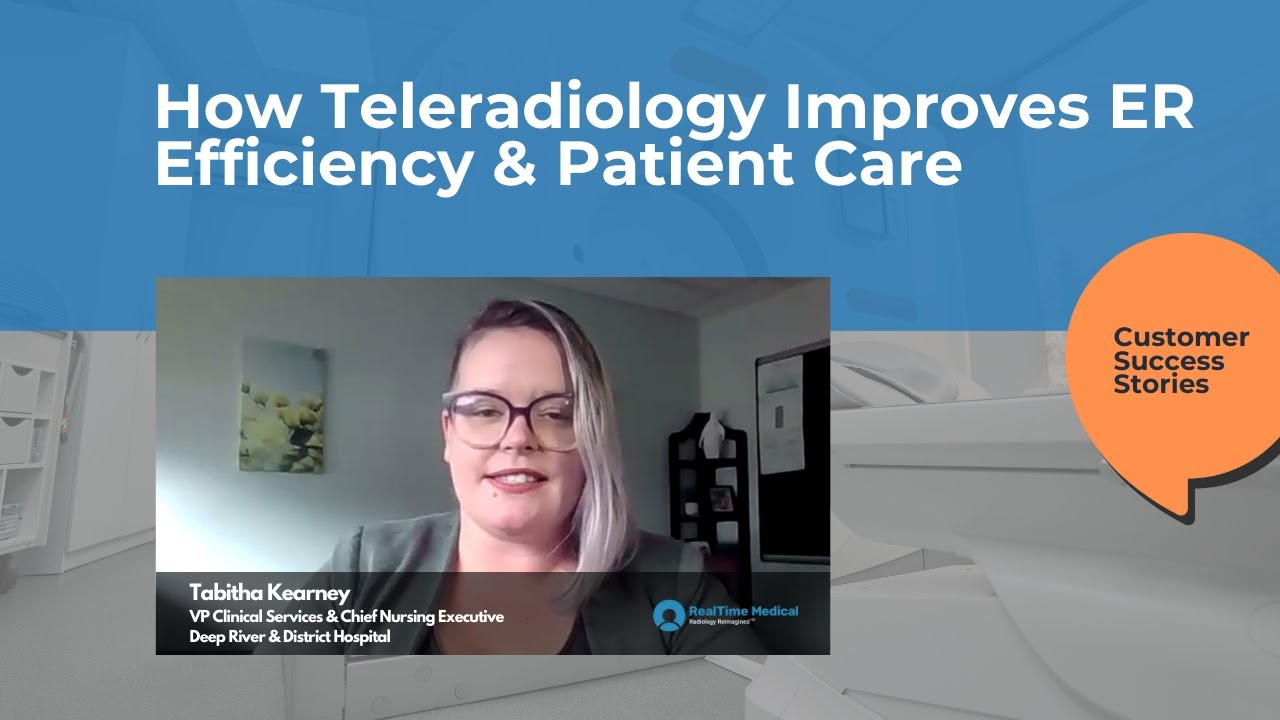
Is your ER efficiency where you need it to be? Learn how radiology collaboration services from RealTime Medical have improved ER efficiency and patient care from Tabitha Kearney, VP Clinical Services, Deep River & District Hospital. Learn how radiology collaboration services have improved ER efficiency and patient experience from Tabitha Kearney, VP Clinical Services, Deep River & District Hospital. Learn more here: https://realtimemedical.com/radiology-services/ #radiology #teleradiology #diagnosticimaging


Optometry professor recognised for excellence in research at awards ceremony
Professor James Wolffsohn recognised for research excellence at London awards ceremony Professor Wolffsohn specialises in myopia management, dry eye disease and contact lenses research Excellence in eye care event is hosted by the Association of Optometrists. A world leading optometrist from Aston University has been recognised for his research excellence in the field of optometry specialising in myopia management, dry eye disease and contact lenses research. Professor James Wolffsohn was the recipient of the Recognising Research Excellence award on Sunday (26 February) at the Excellence in eye care event in London - hosted by the Association of Optometrists. Professor Wolffsohn, who is also the head of the School of Optometry said: “I was very surprised and truly honoured. It is lovely to have my research recognised.” “I have always been driven by wanting to know more. I think research is important because you want healthcare professionals to be working at the cutting edge and using techniques that are proven to work without bias.” James’s first experience of research occurred during his pre-reg placement at Moorfields Eye Hospital. He said: “They had a project on automatic teller machines – bank machines were fairly new and we were working for a major bank on the optimum colour combinations for people with visual impairment.” James went on to complete his doctorate in ocular motor research at Cardiff University, before travelling to Australia to work as a researcher at the University of Melbourne. During this time, Professor Wolffsohn continued to work in practice and would fly into the outback to provide low vision services to remote communities. Since returning to Aston University in 2000, he has worked in a variety of different academic roles – including as head of department across three different disciplines. “I will rarely turn down a collaborative proposal if there is an opportunity to make a difference to evidence-based clinical practice,” Wolffsohn said. James is also passionate about ensuring that scientific discoveries result in tangible change for patients. Three spin-out companies have been developed on the basis of research he has contributed to at Aston University. Alongside research and academic roles, Professor Wolffsohn continues to work a half-day in clinic each week. He has also played an influential role in spearheading consensus among the profession on evolving scientific fields, from myopia management to dry eye disease. James led the diagnostic committee for the Tear Film & Ocular Surface Society DEWS II report and chaired the Contact Lens Evidence-based Academic reports of the British Contact Lens Association. For more information about the School of Optometry and the Vision Sciences Research Group please visit our website.


Why Grand River & St. Mary’s General Hospital Runs the RealTime Medical Platform?
What makes for a good DI partner company? Learn about how Dr. Darren Knibutat and the team at Grand River & St. Mary’s General Hospital are implementing RealTime’s radiology collaboration services to help manage a demanding workload, hold the line on costs and deliver improved patient care. Full interview here: https://youtu.be/lScHwliTnXY Learn more here: https://realtimemedical.com/radiology-services/ #peerlearning #radiology #teleradiology #qualityofcare #radiologyreimagined #radiologyproductivity #workloadbalancing #diagnosticimaging #patientcare #radiologysolutions

How Teleradiology Reduces Return Patient Visits
Can your ER afford unnecessary return patient visits? Learn how radiology collaboration services have improved ER efficiency and patient experience from Tabitha Kearney, VP Clinical Services, Deep River & District Hospital. Watch our interview with Tabitha Kearney, VP of Clinical Services, Deep River & District Hospital, to learn how teleradiology helps reduces return patient visits. Learn more: https://realtimemedical.com/radiology-services/ Find the full interview here: https://youtu.be/Vc5I0E8FkM8 #peerlearning #radiology #teleradiology #QualityofCare #radiologyreimagined #radiologyproductivity #workloadbalancing #diagnosticimaging #patientcare #radiologysolutions