
Experts Matter. Find Yours.
Connect for media, speaking, professional opportunities & more.

Expert Spotlight: Cities Ranked for Climate Resiliency
USA Today Homefront interviewed Jase Bernhardt, associate professor and director of Sustainability Studies in the Department of Geology, Environment and Sustainability, for its feature on the top-ranking cities for climate resiliency. Dr. Bernhardt was asked to explain initiatives or incentives that can be implemented by cities to address vulnerabilities to climate change. He said, “Cities in the U.S. should be most concerned with investing in solutions to the unique challenges they face in a changing climate. Such initiatives might include green roofs to reduce the urban heat island effect and planting more trees to absorb excess water and limit flooding.” Covering our changing climate and how we're adapting ? We're here to help. Jase Bernhardt is an associate professor in the Department of the Geology, Environment and Sustainability at Hofstra University and also director of the department's MA Sustainability program. He's also an expert on hurricane preparedness. Jase is available to speak with media about these topics - simply click on his icon now to arrange an interview today.


World Water Day - United Nations World Water Development Report Launched | Media Advisory
World Water Day marks the launch of the United Nations World Water Development Report, a comprehensive review of the state of the world's freshwater resources. This day serves as a crucial reminder of the importance of water conservation, the challenges of water scarcity, and the need for sustainable management of this essential resource. As climate change accelerates and global demand for water increases, the findings of this report are more relevant than ever, offering a call to action for governments, businesses, and individuals worldwide. Key areas of focus include: Global Water Scarcity: The current status and future projections of freshwater availability. Impact of Climate Change on Water Resources: How global warming is affecting water cycles and availability. Innovative Water Management Solutions: Emerging technologies and strategies for sustainable water use. Water and Sanitation for All: Progress towards ensuring access to clean water and sanitation as a fundamental human right. Economic Implications of Water Management: The costs and benefits of investing in water infrastructure and conservation. International Cooperation on Water Issues: Examples of successful cross-border water management and conservation efforts. For journalists seeking research or insights for their coverage on this topic, here is a select list of experts. Michael Savarese Professor of Marine Science & Environmental Studies, Florida Gulf Coast University Karen Clay Professor, Carnegie Mellon University Pamela Grothe Assistant Professor University of Mary Washington Michael Vandenbergh Professor of Law, Vanderbilt University Tom Rand Managing Director at MaRS Cleantech Fund To search our full list of experts visit www.expertfile.com Photo by Artem Beliaikin


Reddit Shares Expected to Commence Trading on NYSE | Media Advisory
In a move emblematic of the digital age's intersection with traditional finance, Reddit, the vast online community platform, is poised to debut its shares on the New York Stock Exchange (NYSE). This event marks a significant milestone for the company, celebrated for its user-generated content and vibrant forums that span every conceivable interest. For investors, tech enthusiasts, and users alike, Reddit's transition from a private to a public entity opens up discussions on the valuation of online communities, the future of digital platforms, and the implications for the broader stock market. Key sub-topics include: Initial Public Offering (IPO) Details: Insights into Reddit's valuation, share pricing, and the IPO process. Impact on the Tech Industry: What Reddit's public listing means for the tech sector and other social media platforms. User Community Reaction: How Reddit's dedicated user base perceives the move to go public and potential changes to the platform. Market Performance and Investor Sentiment: Analysis of investor interest, market trends, and the potential for Reddit's stock. Corporate Governance and Strategy: The shift in Reddit's management approach post-IPO and strategic plans for growth. The Role of Digital Platforms in Modern Investing: How Reddit and similar platforms influence investor decisions and market dynamics. For journalists seeking research or insights for their coverage on this topic, here is a select list of experts. Scott Stratten President & CEO · UnMarketing Samantha Bradshaw Doctor of Philosophy Candidate · Oxford Internet Institute David Meerman Scott Marketing Strategist, Keynote Speaker, Bestselling Author Sean Thoennes, Ph.D. Associate Faculty - Media Psychology · Fielding Graduate University To search our full list of experts visit www.expertfile.com Photo by Brett Jordan

Aston University to train the UK’s next generation of decarbonisation experts
Consortium led by the University is to receive almost £11 million to open doctoral training centre Will focus on use of biomass to replace fossil fuels and removal of CO2 “…part of the UK’s biggest-ever investment in engineering and physical sciences doctoral skills”. Aston University is to train the next generation of scientists tasked to remove greenhouse gases from the environment. A consortium led by the University is to receive almost £11 million to open a doctoral training centre which will focus on leading the UK towards net zero. The centre, based at Aston University, will bring together world-leading research expertise and facilities from the University of Nottingham, Queens University Belfast and the University of Warwick and more than 25 industrial partners. The funding has been announced by the UK science, innovation and technology secretary Michelle Donelan. The centre is to receive almost £8 million of government money while the remainder will be made up through match funding and support from industry and the four universities. The government has described it as part of the UK’s biggest-ever investment in engineering and physical sciences doctoral skills, totalling more than £1 billion. The Aston University centre will focus on the use of biomass to replace fossil fuels and removal (or capture) of CO2 from the atmosphere, with the potential to create new sources of fuels and chemicals. Integration of these two areas will lead to significant cost and energy savings. Called NET2Zero, the centre will train PhD students across the full range of engineered greenhouse gas removal techniques including direct air capture, CO2 utilisation (including chemical and material synthesis), biomass to energy with carbon capture and storage, and biochar. The students will work in the centre’s laboratories exploring the conversion of feedstock into alternative energy, improving conversion processes and measuring how the new technologies will impact the economy. Supported by a range of relevant industrial, academic and policy partners the centre will equip students to develop the broad range of skills essential for future leaders in decarbonisation. NET2Zero will be led by Professor Patricia Thornley, director of Aston University’s Energy and Bioproducts Research Institute (EBRI). She said: “I am delighted that this centre for doctoral training has been funded. The climate emergency is so stark that we can no longer rely on demand reduction and renewables to meet our decarbonisation targets. “If we are to have greenhouse gas removal options ready in time to be usefully deployed, we need to start now to expand our knowledge and explore the reality of how these can be deployed. This partnership of four leading UK universities with key industrial and policy partners will significantly augment the UK’s ability to deliver on its climate ambitions.” “We are absolutely delighted to be working with our partners to deliver this unique and exciting programme to train the technology leaders of the future. Our students will deliver research outcomes that are urgently needed and only made possible by combining the expertise and resources of all the centre’s academic and industry partners.” Science and technology secretary, Michelle Donelan, said: “As innovators across the world break new ground faster than ever, it is vital that government, business and academia invests in ambitious UK talent, giving them the tools to pioneer new discoveries that benefit all our lives while creating new jobs and growing the economy. “By targeting critical technologies including artificial intelligence and future telecoms, we are supporting world class universities across the UK to build the skills base we need to unleash the potential of future tech and maintain our country’s reputation as a hub of cutting-edge research and development.” Centres for doctoral training have a significant reputation in training future UK academics, industrialists and innovators who have gone on to develop the latest technologies. The University of Nottingham’s Dr Eleanor Binner said: “We are absolutely delighted to be working with our partners to deliver this unique and exciting programme to train the technology leaders of the future. Our students will deliver research outcomes that are urgently needed and only made possible by combining the expertise and resources of all the Centre’s academic and industry partners.” Her colleague Professor Hao Liu added: “We look forward to providing our best support to the NET2Zero CDT, including using our past and existing successful experience in leading other centres, to make this an exemplar.” Overall, there will be 65 new Engineering and Physical Sciences Research Council (EPSRC) centres for doctoral training which will support leading research in areas of national importance including the critical technologies AI, quantum technologies, semiconductors, telecoms and engineering biology. The funding is from a combination of £500 million from UK Research and Innovation and the Ministry of Defence, plus a further £590 million from universities and business partners. Notes to Editors EPSRC and BBSRC Centre for Doctoral Training in Negative Emission Technologies for Net Zero (NET2ZERO) Led by: Professor Patricia Thornley, Aston University The Engineering and Physical Sciences Research Council (EPSRC) is the main funding body for engineering and physical sciences research in the UK. Our portfolio covers a vast range of fields from digital technologies to clean energy, manufacturing to mathematics, advanced materials to chemistry. EPSRC invests in world-leading research and skills, advancing knowledge and delivering a sustainable, resilient and prosperous UK. We support new ideas and transformative technologies which are the foundations of innovation, improving our economy, environment and society. Working in partnership and co-investing with industry, we deliver against national and global priorities. The Biotechnology and Biological Sciences Research Council (BBSRC) invests in world-class bioscience research and training on behalf of the UK public. Our aim is to further scientific knowledge, to promote economic growth, wealth and job creation and to improve quality of life in the UK and beyond. Funded by government, BBSRC invested £451 million in world-class bioscience in 2019-20. We support research and training in universities and strategically funded institutes. BBSRC research and the people we fund are helping society to meet major challenges, including food security, green energy and healthier, longer lives. Our investments underpin important UK economic sectors, such as farming, food, industrial biotechnology and pharmaceuticals. About Centres for Doctoral Training A CDT trains doctoral students with each centre focused on a specific theme or topic. Most CDTs will support five cohorts (a new cohort starting each academic year) with a cohort supporting an average of thirteen students. Fourteen of the centres will have four cohorts rather than five. EPSRC supports doctoral students through three training routes (Doctoral Training Partnerships, ICASE awards and CDTs), and in the last 30 years has supported over 50,000 doctoral students. About Aston University For over a century, Aston University’s enduring purpose has been to make our world a better place through education, research and innovation, by enabling our students to succeed in work and life, and by supporting our communities to thrive economically, socially and culturally. Aston University’s history has been intertwined with the history of Birmingham, a remarkable city that once was the heartland of the Industrial Revolution and the manufacturing powerhouse of the world. Born out of the First Industrial Revolution, Aston University has a proud and distinct heritage dating back to our formation as the School of Metallurgy in 1875, the first UK College of Technology in 1951, gaining university status by Royal Charter in 1966, and becoming The Guardian University of the Year in 2020. Building on our outstanding past, we are now defining our place and role in the Fourth Industrial Revolution (and beyond) within a rapidly changing world. For media inquiries in relation to this release, contact Nicola Jones, Press and Communications Manager, on (+44) 7825 342091 or email: n.jones6@aston.ac.uk



Leap year: Tips for using extra day on career and professional development
Having an extra day in a leap year provides you with a unique opportunity to invest time in your career and professional development. Jill Gugino Panté, director of the Lerner Career Services Center at the University of Delaware, offers six ideas to maximize the day. Dedicate time to enhance your skills. It is easy to find free courses, workshops and training videos on just about anything. Take five minutes to reflect on a skill you wish you had or were better, such as, say, Excel. YouTube, TikTok and LinkedIn Learning have hundreds of thousands of videos that can teach shortcuts, visual design, formulas and more. Use the day for networking. Reach out to professionals in your industry and schedule informational interviews. Reconnect with old classmates, former bosses or colleagues from another department and invite them to meet for coffee or lunch. Spend the day talking with someone about your career/professional development goals. Reflect on your career goals. Many of us do not take the time to articulate where we want to be this time next year or even four years from now. Start with three months, then move to six months, then a year. Do you want to learn a new skill? Meet with someone whose career you’ve admired? Change jobs? Ask for a raise? Career development can be thought of as a series of projects because thinking four years ahead can seem a little daunting. However, making goals for the next six months makes the process more manageable and tangible. Update your career documents. This means not only your resume but your LinkedIn profile and professional bio. If you don’t have access to a Career Coach, use Generative AI (like Chat GPT) to help you write better bullet points or update your “About” section on LinkedIn. Keep in mind that AI should be viewed as a supportive tool rather than a replacement for your active involvement in the process. Maintain a personal touch and let your unique personality shine through in your application materials and interviews. Focus on your well-being. How often do we get an extra day to focus on ourselves? And on this particular leap year, you may be feeling stressed and overwhelmed so focusing on career goals isn’t an option. Take the opportunity for self-care – go for a leisurely walk, engage in meditation or stretching exercises, or schedule an online session with a therapist or counselor. Investing time in personal wellness is important to address before you leap into professional development. Make deliberate choices that not only contribute to your career growth but also foster a sense of well-being. Here's a pro tip: mark a "professional/personal development boost" block on your calendar for each leap year, ensuring you fully capitalize on the extra day. This strategic scheduling will serve as a reminder to prioritize both your professional growth and personal wellness. To set up an interview with Gugino Panté, visit her profile and click on the contact button.



(WILMINGTON, Del. – December 1, 2023) ChristianaCare is investing $1 million in local nonprofit organizations to improve health for communities in Delaware, Pennsylvania and Maryland. Announced during a special event Thursday at Ezion Fair Baptist Church in Wilmington’s Southbridge neighborhood, the funding was given to 19 nonprofits through ChristianaCare’s Community Investment Fund. The fund supports partnerships to build the collective capacity of communities to address social, behavioral and environmental factors that impact health. “In order to improve health equity and accelerate progress in addressing the social drivers of health, we need partners,” said Bettina Tweardy Riveros, chief public affairs officer and chief health equity officer at ChristianaCare. “While ChristianaCare provides excellent health care, we also understand that we are not the experts on every social driver of health. And that’s why we are committed to strengthening these organizations and enhancing their ability to make a positive impact. Together, we are creating health in the neighborhoods and communities we serve.” As an anchor institution in the community, ChristianaCare invests in community health improvement programs as a core component of its community benefit activities. To date, ChristianaCare has provided more than $4 million to 52 community organizations through its Community Investment Fund, which was established in 2019. This year’s awardees received funding to support community health improvement initiatives in high-need communities to address a diverse array of health-related needs, including safe housing, access to nutritious food – and even climate change, which the White House recently highlighted as a social driver of health. One of the organizations that received a grant is Delaware Humanities, which provides educational and cultural opportunities to help Delawareans gain a deeper understanding of human identity. The Wilmington, Del.-headquartered nonprofit will use its grant to develop environmental justice toolkits designed to inspire, facilitate and guide conversations about the importance of environmental issues in Delaware. “Major focus areas at our organization include health and environment, which impact human behavior and our collective sense of well-being,” said Michele Anstine, executive director of Delaware Humanities. “ChristianaCare’s grant will help us empower our communities so they can more truly understand the deep connection between health and their environment and its profound impact on the human experience.” Good Neighbors Home Repair, headquartered in Kennett Square, Pennsylvania, received a grant to expand its free home repair services to houses for low-income households, making their homes safer, healthier and more livable. “Many of the houses that we repair belong to people who are coming home after a hospital discharge,” said Brad Dunn, advancement director for Good Neighbors Home Repair. “They often are returning to homes with broken handrails and misshapen steps but are unable to pay for repairs because they live on fixed incomes. We are deeply appreciative that ChristianaCare is supporting our efforts to provide services that keep our clients safe, healthy and at home.” Recipients were selected based on the quality of their proposals and implementation plans, and on the alignment of their proposals with the key priorities of ChristianaCare’s Community Health Needs Assessment and Community Health Implementation Plan. The funded initiatives will be implemented throughout the upcoming year. The 19 latest Community Investment Fund recipients are: AIDS Delaware. Bayside Community Network, Inc. Children & Families First. Cornerstone West CDC. Deep Roots, Inc. Delaware 211. Delaware Center for Justice. Delaware Coalition Against Domestic Violence. Delaware Humanities. Delaware Interfaith Power & Light. Good Neighbors Home Repair. Green Beret Project. Healthy Food for Healthy Kids. Project New Start. Saint Patrick'’s Center. Sussex County Habitat for Humanity. The Resurrection Center. YMCA of Delaware. YWCA Delaware.



Back to School: Expert Tips for a Smooth Transition in the New Academic Year
With the start of school now upon us, Gary Henry, dean of the University of Delaware’s College of Education and Human Development and professor in the School of Education and the Joseph R. Biden, Jr. School of Public Policy & Administration, is here to answer some common questions educators and parents may have. What are your three biggest concerns about K-12 education going into this academic year? I think the overarching concern for many K-12 teachers and administrators is creating a sense of continuity as children and young adults go back to school. The three big concerns that contribute to this issue are teacher turnover, school leader turnover and the number of long-term substitutes who are not fully prepared to teach in classrooms. These trends were already in place before the pandemic, but the pandemic heightened this crisis. For the last 20 years, we’ve seen a crisis in the enrollment in traditional teacher preparation programs. Between 2010 and 2018, we saw about a 35% reduction in the number of undergraduates who enroll in education majors across the U.S., but in Delaware, that reduction was 60%. Teacher shortages are affecting every state around the country right now. What is the best way to address these chronic teacher shortages? Chronic teacher shortages are a systemic problem, which means it’s largely a result of the system in which we educate and support teachers. We know, for example, that many alternative teacher preparation programs — where students come in with a bachelor’s degree outside of the field of education and take only a few courses in preparation for teaching — actually contribute to teacher shortages. So part of the answer is investing in traditional teacher preparation programs and in financial aid. Our team at CEHD’s Center for Excellence and Equity in Teacher Preparation is working directly with Delaware students from motivation to pursue teaching, through recruitment into UD teacher preparation programs, through graduation from those degree programs and into schools within Delaware, whenever possible. For example, our Teachers of Tomorrow program introduces underrepresented high schoolers to the field of education through an immersive, two-week summer institute at UD where they can learn about our programs, meet current students and talk with educators. In partnership with high-needs Delaware school districts and the Delaware Department of Education, our Teacher Residency program allows early childhood education, elementary teacher education and secondary STEM education students to pursue yearlong, paid teaching placements in Delaware schools. Overall, we find that 80% of the students we recruit from Delaware stay in our schools to teach. What recommendations do you have for school leaders who are struggling with turnover challenges? The first thing to do is to have a human resources professional conduct exit interviews with teachers who are leaving and for building leaders to pay attention to their responses so they can really understand the key causes of turnover in their school. In my research, I have analyzed exit interview data and I’ve found that teachers are often very straightforward about why they are leaving. The second step is to act on those reasons. And the third step is to constantly check in with the teachers. Ask, “how are things going? What can we do to help you address your instructional needs?” Developing relationships around instructional issues and the teachers’ work with students is fundamental to diagnosing and addressing issues before they lead to teacher turnover. What advice would you give a brand-new teacher about to start their first year in charge of a classroom? I believe that all educators should view students and their families for their assets and recognize that a student’s culture at home is an asset. A relationship with parents and students that recognizes and values the family’s culture allows you to unite with the family, unite with the student and give the student the confidence to take risks, to work hard and to want to come to school because that’s where they feel welcomed and honored. If parents are interested in supporting their child's education, how can they do so? I think the key ingredient for parents is working with teachers and principals to articulate the outcomes that they’re seeking for their children. It’s much easier to get everyone on the same page if you start from a position of common ground. I would also encourage parents to seek the person in the school system that’s closest to the issue. So if your child is struggling in math, reach out to your child’s math teacher first. If the teacher identifies other resources that may be helpful, then seek out additional support from the school principal. Gary T. Henry has much more to talk about as the school year gets underway. He is available for interviews. Click the "View Profile" button to get in touch with him.

Fort Stewart, Georgia Southern University, sign agreement to offer graduate courses on base
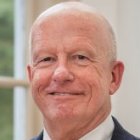
Representatives from Georgia Southern University and Fort Stewart signed an official memorandum of understanding Monday morning that clears the way for Georgia Southern to offer a slate of in-demand graduate courses this fall on base. Col. Manuel F. Ramirez, garrison commander at Fort Stewart and Hunter Army Airfield, and Kyle Marrero, president of Georgia Southern University, signed the agreement in front of officials from both organizations and the University’s live bald eagle mascot, Freedom, at Fort Stewart’s SFC Paul R. Smith Army Education Center. With the agreement, Georgia Southern will offer the following degree programs at the Fort Stewart education center: Master of Business Administration Master of Health Administration Master of Science in Information Technology Master of Arts in Professional Communication and Leadership Professional Communication and Leadership – Graduate Certificate Cybercrime – Graduate Certificate “This is truly a collaboration that will provide incredible opportunities and possibilities for our soldiers and our family members here on the installation,” Ramirez said. “Here at Fort Stewart, we’ve always believed in investing in our most precious asset, which is our people. And today, this partnership is a shining testament to that belief. By adding Georgia Southern to our stable of schools here at the Education Center, we’re opening doors to advanced education, professional development, and then a brighter future for all of our soldiers and their family members and all those people who call Fort Stewart home.” This partnership allows soldiers and their families to advance their career prospects by equipping them with the knowledge and skills and preparing them for increased responsibility in the Army and afterward, he said. Marrero said the courses that will be offered are being configured to allow Soldiers and their families to pursue higher education without disrupting their duties or relocating, allowing them to strike a healthier work-life balance while investing in their personal growth. Marrero thanked the teams behind the agreement and noted that the courses will be flexible and compressed to meet the unique needs of military-connected students. Marrero said this partnership between Fort Stewart and Georgia Southern University creates valuable educational opportunities for soldiers and their families by offering accessible and high-quality master’s degree programs on-site. It’s also the latest example of the University’s commitment to the military, which has led to Georgia Southern being named a “Military-Friendly” school for six years in a row and a “Gold School” for 2023-2024 by Viqtory Media, publisher of G.I. Jobs, STEM Jobs and Military Spouse magazines. “We have had a rich history of partnerships here,” Marrero said. “For us, this is a beginning and a continuation of the belief in the transformational power of education. We are proud and excited to be your partner. Thank you so much for this opportunity.” To learn more about the courses being offered at Fort Stewart and Hunter Army Airfield, visit think link below: If you are interested in knowing more about this partnership or would like to speak with Kyle Marrero, president of Georgia Southern University, simply contact Georgia Southern's Director of Communications Jennifer Wise at jwise@georgiasouthern.edu to arrange an interview today.

Experts in the Media: Georgia Southern investing $1.2 million to upgrade campus security cameras
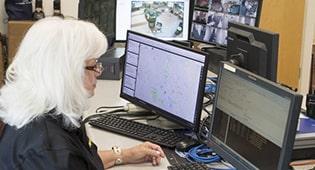
Georgia Southern University is planning a major upgrade to its campus security cameras and video technology. With approximately $1.2 million budgeted, the University will upgrade the cameras in the resident halls and other buildings in Statesboro, Savannah and Hinesville to bring the current cameras from analog to a digital platform. Additionally, new cameras will be placed at entrances to theirr campuses that can tie into those from other law enforcement agencies. The end result will be an interconnected network of cameras across the region. The new technology package includes state-of-the-art Flock cameras, which are motion-activated and record license plate numbers of any vehicle that comes into the hall parking lots. Flock Safety’s “Vehicle Fingerprint” technology lets police search the video by vehicle make, color, type, license plate, state of the license plate, missing plate, covered plate, paper plate, and unique vehicle details such as roof racks, bumper stickers, and more. The cameras can be used to look for a specific suspect or a vehicle that has been entered into law enforcement databases. Additionally, the University can use Flock for investigative purposes as well by going back and looking for any cars that fit a certain profile if it was associated with a crime or if there was a gunshot detected nearby. “This upgrade allows us to add more cameras, extend our reach, add storage and searching capabilities and better integrate our cameras into other video surveillance networks in use by local law enforcement,” said Georgia Southern University Police Chief Laura McCullough. “This is a major step forward in our ongoing work to keep our campus safe.” The new equipment will add to, and augment, Georgia Southern’s network of more than 1,800 video cameras on its three campuses. The project will begin in the coming weeks and is expected to be completed by the start of the fall 2023 semester. The announcement has garnered a lot of attention, especially with local media and publications covering security. If you're a journalist looking to know more about this announcement or speak to an expert about campus security and safety - then let us help with your coverage. Georgia Southern University Police Chief Laura McCullough is available - simply reach out to Georgia Southern Director of Communications Jennifer Wise at jwise@georgiasouthern.edu to arrange an interview today.
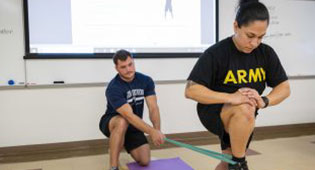
What began in 2016 as a partnership between Georgia Southern University and the Third Infantry Division at Fort Stewart has become a nationally recognized educational and research program with $5.68 million in federal funding to improve soldier health and performance to ensure force readiness. Now called the Soldier Performance and Readiness (SPAR) program, this Georgia Southern project aligns with the U.S. Army’s Holistic Health and Fitness (H2F) initiative and represents a multifaceted partnership with the Army to provide onsite training that decreases musculoskeletal injuries; deliver an online certificate program in tactical fitness for college credit; collaborate with the Army’s Research Institute for Environmental Medicine (USARIEM); and develop programs to enhance and assess cognitive performance in tactical situations. The initial partnership program to prevent musculoskeletal injuries was delivered at first to small cohorts to implement new practices in the physical training of their squads and platoons in a train-the-trainer model. Results were so encouraging, the program expanded at Fort Stewart and to training brigades at Fort Benning last year with the assistance of $1.5 million in Department of Defense funding. Studies show significant preparedness and financial benefits from reducing musculoskeletal injuries to soldiers during drilling and training exercises. In April 2020, officials determined that 58,000 soldiers (the equivalent of 13 Brigade Combat Teams) had injuries that classified them as non-deployable. In 2019, more than half of soldiers experienced a new injury, resulting in 10 million limited-duty days. Musculoskeletal injuries account for nearly 25% of all military injuries and approximately $557 million in acute patient care. Most of these injuries were associated with fitness training-related activities Georgia Southern’s online Tactical Athlete Certificate program was first offered in 2020 and is available exclusively to soldiers on active duty, in the National Guard or reserve. Through a series of three courses, the program teaches foundational exercise and biomechanical concepts, strength and conditioning principles, and rehabilitation. The coursework parallels the Army’s Master Fitness Trainer curriculum, with additional rehabilitation principles, and teaches soldiers how to develop evidence-based and well-rounded physical training programs while minimizing risk of musculoskeletal injury. Certificate completion provides soldiers with nine college credits with Georgia Southern, potential promotion opportunities in the Army, and preparation for the National Strength and Conditioning Association’s TSAC-F exam. “By sharing knowledge, expertise and experience between our faculty and doctoral students with soldiers, drill instructors, and brigade combat fitness teams to create aligned programs that improve tactical performance and force readiness, the SPAR program has become a national model of public-impact research,” said Christopher Curtis, Ph.D., Georgia Southern’s vice provost for research. “We are excited about the future of this partnership. We relish the significant support and encouragement we receive from the Army commands at Fort Stewart, Fort Benning, USARIEM, and the Training and Doctrine command (TRADOC), and we are grateful to Congressman Carter and his fellow members of the Georgia Congressional delegation who have advocated for the value of the partnership on our behalf.” The progress and continued success of this program would not have been possible without several years of support from the Georgia Congressional Delegation and especially the leadership and support of Congressman Buddy Carter, who represents Fort Stewart and the Armstrong Campus of Georgia Southern in Savannah. “Providing for our nation’s defense is the number one responsibility of the federal government. Innovation and research, which is what these dollars will fund at Georgia Southern, will improve working conditions for our brave servicemen and women by providing them with top-of-the-line training and resources,” said Rep. Buddy Carter (R-GA). “I am a proud supporter of Georgia’s military community and am happy that the federal government is investing in these necessary programs.” SPAR programming allocated in the FY23 federal budget will enable Georgia Southern to: Develop protocols and expand delivery of the onsite musculoskeletal injury prevention training and the Tactical Athlete Certificate to commands at Fort Gordon in Augusta and to the Georgia National Guard. Develop and deploy similar online certificate programs for soldiers in Cognitive Performance and Nutrition to further support the Army’s H2F program. Host a national conference on “Charting Future Readiness Needs” in partnership with the U.S. Army Training and Doctrine Command and U.S. Army Forces Command that will bring together other research universities who also work in partnership with the Army. Work with the Army commands to develop specific academic degree programs to meet the specific H2F professional workforce needs at the brigade level. Army officials estimate approximately 3,000 personnel will need graduate degrees or advanced certifications in the next six years. Develop a Tactical Performance Research Lab in Savannah to support the fundamental research and innovation activities of Georgia Southern’s Tactical Performance Group that supports the Army’s H2F program as well as translational research to apply the knowledge and practices broadly to law enforcement and other first responders. Looking to know more - then let us help. Christopher Curtis is available to speak to media - for more information simply click on his icon here or reach out to Georgia Southern Director of Communications Jennifer Wise at jwise@georgiasouthern.edu to arrange an interview today.
