
Experts Matter. Find Yours.
Connect for media, speaking, professional opportunities & more.

Aston University hosts campus reunion for Malaysian alumni
A group of Malaysian alumni visited Aston University for a special reunion with the University alumni team on 4 May. During the visit, the Malaysian alumni group enjoyed a variety of activities, including meeting with the alumni relations and development team. The group was also taken on a campus tour, which included visits to the library and the Students' Union building which opened in May 2019. Whilst touring the campus the alumni group had the opportunity to meet with faculty members and learn about the latest research being conducted at Aston University. They also had the chance to catch up with old friends, reminisce about their time at the University and share stories about their current work and lives. Professor Aleks Subic, Vice-Chancellor and Chief Executive of Aston University, said: "We were delighted to welcome our Malaysian alumni back to campus and hear about their experiences since graduation. “Our alumni are an important part of our University community, and we are proud of their achievements and contributions to economies and societies worldwide. We are committed to building strong relationships with our alumni networks around the world." The group of Malaysian alumni included graduates of the University who have gone on to hold executive positions in different industries: Tan Sri Al Amin, chairman of SME Corporation Malaysia, a government agency for the development and enhancement of SMEs Datuk Mustaza, a retired former CEO of Senai Desaru Expressway Berhad Datuk Adnan, chairman of the board of directors of RPM Engineers Sdn Bhd Ir Abdul Rashid Haron, technical director of Transafe Consult Sdn Bhd Dr Wan Maimun, president of Wanita Industri Binaan Malaysia, a company that aims to facilitate the participation and success of women in the Malaysian construction industry. Kerrie Holland, executive director of alumni relations and development at Aston University, said: "It was fantastic to see so many alumni returning to campus, catching up with old friends, and sharing their stories. We look forward to seeing them again soon, either on campus or at one of our alumni events."


A new book, A Student’s Guide to Open Science: Using the Replication Crisis to Reform Psychology, has been published, providing students and researchers with a comprehensive guide to open science practices and how their implementation can enhance research transparency and rigour. In the book, Dr Charlotte Pennington who is a lecturer in psychology at Aston University, explores the "replication crisis" in psychology, which refers to the difficulties in reproducing research results to test the robustness of findings. Through the book, students will gain an understanding of the origins and drivers of the crisis and learn how open science practices can transform research practice, enhance research transparency, and improve replication and reproducibility. The book contains various features, including an overview of landmark events that will mark the history of the replication crisis in the years to come, case studies of classic psychological studies undergoing replication, ‘test yourself’ activities to reinforce learning of key concepts, and top tips for adopting open science practices. It also includes useful illustrations to aid understanding and facilitate revision. Dr Pennington said: "The replication crisis has highlighted significant issues in the field of psychology and beyond and has led to a lack of trust in some research findings. However, it also provides a platform for reform – to improve research practices and the wider culture, with the discipline of psychology paving the way. I am proud that there is now a textbox that provides students and researchers with a handy guide on how to improve transparency and rigor in research through open science practices. “It is essential for all students to have a fundamental understanding of the challenges posed by the replication crisis and how open science can address them." The book has received high praise from experts in the field. Professor Chris Chambers from Cardiff University said: "This book should be on the reading list for all university science degrees and on all library bookshelves. It is concise, accessible, and remarkably interactive, with brilliant use of examples and learning activities.” Dr Madeleine Pownall from the University of Leeds said: "It is essential reading for anyone who wants to make sense of open science, by covering complex content in an accessible and hands-on way. My hope is that every psychology student will finish their degree with a heavily annotated, well-thumbed copy of this important and timely book.” Professor Brian Nosek, executive director of the Centre for Open Science at the University of Virginia said: “The last 10 years have been a whirlwind in psychology: identification of faulty research practices, frequent failures to replicate findings, research on how the field could improve, and adoption of new solutions to make research more transparent and credible. It is a lot to take in and it is hard to know where to start. “I am frequently asked to recommend a reading that provides an overview of what has been learned during the last 10 years and a gateway for getting started with open science. With this book, now I have an answer.” A Student’s Guide to Open Science: Using the Replication Crisis to Reform Psychology is now available in print and online formats.
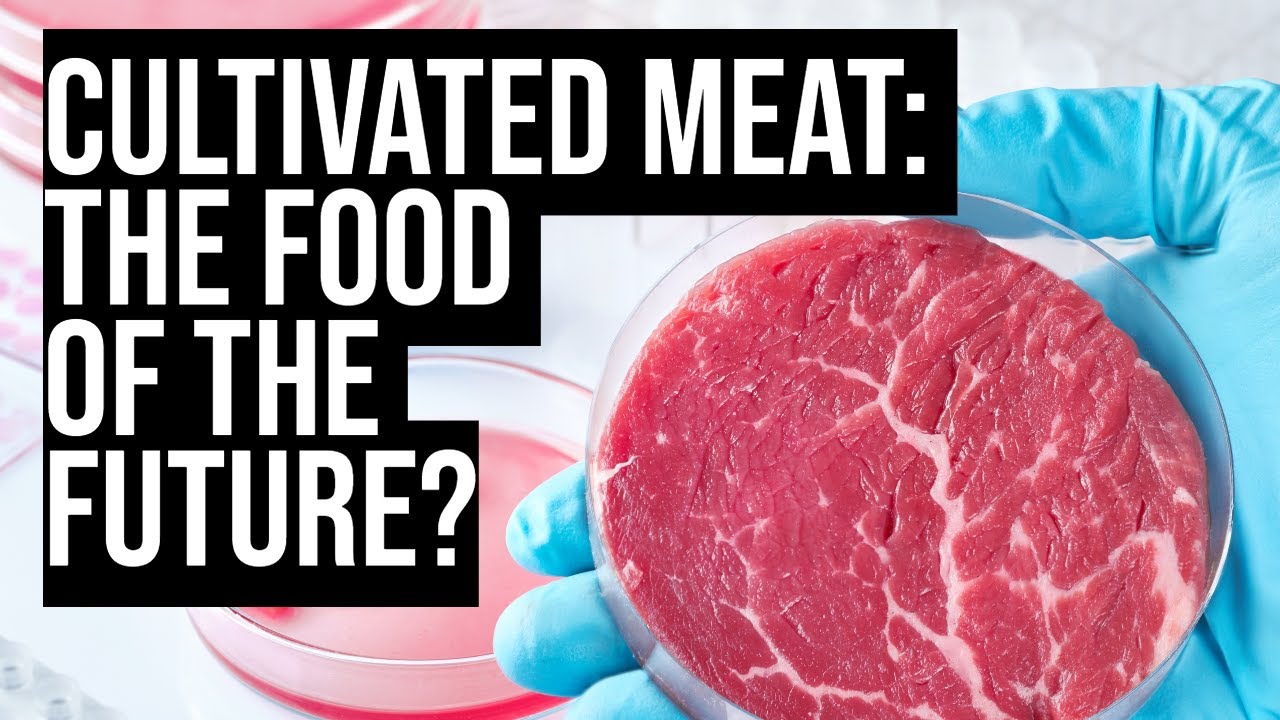
Aston University predicted as one of the UK’s leading centres for lab-made meat
• Aston University named as one of the UK’s leaders in the potential future of food • Highlighted for research, teaching, public outreach, industry links and location • Process uses cells taken from animals via biopsy, so doesn’t involve slaughter. Aston University has been named as one of the UK’s leading lights in what is predicted to be the future of food - lab-made meat. The University is one of 17 higher education institutions that are expected to play a major role in the development of cultivated meat. Cultivated or lab-grown meat is made from cells taken from animals via biopsy. The cells are used to create meat which doesn’t involve the slaughter of animals. The process promises fewer greenhouse gases and a decrease in land required for its production compared to traditional livestock. The list of universities has been compiled by Cellular Agriculture UK, a non-profit organisation which promotes the UK’s so-called ‘cell-ag’ sector. Aston University is one of five institutions they chose to highlight in their report Mapping the potential for UK universities to become research and teaching hubs for cellular agriculture. Aston University is described in the report as having potential to be an anchor institution for cellular agriculture, and was highlighted for its research and teaching, public outreach work, links with emerging industry and its central location. Dr Eirini Theodosiou, senior lecturer in the School of lnfrastructure and Sustainable Engineering, focuses on ways to produce enough cell mass to create the meat. She said: “This is still a relatively new food technology. Unlike many others we work on biomaterials for microcarriers/scaffolds for cultivated meat, which puts us in a very strong position, in the UK at least.” Meanwhile Dr Jason Thomas’ work explores the psychology behind supporting people to accept lab-made food. Although many people are willing to try it, there are still many who are reluctant to do so. A recent study of the US and UK found that 35% of meat eaters and 55% of vegetarians claimed they were too disgusted by the idea of cultured meat to even try it. A key goal of his research is how to support people to not just try it but to integrate it into their diet. Dr Thomas said: “We are interested in finding out what factors can influence consumer purchase of and consumption of lab-made meat.” “The engineering/psychology link is one of our USPs and is something Aston University can capitalise on; learning what the consumer wants from cultivated meat, and what would encourage them to consume it, using psychological science, and then incorporating this directly into the production process via engineering. “It is a relatively new food technology, and much work still needs to be done to make it affordable, acceptable and on a massive scale, but it could easily end up being one of the most transformative new foods of the 21st century.”

Ana Palacios’ interview on “Eagle Eye View,” the official podcast of Georgia Southern University. Palacios discusses her research and how being a mom motivated her. Several esteemed nutrition researchers collaborated on “Effectiveness of Lactation Cookies on Human Milk Production Rates: A Randomized Controlled Trial,” which was recently published in The American Journal of Clinical Nutrition. David B. Allison, Ph.D., dean of the Indiana University School of Public Health-Bloomington (SPH-B), is among the researchers who conducted a one-month, randomized controlled trial of lactating parents of healthy babies in the same age range. Their findings revealed no evidence for an effect of consuming lactation cookies on human milk production. “Too often in the field of nutrition and food, strong beliefs—sometimes even well-reasoned conjectures based upon some scientific knowledge—are mistaken for demonstrated facts,” Allison said. “Conjecture is good, but knowing is better. We come to know about the effects of nutrition and dietary supplements through rigorous, randomized, controlled trials. Having conducted such a study on lactation cookies, we found no evidence for their effectiveness. “This does not mean that it is impossible for any lactation cookie to affect human milk production,” he continued. “This study does suggest that the cookies we studied—under the conditions we studied them—have no discernible effect. The burden of proof seems to now be on those who claim there is an effect.” The study followed 176 U.S. parents who were exclusively breastfeeding healthy two-month-old babies. One group of parents was provided a serving of commercially available lactation cookies to consume daily for a month; the other group of parents ate a serving of conventional cookies not designed to increase lactation, each day for a month. Through a weekly survey, parents reported the quantity of milk they produced after following a validated milk expression protocol using a hospital-grade breast pump, providing data that were analyzed by both the study authors and an independent statistician. These data demonstrated that the impact of consuming lactation cookies did not have a significant effect on how much milk was actually produced or perceived to be produced by the lactating parents. The authors assert that consumers should be cautious when considering the potential effect of this product, or any food and/or supplement that promotes health-promoting benefits without published, peer-reviewed scientific evidence to support its claims. As the researchers noted, these lactation cookies can contain substantial calories and sugars, which could affect postpartum weight loss efforts and related health issues. “Despite being a physician and nutrition scientist focused on early-life nutrition, I still remember how difficult breastfeeding was for me with both of my children,” said study lead author Ana M. Palacios, MD, Ph.D., assistant professor, Department of Health Policy and Community Health, Jiann-Ping Hsu College of Public Health at Georgia Southern University. “Our research highlights that lactation cookies, which include added sugars and saturated fat, may not have the said purported benefits of increasing milk production. Purchasing lactation cookies to increase milk production may pose an unnecessary cost and may have additional implications for parents, such as limiting post-pregnancy weight loss and reducing consumption of healthier foods. More research is needed to better understand what foods and nutrients can best help increase milk supply in diverse populations.” The full article, along with the list of contributing authors, is available by simply clicking the article below: Interested in learning more? For more information about this research or to speak with Ana M. Palacios — simply reach out to Georgia Southern's Director of Communications Jennifer Wise at jwise@georgiasouthern.edu to arrange an interview today.


Why shoppers are paying more for a fake Amazon discount
By Halle Burton According to new research by Jinhong Xie, a Warrington College of Business professor at the University of Florida, more than a quarter of Amazon vacuum cleaners sold have increased their prices while pretending to offer discounts. Xie’s pricing phenomenon research is joined with Sungsik Park at the University of South Carolina and Man Xie at Arizona State University, publishing their analysis in the Marketing Science journal. A product’s price increase is paired with a previously unadvertised listing price, which encourages Amazon shoppers to receive a deceitful false discount. This faux discount drove higher sales despite the price increase, and shoppers end up paying 23% more on average. “When you see this list-price comparison, you naturally assume you are getting a discount. It’s not just that you didn’t get a discount. You actually paid a higher price than before the seller displayed the discount claim,” said Xie. Regulations currently prohibit deceptive pricing by requiring truthful price comparisons from the sellers, but a list price can still be misleading under these circumstances. Shoppers are misled by the timing of price comparisons where retailers advertise a price discount that actually only gives the impression of a deal. “Current regulations are all about the value of the list price, and they don’t say anything about misleading consumers by manipulating the timing of the list price’s introduction,” Xie said. Xie and her colleagues followed more than 1,700 vacuums on Amazon from 2016 to 2017 gathering observational data on their prices. “We found that by increasing the price by 23% on average, the seller achieves a 15% advantage in their sales rank among all products in the home and kitchen category,” Xie said. Xie encourages consumers to be aware, not make assumptions about discount claims and utilize multiple websites to compare prices. “We think that consumer organizations and regulators should evaluate this new marketing practice to determine whether and how to manage it.”


UF researcher proves underrepresented groups experience more workplace bias
By Halle Burton George Cunningham, a UF professor and researcher, conducted a study on workplace bias, finding managers are more likely to display an implicit bias towards minorities and underrepresented groups. Cunningham is chair of the UF Department of Sport Management, and his study was published in Frontiers in Psychology in November 2022. Working with his co-author, Cunningham analyzed self-identified managers and people in 22 other occupational designations to compare their implicit and explicit biases towards race, gender, disability and sexual orientation. “Once we saw that race, gender, disability and sexual orientation-based forms of mistreatment are all prevalent in the U.S. workforce, we determined this warranted examination of managers’ biases in these areas,” Cunningham said. The researchers found that managers held a moderate preference for majority groups. Additionally, the study shows these managers also expressed more bias than jobs working to better societal standards and environmental issues like educators and social scientists. Cunningham’s original question asked if managers convey biases that vary from other occupational codes and if this impacts the claims employees make. Not only did his study answer this with a resounding yes, but it further divides the focus of the bias on sectors of implicit and explicit attitudes. Cunningham said their study also showed a disconnect between managers’ explicit and implicit biases, especially with disabilities. Their responses indicated they explicitly didn’t believe they held biases against disabilities, but their implicit bias regarding disabled groups was the highest of all. “The more we’re aware of it, the more likely we are to take steps to help lessen the impact,” he said. “The bigger issue, though, is to change the way our society operates.”

CAA South Central Ontario is excited to announce a partnership with HAAS Alert. The new partnership will send CAA-specific warnings to popular traffic and navigation apps. Through the CAA dispatch system, Safety Cloud© by HAAS Alert will send warning messages of “CAA Rescuer Ahead. Slow Down, Move Over” and “Vehicle Breakdown. Slow Down, Move Over” to the world’s largest navigation apps, including Waze and vehicles covered by the Stellantis Group OEM (Dodge, Jeep, RAM, Chrysler, and Alfa Romeo). The alerts are specific to CAA member rescue calls but will be visible to anyone who uses the alerting platforms. “As longtime advocates for road safety, CAA is always on the lookout for new and innovative ways to enhance safety on our roads. The new partnership with HAAS Alert helps drivers obey the law and provides an extra layer of safety to those who are stranded and to our Roadside Assistance Rescuers,” says Teresa Di Felice, assistant vice president of Government and Community Relations at CAA South Central Ontario. Every year CAA clubs across Canada mark the second Tuesday of May as National Slow Down Move Over Day. This year, National Slow Down Move Over Day is on May 9, 2023. Across North America, nearly 100 tow truck drivers are killed every year after being struck by oncoming traffic while helping stranded motorists with flat tires, breakdowns, and collisions. “As we approach the summer driving season, it is important for drivers to slow down and move over when approaching a roadside emergency rescue. By doing so, we can help protect the lives of those who work on our roads and highways and make our roads safer for everyone,” adds Di Felice. In Ontario, the SDMO law requires drivers to slow down, and if there is space and it's safe, move over one lane when approaching a stopped emergency vehicle, including tow trucks, with flashing lights. Fines could range from $400 to $2,000 and 3 demerit points if convicted and possible suspension of driver's licence for up to 2 years. By partnering with HAAS Alert and using this technology to warn drivers of stranded vehicles and tow trucks on the side of the road, CAA is working to make our roads safer for everyone. For more information about CAA’s advocacy for road safety and the Slow Down Move Over Law, please visit caasco.com/sdmo.



King Charles and the Power of Pomp
With the approach of the first coronation of a British monarch in 70 years, the world is watching, dissecting, and analyzing every element involved in the Coronation of King Charles III and his wife, Camilla, the Queen Consort. Cameras, photographers and journalists from across the globe are working overtime on this historic event, as are observers and scholars, including UConn anthropologist Dimitris Xygalatas, who penned a piece for the BBC where he explains the power behind the pomp and ceremony around the crowing of Britain's new king: On 6 May, 2023, one of the most spectacular rituals in the world will take place: the Coronation of King Charles III and his wife, Camilla, the Queen Consort. Shrouded in spectacle and adorned with priceless regalia, the ceremony will be officiated by the Archbishop of Canterbury at Westminster Abbey and attended by a host of foreign royals and heads of state. The whole event will be broadcast around the world, with hundreds of millions of people expected to tune in. Once crowned, the royal couple will return to Buckingham Palace in the Gold State Coach, a carriage so loaded with gold that it needs eight horses to pull it. They will be escorted by thousands of troops from all branches of the armed forces, making up the largest military display in three generations. The festivities will last all weekend – and a long weekend at that, as Monday has been proclaimed a public holiday nationwide. Events include colourful parades, public concerts, spectacular light shows, and thousands of street parties across the UK and the Commonwealth. The scale of this undertaking might seem exuberant. After all, King Charles may have dominion over all swans, dolphins, whales and sturgeons in the UK's waters but he will wield little political power beyond a largely ceremonial role. What is more, a coronation is not even necessary to become king. In fact, Edward VIII reigned as sovereign without ever being crowned. As heir apparent, King Charles III's accession to the throne occurred automatically the moment Queen Elizabeth II died, on 8 September 2022. ... The effects of ceremonial opulence may extend well beyond the Kings’ subjects. To the world at large, they act as status symbols – what anthropologists call “credibility-enhancing displays”. Our minds intuitively link effort with value. A ceremony that requires such enormous cost and effort to organise provides tangible evidence of the importance of the institution it celebrates and people’s commitment to that institution. At a time of political instability, with an increase in Russian aggression, the UK emerging from Brexit and a global pandemic, the British state could use some of that social glue. And above all, so could the royal family. The last few years have been rough on the royals, to say the least. Prince Andrew lost his military titles and royal patronages as he faced allegations of sexual assault that he has consistently denied. Internationally, as the world grapples with the legacy of colonialism, more and more countries seem inclined to cut their ties to the Crown. All the while, Prince Harry and his wife Meghan, the Duchess of Sussex, have had a very public exit from the centre of royal life and their media presence has been rubbing salt to these wounds. In light of these developments, the Coronation may play a crucial role in the Royal Family’s struggle to stay relevant. Indeed, as public support for the monarchy has been steadily declining, two recent grand ceremonies, the Queen’s Platinum Jubilee and funeral, have been accompanied by boosts to British attitudes towards the institution. King Charles III's Coronation will be one of the most grandiose royal celebrations of this century. It remains to be seen whether it can help convince his subjects that he still has a role to play in British society. Dimitris Xygalatas is an associate professor of anthropology and psychological sciences, and head of UConn's Experimental Anthropology Lab, which develops interdisciplinary methods and technologies for studying behavior in real-life settings. He is available to speak with media, answering all your questions about coronations and their rituals and purpose. Click on his icon to arrange an interview today.


Comprehensive Sleep Wellness Center Opens on Newark Campus
More than 70 million Americans suffer from sleep-related problems. To address this growing need, ChristianaCare has opened a new comprehensive sleep wellness center in the Medical Arts Pavilion II on the ChristianaCare Newark Campus. The ChristianaCare Sleep Wellness Center, accredited by the American Academy of Sleep Medicine, is an outpatient program that provides expert diagnosis and treatment of sleep disorders. The nearly 5,000 square foot, seven-bed facility builds on the success of ChristianaCare’s previous sleep diagnostic center, now incorporating clinical care and diagnostic testing at the same site. The center is staffed by board-certified sleep medicine specialists who provide in-lab and at-home sleep testing, as well as a behavioral health specialist who offers cognitive behavioral therapy for insomnia. The center offers onsite and virtual appointments. “At the ChristianaCare Sleep Wellness Center, we offer the full range of sleep care services in one place, with the expertise to help people with all kinds of sleep disorders,” said Shilpa Kauta, M.D., medical director of the ChristianaCare Sleep Wellness Center. “Sleep disorders affect members of every race, socioeconomic class and age group, but despite the high prevalence of sleep disorders, many people remain undiagnosed and untreated,” she said. National surveys show that more than 60 percent of adults have never been asked about the quality of their sleep by a physician. “It’s important for people to know that if they have problems related to sleeping, they should talk to their doctor about it, or call us at the Sleep Wellness Center. Sleep disorders can affect overall health—and they are often very treatable.” The Sleep Wellness Center provides expert, multidisciplinary diagnosis and care for every kind of sleep problem, including: Obstructive sleep apnea. Restless leg syndrome. Narcolepsy. Parasomnias, such as sleepwalking. As part of the ChristianaCare team, the expert staff at the Sleep Wellness Center coordinates with disease-based programs at ChristianaCare to integrate sleep services into cardiac care, weight loss surgery and renal transplant care. They also partner with surgeons to manage hypoglossal nerve stimulation therapy, a major advancement in obstructive sleep apnea treatment. Patients at the Sleep Wellness Center undergo a personal sleep history, medical background and physical examination. If appropriate, a polysomnography (sleep study) may be ordered to monitor and record brain waves, heart rate, blood oxygen level, breathing and eye movements. Poor Sleep Health is a National Problem According to the National Institutes of Health, of the 70 million Americans suffering from sleep-related problems, more than 50% are likely to have a chronic disorder, such as insomnia, obstructive sleep apnea, restless leg syndrome and narcolepsy. People who suffer from sleep disorders are also more likely to have chronic diseases like hypertension, diabetes, depression, obesity and even cancer. The impact on American life and economy is enormous as sleep deprivation and untreated sleep disorders are estimated to cost over $100 billion annually in lost productivity, medical expenses, sick leave, property and environmental damage. “With information collected through testing, our sleep experts can determine the source of a sleep problem and begin a treatment plan to help patients improve their quality of life,” Kauta said. The address and phone number of the new center: ChristianaCare Sleep Wellness Center 4735 Ogletown Stanton Rd. Suite 2210 Newark, DE 19713 302-623-0610


Aston University wins grant to make research more sustainable and environmentally friendly
University awarded grant to develop more sustainable separation method through AstraZeneca’s Open Innovation CoSolve Challenge at ELRIG Dr Vesna Najdanovic will explore use of the solvent ethyl lactate It is a biorenewable and environmentally friendly alternative. An Aston University scientist has won a $25000 grant in the AstraZeneca Open Innovation CoSolve sustainability challenge to help to make research more sustainable and environmentally friendly. Dr Vesna Najdanovic, senior lecturer in chemical engineering at the University’s Energy and Bioproducts Research Institute (EBRI), successfully pitched her idea to explore a new method using ethyl lactate as a solvent. Ethyl lactate is a biorenewable and environmentally friendly alternative solvent produced from lactic acid and ethanol, both obtained by fermentation of biomass. Currently hazardous organic solvents such as acetonitrile are widely used instead. Dr Najdanovic won the AstraZeneca’s Open Innovation CoSolve Sustainability Challenge at the European laboratory research & innovation group (ELRIG) Research and Innovation meeting. She said: “Throughout my research career, I have been working with various green solvents, such as supercritical fluids, ionic liquids and biosolvents, to improve chemical and separation processes. “I am delighted to be selected by the expert judging panel and the highly engaged audience to apply my knowledge to develop greener analytical methods using ethyl lactate as a solvent for liquid chromatography. “I hope this project will pave the pathway to use this environmentally friendly alternative solvent while reducing carbon footprint and pollution”. The pharmaceutical industry generates the highest amount of waste per mass of products compared to other chemical industry sectors, such as the petroleum industry, bulk and fine chemicals. Dr Kelly Gray, CoSolve sustainability programme lead at AstraZeneca, said “In order to protect people, society and planet we have to identify and develop solutions to deliver sustainable science. The goal of the CoSolve sustainability programme was to do just that and identify innovative ideas to practical challenges faced by researchers across scientific disciplines in R&D.” Sanj Kumar, CEO of ELRIG, said “Ensuring that drug discovery processes become sustainable is a priority issue to the ELRIG community, so partnering with AstraZeneca on the CoSolve initiative, by hosting the pitching and final award ceremony, is not only an honour, but raises the awareness of sustainability to our community. Dr Najdanovic and her innovation are a worthy winner and ELRIG is proud that we are able to share her success story.” As much as 80% of this waste presents hazardous organic solvents obtained from petrochemical sources. For example, the pharmaceutical industry consumes 50% of globally produced acetonitrile, of which 20% is a solvent for liquid chromatography, a widely used analytical tool in research and development laboratories. After its use, most acetonitrile is discarded as chemical waste and subsequently incinerated, generating greenhouse gases and other pollutants such as nitrogen oxides and highly toxic hydrogen cyanide. The CoSolve sustainability challenge award builds on Dr Najdanovic’s previous work employing ethyl lactate as a solvent for various separation processes. Her new project supports EBRI’s wider objectives of using bioproducts to deliver low-carbon and environmentally sustainable solutions.