
Experts Matter. Find Yours.
Connect for media, speaking, professional opportunities & more.
/cloudfront-us-east-1.images.arcpublishing.com/gray/GEHAY7MEYRD4NHFWOELCD7EWLM.jpg)
FBI data shows murders are up, and our experts are ready to help with your coverage
FBI data shows murder rates are up, with the latest figures showing a staggering 21,570 murders happening nationwide in 2020. Dr. Kim Davies teaches a sociology of murder course at Augusta University and was recently interviewed on the topic by a local CBS affiliate. Davies has developed the course to help educate students and get them thinking about ways they can bring awareness to the violent crime problem. Students put a tick on the sidewalk in chalk to represent every murder to offer a better understanding of the number of families affected. “If I put that number on the board, it looks like a big number," said Davies. "But nobody really knows what that is. If we tick every mark and we say, ‘Look, that’s a victim,’ it means more to the students.” Davies also reiterates that even though this current number is probably the highest it’s ever been since she's been offering this class, it's not at an all-time high. "Murder was higher in the '90s when I was in grad school, but it’s been going down, down, down. Hopefully it’s not a trend where we continue up, but we’re back up.” If you’re a journalist covering true crime or any other aspect of this topic, then let us help with your stories. Davies is a sociologically trained criminologist with academic focus is on homicide and violence. Her most recent book, The Murder Book: Understanding Homicide Today, explores topics such as the increase in mass murders, the change in Stand Your Ground laws across the country and police shootings as it relates to the Black Lives Matter movement. Davies is available to speak with media about this subject – simply click on her icon now to arrange an interview today.


A recent school zone safety survey conducted on behalf of CAA South Central Ontario (CAA SCO) indicates that 78 per cent of Ontario parents report having seen unsafe driving behaviours and only 37 per cent consider the roads around their child’s school to be safe. Some of the most common unsafe driving behaviours parents have witnessed include speeding, double parking and stopping at undesignated areas. “We all have a role to play in keeping our school zones safe,” says Tracy Marshall, manager of community relations at CAA SCO. “These dangerous driving behaviours can lead to serious consequences and CAA is urging motorists to slow down and follow the rules of the road when driving through school zones.” The survey also identified that more than half of parents in the province (66 per cent) support the use of Automated Speed Enforcement (ASE) in school zones, with 79 per cent believing its presence would deter speeding around schools. According to the survey, two in three parents consider that ASE should remain permanent in school zones. “When you’re behind the wheel, you have the responsibility to look out for everyone else around you, including parents, guardians and children,” says Marshall. “It’s important to always watch out for Community Safety Zone signs as they indicate areas where public safety is of special concern and drive with caution through school zones, residential areas and any other areas where children may be walking or playing.” Motorists should also keep an eye out for school buses that are now equipped with amber and red upper flashing lights. Under the new system, upper flashing amber lights will turn on as the bus slows down, indicating that drivers need to be cautious and slow down too. The amber-red system will hopefully provide more clarity when to stop, preventing illegal passings and dangerous sudden stops. CAA reminds motorists that it is an offence to pass a stopped school bus with its red lights flashing and stop arm extended. Fines for a first offense range up to $2,000. It can also result in a significant number of demerit points. Motorists can also use the following CAA tips to ensure they are staying safe in school zones: Help reduce traffic with active school travel: Encourage your kids to walk or ride to school to ease traffic congestion. If your school is a further distance, CAA encourages parents and guardians to park a block away and walk to school, if possible, to reduce traffic and make school zones safer. Slow down: Know the speed limit in your neighbourhood’s school zones and respect them. Ensure you give yourself plenty of time to drop off your kids at school to avoid rushing. Follow the rules of the road near school buses: Always stop for a stopped school bus with its upper flashing red light and/ stop arm activated and wait for children to get safely on or off. Stay alert and watch for children or parents/guardians crossing the road when the bus moves on. Choose a safe spot to drop off and pick up your children from school: Follow your school’s rules and avoid double parking or stopping on crosswalks, dropping off or picking up your kids on the opposite side of the street, and stopping in moving traffic as kids rush out. Instead, use the designated drop off areas or consider a spot a bit farther away from school that is easily accessible and safe. Make eye contact with passing pedestrians and cyclists: With the excitement of going back to school, anticipate that children may not easily see or hear your moving vehicle. Use eye contact to ensure pedestrians are aware of you driving your vehicle. Watch for CAA School Safety Patrollers: As one of the largest youth volunteer programs in Canada, they play an important role by keeping their peers safe on school buses and in school zones. Keep a lookout for their bright safety vests. CAA supports safety in school zones through the CAA School Safety Patrol® program, developed to protect and educate elementary school children on safe road-crossing practices. CAA’s Ontario Road Safety Resource is a toolkit with valuable lesson plans for teachers to help educate students about road safety. To learn more please visit www.caasco.com/schoolzone The study, commissioned by CAA SCO and conducted by Dig Insights between April 13th to 22nd 2022, surveyed 1,402 Ontario parents/guardians between the ages of 18 and 74 with children attending school from kindergarten to grade 8. The margin of error for a sample of this size is plus or minus 2.6% at the 95% confidence level.



Sharing photos of your kids online? Here's what you should consider.
By Emma Richards Today’s parents are the first to raise children alongside social media and in this era of likes, comments and shares, they must also decide when to post images of their children online and when to hold off to protect their privacy. The practice of “sharenting” – parents posting images of their children on social media platforms — has drawn attention to the intersection between the rights of parents and the rights of their children in the online world. Stacey Steinberg, a professor in UF’s Levin College of Law, author and mother of three, says parents need to weigh the right to post their child’s milestones and accomplishments online against the right of a child to dictate their own digital footprint and maintain their privacy. Steinberg, like many parents, avidly posted photographs of her children online to document their childhoods. When she left her job as a child welfare attorney to become a professor, Steinberg also began writing about her motherhood experiences. She also began rethinking posting about her children online, realizing that it could be doing more harm than good. And yet, there was little guidance for parents on to consider when posting images and how to do so with their children’s safety in mind. Among the problematic issues: Machine learning and artificial intelligence allow for the collection of information about people from online posts but there is little control over or understanding of how that stored information is being used or how it will future impact on the next generation. According to Steinberg, a Barclays study found that by the year 2030, nearly two-thirds of all identity theft cases will be related to sharenting. There are also concerns pedophiles may collect and save photographs of children shared online. For example, one article she reviewed reported that 50% of pedophile image-sharing sites had originated on family blogs and on social media. Steinberg says parents should model appropriate social media behavior for their children, such as asking permission before taking and posting an image and staying present in the moment rather than living life through a lens or being fixated with what’s online. “I think it’s a danger that we’re not staying in the moment, that we’re escaping to our newsfeed or that we’re constantly posting and seeing who’s liked our images and liked what we’ve said instead of focusing on real connections with the people in front of us,” Steinberg said in an episode of the From Florida Podcast. While parents serve as the primary gatekeepers for children’s access to the online world, tech companies and policymakers also have roles to play in setting parameters and adopting law that protect children’s safety. Numerous European countries have already moved in this direction with such concepts as the “right to be forgotten,” which allows people to get information that is no longer relevant or is inaccurate removed to protect their name or reputation on platforms such as Google. “The United States really would have a hard time creating a right to be forgotten because we have really strong free speech protections and we really value parental autonomy Steinberg said. Google has, however, created a form that allows older kids to request that old photographs and content about them be removed from the internet, which Steinberg says is a promising step. Steinberg would love to see other mechanisms adopted to minimize the amount of data that is collected about children and ensure artificial intelligence is used responsibly and ethically when collecting online data. In the meantime, parents can proactively make online privacy issues a topic of discussion with their children and take proactive steps to limit their digital footprints, such as deleting old childhood photos. “One thing that I really want to encourage families to do is not to fear the technology, but to try to learn about it,” Steinberg said.


What does Joe Biden's forgiveness of student loans mean for debt relief?
President Joe Biden has made progress on a campaign promise to provide relief for those burdened with student debt. This plan offers targeted debt relief as part of a comprehensive effort to address the burden of growing college costs and make the student loan system more manageable for working families. The President is announcing that the Department of Education will: Provide targeted debt relief to address the financial harms of the pandemic, fulfilling the President’s campaign commitment. The Department of Education will provide up to $20,000 in debt cancellation to Pell Grant recipients with loans held by the Department of Education, and up to $10,000 in debt cancellation to non-Pell Grant recipients. Borrowers are eligible for this relief if their individual income is less than $125,000 ($250,000 for married couples). No high-income individual or high-income household – in the top 5% of incomes – will benefit from this action. To ensure a smooth transition to repayment and prevent unnecessary defaults, the pause on federal student loan repayment will be extended one final time through December 31, 2022. Borrowers should expect to resume payment in January 2023. -- White House Fact Sheet, Aug. 25 The announcement made big waves politically and news coverage is still heavy with reactions to the plan and just who it will benefit. “For some students, they will be completely debt-free afterward," said Wendy Habegger, a lecturer of finance in the James M. Hull College of Business at Augusta University. "The majority are still not going to be debt-free but instead of you having to pay an extra year, it might cut your pay time down. What this is going to do is give you money to start doing some of the other things that you have put off. You can now focus on building up an emergency fund, building up a savings account. You can put it toward your retirement.” The announcement also includes extending the student loan pause a final time through Dec. 31, 2022. “One of the good things about this debt reduction and debt forgiveness is that the Biden administration is making some very firm attempts to go in and fix some of the payment programs that are broke. So when individuals have to start paying in January, they will be able to pay a reduced amount,” said Habegger. “What’s not going to stop is the accrual of future debt. So we really need to look at the underlying problem and the costs of higher education and see if we can bring that down.” This topic will require ongoing coverage, so if you’re a reporter looking to know more, then let us help. Wendy Habegger is a respected finance expert available to offer advice on making the right money moves during volatile times. To arrange an interview, simply click on her icon now.


Aston University and Partnership Medical shortlisted for knowledge transfer partnership award
Aston University and Partnership Medical (PML) have been shortlisted for an award at the KTP Awards 2022. The partnership has been shortlisted in the category of Best Knowledge Transfer Partnership for its work on a revolutionary automated cleaning system which uses synthetic chemistry to sterilise endoscopes, reducing risks of contamination to patients and lowering rates of mortality. A knowledge transfer partnership (KTP) is a three-way collaboration between a business, an academic partner and a highly qualified researcher , known as a KTP associate. The UK-wide programme helps businesses to improve their competitiveness and productivity through the better use of knowledge, technology and skills. Aston University is the leading KTP provider within the Midlands. The KTP Awards recognise the people and partnerships behind the UK’s most inspiring and successful KTP projects. At present there are more than 800 inspiring collaborations happening across the country. Endoscopes are long, thin tubes with a light and camera at one end. Due to the sensitivity of the materials and electronics they cannot be sterilised, opening up high potential for cross infection. Through their automated cleaning system, Aston University and PML achieved industry-leading levels of disinfection, reducing risks of contamination to patients and lowering rates of mortality. The automated prototype and new cleaning materials developed in the KTP produced astonishing results in clinical trials, with a simple five-minute treatment offering deep cleaning levels 1,000 times better than anticipated, providing hygiene levels far superior to those currently possible using conventional manual procedures Mark Smith, executive director of business and regional engagement at Aston University, said: "It’s truly wonderful that Aston University has been formally recognised as a sector leader for knowledge transfer programmes, reflecting the scale and quality of our work with business. Making the shortlist is a recognition of our continued growth and sustained achievements in the knowledge exchange area. “The Aston University and Partnership Medical project has resulted in a far more effective medical cleaning system that ensures that endoscopes are truly sterile, which will ultimately save lives. This is just one example of the University’s real-world support for businesses and their customers. “It is an honour to be considered for best KTP at such a prestigious event, especially when knowledge exchange activity is at a high, with over 800 collaborations happening across the UK.” Partnership Medical Ltd (PML), based in Stoke-on-Trent, are specialists in supplying cleaning equipment and consumables for flexible endoscopes with over 20 years of distributor experience. The company aims to become a leading manufacturer/provider for endoscopic departments in clinics and hospitals worldwide. The Aston University team who worked on the KTP included Dr Andy Sutherland, reader in organic chemistry and member of the Aston Institute of Materials Research, Dr Tony Worthington, associate professor in clinical microbiology and infectious diseases and member of the Biosciences Research Group together with KTP associate, Dr Thien Duong, an expert in synthetic chemistry. The awards ceremony will take place on Wednesday 12 October in Liverpool and will be streamed online for those unable to attend in person.


Aston University history department gears up for live talk to mark 75 years since Indian partition
75 Years On: The Partition of India in a Global Perspective will take place at Café Artum at Hockley Social Club in Birmingham The partition saw the British Indian Empire split into two independent dominions, India and Pakistan The event on 25 August is the second in the series of Society matters LIVE. Aston University’s history department is set to host a live talk to mark 75 years since Indian partition. 75 Years On: The Partition of India in a Global Perspective will take place at Café Artum in Hockley Social Club on Thursday 25 August from 1700 to 1900 hrs. The event on 25 August is the second in the series of Society matters LIVE. The British decision in June 1947 to grant independence to its colony by creating two separate states caused the displacement of over ten million people as well as hundreds of thousands of casualties. In this talk, the second of Aston University’s ‘Society matters LIVE’ series, Dr Volker Prott will invite attendees to take a step back and explore the partition of India from a global historical perspective. Why did partition seem inevitable to so many people 75 years ago, even if they saw trouble ahead? Where does the idea of partition even come from? Why did so many partitions occur in the twentieth century and in the context of decolonisation? Dr Volker Prott, senior lecturer in history at Aston University, said: “The partition of India has become a synonym of tragedy and unimaginable human suffering. “Partition is also now seen by many as a massive diplomatic failure, giving rise to the Indo-Pakistani conflict, one of the most bitter and long-lasting territorial disputes since the end of the Second World War. “We will consider other partition examples, such as Ireland, Palestine, India, and also Germany, Korea, and Vietnam in order to tease out the concept of it and understand what it means in different contexts. “And of course, we will pay attention to the partition, discussing its many facets, and taking the time to explore ways to overcome its divisive legacy.” You can sign up to the free event here. You can listen to the latest podcast episode of ‘Society matters’ with Dr Volker Prott, who speaks about the legacy of India and Pakistan’s independence with journalist Steve Dyson, here. You can find out more about how Aston University’s history department is marking 75 years since Indian partition here. For more information about studying history at Aston University visit our website.

What's next in Georgia's 2020 election saga?
All eyes are on Georgia once again, but this time it's not about an upcoming election. As we sort through the 2020 election aftermath that saw Georgia in a tug-of-war between lawyers, politicians and pundits, the actions a few important figures may now be coming to light. Rudy Giuliani, the former advisor to President Trump, may be in some serious trouble according to Augusta's leading political expert, Dr. Gregg Murray. "When politicians are involved, there are almost always political calculations," Murray said. "But there’s a lot of information suggesting there may be problematic behavior that he was heavily involved with. There are reports of investigations involving several possible Georgia law violations: solicitation of election fraud, making false statements to local officials, conspiracy, racketeering, violations of oath of office and involvement in violence or threats of violence, according to Voice of America." As for Sen. Lindsey Graham, he, too, has been summoned to appear and explain how he may or may not have attempted to influence the election outcome. A federal judge on Monday turned down Sen. Lindsey Graham’s bid to throw out a subpoena compelling him to testify before the Atlanta-area grand jury investigating Donald Trump’s effort to overturn the 2020 election. “[T]he Court finds that the District Attorney has shown extraordinary circumstances and a special need for Senator Graham’s testimony on issues relating to alleged attempts to influence or disrupt the lawful administration of Georgia’s 2022 elections,” U.S. District Court Judge Leigh Martin May wrote in a 22-page opinion rejecting Graham’s effort and sending the matter back to state courts for further proceedings. Politico, Aug. 15 According to Murray, defying the judge's request might be the likely choice for the senator. "It seems the Republican party is still clearly tied to Trump," Murray adds. "I don’t think he would be hurt politically by not showing up. It’s an interesting question if some people would hold it against him for showing up." This legal wrangling will be long and drawn out, so if you are covering this topic, let our expert help with your story. Dr. Gregg Murray is available to talk about the election audit and what it might mean for voters in Georgia and across the country. Murray’s research focuses on political behavior and psychology with specific interests in voter mobilization and turnout. He is also executive director of the Association for Politics and the Life Sciences. Simply click on Murray's icon to arrange an interview today.


Research team aims to enhance security of medical devices
Tamer Nadeem, Ph.D., the principal investigator of the VCU-based MedKnights project, explained that the project’s focus is on the Internet of Medical Things (IoMT). Nadeem and co-PI Irfan Ahmed, Ph.D., both associate professors in the VCU College of Engineering Department of Computer Science, recently received $600,000 from the NSF’s Office of Advanced Cyberinfrastructure to put together a framework to improve IoMT security. IoMT devices are used in a range of diagnostic, monitoring and therapeutic applications. IoMT includes patient monitors, ventilators, MRI machines — even “smart beds.” Ahmed cited the internet-connected insulin pump is a good example of an IoMT device. Internet connectivity allows for both monitoring and adjusting the dosage remotely — functions that require a high degree of security for patient privacy as well as safety. All IoMT devices are potentially vulnerable to ransomware, denial of service and other malicious hacker attacks. Nadeem points out that IoMT devices have a higher security requirement than traditional IoT devices such as smart doorbells and smart thermostats in homes. “The most important thing in the medical domain is privacy,” Nadeem said. “For IoT devices in your home, you wouldn’t care that much about privacy, but for medical devices, it is an essential thing. You wouldn’t want anyone to know what your health conditions are, or what problems you might have had.” The work of the MedKnights group is important, as the IoMT domain is expanding; there is growth in terms of types of devices, number of patients using them and number of IoMT vendors. Nadeem added that the COVID pandemic and accompanying quarantine and stay-home orders increased the focus of medical-technology providers on the possibilities of IoMT. “Talking to some of the medical-device providers, I’ve learned that they are considering a line of products where they can remotely monitor patients on those devices, and they also can configure those devices remotely,” Nadeem said. Security is a large concern for the new generation of devices, because the current IoMT devices have been hit hard by hackers, he said. Security is an issue that extends from the individual patient to the institution. “Statistics show there are a lot of ransom attacks being done on the health sectors during the pandemic,” Nadeem said. “That motivated us.” The MedKnights team’s preparation for taking on the dragon of malicious IoMT attacks includes building a “test bed,” an isolated hardware/software assembly that Nadeem says will mimic the internet-enabled hospital setting. “In the hospital environment, there’s set of rooms. Each room has a lot of medical devices; they could be wired, or they could be wireless devices,” he said. “But there is no way that we can do what we want to do in a hospital.” The test bed will incorporate IoMT datasets based on typical device behavior, traffic and known malicious attacks. Nadeem explained that MedKnights will explore vulnerabilities of various IoMT hardware and software by subjecting the elements of the IoMT test bed to a range of attacks. “We will try to see in real time how efficient our technologies to monitor or detect these attacks, then try to intervene if we notice any change in the activities on the network,” he said. “Now, if the attacks manage to get into the device, we would like to also to start to see whether we can monitor these devices and observe abnormality or any misbehavior.” Nadeem said the next step is to isolate the source of fishy activity in the test bed network and begin to reverse-engineer the malware. He explained the group will work on understanding the question by looking for the “hole” that created the vulnerability. Ahmed said the MedKnights will bring undergraduates into the project through DURI, the Dean’s Undergraduate Research Initiative at the VCU College of Engineering. High school students will have an opportunity to join the team through a similar program known as the Dean’s Early Research Initiative, or DERI. DURI and DERI are just two ways of getting younger scientists and engineers involved in actual research. “For the last couple of years, I’ve been contacted by local high schools to host a couple of their students during the summer,” Nadeem added. “The students were really excited about it. We came up with some nice ideas about how to extend that work to their classrooms. As we continue this project, we will reach out to the schools, because we would love having a couple of their students involved.”


UConn's Amanda J. Crawford on one Sandy Hook family's 'epic fight'
Since December 14, 2012, the families of 18 children and six adults murdered at Sandy Hook Elementary School have been forced to live amidst a tidal wave of conspiracy theorists and their constant lies, threats, and harassment. As lawsuits challenging some of the most vocal purveyors of that misinformation are working through the court system, the stories of the hardships faced by some of these families -- endured while they have tried to grieve their unimaginable loss -- have brought new attention to the profound and negative effects that the wildfire spread of misinformation has on the lives of the people most impacted. Amanda J. Crawford, an assistant professor with the UConn Department of Journalism who studies misinformation and conspiracy theories, offers the story of one family in an in-depth and heartbreaking, but critically important, story for the Boston Globe Magazine: Lenny knew online chatter about the shadow government or some such conspiracy was all but inevitable. When a neuroscience graduate student killed 12 and injured dozens of moviegoers with a semiautomatic assault rifle in Aurora in July, five months prior, there had been allegations about government mind control. When Lenny searched his son’s name in early January 2013, he was disgusted at the speculation about the shooting. People called it a false flag. Mistakes in news coverage had become “anomalies” that conspiracy theorists claimed as proof of a coverup. Why did the shooter’s name change? Why did the guns keep changing? Press conferences were analyzed for clues. Vance’s threat to prosecute purveyors of misinformation was taken as an indication they were onto something. But what concerned Lenny most was their callous scrutiny of the victims and their families. Some people claimed a photo of a victim’s little sister with Obama really showed the dead girl still alive. Others speculated the murdered children never existed at all. They called parents and other relatives “crisis actors” paid to perform a tragedy. And yet, they also criticized them for not performing their grief well enough. There were even claims specifically about Veronique. Lenny needed to warn her. “There are some really dark, twisted people out there calling this a hoax,” he told her. Veronique didn’t understand. There was so much news coverage, so many witnesses. “How could that possibly be?” “If you put yourself out there, people will question your story,” Lenny cautioned. Veronique thought he must be exaggerating a few comments from a dark corner of the Web. This can’t possibly gain traction, she thought. No, no, no! Truth matters. If I tell my story, people will be able to see that I am a mother who is grieving. Amanda J. Crawford is a veteran political reporter, literary journalist, and expert in journalism ethics, misinformation, conspiracy theories, and the First Amendment. Click on her icon now to arrange an interview with her today.


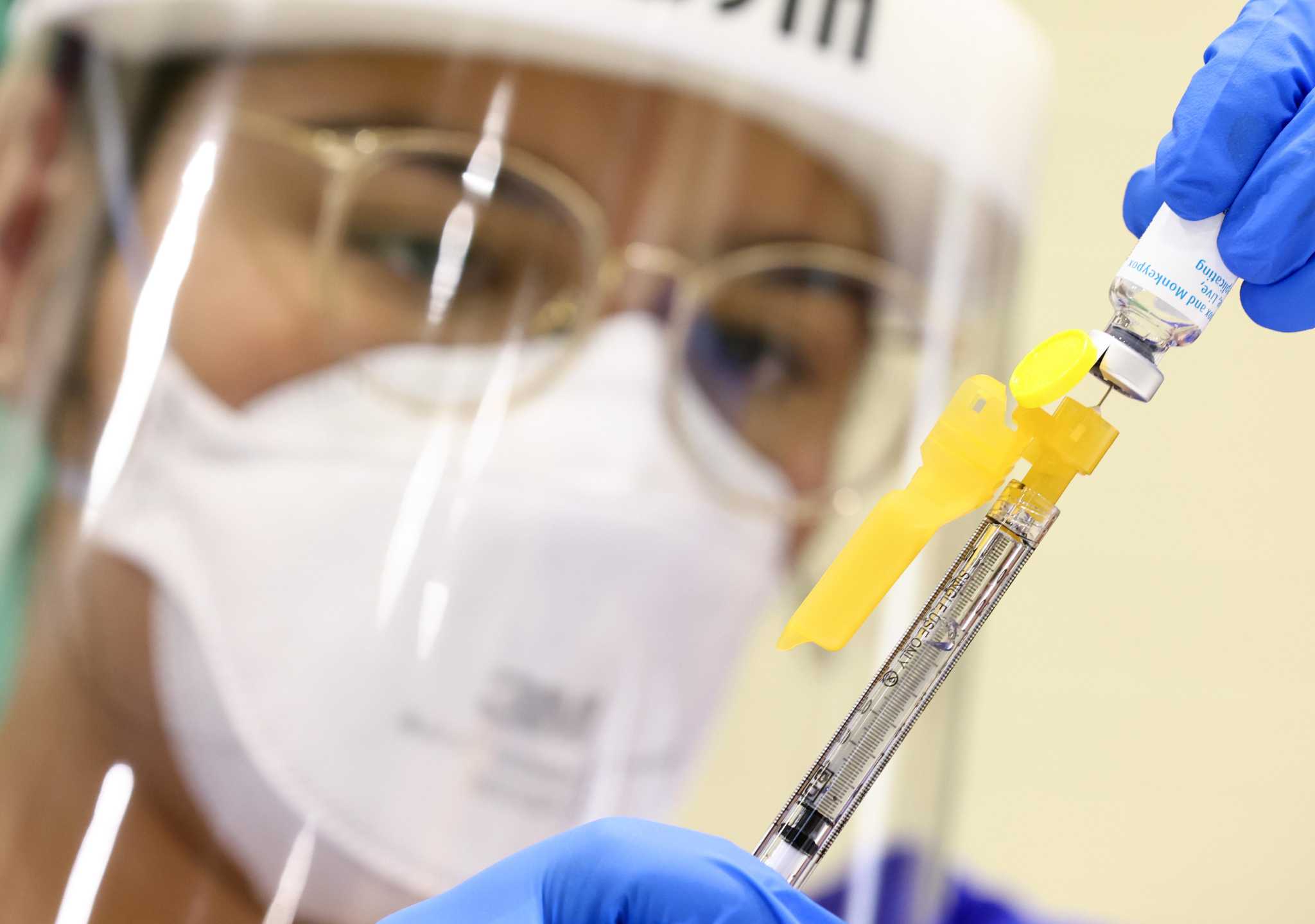
Monkeypox and children - A leading virologist explains
Though the CDC has stated there are no confirmed cases of the monkeypox virus among patients under 18 in Connecticut, a handful of cases involving children have been reported across the country. Paulo Verardi, associate professor of virology and vaccinology at UConn, is taking on some of the important questions about monkeypox and children and offering his expertise and clarity regarding a topic that has many Americans and parents concerned: Are children specifically at risk? A: “Anyone is at risk of contracting monkeypox and spreading it to other people, typically by direct, close contact, such as skin to skin contact. That includes touching monkeypox lesions that sometimes can be hard to notice, or touching and using objects such as toys, clothes, and bedding of someone that is infected. “In this context, it is important to point out that the virus can stay in the environment without losing infectivity for quite some time. Children are very active, social, and tactile, so spread in settings like schools and day care facilities is something we need to consider, particularly if the outbreak continues to evolve and infections become more widespread in diverse populations.” Does the disease traditionally present differently in younger people? Is the symptomology different? A: “In general, symptoms are similar in adults and children, although for this outbreak with this specific strain of the virus, our clinical experience in children is limited because we have had only a few cases so far. “Rash or skin lesions are typical, and fever and swollen lymph nodes (lymphadenopathy) are also common symptoms. However, children may be at higher risk of more severe disease and complications from monkeypox, particularly if they are very young, have skin conditions like eczema, or are immunocompromised.” If you are a journalist looking to cover this topic, let us help with your stories. Paulo Verardi is a virologist who specializes in vaccine research and development and is a member of the Center of Excellence for Vaccine Research. Dr. Verardi is available to speak with media regarding virology, monkeypox, COVID-19, and other viruses – simply click on his icon now to arrange an interview today.
