
Experts Matter. Find Yours.
Connect for media, speaking, professional opportunities & more.

Are You an Expert? Here’s How to Tell
Have you ever wondered whether or not you are an expert? When asked this question about what defines expertise, you will hear a variety of answers. Many will reference key requirements such as an expert must have extensive knowledge in their field. Others will see education, published work, or years of experience as key qualifiers. Yet there are so many other dimensions of expertise that contribute to how visible, influential and authoritative they are within their community of practice or with the general public. Who Qualifies as an Expert? I started looking closer at this topic for two reasons. The first is my personal work with experts. Having worked with thousands of them across a variety of sectors I've observed that many are driven to develop themselves professionally as an expert to meet a variety of objectives. Often these are focused on raising one's profile and reputation among peers or with the broader market to inform the public. Some see media coverage being an essential part of their strategy while others are more interested in developing a larger audience for their research or client work, by speaking at conferences or on podcasts. Others have a focus on improving their PageRank on search engines. All these activities can enable important objectives such as attracting new clients, research funding or talent. The second reason for this deeper dive into expertise is a need to better organize how we look at experts within organizations. My work with communications departments in knowledge-based sectors reveals that they are keen to learn more about how they can better engage their experts to build reputation, relationships and revenue. However, better engagement starts with a better understanding of what qualifies someone as an expert - what attributes can we objectively look at that define expertise? With that knowledge, we can first better appreciate the amount of work experts have put into establishing themselves in their field. Then organizations can nurture this expertise in a more collaborative way to accomplish shared goals. My observation is that with a little more insight, empathy, and alignment, both experts and their organizations can accomplish incredible things together. And there has never been a more important time for experts to "show their smarts." By definition, an expert is someone with comprehensive or authoritative knowledge in a particular area of study. While formal education and certifications are a starting point for expertise, many disciplines don’t have a set list of criteria to measure expertise against. It’s also important to recognize other dimensions of expertise that relate not just to the working proficiency in a field but also to the degree of influence and authority they have earned within their profession or community of practice. Because of this, expertise is often looked at as a person’s cumulative training, skills, research and experience. What are the Key Attributes of Expertise? In evaluating your accomplishments and the various ways you can contribute as an expert to both your community of practice and the public, here are some key questions that can help you assess how you are developing your expertise: Have you completed any formal education or gained relevant experience to achieve proficiency in your chosen field? Are you actively building knowledge in a specific discipline or practice area by providing your services as an expert? Are you generating unique insights through your research or fieldwork? Are you publishing your work to establish your reputation and reach a broader audience such as publications or books? Are you teaching in the classroom or educating and inspiring audiences through speaking at conferences? Do you demonstrate a commitment to impact your community of practice and help advance your field and generate an impact on society by informing the public? Have you established a reputation as a go-to source for well-informed, unique perspectives? Some Additional Tips to Help you Develop Your Expertise To further the discussion, I’ve also shared further thoughts about the meaning of “expertise”. As you think about developing your own personal skills, or if you are a communicator who is responsible for engaging with your organizations experts, here are a few additional principles to keep in mind. Experts Aren't Focused on Some“Magic Number” Related to Hours of Experience Malcolm Gladwell’s book “Outliers” (2008), outlined the now famous “10,000-hour rule” as the magic number of greatness for the time it takes to master a given field. As the rule goes, you could become a genuine expert in a field with approximately 10,000 hours of practice — roughly 3 hours a day, every day for a consecutive decade. But is that what it really takes to become an expert? But is that what it really takes to become an expert? Or did Gladwell oversimplify the concept of expertise? Some of his assumptions for “Outliers” (which became a major bestseller) relied on research from Dr. Anders Ericsson at Florida State University who made expertise the focus of his research career. Contrary to how Gladwell outlined it, Ericsson argued that the way a person practised mattered just as much, if not more, than the amount of time they committed to their discipline. It also depends on the field of research or practice one is involved in. Some disciplines take decades to achieve expertise and many experts will admit they are just scratching the surface of what they are studying, well after they have passed the 10,000-hour mark. That might be just the first stage of proficiency for some disciplines. Experts are Continuously Learning It’s difficult to claim proficiency as an expert if you are not staying current in your field. The best experts are constantly scouring new research and best practices. Dr. Anders Ericsson observed in his work that "deliberate practice" is an essential element of expertise. His reasoning was that one simply won’t progress as an expert unless they push their limits. Many experts aren’t satisfied unless they are going beyond their comfort zone, opening up new pathways of research, focusing on their weaknesses, and broadening their knowledge and skills through avenues such as peer review, speaking, and teaching. The deliberate practice occurred “at the edge of one’s comfort zone” and involved setting specific goals, focusing on technique, and obtaining immediate feedback from a teacher or mentor. Experts Apply their Knowledge to Share Unique Perspectives While many experts conduct research, simply reciting facts isn't enough. Those who can provide evidence-based perspectives, that objectively accommodate and adapt to new information will have more impact. Expertise is also about developing unique, informed perspectives that challenge the status quo, which can at times be controversial. Experts know that things change. But they don’t get caught up in every small detail in ways that prevent them from seeing the whole picture. They don't immediately rush toward new ideas. They consider historical perspectives and patterns learned from their research that provide more context for what's happening today. And these experts have the patience and wisdom to validate their perspectives with real evidence. That's why expert sources are so valuable for journalists when they research stories. The perspectives they offer are critical to countering the misinformation and uninformed opinions found on social media. Experts Connect with a Broader Audience Many experts are pushing past traditional communication formats, using more creative and visual ways to translate their research into a wider audience. We conducted research with academics in North America and in Europe who are trying to balance their research (seen in traditional peer-reviewed journals) with other work such as blogs, social media, podcasts and conferences such as TEDx - all with the goal to bring their work to a wider audience. While that's an essential part of public service, it pays dividends for the expert and the organization they represent. Experts Are Transparent More than ever, credible experts are in demand. The reason for this is simple. They inspire trust. And the overnight success some have seemingly achieved has come from decades of work in the trenches. They have a proven record that is on display and they make it easy to understand how they got there. They don't mask their credentials or their affiliations as they didn't take shortcuts. They understand that transparency is a critical part of being seen as credible. Experts Don’t Take “Fake It Till You Make It” Shortcuts The phrase “fake it till you make it,” is a personal development mantra that speaks to how one can imitate confidence, competence, and an optimistic mindset, and realize those qualities in real life. While this pop psychology construct can be helpful for inspiring personal development, it gets problematic when it becomes a strategy for garnering trust with a broader audience to establish some degree of authority - especially when this inexperience causes harm to others who may be influenced by what they see. When self-appointed experts take shortcuts, promoting themselves as authorities on social media without the requisite research or experience, this blurs the lines of expertise and erodes the public trust. Experts Are Generous The best experts are excited about the future of their field, and that translates to helping others become experts too. That's why many openly share their valuable time, through speaking, teaching and mentorship. In the end, they understand that these activities are essential to developing the scale and momentum necessary to tackle the important issues of the day. How Do You Show your Smarts? How do you personally score on this framework? Or if you are in a corporate communications or academic affairs role in an institution how does this help you better understand your experts so you can better develop your internal talent and build your organization’s reputation? As always we welcome your comments as we further refine this and other models related to expertise. Let us know what you think. Helpful Resources Download our Academic Experts and the Media (PDF) This report, based on detailed interviews with some of the most media-experienced academics across the UK and United States draws on their experiences to identify lessons they can share in encouraging other academics to follow in their path. Download the UK Report Here Download the US Report Here The Complete Guide to Expertise Marketing for Higher Education (PDF) Expertise Marketing is the next evolution of content marketing. Build value by mobilizing the hidden people, knowledge and content you already have at your fingertips. This win-win solution not only gives audiences better quality content, but it also lets higher ed organizations show off their smarts. Download Your Copy



Well before the uncertainty of the pandemic, Orion Travel Insurance, a CAA company, decided to change the way travellers access travel insurance online. Working with a team of anthropologists, the goal of the redesign was to better understand how humans think about travel and safety. Researchers scoured opinions online, analyzed media and sat down with travellers to document their feelings around travel. “The traditional way of building an online quoting system just wasn’t sufficient,” says Kellee Irwin, VP, Orion Travel Insurance Company. “We didn’t feel that the online experience was putting the needs of the traveller first, so we turned it on its head and approached things differently. We are confident that this new approach to accessing travel insurance and information about travel insurance online is going to be an industry game-changer.” Traditionally, online quoting systems for travel insurance have been designed with business needs at the forefront, rather than designed to reflect what customers need to confidently purchase the appropriate protection. “As a company founded to deliver the protection that our members deserve, this antiquated way of doing things wasn’t good enough. Our mission was to create an online buying experience that was inspired by what it’s like when a traveller engages with a CAA Associate at a store,” adds Irwin. The end result of this in-depth work is the launch of a reinvented online travel quote and purchase system that makes learning about and buying travel insurance an easy and seamless experience for travellers. "Our research told us that travellers want to feel like 'their own best expert'. This new online experience enables travellers to explore and learn about the different types of travel insurance and compare the cost of various levels of protection all at their fingertips," says Irwin. The new system helps customers clearly understand the protection they are viewing and why qualifying questions are being asked. No longer will customers be forced to click through a series of prompts, only to discover that their selections do not reflect their needs and they must start all over again. As they explore coverage and learn more about what protection is right for them, travellers can get to a price in just seven clicks. Plus, they can alter their choices and the system will give updated quotes in real time. It also allows customers to use our SMART FAQ search engine in which the customer enters a question and immediately receives a matched answer. The new online buy flow is now in effect, click here to experience Orion’s reimagined online travel insurance system.



The University of Florida aims to bring a scientist to every Florida school
By Emma Richards It was the encouraging support of his 10th grade earth science teacher that led Bruce MacFadden to pursue his dream of becoming a scientist. Now an accomplished paleontologist, MacFadden is paying it forward as director of the UF Thompson Earth Systems Institute and its “Scientist in Every Florida School” program. The program connects more than 700 scientists to K-12 classrooms in 42 counties throughout the state, providing students and teachers alike with up-to-date science lessons that both inform and, hopefully, inspire future scientists. Teachers use the program’s online application portal to request a visit by a scientist to teach a specific concept. Teachers are then matched with a scientist with that expertise, who delivers the requested lesson in person or virtually. Participating scientists are vetted to ensure they can communicate clearly with audiences of varying education levels. The program benefits students, teachers and scientists, MacFadden said. Students get to see the amazing things scientists do. Teachers receive timely knowledge and professional development. And scientists get to give back to society and gain confidence in their ability to share research, even with the youngest students. “We want to let young people know that if they want to be a scientist and apply themselves, they can also be a scientist,” MacFadden said. “It’s a synergy between the scientists and the teacher,” he said in an interview on the From Florida podcast. “We do not have prescribed, off-the-shelf lesson plans, but instead we typically talk with the teacher and say, ‘What would you like to do?’” It is the only program that currently works throughout the state to deliver high-quality STEM instruction to teachers and students, particularly in public Title 1 schools. “We want to make sure that there’s a level playing field with the understanding and teaching about STEM in a larger context,” he said. “But for me, it’s more about earth system science so that all teachers and students can benefit from what we know about current research in this field.” Outreach conducted through the Thompson Earth Systems Institute focuses on those systems — the interaction of air, water, land and life, and human impacts. Another important aspect of the “Scientist in Every Florida School” program is showcasing what a 21-st century career in science can look like for people from a variety of different backgrounds and interests. MacFadden said graduate students serve as role models in their visits to schools. “We want to let young people know that if they want to be a scientist and apply themselves, they can also be a scientist,” MacFadden said. The program aims to get a scientist into every public school in Florida at least once. With more than 4,000 public schools in the state, the scientists have a lot of stops to make — though virtual visits have helped them reach distantly located schools. MacFadden said once the team accomplishes that feat, they’ll focus on expanding outreach to other states. “Right now, I’m totally focused on making a difference in Florida’s public education,” he said. To learn more about the Scientist in Every Florida School program, listen to the full episode on From Florida at this link. Listen to other episodes of the From Florida podcast here. To learn more about the Thompson Earth Systems Institute, visit this link.


Could eating fruit more often keep depression at bay? New research
Study found frequent fruit eaters had greater positive mental wellbeing The study surveyed 428 adults and looked at the relationship between their consumption of fruit, vegetables, sweet and savoury food snacks and their psychological health The more often people ate fruit, the lower they scored for depression and the higher for mental wellbeing. People who frequently eat fruit are more likely to report greater positive mental wellbeing and are less likely to report symptoms of depression than those who do not, according to new research from the College of Health and Life Sciences, Aston University. The researchers’ findings suggest that how often we eat fruit is more important to our psychological health than the total amount we consume during a typical week. The team also found that people who eat savoury snacks such as crisps, which are low in nutrients, are more likely to report greater levels of anxiety. Published in the British Journal of Nutrition, the study surveyed 428 adults from across the UK and looked at the relationship between their consumption of fruit, vegetables, sweet and savoury food snacks, and their psychological health. After taking demographic and lifestyle factors such as age, general health and exercise into account, the research found that both nutrient-rich fruit and nutrient-poor savoury snacks appeared to be linked to psychological health. They also found that there was no direct association between eating vegetables and psychological health. Based on the survey, the more often people ate fruit, the lower they scored for depression and the higher for mental wellbeing, independent of the overall quantity of fruit intake. People who frequently snacked on nutrient-poor savoury foods (such as crisps) were more likely to experience ‘everyday mental lapses’ (known as subjective cognitive failures) and report lower mental wellbeing. A greater number of lapses, was associated with higher reported symptoms of anxiety, stress and depression, and lower mental wellbeing scores. By contrast, there was no link between these everyday memory lapses and fruit and vegetable intake or sweet snacks, suggesting a unique relationship between these nutrient-poor savoury snacks, everyday mental lapses, and psychological health. Examples of these frustrating little everyday mental lapses included forgetting where items had been placed, forgetting the purpose of going into certain rooms, and being unable to retrieve names of acquaintances whose name was on the ‘tip of the tongue’. Lead author, PhD student Nicola-Jayne Tuck commented: “Very little is known about how diet may affect mental health and wellbeing, and while we did not directly examine causality here, our findings could suggest that frequently snacking on nutrient-poor savoury foods may increase everyday mental lapses, which in turn reduces psychological health. “Other studies have found an association between fruit and vegetables and mental health, but few have looked at fruit and vegetables separately – and even fewer evaluate both frequency and quantity of intake. “Both fruit and vegetables are rich in antioxidants, fibre and essential micronutrients which promote optimal brain function, but these nutrients can be lost during cooking. As we are more likely to eat fruit raw, this could potentially explain its stronger influence on our psychological health. “It is possible that changing what we snack on could be a really simple and easy way to improve our mental wellbeing. Conversely, it is also possible that the forthcoming restriction of processed snack foods at checkouts, due to come in this October, could not only improve the country’s physical health, but mental health too. “Overall, it’s definitely worth trying to get into the habit of reaching for the fruit bowl.” For more information about the School of Psychology, please visit our website.


Researchers in Georgia Southern University’s Tactical Athlete Readiness and Preparedness Program (TARP) have teamed up with the Georgia Public Safety Training Center (GPSTC) to ensure the readiness and resilience of Georgia’s public safety officials. Members of the TARP in the Waters College of Health Professions have worked to revise the fitness training standards for Georgia’s police cadets with a focus on functional fitness, mental resilience and injury prevention. In addition, the program has formed a partnership with the GPSTC, Georgia’s premier training facility for all state and local public safety related units to include police, fire and communication. Bridget Melton, Ed.D., professor of exercise science and lead faculty member of TARP, said that due to high stress and health concerns, some police and public safety officials are at high risk for cardiovascular disease or other fatal illnesses. “Our program provides state academies with fitness exercises that increase overall cadet fitness and focuses on injury prevention,” said Melton. “Our program focuses on occupational focused fitness to hopefully encourage a more positive view of exercise that will stick with cadets even after their academy training is done.” Richard Cleveland, Ed.D., associate professor of leadership, technology and human development, heads resilience and mental health for the TARP team, and has created a Mindfulness-Based Tactical Instruction curriculum for the state of Georgia. “Tactical athletes need training and support for resilience and mental health, but too often it’s only presented as a one-time workshop or seminar,” said Cleveland. “Our program dovetails into the state’s resilience curriculum for officers, but provides ‘bite-sized’ mindfulness practices within the fitness program. This gives cadets repeated practice at using mindfulness and embeds it within their context using police language, actions and behaviors.” The partnership was made possible due to a subgrant GPSTC was awarded from the Criminal Justice Coordinating Council to fund TARP at their facilities due to the program’s comprehensive view of officer wellness, which is aimed at improving de-escalation skills among recruits through mental and physical training. “We are pleased to form a partnership with the GPSTC and the Tactical Athlete Readiness and Preparedness Program,” stated Chris Wigginton, director of GPSTC. “This partnership will allow public safety professionals to be better prepared in their personal and professional lives. Some of the many benefits will be a reduction in injuries, being better prepared to use needed skills in rapidly evolving situations, and the resiliency and mental health component. As word has gotten out of the possibility of the GPSTC implementing this program we have already been contacted by several states regarding the initiative.” Additionally, graduate students in the Department of Health Sciences and Kinesiology participate in the program and gain firsthand and practical experience by performing training and assessment for state instructors. TARP is part of Georgia Southern’s Tactical Athlete Initiative, which aims to reduce the number of injuries and increase readiness and preparedness of tactical athletes. The interdisciplinary team consists of the following Georgia Southern faculty members: • Bridget Melton, Ed.D., Professor • Richard Cleveland, Ed.D., Associate Professor • Greg Grosicki, Ph.D., Assistant Professor • Haresh Rochani, DrPH, Associate Professor • Mary Beth Yarbrough, Lecturer • Sarah Davis, Lecturer TARP is just one example of the work coming from Georgia Southern University’s Tactical Athlete Initiative. The Tactical Athlete Initiative is a multi-discipline collaboration providing research, training and support for military, police, fire and EMS workers. The Tactical Athlete Initiative has partnered with multiple agencies including the Statesboro Police Department, Statesboro Fire Department, Bulloch County Sheriff’s Office, Forsyth County Sheriff’s Office, Waycross Fire Department, Georgia Public Safety Training Centers, Federal Law Enforcement Training Centers and the United States Army. If you're a reporter looking to know more about this partnership at Georgia Southern University - the let us help. Richard Cleveland, Ph.D., is an assistant professor in the Department of Leadership, Technology & Human Development at Georgia Southern - simply click on his icon to get in touch or contact Georgia Southern Director of Communications Jennifer Wise at jwise@georgiasouthern.edu to arrange an interview today.


Georgia Southern University’s annual economic impact soars to more than $1B
The latest report released by the University System of Georgia (USG) shows that Georgia Southern continues to have a strong economic impact on the region it serves and significantly contributed to the USG’s $19.3 billion total economic impact between July 1, 2020, and June 30, 2021. The report indicates that Georgia Southern’s annual economic impact has soared to more than $1 billion for FY 2021, a 7.4% increase over FY 2020. The report found these economic impacts demonstrate that continued emphasis on colleges and universities as a pillar of the state’s economy translates into jobs, higher incomes and greater production of goods and services. “We faced unprecedented challenges in FY 2021, but we’ve come out stronger than ever,” said Georgia Southern President Kyle Marrero. “With more than $1.03 billion of direct impact on southeast Georgia, Georgia Southern will continue to create more academic programs that meet specific needs for economic development. Informed by our regional academic plan and University strategic plan, we’re committed to making our region a thriving economic hub in Georgia.” There are 3,250 jobs on Georgia Southern’s campuses in Statesboro, Savannah and Hinesville. Because of institution-related spending, 6,363 jobs exist off-campus. Georgia Southern’s “initial spending” is $806,753,630. That breaks down in three areas: $235,513,929 is spent on personnel services $161,882,006 is spent on operations $409,357,695 is spent by Georgia Southern’s students Included in the initial spending by USG institutions are rounds of funding from the Higher Education Emergency Relief Fund (HEERF), which are federal funds allocated by the Coronavirus Response and Relief Supplemental Appropriations Act that provided emergency grants for postsecondary education. The study is conducted on behalf of USG by Jeffrey M. Humphreys, Ph.D., director of the Selig Center for Economic Growth in the University of Georgia’s Terry College of Business. If you are a journalist looking to know more about the positive economic Georgia Southern is having - then let us help. Georgia Southern President Kyle Marrero is available to speak with media - simply reach out to Georgia Southern Director of Communications Jennifer Wise at jwise@georgiasouthern.edu to arrange an interview today.

News in Atlanta is attracting from across the country. A Starbucks tucked away in the Ansley Mall in midtown Atlanta became the third of the popular chain's locations in the state to unionize. Georgia is not known a union strong state. But efforts are also on to see an Amazon warehouse in Gwinnett County organized as well. The union push in the Peach State is getting a lot of attention. In a state that has been historically non-union, the battle to organize in Georgia has often been uphill. And in a workforce of 5 million, most efforts may have a minimal impact. Yet in recent months, there have been public signs of union activism: among low-wage marginal workers, long-time unionists pushing for better contracts and — most visibly — upstart efforts in high-profile, non-factory settings like Starbucks and Apple. Maybe it's the tight labor market that gives workers more leverage. After all, the historically low unemployment rate during a time of economic growth has many employers desperate for workers, less able to dictate terms and pay, said Anthony Barilla, Ph.D, economist at Georgia Southern University, who has researched labor issues. "There is a shortage of workers willing to work at the minimum wage or at a wage that simply doesn't mesh with the area's standard of living," he said. "When labor deserves a higher wage, organizing is simply a tool to be used in accomplishing this." July 07 - Atlanta Journal Constitution/Miami Herald There's a lot of interest in the union push in Georgia and a lot of questions to ask: Are perceptions of organized labor changing in the south? What's motivating the union drives? Is it time larger corporations took notice? If you are a journalist looking to know more about this labor trend - then let us help. Anthony Barilla, Ph.D., is an associate professor of economics. He has published research in the fields of labor economics, sports economics and the aspects of economic education. He is available to speak with media about these recent developments - simply reach out to Georgia Southern Director of Communications Jennifer Wise at jwise@georgiasouthern.edu to arrange an interview today.

James Webb Space Telescope Images Deliver New Look at Universe, Potential for Life in the Cosmos
On July 12, the National Aeronautics and Space Administration (NASA) unveiled its long-awaited first images from the James Webb Space Telescope, a cutting-edge tool sent out with the mission of furthering our understanding of the universe. The telescope delivered on its promise, depicting the cosmos more clearly than we’ve ever seen. Among the many in awe was Villanova astronomy and astrophysics professor Ed Guinan, PhD, who’s familiar with extraterrestrial discovery. In 1968, Guinan helped observe evidence of Neptune’s ring system and has been involved in research beyond our planet for over 50 years. “The first few photos are beautiful, showing highly detailed images of stars, galaxies, nebulae and gravitational lensed distant galaxies” Dr. Guinan said. “Some of the oldest galaxies formed as far back as 13-to-13.5 billion years, right after the Big Bang.” The latest images come almost seven months after Webb’s launch in December. A series of steps needed to be completed for the mission to be successful. “Many things could’ve gone wrong, and if something failed, it would be too far away to fix,” Dr. Guinan said. One of the photos featured a signature of water in the atmosphere of a distant sun-like star, showing the unique capabilities of Webb. Dr. Guinan, along with assistant astrophysics and planetary science professor Scott Engle, PhD, have been researching the potential habitability of Earth-sized exoplanets over the last decade, and he believes this telescope may be able to help bring clarity to finding life outside of our planet. “Several of these potentially habitable exoplanet systems are planned to be observed with the telescope to search for spectroscopic evidence of life,” Dr. Guinan said. “Webb is capable of answering these questions, whether these Earth-sized planets may be suitable for harboring complex life, possibly intelligent life.”


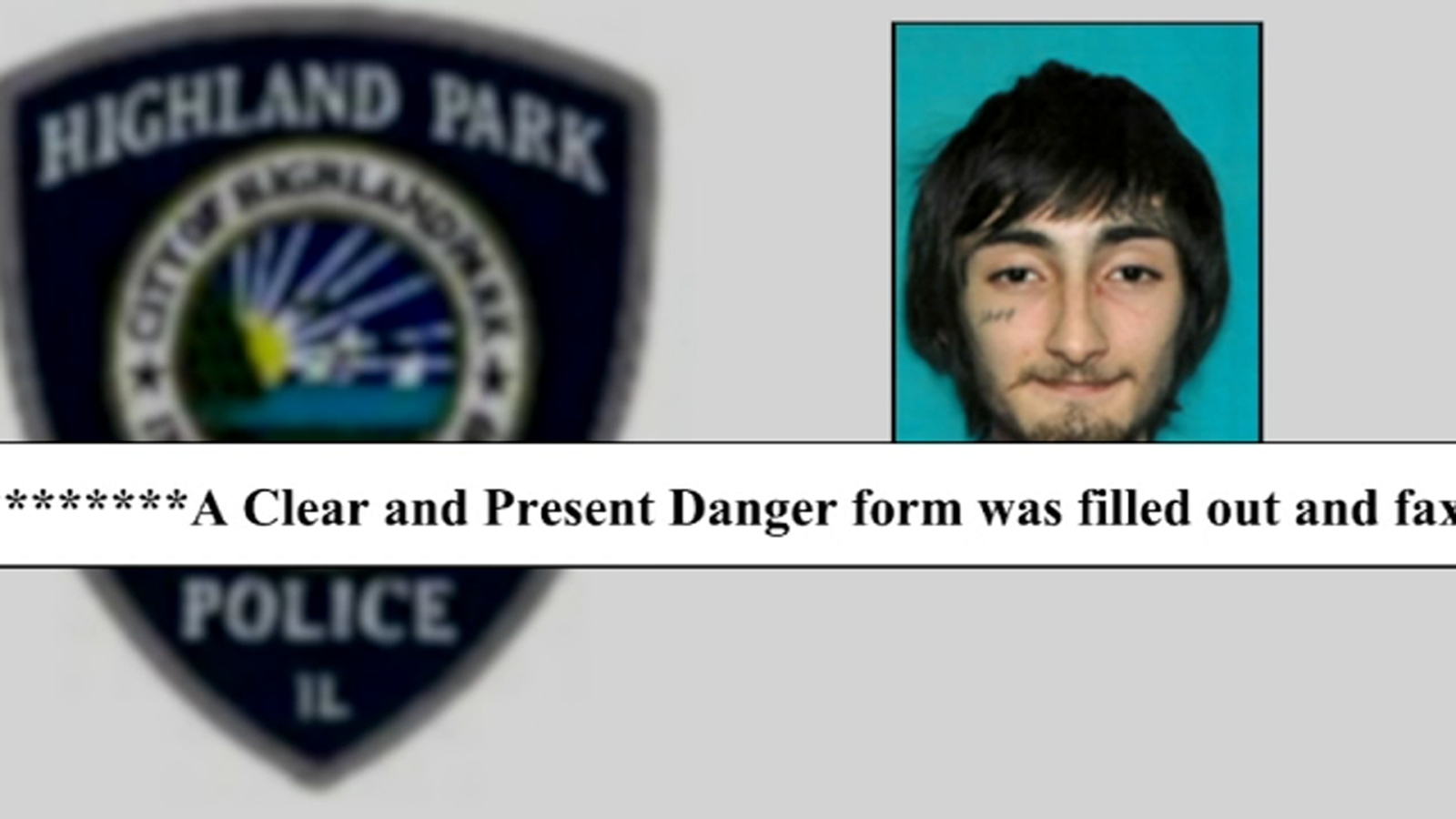
On July 4, 2022 when people across America were expecting to enjoy a day off and celebrating the country's 245th birthday - another mass shooting occurred. This time it was in Highland Park, Illinois and so far this year, a week has not passed in America without a mass shooting. In the aftermath of the July 4th tragedy - media were clamoring to cover and looking for answers, motives and reasons. UMW's Laura Wilson, a go-to expert on the topic was contacted immediately by media. Even with Crimo's history, it's not as if Absler or anyone else could have predicted that one day he'd be accused of mass murder, experts say. "We don't really know much about how to predict mass shootings, and we don't really have a profile of a shooter, what the characteristics are. They are shared by millions of people," says Laura Wilson, an associate professor of psychology at the University of Mary Washington in Virginia. "There aren't any clear-cut characteristics that we can definitively say, this is the mold." July 11 - ABC News Dr. Laura Wilson is a clinical psychologist whose expertise focuses on post-trauma functioning, particularly in survivors of sexual violence or mass trauma (e.g., terrorism, mass shootings, combat). Her research interests extend to predictors of violence and aggression, including psychophysiological and personality factors, as well as indicators of PTSD following mass trauma, long-term functioning among first responders, outcomes among survivors of sexual violence and the influence of media on mental illness stigma. Dr. Wilson is available to speak with media, simply click on her icon to arrange an interview today.



MEDIA RELEASE: Ten travel tips Ontarians should consider before flying this summer
CAA South Central Ontario (CAA SCO) has compiled a list of ten things that Ontarians should be aware of if they are considering travelling this summer – both inside and outside the country. “Those who are considering booking a trip should make sure they understand the scope of what travel looks like at the moment,” said Nadia Matos, manager external communications, CAA SCO. “The checklist for planning a trip has changed and we want to help people navigate this new environment. “Airports are experiencing delays with varying degrees of impact, and Ontarians should be prepared.” Through consultation with its top travel agents, CAA SCO has identified ten key considerations that potential travelers may not be aware of. Anyone who is considering travel in the current environment should remember that travel requirements and regulations are continually changing. Expect itinerary changes. CAA SCO travel agents say our members are experiencing schedule changes for flights. Subscribe to the airline’s text message service to be immediately notified of any changes, and book connecting flights with more time in between than you normally would if available. A travel agent is also a valuable resource if this happens. Consider packing a carryon instead of checking luggage. Potential baggage delays mean that your luggage may not arrive with you or take extra time to be unloaded off the plane. If you bring a carryon, make sure it fits the size requirements for all the airlines you are flying on, and with any tour operators. When using a carryon to travel, you still need to follow the 3-1-1 rule: three ounces of liquid, gel, aerosol, cream or paste that fit in one quart-sized resealable bag. If you are checking luggage, make sure your carryon has your hygiene essentials, any medications, and a change of clothing. Expect longer wait times at the airport. The old standby of being at the airport one hour before takeoff for domestic flights and two hours before international flights no longer apply. CAA currently recommends arriving at the airport a minimum of two hours before domestic flight departures and at least three hours for international flights. Make sure all your documentation is in order before you book. Your passport should still be valid six months after your travel date, as this is required in several countries. Passports themselves are taking longer than usual to renew, so it should be done several months before you travel. Each destination has varying documentation requirements, so make sure you fully understand what information you need to have ready and in what format. Buy travel insurance and understand what is covered. Make sure you have $5 million in coverage for emergency medical situations and that illness related to COVID-19 is included. Understand your entitlements for situations like denied boarding in the event of a positive test, trip cancellation or delays, what luggage is covered and what isn’t. Car rentals need to be booked months in advance. High demand as well as a shortage of vehicles means a shortage of rental cars. Some rental agencies, particularly on the east and west coasts, are not allowing vehicles to be rented in one city and left in another. A travel agent can help you navigate this. COVID-19 is still a major consideration. Confirm the COVID-19 situation at destination prior to booking. Understand the risk level associated with travel to a particular destination by checking the Government of Canada Travel Advice and Advisories website. Individual travel advisories remain on a country-by-country basis. It is important that Ontarians understand the ongoing uncertainty associated with international travel, whether that be related to the continued community transmission of COVID-19, or state of health care systems in destinations hit hard by the pandemic. Canadians returning home must have all required documentation loaded onto the ArriveCAN App or website. Stay connected. It is important to have access to trusted, up-to-date information while travelling so you can monitor changing conditions and requirements and adapt accordingly. Bookmark the Global Affairs Canada website prior to departure and check it regularly while abroad. It is also a good idea to sign up for Registration of Canadians Abroad and stay in touch with a family or friend that has knowledge of your travel plans. Find these and more information at www.caasco.com/travel Confirm change and cancellation flexibility with your travel service provider. Many airlines and hotels have been providing more flexibility when it comes to refunds and changes to bookings. Make sure you understand any key dates related to cancellation and changes and whether you are entitled to a refund or a future travel voucher or credit at the time of booking. Be patient, be kind. Around the globe, airlines are dealing with staff shortages and luggage handling back-ups. Keep in mind that the staff at the airports are there to help you, and that things may take longer than usual.
