
Experts Matter. Find Yours.
Connect for media, speaking, professional opportunities & more.
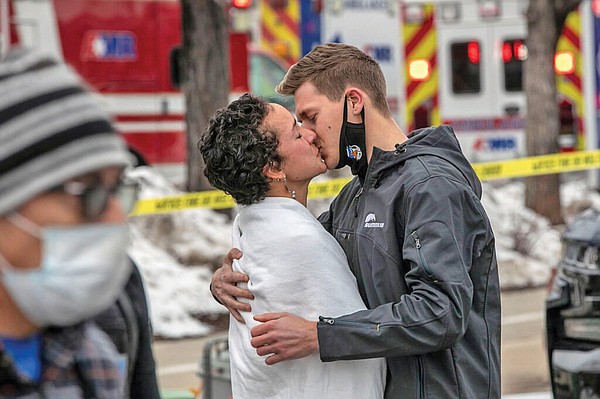
UMW's psychological trauma expert Laura Wilson weighs in on survivors of recent mass shootings
Media have been covering what has been a deadly year in America, with nearly a dozen mass shootings to date. UMW's psychological trauma expert Laura Wilson has been the go-to person to help journalists understand the impact these horrific events have on survivors. Recently, Dr. Wilson was interviewed about the recovery process American Olympic hopeful Maggie Montoya is facing after witnessing first-hand the shooting in Boulder, Colorado, as she prepares to represent America this summer in Tokyo. Laura C. Wilson, associate professor of psychology at the University of Mary Washington in Fredericksburg, Va., has focused on post-trauma functioning from mass trauma. She says most people's exposure and understanding of mass shootings consists of the immediate aftermath. "They see the news coverage of the crime scene and watch the investigators' news briefing," Wilson said. "Within a few days the news trucks leave and people's attention turns to the next major news event. This is when the grief and recovery work starts for the survivors." Wilson said every person will process the events differently. Some will have intense, acute reactions that subside in a few days or weeks. Effects could be chronic for others, and some experience delayed reactions. "Each person is different, and their recovery will look different," she said. Wilson didn't speak specifically about Montoya's running community but said community overall is a powerful strength for survivors in the aftermath of a mass shooting. "It creates a sense of belonging, which can promote psychological recovery," Wilson said. "Having supportive family and friends to validate the feelings and help you process your thoughts is certainly a protective factor." April 18 - The Northwest Arkansas Democrat-Gazette If you are a reporter looking to cover the issues survivors of mass-shooting events will experience, then let us help. Dr. Laura Wilson is a clinical psychologist whose expertise focuses on post-trauma functioning, particularly in survivors of sexual violence or mass trauma (e.g., terrorism, mass shootings, combat). Her research interests extend to predictors of violence and aggression, including psychophysiological and personality factors, as well as indicators of PTSD following mass trauma, long-term functioning among first responders, outcomes among survivors of sexual violence and the influence of media on mental illness stigma. Dr. Wilson is available to speak with media, simply click on her icon to arrange an interview today.


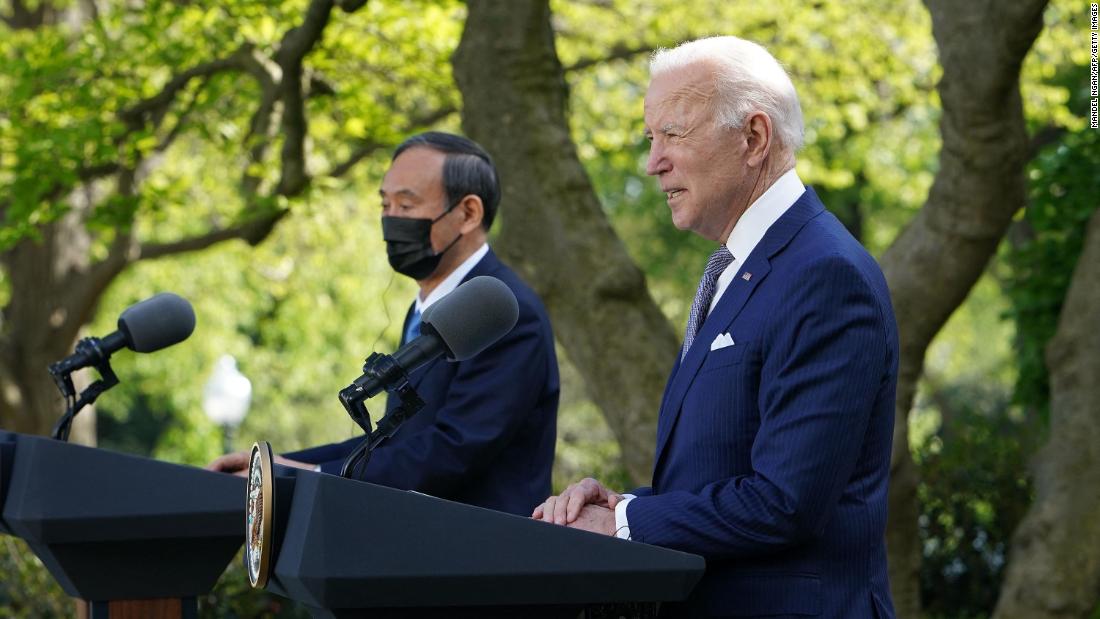
Are America and Japan forming a strong western front when it comes to China?
Friday saw President Joe Biden host a foreign leader for the first time since being elected, with Japan’s Prime Minister Yoshihide Suga coming to the White House to discuss Asian policies, primarily, concerns about China. Biden and Suga said they both aimed to tighten the relationship between the two countries during the daylong visit, and China was one of the biggest focuses of the day's meetings. "We committed to working together to take on the challenges from China and on issues like the East China Sea, the South China Sea, as well as North Korea, to ensure the future of a free and open Indo-Pacific," Biden said during remarks in the Rose Garden of the White House on Friday. Suga said he and Biden had "serious talks on China's influence over the peace and prosperity of the Indo-Pacific, and the world at large." "We agreed to oppose any attempts to change the status quo by force or coercion in the East and South China Seas and intimidation of others in the region," Suga said. "At the same time, we agreed on the necessity for each of us to engage in frank dialogue with China, and in so doing, to pursue stability of international relations, while upholding universal values." China sent 25 warplanes into Taiwan's air defense identification zone on Monday, which was the largest breach of that space since the island began regularly reporting such activity in September, Taiwan's Defense Ministry said. The fact that Suga was the first foreign leader to pay a visit to the White House showed the importance of the relationship between the two countries in promoting democracy in the region, Biden said earlier in the day. April 16 – CNN As China continues to flex its military and economic muscle in the region, the world is watching, and every move may have a global impact. If you are a journalist covering Asia and the political issues that are brewing in the region, then let us help with your coverage. Dr. Elizabeth Larus is an expert in the politics of China. She is available to speak to media, simply click on her icon to arrange an interview today.


With billions of cicadas set to emerge from the ground this spring, etymologist and professor of biology Dr. Vikram Iyengar is looking forward to what he calls “this rare opportunity” for scientists and onlookers alike. Scientists are referring to this massive group of cicadas resurging in North America as “Brood X,” since they are the tenth group to emerge since 1898, when scientists began tracking the cycle. “Some cicadas are annual (the ones we hear every summer), but the largest broods come out every 13 or 17 years,” Dr. Iyengar explains. “Some have guessed that, since most cicada predators (small rodents, etc.) have 4-year cycles, having 13- or 17-year cycles offsets that, making it hard for these predators to “predict” when the cicadas will reappear.” Dr. Iyengar reinforces that these clever bugs are nothing to be too concerned about. “There isn’t much you can ‘do’ about them…they will just be ubiquitous for a couple weeks, so we should all just take it in and try to enjoy this.” In the Philadelphia area, Dr. Iyengar expects there to be “thousands of cicadas [near Villanova’s campus alone].” He continues, “They are really just going to fly around and call loudly.” As the Northeastern United States prepares to enter the third summer of an infestation of spotted lanternflies, Dr. Iyengar “unfortunately” doesn’t think that it will do much long-term damage to the invasive lanternfly populations, “given that [the cicadas] are only around for a short period.” There might be an upside, however. “cicadas also feed on plant juices (like the lanternflies), so there should be a brief period where the cicadas outcompete the lanternflies.” Though it’s difficult to predict when exactly Brood X will make their appearance, Dr. Iyengar says that for those living in the region, “it could make for a very memorable event!” To speak with Dr. Iyengar, email mediaexperts@villanova.edu


Wastewater Hazards in Southwest Florida Spark Environmental Concerns Across the State and Beyond
Over the last week hundreds of millions of gallons of wastewater have spewed from a former fertilizer plant in Piney Point, Florida, which was abandoned in 2001 and taken over in 2006 by the Florida Department of Environmental Protection. The location is adjacent to Tampa Bay, a 400-square-mile body of water that separates Tampa, Clearwater and St. Petersburg and is full of fish, crabs, seagrass, dolphins, manatees and seabirds of every kind. The state plans to close Piney Point, scientists are trying to forecast what comes next and environmentalists fear algal blooms and fish kills (also known as fish die-offs). “There are hundreds if not thousands of these waste storage ponds in the United States and each one is a ticking time bomb,” says Villanova University’s Metin Duran, PhD, an expert on the biological processes of environmental engineering, including public health microbiology and biological processes for waste management. “The last major disaster was in December 2008, when a 40-acre pond used by Tennessee Valley Authority for the coal-burning Kingston Fossil Plant collapsed. The aftermath included damage to the area’s ecosystem and lawsuits.” Regulations regarding waste storage ponds are at the state level, and they aren’t very strict, says Dr. Duran. “Though there are strict design and groundwater monitoring requirements to ensure waste does not cause groundwater pollution, these waste impoundments are prone to have issues under extreme weather events, such as heavy rains. With the increased frequency of such events recently, there is a risk that more of such may fail.” Dr. Duran adds that it can be difficult to predict short- and long-term effects of the Florida case, but the reported low-level radioactive contamination could cause major damage to aquatic life and properties—and that phosphorous and nitrogen would cause eutrophication in Tampa Bay as well.

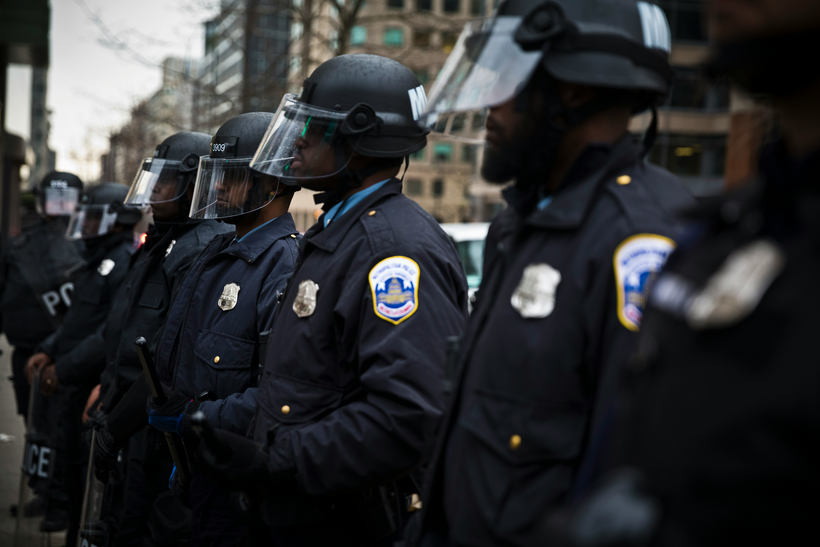
Is It Time to End Qualified Immunity?
Following the death of George Floyd and subsequent protests of police brutality, many began to wonder if this should be the end of qualified immunity, the legal protection that police officers and other government officials have from civil rights lawsuits unless the victim is able to show their constitutional rights had been violated by that official. At the time, there seemed to be a lot of momentum. "Based on the events of last summer, we were all poised for the United States Supreme Court to take action on qualified immunity," says Teri Ravenell, a law professor at Villanova who specializes in police accountability and municipal liability. "There were almost a dozen cases pending before them. With the egregious facts in these cases, it was ripe for them to act, but they refused to take cert." It was around the same time that the House passed the George Floyd Justice in Policing Act. And while there had been no action at the federal level, we began to see more states and local municipalities decide to move forward on their own. New Mexico and Colorado put laws in place to end qualified immunity, including for police officers, and New York City recently ended it as well. "Qualified immunity still exists at the federal level, but you now have local options that don't have the same obstacles because it has been eliminated in these state and local statutes," Prof. Ravenell says. While there has been progress, Prof. Ravenell cautions to look beyond the present moment. "We say we want to end qualified immunity, but we're not thinking five steps ahead about what this actually does. We can say we want to make police more accountable, but how are we doing that? If it's that we want them to pay damages, if they take on more liability, municipalities will stop indemnifying and plaintiffs will go uncompensated. We have to think about how different rights and issues intersect with each other."

Much like the cherry blossoms that are reaching peak in DC and are just starting to bloom here in NYC, U.S.-Japan relations seem set to hit their peak with Prime Minister Yoshihide Suga set to become the first world leader to meet with President Biden at the White House this week. This marks the first time a Japanese leader—or any Asian leader—is the first to meet with a U.S. president, since traditionally this honor has been reserved for a neighboring country like Canada or Mexico, or a European ally such as the UK. What does this mean for geopolitics? How does this shift our relationship with Japan and other allies? What does this mean for the balance of global power in a world of ever-shifting alliances? According to Joshua Walker, President & CEO of Japan Society, this historic visit indicates the following: This visit highlights the shift from a Western Transatlantic to an Eastern Transpacific Asian century, where Japan plays a critical role as a frontline security ally of the United States against China as this competition dominates geopolitics. It emphasizes the importance of democratic allies like Japan, specifically the Quad formation of Australia, India, Japan, and the U.S. as a new multilateral framing of America’s engagement in Asia. Japanese leadership inaugurated this concept in the last decade, which has now been embraced by the Biden administration. Brings into focus the 70 years of security treaty alliance between the United States and Japan, where Biden and Suga have been key players for the last half century—since the opening to China that changed the character of U.S.-Japan relations. Represents a key bilateral opportunity for both new administrations to get to know each other on the world stage in advance of the G7 summit in England this summer, and a time to coordinate strategies between the first and third largest economies, from domestic COVID responses and infrastructure investment to global responses to climate change and authoritarian regimes from North Korea and Myanmar to Iran. As host of the Summer Olympics in Tokyo, Japan elevates global aspirations and hopes for a successful, albeit different, competition of the human spirit that, through its resiliency, can overcome COVID. America represents the largest Olympic delegation and TV market, while Japan is the only Asian country to host two Summer Olympics even as China plans for its own Winter Games in 2022.


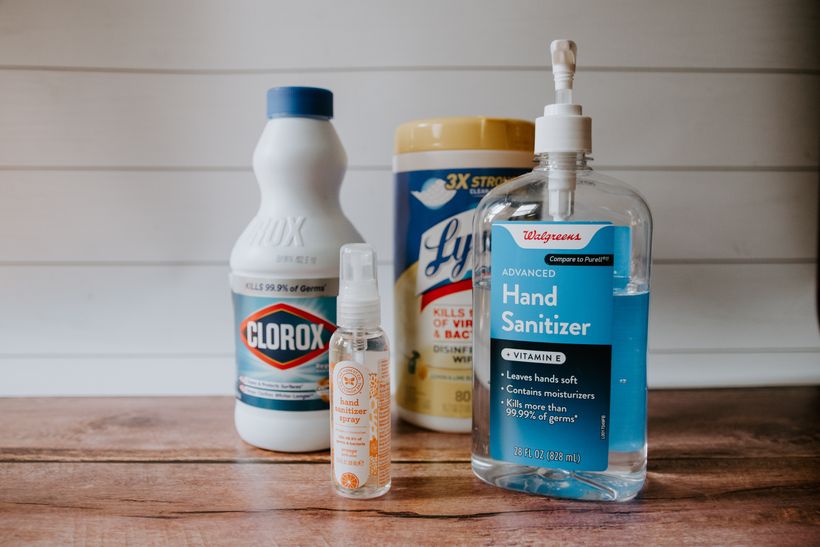
The days of wiping down groceries may be coming to an end, but will Americans' reliance on hand sanitizer follow suit? This week, the Centers for Disease Control and Prevention (CDC) released a report confirming that the risk of catching the coronavirus from surfaces is low. Kevin Minbiole, PhD, chair of the Department of Chemistry at Villanova University, weighs in on hand sanitizer use—and whether too much sanitizing is a bad thing. "I think that a lot of the concern on the overuse of hand sanitizer a decade ago or so was the overuse of triclosan, a strong antimicrobial agent that would persist in wastewater," said Dr. Minbiole, referring to a theory that arose following the H1N1 pandemic in 2009. At that time, scientists expressed worry that bacteria were becoming resistant to hand sanitizer. "It seemed like overkill to go beyond soap and water or simply ethanol (alcohol)—or to add triclosan into hand soap," Dr. Minbiole continued. While Dr. Minbiole does not dismiss this theory, he notes, "I believe there was merit to the concerns of overapplying antibiotics and antiseptics when they were not needed." Looking to the future, Dr. Minbiole does not see hand sanitizer playing as big a role. "I don't foresee a backlash so much here, as folks recognize that this particular virus is more of an airborne concern," he says.

Toolkit is easily incorporated into any laboratory science course Wilmington, Del., April 1, 2021 – St. Georges Technical High School in southern New Castle County, Delaware is the first high school in the United States to use ChristianaCare Gene Editing Institute’s innovative CRISPR in a Box Educational Toolkit™ in a science class. CRISPR in a Box brings to life the much-heralded CRISPR gene editing technology – the “genetic scissors” that allow scientists to edit DNA. The toolkit is designed for educational sessions in secondary and post-secondary schools and is suitable for remote learning. “Gene editing is the future of medicine,” said Eric Kmiec, Ph.D., director of ChristianaCare’s Gene Editing Institute. “Our partnership with the Delaware Department of Education will help cultivate the next generation of genetic scientists and enhance Delaware’s position as a leader in the biosciences.” “We are thrilled that students at St. Georges Technical High School will be the first In the United States to experience a live demonstration of CRISPR gene editing using our Innovative CRISPR in a Box educational toolkit,” said Siobhan Hawthorne, Education and Community Outreach leader at ChristianaCare’s Gene Editing Institute. “This toolkit will provide STEM students with a visual understanding of how the exciting CRISPR technology can unlock medical treatments to improve lives.” Delaware Secretary of Education Susan Bunting praised her department's partnership with ChristianaCare's Gene Editing Institute to develop the “Seeds of STEM” course that teaches high school students about gene editing. “Gene editing approaches diseases in new ways and will have significant impact in the health care and agriscience fields,” Bunting said. “This is a great example of an industry and education partnership investing in youth by providing hands-on knowledge and skills around emerging technology.” “We are so fortunate that ChristianaCare’s Gene Editing Institute reached out to our program to plan a high school ‘first’ opportunity with this new CRISPR experiment,” said Danya Espadas, one of the St. Georges biotech teachers. “Giving students the chance to use a cutting-edge, 21st century tool for medicine in their own high school lab – to have that technology at their fingertips – transcends what they see in a textbook or a video. By being able to do it themselves, it makes it real for them.” Espada said the experiment focuses on editing a gene of a non-infectious E.coli bacteria to become resistant to an antibiotic, thereby allowing researchers to create a new class of antibiotics that cannot be overcome by bacteria that are gene resistant. “We’re talking about eventually saving lives, here,” she said. “What can be more important than that?” The tools in CRISPR in a Box have been designed based on the pioneering discoveries of the Gene Editing Institute that are currently being used to explore next-generation medical therapies and diagnostics for diseases, including lung cancer and sickle-cell anemia. Component items in the toolkit include the CRISPR/Cas complex, a target DNA molecule, a mammalian cell free extract and a synthetic DNA molecule. All materials in the kit are safe, synthetic materials. There are no live cultures or viruses involved. The kit is meant to provide a hands-on demonstration of CRISPR’s capabilities, and not allow for manipulations of living organisms. “The kit is easy and fun to use,” said Kristen Pisarcik, research assistant at the Gene Editing Institute who has taught students at Delaware Technical Community College which first used the toolkit. “In a short period of time students will reliably and successfully complete the laboratory activity and be able to see the results of gene editing,” she said. Since the foundations of the kit touch upon key themes in biology, it can be readily incorporated into practically any science or biology course with a laboratory component, “One of the beauties of CRISPR in a Box is that there is no need to purchase specialized equipment. If a teaching lab can support bacterial cultivation, it can perform the in vitro gene editing lab activity,” Pisarcik said. CRISPR in a Box is the evolution of a partnership between the Gene Editing Institute, Delaware Technical Community College and Rockland Immunochemicals that began in 2017 with a National Science Foundation grant to develop the first-ever gene editing curriculum for community college students. Video and photo collection of first class in U.S. to use CRISPR in a Box™ educational gene editing toolkit. About ChristianaCare’s Gene Editing Institute The Gene Editing Institute, a worldwide leader in CRISPR gene editing technology and the only institute of its kind based within a community health care system, takes a patient-first approach in all its research to improve the lives of people with life-threatening disease. Since 2015, researchers at the Gene Editing Institute have been involved in several ground-breaking firsts in the field, including the development of the first CRISPR gene editing tool to allow DNA repairs outside the human cell which will rapidly speed therapies to patients and a unique version of CRISPR called EXACT that reduces the number of off-target edits to other areas of the genome, which is vital for further research and patient applications. Its researchers are currently developing a patient trial for lung cancer using CRISPR and employing the technology to combat the COVID-19 pandemic. About the biotech program St. Georges Technical High School The Biotech career program of study at St. Georges Technical High School is the first such program offered in a Delaware high school. With two teachers and approximately 100 students in grades 10-12, the program presents advanced content in biology and chemistry with opportunities for students to learn basic laboratory techniques and procedures and to maintain and operate common instruments and equipment used in a biotechnology laboratory. St. Georges is a comprehensive career and technical high school with 1,100 students who study in one of 16 different career pathways.


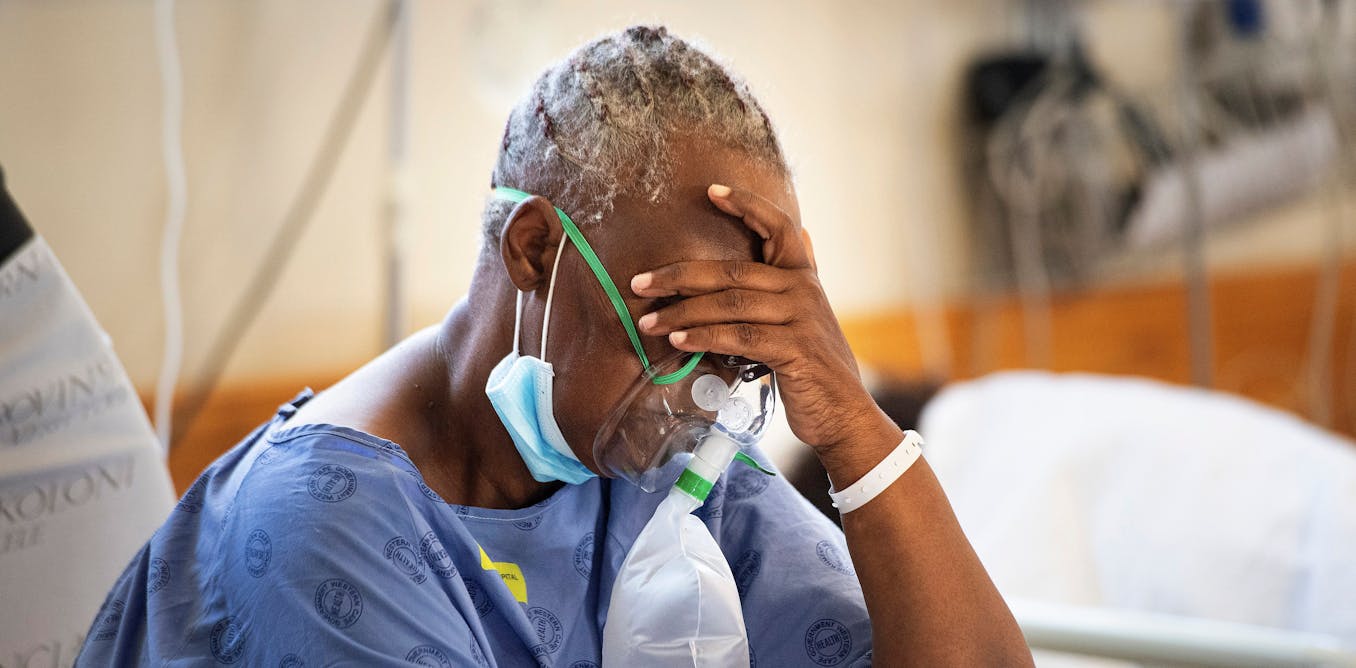
How worried should you be about coronavirus variants? A virologist explains his concerns
Paulo Verardi, Associate Professor of Virology and Vaccinology at UConn, was asked to lend his expertise and opinion to The Conversation about coronavirus variants and just how concerned Americans should be about the emergence of variants and the speed at which they are spreading across the country and the globe. Spring has sprung, and there is a sense of relief in the air. After one year of lockdowns and social distancing, more than 171 million COVID-19 vaccine doses have been administered in the U.S. and about 19.4% of the population is fully vaccinated. But there is something else in the air: ominous SARS-CoV-2 variants. I am a virologist and vaccinologist, which means that I spend my days studying viruses and designing and testing vaccine strategies against viral diseases. In the case of SARS-CoV-2, this work has taken on greater urgency. We humans are in a race to become immune against this cagey virus, whose ability to mutate and adapt seems to be a step ahead of our capacity to gain herd immunity. Because of the variants that are emerging, it could be a race to the wire. April 08 - The Conversation Dr. Verardi discusses the the five SARS-CoV-2 variants we all need to be watching, the rates of transmission and the severity of symptoms, and why we all need to remain on guard and get vaccinated. It is a great article, and if you are a journalist looking to cover this topic, then let us help with your stories. Dr. Paulo Verardi is a virologist who specializes in vaccine research and development and is a member of the Center of Excellence for Vaccine Research. Dr. Verardi is available to speak with media regarding variants and COVID-19 – simply click on his icon now to arrange an interview today.



The Zoom Boom? More and more Americans are getting plastic surgery – let our expert explain why
After almost a year where most American offices went unused, experts are noticing an unexpected side effect from all those online meetings. It appears that prolonged exposure to seeing yourself in that tiny box during video calls is inspiring a sudden uptick in plastic surgery. The plastic surgery industry is booming during the coronavirus pandemic, largely due to the increase in the number of virtual meetings offered through Zoom and other video web services. Call it the “Zoom boom.” The interest in cosmetic surgery is boosting appointments for Botox, lip fillers and other plastic surgery procedures that help people feel more attractive on computer screens, according to Dr. Maria Helena Lima, an assistant professor of Surgery for the Section of Plastic and Reconstructive Surgery in the Medical College of Georgia at Augusta University. “In the last few months, there has been a jump in the number of patients wanting plastic surgery procedures,” said Lima. “We have discovered that when people are in Zoom meetings, they should be listening to the content and paying attention to what’s going on, but they’re not.” Lima says participants are oftentimes looking at themselves on the screen and wondering what could be done to alter their image. It is a trend that offers up some interesting questions: • Along with the Zoom boom, are there other reasons people are opting to go under the knife for an elective procedure? • Are there long-term consequences to these decisions? • What do patients need to know first to avoid any safety or health issues? There’s a lot to know about this topic, and if you are a journalist looking to learn more, then let us help with your coverage. Dr. Maria Helena Lima is one of the nation’s leading plastic surgeons with 12 years of experience specializing in aesthetic plastic surgery, facial reconstruction and craniofacial pediatric plastic surgery. She is available to speak with media about this emerging trend. Simply click on her name now to arrange an interview today.
