
Experts Matter. Find Yours.
Connect for media, speaking, professional opportunities & more.

STORY: By the Numbers - CAA looks back on key initiatives from the pandemic
It’s been almost five months since COVID-19 started to dominate headlines in Canada and many people and businesses had to adapt to quickly changing circumstances. As one of Canada’s largest membership organizations, with multiple areas of business, CAA had to navigate the changes in various industries in order to keep CAA members safe. The initial response As a travel company, our agents helped to rebook hundreds of passenger travel itineraries as flights were cancelled and borders closed. CAA’s travel insurance company, Orion Travel Insurance, worked with thousands of insureds to extend their trip cancellation and interruption insurance policies while offering additional protection for travel suppliers’ vouchers and credits. As the community spread of COVID-19 started to take hold, CAA had to make the difficult decision to implement contact-free service and ask members to seek alternative transportation from their breakdown location, all in the interest of keeping members and drivers safe. To help do our part to curb the spread of the virus, a decision was made in early March to close all of CAA’s retail stores across south-central Ontario. While the state of emergency had not yet been implemented by the province, we felt it was the right thing to do. All CAA associates across the company quickly adapted to work from home. Shortly after, a state of emergency went into effect in Ontario and CAA was established as an essential service both for roadside and insurance operations. A Responsibility to do something good Once the safety of CAA operations was taken care of, we quickly started looking at how else we can make a difference during this difficult time. First, we committed to supporting healthcare workers and first responders by offering free roadside assistance during this crisis. We then leveraged our network of trucks to deliver vital food and supplies to those in need. CAA worked with several large organizations in need, such as food banks, Meals on Wheels, Mobilizing Masks for Healthcare Workers and other community service groups, to assist with delivering vital supplies where they were needed urgently. CAA also felt that it was important to stay connected and check in on the vulnerable members of our community who are struggling most. We created Operation Outreach to proactively reach out to a group of CAA members who were over the age of 75. The initiative was overwhelmingly positive with members appreciating the call and opportunity to interact with someone. One member even offered to join our outbound-calling team and to help check in with others. As the pandemic continued, we noticed that another important way we could give back and help people in need was through our insurance coverage. We saw that Canadians everywhere were feeling the profound social, emotional and financial effects of COVID-19, and so CAA Insurance looked at every possible way to help people save money. We are the only insurance company offering a 10% rate reduction on both home and auto policies, as well as a $100 Auto Insurance Relief Benefit. Unlike other insurers, we made sure that the rate reduction would be valid for the duration of the 12-month policy term. By the numbers Everything that was accomplished throughout the pandemic was possible thanks to the hard work of dedicated Associates and the enduring support of our Members. While many Members may join CAA for roadside or to sign up for insurance, they are also contributing to the community. The COVID-19 pandemic presented an opportunity for us to support our Members and the communities in which they live. We are pleased to share the impact that was made throughout this time.


MEDIA RELEASE: CAA supports Ontario government's focus to reform the towing industry
CAA South Central Ontario supports the Ontario government’s move to assemble a task force to review and reform the towing industry. Changes to the towing industry is something that CAA has been advocating for over a decade and the task force announced today is a strong step in the right direction. “There are a number of measures that will go a long way to restore motorist confidence and keep our roads safe across the province,” says Teresa Di Felice, assistant vice-president of government and community relations. “We would like to see a tow truck licensing system, clearer rules around consumer protection and the establishment of a body to oversee the industry.” CAA has been actively working with stakeholders and government officials towards provincial oversight of the towing industry. Provincial oversight would provide consistent levels of training for operators, ensure the vitality of an essential service on Ontario roads and established penalties for those that do not follow the rules. It would also ensure consumers would have certainty when it comes to their towing services, regardless of when or where they require support. CAA is also advocating for the necessary regulation that would implement criminal background checks, discourage racing to accident scenes, charging consumers sky high towing bills, and fraud. “For years now the towing industry has been plagued with unscrupulous drivers who take advantage of consumers in their most stressful times of need. Regulating the industry would enhance consumer protection for motorists,” adds Di Felice.


A New Kind of "Zoom" Science Lesson
With the end of the school year just around the corner and numerous COVID-19 restrictions still in place for the foreseeable future, many parents are worried. Summer camps in Pennsylvania are beginning to open—but with limited capacity. So, what are working caretakers to do with their kids all day? Villanova University professor of chemistry Marta Guron, PhD, and six of her students have created informative science lessons that bring learning and fun together in a virtual environment. In a typical year, Dr. Guron gathers a group together who volunteer their time by visiting local elementary schools to perform hands-on science experiments with fourth-graders, fifth-graders and sixth-graders. When in-person lessons were no longer an option due to the pandemic, the Villanovans adapted their strategy. Though finals are over and Villanova's campus remains empty, six dedicated undergraduate and graduate students are still finding time to go virtual with their lessons. In the following video, Dr. Guron and the Villanova students use PowerPoint, plastic containers, water and their choice of "solids" to talk about density. The supplies for this outreach program are typically provided by Villanova, but in light of everyone being "stuck at home," Dr. Guron encouraged the grade school students to experiment. "If there is something that you don't have at home, it's OK to try to replace different things. For example, some students, when they added different solids, they might have added a penny or a piece of wood. But others might have a bead or something else. It doesn't... much matter." She adds, "Please make sure you talk to your mom and dad before you take anything out!" Some other experiments the team has done include assessing symmetry in crystals, making the gooey, Double Dare-inspired "gak," building a fruit battery, investigating sound and studying capillary action in flowers. Dr. Guron is grateful that her students were still interested in the project, even after the end of a particularly unusual semester. "I thought it was awesome that these students all volunteered time and effort after their final exams were over because of their dedication to the program and to the kids. We are truly a community of helpers."

With an economy on life support – is inflation inevitable?
As countries around the globe are flooding their respective economies with enough cash to hold back the financial tsunami that could be felt by COVID-19 … will all that cash inevitably come with an unfortunate consequence like inflation? Those who work the markets and do their best to see into the future … think so. With the world economy forecast to shrink 6% this year, it may seem like a strange time to fret about inflation. And sure enough, market-based gauges suggest an uptrend in prices may not trouble investors for years. U.S. and euro zone inflation gauges indicate that annual price growth will be running at barely over 1% even a decade from now. So if inflation really is, as the IMF put it in 2013, “the dog that didn’t bark”, failing to respond to all the central bank money-printing unleashed in the wake of the 2008-9 crisis, why should investors prepare for it now, especially as demographics and technology are also conspiring to tamp down inflation across the developed world? The answer is that some think the dog really will bark this time, partly because - unlike in the post-2008 years - governments around the world have also been rolling out massive spending packages, in a bid to limit the impact of the coronavirus pandemic. “We will be pushing, pushing, pushing on the string and dropping our guard, then 3-5 years from now...that’s when the (inflation) dog will start barking,” said PineBridge Investments’ head of multi-asset Mike Kelly, who has been buying gold on that view. “Gold worries about such things long in advance. It has risen through this coronavirus with that down-the-road-risk top of mind,” he added. June 22 - Reuters It’s a daunting and stressful scenario. How much inflation could America expect and what would it mean to household incomes and spending? What industries would be further devastated by this? Is there any way to reverse inflation or is there an upside to it for some? If you are a reporter covering this topic – then let our experts help. Jeff Haymond, Ph.D. is Dean, School of Business Administration and a Professor of Economics at Cedarville and is an expert in finance and trade. Dr. Haymond is available to speak with media regarding this topic – simply click on his icon to arrange an interview.


Black Gospel Music Expert Shares 10 of the Most Powerful, Enduring Freedom Songs, Protest Spirituals
By Robert F. Darden, Professor of Journalism, Public Relations & New Media, Founder and Director of the Black Gospel Music Restoration Project at Baylor University WACO, Texas (June 19, 2020) – As the protests following the death of George Floyd began to roil the country, it was only a few days before the demonstrators began to sing an array of freedom songs and protest spirituals, as well as a few new adaptations, including Bill Withers’ “Lean on Me.” Some of these songs have been sung by people fighting nonviolently for freedom and justice for hundreds of years. Many have been sung continually in the United States since the 1800s, right through the #blacklivesmatter and #metoo movements. Others have been adopted by freedom fighters in the Arab Spring, at Tiananmen Square and even now in Hong Kong. The Black Gospel Music Restoration Project at Baylor University has the world’s largest collection of digitized vinyl songs and sermons from gospel’s “golden age.” Not surprisingly, there are hundreds of freedom songs and protest spirituals in the collection as well. Below is a list of some of the most influential, most powerful, most enduring and beloved songs that have inspired and encouraged sings for two centuries. Each song is available for listening in the digital collections of the Black Gospel Music Restoration Project. (Assistance provided by Baylor Libraries’ Digitization and Digital Preservation Services.) 10. “We Shall Not Be Moved” and “Which Side Are You On?” When labor unions admitted African Americans in the 1930s and '40s, labor protesters quickly absorbed and adapted the great protest spirituals. These two old union songs were quickly adopted and expanded by the civil rights movement of the '50s and '60s. Listen to “I Shall Not Be Moved” by the Mighty Wonders of Aquasco, Maryland. 9. “A Charge to Keep Have I” In the days before hymnals, a song-leader would sing or speak a line and the congregation, whether in a church or at a mass meeting, would sing it back, called “lining out.” One of the most popular lined-out hymns during the movement was the old hymn, “A Charge to Keep Have I.” Listen to “A Charge to Keep” by Betty Simmons. 8. “Up Above My Head, I Hear Freedom in the Air” This old spiritual became a favorite in the great singing protests of Albany, Georgia, and quickly spread throughout the South. Listen to “Up Above My Head, I Hear Freedom in the Air” by Sister Rosetta Tharpe. 7. “If I Can Help Somebody” Not all freedom songs were defiant in tone. Some provided comfort in difficult times. Some helped encourage those in despair. This is one of those songs. Listen to “If I Can Help Somebody” by Dorothy Love Coates and the Gospel Harmonettes from the LP, Till My Changes Come. 6. “Freedom Highway” Some original songs were composed during the movement that were not only quickly adopted by the civil rights activists, they’ve remained in the repertoire of freedom fighters everywhere. One such song is “Freedom Highway” by the Staple Singers who themselves marched many miles with Dr. Martin Luther King Jr. Listen to “Freedom Highway” by the Staple Singers. 5. “Keep Your Eyes on the Prize”/“Hold On” There are dozens of variations of this civil rights-era favorite. Most include the couplet about Paul and Silas in jail, but all were sung to bolster spirits in tough times. Listen to “Keep Your Hands on the Plow” by The Famous Ward Singers from the LP on Vista Records. 4. “This Little Light of Mine” Fannie Lou Hamer made this old children’s song one of the most popular and righteous of the freedom songs. It was easily adaptable to every situation and good for naming the names of your oppressors. Listen to “The Little Light of Mine” by the Ward Singers. 3. “99 ½ Won’t Do” “99 ½ Won’t Do” was one of the most powerful songs to come out of the Birmingham freedom movement, sung by choirs and soloists alike, and it has since become a staple for many gospel singers, along with “I’m a Soldier in the Army of the Lord.” Listen to “99 ½ Won’t Do” by the Greater Sabathani Baptist Church Mass Choir. 2. “Don't Let Nobody Turn You Around” This freedom song has been sung repeatedly during the George Floyd protests – and has been sung for a hundred years or more. It lends itself well to a tone of defiance against great odds and was another freedom song that was infinitely adaptable to the situation. Listen to “Don't Let Nobody Turn You Around” by the Five Trumpets. 1. “We Shall Overcome” Few songs can match the majesty and soulful power of “We Shall Overcome,” always sung standing, with arms crossed clasping the hands of those on either side. It is at its most powerful -- then and now -- when the lines “black and white together” are included. Listen to “We Shall Overcome” from the 45 by Alice McClarty and the Traveling Echoes. ABOUT BAYLOR UNIVERSITY Baylor University is a private Christian University and a nationally ranked research institution. The University provides a vibrant campus community for more than 18,000 students by blending interdisciplinary research with an international reputation for educational excellence and a faculty commitment to teaching and scholarship. Chartered in 1845 by the Republic of Texas through the efforts of Baptist pioneers, Baylor is the oldest continually operating University in Texas. Located in Waco, Baylor welcomes students from all 50 states and more than 90 countries to study a broad range of degrees among its 12 nationally recognized academic divisions.


MEDIA RELEASE: CAA announces the recipients of two provincial school zone safety awards
CAA South Central Ontario (CAA SCO) is proudly awarding two dedicated school zone safety volunteers with Provincial Safety awards. Tyra Sayles, 13, from Brantford has received the CAA School Safety Patroller of the Year award, and Kerri-Ann Sagert a grade 4/5 teacher at Agincourt Jr Public School in Toronto, has received the CAA School Safety Patrol Supervisor of the Year award. “For over 90 years, the CAA School Safety Patrol® program (SSP) has been advocating for the safety of children on their way to and from school, and in school zones. Sayles and Sagert are true road safety champions,” says Leslie Rocha, community relations specialist, CAA SCO. Sayles has been in the program for three years, and excels in her extracurricular activities and academically as well. “I do my best to balance everything because I take pride in making the world a better place in the things I do,” says Sayles. The CAA School Safety Patrol program is a joint effort between CAA, the police, school boards, teachers, busing consortia, parents, and approximately 20,000 dedicated student volunteers. In Brantford, there are over 800 students that participate in the program. “The students really respect and listen to Tyra. When it was discovered that students acted differently once Tyra got off the bus, she offered to stay on the bus for an extra hour of the day with no hesitation,” says Richard Melski, SSP Patrol Supervisor. Sagert, has been a part of the SSP program for 10 years. “I believe in everything the program stands for so much that I actively promote the program to younger students at the school, who will become Patrollers themselves,” says Sagert. Toronto Police constable and nominator Claudia Bednarczyk says, “She understands the value of having the CAA School Safety Patroller program at the school, and knows how to run it effectively, with little help.” Both awards were announced last night in a year-end online celebration for patrollers in Ontario and Manitoba. Patrollers, teachers and supervisors took part in the virtual celebration hosted by DJ Metime also known as Sarah Barrable-Tishauer and choreographer, Boneless. In Ontario, approximately 900 schools participate in the CAA School Safety Patrol program. CAA SCO works with over 50 partners to help deliver the program. For more information, visit https://www.caaschoolsafetypatrol.com/.
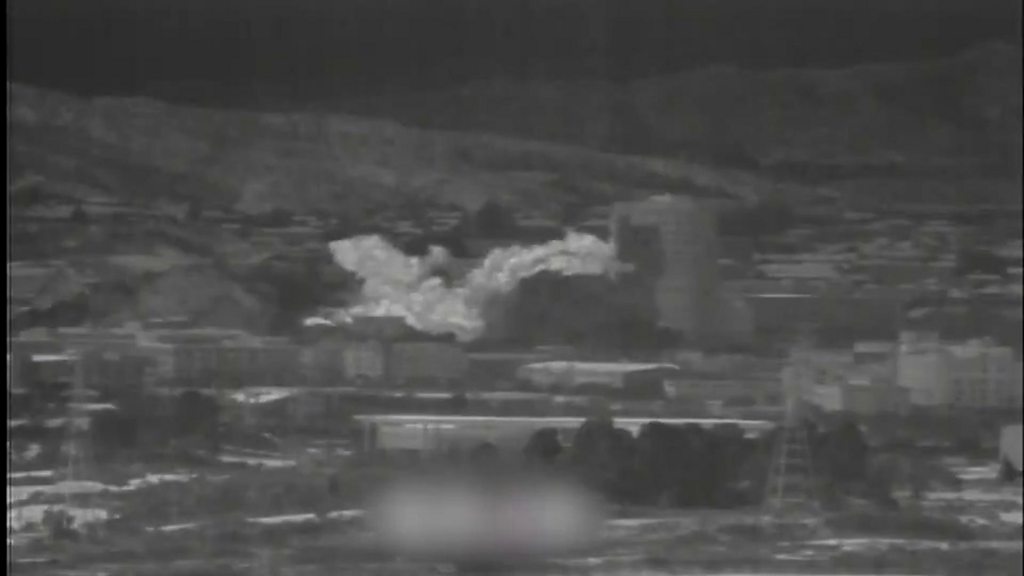
Is Asia a powder keg ready to blow?
This week has seen rising tensions across Asia with key players facing off on what looks to be a dramatic rise in tensions with the potential for action. First off … Korea, where early Tuesday the first salvo was thrown: North Korea has blown up a joint liaison office with the South near the North's border town of Kaesong. The move comes just hours after the North renewed threats of military action at the Korean border. The site was opened in 2018 to help the Koreas - officially in a state of war - to communicate. It had been empty since January due to Covid-19 restrictions. In a statement, South Korea warned it would "respond strongly" if the North "continues to worsen the situation". The destruction of the office, it said, "abandons the hopes of everyone who wanted the development of inter-Korean relations and peace settlement in the Korean Peninsula". "The government makes it clear that all responsibility of this situation lies in the North." June 16 - BBC And this incident occurred which saw gun fire traded between China and India for the first time in almost a half century: Three members of India’s armed forces have been killed in a “violent face-off” with Chinese soldiers on their disputed Himalayan border, the Indian army has said in a statement. The deaths are the first loss of life in the border area in at least 45 years, and come amid a renewed dispute between the two countries in recent weeks. Indian and Chinese soldiers, who often do not carry weapons in the area to avoid escalating conflicts, have brawled, detained each other and deployed forces and equipment in the western Himalayas in recent weeks. “During the de-escalation process under way in the Galwan Valley, a violent face-off took place yesterday [Monday] night with casualties on both sides,” the Indian army said in a statement on Tuesday afternoon Delhi-time. “The loss of lives on the Indian side includes an officer and two soldiers.” It said “senior military officials of the two sides are currently meeting at the venue to defuse the situation”. It was unclear whether shots had been fired or if the men were killed in hand-to-hand combat. Several Indian media reports cited defence sources claiming the fighting involved stones and clubs. The Chinese also military suffered casualties, according to a tweet by the editor-in-chief of China’s state-run Global Times newspaper. “Based on what I know, Chinese side also suffered casualties in the Galwan Valley physical clash,” Hu Xijin wrote. He did not give further details. June 16 - The Guardian The world seems on edge, and if you are a journalist covering these topics and you need the perspective and input of an expert who can help with your story – then let us help. Dr. Glen Duerr's research interests include comparative politics and international relations theory. Glen is an expert on this subject and is available to speak to media regarding this topic– simply click on his icon to arrange an interview.


Individuals With Intellectual and Developmental Disabilities More Likely to Contract COVID-19
Recent news coverage has indicated that individuals with intellectual and developmental disabilities (ID/DD) are more likely than those without ID/DD to contract COVID-19 and to die as a result of it. "Similar to other individuals with disability, those with ID/DD often have pre-existing health conditions that increase their risk," says Suzanne C. Smeltzer, EdD, RN, the Richard and Marianne Kreider Endowed Professor in Nursing for Vulnerable Populations at Villanova University's M. Louise Fitzpatrick College of Nursing. Some people with ID/DD live in group settings in which they come in contact with others who may be infected with COVID-19. The frequent turnover of personal assistants and contact of persons with ID/DD with multiple personal assistants may increase the risk of COVID-19 in part because of their exposure to multiple potential carriers and the need for many of their personal assistants to use public transportation. Dr. Smeltzer says, "There is also concern in the disability community, among family members of individuals with disability and among disability advocates that those with these disabilities will be viewed as less deserving of more aggressive therapies, such as ventilators. The quality of life of persons with ID/DD may be considered by others as low, even though quality of life can only be judged by the people themselves." Initial limitations put in place in many health care institutions included the exclusion of family members and other support persons because of risk for COVID-19 infection. However, a groundswell of advocacy resulted in changes in this policy because individuals with ID/DD hospitalized during the COVID-19 pandemic were being deprived of essential support. "These support persons are needed to help those with ID/DD understand what was happening in the hectic health care settings and to help with communication and decision making," says Dr. Smeltzer. "Individuals with ID/DD need the same care as others and must receive explanations about their care and must be allowed to participate in making decisions about their care."

Whistle stops or Zoom chats – What will a campaign for the 2020 election look like?
The race for 2020 is on. President Donald Trump has already scheduled his first rally in the very red-leaning Oklahoma whereas Joe Biden has been conducting digital town-halls and online events in his effort to reach voters. Campaigning for president is a billion-dollar ordeal. It usually means months and months on the road; a different message being brought to a different audience and usually in a different state each night from August until November. For President Trump, it seems he’s charging, head down – despite what many critics and officials have to say. Yet Trump has continued to travel — even to states that still have restrictions — and announced this week that he’ll resume his signature campaign rallies beginning next Friday in Tulsa, Oklahoma. The state, which was among the earliest to begin loosening coronavirus restrictions, has a relatively low rate of infection but has seen cases rising. “They’ve done a great job with COVID, as you know, the state of Oklahoma,” Trump said Wednesday. Campaign officials chose the location knowing Republican Gov. Kevin Stitt would raise no objections. Stitt’s most recent reopening phase places no limits on the size of group gatherings. The campaign hopes the location will all but guarantee a large crowd, since Oklahoma is one of the most Republican states in the nation and Trump has never held a rally there as president. Still, the reality could not be completely ignored. “By clicking register below, you are acknowledging that an inherent risk of exposure to COVID-19 exists in any public place where people are present,” Trump’s campaign advised those signing up for the rally. “By attending the Rally, you and any guests voluntarily assume all risks related to exposure to COVID-19 and agree not to hold Donald J. Trump for President, Inc.” liable for illness or injury. Trump is also planning events in Arizona and Florida — states where cases are on the upswing. In Arizona, hospitals have been told to prepare for the worst as hospitalizations have surged. Trump this month decided that he would no longer hold the marquee event of the Republican National Convention —- his acceptance speech — in North Carolina after the state refused to guarantee that he could fill an arena to capacity with maskless supporters. It’s being moved to Jacksonville, Florida. June 12 – Associated Press But as the Trump campaign seems to be sticking to the old school playbook – what will the Democrats do? Can campaigning on-line be effective? Do voters really need to see a person and shake a hand to make a decision who to vote for? Is it better to be safe or sorry when there is so much at stake? If you are covering – then let our experts help with your questions and stories. Mark Caleb Smith is the Director of the Center for Political Studies at Cedarville University. Mark is available to speak with media regarding the DNC Primary, running mates and the upcoming election. Simply click on his icon to arrange an interview.


CAA Insurance Company has developed a list of 10 questions that customers can ask their insurance companies to make sure they are covering all the bases when it comes to finding savings while staying protected. “As of right now, much of the relief provided by insurance companies during the COVID-19 pandemic will soon expire, and customers will be looking for ways to continue to save since many cars are still sitting in the driveway,” said Elliott Silverstein, director, government relations, CAA Insurance. “We felt it was important to empower people with the information they need to continue to advocate for lower premiums for the months ahead.” In a recent survey conducted in late April by CAA South Central Ontario, only one out of five CAA members surveyed were aware that their insurance company had provided relief during COVID-19. The most preferred action to lower auto insurance premium was reviewing their policy with an agent/broker to ensure coverage and costs meet individual needs. Based on this data, CAA Insurance wanted to make sure that people are asking the right questions. Customers are encouraged to call their agent or broker and review the following list of questions to make sure they are receiving all the potential savings available. What savings relief payments or refunds do you have for me during the pandemic? Are there coverages that I can reduce or put on hold while I’m not driving? Can we do a review to see if I can save more on my policy? Will increasing my deductible provide me cost savings? Do you have an insurance policy where I would only pay for insurance while I am driving, for example, pay-as-you-go? When does my policy renew and is there a penalty if I cancel my policy mid-term to save money with another insurance company? What can I do if I can’t make my insurance payments this month? Will changing my coverage from commuting to pleasure help me save money? Are there any other ongoing discounts you offer that I might qualify for? What can I do to keep my rates low after the pandemic?
