
Experts Matter. Find Yours.
Connect for media, speaking, professional opportunities & more.

COVID-19 and a sustainable transition
As the COVID-19 pandemic touches almost every aspect of society, it is becoming increasingly obvious that the slowdowns and shutdowns may inadvertently enable us to shape a new conception of prosperity and good livelihood. What has the global slowdown meant for the environment and sustainable living, and what could it mean if some of the radical changes in our everyday lifestyles and consumption habits persisted long-term? As Maurie Cohen, professor in New Jersey Institute of Technology's department of humanities, explains, "Since we are all living through this unique moment, observing the responses by government, businesses and ordinary people, it marks an opportune time to explore if these changes can provide leverage points for opening pathways to a sustainability transition." The topic attracted a diverse group of scientists, economists, educators and hundreds more around the world virtually during a live webinar titled, “COVID-19 Can Help Wealthier Nations Prepare for a Sustainability Transition.” The open forum-style event, organized by researchers from the international sustainability organization FutureEarth, set up an online discussion on the major global sustainability trends and issues that have evolved in recent months alongside the coronavirus outbreak. Read more: Cohen is available to speak with media directly on issues related to COVID-19 and sustainability. To arrange an interview, click on the button below.


Drinking alcoholic beverages may be more appealing amid unease about the coronavirus, as people deal with shelter-at-home orders, fears about the economy and boredom, says a Baylor University researcher who studies alcohol use and misuse. But with regulations providing less access to alcohol, this may be a good time for individuals struggling with alcohol use to begin recovery and for others to guard against over-relying on alcohol or other substances. When bars and restaurants began closing — other than for such options as pickup, delivery or drive-through — liquor stores saw a surge in business, according to news reports. But Pennsylvania closed its liquor stores — some people defied stay-at-home orders and drove to liquor stores in neighboring states — and New Hampshire recently closed some of its liquor stores, according to reports. Other states who deemed the businesses “essential” also may take another look at the issue. How to grapple with the risks of substance use and misuse during this stressful time is the subject of this Q&A with Sara Dolan, Ph.D., associate professor of psychology and neuroscience at Baylor University, who has done extensive research on substance use and misuse. Q: There are memes — some of them humorous — going around about heavy alcohol use during quarantine. Why might people be drinking more than usual? DOLAN: People have many different motivations for drinking, and I think self-isolation amplifies some of those. First, people drink to feel good. For some, being out of the normal work routine may feel like a time to let loose. People also drink to feel less bad. It would be normal to feel out of sorts now that we are social distancing. It also would be normal to feel some boredom, and certainly we feel anxiety and uneasiness about our current circumstances. Alcohol may be seen by some as a way to cope with those negative feelings. Q: How might the “new normal” be especially hard for alcoholics? Could this be a time to begin recovery? Some may be social distancing from drinking buddies, although that wouldn’t stop drinking alone. DOLAN: A forced lack of access to alcohol through social distancing and bars being closed can be a great jumping-off point for someone to begin recovery, especially when people are physically distancing from the people they drink or use with. But this can be an especially tough time for people because they may not be able to cope with all the new stressors, especially if they don’t have access to their typical means of coping. For example, for someone who usually relies on friends and family for support, social distancing can cause more stress. And loneliness is especially difficult when it is stacked on top of economic, illness and other anxieties we are experiencing. It is important for us to reach out, from a distance, to family and friends and other resources to help us cope positively so we don’t turn to drinking or other drug use to help us cope. I worry about people who are very heavy drinkers who suddenly stop drinking. Alcohol withdrawal, which can happen when a very heavy drinker stops drinking suddenly, can be very dangerous. Symptoms include anxiety, shakiness, sweatiness, headaches, nausea and even hallucinations – seeing and hearing things others don’t see or hear — and seizures. If someone who usually drinks very heavily and suddenly stops drinking experiences these symptoms, immediate medical attention is necessary. Q: What strategies would you suggest as far as dealing with heavy drinking during this time – both for drinkers and for those who love them? DOLAN: We really all need to be compassionate toward one another, regardless of our individual struggles. This is a difficult time for everyone – it is normal during a crisis like this to feel anxious and even depressed. Support is very important, both for those who are struggling and for those who seem like they are doing fine. This support can take a lot of different forms, from offering an ear to listen to offering specific strategies, such as mutual recovery groups (such as Alcoholics Anonymous, offered online) and other coping resources, like apps. Here is a list of just a few of the apps that may help people cope with stress: Breathe2Relax iChill Personal Zen Self-Help for Anxiety Management T2Mood Tracker The Mindfulness App - meditate Q: What about groups like Alcoholics Anonymous during this time, who because of guidelines against large gatherings may miss in-person support? DOLAN: There are quite a few digital resources to support recovery from alcohol and substance abuse. Here are just a few: Alcoholics Anonymous Narcotics Anonymous Smart Recovery Groups Al-Anon Recovery Groups for loved ones of those struggling with problematic alcohol use Q: Is there anything else you would like to add? DOLAN: We know that during times of crisis, rates of anxiety, depression and suicidal behaviors increase, and those feelings and behaviors can be exacerbated by heavier alcohol or drug use. Let’s do all that we can to care for those around us. ABOUT BAYLOR UNIVERSITY Baylor University is a private Christian University and a nationally ranked research institution. The University provides a vibrant campus community for more than 18,000 students by blending interdisciplinary research with an international reputation for educational excellence and a faculty commitment to teaching and scholarship. Chartered in 1845 by the Republic of Texas through efforts of Baptist pioneers, Baylor is the oldest continually operating University in Texas. Located in Waco, Baylor welcomes students from all 50 states and more than 90 countries to study a broad range of degrees among its 12 nationally recognized academic divisions. ABOUT THE COLLEGE OF ARTS & SCIENCES AT BAYLOR UNIVERSITY The College of Arts & Sciences is Baylor University’s oldest and largest academic division, consisting of 25 academic departments and seven academic centers and institutes. The more than 5,000 courses taught in the College span topics from art and theatre to religion, philosophy, sociology and the natural sciences. Faculty conduct research around the world, and research on the undergraduate and graduate level is prevalent throughout all disciplines. Visit www.baylor.edu/artsandsciences.


Artificial Intelligence Playing a Powerful Role in Understanding and Fighting COVID-19
Artificial intelligence is emerging as a powerful new ally in tracking COVID-19, modeling the virus at the molecular level, and analyzing the myriad research results being published daily. James Hendler, the Tetherless World Professor of Computer, Web, and Cognitive Sciences at Rensselaer, and director of the Rensselaer Institute of Data Exploration and Applications, is leading campus efforts to marshal AI resources for the purpose of battling the virus. “The bottom line is that, at heart, dealing with COVID-19 is a ‘big data’ problem, and AI is a crucial tool in the big data toolkit,” Hendler said. For example, IDEA and the Rensselaer Libraries have collaborated to maintain lists of COVID-19-related data sources and scholarly research publications. AI is being used to translate literally thousands of scientific insights from text-based research products into forms that can more easily be analyzed. Hendler and other Rensselaer AI experts are also involved in studying the spread of the virus under different policy measures at the local, then state and national, and ultimately global scale. Additionally, Rensselaer is part of the national COVID-19 High Performance Computing Consortium, which is offering researchers access to supercomputers for COVID-19 research. In addition to AiMOS, the most powerful supercomputer housed at a private university, Rensselaer is offering access to the expertise of world-class faculty, including in artificial intelligence. Hendler said AiMOS is one of the few facilities that can truly offer a platform optimized for artificial intelligence computing. “AI has helped us achieve an excellent understanding of the coronavirus and its interactions at the molecular level. That’s going to make it possible not only to model the virus, but also how it will interact with potential drug targets and vaccines,” said Hendler. “A platform like AiMOS is invaluable for molecular modeling in drug discovery, helping scientists cope with a huge and rapidly changing literature, and exploring means to model, and then mitigate, the spread of the disease. These are the kinds of things that modern AI can do.” Hendler has authored over 400 books, technical papers and articles in the areas of Semantic Web, artificial intelligence, agent-based computing and high performance processing. One of the originators of the “Semantic Web,” Hendler is the former Chief Scientist of the Information Systems Office at the U.S. Defense Advanced Research Projects Agency (DARPA) and was awarded a US Air Force Exceptional Civilian Service Medal. Among other organizations, he is a member of the National Academies Board on Research Data and Information, a fellow of the National Academy of Public Administration, and he serves as chair of the Association for Computing Machinery (ACM) U.S. technology policy committee.



Baylor Remote-Work Expert Shares Tips with The New York Times
Sara Perry, Ph.D., assistant professor of management in Baylor University's Hankamer School of Business, is a nationally recognized expert on remote work and working from home. In 2018, Perry led a team of management researchers who examined the relationship between stress and remote work, which resulted in a study published in the European Journal of Work and Organizational Psychology. Dr. Perry was recently a featured expert in The New York Times' piece by Jen A. Miller, "How To Work From Home, If You've Never Done It Before," which was written as millions of people were suddenly faced with launching home offices as a result of COVID-19. Regarding setting boundaries: But being expected to work from home full time while also home-schooling children full time is just not going to be realistic, said Sara Perry, assistant professor of management at Baylor University. “There’s a lot demanding of your time and energy and resources right now,” she said. This may mean having conversations with managers about adjusting their expectations, given the extraordinary circumstances. On the topic of "putting work away": For those who are used to working in an office, the evening commute is often a way to end the work day and begin home life. Dr. Perry said it’s important to continue to make the same transition, even if you’re just moving from one spot on the couch to the other. So put your work materials and your laptop away (or just shut work applications if you want to use your computer for something else). She added that this is crucial right now because “you’re already being challenged in terms of your personal resources,” she said. “You still have to take that recovery time from work.”


Will schools reopen before semester ends? Georgia Southern pandemic expert can give perspective
While education has moved into homes across the country because of the COVID-19 pandemic, people are wondering if the shutdowns will actually help stop the spread of the disease. Isaac Chun-Hai Fung, Ph.D., a digital health expert and infectious disease epidemiologist at Georgia Southern University, said school closures can delay the peak of the outbreak, reduce the amount of cases and decelerate the spread of the virus. Fung was a part of a study in 2015 that modeled a potential flu pandemic. The study showed that delaying the spread of a virus can give health care professionals more time to come up with vaccines and other treatments, as well as giving the system time to brace itself for the onslaught of patients. “The key message of my paper is not necessarily how quickly we shut down schools,” Fung told Rolling Stone. “It is the duration of school closure that matters. Whenever we relax social distancing measures, we will see a bounce-back of the cases, unless we are able to completely block all transmission chains and have driven the case number to zero — i.e., extinction of the virus, as in the case of SARS in 2003.” While some think opening schools and other public places would benefit the economy, Fung said doing so could leave the country vulnerable. “To save the U.S. economy, we must control this disease first,” Hung said to Rolling Stone. “That is what China is going to achieve — even if they have already suffered a great deal economically due to COVID-19. That is why (Narendra) Modi asks the whole of India to stay home for three weeks. That is also what Boris Johnson asks the British people to do now. The Americans should take heed.” Fung analyses social media data for public health surveillance and health communication and uses digital technologies for public health interventions. He investigates the transmission of communicable diseases with a focus on respiratory infections and environmentally transmitted infections. He applied a variety of methods, from classical statistical methods to machine learning and mathematical modeling, to address public health problems and to provide solutions to policymakers. He is especially interested in assisting public health agencies in their responses to public health emergencies. Fung is available to speak with media regarding this topic — simply reach out to Georgia Southern Director of Communications Jennifer Wise at jwise@georgiasouthern.edu to arrange an interview.


Are Home Prices in Peril? FAU Expert Says Coronavirus Stimulus May Hold the Key
The United States housing market faces its biggest threat in more than a decade, and whether home prices can withstand the new coronavirus pandemic largely depends on an effective stimulus package, said Ken H. Johnson, Ph.D., a real estate economist in Florida Atlantic University’s College of Business. U.S. President Donald Trump recently signed a historic $2 trillion stimulus to boost a battered U.S. economy, and getting the aid exactly right is the key to avoiding the first sustained setback to home prices since the end of the housing boom in 2006, according to Johnson. “If the stimulus package ends up being more than we need, this will almost certainly trigger a non-trivial amount of inflation in the economy, which will increase mortgage rates, which, in turn, will place downward pressure on housing prices,” Johnson said. “If the stimulus is not sufficient enough to hold down unemployment and it increases the likelihood of mortgage default, mortgage rates will rise and put downward pressure on housing prices. Only if the stimulus is just right will increasing inflation and higher unemployment be held in check.” Fixed rates for 30-year mortgages rose from 3.29 percent on March 5 to 3.65 percent on March 19, before moving down to 3.5 percent last week as the stimulus gained momentum. The higher rates are an indication that investors are factoring in inflation and the higher likelihood of default, though the recent downward trend suggests that it was the threat of rising default probabilities that was having the bigger impact on mortgage rates, according to Johnson. Since bottoming in March 2012, U.S. home prices rose 61 percent over the next seven and a half years, according to the S&P/Case-Shiller 20-City Composite Home Price Index. The nation’s housing market rebounded from a devastating downturn when investors started renovating and reselling properties after buying them at deep discounts. The market has been robust ever since, but Zillow Group recently suspended its home-buying program as a result of the pandemic and how it may affect the housing market. The move means Zillow is worried that housing prices are at risk, according to Johnson. If mortgage rates were to climb from 3.5 percent to 5 percent, it would result in a 43 percent increase in the interest portion of a housing payment, dramatically reducing the purchasing power for consumers. “Only time will tell here,” Johnson said. “We are in uncharted waters, making it difficult to tell when and if we got the stimulus package right.” If you are a journalist covering how real estate and property values are being impacted by the COVID-19 pandemic – then let our experts help. Ken Johnson is the associate dean and Investments Limited professor in the College of Business at Florida Atlantic University. Ken is available to speak to media about this topic – simply click on his icon to arrange an interview and time.


The consequences of ending early - Is a second wave of COVID-19 inevitable?
America is in lockdown. As the COVID-19 virus spreads to just about every corner of America and the planet for that matter, extreme measures are being brought in by various levels of local, state and the federal government to help contain the spread of this virus that is growing in near exponential numbers daily. Despite the White House advising all Americans to practice social distancing, the number of coronavirus cases in the US continues to rise. So, governors across the nation are taking stronger action by issuing stay-at-home orders in their states. By March 30, at least 27 states will have those orders in effect. Those states contain more than 225 million people -- more than two-thirds of the country's population. CNN - March 28 And as Americans comply with these orders, there’s a growing anticipation about when people will be able to return to work and resume a semi-normal routine. Some are saying weeks, others indicating months. But the reality is, as much as many yearn for normalcy, going back too early could come with even steeper consequences than waiting the epidemic out. If there is a second wave of COVID-19 infections – it could be disastrous. What would a second wave look like and how would it spread? Can people be re-infected? Does America have the front-line capacity to take on another fresh round of infections? Can the country’s stretched medical system handle more patients? And how much longer would it take to try and contain the spread of COVID-19 for a second time? There are a lot of questions to be answered, and that’s where our experts can help. Dr. Zach Jenkins is an infectious disease expert at Cedarville University. He is available to speak with media about this topic – simply click on his icon to arrange an interview.


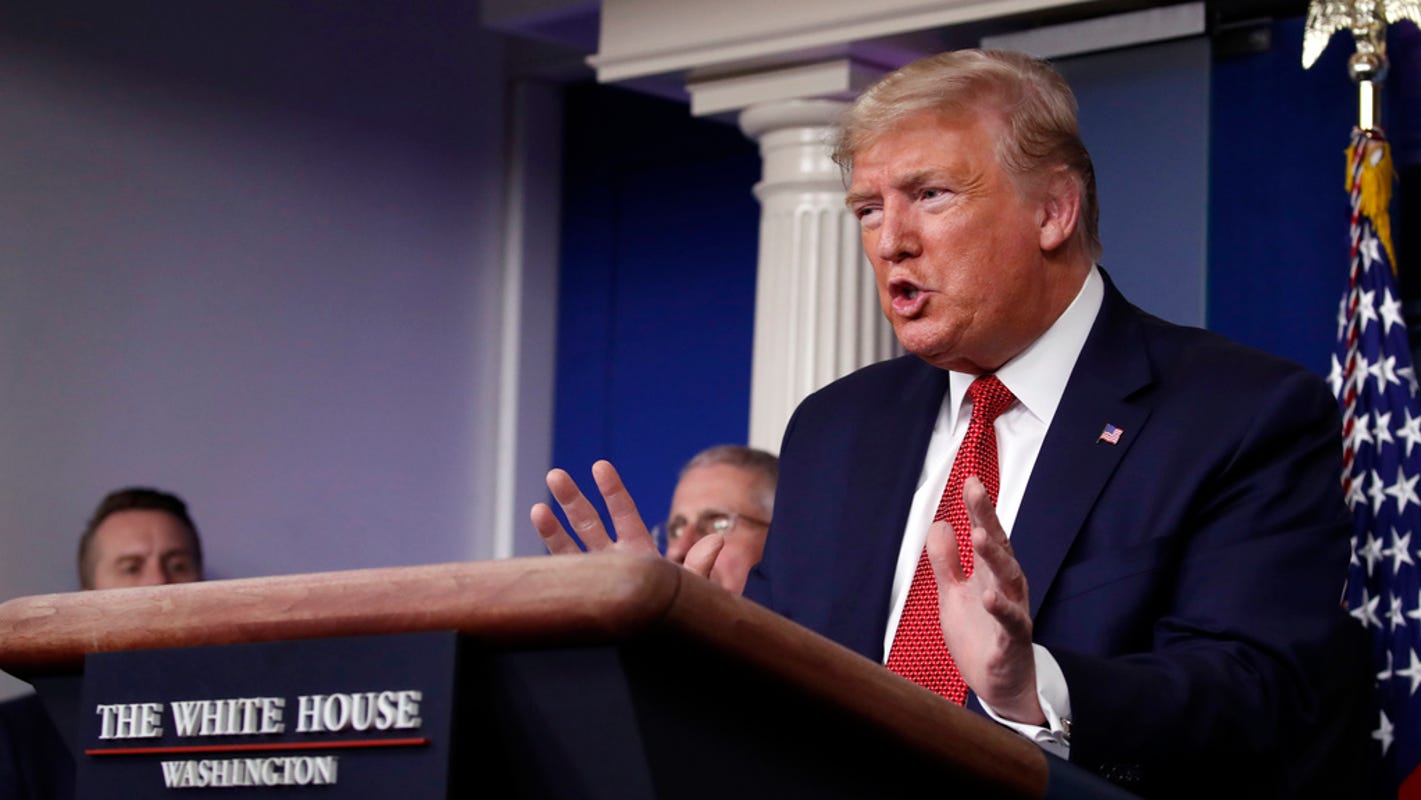
Op Ed: In coronavirus crisis, Don't prioritize economics over public health
The following is an excerpt from Op Ed that ran in the Detroit Free Press late last week. Th full piece is attached below for your reading pleasure. President Donald Trump said this week that he hopes to see economic activity ramped up and social distancing practices and other public health measures reduced by Easter, which is April 12. This is a recipe for disaster and it again vividly illustrates his dismissal of medical and scientific expertise for his own political goals. The rhetoric he uses suggests that the financial pain the nation will experience over the next year or longer is not worth the lives that will be lost as a result of dialing back public health restrictions. I am an ethicist. To me, Trump is forcing Sophie’s Choice decisions by people who have taken an oath to “first do no harm.” Trump and his advisers ignore the ethical pain that health professionals will have to endure who must decide who lives and who dies because we have too few ventilators or too few ICU beds to treat all the patients who need those beds for survival. Those harsh choices are very real right now. They would become even more tragic if public health measures now in place were loosened in order to improve economic activity. March 27 - Detroit Free Press There are many angles to explore and cover as the COVID-19 pandemic impacts just about every segment of American life. If you're a journalist covering the ethics involved and the leadership decisions taking place at each level of government, then let our experts help. Leonard M. Fleck is the Director of the Center for Ethics at Michigan State University. He is an expert in the areas of health care justice and served as a member of the Clinton Administration’s Health Care Reform Task Force in 1993 and as a state ethicist for Michigan regarding access to health care. Dr. Fleck is available to speak with media – simply click on his icon to arrange an interview.


Baylor Cultural Critic and Author of “Living with the Living Dead” Talks Books and Pop Culture During COVID-19 Time at home is increasing as shelter in place orders and working from home become the norm for many people during the COVID-19 pandemic. During this season of uncertainty, many turn to books, movies and other pieces of pop culture pass the time. Greg Garrett, Ph.D., professor of English at Baylor University and expert cultural critic, supports pop culture and literature as important to meaningfully escaping current fears as well as contextualizing experience and emotions. “A great novel, movie or memoir is a gift when we need distraction, but it can also offer us the dramatic reminder that these are the things that make us truly human: love, community, compassion and faith,” Garrett said. “The world may be shifting beneath our feet, but we’re going to be fine as long as we keep the important things in view.” In a Q&A with Garrett, he gave insight on what can be learned from zombie pandemic pop culture, touched on how literature has fit culturally into pandemic history and offered advice on books to pick up during extra free time at home. Q: You’re the author of “Living with the Living Dead: The Wisdom of the Zombie Apocalypse.” What can we learn from zombie pandemic pop culture? A: Our most pervasive form of pandemic literature in recent years is the story of the Zombie Apocalypse, which has been told in novels, movies, games and comics. It’s been the inciting conflict of “The Walking Dead,” and the underlying threat in “Game of Thrones,” two of the most popular television series in history. One of the attractions of zombie literature is that zombies can serve as a metaphor for lots of things at once: for pandemic, sure, but also for economic unrest, political chaos, terrorism and other things that keep us up at night. But as Max Brooks, author of the seminal zombie novel “World War Z: An Oral History of the Zombie War” (2006), notes: however difficult our lives might be at this moment, at least the dead are not wandering the earth and trying to eat us! We can, Brooks says, close the book, turn off the TV, and at least be secure in that. A book like “World War Z” or a movie like “Sean of the Dead” (2004) or “Zombieland” (2009) can soothe some of our tension since this story of a world coming off the rails is our story, yet clearly not our story. Q: How does literature fit into cultural history events like pandemics? A: One of the most important gifts that great stories can give us is the realization that we’re not alone in our experience, and that, in fact, our experience is not unprecedented. Anyone wanting to understand that this dark time is not in fact the darkest time should read historian Barbara Tuchman’s masterful “A Distant Mirror: The Calamitous 14th Century” (1978), which explores the Black Death of 1348-50, a pandemic so awful it killed a third of the populations of Europe and the Middle East. Daniel Defoe’s “A Journal of the Plague Year” (1722) is a novel recalling the horror of the Black Death in London some 60 years prior to its writing. In that book, Defoe’s narrator says he writes about his choices in such detail because he believes that they might be “of moment to those who come after me.” That is, he hopes his story might be of use to future sufferers like ourselves, and it is. Q: Literature can also provide escape from tough times. What other books should we be reading right now? A: In the zombie spirit, you could read “Pride and Prejudice and Zombies,” a 2009 parody by Seth Grahame-Smith of the Jane Austen novel. But if you’re simply seeking meaningful escape from our current story, you couldn’t do much better than reading (or re-reading) the actual “Pride and Prejudice” (1813), one of my favorite novels. I can’t wait to fall back into the world of the Bennets and worry about something besides viral curves and travel bans. During the weeks we expect to be largely confined to the house, my family and I are making reading lists. Mine includes Ernest Hemingway’s “The Sun Also Rises” (1926) and James Baldwin’s “The Fire Next Time” (1963), both of which I plan to teach in my American lit class at Baylor this fall, and Toni Morrison’s “Beloved” (1987), which will scare me and break my heart in ways that have nothing to do with this pandemic. ABOUT GREG GARRETT, PH.D. Greg Garrett, Ph.D., professor of English at Baylor University, is a popular theologian and cultural critic as well as the author of two dozen novels, memoir and nonfiction books including “Living with the Living Dead: The Wisdom of the Zombie Apocalypse” (Oxford University Press, 2017). ABOUT BAYLOR UNIVERSITY Baylor University is a private Christian University and a nationally ranked research institution. The University provides a vibrant campus community for more than 18,000 students by blending interdisciplinary research with an international reputation for educational excellence and a faculty commitment to teaching and scholarship. Chartered in 1845 by the Republic of Texas through the efforts of Baptist pioneers, Baylor is the oldest continually operating University in Texas. Located in Waco, Baylor welcomes students from all 50 states and more than 90 countries to study a broad range of degrees among its 12 nationally recognized academic divisions. THE COLLEGE OF ARTS & SCIENCES AT BAYLOR UNIVERSITY The College of Arts & Sciences is Baylor University’s oldest and largest academic division, consisting of 25 academic departments and seven academic centers and institutes. The more than 5,000 courses taught in the College span topics from art and theatre to religion, philosophy, sociology and the natural sciences. Faculty conduct research around the world, and research on the undergraduate and graduate level is prevalent throughout all disciplines. Visit www.baylor.edu/artsandsciences.


My Friend Just Lost Her Job. How Do I Respond?
Baylor expert on grief shares ways people can speak with and minister to those who are unemployed due to COVID-19 For the week ending March 21, a record 3.28 million workers applied for unemployment benefits, a result of the sweeping economic consequences of COVID-19, according to a report from the U.S. Department of Labor. In the proverbial “blink of an eye,” many find their neighbors, friends, family – and even themselves – out of jobs that only a few weeks ago seemed safe and secure. The jobless are grieving. What’s our role? How do we help? How do we engage? Helen Harris, Ed.D., associate professor in Baylor University’s Diana R. Garland School of Social Work, is a nationally recognized expert on grief. She says one key to helping others is to imagine changing places with them – putting yourself in their position – and being the person you’d hope they’d be if the tables were turned. “The key to helping is to think about how we feel when we need help and what helps us feel comfortable,” Harris said. “This is a time to ‘do unto others as we would have them do unto us.’” In this Q&A, Harris shares tips that can help us be the neighbors, friends and family we need to be at this time. Q: With the rapid shuttering of businesses including retail stores, movie theaters and restaurants, many of our neighbors have found themselves without jobs. What are some ways we can help them during this time? Harris: This is such a hard time. People who lose their jobs feel even more anxious and vulnerable at a time when everyone is already struggling. Hopefully unemployment and the federal government allocations will make a difference, but those are not immediate. In the meantime, consider what we can do to help directly, through agencies and through our churches. It is important during this time that we reach out to our neighbors who are unemployed, not only with an encouraging word but also with concrete help like meals and supplies or rent and utilities. For families with infants, for example, we provide formula and diapers or the financial help to buy them. We can also contribute to the agencies that provide assistance to families during these hard times. Those of us who are working and earning an income have an opportunity to share with our neighbors. We can also remind them that job loss right now is about this crisis and will not last forever while being careful not to minimize what they are experiencing. This is really hard. Q: When someone is grieving – in this case due to the loss of a job – what should people say? What should they NOT say? Should we even address it at all? Harris: As is true with any loss, it is important to acknowledge it and share how sorry we are that they are going through this hard time. I would avoid minimizing or blaming for the job loss. That just is not helpful. Letting someone know that we care about their painful experience helps with isolation at a time when social distancing is already creating a sense of isolation. We need to stay socially connected even while we keep our physical distance from one another. Acknowledging how hard it is not to have a job to go to matters even as folks apply for other jobs, apply for unemployment and support one another. Q: In terms of actions, should people ask before donating money or groceries or other items? Harris: That’s a hard one. A lot depends on how well we know them and what will make them comfortable. I think when we cook a casserole or pot of beans and cornbread, cooking enough for our friend/neighbor too doesn’t require checking ahead of time. Otherwise, it makes sense to ask how we can help and then do what we can. When we are headed to get groceries or other items, we can check to see if our friend/neighbor needs something and then deliver it with the assurance of the blessing it is for us to be able to help out. There may be ways to do our helping anonymously as well when possible. Q: Is there anything else you’d like to share? Harris: When reaching out to people, it might be appropriate to use a statement like: “I like to believe that when I need help, and we all do sometimes, that someone will be there for me and my family. Right now, I am able to help. Next time, it could be me who needs help. I believe we are best when we are there for each other. So, thanks for letting me help.” It can also be a huge help to let folks know when we are aware of job possibilities and willing to put in a good word for them. Also Read: “Unintended Consequences of COVID-19,” an article by Baylor University’s Helen Harris, Ed.D., associate professor of social work, and Bill Hoy, D.M., clinical professor of medical humanities. ABOUT BAYLOR UNIVERSITY Baylor University is a private Christian University and a nationally ranked research institution. The University provides a vibrant campus community for more than 18,000 students by blending interdisciplinary research with an international reputation for educational excellence and a faculty commitment to teaching and scholarship. Chartered in 1845 by the Republic of Texas through the efforts of Baptist pioneers, Baylor is the oldest continually operating University in Texas. Located in Waco, Baylor welcomes students from all 50 states and more than 90 countries to study a broad range of degrees among its 12 nationally recognized academic divisions. ABOUT THE DIANA R. GARLAND SCHOOL OF SOCIAL WORK AT BAYLOR UNIVERSITY Baylor University’s Diana R. Garland School of Social Work is home to one of the leading graduate social work programs in the nation with a research agenda focused on the integration of faith and practice. Upholding its mission of preparing social workers in a Christian context for worldwide service and leadership, the School offers a baccalaureate degree (B.S.W.); a Master of Social Work (M.S.W.) degree available on the Waco or Houston campuses or online; three joint-degree options, M.S.W./M.B.A., M.S.W./M.Div. and M.S.W./M.T.S., through a partnership with Baylor’s Hankamer School of Business and George W. Truett Theological Seminary; and an online Ph.D. program. Visit www.baylor.edu/social_work to learn more.