
Experts Matter. Find Yours.
Connect for media, speaking, professional opportunities & more.

August is National Breastfeeding Month – Let our Experts Help with Your Coverage
It’s August…a month that celebrates breastfeeding and all the benefits that come with it. Breastfeeding is natural, healthy and cost-effective – and the American public is beginning to recognize a mother’s right to feed her child wherever and whenever she wants. Breastfeeding is a great benefit to the environment and society, according to the American Academy of Pediatrics. Breastfeeding families are sick less often and the parents miss less work. It does not require the use of energy for manufacturing or create waste or air pollution. There is no risk of contamination and it is always at the right temperature and ready to feed. A new website developed by researchers in Canada and Asia showed that the world could have saved $341 billion each year if mothers breastfeed their children for longer, helping prevent early deaths and various diseases, according to a July 12 article from Reuters. Known as the “Cost of Not Breastfeeding,” the online tool used data from a six-year study supported by the U.S.-based maternal and child nutrition initiative, Alive & Thrive. According to Augusta University Health’s Dr. Kathryn Strickler McLeod, breastfeeding protects against a variety of diseases and conditions in the infant, including diarrhea, respiratory tract infection, childhood obesity and much more. Additionally, there are also maternal health benefits to breastfeeding, including a decreased risk of breast and ovarian cancers. If you are covering this topic – let us help with your stories and questions. Dr. Kathryn Strickler McLeod is a nationally recognized expert in pediatric general and adolescent medicine. McLeod is available to speak with media – simply click on the icon to arrange an interview.


As Europe’s heatwave moves north toward the Arctic…just how worried do we need to be?
There’s no easier way to say it – Europe is baking. Record high temperatures are breaking the mercury in London, France, Germany and elsewhere across the continent. And, that warm air is not pushing north toward the Arctic. Greenland’s ice sheet is feeling the heat and it has some scientists worried. “So far this year, Arctic sea ice extent has hovered at record lows during the melt season. Weather patterns favorable for increased melt have predominated in this region, and an unusually mild summer has also increased melting of the Greenland ice sheet. Unlike with sea ice melt, runoff from the Greenland ice sheet increases sea levels, since it adds new water to the oceans. If the entire ice sheet were to melt, it would raise global average sea levels by 23 feet.” Washington Post, July 26 Are you a reporter covering climate change or weather? If so – we have an expert who can help with your stories. Dr. Pamela Grothe is an assistant professor in the Department of Earth and Environmental Sciences as the University of Mary Washington. She recently completed a Ph.D. in the Paleoclimatology Lab at the Earth and Atmospheric Sciences department at Georgia Institute of Technology. She’s an #expert in climate change and is available to speak with media – simply click on her icon to arrange an interview.


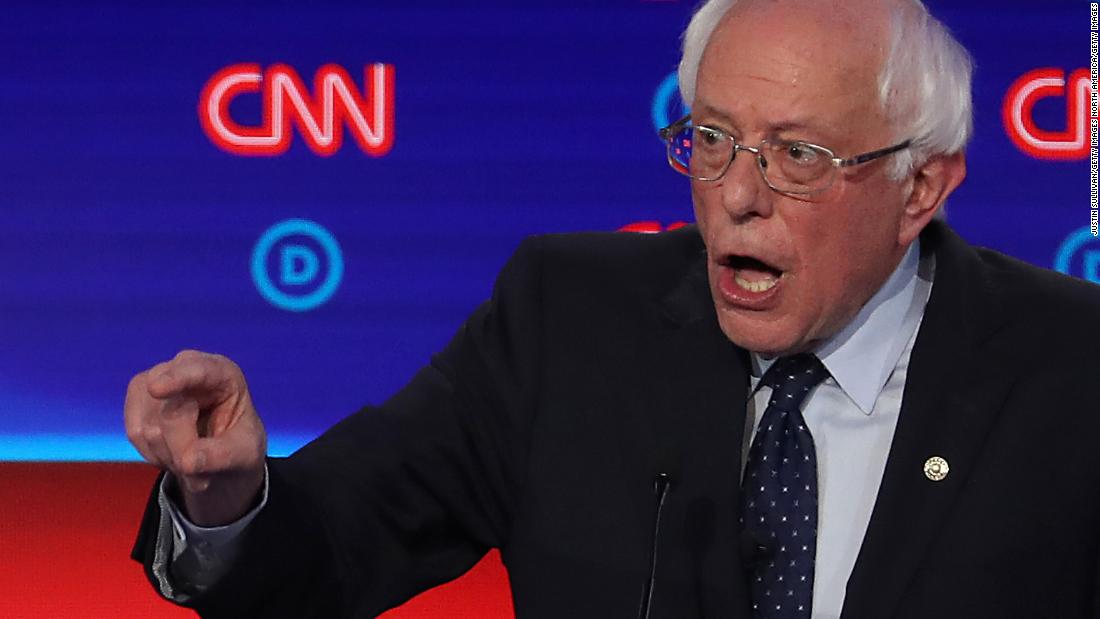
Detroit Rock City – Did any Rock Stars Emerge from Day 1 of the DNC Debates?
It was the first of two crucial days for anyone looking to lead the DNC into the 2020 election next fall. The reality is, with more candidates on the field than a World Cup soccer match, it’s too crowded for the very limited amount of airtime, fundraising and attention needed to win this race. Quite soon, there will need to be a substantial culling of this herd. Odds are, come the end of summer the field will be whittled down to three or four from the current two dozen (or so) currently contesting. Last night was Day 1 of the DNC debates in Detroit. Here were the key takeaways: Bernie Sanders came out spitting fire about health care and tried to reassert his prominence. Sanders has receded recently, was this the resurgence he needed? Pete Buttigieg made it clear he is the young, fresh and non-Washington choice – will it stick and can he gain traction? Montana Governor Steve Bullock knew this was his shot to get the attention a campaign needs. Late to the game, can he emerge as a credible candidate? And Elizabeth Warren and Beto O’Rourke seemed to fade into the crowd – is this a death knell for a campaign at this point? It was a long night and another one happens tonight. So, who emerged as the winner and who fell hard on Day 1? Who needs to leave? And what were the key policy planks that are starting to stick There is still a long way to go until the first Iowa primary in February, but if you are a journalist covering this long road – let us help. Dr. Stephen Farnsworth is professor of political science and international affairs at the University of Mary Washington. A published author and a media ‘go-to’ on U.S. politics, he is available to speak with media regarding the long journey to lead the DNC in 2020. Simply click on his icon to arrange an interview.


It was the testimony that had as much ramp up and hype as a Superbowl or a Star Wars movie. But last week, after Robert Mueller gave hours of testimony in front of lawmakers in Washington…not much has changed. The Democrats are still crying for impeachment over the obvious intonations of collusion and cooperation with the Russians. On the other side, the Republicans are calling it vindication – a truth they knew all along. So, two years later and 16 months before the next election – where to know? Is impeachment the right path for Democrats still looking for blood? Do both sides need to focus on governing and ensuring the economy doesn’t turn? Is it time no for policy and ideas as we all look towards 2020? We are living in interesting times, and if you are a journalist covering this topic – let us help! Mark Caleb Smith is the Director of the Center for Political Studies at Cedarville University. Mark is available to speak with media, simply click on his icon to arrange an interview.



August is National Immunization Awareness Month – get the facts about vaccination
All month long, there will be stories, debates and conversations about vaccinations. Once common-place in life, vaccinations today face scrutiny. The anti-vax movement has taken its foothold on social media and regrettably causing some to question medical advice, expertise and the need for basic childhood immunizations out of fear and misinformation. Measles, which was considered eradicated a short time ago, has now made a resurgence across the country. Mumps are also on the comeback. It’s as baffling as it is concerning – and dangerous. There are a lot of questions to be asked this month: What study spawned the anti-vax movement, and has it been debunked? Are there dangers to being vaccinated? Do people understand the term “herd immunity”? And who is truly in danger at schools and in the community if people aren’t vaccinated? Are you a journalist covering this topic? That’s where our experts can help. Dr. Jose Vazquez is an expert in the realm of infectious diseases. He studies and treats infectious diseases, including antibiotic-resistant superbugs and fungal infections. A leader in his field and a go-to expert for media regarding this topic, Dr. Vasquez is available to speak with media regarding Immunization Awareness Month. Click on his icon to arrange an interview.


Buying local? Higher price means higher quality in consumers' minds
BLOOMINGTON, Ind. -- Why are we willing to pay much more for a six pack of craft beer, a locally produced bottle of wine or a regional brand item, often choosing them over national brands? It's because when people prefer to "buy local," they more frequently base their decisions on price as a perception of quality, according to research from the Indiana University Kelley School of Business and three other universities. The study, published in the Journal of Marketing, suggests that marketers can use this understanding of local identity versus global identity to shape consumers' price perceptions and behavior. "Consumers tend to use price to judge a product's quality when their local identity is most important to them," said Ashok Lalwani, associate professor of marketing at Kelley. "When promoting high-priced or branded products, marketers can situationally activate consumers' local identity. To accomplish this objective, businesses can encourage consumers to 'think local' or employ local cultural symbols in advertising and other promotional material. The researchers also suggested that the opposite was true for low-price products. "Discount stores, such as dollar stores, should discourage consumers from using the price of a product to infer its quality," Lalwani said. "They would be better served by temporarily making consumers' global identity more prominent. Cues in advertisements that focus on a product's global appeal would help achieve that goal." Many companies find it difficult to set and increase prices in the digital marketplace because of the pricing transparency of the internet, consumers' deal-seeking attitudes and global product availability. For their study, Lalwani and his colleagues conducted in-depth interviews, two field studies and seven experiments, and reviewed secondary data. In their interviews with 15 senior-level managers from Fortune 500 companies, they found that while the executives considered local or global communities in their pricing decisions, none knew when such strategies were effective or why. For example, an executive at a snack food maker told them, "It is important to have a reasonably high price since it communicated 'premium-ness' and then reinforce it with advertising and packaging. But we don't know for sure why such consumers prefer premium brands." A pet products manager said, "In dog sweaters, it is difficult to judge quality, so I am sure that my pet parents use price, in addition to other factors, to choose." Through the field studies, experiments and secondary data, the researchers found that when consumers choose to identify more with others around them, they perceive greater variance among brands, which increases their reliance on price as a cue to judge quality. Past research has found that consumers from more globalized countries and communities, such as the United States and its larger cities, often have a stronger global mindset because they interact with many types of people and cultures and hear news from abroad. In contrast, those living in smaller population areas or from isolated or insular nations often have a stronger local identity because they have less access to other cultures. This paper provides useful guidelines for firms to adapt strategies for different regions and address whether companies should be more locally or globally oriented. "For products to be marketed to the places where people tend to have a more local identity (such as rural areas), local flavors and ingredients can be used in the products. As these consumers are more likely to make price-quality associations, marketers may not need to allocate much ad budget to convince consumers about price-quality associations," Lalwani and his co-authors wrote. The opposite is true as well, according to the authors, indicating that in more metropolitan areas, consumers most often don't have an established connection between price and quality. For marketers, this means that putting additional effort into differentiating their brand will help consumers associate a higher price with higher quality. Lalwani is in the process of reviewing results of a large-scale national survey of the U.S. that measures which states tend to have more of a local identity versus a global one, for a follow-up study. His co-authors on the paper, "How Does Consumers' Local or Global Identity Influence Price-Perceived Quality Associations? The Role of Perceived Quality Variance," are Zhiyong Yang of the University of North Carolina, Sijie Sun of the University of Hawaii at Hilo and Narayan Janakiraman of the University of Texas at Arlington.


‘Bottom-line mentality’ can lead to loss of employee respect and loyalty, research shows Supervisors driven by profits could actually be hurting their coveted bottom lines by losing the respect of their employees, who counter by withholding performance, according to a new study led by Baylor University. The study, “The Influence of Supervisor Bottom-Line Mentality and Employee Bottom-Line Mentality on Leader-Member Exchange and Subsequent Employee Performance,” is published in the journal Human Relations. “Supervisors who focus only on profits to the exclusion of caring about other important outcomes, such as employee well-being or environmental or ethical concerns, turn out to be detrimental to employees,” said lead researcher Matthew Quade, Ph.D., assistant professor of management in Baylor University’s Hankamer School of Business. “This results in relationships that are marked by distrust, dissatisfaction and lack of affection for the supervisor. And ultimately, that leads to employees who are less likely to complete tasks at a high level and less likely to go above and beyond the call of duty.” While other studies have examined the impact of bottom-line mentality (BLM) on employee behavior, Quade said this is the first to identify why employees respond with negative behaviors to supervisors they perceive to have BLM. The research team surveyed 866 people. Half of those surveyed were supervisors; the other half were their respective employees. Data was collected from those who work in a range of jobs and industries, including financial services, health care, sales, legal and education. Researchers measured supervisor BLM, employee BLM, task performance and leader-member exchange – the rating employees gave of their relationships with their supervisors. Employees rated their supervisors’ BLM by scoring on a scale statements like: “My supervisor treats the bottom line as more important than anything else” and “My supervisor cares more about profits than his/her employees’ well-being.” They rated leader-member exchange via statements such as “I like my supervisor very much as a person” and “My relationship with my supervisor is composed of comparable exchanges of giving and taking.” Supervisors rated their employees by scoring statements such as: “This employee meets or exceeds his/her productivity requirements,” “This employee searches for ways to be more productive” and “This employee demonstrates commitment to producing quality work.” Based on the responses and the data collected and analyzed, the researchers found: High-BLM supervisors create low-quality relationships with their employees. In turn, employees perceive low-quality leader-member exchange relationships. Thus, employees reciprocate by withholding performance. When supervisor BLM is high and employee BLM is low, the damaging effects are strengthened. When both supervisor and employee BLM are high, the negative performance is still evident. The last finding on that list was particularly significant, Quade said, because it contradicts a common belief that when two parties (in this case, supervisors and employees) think alike and have similar values, there will be a positive outcome. Not so much in the case of BLM, the study shows. “When supervisor and employee BLM is similarly high, our research demonstrates the negative effect on performance is only buffered, not mitigated – indicating no degree of supervisor BLM seems to be particularly beneficial,” the researchers wrote. “It seems even if employees maintain a BLM, they would prefer for their managers to focus on interpersonal aspects of the job that foster healthier social exchange relationships with their employees in addition to the bottom line.” The profit-performance relationship can spark a conundrum for companies, Quade said, because organizations want to be profitable, and performance is an important indicator of an organization’s health and vitality. If leaders believe a negative dynamic regarding BLM exists in their organization, the researchers suggest a few practical steps: Be cautious of a BLM approach or emphasizing bottom-line outcomes that could neglect other organizational concerns, such as employee well-being and ethical standards. Managers should be aware of the message they pass along to employees (and the possible performance repercussions) when they tout bottom-line profits as the most important consideration. Organizations that need to emphasize bottom-line outcomes should consider pairing the BLM management style with other management approaches known to produce positive results, such as practicing ethical leadership. “Supervisors undoubtedly face heavy scrutiny for the performance levels of their employees, and as such they may tend to emphasize the need for employees to pursue bottom-line outcomes at the exclusion of other competing priorities, such as ethical practices, personal development or building social connections in the workplace,” the researchers wrote. “However, in doing so they may have to suffer the consequence of reduced employee respect, loyalty and even liking.” ABOUT THE STUDY “The Influence of Supervisor Bottom-Line Mentality and Employee Bottom-Line Mentality on Leader-Member Exchange and Subsequent Employee Performance” is published in the journal Human Relations. Authors are Matthew Quade, Ph.D., assistant professor of management in Baylor University’s Hankamer School of Business; Benjamin McLarty, Ph.D., assistant professor of management, Mississippi State University; and Julena Bonner, Ph.D., assistant professor, Utah State University. ABOUT BAYLOR UNIVERSITY Baylor University is a private Christian University and a nationally ranked research institution. The University provides a vibrant campus community for more than 17,000 students by blending interdisciplinary research with an international reputation for educational excellence and a faculty commitment to teaching and scholarship. Chartered in 1845 by the Republic of Texas through the efforts of Baptist pioneers, Baylor is the oldest continually operating University in Texas. Located in Waco, Baylor welcomes students from all 50 states and more than 90 countries to study a broad range of degrees among its 12 nationally recognized academic divisions. ABOUT HANKAMER SCHOOL OF BUSINESS AT BAYLOR UNIVERSITY At Baylor University’s Hankamer School of Business, integrity stands shoulder-to-shoulder with analytic and strategic strengths. The School’s top-ranked programs combine rigorous classroom learning, hands on experience in the real world, a solid foundation in Christian values and a global outlook. Making up approximately 25 percent of the University’s total enrollment, undergraduate students choose from 16 major areas of study. Graduate students choose from full-time, executive or online MBA or other specialized master’s programs, and Ph.D. programs in Information Systems, Entrepreneurship or Health Services Research. The Business School also has campuses located in Austin and Dallas, Texas. Visit www.baylor.edu/business and follow on Twitter at twitter.com/Baylor_Business.



A crowd of presidential candidates – who needs to surge and who needs to go?
To date, there are 25 registered and “serious” candidates vying to lead the Democratic Party in the 2020 election against President Donald Trump. To put it in perspective: If this were an NFL game, you’d have a full field and still three players left watching and waiting on the sidelines for their chance to touch the ball. It’s a lot of people. Odds are, given the enormous costs and time a campaign requires, it’s just not sustainable for most of the candidates. On July 30 and 31, CNN will be hosting two debates to try and introduce all these candidates to a national audience. Screen time will be limited and opportunities must be seized. It’s a crucial moment for most of the 25. So next week, some will emerge and likely, others will have to accept the reality that they just won’t be president. What will it take to emerge from the pack? Of the more popular candidates – who is at risk of losing relevance? Is there a dark horse who could upset the more usual suspects? There is a lot to know going into these debates and that’s where our experts can help. Dr. Gregg R. Murray, professor of political science at Augusta University, is available to talk about the current race to lead the DNC. Murray’s research focuses on political behavior and psychology with specific interests in voter mobilization and turnout. He is also executive director of the Association for Politics and the Life Sciences.


Is Bipartisan Federal Budget Agreement a Good Deal?
In a rare display of bipartisan unity, the U.S. Congress and President Donald Trump have found common ground in hammering out a two-year budget agreement that suspends the debt ceiling until July 2021 while eliminating budget caps enacted in 2021. Villanova University economist David Fiorenza has serious concerns about the effect of the proposed agreement on the country’s exploding debt and Congress’ refusal to slow the rate of growth of expenses. “There is no fiscal austerity in this budget, as the budget will be presented to the president with an approximate increase of $320 billion in spending. Most economists are not as concerned about the debt as I am because they believe our country can make good on any debt that needs to be paid back,” Fiorenza said. “I believe the debt will hinder growth for the younger citizens of our country. We cannot continue to increase the debt. It is not prudent,” he added. A true budget, according to Fiorenza, should be presented that, at the very least, reduces the rate of growth of expenses. The additional spending in the proposed budget satisfies both sides of the aisle, giving Republicans increases for national defense and discretionary spending for the Democrats. And, even though the federal government is collecting more in tariff revenue and decreasing our trade deficit with China, it does not compare to the increase in debt of this new budget, Fiorenza pointed out. Particularly worrisome, he said, is that U.S. debt is exceeding our gross domestic product (GDP) by approximately six per cent. “In theory, GDP should be exceeding a country's debt, which has not been seen since the Clinton administration, he concluded.”


Cord blood awareness – let our experts help with coverage
July is Cord Blood Awareness Month. In the simplest of terms, cord blood is found in the blood vessels of the placenta and the umbilical cord and collected after a baby is born and after the umbilical cord is cut. The benefits of cord blood transplantation are many, according to the Human Cord Blood Stem Cell Core Laboratory at Augusta University: Can be stored for personal use (biological insurance) or donated for others to use Important for ethnic minorities for whom bone marrow donors are difficult to locate Less risk of infectious disease contamination Less stringent HLA-matching required for use in transplantation Fewer side-effects after transplantation Cord blood transplantation can be used in the treatment of leukemia and other blood disorders, sickle cell disease, bone marrow failure diseases, immune deficiency diseases, neuroblastoma and more. “Cord blood is useful because it is a source of stem cells that form into blood cells. Cord blood can be used for transplantation in people who need regeneration, that is, ‘regrowth,’ of these blood-forming cells,” says Keith Wonnacott, Ph.D., chief of the Cellular Therapies Branch in FDA’s Office of Cellular, Tissue, and Gene Therapies. “For instance, in many cancer patients, the disease is found in the blood cells. Chemotherapy treatment of these patients kills both cancer cells and the healthy blood-forming stem cells. Transplanted stem cells from cord blood can help regrow the healthy blood cells after the chemotherapy.” – USFDA website Cord blood and stem cell research are often in the news and sometimes even the subject of serious debate. Are you a journalist looking to cover Cord Blood Awareness Month, or do you have questions for ongoing stories? That’s where our experts can help. Dr. Jatinder Bhatia is an expert on infant nutrition, neonatology, and ECMO for the Medical College of Georgia at Augusta University. Dr. Bhatia is available to speak with media regarding cord blood, its uses and the research behind it – simply click on his icon to arrange an interview.