
Experts Matter. Find Yours.
Connect for media, speaking, professional opportunities & more.

#ExpertSpotlight: 10th anniversary of Flint, MI, water crisis beginning
The 10th anniversary of the Flint, MI water crisis marks a pivotal moment in environmental justice and public health awareness. This event matters deeply to the public as it sheds light on systemic failures in infrastructure management, government accountability, and the disproportionate impacts of environmental hazards on marginalized communities. Here are several sub-topics that could be of interest to a broad audience: Health Impacts and Long-term Consequences: Explore the lingering health effects on residents exposed to lead-contaminated water, including neurological disorders, developmental delays, and mental health challenges. Government Response and Accountability: Investigate the role of local, state, and federal authorities in addressing the crisis, including accountability measures taken against officials responsible for the negligence and mismanagement. Community Resilience and Activism: Highlight the resilience of Flint residents and grassroots organizations in advocating for clean water access, demanding justice, and implementing community-led solutions. Infrastructure Challenges Nationwide: Examine the broader implications of Flint's water crisis on infrastructure investment, maintenance, and regulation across the United States, particularly in aging urban areas. Policy Reforms and Prevention Efforts: Discuss policy reforms enacted post-crisis to prevent similar incidents, such as improvements in water quality testing, infrastructure upgrades, and measures to ensure environmental justice. Legacy of Environmental Injustice: Analyze the broader socio-economic factors contributing to environmental injustices like the Flint water crisis, including racial disparities in access to clean water and the intersectionality of poverty and environmental hazards. This anniversary presents an opportunity for journalists to revisit the ongoing repercussions of the Flint water crisis, amplify the voices of affected communities, and advocate for sustainable solutions to prevent similar tragedies in the future. Connect with an Expert about the Flint, MI water crisis: To search our full list of experts visit www.expertfile.com Gerald Kauffman Project Director, Water Resources Center, Institute for Public Administration; Assistant Professor, Biden School of Public Policy and Administration · University of Delaware Viviane Yargeau Professor, Department of Chemical Engineering · McGill University Jared L. Cohon University Professor · Carnegie Mellon University Joe Brown Assistant Professor, Environmental Engineering · Georgia Tech - COE For journalists with questions or looking to cover the streaming wars, here is a select list of experts. Photo Credit: Bruno Guerrero


The research team asked one group of participants to follow healthy eating accounts and another to follow interior design accounts After just two weeks, participants following healthy eating accounts ate more fruit and vegetables and less junk food Even minor tweaks to social media accounts could result in substantial diet improvements in young adults. Researchers from Aston University have found that people following healthy eating accounts on social media for as little as two weeks ate more fruit and vegetables and less junk food. Previous research has shown that positive social norms about fruit and vegetables increases individuals’ consumption. The research team sought to investigate whether positive representation of healthier food on social media would have the same effect. The research was led by Dr Lily Hawkins, whose PhD study it was, supervised by Dr Jason Thomas and Professor Claire Farrow in the School of Psychology. The researchers recruited 52 volunteers, all social media users, with a mean age of 22, and split them into two groups. Volunteers in the first group, known as the intervention group, were asked to follow healthy eating Instagram accounts in addition to their usual accounts. Volunteers in the second group, known as the control group, were asked to follow interior design accounts. The experiment lasted two weeks, and the volunteers recorded what they ate and drank during the time period. Overall, participants following the healthy eating accounts ate an extra 1.4 portions of fruit and vegetables per day and 0.8 fewer energy dense items, such as high-calorie snacks and sugar-sweetened drinks, per day. This is a substantial improvement compared to previous educational and social media-based interventions attempting to improve diets. Dr Thomas and the team believe affiliation is a key component of the change in eating behaviour. For example, the effect was more pronounced amongst participants who felt affiliated with other Instagram users. The 2018 NHS Health Survey for England study showed that only 28% of the UK population consumed the recommended five portions of fruit and vegetables per day. Low consumption of such food is linked to heart disease, cancer and stroke, so identifying ways to encourage higher consumption is vital. Exposing people to positive social norms, using posters in canteens encouraging vegetable consumption, or in bars to discourage dangerous levels of drinking, have been shown to work. Social media is so prevalent now that the researchers believe it could be an ideal way to spread positive social norms around high fruit and vegetable consumption, particularly amongst younger people. Dr Thomas said: “This is only a pilot intervention study at the moment, but it’s quite an exciting suite of findings, as it suggests that even some minor tweaks to our social media accounts might lead to substantial improvements in diet, at zero cost! Our future work will examine whether such interventions actually do change our perceptions of what others are consuming, and also, whether these interventions produce effects that are sustained over time.” Dr Hawkins, who is now at the University of Exeter, said: “Our previous research has demonstrated that social norms on social media may nudge food consumption, but this pilot demonstrates that this translates to the real world. Of course, we would like to now understand whether this can be replicated in a larger, community sample.” Digital Health DOI: 10.1177/20552076241241262



Healthy Environment, Healthy People: The Intersection Between Climate and Health
How is climate change influencing our health? Why does climate change have a greater impact on vulnerable populations and low-income people? How does the U.S. health care system affect the climate? How can health care systems improve their impact on the climate and the environment? ChristianaCare’s inaugural Climate and Health Conference addressed these topics and raised possible solutions at the John H. Ammon Medical Education Center on the Newark, Delaware, campus on April 12. At the conference, the common denominator was this: An unhealthy environment can lead to illnesses and deaths from air pollution, high heat, contaminated water and extreme weather events. Health systems, government entities, community organizations and individuals all have a role to play in decreasing these effects. “Climate, the environment and health care systems are intertwined,” said Greg O’Neill, MSN, APRN, AGCNS-BC. “We need to pay close attention to this relationship so we can improve health for everyone.” O’Neill is director of Patient & Family Health Education and co-chair of the Environmental Sustainability Caregiver Committee at ChristianaCare. Climate change and intensifying health conditions Negative health effects are so closely tied to the environments where people live, work and play that The Lancet called climate change “the greatest global health threat facing the world in the 21st century [and] the greatest opportunity to redefine the social and environmental determinants of health.” At the conference, speakers addressed specific areas of concern. Asthma. Air pollutants, while largely invisible, are associated with asthma. What’s more, people who live in urban areas with little green space are more likely to have uncontrolled asthma, said speaker Robert Ries, M.D., an emergency medicine resident at ChristianaCare. And there’s the rub, he said: When people with asthma spend time in green spaces, it may improve their health. “In Canada,” he said, “some doctors prescribe nature – two hours a week for better overall health outcomes. Could we do that here?” Heat-related illness. Temperatures worldwide have been rising, increasing the likelihood of heat-related health incidents. Heat waves may be harmful to children and older adults, particularly those who don’t have access to air conditioning, swimming pools or transportation to the beach, said speaker Alan Greenglass, M.D., a retired primary care physician. Children visit the emergency room 20% more frequently during heat waves. Weather-related illness. Climate change is causing more floods, which may result in respiratory problems due to mold growth; and droughts, which may threaten water safety and contribute to global food insecurity, said speaker Anat Feingold, M.D., MPH, an infectious disease specialist at Cooper Health. Stress and anxiety. Climate change can affect mental health, even leading to “solastalgia,” which is distress about environmental change and its effect on one’s home, said speaker Zachary Radcliff, Ph.D., an adolescent psychologist at Nemours. He encouraged clinicians in the audience to keep this mental health concern in mind when seeing patients as it may become more prevalent. Cardiovascular disease risk. Frequent consumption of red meat increases the risk of cardiovascular disease, the top cause of death in the U.S. It’s also unhealthy for the environment, said speaker Shirley Kalwaney, M.D., an internal medicine specialist at Inova. Livestock uses 80% of available farmland to produce only 17% of calories consumed, creating a high level of greenhouse gas emissions. By comparison, plant-based whole foods decrease the risk of cardiovascular disease and diabetes. They use only 16% of available farmland, producing 82% of calories consumed. This makes reducing red meat in our diets one of the most powerful ways to lower the impact on our environment. Health equity and the environment People in low-income communities are more likely to live in urban areas that experience the greatest impacts of climate change, including exposure to air pollutants and little access to green space, said speaker Abby Nerlinger, M.D., a pediatrician for Nemours. A Harvard study in 2020 demonstrated that air pollution was linked with higher death rates from COVID-19 — likely one of the many reasons the pandemic has disproportionally harmed Black and Latino communities. Similarly, access to safe, affordable housing is essential to a healthy environment, said Sarah Stowens, Ed.D., manager of State Policy and Advocacy for ChristianaCare, who advocated for legislation including the Climate Solutions Act, another bill that increased oversight regarding testing and reporting of lead poisoning and a policy to reduce waste from topical medications. Opportunities for change in health care Reduce emissions from pharmaceuticals and chemicals. These emissions are responsible for 18% of a health system’s greenhouse gas emissions. One way to reduce this number is for clinicians to prescribe a dry-powder inhaler (DPI) instead of a metered-dose inhaler (MDI) when applicable and safe for the patient and to give patients any inhalers that were used in the hospital at discharge if they are going home on the same prescription. Hospitals have opportunities to reduce greenhouse gases while caring for patients, said Deanna Benner, MSN, APRN, WHNP, women’s health nurse practitioner and co-chair of ChristianaCare’s Environmental Sustainability Caregiver Committee. The health care sector is responsible for 8.5% of U.S. greenhouse gas emissions, the highest per person in the world. U.S. greenhouse gas emissions account for 27% of the global health care footprint. One way to significantly reduce the carbon footprint is to use fewer anesthetic gases associated with greater greenhouse gas emissions, Benner said. Limit single-use medical devices. Did you know that one surgical procedure may produce more waste than a family of four produces in a week? Elizabeth Cerceo, M.D., director of climate health at Cooper Health, posed this question during her talk. Sterilizing and reusing medical devices, instead of using single-use medical devices, she said, may meaningfully reduce hospital waste. ChristianaCare’s commitment to healthy environments and healthy people As one of the nation’s leading health systems, ChristianaCare is taking a bold, comprehensive approach to environmental stewardship. ChristianaCare reduced its carbon footprint by 37% in 2023 by purchasing emission-free electricity. ChristianaCare joined the White House Climate Pledge to use 100% renewable energy by 2025, reduce greenhouse gas emissions by 50% by 2030 and achieve zero net emissions by 2050. ChristianaCare has created an Environmental, Social and Governance structure to help advance a five-year strategic plan that delivers health equity and environmental stewardship. Nearly 150 staff members have become Eco-Champions, an opportunity to be environmental change-leaders in the workplace. In 2023, ChristianaCare’s successful environmental stewardship included: Reducing our carbon footprint by 37% by purchasing emission-free electricity. Recycling 96,663 pounds of paper, which preserved 11,485 trees. Reducing air pollution by releasing an estimated 33,000 fewer pounds of nitrogen oxides and sulfur oxides through the use of a cogeneration energy plant on the Newark campus. Donating 34,095 pounds of unused food to the Sunday Breakfast Mission in Wilmington, Delaware. Donating 1,575 pounds of unused medical equipment to Project C.U.R.E., ChristianaCare’s Virtual Education and Simulation Training Center and Delaware Technical Community College. “In quality improvement, they say you improve the things that you measure,” O’Neill said in expressing goals for continued success. In looking ahead, said Benner, “I really hope that this conference is the catalyst for positive change with more people understanding how climate is connected to health, so that we can protect health from environmental harms and promote a healthy environment for all people to thrive.”



Exploring the Link Between Student Engagement and Deeper Learning
When students are engaged in their learning, they are more likely to dive deeper into the material. This is because they are actively participating in the process, asking questions, and seeking out answers. This is a concept that was recently explored by Amanda Jansen, a University of Delaware professor in the College of Education and Human Development. With attention to teachers’ first-person narratives and reflections, her study offers educators a model for understanding student engagement so that they can better facilitate deeper learning in their classrooms. Funded by the National Science Foundation (NSF), it was found that the majority of the teachers in Jansen’s study understood the primary function of student engagement to be deeper learning about a mathematics concept rather than classroom performance. These teachers talked more about engagement in terms of cognitive, affective and social processes, and they often spoke about more than one dimension. Jansen also emphasizes that how educators ask students to be engaged often reveals helpful information about educators’ instructional practices and their own assumptions. It can also send a message to students about their role in the learning process. These more engaged students are more likely to analyze and evaluate information, rather than just passively accepting it. This higher level of thinking leads to a deeper understanding of the material and allows students to apply their knowledge in real-world situations. To speak to Jansen about the study and its impact, click her "View Profile" button.


Covering Earth Day - Our Experts can Help | Media Advisory
As we commemorate Earth Day, the urgency to address environmental challenges and foster sustainable practices has never been more critical. Earth Day serves as a reminder of our collective responsibility to protect and preserve our planet for future generations. This event matters to the public because it highlights the interconnectedness of environmental issues with our daily lives and underscores the importance of taking action. Here are several sub-topics that could be of interest to a broad audience: Climate change mitigation efforts and their impact on local communities Innovative technologies and initiatives for renewable energy sources Conservation efforts to protect endangered species and habitats Sustainable practices in agriculture and food production The role of businesses and corporations in promoting environmental sustainability Government policies and regulations aimed at addressing environmental challenges Connect with an Expert about Earth Day: For journalists with questions or looking to cover the streaming wars, here is a select list of experts. Bryan W. Brooks, Ph.D. Distinguished Professor, Environmental Science and Biomedical Studies; Director of Environmental Health Science · Baylor University Jase Bernhardt Associate Professor of Geology, Environment, and Sustainability · Hofstra University Saleem Ali Professor of Energy and the Environment Geography and Spatial Sciences; Biden School of Public Policy and Administration · University of Delaware Francis Galgano, PhD Associate Professor, Geography and the Environment | College of Liberal Arts and Sciences · Villanova University To search our full list of experts visit www.expertfile.com Photo Credit:Fateme Alaie

Global audience in Copenhagen, Denmark, will learn of Gene Editing Institute research targeting the NRF2 gene in cancer cells Kelly Banas, Ph.D., principal investigator at ChristianaCare’s Gene Editing Institute, will present her latest research discovery related to targeting the NRF2 gene in cancer cells at the first CRISPR Medicine Conference held in Copenhagen, Denmark, April 22 to 25. The Gene Editing Institute’s research has focused on the NRF2 gene and the strong immune response it causes within cancer cells, allowing them to grow resistant to chemotherapy and leading cancer treatments to fail. By disrupting the NRF2 gene in cancer cells while allowing healthy cells to continue producing it, chemotherapy treatment becomes more effective. Gene Editing Institute principal investigators Kelly Banas, Ph.D., and Natalia Rivera-Torres, Ph.D., in the lab. Banas’ latest research delves into the mechanism of DNA repair following the removal of NRF2, ensuring that surrounding DNA in healthy cells is not affected and that the repair does not produce an unexpected outcome. “I’m extremely honored to be invited to this conference to highlight the work that all of our researchers at the Gene Editing Institute have put into this study,” Banas said. “The work we have done to characterize the impact of CRISPR on the NRF2 gene has changed how we approach new cancer targets. “This has influenced how we design experiments and analyze our data,” she said, “so it’s got a big impact on not just our work, but the work of anyone we collaborate with in the future. This community is full of phenomenal voices, and we’re committed to sharing our work in contexts like this to continue building a foundation of CRISPR research that will uplift treatment for some of the deadliest and most resilient cancers and diseases.” Read about Banas’ earlier research here.


Food is Medicine: ‘It’s Not Just About Food–It’s About Friendship
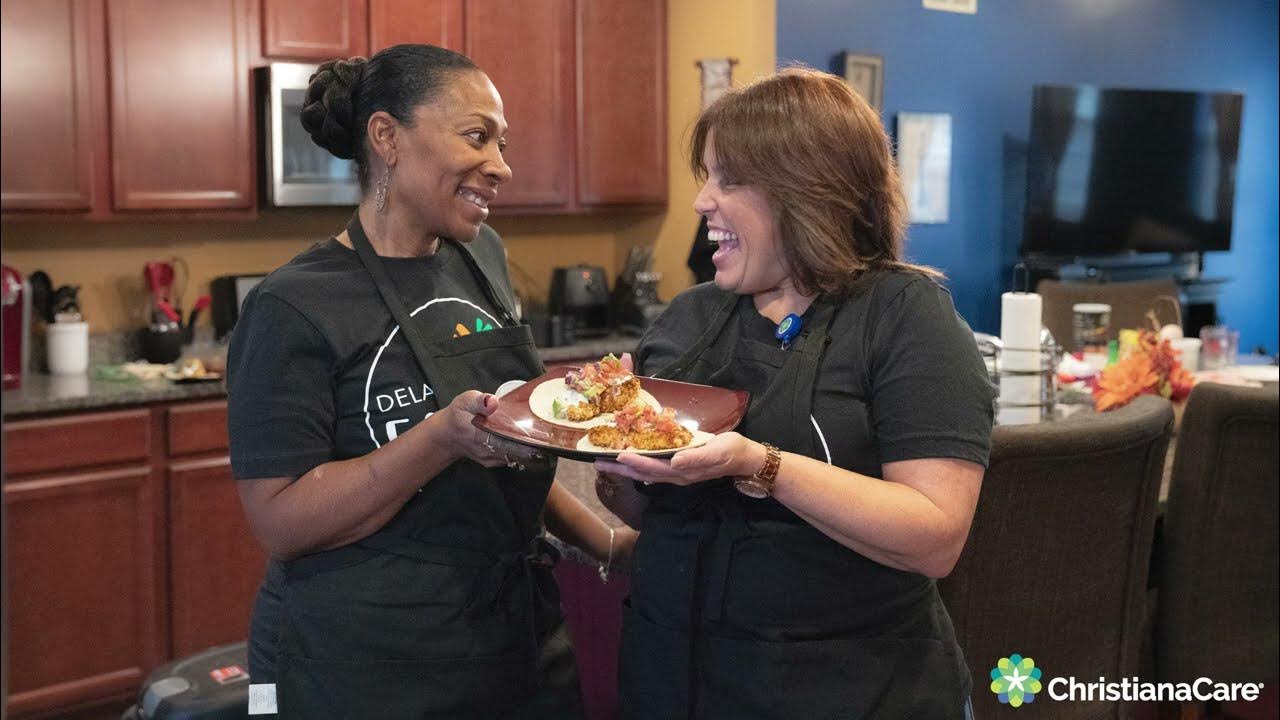
Kim Solomon’s kitchen showed all the signs of a good lunch in the making – chopped veggies on the counter, a few dirty dishes in the sink and two people laughing as they cooked. “Don’t worry, we’re going to clean all this up,” ChristianaCare community health worker Michelle Torres, BBA-HM, said as she sliced tilapia for the heart-healthy fish tacos she was making with Solomon. “I’m not worried about the mess, especially when it tastes this yummy,” Solomon said as she watched Torres place the raw fish – coated with panko crumbs, spices and an egg wash – into the air fryer. A few years earlier, Solomon’s lunch would have been something quick from the pantry after cooking for her sons or helping a neighbor. But after dealing with the life-threatening effects of high blood pressure, she is learning – with Torres’ help – how to prioritize her own nutrition and health. Solomon is one of more than 225 patients enrolled in the Delaware Food Farmacy, a ChristianaCare partnership with Lutheran Community Services that provides weekly deliveries of locally sourced produce, meat and other foods, along with one-on-one support from a community health worker. Delaware Food Farmacy participants report lower A1C blood glucose levels, healthier blood pressure readings and reduced body mass index. Dishing out good health “It took me getting very sick to finally make my own health a priority in my life, and that’s a humbling experience,” said Solomon, who lives in Bear, Delaware. “This is not just about food – it is about friendship, and Michelle’s support really gives me motivation. It keeps me excited to hear her voice and know that she’s there for me.” Kim Solomon (left) finds prioritizing her own nutrition and health can be delicious, as she prepares panko-crusted tilapia for fish tacos with community health worker Michelle Torres. ChristianaCare is expanding efforts to reduce food insecurity among patients in an ongoing commitment to ending disparities and in recognition that access to nutritious food is critical to overall health. In addition to the Delaware Food Farmacy, over 100 Maryland Primary Care Program (MDPCP) patients are participating in Healthy Food, Healthy Hearts, a 12-week program that delivers fresh groceries to under-resourced Medicare patients with complex health needs. “Our focus is empowering people to maintain their health by giving them the resources they need for whole-person care, including healthy food and education related to meal preparation and living with a chronic health condition,” said Erin Booker, LPC, chief biopsychosocial officer for ChristianaCare. “Through our work with our community partners in the Food Farmacy program in Delaware and our Healthy Food, Healthy Hearts program in Maryland, we are acknowledging the intersection of nutrition and health care and the importance of creating a more equitable food system.” Food is Medicine Both programs operate on the Food Is Medicine model, which recognizes that nutritious foods are essential for good health – and they must be accessible in the community, particularly in under-resourced areas. Studies have shown that evidence-based, tailored food interventions can lead to improved health outcomes and better use of health care services among participants while also reducing food insecurity, said Michelle Axe, MS, CHES, program manager of Food and Social Care Initiatives for ChristianaCare. The Centers for Disease Control and Prevention estimated in 2023 that food insecurity results in nearly $77 billion in excess health care spending. Veggie power: Much of the food in the Food Farmacy is sourced locally through a cooperative agreement with Delaware’s Department of Agriculture and the Farm-to-Community Program, which connects local farms with organizations distributing food to the community. Among Food Farmacy graduates, 26% report a decrease in food insecurity and 18% said they experience less anxiety. “With these programs, we’re offering participants an opportunity to make a change in their life, not only for them as individuals, but for the entire family,” Axe said. “This is about more than food.” From farm to table Getting health care professionals to prescribe healthier food options – and then making it possible for the patients to obtain them – helps close the gap between medical nutrition and financial health, said Rob Gurnee, executive director of Lutheran Community Services. “Providing food – that’s our core competency,” Gurnee said. “What really makes this program different and incredibly valuable is that ChristianaCare can funnel the right people into the program and then maintain these relationships to help patients make changes that are sustainable. Together, we utilize the strengths of our organizations with the goal of improving health outcomes.” Each week, Delaware Food Farmacy participants select from a menu of fresh produce, lean meats and fish, whole grains, low-fat dairy, snacks and other healthy items, all of which fall under the Dietary Approach to Stop Hypertension (DASH) diet. Fresh-picked: With Delaware Food Farmacy, patients are getting local produce that is typically picked within 24 to 48 hours. Much of the food distributed through Delaware Food Farmacy is sourced locally through a cooperative agreement with Delaware’s Department of Agriculture and the Farm-to-Community Program, which connects local farms with organizations distributing food to the community. Solomon’s refrigerator is filled with local produce, eggs and lean meats from the Food Farmacy program, but it’s Torres who keeps Solomon on the path to good health with her encouraging personality and a tasty supply of easy-to-make recipes. A recipe for healthy eating: Air Fryer Fish Tacos. Kim Solomon’s review? “Yummy.” “She’s there to support you and help you understand it’s going to be OK,” Solomon said. “She goes above and beyond every time. We need more Michelles in our world.”


NASA selects University of Delaware’s CubeSat spacecraft for upcoming mission
It’s safe to say that not many students expect to lead a NASA-supported mission during their undergraduate studies. But at least a dozen from the University of Delaware will have done that by the time they collect their diplomas in the next few years. All are part of a team creating Delaware’s first orbital spacecraft, which was selected by NASA for launch in 2026 as part of its CubeSat Launch Initiative. The NASA program, which started in 2011, aims to give students an opportunity to be part of real missions and gain extraordinary experience in what it takes to do space research. CubeSats are small, modular, inexpensive satellites that carry experiments for science investigations and/or technology demonstrations. About 160 CubeSats have been launched in the NASA program over the years, many deployed from the International Space Station (ISS). Delaware’s mission — the Delaware Atmospheric Plasma Probe Experiment (DAPPEr) — will launch its CubeSat spacecraft from the ISS and orbit independently through Earth’s upper atmosphere. The CubeSat will be about the size of a loaf of bread, according to the team’s faculty mentor, Bennett Maruca, associate professor of physics and astronomy. It will gather data about the density and temperature of electrons in Earth’s upper atmosphere, recording changes observed at different latitudes and times of day. This data will inform future research on how the sun affects conditions there. Understanding the sun’s interaction with the Earth’s atmosphere is critical to development of satellite communications networks, global positioning systems (GPS) and national security. But the real objective is educational, Maruca said. The students are the “deliverables.” They’ll emerge from this work with an insider’s view of what it’s like to develop and work on a NASA mission. To arrange an interview with Maruca, contact UD's media relations team at mediarelations@udel.edu.

New research shines a light on how expert mapmakers at Ordnance Survey see the world differently
OS Remote Sensing Services survey team updating OS MasterMap using the latest aerial imagery (Image credit: OS) Aston University psychologists worked with Ordnance Survey to assess how surveyors use 3D aerial images when making maps Humans naturally assume light comes from above, but experienced surveyors can interpret visual cues to assess topography regardless of the light direction It is the first time it has been shown that experience can radically alter natural human assumptions about lighting and could improve surveyor training. Researchers at Aston University have found differences between experienced Ordnance Survey (OS) mapmakers and novices in the way that they interpret aerial images for mapmaking, which could lead to improved training processes for new recruits. OS is well known for its travel and walking maps, but is also responsible for maintaining Great Britain’s national geographic database. Every time a building is demolished or developed, or a new road and path built, the map must be updated. Aerial photographs are taken of the area that has changed, either from a plane or using drones, and expert mapmakers, known as remote sensing surveyors, will examine the images to identify change and accurately redraw the map of the area. Image pairs are presented stereoscopically, one to each eye, allowing the remote sensing surveyors to see in 3D and correctly assess the topography, such as ditches, hills and hedges. Led by Professor Andrew Schofield, a team from Aston University’s College of Health and Life Sciences, together with Dr Isabel Sargent, previously at OS, carried out a study to understand how remote sensing surveyors interpret the shadows and highlights in images. The researchers asked six trained remote sensing surveyors and six novices to assess 10,000 stereoscopic aerial images of hedges and ditches, which had been heavily masked with image distortions. The stereoscopic images the aerial surveyors use for mapmaking are usually taken on sunny days. The human brain is naturally wired to interpret light as coming from above. However, the light does not come from above in the OS aerial images, it depends on the position of the sun. In the UK, north of the equator, light comes slightly from the south, thus appearing to come from below in images viewed by the surveyors. The researchers wanted to see how manipulating the direction of the light would affect the surveyors. Professor Schofield and the team swapped the image pairs between the eyes in half of the trials, so that hedges might look like ditches, and ditches look like hedges. The images were also flipped vertically on half the trials, changing the direction of the light source. Expert surveyors were found to rely on the stereoscopic cues – the difference in images seen by the two eyes – when performing the task. Novices were more likely to rely on lighting cues – highlights and shadows – to judge the shape and relief of an object, and assumed, as is natural, that the lighting came from above. With the manipulated images, this meant that novices frequently made mistakes. Experts were more accurate, even when the images had been turned upside down, and some had learnt to assume that the light source came from the south, or below. This is the first time anyone has shown that the natural assumption that light comes from above, which is common amongst many animal species, can be changed through long term experience. The researchers say that it could be used to develop new visual training techniques for remote sensing surveyors. For example, intensive exposure to repeated, difficult images can improve performance via a process called perceptual learning. Professor Schofield said: “This is a very exciting result. Others have shown that the light-from-above assumption can be altered by a few degrees, but no one has ever found complete reversals following long term experience. Dr Sargent said: “This result will help Ordnance Survey to understand the expertise of their staff and improve surveyor training and procedures.” Remote sensing surveyor Andy Ormerod, who worked on the study, said: “This research proves that experienced remote sensing surveyors can see the world differently. Whereas non-surveyors are used to seeing the world from one perspective, our brains have learned to view the world as seen from aerial imagery.” Journal of Vision DOI:10.1167/jov.24.4.11
Demystifying Relapse: 2-part series on substance use disorder recurrence and treatment
CARF International Senior Managing Director of Behavioral Health Michael Johnson is a contributor of this terrific two-part series on substance use relapse from the National Council for Mental Wellbeing. NATCON and partnering contributors from CARF International, National Association of Addiction Treatment Providers (NAATP), and the Recovery Research Institute are excited to release the Demystifying Relapse series, which includes two issue briefs that explore the complex dynamics of substance use disorder recurrence and the difficulty of reengaging individuals in the recovery process. “I’m grateful to the National Council for Mental Wellbeing for the opportunity to work with them on these two important documents. The U.S. is facing unprecedented challenges in treating persons with substance use disorders, with access to care continuing to be difficult for many. The field, the payers, and the public at large needs to take time to recalibrate how treatment and return to use are viewed in order to have realistic expectations for care, to destigmatize what it means for a person to return to use, and to ensure there is appropriate types of care available to those who need to re-enter the treatment systems,” said Senior Managing Director of Behavioral Health Michael Johnson. “Only when we recognize that persons who return to use need to have care that is individualized to assist them to stabilize, not start over, can we better ensure that treatment systems are more accessible based on the needs of persons served. The treatment for any chronic illness can be difficult as the path to wellness is often not linear. I hope these two papers can start a dialogue on how to reframe the systems to better meet the needs of those who continue with the recurrence of symptoms.” Michael Johnson is the CARF International Senior Managing Director of Behavioral Health. If you are looking to know more or connect with Michael, view his profile below to arrange an interview today.

