Experts Matter. Find Yours.
Connect for media, speaking, professional opportunities & more.

Questions are flying around about airplane safety
The Boeing Corporation is the recognized pioneer in aviation and aircraft manufacturing, but now significant quality control concerns are mounting in light of recent near disasters associated with Boeing's planes. David Primo, professor of political science and business administration at the University of Rochester, is available to tackle some of the regulatory, crisis management and reputational questions related to Boeing's recent safety problems, including: 1) This is just the latest in a string of black eyes for Boeing on safety. How badly will the company’s bottom line suffer as a result? 2) Has the company learned from how it handled the initial crisis with its MAX planes resulting from the fatal Lion Air and Ethiopian Airlines crashes? 3) What does the company need to do to prevent further damage to its reputation? 4) How will this change the nature of the relationship between Boeing and its main US regulator, the FAA?



Research: Add space salad to the risks astronauts face
University of Delaware researchers grew lettuce under conditions that imitated the weightless environment aboard the International Space Station and found those plants were actually more prone to infections from Salmonella. It’s been more than three years since the National Aeronautics and Space Administration made space-grown lettuce an item on the menu for astronauts aboard the International Space Station. Alongside their space diet staples of flour tortillas and powdered coffee, astronauts can munch on a salad, grown from control chambers aboard the ISS that account for the ideal temperature, amount of water and light that plants need to mature. But as the UD researchers discovered, there is a problem. The International Space Station has a lot of pathogenic bacteria and fungi. Many of these disease-causing microbes at the ISS are very aggressive and can easily colonize the tissue of lettuce and other plants. Once people eat lettuce that’s been overrun by E. coli or Salmonella, they can get sick. With billions of dollars poured into space exploration each year by NASA and private companies like SpaceX, some researchers are concerned that a foodborne illness outbreak aboard the International Space Station could derail a mission. In the new study by UD's team, published in Scientific Reports and in npj Microgravity, researchers grew lettuce in a weightless environment similar to that found at the International Space Station. Plants are masters of sensing gravity, and they use roots to find it. The plants grown at UD were exposed to simulated microgravity by rotation. The researchers found those plants under the manufactured microgravity were actually more prone to infections from Salmonella, a human pathogen. Stomata, the tiny pores in leaves and stems that plants use to breathe, normally close to defend a plant when it senses a stressor, like bacteria, nearby, said Noah Totsline, an alumnus of UD’s Department of Plant and Soil Sciences who finished his graduate program in December. When the researchers added bacteria to lettuce under their microgravity simulation, they found the leafy greens opened their stomata wide instead of closing them. “The fact that they were remaining open when we were presenting them with what would appear to be a stress was really unexpected,” Totsline said. Totsline, the lead author of both papers, worked with plant biology professor Harsh Bais as well as microbial food safety professor Kali Kniel and Chandran Sabanayagam of the Delaware Biotechnology Institute. The research team used a device called a clinostat to rotate plants at the speed of a rotisserie chicken on a spinner. “In effect, the plant would not know which way was up or down,” Totsline said. “We were kind of confusing their response to gravity.” Additionally, Bais and other UD researchers have shown the usage of a helper bacteria called B. subtilis UD1022 in promoting plant growth and fitness against pathogens or other stressors such as drought. They added the UD1022 to the microgravity simulation that on Earth can protect plants against Salmonella, thinking it might help the plants fend off Salmonella in microgravity. Instead, they found the bacterium actually failed to protect plants in space-like conditions, which could stem from the bacteria’s inability to trigger a biochemical response that would force a plant to close its stomata. “The failure of UD1022 to close stomata under simulated microgravity is both surprising and interesting and opens another can of worms,” Bais said. “I suspect the ability of UD1022 to negate the stomata closure under microgravity simulation may overwhelm the plant and make the plant and UD1022 unable to communicate with each other, helping Salmonella invade a plant.” To contact researchers from the team, visit the profiles for Bais or Kniel and click on the contact button.


Expert Help: Augusta University faculty offers financial advice for college students
The world of finances isn't always an easy one for students to navigate. Wendy Habegger, PhD, senior lecturer in the Hull College of Business, suggests several ways college students can improve their financial literacy, even after their collegiate career. Habegger said most don’t have a good grasp of what that is, despite being one of the most foundational building blocks to help students start off on the right foot. “They should know their credit scores just as quickly as their GPA and they should protect it just as vigorously,” Habegger said. She also suggests students have a credit card but with the caveat they use it wisely and be sure to pay their bills in a timely fashion. While they might like using cash, having a credit card will start to build a good credit history that they’ll likely need down the road. “The sooner they get started, the better they are of having good credit when they leave (college),” she added. When looking at their student loans, there are ways they can be better prepared when they start having to pay them back. During that deferral period, she suggests students really consider what a job may pay. Also, when selecting a payment plan for college loans, make sure it’s something they can make monthly payments on without any problems. She also said people need to think about public service jobs that may offer loan forgiveness or asking a potential employer about any loan forgiveness programs. “Some employers out there will offer some sort of that. The military is a good career and they are happy to be help pay off your student loans. Other businesses may offer that as well. It can be a good perk on both sides of the table, for the company and student looking for a first time job.” This is great advice and an important topic, so if you’re a reporter looking to know more, then let us help. Wendy Habegger is a respected finance expert available to offer advice on making the right money moves during volatile times. To arrange an interview, simply click on her icon now.


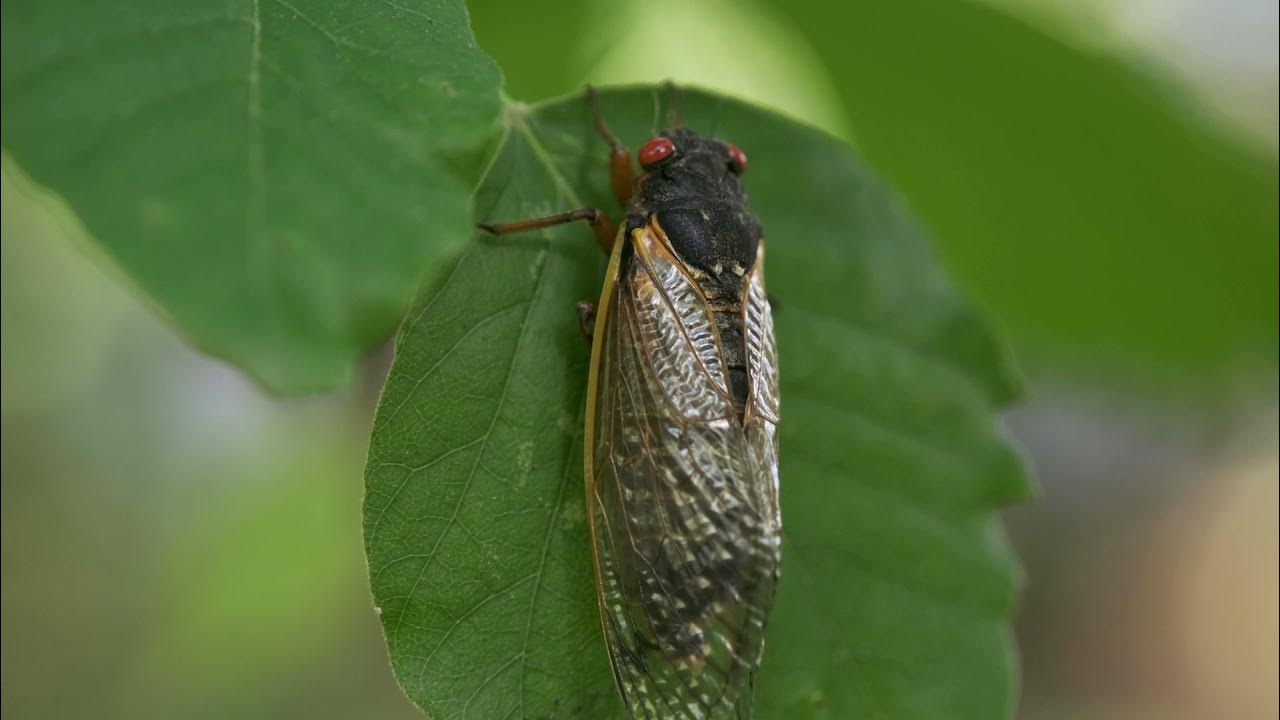
It's coming this summer -- and it'll be twice as big! Two broods of cicadas are set to emerge this year, an event that last occurred more than 200 years ago and now has scientists, bug watchers, and fans of the loud and noisy (yet harmless) insects buzzing with anticipation. Media coverage of this popular event put on by nature is also starting, and John R. Cooley, a cicada expert at UConn, offered his expertise on the impending emergence to MassLive: This summer, some will get a chance to witness a phenomenon rarer — and probably louder — than Halley’s comet. For the first time in more than two centuries, two big groups of cicadas in the United States will emerge simultaneously from the ground. Cicadas, often called “heat bugs,” make their presence known throughout the country every summer by “singing” their loud song. But some of these large, flying insects only emerge from underground every so often, depending on their group, or brood. These “periodical” cicadas bury themselves in soil, where they spend most of their lives. This summer, millions of cicadas from broods XIX (emerging every 13 years) and XIII (every 17 years) will both crawl out from underground and fly across the south and Midwest looking for a mate, according to Cicadamania, a website dedicated to tracking the insects. The last time these two broods popped out of the ground at the same time was in 1803, Cicadamania reported – when the U.S. bought the Louisiana Territory from France. “You cannot possibly be unaware that periodical cicadas are out, because they’re out by the millions and millions, and they’re noisy, charismatic, active insects that are just everywhere,” John R. Cooley, an entomologist who studies cicadas at the University of Connecticut, told MassLive. “When you got them, you know it. And that’s what you can expect to see. That’s what any normal emergence looks like,” he continued. What folks will see are a whole lot of bugs that all look the same, as the ones that come out every decade-plus look the same as the ones that come out every year, Cooley said. Researchers are still exploring why some cicadas emerge periodically. One common theory is that their infrequent appearance helps them avoid predators and prevents enemies from synchronizing on their life cycle. But, Cooley said this theory is flawed since all cicadas have predators, but fewer than 10 species are periodical. Some of the cicada’s natural enemies include birds, moles and Cicada killer wasps, according to the University of California Integrated Pest Management Program. Another theory suggests the last ice age forced cicadas to evolve to have longer periodical life cycles. But, that theory is limited as many cicadas live near glacial areas – few of which are periodical, according to nature.com. “Science isn’t all about having the explanations,” Cooley said. “We just test hypotheses and there are a lot of hypotheses as to why these cicadas are the way they are, but none really stand up so far.” The emerging of cicadas is always a popular and trending topic, and if you have questions or are looking to cover, then let us help. John R. Cooley is an Associate Professor in Residence at the University of Connecticut. He is an entomologist, author, and leading authority when it comes to cicadas. Simply click on his icon now to arrange a time to talk today.


Image shows how tiny water channels control how water enters and exits cells through their membranes The Aston Institute for Membrane Excellence (AIME) will be set up with a £10m grant from Research England AIME will be led by Professor Roslyn Bill from Biosciences and Professor Paul Topham from Chemical Engineering and Applied Chemistry The globally unique institute will use biomimetic polymer membranes for applications such as water purification and drug development Aston University will establish the Aston Institute for Membrane Excellence (AIME), a globally unique, cross-disciplinary institute to develop novel biomimetic membranes, after receiving a major grant of £10m from Research England. AIME will be led by Professor Roslyn Bill, from the School of Biosciences, with co-lead Professor Paul Topham from the department of Chemical Engineering and Applied Chemistry (CEAC). Membranes, both biological and synthetic, are hugely important in many sectors. For example, the world’s top ten selling human medicines all target proteins in biological membranes, while synthetic polymer membranes are used in the US$100bn/year water purification industry. The team behind AIME believes that the full potential of membranes will only be realised by an interdisciplinary group spanning biology, physics and chemistry that can investigate membranes holistically. Professor Bill, a European Research Council (ERC) Advanced grantee leads Aston Membrane Proteins and Lipids (AMPL) research centre of excellence that studies the structure and function of membrane proteins and associated lipids. Professor Topham leads Aston Polymer Research Group (APRG), which investigates the nanoscale behaviour of block copolymers (a type of polymer with a structure made of more than one type of polymer molecule) and polymer technologies for membranes. AMPL and APRG have already begun collaborative research and AIME will bring together the complementary expertise of both research clusters into one institute. AIME will initially comprise the eight researchers from AMPL and APRG. Alongside the co-leads Professor Bill and Professor Topham, will be Dr Alan Goddard, Professor Andrew Devitt, Professor Corinne Spickett, Dr Alice Rothnie, Dr Matt Derry and Dr Alfred Fernandez. It plans to recruit three further academics, six tenure-track research fellows, three postdoctoral research assistants (PDRAs), six PhD students, a research technician and a business development manager. Importantly, AIME will work with many existing Aston University colleagues to build a comprehensive research community focused on all aspects of membrane science. The new AIME team will focus on the development of bioinspired, highly selective polymer structures for applications in water purification and waste remediation, nanoparticles loaded with therapeutic molecules to treat disorders ranging from chronic wounds to neurological injuries, and the purification of individual membrane proteins with polymers to study them as drug targets. The vision is for AIME to become a ‘one-stop shop’ for interdisciplinary, translational membrane research through its facilities access and expertise, ideally located in the heart of the country. Professor Bill said: “The creation of AIME is ground-breaking. Together with Aston’s investment, E3 funding will deliver a step-change in scale and the rate at which we can grow capacity. We will address intractable scientific challenges in health, disease, and biotechnology, combining our world-class expertise in polymer chemistry and membrane biology to study membranes holistically. The excellence of our science, alongside recent growth in collaborative successes means we have a unique opportunity to deliver AIME’s ambitious and inclusive vision.” Professor Topham said: “We are really excited by this fantastic opportunity to work more closely with our expert colleagues in Biosciences to create advanced technology to address real world problems. From our side, we are interested in molecular engineering, where we control the molecular structure of new materials to manipulate their properties to do the things that we want! Moreover, we are passionate about a fully sustainable future for our planet, and this investment will enable us to develop technological solutions in a sustainable or ‘green’ way.” Professor Aleks Subic, Vice-Chancellor and Chief Executive of Aston University, says: “Our new Aston Institute for Membrane Excellence (AIME) will be a regional, national, and international research leader in membrane science, driving game-changing research and innovation that will produce a pipeline of high-quality research outcomes leading to socioeconomic impact, develop future global research leaders, create advanced tech spinout companies and high value-added jobs for Birmingham and the West Midlands region. Its establishment aligns perfectly with our 2030 strategy that positions Aston University as a leading university of science, technology and enterprise.” Steven Heales, Policy Manager (Innovation) at the West Midlands Combined Authority, said: “WMCA is delighted to see Research England back the Aston Institute for Membrane Excellence. This will enable Aston University’s excellent academics and research community to work closely with businesses to make advances in membrane technology and applications. “In 2023 the West Midlands Combined Authority agreed a Deeper Devolution Trailblazer Deal with Government, which included a new strategic innovation partnership with Government. Projects like AIME are exactly the kind of impact we expect this new partnership to generate, so watch this space.” Lisa Smith, chief executive of Midlands Mindforge, the patient capital investment company formed by eight Midlands research-intensive universities including Aston University, said: “This grant is an important vote of confidence in the Midlands scientific R&D ecosystem. AIME will play an important role in the future research of pioneering breakthroughs in membrane science and enable the world-leading research team at Aston University to develop solutions to real world problems. We look forward to closely working with the Institute and nurturing best-in-field research being undertaken at Aston out of the lab and into the wider society so it can make a positive impact”. Rob Valentine, regional director of Bruntwood SciTech, the UK’s leading developer of city-wide innovation ecosystems and specialist environments and a strategic partner in Birmingham Innovation Quarter, said: "As a proud supporter of the Aston Institute for Membrane Excellence (AIME), I am thrilled at the launch of this groundbreaking initiative. AIME exemplifies Aston University's commitment to advancing cutting-edge interdisciplinary research and further raises the profile of the region’s exemplary research capabilities and sector specialisms. AIME's vision of becoming a 'one-stop shop' for translational membrane research, strategically located at the heart of the country, aligns perfectly with our strategy at Bruntwood SciTech. We are committed to working with partners, including Aston University, to develop a globally significant innovation district at the heart of the UK where the brightest minds and most inspiring spaces will foster tomorrow’s innovation.” Membrane research at Aston University has also recently received two other grants. In November 2023, Professor Bill received £196,648 from the Biotechnology and Biological Sciences Research Council’s Pioneer Awards Scheme to understand how tiny membrane water channels in brain cells keep brains healthy. In December 2023, a team led by AIME team-member Dr Derry received £165,999 from the Engineering and Physical Sciences Research Council to develop biomimetic membranes for water purification. For more information about AIME, visit the webpage.




MEDIA RELEASE: CAA Manitoba releases Top 10 Tips to help Manitobans get ready for Winter Driving
Winnipeg, MB, Oct. 24, 2023 – As we anticipate winter’s blustery arrival, CAA Manitoba is asking Manitobans to take the time now to prepare their vehicle and themselves. “People often wait until the first snowfall before getting their vehicle ready to drive in winter conditions,” says Elisha Dacey, communications manager for CAA Manitoba. “Preparing now means your vehicle will be as safe as it can be when the cold weather comes,” says Dacey, “so we’ve prepared a Top 10 list to help you get started.” CAA Manitoba has a list of several things you can do to prepare yourself and your vehicle for winter driving. TOP 10 READY FOR WINTER DRIVING TIPS: Install winter tires for better traction on cold and snowy roads – Members can call CAA before Nov. 15 to have our mobile tire service change them for you at home for a fee Have your battery tested and replace it before it fails. CAA Manitoba will test Members’ batteries as part of a service call. Make sure you have an emergency kit that includes water, non-perishable food, jumper cables, blankets, a flashlight, batteries, waterproof matches, candles, a small shovel, and kitty litter. Have your brakes checked and serviced if needed. Make sure where you park your vehicle is prepared – is your outdoor plug drawing power? Is your extension cord working with no missing prongs or exposed wires? Have a family member or friend watch as you flick your vehicle and signal lights on and off to ensure they are working correctly. Top up your windshield washer fluid and any other fluids that are getting low. Get an oil change. Remove worn wiper blades and replace them with new ones. Ensure you have an ice scraper in your vehicle. While it’s important to make sure your vehicle is ready to go, it’s also important for drivers and passengers to be prepared, in case of an emergency or if you are stranded. Some additional ways to be prepared include: Have a cell phone battery bank and keep it on you, as well as a charging cable that connects your phone to your vehicle. Download and register for the CAA app and keep your CAA membership card in your wallet or vehicle so you always know how to contact CAA Manitoba if you are stranded. Consider adding extra mitts, hats and socks and footwear to your emergency kit. Check Manitoba 511.ca for road conditions and closures if you head out into a rural area. Always tell your loved ones where you plan to go and your planned route before you leave on a longer trip in your vehicle. “At CAA Manitoba, Member safety is our number one priority,” says Dacey. “There’s still time to make sure you, your loved ones and your vehicle are ready to drive safely this winter.” For more information about driving safely in winter conditions, please visit our Safe Winter Driving page at caamanitoba.com.


Winnipeg, MB, September 5, 2023 – As Manitoba students head back to class this week, parents say speeding and traffic congestion are their biggest worry when it comes to road safety near schools. A recent study by CAA Manitoba, conducted by DIG insights*, shows that 94 per cent of parents have at least one concern about safety in school zones. “We want to remind motorists that they need to be extra vigilant as students return to school this week,” says Ewald Friesen, manager of government and community relations, CAA Manitoba. “Kids will be excited to see their friends and teachers and may fail to check their surroundings before stepping out onto the street.” The top three concerns are drivers speeding (32 per cent), traffic congestion in and around school (30 per cent), and a lack of street/school parking (26 per cent). Other concerns include illegal parking or stopping, jaywalkers, distracted pedestrians and drivers, and drivers not obeying traffic signs. As a result of those concerns, many parents drive their children to school, further exacerbating traffic congestion, Friesen notes. “While there are always parents who must drive their children to school, we do encourage parents and students to try other modes of transportation to get to class,” says Friesen. “Things like walking, biking and skateboarding are great exercise and lots of fun, and fewer cars will help alleviate parents’ concerns.” The study also showed that parents would like to see additional solutions. About 26 per cent of parents want better road infrastructure in school zones and 21 per cent want to see more police enforcement. More crossing guards and road safety education for parents and students was also suggested. “Helping to keep school zones safe for everyone is the primary goal of CAA’s School Safety Patrol program,” says Friesen. “Watch for our trained patrols in bright yellow-lime vests helping people safely cross the street.” According to Stats Canada, there were about 183,000 students enrolled in about 700 K-12 schools across Manitoba in 2022. Back to School Safety Tips for Drivers: Drivers can also use the following CAA Manitoba tips to ensure they are staying safe in school zones. Slow down: Know the speed limit in your neighbourhood’s school zones and respect them. Give yourself plenty of time to drop off your kids at school to avoid rushing. Follow the rules of the road near school buses: Always stop for a stopped school bus with its upper flashing lights and stop arm activated, then wait for children to get safely on or off. Stay alert and watch for children or parents/guardians crossing the road when the bus moves on. Choose a safe spot to drop off and pick up your children from school: Follow your school’s rules and avoid double parking or stopping on crosswalks, dropping off or picking up your kids on the opposite side of the street, and stopping in moving traffic as kids rush out. Instead, use the designated drop off areas or consider a spot a bit farther away from school that is easily accessible and safe. Make eye contact with pedestrians: With the excitement of going back to school, anticipate that children may not easily see or hear your moving vehicle, so be sure to make eye contact with pedestrians crossing the road. Watch for CAA School Safety Patrollers: When travelling to and from school, watch for CAA School Safety Patrollers in their safety vests, as they play an important role in ensuring the roadway is safe before kids cross on their own. Avoid fines: Passing another vehicle in a school zone is not permitted. Passing a bus with its lights flashing and stop sign activated will result in a $673 fine and five demerits. Speeding in school zone is a minimum $200 fine and two demerits. * The study, commissioned by CCG and conducted by Dig Insights in May 2023, surveyed 613 Manitoba parents/guardians between the ages of 18 and 74 with children attending school from kindergarten to grade 8. The margin of error for a sample of this size is plus or minus 4% at the 95% confidence level.


Aston University scientists to tackle challenges of converting rice straw into biofuels Researchers to examine issues that hinder conversion into an alternative fuel Will help protect global food security, minimise CO2 emissions and decrease farmland needed for growing energy crops. Aston University scientists are to tackle some of the challenges of how to make inedible rice straw into the next generation of biofuels. In recent years, biofuels and biobased chemicals have been blended with petrol to create a more sustainable alternative. The Aston University researchers are to examine issues that currently hinder the conversion of rice straw into an alternative fuel. Currently the production of biofuels mainly relies on sugar crops such as sugarcane and sugar beet, which raises major concern about the competition between growing crops for food or fuel. However plant dry matter such as rice straw is seen as a better alternative to current crops because it doesn’t affect food security. Rice straw is often treated as an agricultural waste by-product and is removed by burning in the field. Farmers burn straw to prepare to plough and sow rice credit: S.Narongrit99 The research is being led by Dr Alfred Fernandez-Castane, senior lecturer in biochemical engineering and principal investigator at the Energy and Bioproducts Research Institute (EBRI) at Aston University, alongside a Marie Curie fellow, Dr Longinus Igbojionu. Their two-year project, An integrated approach to ethanol production from rice straw via microwave-assisted deep eutectic solvent pretreatment and sequential cultivation using Candida tropicalis and Saccharomyces cerevisiae, will explore cleaner and cost effective methods to extract rice straw’s energy-containing molecules. Dr Alfred Fernandez-Castane said: “The problems envisaged with the conversion of rice straw to ethanol can be categorised into four main challenges and resolving each challenge will lead to a major advance on the current state of the art. “The first is to develop pre-treatment conditions which will break down complex polymers thereby allowing the removal of lignin. “The next is to investigate novel biomass pre-treatment technologies combining green solvents and microwaves and how different methods affect morphology, structure and crystallinity of biomass. The next is to develop novel biotrasnformations using the yeasts Candida tropicalis and Saccharomyces cerevisiae to convert sugars into ethanol efficiently. “These three challenges will lead to the fourth scientific challenge which is to make the process sustainable and scalable, such as recycling the wastewater created and even the possibility of using the by-product of yeast for animal feeds.” The team believes that the research will help contribute to combating global warming and decreasing avoidable deaths by protecting global food security, minimising CO2 emissions by reducing the burning of straw and decreasing the farmland needed for growing energy crops. The research will end in November 2025.


When it comes to New Year's resolutions, think small
By now, those of us who made New Year's resolutions are either off and running or off the rails. According to Philip Gable, professor in the Department of Psychological and Brain Sciences, a lack of commitment and setting the bar too high are among the reasons many people fail to stick with their resolutions and achieve their goals. “It's just this time of year when people feel like they should make a resolution, as opposed to other times in the year when it's less common but maybe more meaningful, like if you get a doctor's report and realize you need to change that aspect of your life," he said. When people set goals, they tend to feel very motivated for a few days and falsely assume they’re committed to their goal. But as soon as that motivation wears off, they give up. In order to be part of the 10% of people who keep their New Year’s resolutions, Gable said to break down big goals into small, achievable steps. “I think a lot of times with goals, people will commit to a very big goal and not realize the smaller steps they need to take to achieve that goal,” Gable said. “If we have too big of a goal, we get emotionally distressed when we can't do it, or we fail because we set too big of a goal. Or maybe we couldn't think through all of the elements required to meet that really big goal. So starting small gives us something achievable, and then that gives you a platform to go to the next thing.” To set up an interview with Gable, visit his profile and click on the contact button.


CorpusCast with Dr Robbie Love: Professor Laurence Anthony on AntConc
CorpusCast is the podcast about corpus linguistics and what it can do for society. Join Dr Robbie Love as he speaks with top researchers in the field to find out more about how corpus linguistics – the study of linguistic patterns in large samples of language – is applied to a diverse range of areas including health, social justice and education. To mark the 25th episode and second anniversary in 2024, this episode reflects on the incredible two-year journey, expressing gratitude to exceptional guests and listeners spanning over 30 countries. In this milestone episode, the spotlight is on Professor Lawrence Anthony, the brilliant mind behind AntConc, a widely used and freely available corpus tool. Listeners are invited to join a profound exploration into AntConc's story, development, and its impact on corpus linguistics. Professor Lawrence Anthony, based at Waseda University in Japan, directs the Center for English Language Education in Science and Engineering. With over two decades of expertise in educational technology, natural language processing, and genre analysis, he has been a pioneer in developing educational software for corpus linguistics enthusiasts. Listeners can anticipate a captivating conversation as CorpusCast delves into the world of AntConc, gaining insights into its significance in the field. The third season kicks off with Professor Lawrence Anthony, promising a knowledge-packed episode. A heartfelt thank you goes out to all CorpusCast listeners for their continuous support. Here's to more discoveries, learning, and growth in 2024! Happy New Year, and welcome to another exciting episode of CorpusCast! Dr Robbie Love ? https://bit.ly/3Zcgo36 Professor Laurence Anthony ? https://www.laurenceanthony.net/ Aston Centre for Applied Linguistics ? https://bit.ly/3QKHcSF School of Social Sciences and Humanities ? https://bit.ly/3JCRAd1 Find out more about courses related to this show ? https://bit.ly/3pR705k #corpuslinguistics #BusinessCommunication #AstonUniversity #RobbieLove #MatteoFuoli #SocietalImpact #corpuslinguistics #AntConc #PodcastAnniversary #EducationTechnology