
Experts Matter. Find Yours.
Connect for media, speaking, professional opportunities & more.

Deprivation in childhood linked to impulsive behaviour in adulthood – new study
Inflation is running high around the globe, largely fuelled by Russia’s war in Ukraine and the COVID pandemic. As a result, many households are having to choose between eating and heating. Deprivation has a terrible immediate effect on children – as anyone who has experienced real hunger knows – but it can also affect things like impulsive behaviour in later life. “Trait impulsivity”, the preference for immediate gratification, has been linked to spending more on food, especially unhealthy, highly calorific food. Studies have shown that children who experience poverty and food insecurity tend to have a higher body-mass index as adults than those who do not. In a study published in Scientific Reports earlier this year, my colleagues and I showed that children who experience deprivation make more impulsive choices than children who don’t. We studied 146 children, with an average age of eight, living in some of the most deprived areas of England and compared them with children living in some of the most affluent neighbourhoods. Children were given a choice between taking home a small amount of money (for example, £1) or getting £10 a week, or even more a year later. How long a person is willing to wait for the larger amount of money can be used to calculate a “discount rate” that shows how much the waiting time reduces the value of the money. An impulsive person might prefer £1 now because the value of £10 in six months is “discounted” to less than £1 right now. This means that, for them, the £10, is discounted by £9 over the six-month wait. A less impulsive person might be willing to wait six months for £10, but not wait for a whole year for £15. This means that, for them, the value of the £15 is discounted by £5 over the additional six-month wait. This discount rate is a measure of how impulsive someone is. The results showed that children living in the most deprived areas had significantly higher discount rates than children living in the least deprived areas, regardless of age or intelligence, indicating that deprivation was the causal factor in the children’s choice. A stable trait This preference for immediate outcomes is a stable personality trait that remains constant throughout a person’s life. In our most recent study, published by the Royal Society, we investigated impulsivity in over 1,000 older adults aged between 50 and 90. We found that older adults, living in the most deprived areas, show the same preference for smaller-sooner financial outcomes as the children in our first study. We also found that a person’s job predicted the choices they made. Adults working in technical or routine occupations, such as mechanics or cleaners, chose to receive smaller amounts of money than wait for larger amounts compared with people in professional occupations, such as engineers or scientists. These findings are concerning because impulsivity doesn’t just predict obesity. These findings tell us a lot about why people living in poorer areas tend to be unhealthier than people living in wealthy areas. People who experience deprivation as children are more likely to choose to do things that, although they might be pleasurable in the short term, are unhealthy in the long run. This includes overeating, taking drugs, smoking cigarettes and gambling. We know too, that impulsivity can help to explain why some people go on to become addicts, while other people can avoid some of the more harmful effects of drugs and alcohol. Deprivation is one of many factors that can lead to impulsive behaviour throughout a person’s lifetime. Genetics also plays a role in impulsivity. Policymakers can’t do anything about a person’s genes but they can influence the nation’s long-term mental and physical health by minimising child poverty. Failing to do so will have long-term implications for the children living through today’s cost of living crisis.



It’s time to embrace it: We’re in peak fall mode. But other than Instagram photos of crimson foliage and shearling boots, how does mainstream society observe the season? Two words: pumpkin spice. AdAge reports that the seasonal flavor is now a $500 million annual industry. So, what gives? "Seasonal products or limited-time offerings have a long history in marketing," says Tyler Milfeld, assistant professor at the Villanova School of Business. "These products are designed to connect to a broader cultural context." And pumpkin spice is undoubtedly a part of Western fall culture. Candles, snacks, drinks, eye shadow palettes, dog treats… the list goes on. But what drives consumer interest? Is it the packaging? The taste? The coziness factor? "Because of their seasonal or limited-time nature, products like these inspire consumer urgency, brand connection and word-of-mouth, three cornerstone marketing objectives," says Milfeld. "For example, candy companies have a long affiliation with the holidays through seasonal packages and flavors." But let’s be honest, there’s no pumpkin spice without Starbucks. "Starbucks' pumpkin spice latte is a terrific example of an in-season tie-in. Starbucks has leveraged consumer demand for the product by creating a buzz around the latte’s debut," says Milfeld. "It's interesting how pumpkin spice latte fans made videos and posted on social media about the launch date! In this way, product marketing is delivered through influencers, social media, and popular press. This year's product debuted in late August, allowing the brand a long run-up to the peak period." And it’s no coincidence that we see seasonally branded items popping up the most in grocery stores and restaurants. "Food products are ideal for seasonal offerings because certain ingredients enjoy strong associations with certain times. For instance, consumers associate cranberry with the Thanksgiving and Christmas seasons," Milfeld says. "These products become cultural touchstones because they connect to a specific flavor, ingredient, recipe or color associated with the season and become an experience—for example, picking up a peppermint milkshake on the way home from holiday shopping or getting a 12-pack of cranberry splash for an extended family gathering. Marketers reinforce these usage occasions to strengthen the association for subsequent seasons. The product then becomes a tradition itself and a seasonal icon." The anticipation of a product's return becomes a marketing event. Thus, the holiday and consumer product become inextricably entwined. So, here's to the "basic" PSL lovers amongst us. Enjoy your festive treat without that extra side of embarrassment. After all, we're just celebrating the season.


MEDIA RELEASE: Motorists are urged to slow down and stay alert for trick-or-treaters this Halloween
As Halloween approaches, motorists can expect even the quietest streets becoming busy with trick-or-treaters. To ensure everyone has a safe and fang-tastic night, CAA South Central Ontario (CAA SCO) is reminding motorists to be extra vigilant while driving in areas with higher volumes of pedestrians. “In the excitement of dressing up in costume and going trick-or-treating, children may not always be looking out for oncoming traffic,” says Michael Stewart, community relations consultant, Government and Community Relations, CAA SCO. “With this in mind, it’s important for motorists to slow down, obey all traffic signs and continually scan not only the road ahead, but also driveways, front yards and the spaces between parked cars.” With the majority of trick-or-treating happening after dark, visibility is key for both motorists and pedestrians. Motorists are advised to turn their headlights on 30 minutes before sunset and keep them on when it’s dark while pedestrians should opt for makeup instead of masks to not obstruct their vision. “Trick-or-treaters can also help make themselves more visible to motorists by choosing brightly coloured costumes instead of all-black ones as well as using reflective items and accessories while trick-or-treating,” adds Stewart. CAA is offering free reflector tags at CAA Stores in south-central Ontario that can be attached to backpacks and jackets. Find your nearest CAA Store here and stop by to get up to four free tags per family. CAA is also reminding all road users to take extra caution as daylight saving time ends at 2 a.m. on Sunday, November 6. The return to standard time means fewer daylight hours and reduced visibility for both motorists and pedestrians. What motorists can do to stay safe: Always look for pedestrians crossing the road. Be alert and attentive while driving and yield to pedestrians at crosswalks, school crossings and crossovers. Mind your blind spots. Be aware of blind spots when making turns at intersections. Stay focused and vigilant behind the wheel. Put the phone away, reduce your speed and obey speed limits in residential neighbourhoods. Be cautious and considerate. Be alert around stopped transit vehicles and be courteous to pedestrians with different mobility needs that may require more time to cross. Use your lights. Motorists should use their full lighting system when it gets dark and in low visibility situations. What pedestrians can do to stay safe: Remain on the sidewalk. Sidewalks give pedestrians a designated space to keep them safe. If no sidewalk is present, you should walk on the far-left side of the road. Always be aware of your surroundings. Avoid distractions and be alert while crossing the street. Follow the flow. Follow signals and only cross at designated locations or crosswalks. Stop, look, and listen. Ensure all traffic has come to a complete stop before crossing the road. Always remember to look both ways before crossing. Be visible. Make eye contact with motorists before crossing—never assume that drivers can see you or know your intentions. Pedestrians should also wear bright or reflective clothing or accessories at night to help with visibility.



Research suggests nutrition education should be on the curriculum of all medical students as well as other healthcare professionals Association for Nutrition develops new curriculum ready for medical students Aston University is one of the pioneers in delivering and embedding nutrition education as part of its medical school undergraduate programme. All healthcare professionals should study a curriculum of nutrition education during their studies in order to help better support public health – new paper suggests. Nutritional researchers from Aston University, with colleagues from other universities and leading nutritional groups, worked with the Association of Nutrition (AfN) to help develop a curriculum that can be rolled out amongst all undergraduate medical school students with potential for modules to be taught to other healthcare professional courses. The paper jointly published in the British Journal for Nutrition and BMJ Nutrition, Prevention and Health examined the development of a new curriculum aimed at undergraduate medical students and made recommendations on its roll out nationally, with a view to it subsequently being implemented into other healthcare courses. The AfN Undergraduate Curriculum in Nutrition for medical doctors has been designed to be presented to medical students as an integral part of their general undergraduate training, making it clear how nutrition interrelates with the study of other systems and contributes to an inclusive understanding of health and disease. Dr Duane Mellor, clinical dietitian and senior lecturer at Aston Medical School at Aston University and co-author on the paper, said: “At present, lifestyle related health problems from living with obesity, through to high blood pressure, type 2 diabetes, heart disease and several cancers can all be linked to diet across our communities. Whereas in hospitals around a third of patients coming in can be undernourished. “Nutrition and food play a key role to both keeping us healthy and helping to manage disease, which is why it is imperative we educate our future doctors and other health professionals about the role of nutrition in patient care.” The paper sets out not only the need for nutrition education and the gaps, but how it can be included as part of what is already a very busy and content heavy curriculum. It builds on areas of the curriculum where nutrition could even be used to help teach concepts such as epidemiology. It highlights how historically medical education along with the education of many health professionals not specialising in nutrition often have only a few hours of teaching on the subject. Dr Glenys Jones, deputy chief executive at the Association for Nutrition, who led the curriculum development project and is co-author on the recent paper, said: “Nutrition is a key and modifiable determinant of health and wellbeing, therefore it is essential our future medical and healthcare professionals are equipped to be able to identify when nutrition could be involved in a patient’s condition in order for this to form part of their care. “The curriculum is not designed to turn our doctors into nutritionists or dietitians, but to give them the knowledge and skills to be able to think about whether nutrition could be playing a role and having the confidence and knowledge of who, when and how to refer on to suitable nutrition professionals when this is needed.” Aston University is a pioneer in the key area of nutrition education of the future healthcare workforce. As one of few UK universities with a dietitian or nutritionist as part of the teaching team within its medical school, these skills are now being developed to benefit the training of other health professionals. Dr Mellor added: “As one of a few dietitians and nutritionists embedded into the teaching team at Aston Medical School, we have been able to integrate nutrition across our curriculum. “It is great to be able to highlight how nutrition links to the basic science areas such as biochemistry through to how you can encourage a patient to think about changing their diet in clinical skills". Aston University has also started to explore with the Association for Nutrition the potential need for nutrition education in other professions. From this an outline of a core curriculum for nutrition for a range of health professionals is in development. Dr Mellor also plans to work with colleagues to further develop nutrition teaching at Aston University, thus helping students across subjects such as optometry and pharmacy to gain a better understanding of nutrition and how it impacts on their areas of expertise. For more information about Aston Medical School please visit our website.


It's a question people have been asking since we first started looking at the stars - Are we alone out there? It's been the focus of books, movies, childhood dreams and most importantly, scientists who have spent careers searching for intelligent life in the universe. Recently, the popular publication Astronomy magazine contacted some of the leading experts and academics in America and asked that very question. Manasvi Lingam, an astrobiologist and assistant professor in the Department of Aerospace, Physics, and Space Sciences at Florida Institute of Technology was interviewed to add his perspective and expert opinion with the quest to answer a question people have been asking for centuries. If you're a journalist looking to know more or are covering this topic, let us help with your stories! Manasvi Lingam is an assistant professor in the Department of Aerospace, Physics and Space Sciences at Florida Institute of Technology. He is an author and go-to expert for media when it comes to anything in outer space or out of this world. Simply click on Manasvi's icon now to arrange an interview today.


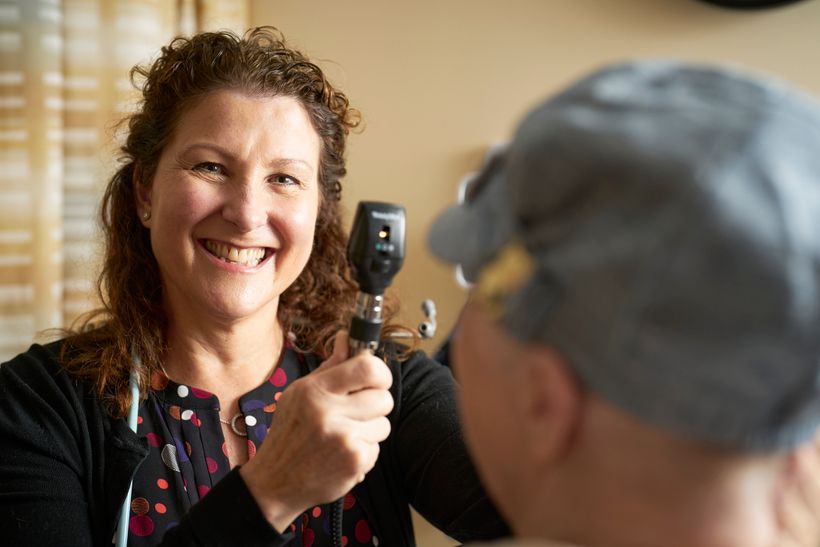
Adding Onsite Primary Care Practice in Cancer Center Earns National Innovator Award
ChristianaCare’s Helen F. Graham Cancer Center & Research Institute is the recipient of The Association of Community Cancer Center’s (ACCC) 2022 Innovator Award for its person-centered model of care that embeds a primary care provider in the cancer center for patients undergoing treatment who do not have a primary care provider. The Graham Cancer Center is among the first cancer programs in the nation to offer a program of this kind to its patients. “Earning the prestigious ACCC Innovator Award for our primary care practice is an accomplishment that belongs to our entire cancer care team which has worked long and hard to develop this unique program designed to improve our patients’ long-term health,” said Nicholas J. Petrelli, M.D., Bank of America endowed medical director of the Helen F. Graham Cancer Center & Research Institute. Patients diagnosed with cancer frequently have one or more concurrent chronic diseases, including heart disease, high blood pressure, COPD and diabetes. Cancer treatment can make these chronic medical problems worse, so it is important for patients to continue to see a primary care provider during their treatment, which can also help eliminate unnecessary emergency department visits. The new Primary Care Practice builds on the success of the Graham Cancer Center’s Oncology Express Unit, a program that offers urgent care to cancer patients in distress during treatment. “We conducted an informal survey that found as many as 15 percent of our patients did not have their own primary care provider,” said Cancer Program Clinical Director Cindy Waddington, MSN, RN, AOCN. “Having a primary care provider onsite working closely with the entire cancer care team helps ensure that essential patient care beyond cancer treatment is not delayed,” Waddington said. Patients are referred to the practice by their oncologists for any non-cancer health concerns. Since opening in January 2021, the program has received referrals to care for 234 patients. “Primary care in oncology has been a long-standing challenge for cancer patients and cancer programs,” said Family Nurse Practitioner Debra Delaney, RN, MSN, ACNS-BC, FNP-BC, who provides primary care services at the Graham Cancer Center. “Thankfully, we’ve been able to solve that challenge by addressing the whole person and promoting healthy living for the long-term.” Delaney helps patients manage their chronic medical conditions by monitoring their labs, refilling prescriptions and coordinating and communicating about any referrals they many need. “Following their cancer treatment, we help our patients transition to another practice, so they can continue to receive care for their primary care needs,” she said. The ACCC featured the program on its BuzzBlog. According to the ACCC, Innovator Award winners demonstrate the ability to advance the goals of improving access, quality and value in cancer care delivery, while also providing replicable solutions for other cancer programs and practices.



• Menopause: Continuing the Conversation will premiere at 12 noon on 18 October • The news-style programme features key industry interviews and news-style reports along with sponsored editorial profiles • It includes a film of Aston University staff telling their own stories. Aston University has joined forces with the British Menopause Society and ITN’s bespoke production hub, ITN Business, to contribute to a programme which raises awareness of the menopause for World Menopause Day. Menopause: Continuing the Conversation features key industry interviews and news-style reports, along with sponsored editorial profiles. It is anchored by television presenter and journalist Louise Minchin and will premiere at 12 noon on 18 October 2022 on the British Menopause Society's YouTube channel. The programme takes a holistic look – from lifestyle to changes in workplace policy - to support and empower women embarking on the perimenopause and beyond. Staff from Aston University tell their own stories in a film which forms part of the programme. World Menopause Day is held every year on 18 October. The day was designated by the International Menopause Society (IMS) to raise awareness of the menopause and to support options to improve health and wellbeing for women in mid-life and beyond. The theme for World Menopause Day 2022 is cognition and mood. According to research by the Chartered Institute of Personnel and Development (CIPD), three out of five working women between the ages of 45 and 55 who are experiencing menopause symptoms say it has a negative impact on them at work, nearly two-thirds of women surveyed said they were less able to concentrate, more than half said they experience more stress, 30 per cent of women said they had taken sick leave because of their symptoms and only a small minority said they told their managers about the real reason for taking sick leave. Beth Lloyd, associate director of organisational development at Aston University, said: “We are excited to announce our involvement in a news-style programme Menopause: Continuing the Conversation in partnership with ITN Business and the British Menopause Society for World Menopause Day. “Menopause is not just a gender or age issue; it is an organisational issue. It can impact on colleagues both directly or indirectly. Awareness on this topic is fundamental to reduce the stigma attached to it so that more people will talk openly about it so it can begin to be normalised and people can get the support they need. “Aston University has taken a proactive approach to raising awareness of the topic including hosting a range of workshops for managers and staff, introducing menopause mentors and creating an informal networking group. Our hope is that these activities will create a truly inclusive workplace and achieve our goal of becoming a recognised menopause friendly employer.”

Expert Perspective: UC Irvine's David Feldman on 'How to address the American megadrought?'
With the American West suffering from its worst megadrought in 1,200 years, and the Mississippi River as its lowest levels in recent history, water resource management is key to the America’s future. It’s a political challenge as much as a climate change mitigation one. UCI Water’s director David Feldman studies how water is allocated and distributed, and the difficulties in achieving institutional reform to promote equity in water management in the U.S. and elsewhere. He specializes in water resources management and policy, global climate change policy, ethics and environmental decisions, adaptive management, and sustainable development. Recently, David was featured on the UCI podcast to talk about this issue. If you're a journalist looking to cover this important topic - then let our experts help with your stories. David Feldman is a professor of Urban Planning & Public Policy and Political Science, Director of Water UCI. He is an expert in the areas of water resources management and policy, global climate change policy, ethics and environmental decisions, adaptive management, and sustainable development. David is available to speak with media - simply click on his icon now to arrange an interview today or call Tom Vasich with UCI media relations at 949-285-6455.


Can you be hacked while using your mobile device? In a word, yes — here’s how to protect your data
October is Cybersecurity Awareness Month and being aware of all your devices is as important as ever before. Most people are online every day, which opens themselves up to a threat of being hacked. Whether it be a mobile device, laptop, or personal computer, everyone needs to have cyber awareness. Steven Weldon, director of the Cyber Institute at Augusta University’s School of Computer and Cyber Sciences said many straightforward things that can be done to protect devices, such as having lock screens, making sure operating systems are up to date and simply recognizing how, when and where devices are being used. “Smart phones today are probably the most capable computing device that we have and we have it on us all the time,” said Weldon. “The data that can be extracted from these devices can be put together to build a pattern of life on us: where we go, what we do and when we do it. All of this data is potentially at risk if we’re not being careful about who gets access to our smart phones. That’s a great reason to lock the screen and require at least a password or pin to unlock the phone.” Gokila Dorai, PhD, assistant professor in the School of Computer and Cyber Sciences, suggests using biometrics to enhance security. “I would strongly recommend for women, young adults even teenagers, if it’s possible for you to have biometrics as a way to unlock your device, then go for that. These unique ways of unlocking a device would add a layer of protection,” said Dorai. Dorai is one of the growing experts in the field of mobile forensics and her research projects are federally funded. In addition, several SCCS faculty are mentoring undergraduate and graduate students working on cutting edge research related to mobile device security and digital forensics. She also suggested adding a two-factor authentication or multi-factor authentication to add an extra layer of security. When out in the public, it’s easy to connect a mobile device to an unprotected Wi-Fi network. Doing so could open up sites you visit to a hacker. Weldon suggests people should be careful of what apps are used when on public Wi-Fi, since they may expose a lot of personally identifiable information. His suggestion is to use a virtual private network to help protect data that’s being transmitted and received. “We should recognize the data on our smart phones and protect them accordingly,” added Weldon. “Recognizing the value and sensitivity of the data on our smart phones can guide us in how we protect these devices. We may not think as much about the security and privacy of our smart phones as we do about our laptops and desktops. When we think about everything we use our smartphones for, how ubiquitous they are in our lives, we come to realize just how central they are to today’s lifestyle in the digital age.” It’s tough to identify when a mobile device has been hijacked, so both Weldon and Dorai suggest paying close attention to any unusual behavior, even small things such as a battery draining faster than usual. Both are indicators you may need to take corrective actions. Dorai added the government can do more to protect a person’s privacy. “With the introduction of more and more Internet of Things devices in the market, with several different manufacturers, there’s a lot of user data that’s actually getting exchanged. These days, the most valuable thing in the world is data. So stricter measures are required,” she said. She indicated it needs to be a collaborative effort between industry, academia, government, and practitioners to come together and work on ideas to strengthen security. “Yes we want security. We are willing to put up with a little bit of friction for additional security. We want it easy and we generally want it free,” said Weldon. “We don’t read licensing agreements, but we would generally be willing to take certain actions, make certain tradeoffs, to be more secure.” One other major concern are apps in general. While Google Play Store and Apple routinely remove some apps that may be out of date or have security vulnerabilities, they may still be running on a user’s device. “Mobile applications may also hide from you in plain sight in the sense the app icons may not be showing up on the screen, but still they are running in the background,” added Dorai. In essence, the device user is the first line of defense. Taking all the necessary steps to prevent a third party from getting your information is of the utmost importance in the digital age. “I believe a big part of it this discussion is about user awareness. We want that free app but that app is asking for a lot of permissions. There’s an old saying in cybersecurity: if you are not paying for the product, you are the product. There’s also another saying: if it’s smart, it’s vulnerable,” said Weldon. Are you a reporter covering Cybersecurity Awareness Month? If so - then let us help with your stories. Steven Weldon is the Director of Cyber Institute at the School of Computer and Cyber Sciences at Augusta University and is an expert in the areas of cellular and mobile technology, ethics in computer science, scripting and scripting and automation. Gokila Dorai is an Assistant Professor in the School of Computer and Cyber Sciences at Augusta University and is an expert in the areas is mobile/IoT forensics research. Both experts are available for interviews - simply click on either icon to arrange a time today.


MEDIA RELEASE: Ten travel tips Manitobans should consider before flying this summer
Winnipeg MB, July 13, 2022 – CAA Manitoba (CAA MB) has compiled a list of ten things that Manitobans should be aware of if they are considering travelling this summer – both inside and outside the country. “Those who are considering booking a trip should make sure they understand the scope of what travel looks like at the moment,” said Susan Postma, regional manager, CAA Manitoba. “The checklist for planning a trip has changed and we want to help people navigate this new environment. “Airports are experiencing delays with varying degrees of impact, and Manitobans should be prepared.” Through consultation with its top travel agents, CAA MB has identified ten key considerations that potential travelers may not be aware of. Anyone who is considering travel in the current environment should remember that travel requirements and regulations are continually changing. Expect itinerary changes. CAA Manitoba travel agents say our Members are experiencing schedule changes for flights. Subscribe to the airline’s text message service to be immediately notified of any changes, and book connecting flights with more time in between than you normally would if available. A travel agent is also a valuable resource if this happens. Consider packing a carryon instead of checking luggage. Potential baggage delays mean that your luggage may not arrive with you, or take extra time to be unloaded off the plane. If you bring a carryon, make sure it fits the size requirements for all the airlines you are flying on, and with any tour operators. When using a carryon to travel, you still need to follow the 3-1-1 rule: three ounces of liquid, gel, aerosol, cream or paste that fit in one quart-sized resealable bag. If you are checking luggage, make sure your carryon has your hygiene essentials, any medications and perhaps a change of clothing. It will take longer to get through airport security. The old standby of being at the airport one hour before takeoff for domestic flights and two hours before international flights no longer apply. CAA Manitoba currently recommends a minimum of two hours before domestic flight departures and three hours for international flights. While waiting in line, take off your jacket, belt, and empty your pockets so you’re ready to quickly place your belongings in the scanner. Make sure all your documentation is in order before you book. Your passport should still be valid six months after your travel date, as this is required in several countries. Passports themselves are taking longer than usual to renew, so it should be done several months before you travel. Each destination has varying documentation requirements, so make sure you fully understand what information you need to have ready and in what format. Buy travel insurance and understand what is covered. Make sure you have $5 million in coverage for emergency medical situations and that illness related to COVID-19 is included. Understand your entitlements for situations like denied boarding in the event of a positive test, trip cancellation or delays, what luggage is covered and what isn’t. Car rentals need to be booked months in advance. High demand as well as a shortage of vehicles means a shortage of rental cars. Some rental agencies, particularly on the east and west coasts, are not allowing vehicles to be rented in one city and left in another. A travel agent can help you navigate this. Be patient, be kind. Around the globe, airlines are dealing with staff shortages and luggage handling back-ups. Keep in mind that the staff at the airports are there to help you, and that things may take longer than usual. COVID-19 is still a major consideration. Confirm the COVID-19 situation at destination prior to booking. Understand the risk level associated with travel to a particular destination by checking the Government of Canada Travel Advice and Advisories website. Individual travel advisories remain on a country-by-country basis. It is important that Manitobans understand the ongoing uncertainty associated with international travel, whether that be related to the continued community transmission of COVID-19, or state of health care systems in destinations hit hard by the pandemic. Stay connected. It is important to have access to trusted, up-to-date information while travelling so you can monitor changing conditions and requirements and adapt accordingly. Bookmark the Global Affairs Canada website prior to departure and check it regularly while abroad. It is also a good idea to sign up for Registration of Canadians Abroad and stay in touch with a family or friend that has knowledge of your travel plans. Find these and more information at caamanitoba.com/travel. Confirm change and cancellation flexibility with your travel service provider. Many airlines and hotels have been providing more flexibility when it comes to refunds and changes to bookings. Make sure you understand any key dates related to cancellation and changes and whether you are entitled to a refund or a future travel voucher or credit at the time of booking.
