
Experts Matter. Find Yours.
Connect for media, speaking, professional opportunities & more.

What does Joe Biden's forgiveness of student loans mean for debt relief?
President Joe Biden has made progress on a campaign promise to provide relief for those burdened with student debt. This plan offers targeted debt relief as part of a comprehensive effort to address the burden of growing college costs and make the student loan system more manageable for working families. The President is announcing that the Department of Education will: Provide targeted debt relief to address the financial harms of the pandemic, fulfilling the President’s campaign commitment. The Department of Education will provide up to $20,000 in debt cancellation to Pell Grant recipients with loans held by the Department of Education, and up to $10,000 in debt cancellation to non-Pell Grant recipients. Borrowers are eligible for this relief if their individual income is less than $125,000 ($250,000 for married couples). No high-income individual or high-income household – in the top 5% of incomes – will benefit from this action. To ensure a smooth transition to repayment and prevent unnecessary defaults, the pause on federal student loan repayment will be extended one final time through December 31, 2022. Borrowers should expect to resume payment in January 2023. -- White House Fact Sheet, Aug. 25 The announcement made big waves politically and news coverage is still heavy with reactions to the plan and just who it will benefit. “For some students, they will be completely debt-free afterward," said Wendy Habegger, a lecturer of finance in the James M. Hull College of Business at Augusta University. "The majority are still not going to be debt-free but instead of you having to pay an extra year, it might cut your pay time down. What this is going to do is give you money to start doing some of the other things that you have put off. You can now focus on building up an emergency fund, building up a savings account. You can put it toward your retirement.” The announcement also includes extending the student loan pause a final time through Dec. 31, 2022. “One of the good things about this debt reduction and debt forgiveness is that the Biden administration is making some very firm attempts to go in and fix some of the payment programs that are broke. So when individuals have to start paying in January, they will be able to pay a reduced amount,” said Habegger. “What’s not going to stop is the accrual of future debt. So we really need to look at the underlying problem and the costs of higher education and see if we can bring that down.” This topic will require ongoing coverage, so if you’re a reporter looking to know more, then let us help. Wendy Habegger is a respected finance expert available to offer advice on making the right money moves during volatile times. To arrange an interview, simply click on her icon now.


Aston University and Partnership Medical shortlisted for knowledge transfer partnership award
Aston University and Partnership Medical (PML) have been shortlisted for an award at the KTP Awards 2022. The partnership has been shortlisted in the category of Best Knowledge Transfer Partnership for its work on a revolutionary automated cleaning system which uses synthetic chemistry to sterilise endoscopes, reducing risks of contamination to patients and lowering rates of mortality. A knowledge transfer partnership (KTP) is a three-way collaboration between a business, an academic partner and a highly qualified researcher , known as a KTP associate. The UK-wide programme helps businesses to improve their competitiveness and productivity through the better use of knowledge, technology and skills. Aston University is the leading KTP provider within the Midlands. The KTP Awards recognise the people and partnerships behind the UK’s most inspiring and successful KTP projects. At present there are more than 800 inspiring collaborations happening across the country. Endoscopes are long, thin tubes with a light and camera at one end. Due to the sensitivity of the materials and electronics they cannot be sterilised, opening up high potential for cross infection. Through their automated cleaning system, Aston University and PML achieved industry-leading levels of disinfection, reducing risks of contamination to patients and lowering rates of mortality. The automated prototype and new cleaning materials developed in the KTP produced astonishing results in clinical trials, with a simple five-minute treatment offering deep cleaning levels 1,000 times better than anticipated, providing hygiene levels far superior to those currently possible using conventional manual procedures Mark Smith, executive director of business and regional engagement at Aston University, said: "It’s truly wonderful that Aston University has been formally recognised as a sector leader for knowledge transfer programmes, reflecting the scale and quality of our work with business. Making the shortlist is a recognition of our continued growth and sustained achievements in the knowledge exchange area. “The Aston University and Partnership Medical project has resulted in a far more effective medical cleaning system that ensures that endoscopes are truly sterile, which will ultimately save lives. This is just one example of the University’s real-world support for businesses and their customers. “It is an honour to be considered for best KTP at such a prestigious event, especially when knowledge exchange activity is at a high, with over 800 collaborations happening across the UK.” Partnership Medical Ltd (PML), based in Stoke-on-Trent, are specialists in supplying cleaning equipment and consumables for flexible endoscopes with over 20 years of distributor experience. The company aims to become a leading manufacturer/provider for endoscopic departments in clinics and hospitals worldwide. The Aston University team who worked on the KTP included Dr Andy Sutherland, reader in organic chemistry and member of the Aston Institute of Materials Research, Dr Tony Worthington, associate professor in clinical microbiology and infectious diseases and member of the Biosciences Research Group together with KTP associate, Dr Thien Duong, an expert in synthetic chemistry. The awards ceremony will take place on Wednesday 12 October in Liverpool and will be streamed online for those unable to attend in person.


Aston University history department gears up for live talk to mark 75 years since Indian partition
75 Years On: The Partition of India in a Global Perspective will take place at Café Artum at Hockley Social Club in Birmingham The partition saw the British Indian Empire split into two independent dominions, India and Pakistan The event on 25 August is the second in the series of Society matters LIVE. Aston University’s history department is set to host a live talk to mark 75 years since Indian partition. 75 Years On: The Partition of India in a Global Perspective will take place at Café Artum in Hockley Social Club on Thursday 25 August from 1700 to 1900 hrs. The event on 25 August is the second in the series of Society matters LIVE. The British decision in June 1947 to grant independence to its colony by creating two separate states caused the displacement of over ten million people as well as hundreds of thousands of casualties. In this talk, the second of Aston University’s ‘Society matters LIVE’ series, Dr Volker Prott will invite attendees to take a step back and explore the partition of India from a global historical perspective. Why did partition seem inevitable to so many people 75 years ago, even if they saw trouble ahead? Where does the idea of partition even come from? Why did so many partitions occur in the twentieth century and in the context of decolonisation? Dr Volker Prott, senior lecturer in history at Aston University, said: “The partition of India has become a synonym of tragedy and unimaginable human suffering. “Partition is also now seen by many as a massive diplomatic failure, giving rise to the Indo-Pakistani conflict, one of the most bitter and long-lasting territorial disputes since the end of the Second World War. “We will consider other partition examples, such as Ireland, Palestine, India, and also Germany, Korea, and Vietnam in order to tease out the concept of it and understand what it means in different contexts. “And of course, we will pay attention to the partition, discussing its many facets, and taking the time to explore ways to overcome its divisive legacy.” You can sign up to the free event here. You can listen to the latest podcast episode of ‘Society matters’ with Dr Volker Prott, who speaks about the legacy of India and Pakistan’s independence with journalist Steve Dyson, here. You can find out more about how Aston University’s history department is marking 75 years since Indian partition here. For more information about studying history at Aston University visit our website.

What's next in Georgia's 2020 election saga?
All eyes are on Georgia once again, but this time it's not about an upcoming election. As we sort through the 2020 election aftermath that saw Georgia in a tug-of-war between lawyers, politicians and pundits, the actions a few important figures may now be coming to light. Rudy Giuliani, the former advisor to President Trump, may be in some serious trouble according to Augusta's leading political expert, Dr. Gregg Murray. "When politicians are involved, there are almost always political calculations," Murray said. "But there’s a lot of information suggesting there may be problematic behavior that he was heavily involved with. There are reports of investigations involving several possible Georgia law violations: solicitation of election fraud, making false statements to local officials, conspiracy, racketeering, violations of oath of office and involvement in violence or threats of violence, according to Voice of America." As for Sen. Lindsey Graham, he, too, has been summoned to appear and explain how he may or may not have attempted to influence the election outcome. A federal judge on Monday turned down Sen. Lindsey Graham’s bid to throw out a subpoena compelling him to testify before the Atlanta-area grand jury investigating Donald Trump’s effort to overturn the 2020 election. “[T]he Court finds that the District Attorney has shown extraordinary circumstances and a special need for Senator Graham’s testimony on issues relating to alleged attempts to influence or disrupt the lawful administration of Georgia’s 2022 elections,” U.S. District Court Judge Leigh Martin May wrote in a 22-page opinion rejecting Graham’s effort and sending the matter back to state courts for further proceedings. Politico, Aug. 15 According to Murray, defying the judge's request might be the likely choice for the senator. "It seems the Republican party is still clearly tied to Trump," Murray adds. "I don’t think he would be hurt politically by not showing up. It’s an interesting question if some people would hold it against him for showing up." This legal wrangling will be long and drawn out, so if you are covering this topic, let our expert help with your story. Dr. Gregg Murray is available to talk about the election audit and what it might mean for voters in Georgia and across the country. Murray’s research focuses on political behavior and psychology with specific interests in voter mobilization and turnout. He is also executive director of the Association for Politics and the Life Sciences. Simply click on Murray's icon to arrange an interview today.


Research team aims to enhance security of medical devices
Tamer Nadeem, Ph.D., the principal investigator of the VCU-based MedKnights project, explained that the project’s focus is on the Internet of Medical Things (IoMT). Nadeem and co-PI Irfan Ahmed, Ph.D., both associate professors in the VCU College of Engineering Department of Computer Science, recently received $600,000 from the NSF’s Office of Advanced Cyberinfrastructure to put together a framework to improve IoMT security. IoMT devices are used in a range of diagnostic, monitoring and therapeutic applications. IoMT includes patient monitors, ventilators, MRI machines — even “smart beds.” Ahmed cited the internet-connected insulin pump is a good example of an IoMT device. Internet connectivity allows for both monitoring and adjusting the dosage remotely — functions that require a high degree of security for patient privacy as well as safety. All IoMT devices are potentially vulnerable to ransomware, denial of service and other malicious hacker attacks. Nadeem points out that IoMT devices have a higher security requirement than traditional IoT devices such as smart doorbells and smart thermostats in homes. “The most important thing in the medical domain is privacy,” Nadeem said. “For IoT devices in your home, you wouldn’t care that much about privacy, but for medical devices, it is an essential thing. You wouldn’t want anyone to know what your health conditions are, or what problems you might have had.” The work of the MedKnights group is important, as the IoMT domain is expanding; there is growth in terms of types of devices, number of patients using them and number of IoMT vendors. Nadeem added that the COVID pandemic and accompanying quarantine and stay-home orders increased the focus of medical-technology providers on the possibilities of IoMT. “Talking to some of the medical-device providers, I’ve learned that they are considering a line of products where they can remotely monitor patients on those devices, and they also can configure those devices remotely,” Nadeem said. Security is a large concern for the new generation of devices, because the current IoMT devices have been hit hard by hackers, he said. Security is an issue that extends from the individual patient to the institution. “Statistics show there are a lot of ransom attacks being done on the health sectors during the pandemic,” Nadeem said. “That motivated us.” The MedKnights team’s preparation for taking on the dragon of malicious IoMT attacks includes building a “test bed,” an isolated hardware/software assembly that Nadeem says will mimic the internet-enabled hospital setting. “In the hospital environment, there’s set of rooms. Each room has a lot of medical devices; they could be wired, or they could be wireless devices,” he said. “But there is no way that we can do what we want to do in a hospital.” The test bed will incorporate IoMT datasets based on typical device behavior, traffic and known malicious attacks. Nadeem explained that MedKnights will explore vulnerabilities of various IoMT hardware and software by subjecting the elements of the IoMT test bed to a range of attacks. “We will try to see in real time how efficient our technologies to monitor or detect these attacks, then try to intervene if we notice any change in the activities on the network,” he said. “Now, if the attacks manage to get into the device, we would like to also to start to see whether we can monitor these devices and observe abnormality or any misbehavior.” Nadeem said the next step is to isolate the source of fishy activity in the test bed network and begin to reverse-engineer the malware. He explained the group will work on understanding the question by looking for the “hole” that created the vulnerability. Ahmed said the MedKnights will bring undergraduates into the project through DURI, the Dean’s Undergraduate Research Initiative at the VCU College of Engineering. High school students will have an opportunity to join the team through a similar program known as the Dean’s Early Research Initiative, or DERI. DURI and DERI are just two ways of getting younger scientists and engineers involved in actual research. “For the last couple of years, I’ve been contacted by local high schools to host a couple of their students during the summer,” Nadeem added. “The students were really excited about it. We came up with some nice ideas about how to extend that work to their classrooms. As we continue this project, we will reach out to the schools, because we would love having a couple of their students involved.”


UConn's Amanda J. Crawford on one Sandy Hook family's 'epic fight'
Since December 14, 2012, the families of 18 children and six adults murdered at Sandy Hook Elementary School have been forced to live amidst a tidal wave of conspiracy theorists and their constant lies, threats, and harassment. As lawsuits challenging some of the most vocal purveyors of that misinformation are working through the court system, the stories of the hardships faced by some of these families -- endured while they have tried to grieve their unimaginable loss -- have brought new attention to the profound and negative effects that the wildfire spread of misinformation has on the lives of the people most impacted. Amanda J. Crawford, an assistant professor with the UConn Department of Journalism who studies misinformation and conspiracy theories, offers the story of one family in an in-depth and heartbreaking, but critically important, story for the Boston Globe Magazine: Lenny knew online chatter about the shadow government or some such conspiracy was all but inevitable. When a neuroscience graduate student killed 12 and injured dozens of moviegoers with a semiautomatic assault rifle in Aurora in July, five months prior, there had been allegations about government mind control. When Lenny searched his son’s name in early January 2013, he was disgusted at the speculation about the shooting. People called it a false flag. Mistakes in news coverage had become “anomalies” that conspiracy theorists claimed as proof of a coverup. Why did the shooter’s name change? Why did the guns keep changing? Press conferences were analyzed for clues. Vance’s threat to prosecute purveyors of misinformation was taken as an indication they were onto something. But what concerned Lenny most was their callous scrutiny of the victims and their families. Some people claimed a photo of a victim’s little sister with Obama really showed the dead girl still alive. Others speculated the murdered children never existed at all. They called parents and other relatives “crisis actors” paid to perform a tragedy. And yet, they also criticized them for not performing their grief well enough. There were even claims specifically about Veronique. Lenny needed to warn her. “There are some really dark, twisted people out there calling this a hoax,” he told her. Veronique didn’t understand. There was so much news coverage, so many witnesses. “How could that possibly be?” “If you put yourself out there, people will question your story,” Lenny cautioned. Veronique thought he must be exaggerating a few comments from a dark corner of the Web. This can’t possibly gain traction, she thought. No, no, no! Truth matters. If I tell my story, people will be able to see that I am a mother who is grieving. Amanda J. Crawford is a veteran political reporter, literary journalist, and expert in journalism ethics, misinformation, conspiracy theories, and the First Amendment. Click on her icon now to arrange an interview with her today.


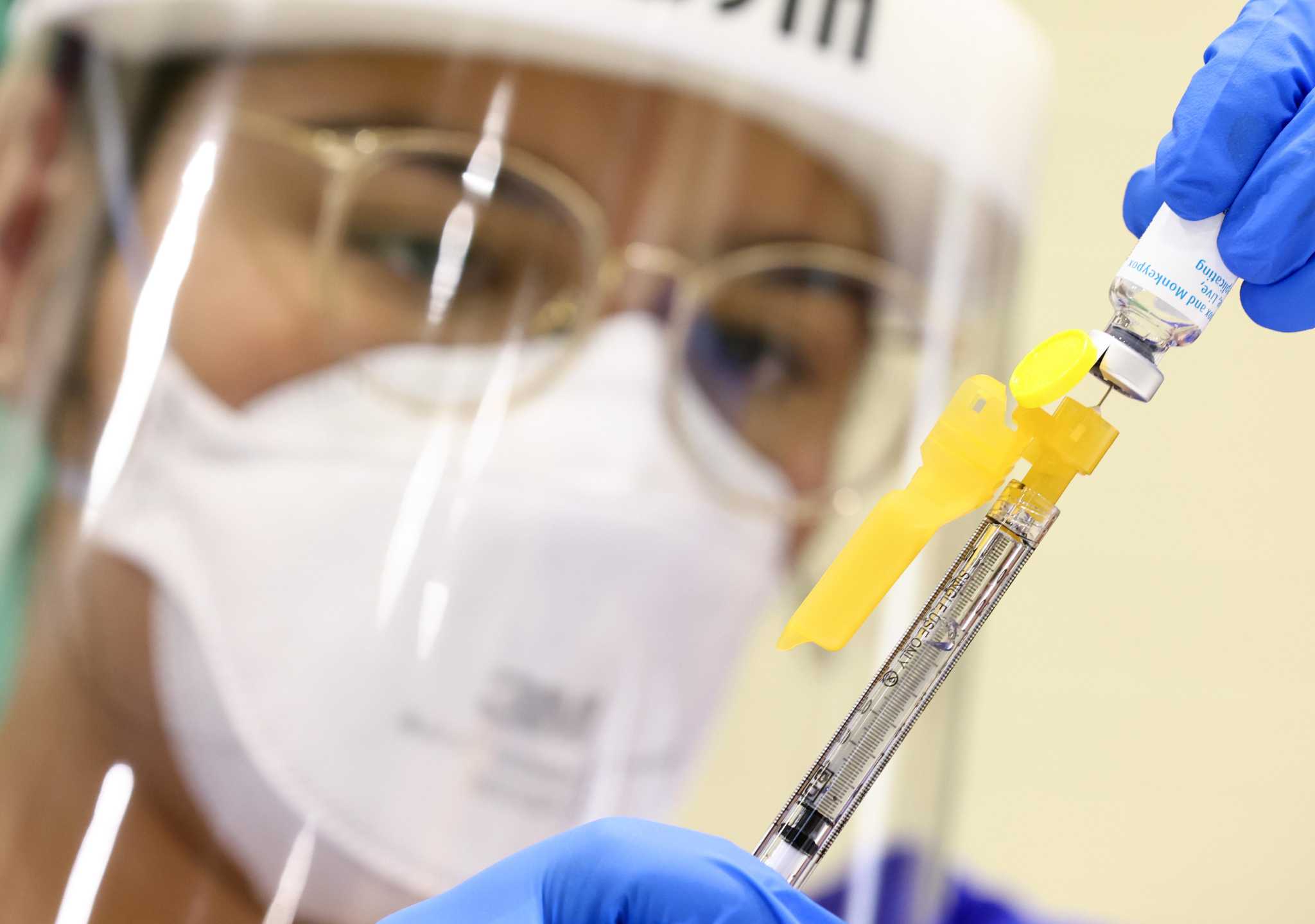
Monkeypox and children - A leading virologist explains
Though the CDC has stated there are no confirmed cases of the monkeypox virus among patients under 18 in Connecticut, a handful of cases involving children have been reported across the country. Paulo Verardi, associate professor of virology and vaccinology at UConn, is taking on some of the important questions about monkeypox and children and offering his expertise and clarity regarding a topic that has many Americans and parents concerned: Are children specifically at risk? A: “Anyone is at risk of contracting monkeypox and spreading it to other people, typically by direct, close contact, such as skin to skin contact. That includes touching monkeypox lesions that sometimes can be hard to notice, or touching and using objects such as toys, clothes, and bedding of someone that is infected. “In this context, it is important to point out that the virus can stay in the environment without losing infectivity for quite some time. Children are very active, social, and tactile, so spread in settings like schools and day care facilities is something we need to consider, particularly if the outbreak continues to evolve and infections become more widespread in diverse populations.” Does the disease traditionally present differently in younger people? Is the symptomology different? A: “In general, symptoms are similar in adults and children, although for this outbreak with this specific strain of the virus, our clinical experience in children is limited because we have had only a few cases so far. “Rash or skin lesions are typical, and fever and swollen lymph nodes (lymphadenopathy) are also common symptoms. However, children may be at higher risk of more severe disease and complications from monkeypox, particularly if they are very young, have skin conditions like eczema, or are immunocompromised.” If you are a journalist looking to cover this topic, let us help with your stories. Paulo Verardi is a virologist who specializes in vaccine research and development and is a member of the Center of Excellence for Vaccine Research. Dr. Verardi is available to speak with media regarding virology, monkeypox, COVID-19, and other viruses – simply click on his icon now to arrange an interview today.


Aston University and ADInstruments Ltd (ADI) enter 24-month knowledge transfer partnership to develop ground-breaking animal telemetry system World-leading expertise in neuroscience to help bring game-changing system to market Outcomes of KTP will feed directly into the product hardware and software development, ensuring technological advantage for ADI. Aston University has teamed up with research software experts ADInstruments Ltd (ADI) through a knowledge transfer partnership to develop a revolutionary dual-function wireless telemetry system for neuroscience research that is set to transform how implanted biosensors are used for data generation in animals. Telemetry is the automatic recording and transmission of data from remote or inaccessible sources to an IT system in a different location for monitoring and analysis. ADI has an established reputation for developing, supplying and supporting its customers in specific areas of life science research, particularly in cardiovascular science. The company has recently acquired Kaha Sciences, which has developed ground-breaking telemetry technology that can be used to measure neuroscience-relevant signals in free-moving animals for research. The company is looking to use the KTP to harness the world-leading expertise of Aston University to build their reputation in neuroscience. Mark de Reus, head of support at ADInstruments, said: “The evidence-base of research papers, training and support materials from Aston University will be invaluable in improving the product design, identifying development opportunities and embedding a culture of neuroscience within the company.” A knowledge transfer partnership (KTP) is a three-way collaboration between a business, an academic partner and a highly qualified graduate, known as a KTP associate. The UK-wide programme helps businesses to improve their competitiveness and productivity through the better use of knowledge, technology and skills. Aston University is the leading KTP provider within the Midlands. The Aston University team features Professor Gavin Woodhall and Dr Stuart Greenhill from its Pharmacy School’s Pharmacology and Translational Neuroscience Research Group. Professor Woodhall is co-director of the Institute of Health and Neurodevelopment (IHN) and a neuroscientist who studies epilepsy and schizophrenia in rodent models of disease. Dr Stuart Greenhill is a member of IHN and senior lecturer in neuroscience, with a longstanding track record in developing and deploying novel and difficult mechanisms of recording from brain tissue both in vivo and in vitro. Dr Stuart Greenhill said: “It is a privilege to be involved in the development of this important technology, which will be invaluable to thousands of research groups across the globe, and we are delighted to be able to help the product team realise the potential of this device.”


Potential long-term treatment for asthma found - new research
New approach tackles one of the causes of asthma, not just its symptoms In treated mice, symptoms virtually disappeared within two weeks Further research needed before the treatment can be trialled in humans. A possible way to tackle one of the underlying causes of asthma has been developed by researchers from Aston University and Imperial College London. In tests in mice, the researchers were able to virtually eliminate asthmatic symptoms within two weeks and return their airways to near normal. Just under 5.5 million people in the UK receive treatment for asthma and around 1,200 people die of the disease each year. Asthma causes the airways to become thickened and constricted, resulting in symptoms such as wheezing and shortness of breath. Current treatments, including steroids, provide short term relief from these symptoms, by either relaxing the airways or reducing inflammation. However, no current drugs address the structural changes asthma makes to the airway and lungs, in order to offer a longer-lasting treatment. Lead researcher, Dr Jill Johnson, from Aston University’s School of Biosciences, said: “By targeting the changes in the airway directly, we hope this approach could eventually offer a more permanent and effective treatment than those already available, particularly for severe asthmatics who don’t respond to steroids. However, our work is still at an early stage and further research is needed before we can begin to test this in people.” The research focused on a type of stem cell known as a pericyte, which is mainly found in the lining of blood vessels. When asthmatics have an allergic and inflammatory reaction, for example to house dust mites, this causes the pericytes to move to the airway walls. Once there, the pericytes develop into muscle cells and other cells that make the airway thicker and less flexible. This movement of the pericytes is triggered by a protein known as CXCL12. The researchers used a molecule called LIT-927 to block the signal from this protein, by introducing it into the mice’s nasal passages. Asthmatic mice that were treated with LIT-927 had a reduction in symptoms within one week and their symptoms virtually disappeared within two weeks. The researchers also found that the airway walls in mice treated with LIT-927 were much thinner than those in untreated mice, closer to those of healthy controls. The team are now applying for further funding to carry out more research into dosage and timing. This would help them to determine when might be the most effective time to administer the treatment during the progress of the disease, how much of LIT-927 is needed, and to better understand its impact on lung function. They believe that, should this research be successful, it will still be several years before the treatment could be tested in people. The research was funded by the Medical Research Council, part of UK Research and Innovation and is published in Respiratory Medicine.

Is Chechnya next as the war in Ukraine shows no signs of stopping?
A long history of conflict in regions such as Eastern Europe, the Balkans and Russia shows these conflicts often grow and eventually draw in other armies or countries. With all eyes on the ongoing war between Russia and Ukraine, there are serious concerns that the powder keg could soon blow. Augusta University's Dr. Craig Albert shares his expertise on war, terrorism and what could be next for the region. As this war between Ukraine and Russia goes on, how does Chechnya come into play? "Chechnya has units fighting on both sides of the conflict. There is a large contingent of independence fighters, rebels and militants fighting for Ukraine, as they have historical grievances with Putin and Russia dating to the Russo-Chechen wars beginning in the early '90s. The official stance of Chechnya, however, under the dictatorship of Kadyrov, is pro-Putin, and has sent upwards of 10,000 troops to fight against Ukraine. Thus, we have the potential of an ethnic civil war breaking out within Chechnya, as they dispute their differences on the battlefield." Do they look at this as an opportunity to break free from Russia? "There are many Chechens that may think this is the perfect strategic opportunity to break away from Russia and claim independence. Others within Chechnya see this as a perfect opportunity to carry out the deeds of the Islamic Caucasus Emirate, officially a part of ISIS, and claim more space for ISIS to operate. It should be noted, most of the civilians just want to live in peace and have economic opportunity as they are still recovering from decades of war in the '90s-2000s." What would that look like if they decided to go on attack? "Depending on which group initiates conflict, it would most likely look like some form of terrorism or insurgency operation. Small-scale and limited in scope. Political assassination could also come into play depending on the side of the people that seek violence." If you’re a journalist looking to know more about the war between Ukraine and Russia and how Chechnya may soon be a factor, then let us help with your questions and coverage. Dr. Craig Albert is director of the Master of Arts in Intelligence and Security Studies at Augusta University. He is a leading expert on war, terrorism and American politics. This is an important national and international issue. Albert is available to speak with media – simply click on his name to arrange an interview today.