
Experts Matter. Find Yours.
Connect for media, speaking, professional opportunities & more.

Oceans expert Dr Bakker to attend COP26
A number of climate experts from the University of East Anglia will be attending the COP26 climate conference in Glasgow. Their areas of expertise range from the impact of climate change on biodiversity, climate geoengineering and carbon removal, to the impact of climate change on sovereign credit ratings, carbon uptake by the oceans, and gender and climate change. Dr Dorothee Bakker will attend the first week of COP26 as part of the Integrated Carbon Observation System European Infrastructure Consortium (ICOS ERIC). Her areas of research and expertise cover processes affecting the air-sea transfer of natural long-lived greenhouse gases (carbon dioxide, methane, nitrous oxide) and the marine carbon cycle in a changing climate. Dr Bakker chairs the SOCAT global group - SOCAT is a Global Ocean Observing System, with more than 100 contributors. Her brief: The ocean takes up a quarter of anthropogenic CO2 emissions. This uptake varies over time (between years and decades) for reasons that we do not fully understand. It is unclear how ocean CO2 uptake will respond when we move towards net zero. Measurements of (surface) ocean CO2 and their synthesis are therefore key for determining ocean CO2 uptake, now and in the future. However, funding for these measurements and their synthesis is precarious. Dr Bakker is currently investigating carbon cycling in UK shelf seas and the Southern and Arctic Oceans. She is a co-author of this year’s Global Carbon Budget paper (for SOCAT synthesis of ocean CO2 measurements).


Rochester's David Primo on how the wealth tax proposal will (or won't) work
“The ‘wealth tax’ that’s being proposed in the current budget is really a tax on unrealized capital gains, so the stock that you have not sold yet but which has seen gains would be taxed before it is sold,” says David Primo, the Ani and Mark Gabrellian Professor and an associate professor of political science and business administration at the University of Rochester. “It applies only to the ‘richest of the rich’ and many questions remain as to how the operational and Constitutional concerns of it will be addressed. This proposal is much different from traditional wealth taxes where the idea has been to assess the wealth of tax payers every year and have the wealthiest individuals pay a tax on their net worth.” Primo is available for interviews and can discuss the precedent that this current wealth tax would establish with regard to taxing stock investments; if this is the best approach to taxing the wealthiest Americans; if it would even generate enough tax dollars to make a difference with the federal government’s current spending obligations; and more.



What can America expect as supply chain issues leave the auto industry stuck in park?
America’s auto industry is slowing down – and this time the main source is not a matter of labor issues or a lack of customers. This time this crisis, like those plaguing so many other industries lies in the tangled web of supply chain issues that is challenging manufacturing, industries and economies across America and the continent. In the United States, the auto industry has been hit particularly hard. The nation’s largest automaker and the rest of the global auto industry have been sporadically shutting down plants since late last year due to the semiconductor shortage, which has cut supplies on dealer lots and driven new vehicle prices to record levels. To be sure, production still isn’t back to normal because some of the factories will only run on one shift per day. Phil Amsrud, senior principal analyst for IHS Markit who studies the chip market, said GM’s move is a good sign, but doesn’t signal the end of the chip shortage. “It’s just not a sign that the patient is through all the rough spots and it’s a matter of weeks before they’re released from the hospital,” he said. October 22 - Associated Press There has been a lot of coverage, and a lot of questions asked as to how this happened and what it will take to untangle the mess. And that’s where experts from Augusta can help with coverage. "There are several factors but the main themes are suppliers inability to react to the increased demand, and governmental policies and responses,” explains Dr. Mark Thompson an economist and expert regarding the industrial issues facing America. “When COVID initially hit, demand dropped considerably. As it relates to the shortage of computer chips, what do you think consumers were demanding during the early phase of COVID...computers, laptops, handheld devices, etc. Technology companies responded and chip manufacturers switch to produce these items. Now, as consumers demand for new cars pick up, there is a shortage of the chips necessary for new cars. As it relates to government intervention, the stimulus has also increased demand for various goods and services furthering the shortage." As for how long will it take for America to see the supply chain replenished? "Good guess,” says Thompson. "I would say that we should expect to continue to see these shortages through the rest of 2021 and part of the way in 2022." If you’re a journalist covering the ongoing supply-chain issues – then let our experts help with your stories. Dr. Mark Thompson is an economist with highly accomplished work in business conditions, risk analysis, energy and the healthcare industry. Dr. Thompson is available to speak with media regarding the economic and industrial issues facing America during this supply chain crisis - simply click on his icon now to arrange an interview today.


Prices are going up, shipments are being delayed and there are shortages of good and essential parts and pieces hindering almost every aspect of industry and manufacturing across America. The topic is getting attention from media outlets across the country as retailers and shoppers adapt to the problem. Hasbro Inc (HAS.O) said on Tuesday global supply chain disruptions cost it about $100 million in lost toy orders in the third quarter, and the company warned of a further hit to sales during the crucial holiday shopping season. While demand has surged over the last year, factory shutdowns, a lack of container ships and long port delays have fueled fears of a shortage of toys to put under Christmas trees during the holiday season. October 26 - Reuters Amazon on Monday reassured shoppers and industry watchers that it’s well-prepared to avoid supply-chain challenges during the holiday season. In a blog post, Amazon said a combination of planes, trucks, ships and delivery vans, along with staffed-up warehouses, has put it in a good position to “get customers what they want, when they want it, wherever they are this holiday season.” Retailers are entering what’s poised to be a particularly challenging holiday shopping period, due to existing supply-chain woes, inflationary pressures and labor shortages. Several factors are behind the issues, including skyrocketing shipping container costs and container shortages, Covid-19 outbreaks at shipping ports, as well as a shortage of workers needed to unload containers and handle goods at warehouses. October 25 - CNBC The United States is facing a supply chain crisis that it has never seen before. Some are blaming COVID, trade deals and shipping. The issue is causing serious trouble for America’s already fragile economy. If you’re a journalist covering this important topic let our experts help with your questions and stories. Georgia Southern University's Jerry Burke, Ph.D., is a professor in the Department of Logistics and Supply Chain Management. Burke researches manufacturing and service operations. He is available to speak with media regarding this important issue - simply click on his icon now to arrange an interview.


MEDIA RELEASE: Ten things Ontarians need to know prior to booking travel abroad
CAA South Central Ontario (CAA SCO) has compiled a list of ten things that Ontarians should be aware of if they are considering travelling abroad. “Now that the Canadian government is no longer advising against non-essential travel due to COVID-19, those who are considering booking a trip should make sure they understand the scope of what travel looks like at the moment,” said Kaitlynn Furse, director, corporate communications, CAA Club Group. “The checklist for planning a trip has changed and we want to help people navigate this new environment.” Through consultation with its top travel agents, CAA SCO has identified ten key considerations that potential travellers may not be aware of. Anyone who is considering travel in the current environment should make sure they have looked into the following and remember that travel requirements and regulations are continually changing. 1. Confirm the COVID-19 situation at destination prior to booking. Understand the risk level associated with travel to a particular destination by checking the Government of Canada Travel Advice and Advisories website. While the Global Affairs Canada Level 3 Travel Advisory to avoid all non-essential travel has been lifted, individual travel advisories do remain on a country-by-country basis. It is important that Canadians understand the ongoing uncertainty associated with international travel, whether that be related to the continued community transmission of COVID-19, or state of health care systems in destinations hit hard by the pandemic. 2. Understand the type, timing, cost and accessibility of required COVID testing. Every country has different requirements when it comes to the COVID tests that are needed prior to travel, and every country has different testing capacities once you are there. There are also requirements in order to return to Canada. Make sure you understand the difference between molecular PCR and rapid antigen tests, in what time period tests must be taken, the associated costs and locations where these tests are available. 3. Confirm change and cancellation flexibility with your travel service provider. Many airlines and hotels have been providing more flexibility when it comes to refunds and changes to bookings. Make sure you understand any key dates related to cancellation and changes and whether you are entitled to a refund or a future travel voucher or credit at the time of booking. 4. Buy travel insurance and understand what is covered. Make sure you have $5 million in coverage for emergency medical situations and that illness related to COVID-19 is included. Understand your entitlements for things like denied boarding in the event of a positive test and coverage related to isolation expenses. 5. Prepare required travel documentation and the format it must be presented in, for both Canada and your destination. Canadians returning home should have all required documentation loaded onto the ArriveCAN App or website. Each destination has varying requirements, so make sure you fully understand what information you need to have ready and in what format. Make sure you also take into consideration connections and any requirements in the connecting destination due to lay over or delays. 6. Take note of local public health rules prior to departure. Many destinations have measures in place such as curfews and quarantine requirements. You should also understand what the regulations are if you happen to test positive for COVID-19 in the country you are visiting. 7. Be aware of changes between booking and departure. Make sure you reconfirm all the details that were researched prior to booking, to ensure they are still accurate prior to departure. What was true when a trip was booked may not be the case by the time you are ready to travel. 8. Double check all research with the appropriate embassy or consulate. Travel at this time is complex and many factors can change quickly, so ensuring you have the most up to date and accurate information is essential. 9. Plan for extra time. From disembarkment and customs to retrieving luggage and exiting the airport, most things on the travel journey are taking longer than during pre-COVID travel times. Also note the check-in and baggage drop off deadline for your flight as it may require you to arrive earlier than anticipated. 10. Stay connected. Fully unplugging while travelling is likely a thing of the past. It is important to have access to trusted, up-to-date information while travelling so you can monitor changing conditions and requirements and adapt accordingly. Bookmark the Global Affairs Canada website prior to departure and check it regularly while abroad. It is also a good idea to sign up for Registration of Canadians Abroad and stay in touch with a family or friend that has knowledge of your travel plans.



UCI scientists study the effects of an oil spill on Orange County's coastline
Joana Tavares and Melissa Brock, a Ph.D student in ecology and evolutionary biology, are spearheading the newly formed Southern California Oil Spill Project at UCI. They are analyzing the composition and health of the phytoplankton and bacterial communities in the ocean and inland waterways, using samples collected before, during, and ultimately after the oil spill situation has played out. Also, the cleanup of the oil spill off the coast of Huntington Beach earlier this month is essentially complete, but responsibility for the spill has yet to be assigned. In the coming months, and possibly years, it will be the legal system that determines liability — and damages. Michael Robinson-Dorn, a clinical professor of law, co-associate dean for experiential education at the law school and director of UCI’s Environmental Law Clinic, joins the UCI Podcast to discuss how this spill compares to past ones, why simply shutting down offshore drilling is more challenging than it may seem and how society’s values will shape the future of oil drilling in California. For more information or to contact the researchers, email Brian Bell at bpbell@uci.edu.


Companies Big and Small Can Benefit From a Clear Remote Work Strategy
As remote work evolves into a regular work mode that satisfies employment needs for both employer and employee, it is important for businesses to have a well-thought-out remote work strategy, says Timothy Golden, professor at Rensselaer Polytechnic Institute. Golden, who teaches in the Lally School of Management, believes that creating the right norms and expectations from the start provides an important boost for achieving success in remote work. “If these norms — informal and often unspoken expectations for how people should act and behave — are not set correctly right from the start, then remote work can be much more challenging than it needs to be,” Golden said. In many companies, creating a position of a Chief Remote Officer (CRO) — a position similar to a CFO or COO but with a focus on leading remote work programs — can be a step toward future stability. According to Golden, other aspects to consider range from methods of employee communication and performance assessments, to the compatibility of a combination of hybrid, in-person, and remote work modes in the framework of an organizational business model. Remote work and telecommuting have been the focus of Golden’s body of research for more than 20 years. He is available to discuss remote work strategies and other aspects of working from home from the business perspective as well as the viewpoint of the remote workers.


Supply Chain Disruption Continues Due to the Pandemic
During the pandemic, the global supply chain began experiencing major disruptions. Kathleen Iacocca, PhD, an associate professor of management and operations in the Villanova School of Business, says that this issue is currently more severe than at the beginning of COVID's spread. Per the professor, the supply chain relies on effective forecasting, inventory control and logistics of supply and demand. At the start of the pandemic, the supply and demand scale became off-balance due to panic purchasing. Today, one reason it's much worse is that the supply went down. "You can try and push supply back up, which is what President Biden is doing with having ports operating 24/7. [But] Costco or Target can make as many phone calls as they want to Hasbro asking for Barbies, and if they don't have them, they can't just wave a wand and get them," says Dr. Iacocca. One option, if there's an imbalance, is to push demand down. "As a retailer, you can raise prices. That will help bring the supply and demand into a balance until the logistics part can catch up," says Dr. Iacocca. "But that can lead to dangerous issues. The people that can afford things are going to continue buying product, and it will exaggerate the differences in socioeconomic status." Dr. Iacocca predicts, with the upcoming holiday season, supply will simply not be able to meet demand. "In a normal world, retailers can forecast and build up inventory. In the future, demand will continue to go up while the supply doesn't get any larger and will just increase the gap between the two." In the meantime, small businesses can expect challenges. "If there's a short supply of lumber, Home Depot can afford it more than Mom and Pop's Lumberyard. Raising prices are a risk for those that can't necessarily afford things, but also the small businesses," says Dr. Iacocca. Ultimately, Dr. Iacocca predicts that supply could catch up with demand by March (at the earliest), depending on two things: "First, that the labor force doesn't remain as is. If you're playing the game of catchup, you’re working overtime. Second, you’re counting on factories not shutting down again because of COVID. March is the assumption that you have the means—and you just need the time and a period where demand does not continue to go up."


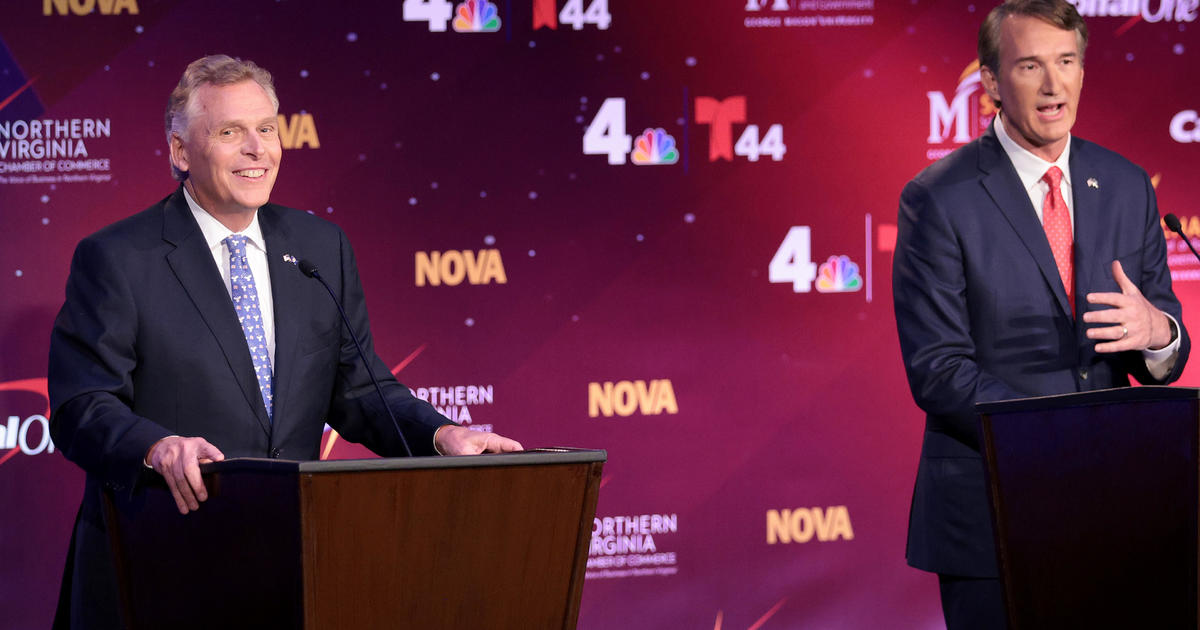
All eyes on Virginia – What’s at stake as the race for Governor goes into overdrive
Virginians are already voting to elect a new governor – and as political junkies, pundits and media across America know, this race could paint a picture of what’s to come in next year’s midterm elections and even as far away as 2024. Stephen Farnsworth, a political science professor at University of Mary Washington, said Mr. Biden's ability to sell his agenda will be "significantly deteriorated" if Republicans win the governor's mansion in Virginia. "If a Biden-like message offered by McAuliffe doesn't succeed in purple Virginia, a lot of Democrats around the country will wonder if it makes more sense to chart a more independent course," he said. CBS News – October 07 Dr. Stephen Farnsworth is a sought-after political commentator on presidential politics. He has been widely featured in national media, including The Washington Post, Reuters, The Chicago Tribune and MSNBC. If you are a reporter covering Virginia's gubernatorial race, simple click on his icon to arrange an interview today.



Friends or enemies? Is there any solving the ancient secret that is Chinese diplomacy?
When it comes to trade, investment and trillions of dollars of opportunity for American companies – it would appear that China and the United States should be close-knit allies. However when it comes to military escalation, an emerging global bull and national security – China is also a country that the U.S. government is very concerned about. NPR recently got in touch with UMW Professor of Political Science and International Affairs Elizabeth Larus to lend her expertise when it comes to the politics of China. Elizabeth Larus, who teaches Chinese studies at the University of Mary Washington in Virginia, says any economic "de-coupling" between the U.S. and China will be very difficult. "You can't just say you're going to pick up your factory and move all your resources and have a consistent, reliable energy source and the shipping port to get your stuff out at a decent price, and the logistics. China has nailed that down," said Larus, the author of Politics and Society in Contemporary China. China's President Xi Jinping uses this as leverage, she noted. "One of the goals of this Xi Jinping regime is to make the world really reliant on China for its supply chain, but not to have China reliant on the rest of the world," she added. "So that makes it difficult for the businesses." Is there a way out of this downward spiral? "I do not see a de-escalation anytime soon," she said. October 08 - NPR There will be no easy or immediate solution to the hot-and-cold relationship between the United States and China. But if you are covering this ongoing story – then let our experts help with your questions and coverage. Dr. Elizabeth Larus is an expert in the politics of China. She is available to speak to media, simply click on her icon to arrange an interview today.
