
Experts Matter. Find Yours.
Connect for media, speaking, professional opportunities & more.

Is Asia a powder keg ready to blow?
This week has seen rising tensions across Asia with key players facing off on what looks to be a dramatic rise in tensions with the potential for action. First off … Korea, where early Tuesday the first salvo was thrown: North Korea has blown up a joint liaison office with the South near the North's border town of Kaesong. The move comes just hours after the North renewed threats of military action at the Korean border. The site was opened in 2018 to help the Koreas - officially in a state of war - to communicate. It had been empty since January due to Covid-19 restrictions. In a statement, South Korea warned it would "respond strongly" if the North "continues to worsen the situation". The destruction of the office, it said, "abandons the hopes of everyone who wanted the development of inter-Korean relations and peace settlement in the Korean Peninsula". "The government makes it clear that all responsibility of this situation lies in the North." June 16 - BBC And this incident occurred which saw gun fire traded between China and India for the first time in almost a half century: Three members of India’s armed forces have been killed in a “violent face-off” with Chinese soldiers on their disputed Himalayan border, the Indian army has said in a statement. The deaths are the first loss of life in the border area in at least 45 years, and come amid a renewed dispute between the two countries in recent weeks. Indian and Chinese soldiers, who often do not carry weapons in the area to avoid escalating conflicts, have brawled, detained each other and deployed forces and equipment in the western Himalayas in recent weeks. “During the de-escalation process under way in the Galwan Valley, a violent face-off took place yesterday [Monday] night with casualties on both sides,” the Indian army said in a statement on Tuesday afternoon Delhi-time. “The loss of lives on the Indian side includes an officer and two soldiers.” It said “senior military officials of the two sides are currently meeting at the venue to defuse the situation”. It was unclear whether shots had been fired or if the men were killed in hand-to-hand combat. Several Indian media reports cited defence sources claiming the fighting involved stones and clubs. The Chinese also military suffered casualties, according to a tweet by the editor-in-chief of China’s state-run Global Times newspaper. “Based on what I know, Chinese side also suffered casualties in the Galwan Valley physical clash,” Hu Xijin wrote. He did not give further details. June 16 - The Guardian The world seems on edge, and if you are a journalist covering these topics and you need the perspective and input of an expert who can help with your story – then let us help. Dr. Glen Duerr's research interests include comparative politics and international relations theory. Glen is an expert on this subject and is available to speak to media regarding this topic– simply click on his icon to arrange an interview.


Individuals With Intellectual and Developmental Disabilities More Likely to Contract COVID-19
Recent news coverage has indicated that individuals with intellectual and developmental disabilities (ID/DD) are more likely than those without ID/DD to contract COVID-19 and to die as a result of it. "Similar to other individuals with disability, those with ID/DD often have pre-existing health conditions that increase their risk," says Suzanne C. Smeltzer, EdD, RN, the Richard and Marianne Kreider Endowed Professor in Nursing for Vulnerable Populations at Villanova University's M. Louise Fitzpatrick College of Nursing. Some people with ID/DD live in group settings in which they come in contact with others who may be infected with COVID-19. The frequent turnover of personal assistants and contact of persons with ID/DD with multiple personal assistants may increase the risk of COVID-19 in part because of their exposure to multiple potential carriers and the need for many of their personal assistants to use public transportation. Dr. Smeltzer says, "There is also concern in the disability community, among family members of individuals with disability and among disability advocates that those with these disabilities will be viewed as less deserving of more aggressive therapies, such as ventilators. The quality of life of persons with ID/DD may be considered by others as low, even though quality of life can only be judged by the people themselves." Initial limitations put in place in many health care institutions included the exclusion of family members and other support persons because of risk for COVID-19 infection. However, a groundswell of advocacy resulted in changes in this policy because individuals with ID/DD hospitalized during the COVID-19 pandemic were being deprived of essential support. "These support persons are needed to help those with ID/DD understand what was happening in the hectic health care settings and to help with communication and decision making," says Dr. Smeltzer. "Individuals with ID/DD need the same care as others and must receive explanations about their care and must be allowed to participate in making decisions about their care."


Whistle stops or Zoom chats – What will a campaign for the 2020 election look like?
The race for 2020 is on. President Donald Trump has already scheduled his first rally in the very red-leaning Oklahoma whereas Joe Biden has been conducting digital town-halls and online events in his effort to reach voters. Campaigning for president is a billion-dollar ordeal. It usually means months and months on the road; a different message being brought to a different audience and usually in a different state each night from August until November. For President Trump, it seems he’s charging, head down – despite what many critics and officials have to say. Yet Trump has continued to travel — even to states that still have restrictions — and announced this week that he’ll resume his signature campaign rallies beginning next Friday in Tulsa, Oklahoma. The state, which was among the earliest to begin loosening coronavirus restrictions, has a relatively low rate of infection but has seen cases rising. “They’ve done a great job with COVID, as you know, the state of Oklahoma,” Trump said Wednesday. Campaign officials chose the location knowing Republican Gov. Kevin Stitt would raise no objections. Stitt’s most recent reopening phase places no limits on the size of group gatherings. The campaign hopes the location will all but guarantee a large crowd, since Oklahoma is one of the most Republican states in the nation and Trump has never held a rally there as president. Still, the reality could not be completely ignored. “By clicking register below, you are acknowledging that an inherent risk of exposure to COVID-19 exists in any public place where people are present,” Trump’s campaign advised those signing up for the rally. “By attending the Rally, you and any guests voluntarily assume all risks related to exposure to COVID-19 and agree not to hold Donald J. Trump for President, Inc.” liable for illness or injury. Trump is also planning events in Arizona and Florida — states where cases are on the upswing. In Arizona, hospitals have been told to prepare for the worst as hospitalizations have surged. Trump this month decided that he would no longer hold the marquee event of the Republican National Convention —- his acceptance speech — in North Carolina after the state refused to guarantee that he could fill an arena to capacity with maskless supporters. It’s being moved to Jacksonville, Florida. June 12 – Associated Press But as the Trump campaign seems to be sticking to the old school playbook – what will the Democrats do? Can campaigning on-line be effective? Do voters really need to see a person and shake a hand to make a decision who to vote for? Is it better to be safe or sorry when there is so much at stake? If you are covering – then let our experts help with your questions and stories. Mark Caleb Smith is the Director of the Center for Political Studies at Cedarville University. Mark is available to speak with media regarding the DNC Primary, running mates and the upcoming election. Simply click on his icon to arrange an interview.


CAA Insurance Company has developed a list of 10 questions that customers can ask their insurance companies to make sure they are covering all the bases when it comes to finding savings while staying protected. “As of right now, much of the relief provided by insurance companies during the COVID-19 pandemic will soon expire, and customers will be looking for ways to continue to save since many cars are still sitting in the driveway,” said Elliott Silverstein, director, government relations, CAA Insurance. “We felt it was important to empower people with the information they need to continue to advocate for lower premiums for the months ahead.” In a recent survey conducted in late April by CAA South Central Ontario, only one out of five CAA members surveyed were aware that their insurance company had provided relief during COVID-19. The most preferred action to lower auto insurance premium was reviewing their policy with an agent/broker to ensure coverage and costs meet individual needs. Based on this data, CAA Insurance wanted to make sure that people are asking the right questions. Customers are encouraged to call their agent or broker and review the following list of questions to make sure they are receiving all the potential savings available. What savings relief payments or refunds do you have for me during the pandemic? Are there coverages that I can reduce or put on hold while I’m not driving? Can we do a review to see if I can save more on my policy? Will increasing my deductible provide me cost savings? Do you have an insurance policy where I would only pay for insurance while I am driving, for example, pay-as-you-go? When does my policy renew and is there a penalty if I cancel my policy mid-term to save money with another insurance company? What can I do if I can’t make my insurance payments this month? Will changing my coverage from commuting to pleasure help me save money? Are there any other ongoing discounts you offer that I might qualify for? What can I do to keep my rates low after the pandemic?



Protests and politics – let our expert explain how one influences the other
The protests that have been occurring across most of America have seen politically charged language, action, and reaction. Calls for change have been made, and promises have followed by those seeking to attain office or remain in office once the dust has settled and America goes to the polls in the fall. In a recent essay, former President Barack Obama touched on how those protesting can translate emotions into action. “Throughout American history, it’s often only been in response to protests and civil disobedience that the political system has even paid attention to marginalized communities,” said Obama. ”Eventually, aspirations have to be translated into specific laws and institutional practices — and in a democracy, that only happens when we elect government officials who are responsive to our demands.” Social movement expert and Augusta University Sociology Professor Dr. Todd Powell-Williams says protest movements have a significant impact on politics. His research shows societal change not only happens as a result of the crowd but also because the protests get people politically activated. “From the Boston Tea Party to the protests of the Civil Rights Movement, protests have had some degree of success in changing the course of history,” said Powell-Williams. “The recent protests against racial injustice are no different and I’m sure it will influence the outcomes of upcoming elections.” If you are a journalist looking to cover this topic, then let our expert help with your questions and coverage today. Dr. Todd Powell-Williams is an expert in social movements, social control, religion, police science and symbolic interactionism. He is available to speak with media regarding this topic — simply click on his name to arrange an interview. Also, check out the Augusta University Expert Center to view a complete list of our experts.


What will the extradition of Meng Wanzhou mean for relations between Canada, China, and the U.S.?
There is the rule of law, and there’s politics – but what happens when you are a country like Canada stuck in the middle of an ugly legal battle between China and America? This Monday, in Vancouver – a hearing is underway that will see one of the world’s titans victorious and the other, probably quite angry. Legal arguments at the B.C. Supreme Court in the extradition case of Huawei executive Meng Wanzhou may stretch into next year. Crown lawyer Robert Frater told the court Wednesday that lawyers for both sides will propose a new schedule later this month that would bring the hearings to a close in early 2021 at the latest, instead of this fall. The Unites States wants Canada to extradite Meng over allegations she misrepresented the company’s relationship with Skycom Tech Co., putting HSBC at risk of violating U.S. sanction against Iran, a charge both she and Huawei deny. Associate Chief Justice Heather Holmes dismissed the first phase of arguments last week by Meng’s lawyers who claimed the case should be thrown out because the U.S. allegations against her wouldn’t be a crime in Canada. Global News - June 03 It has been a long and drawn out process and will likely stretch into this year, and odds are patience is wearing thin. Can any of the countries expect retaliation and what would that look like? Is the United State right seeking extradition of this official? Will a change at the Whitehouse see this effort dropped? And what are the underlying issues at play that may be attributing to this drama? If you are a journalist covering this topic – then let our experts help. Dr. Glen Duerr's research interests include comparative politics and international relations theory. Glen is an expert on this subject and is available to speak to media regarding this topic– simply click on his icon to arrange an interview.
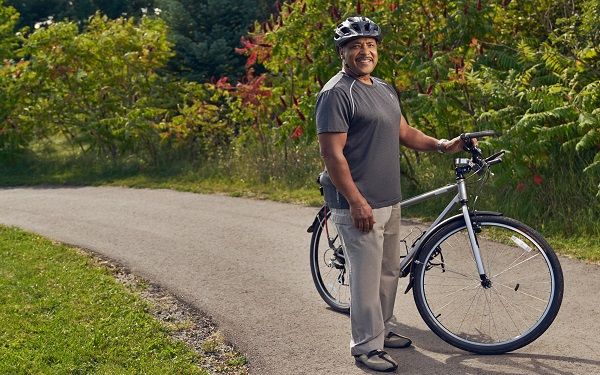
MEDIA RELEASE: Watch for Bikes: Top nine tips for cycling safety success
The summer months are fast approaching and with more cyclists and drivers expected to re-emerge on the roads, CAA South Central Ontario (SCO) is encouraging motorists to keep the safety of cyclists in mind when sharing the road. “Cycling is an excellent way to stay active during the pandemic and many more are picking up the activity, but as the province works towards reopening, we need to stay vigilant for everyone’s safety,” says Teresa Di Felice, AVP of government and community relations at CAA SCO. All drivers and cyclists are advised to follow public health guidelines, be predictable, be patient, communicate their intentions with signals, regularly check blind spots, and turn on their lights during dawn, dark and dusk. “In Ontario, there are tough penalties for those who do not follow the rules of the road, yet many remain unaware of what these rules are. Whether you’re on two wheels or four, get to know the following rules and best practices,”adds Di Felice. CAA is also reminding all motorists of these important rules of the road: Be aware. Do not use headphones or mobile devices while driving and pay attention. Yield to cyclists. Motorists should not be driving in a bike lane unless making a right turn. Watch for the approaching cyclists and never speed up and cut off a cyclist when making a right turn Keep a safe distance. Drivers must keep at least a one metre distance from other cyclists. If it is not possible, safely change lanes to pass. The penalty for not doing so is a $110 fine. Practice the Dutch Reach. Avoid “dooring” cyclists by doing the Dutch Reach. CAA launched a new Dutch Reach video for users to practice as more people out on their bikes. Some cycling-specific safety tips: Ride with traffic. Riding against traffic flow is dangerous, illegal and a leading cause of car-bike collisions. Protect yourself. Drivers, use your seat belts. Cyclists, wear your helmets. Be visible. Use reflectors and lights in dark and overcast conditions. It’s the law. Be predictable. Obey traffic signs and be clear with your intentions with other drivers. Under Ontario’s Highway Traffice Act (HTA), a bicycle is considered a vehicle, just like car or truck and must follow the same rules of the road. Ride close to home. As cyclists start to use their bikes for the first time in awhile, remember to stay close to home as you are starting out. Put your cycling safety knowledge to the test with CAA’s new cycling safety quiz. For all other cycling information, visit caasco.com/cycling. If you run into a problem that cannot be fixed on the spot, CAA Bike Assist will transport you and your bicycle to wherever you need to go. It's available as part of your membership 24 hours a day, 7 days a week, 365 days a year.

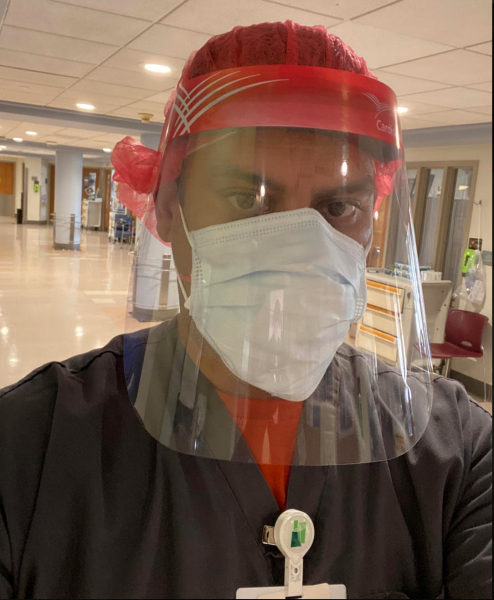
When the first cases of the novel coronavirus arrived in Chatham County, Georgia, Rafael Agosto, who has been a respiratory therapist at St. Joseph’s/Candler Hospital in Savannah for 17 years, had to recalibrate his approach to lung care. “Initially, it was kind of wild because we didn’t know what to expect and how to manage any of these patients,” said Agosto. “What are we looking for, and how do we treat this?” The primary role of a respiratory therapist is to assist patients who have trouble breathing by administering oxygen, managing ventilators and measuring lung function, among other methods. COVID-19 symptoms include fatigue, fever, cough and shortness of breath, and at the onset, Agosto and his colleagues raced to stabilize patients who tested positive for the precarious disease. “We were trying to keep them oxygenated,” he said. “It was sort of like pneumonia, but we wouldn’t treat it like a normal pneumonia because it’s like a deadly pneumonia. Patients were declining very fast so you didn’t have time like you normally would with other patients. And they were of all ages. That’s what was so scary.” While grappling with patient care, Agosto and his co-workers were also dealing with fear for their own safety with exposure to the virus in such close proximity. St. Joseph’s/Candler, Agosto’s employer since he graduated with a B.S. in respiratory care from Georgia Southern University’s Armstrong Campus in 2003, made it a priority to outfit the health care workers with proper personal protection equipment (PPE), Agosto said. “That was scary but they made sure we had what we needed,” he explained. “Safety was the number one key. So the proper PPE, it was everything. We had all of it. A face shield, goggles, scrub cap and masks. They were not comfortable at all. At least here when I wore them I had downtime, but in Boston, holy moly, my face was bruised.” Agosto registered for a four-week rotation with a crisis nurse staffing company that placed him at Good Samaritan Medical Center in Brockton, Massachusetts, a suburb of Boston. COVID-19-related deaths in Massachusetts were outpaced only by New York and California, and Brockton was the second hardest-hit community in the state. “The reason I went was the opportunity to help patients, number one, and to learn how they were managing their ventilator patients there so it could help here,” he explained. On April 19, Agosto reported to the facility, suited up for his first 12-hour shift. “I was in complete shock when I got in there,” Agosto said. “The ICU was full. Every single floor was possible for COVID.” The hospital averaged 80 to 90 cases throughout his stay, and the intensive care unit remained full. Days were hectic and taxing; lunch was an afterthought. His focus was on keeping patients off of ventilators, as global reports show that more than half of ventilated coronavirus patients don’t survive. Yet, “it started becoming hard to get them off ventilators,” and his group often didn’t have a choice but to put patients on 100% oxygen. Stress didn’t let up, but Agosto found moments of solace in interactions with patients. “I would walk into patients’ rooms and they all kept telling me the same thing — they’re scared,” he said. “Because they don’t know anything. It’s like a ghost town because the nurses are running around. Patients felt they weren’t being seen much.” In response, Agosto offered his undivided attention. “That’s one thing that made me feel really good,” Agosto continued. “Just to sit there and talk with them for a few minutes. Or just listening to them. That’s what we’re here for, and they were appreciative.” Agosto returned to Savannah healthy and with a new oxygen delivery device to share with his co-workers at St. Joseph’s/Candler. His manager ordered the devices to serve local patients. “The most important thing I took out of this is that it’s serious, and people are doing everything they can,” Agosto said. “They’re putting their lives in jeopardy for the patients, and I’m glad I had the opportunity to do that.” The accomplishment of his goals in a time of crisis and his continued dedication as a respiratory therapist leave Agosto fulfilled. “I didn’t get sick,” he said. “I helped as much as I possibly could. I did what I wanted to achieve. I’m so happy and blessed because I still love my job.” If you’re a journalist covering COVID-19 and how Georgia Southern University is helping mitigate the spread of this virus – then let us help. Barry Joyner, Ph.D., is the dean of Georgia Southern University’s Waters College of Health Professions - simply click on his icon to arrange an interview today.


Orion Travel Insurance, a CAA-owned company, is now the first travel insurer to offer in-province Virtual Emergency Medical Assistance, to provide easier access to emergency medical assistance while on the road. Orion Travel Insurance is enhancing its Multi-Trip Annual Plans and Multi-Trip Annual Vacation Package Plans with Virtual Emergency Medical Assistance that can be used while travellers are in their home province. “We felt it was important to add Virtual Emergency Medical Assistance to in-province travel, to help travellers preserve as much of their vacation as possible if faced with a medical emergency,” said Kellee Irwin, vice president, Orion Travel Insurance. “As COVID related restrictions begin to ease, we anticipate more people will be staying closer to home and choosing travel options within their home province. This will provide additional peace of mind to those who venture out.” Virtual Emergency Medical Assistance is already included as part of Orion’s out-of-province emergency medical coverage and will now extend to travellers within province. The new service is free of charge and is automatically embedded into Multi-Trip Annual Plans and Multi-Trip Annual Vacation Package Plans starting June 8. “Travellers have benefited from Virtual Emergency Medical Assistance while travelling abroad and between provinces for many years, but this same convenience has not been available for in-province travel,” continued Irwin. “Travel restrictions during the COVID-19 pandemic have highlighted this gap that has been previously overlooked by travel insurers. We are happy to respond and give travellers this added protection.” Existing and new annual plans will include up to four virtual visits through CAA Assistance that will be provided by licensed doctors within Canada. Travellers with Orion’s Annual Travel Plan can access this new feature by contacting CAA Assistance, as you normally would if you experienced a medical emergency while travelling. They will triage your situation and connect you with a Canadian doctor.

FAU College of Business Experts Available to Discuss May Unemployment Numbers
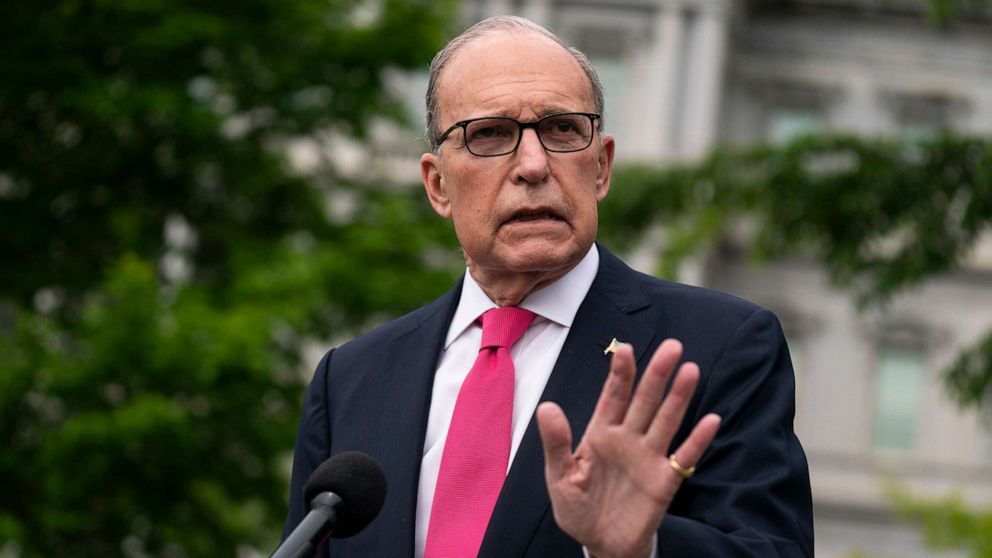
Professors in Florida Atlantic University’s College of Business are available to discuss U.S. unemployment figures that are scheduled to be released by the Bureau of Labor Statistics on Friday, June 5. The U.S. unemployment rate jumped to 14.7 percent in April in response to the coronavirus pandemic. It’s the highest level since the Great Depression, and analysts fear it could be years before the economy fully recovers. If you are a journalist covering this important story about employment and the economy of Florida and America – let our experts help. Rebel Cole, Ph.D., a Lynn Eminent Scholar Chaired Professor of Finance, has expertise in financial institutions, commercial banking and small business finance. He spent 10 years working in the Federal Reserve System. Cole has been interviewed by numerous national media outlets, such as The Wall Street Journal and The Palm Beach Post. William Luther, Ph.D., an assistant professor in FAU’s Economics Department, has expertise in economic growth, monetary policies, business cycles and cryptocurrencies. He has authored more than two dozen articles. Luther’s research has obtained media interest across the nation, including recent coverage by Politico and Florida Trend. Both Professor Cole and Luther are available to speak with media – simply click on either expert’s icon to arrange an interview today.


