Experts Matter. Find Yours.
Connect for media, speaking, professional opportunities & more.
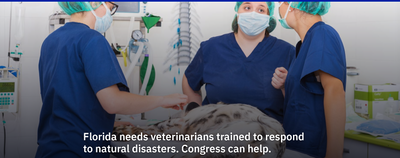
Florida needs veterinarians trained to respond to natural disasters. Congress can help.
When Hurricane Helene struck, we were on the frontlines in Florida’s Big Bend region, racing against time to support the Humane Society as they rescued animals displaced by the most powerful storm ever to hit this part of the state. Two weeks later, we were back in action, facing the devastating flooding from Hurricane Milton. These back-to-back disasters showcased the urgency and critical need for emergency-response veterinarians who can act fast to save lives. We lead one of the nation’s only three emergency veterinary response teams — the University of Florida Veterinary Emergency Treatment Service (UF VETS). Founded after the 2004 hurricane season and operating under the UF College of Veterinary Medicine, the UF VETS program hosts two distinct, yet complementary, branches: a medical response unit for disaster-affected animals and an animal technical rescue branch, which manages complex operations like overturned livestock trailers. Larry Garcia specializes in veterinary disaster preparedness and response, animal technical rescue/training and shelter medicine operations. View his profile here Our team is on call whenever disaster strikes, working alongside local and state veterinary organizations, animal rescues and law enforcement to save animals in crisis. But here’s the problem: Without a nationwide system for coordinating these efforts, it’s often chaotic, and animals suffer because of it. Now Congress has a golden opportunity to change that. As they return to Washington, they have the chance to make a game-changing impact by including funding in the final FY 2025 Homeland Security Appropriations bill to create a nationwide network of veterinary emergency teams. This funding could revolutionize how the U.S. handles animal care during national disasters — and it needs to happen, fast. Read more ... Looking to know more about this important topic or connect with Lawrence Garcia - simply click on his icon now to arrange an interview today.


Batty pathogens: Why do bats spread so many diseases?
Let’s face it — bats get a bad rap. Their links to disease outbreaks and their spooky association with vampires influence their notoriety. In reality, bats are truly remarkable. Bats support our agricultural industries as vital members of food webs. And, contrary to their portrayal in popular Halloween blockbusters, they are gentle and tidy creatures that groom themselves like cats. So why is it that when we hear of disease outbreaks, it always seems to be bats? According to University of Florida Emerging Pathogens Institute member Jim Wellehan, D.V.M., what sets bats apart isn’t black magic at all. But rather, it’s their long history of co-existing with viruses, the unique tradeoffs of flight and, perhaps most of all, a history of adapting to new pathogens. “(Infectious disease) has been the biggest factor in all of evolution,” said Wellehan, who is also a professor at the UF College of Veterinary Medicine. “People are always looking for an excuse (as to) why bats are magic, and the truth is bats have just been exposed to a lot of stuff and selected for those genes accordingly.” While humans are the most populous mammals on Earth, bats are a massive group of animals. Behind rodents, they represent the second-largest group of mammalian biodiversity, accounting for a whopping 20% of all mammal species. With over 1,400 species, it’s no surprise that pathogen diversity in bats is just as extensive and complex. Jim Wellehan's research focuses on comparative infectious disease, pathogen evolution, molecular diagnostics and pathogen discovery. View his profile here Bats, as we know them, have been on Earth for over 50 million years. This extensive period has given pathogens plenty of time to evolve alongside the winged mammals. Bats carry viruses like Ebola, Hendra virus, Nipah virus and SARS-CoV-2, which causes COVID-19. One factor that is important in this viral diversity is flight. Flight provides bats with many evolutionary advantages, such as predator evasion, access to new food sources and the ability to exploit diverse habitats. Flight also dramatically increases the chance of rapid pathogen transmission, as they can travel long distances and past many geographic barriers. Many species are highly social, which increases transmission rates as they live in close proximity and groom one another. “When I first learned about Darwin and evolution, ‘survival of the fittest,’ I assumed, meant ‘smartest and fastest and strongest,’ but if you look at our genomes, turns out that's wrong,” said Wellehan. “The genes that are selected for are mostly immune-related. The most important thing is to have enough genetic diversity in your population so that someone has immunity genes that are effective against the next pathogen that doesn't even exist yet. With their increased mixing and contact rates, bats have done this more often than most animals.” Generally, pathogens are most likely to cause disease when they first infect a new host species, as the susceptible animals have not yet developed the necessary defenses. Pathogens, along with their hosts, have no choice but to evolve to survive. With such a wide variety of species, it is not surprising that bats also carry a large proportion of mammal-associated viruses. This is not to say that bats are immune to all pathogens. As the most rapidly evolving factor in life, infectious disease is an incredibly dynamic part of medicine. Bats can get sick from lyssaviruses, including rabies. Additionally, white nose disease, a fungal infection that targets hibernating bats, has been a growing concern in the United States for the past decade. Though bat pathogens are a significant concern, habitat disturbance plays a larger role in bat population pathogen emergence, ultimately affecting humans as the dominoes fall. “Pathogen transmission to humans and conservation efforts go hand in hand,” Wellehan said. “When populations get under stress, that's when ecological balances get shifted, and zoonotic jumps occur. ... It turns out that if we think of ourselves as something separate from nature, it doesn't work so well.” So, while bats may embody the spirit of Halloween, their “magic” lies in evolution and resilience, shaped by millions of years of flying in the face of viruses, not spooky legends. Looking to know more? We can help. Jim Wellehan is available to speak with reporters about bats - simply click on his icon now to arrange an interview today.

Adam Frank: New Peer-reviewed Studies Change the Conversation on UFOs
For decades, talk of UFOs has thrived on fuzzy photos and personal anecdotes—never the kind of hard data scientists can actually test. But new peer-reviewed studies have changed the conversation, says Adam Frank, a University of Rochester astrophysicist who studies life in the universe and the nature of scientific discovery. Two recent papers, published in reputable astronomy journals, claim to have found evidence of “non-terrestrial artifacts” in astronomical photographs from the 1950s — objects that appear to be orbiting Earth before the Space Age began. “That’s an extraordinary claim,” Frank says, “and, as Carl Sagan famously said, 'Extraordinary claims require extraordinary proof.' “The good news is that, finally, there’s something associated with UFOs that science can work with.” Led by astronomer Beatriz Villarroel and her VASCO project (Vanishing and Appearing Sources during a Century of Observations), the studies passed the first test of scientific credibility: rigorous peer review. Now, Frank says, comes the harder part — the “call-and-response” that defines real science. “Getting a paper published doesn’t make the claim right,” he explains. “It just means the debate can begin. Other scientists will now dig into the data, test the methods, and try to tear the claim apart. That’s how science works.” Frank is a frequent on-air commentator for live interviews and segments in national media outlets and the author of The Little Book of Aliens (Harper Collins, 2023). He also regularly contributes to written publications, including The Washington Post, The Atlantic, The New York Times, and Scientific American. In 2021 he received the Carl Sagan Medal, which recognizes and honors outstanding communication by an active planetary scientist to the general public. It is awarded to scientists whose efforts have significantly contributed to a public understanding of, and enthusiasm for, planetary science. Connect with him by clicking on his profile.


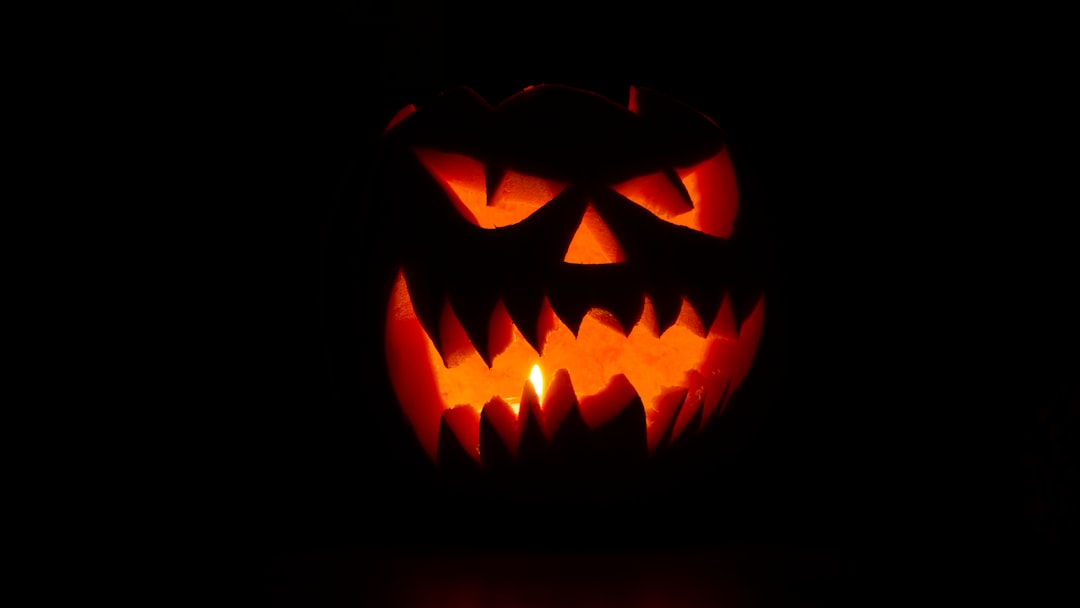
Lighting the Night: The History and Meaning of the Jack-o’-Lantern
No Halloween is complete without the warm flicker of a Jack-o’-Lantern glowing from porches and windowsills. But long before it became a symbol of trick-or-treating and fall décor, the carved pumpkin had deep roots in folklore, superstition, and the immigrant experience that shaped North American culture. From Folklore to Flame The story begins in Ireland, where early Jack-o’-Lanterns were not pumpkins at all, but turnips and beets. The tradition sprang from an old Irish folktale about “Stingy Jack,” a clever but dishonest man who tricked the Devil and was doomed to wander the Earth with only a burning coal inside a hollowed-out turnip to light his way. People began carving their own “Jack’s lanterns” to ward off wandering spirits and evil forces during Samhain, the Celtic festival marking the end of the harvest and the beginning of winter. When Irish and Scottish immigrants brought this tradition to North America in the 19th century, they discovered that the native pumpkin—larger, softer, and easier to carve—was the perfect replacement. The transformation from turnip to pumpkin turned a small superstition into a dazzling new folk art. The American Reinvention By the mid-1800s, Jack-o’-Lanterns had become a staple of Halloween celebrations in the United States. Newspapers of the era described “pumpkin lanterns” lighting up autumn gatherings, and by the early 20th century, the smiling (and sometimes sinister) carved pumpkin was the defining symbol of the holiday. Over time, the tradition evolved from scaring away spirits to creating community and creativity. Towns began holding carving contests, families passed down patterns and designs, and pumpkin patches and Halloween festivals turned the once-humble lantern into an essential piece of American seasonal culture. A Symbol Beyond Scares Today, Jack-o’-Lanterns carry layered meanings: they celebrate harvest, creativity, and folklore while keeping a touch of the supernatural alive. In many ways, they embody the blend of ancient myth and modern celebration that defines Halloween itself—where fear meets fun, and the flicker of a candle becomes both decoration and tradition. Whether whimsical or eerie, the glowing face of a Jack-o’-Lantern continues to connect generations to an age-old story about light overcoming darkness—a reminder that even the spookiest traditions began with a spark of human imagination. Connect with our experts about the folklore, cultural history, and enduring legacy of the Jack-o’-Lantern. Check out our experts here : www.expertfile.com

Gig worker protection law boosted overall earnings but dropped hourly pay
A 2020 California law designed to protect gig workers by classifying them as regular employees, rather than contractors, ended up increasing their earnings by about 8%. However, their hourly pay dropped by 1.6% as companies offset the higher costs of benefits. Workers’ increased earnings came from working longer hours in order to qualify for and reap benefits like employer tax sharing. These findings come from a study led by Liangfei Qiu, Ph.D., a professor in the University of Florida’s Warrington College of Business, which examined nearly 400,000 monthly work records from about 41,000 freelancers on Upwork, one of the world’s largest online labor platforms. That trove of data let the researchers ask what actually happened when the law, known as AB5, took effect. Qiu’s is the first study to reveal how AB5 affected workers’ income and comes as other states consider passing similar laws. Liangfei Qiu is an expert in social technology, including social media and social networks, as well as artificial intelligence. View his profile here “It highlights some unintended consequences,” Qiu said. “If the labor market competition is similar to what we observe in California, then you might get lower hourly rates for gig economy workers and longer working hours.” “But it’s nuanced. In surveys, gig workers said they were willing to work longer hours because they had better benefits. The outcome depends on how involved someone is in the gig economy,” Qiu added. AB5 was designed to correct what labor advocates saw as widespread misclassification of a company’s essential employees as independent contractors, who don’t typically earn any benefits. This classification gives companies a cheaper workforce, and provides maximum flexibility for workers, but doesn’t allow workers to earn any sick leave, vacation or health insurance. Self-employed contractors must also pay the full share of Social Security and Medicare taxes, which works out to about 15% of gross income. Gig economy companies fought back against the AB5 regulations. A company-sponsored ballot referendum, Prop 22, exempted well-known giants like Uber, Lyft and DoorDash from the law later in 2020. And the California legislature provided further carve outs for professions like doctors, lawyers and photographers. The law still applies to contractors used by delivery companies like FedEx, UPS or Amazon, home-service companies like Angi or Rover as well as online freelance platforms like TaskRabbit. The study is forthcoming in the journal Information Systems Research. Qiu collaborated on the analysis with researchers at Baylor University, Santa Clara University and Stony Brook University. Looking to know more about the 'gig economy' and how it impacts the workforce? Connect with Liangfei Qiu today and click is icon now to arrange a time to talk.
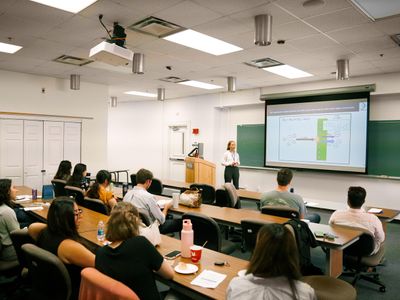
Cesar Dominguez, a fourth-year chemistry and physics double major at the University of Florida, may be on track to finding alternatives to plastic that could benefit the planet. His impactful work has helped him earn the title of Michelin Science Scholar, and he is now one of a select group of undergraduates connecting scientific research to real-world challenges at Michelin – a global leader in materials science and sustainability. “There’s always this misconception that academic research is completely separate from industry research,” Dominguez said. “Michelin has shown me it’s all one science. You can push discovery forward in both spaces.” Dominguez embarked this fall on a two-semester program of faculty-mentored research, with a $2,000 student stipend and $500 in support funding for his faculty mentor, UF chemistry professor Austin Evans, Ph.D. The program also invites students to present their findings at a spring symposium and tour a Michelin facility in South Carolina. Austin Evans' research aims to control macromolecular structure at all length scales concurrently and deploy materials in the real world. View his profile here Dominguez is furthering his study of how to process ultra-high molecular weight polymers – materials he compares to the scale of “an entire city” rather than a football stadium, through powerful electric fields. By adjusting electrospinning techniques, Dominguez and his team examine how polymers form fibers with different thermal and mechanical properties. These findings could lead to stronger, more sustainable materials, including alternatives to plastics like the major pollutant polyethylene. “All my life, I’ve been told chemistry and physics are separate fields,” Dominguez said. “But I’ve learned they come together in really elegant ways. Being able to unite concepts from both gives me a deeper understanding of how things work.” Dominguez attributes much of his development as a researcher to his work with Evans, who he describes as incredibly supportive, always accessible, and consistently encouraging him to focus on precision and detail. Dominguez also sees UF’s resources as pivotal to his journey. “I feel like what makes the research I'm doing really exciting is the fact that this can only be done at the University of Florida, because we're working with materials that have been developed by scientists here, using equipment that we're very fortunate to have access to here,” Dominguez said. As he prepares to apply to graduate school in analytical chemistry, Dominguez said the Michelin program has expanded his view of what is possible after his degree. “I used to think research only happened in academia,” he said. “Now I know industry is just as vital. It’s opened my mind to different paths for my future.” For now, he offers one piece of advice to other students considering the program: “Do it for the love of the game. If you put passion into your work, everything else will follow.” For more information on the Michelin Science Scholars Program, click here: To learn more about the research happening at UF and to connect with Austin Evans - simply click his icon now to arrange an interview today.


Experts in the Media: Hurricane Season Isn’t Shutdown. A Busy Week Looms For Meteorologists
When you think hurricane season is winding down, think again. Just as many people begin to relax after a stretch of calm weather, the atmosphere often has other plans. Meteorologists are warning that even as we head deeper into October, the tropics are far from done stirring. The “off-season,” as Dr. Marshall Shepherd puts it, can be one of the most deceptive times of year—when attention fades but nature remains restless. Dr. J. Marshall Shepherd is a leading international weather-climate expert and is the Georgia Athletic Association Distinguished Professor of Geography and Atmospheric Sciences at the University of Georgia. Dr. Shepherd was the 2013 President of American Meteorological Society (AMS), the nation’s largest and oldest professional/science society in the atmospheric and related sciences. View his profile here In his recent Forbes article, Shepherd, a leading atmospheric scientist and former president of the American Meteorological Society, reminds readers that the Atlantic hurricane season doesn’t have an on-off switch. While it may appear to be slowing, meteorologists are bracing for a busy week ahead as multiple weather systems continue to develop. He explains that this year’s pattern demonstrates how tropical activity often ebbs and flows, and a lull in storms doesn’t mean the threat has passed. Shepherd highlights how experts are closely watching sea-surface temperatures, wind shear, and atmospheric moisture—factors that can quickly transform calm seas into cyclone breeding grounds. Despite the calendar inching toward November, he warns that conditions remain ripe for sudden storm formation. Ultimately, Shepherd’s message is one of preparedness and respect for nature’s unpredictability. Even when the radar looks clear, the tropics can still surprise us. His call to stay alert is a timely reminder that meteorology is not about predicting the past—it’s about anticipating the next twist in the weather’s unfolding story. Dr. J. Marshall Shepherd is a leading international weather-climate expert and is the Georgia Athletic Association Distinguished Professor of Geography and Atmospheric Sciences at the University of Georgia. He's available to speak with the media about this topic - simply click on his icon now to arrange an interview today.

Treat AI as a Teammate—or Risk Falling Behind
AI is shifting from back-office tool to frontline collaborator, "We are witnessing a key inflection point in how organizations work," says LSU professor Andrew Schwarz. He argues the business case is now clear: AI boosts the quality of ideas and expands who gets to contribute, acting less like software and more like a creative partner. He adds that organizations that embed AI "as a teammate will lead," while those that treat it "as simply a cost-saver risk falling behind." That shift, he says, reaches deep into org charts and workflows. Schwarz notes that AI can flatten expertise silos, help less-experienced employees operate closer to expert levels, and spark cross-functional thinking that blends technical and commercial insight. Leaders, he said, must "rethink structures, roles and workflows — placing AI at the heart of how teams collaborate, not simply at the edge." Technology deployment alone won't deliver those gains, "it requires cultural and capability investment," Schwarz said. The priority, in his view, is to "build collaborative ecosystems where human talent and AI capabilities co-create value," invest early to make the "human-plus-AI" model the default, and tap into academic partnerships: "those companies that partner with universities, such as LSU, will have an even greater advantage." Schwarz also urges guardrails as adoption accelerates. He points to the need for transparency, accountability, fairness, and continuous skill development so the transition "enhances human agency, fosters inclusion, and delivers sustainable value for all stakeholders." His bottom line is urgent and straightforward: "When AI joins the team, better ideas truly surface. Let's prepare our organizations to make that transition, and lead from the front."



NBA stars' leg injuries loom over the new season. What's the prognosis?
Over the past year, fans in multiple NBA cities watched in horror as their stars went down with major lower leg injuries. And even though players like Tyrese Haliburton (ankle), Jayson Tatum (ankle) and Kyrie Irving (knee) will be back at some point, it’s quite possible they will never return to their prior peak, says the University of Delaware’s Dr. Karin Gravare Silbernagel. Dr. Silbernagel, an associate professor of physical therapy at UD, studies tendon injuries in the ankle and knee in elite athletes, especially Achilles ruptures and ankle function. She was quoted in an ESPN story on this topic at the end of last season and can specifically address the stars' injuries and what it might mean for their careers. Her research shows that even after successful surgery, many players return to the court but not many among them return to peak explosiveness or durability. Dr. Silbernagel, whose research on ankle and knee injuries dates back to the early 2000s, can also talk about the larger pattern of lower leg injuries reshaping the NBA. She consults with professional sports teams relating to tendon injuries and is a consultant to the NFL's Musculoskeletal Committee. To connect with Dr. Silbernagel directly and arrange an interview, visit her profile and click on the "contact" button. Interested reporters can also email MediaRelatons@udel.edu.


What the First U.S. Chikungunya Virus Case Means: LSU Expert Breaks It Down
"The main vector in the US, Aedes albopictus, is known to have been there so it isn’t terribly surprising that we’d eventually have a case. The fact that is was a local transmission case – meaning that a mosquito transmitted it to someone who had not traveled outside the area – is a bit concerning and points to a couple of things: We need more surveillance for these types of viruses; the fact that it got here means likely someone who had traveled brought it back from their vacation The surveillance infrastructure via the CDC and federal funding has been gutted – which of course is problematic when we have these sorts of introductions occurring. These types of mosquitoes go a little quiet in the fall/winter because it gets too cool for them to be as active as say the summertime. They’re lucky it’s in the fall and not at the start of summer, where the weather would be more conducive to MORE transmission. HOWEVER, as weather patterns change from a combination of climate change and urban development (which creates more heated areas), we’re going to see the times that these mosquitoes are more active becoming longer – which will again mean more opportunities for transmission. Of course, in Louisiana, these mosquitoes are active for a lot of the year. We have good mosquito control, but anyone who sits outside will tell you that doesn’t eliminate biting (though imagine if we didn’t have it) we need to stay vigilant and support the systems that protect us: mosquito abatement, federal and state surveillance, and the science and research that supports our ability to recognize and respond to outbreaks." Dr. Christofferson's recent research publications in this area: