
Experts Matter. Find Yours.
Connect for media, speaking, professional opportunities & more.

How authorship language helped catch a domestic terrorist – new podcast
In the latest episode of Writing Wrongs, hosts Professor Tim Grant and Dr Nicci MacLeod interview Dr Isobelle Clarke to unravel a case where forensic linguistics helped track down and convict a dangerous individual. Episode three, Imposters Tending to the Wild with Dr Isobelle Clarke, dives into the chilling case of Nikolaos Karvounakis, a self-proclaimed anarchist who planted a viable explosive device in Princes Street Gardens, Edinburgh, in 2018. Karvounakis, a Greek national, evaded capture for years, hiding behind online anonymity and extremist rhetoric. However, forensic linguists stepped in to analyse his anonymous blog posts, revealing patterns in his language that ultimately helped Police Scotland link him to the crime. The case not only demonstrates how linguistic evidence can be a powerful forensic tool but also raises crucial questions about the role of language analysis in modern terrorism investigations. On 11 January 2018, a suspicious cardboard box was discovered in a public seating area in Edinburgh’s Princes Street Gardens. After a controlled explosion, investigators determined the device could have caused serious harm had it detonated. With no immediate leads, the investigation stalled - until an anonymous blog post surfaced, claiming responsibility for the attack. The post, written in both English and Spanish, was linked to an eco-anarchist group called Individualists Tending to the Wild, a Mexican-based extremist organisation advocating violent action against technological progress. Crucially, the post included an image of the bomb’s interior, a detail only the perpetrator or law enforcement could have known. Police Scotland sought the expertise of Professor Tim Grant, who analysed the text, producing a linguistic profile that suggested the writer was neither a native English nor Spanish speaker - but rather someone influenced by another language entirely. Two years later, police identified Nikolaos Karvounakis as a suspect. Using comparative authorship analysis, Professor Tim Grant compared his online writings - including song lyrics from his rock band - to the manifesto. By dissecting word patterns, grammatical structures and stylistic quirks, he established that Karvounakis was the likely author. This evidence -alongside forensic meteorology, which linked photos of clouds in Karvounakis’ blog posts to the same weather conditions on the day of the crime - was used to secure a warrant and seize computers containing known writings by Karvounakis. To eliminate inevitable bias that would result from having worked the case for more than two years, Professor Grant invited Dr Isabelle Clarke onto the case as an independent forensic linguist. Using a version of the General Imposters Method, a technique similar to a police lineup but for language, Dr Clarke confirmed that the writing style in the blog post was the closest to Karvounakis’ known writings. Police Scotland put the evidence in the case, including the linguistic evidence, to Karvounakis, and secured a guilty plea. In February 2022, Nikolaos Karvounakis was sentenced to over eight years in prison under the UK’s Terrorism Act. Tim Grant, professor of forensic linguistics at Aston University, said: “The case highlights the growing importance of forensic linguistics in solving crimes, particularly in an age where digital anonymity combines with extremist ideologies. “It also highlights the how different types of language analysis can assist as a case moves through different stages of investigation.” Dr Nicci MacLeod, deputy director of the Aston Institute for Forensic Linguistics, said: “This episode offers listeners a behind-the-scenes look at the forensic methods that expose deception, identify threats and ultimately bring criminals to justice.” Dr Isobelle Clarke, a lecturer in security and protection science at Lancaster University and one of the first graduates from the campus-based MA Forensic Linguistics programme at Aston University, said: “It was great to be back at Aston University talking about the Karvounakis case for the Writing Wrongs podcast. “It’s an interesting case to highlight, as it shows how different types of language analysis can help with police investigations.” Writing Wrongs is available on Spotify, Apple Podcasts and all major streaming platforms. Listeners are encouraged to subscribe, share and engage with the hosts by submitting their forensic linguistics questions. Whether it’s about this case or broader forensic linguistic techniques, Professor Grant and Dr MacLeod welcome inquiries from listeners.


Best-selling author Kate Summerscale joins Writing Wrongs to explore true crime and justice
The true crime podcast Writing Wrongs continues its exploration of language and justice with a special bonus episode featuring best-selling author and historian Kate Summerscale. Kate is an award-winning historian, journalist and best-selling author known for her meticulous research into historical true crime cases. Her book The Suspicions of Mr. Whicher won the Samuel Johnson Prize for Non-Fiction and was adapted into a major ITV drama. Her latest book, The Peep Show: The Murders at 10 Rillington Place, revisits the infamous Christie case, shedding new light on the victims’ lives, the social conditions of post-war Britain and the power of the press in shaping public perceptions of crime. In this episode, hosts Professor Tim Grant and Dr Nicci MacLeod explore a fresh perspective on the Rillington Place murders, the wrongful execution of Timothy Evans and how forensic linguistics has helped uncover the truth in criminal cases. Following on from the first episode of the series, which examined the Timothy Evans case and the origins of forensic linguistics, this conversation with Kate Summerscale provides fresh historical insights into one of Britain’s most infamous miscarriages of justice. The episode revisits the horrifying crimes of John Christie, whose calculated murders led to one of the most infamous miscarriages of justice in British history. The wrongful conviction and execution of Timothy Evans cast a long shadow over the UK’s legal system and played a pivotal role in the eventual abolition of the death penalty. Through expert discussion, the episode examines how Evans’ case became a turning point for criminal justice reform. The conversation also looks at the role of the media in shaping crime narratives. Sensationalist reporting during the Rillington Place murders fuelled public perceptions, sometimes distorting the truth in favour of dramatic storytelling. The episode draws comparisons between 1950s tabloid journalism and today’s true crime media, examining how crime reporting has evolved - and the ethical challenges it still faces. A deeply unsettling aspect of this case is its gendered nature. The majority of John Christie's victims were vulnerable women, many facing financial and social instability. The episode delves into how structural inequalities, from the lack of legal abortion to economic dependence, made women more susceptible to predatory figures like Christie, a pattern that remains relevant in crime analysis today. Finally, the episode scrutinises government complicity in covering up a miscarriage of justice. The Brabin Inquiry, launched in the 1960s, sought to reexamine Evans’ conviction but delivered a highly controversial conclusion, failing to fully exonerate him. The discussion highlights how political interests and legal reputation management influenced the case’s outcome, leading to Evans’ eventual posthumous pardon - but not a full legal exoneration. Tim Grant, professor of forensic linguistics at Aston University, said: “It was wonderful to have Kate on Writing Wrongs. “Her work challenges the traditional true crime narrative, shifting focus from the murderer to the victims and the broader social structures that allow such crimes to happen. “Her insights in this episode provide a fresh and deeply researched perspective on a case that still haunts British legal history.” Writing Wrongs is available on Spotify, Apple Podcasts and all major streaming platforms. Listeners are encouraged to subscribe, share and engage with the hosts by submitting their forensic linguistics questions. Whether it’s about this case or broader forensic linguistic techniques, Professor Grant and Dr MacLeod welcome inquiries from listeners.

Can we separate our work and home memories, 'Severance' style?
The hit Apple TV show 'Severance' offers a tempting alternative to balancing work and home life by using neural implants to entirely split the memories. But according to Carnegie Mellon University neuroscientist Dr. Alison Barth, this work-life separation is somewhat possible even without an implant. In an interview, Dr. Barth explains: "We all experience some compartmentalization between our private and our work lives. Having a different location where you work and play makes that easier, but the cues for 'life' and 'work' can be as simple as time of day, or what your computer screen looks like." In addition, she says humans can "easily move in and out" of our work and personal worlds, and that there are many examples of people whose work and private lives are completely 'severed'. CMU neuroscientist Alison Barth shares her thoughts on the TV thriller Severance As far as the feasibility of technology to control our memories for us, Dr. Barth says: "I don't think that it is possible to program people so that they simply cannot access memories outside of a particular space and time." And she further warns of the dangers of such a separation: "The potential for abuse and lack of accountability are horrifying. In Severance, the office workers have little notion of what their work is. It would be hard to hold them accountable in a court of law. Severance is perfectly suited to corporate malfeasance," she explained. Watch Alison Barth's CMU Experts video below to learn more about her research seeking to understand how experience transforms the properties of neurons to encode memory.


ExpertSpotlight: History of Yemen and the Houthi Rebels
The history of Yemen and the rise of the Houthi rebels is essential to understanding one of the world’s most complex humanitarian and geopolitical crises. Once considered a crossroads of ancient trade, Yemen has in recent decades become a focal point of conflict, regional power struggles, and human rights challenges. The conflict involving the Houthi movement has had global ramifications—from maritime security and oil trade routes to civilian displacement and famine. This topic matters to the public because it highlights the intersection of war, diplomacy, and humanitarian need, while prompting critical questions about international responsibility, peace-building, and regional stability. Key story angles that may interest a broad audience include: The roots and rise of the Houthi movement: Tracing the group’s origins, ideology, and evolution into a key political and military force in Yemen. Regional power dynamics: Analyzing the involvement of Saudi Arabia, Iran, and other actors in fueling or resolving the conflict. The humanitarian crisis in Yemen: Investigating the scale of famine, disease outbreaks, displaced populations, and access to aid. The role of the international community: Exploring arms sales, ceasefire negotiations, and accountability in the context of international law. Maritime security and global trade: Understanding how conflict in Yemen affects Red Sea shipping routes and international energy markets. The future of peace and governance: Examining potential pathways to a political resolution and the reconstruction of a stable Yemeni state. Connect with an expert about Yemen and the Houthi rebels: To search our full list of experts visit www.expertfile.com


MEDIA RELEASE: Nominate now: the annual CAA Worst Roads campaign kicks off
The nomination portal for the annual CAA Worst Roads campaign is now open, and CAA South Central Ontario (CAA SCO) is giving Ontarians the opportunity to voice their concerns about the bad roads in their communities. “Our research shows that 85 per cent of Ontarians are concerned about the state of our roads,” says Teresa Di Felice, assistant vice president of government and community relations, CAA SCO. “The campaign has been a vital platform for Ontarians to nominate roads they believe need urgent attention. It allows Ontarians to drive positive change in their communities by amplifying their voices.” Survey Reveals High Cost of Vehicle Damage from Poor Roads According to a survey conducted by CAA SCO, nearly half of respondents have experienced vehicle damage because of poor roads. Eighty-one per cent pay out of pocket to repair their vehicle, only three per cent file a claim with their personal auto insurance, and nine per cent forego repairs altogether. Vehicle damage caused by potholes and poor road maintenance can range from $500 to over $2,000. The average repair by those surveyed cost $933, a significant $81 increase from 2024. “With the increasing cost of living, many people hold on to their cars for longer when damaged, the last thing they need is expensive repair bills on an already stretched household budget,” adds Di Felice. The survey also found that cracked pavement remains the most dominant road-related issue (88 per cent), followed by potholes (84 per cent) and congestion (81 per cent – up four per cent from 2024). One of the highest-climbing road-related issues Members reported is reduced or closed lanes, where 78 per cent of respondents agreed it is common in their region—up six per cent from last year. “The frustration from motorists is evident,” says Di Felice, “congestion continues to grow as one of the top road-related concerns for Ontarians, and the CAA Worst Roads campaign allows governments the insight into what repairs need to be prioritized for their communities.” More than half of respondents (64 per cent) also agreed that not enough is currently being done to maintain the roads in their area. Decision-Makers Respond to the Worst Roads Campaign “We know that the campaign works and that decision-makers are listening. Since the start of the campaign, we have seen budgets prioritized and road repairs moved up,” says Di Felice, “in the last four campaigns, we have seen ten roads receive attention because of their nomination in the CAA Worst Roads campaign.” Ontario’s top 10 list is verified by the Residential and Civil Construction Alliance of Ontario (RCCAO) and its members, including the Greater Toronto Sewer and Watermain Contractors Association (GTSWCA), Heavy Construction Association of Toronto (HCAT), and the Toronto and Area Road Builders Association (TARBA). Nominations for the Worst Roads campaign can be submitted online at www.caaworstroads.com from March 25 to April 18. Once the nominations are collected, CAA will reveal the top 10 worst roads in the province to the public. CAA conducted an online survey with 2,370 CAA SCO Members between January 6 to 14, 2025. Based on the sample size and the confidence level (95 per cent), the margin of error for this study was +/- 2 per cent.



Hundreds of nurses and their colleagues at ChristianaCare gathered in a conference room at Christiana Hospital and listened through a livestream across the organization’s campuses and practices for an announcement they’ve been anticipating for many months. “For your commitment to nursing excellence and quality care, we are thrilled to recognize ChristianaCare with its fourth consecutive Magnet designation,” said David Marshall, JD, DNP, RN, chair of the American Nurses Credentialing Center’s Commission on Magnet Recognition. “This accomplishment is a powerful testament to your dedication to the nurses who practice there, the entire health care team, and — most importantly — the patients you serve.” Shouts erupted, balloons and streamers floated up and, in the happy commotion, there was even a little cowbell. As the only four-time Magnet-designated health care organization in Delaware, ChristianaCare has achieved this global recognition — the highest honor in nursing practice — for continued dedication to excellence and innovation, high-quality patient care and experience, nurse engagement and work culture. “Magnet designation recognizes ChristianaCare nurses are simply the best!” said ChristianaCare President and CEO Janice E. Nevin, M.D., MPH. “A fourth Magnet designation is an incredible achievement and reflects the vital importance and commitment of our nurses as we serve together with love and excellence.” ChristianaCare has more than 3,000 nurses, and they make up the largest segment of ChristianaCare’s workforce. ChristianaCare is the largest nonprofit organization and private employer in the state of Delaware. This most recent designation for ChristianaCare includes Christiana Hospital, Wilmington Hospital, ChristianaCare HomeHealth and Community Care Services, through early 2029. What it means to be Magnet “Our fourth consecutive Magnet designation means that our nurses and all of our caregiver colleagues have upheld the ANCC’s very high standards in patient care since our first recognition in 2010,” said ChristianaCare Chief Nurse Executive Danielle Weber, DNP, RN. “That is a long time to bring your ‘A’ game every day — through 15 years of change, including a pandemic — and to sustain growth in professional practice, innovation and culture. Magnet recognition raises the bar for patient care and inspires every member of our team to achieve excellence every day.” The Magnet Recognition Program — administered by the American Nurses Credentialing Center, the largest and most prominent nurses credentialing organization in the world — identifies health care organizations that provide the very best in nursing care, exceptional nurse engagement and professionalism in nursing practice. The Magnet Recognition Program serves as the gold standard for nursing excellence and provides consumers with the ultimate benchmark for measuring quality of care. The ANCC Magnet Recognition Program® has conferred Magnet status to less than 10% of hospitals and health systems in the United States. There are 621 Magnet-designated health organizations internationally. ChristianaCare was the first in Delaware to achieve Magnet designation, in 2010. For nurses, Magnet Recognition means education and development through every career stage, which leads to greater autonomy at the bedside. For patients, it means the very best care, delivered by nurses who are supported to be the very best that they can be. While Magnet is a nursing-led initiative, the designation reflects the work of caregivers across the organization. Magnet redesignation itself is a rigorous process. Health care organizations must reapply for Magnet status every four years and demonstrate adherence to the Magnet concepts for nursing excellence and engagement and measurable improvements in patient care and quality. The ANCC commended ChristianaCare on these exemplars: Advocacy for and acquisition of organizational resources specific to nurses’ well-being. particularly through the Nursing Integrative Care Program. An innovative strategy to address the shortage of certified registered nurse anesthetists in Delaware through a partnership program between ChristianaCare and Wilmington University to launch the state’s first Nurse Anesthesiology program. Outstanding nursing research engagement and growth of the nursing research enterprise especially through the Nursing Research Fellowship in Robotics and Innovation.




New survey shows lack of public trust in Musk, DOGE
New data from the Center for Political Communication (CPC) at the University of Delaware shows many Americans have little trust in either Elon Musk or the Department of Government Efficiency (DOGE). In a nationally-representative sample of 1,600 adult Americans surveyed by YouGov between February 27 and March 5, 2025, CPC researchers asked how much trust respondents had in various people and institutions, including Elon Musk, the Department of Government Efficiency, and President Trump. Among the key findings: • 25% of Americans report having “a lot” or “a great deal” of trust in Elon Musk 26% report having “a lot” or “a great deal” of trust in Musk’s Department of Government Efficiency (DOGE). • 33% report having “a lot” or “a great deal” of trust in President Donald Trump. • About half of Republicans report “a lot” or “a great deal” of trust in either (compared to 70% of Republicans who report “a lot” or “a great deal” of trust in President Trump). • Among independent voters, only 11% report “a lot” or “a great deal” of trust in Musk and 13% in DOGE. “As constituents in Republican districts learn about and voice concerns about DOGE’s cuts to Veteran’s Affairs, The National Institutes of Health, National Parks, and the Federal Aviation Administration, it will be interesting to see how public trust in Musk and DOGE may be affected,” said Dr. Dannagal Young, Director of the Center for Political Communication and one of the authors of the survey. “Understanding public sentiment about these unique government entities is essential to help ensure that elected officials are responsive to voter concerns." Visit the CPC's website for full results of the survey. To connect with Young for an interview, visit her profile and click the contact button.


MEDIA RELEASE: Nominate now: the annual CAA Worst Roads campaign kicks off
The 14th annual CAA Worst Roads Campaign is live and CAA Manitoba wants citizens to voice their concerns and nominate the roads they want to see fixed. “Our research shows that 96 per cent of Manitobans are concerned about the state of our roads,” says Ewald Friesen, manager government relations at CAA Manitoba, “the CAA Worst Roads campaign gives Manitobans a voice in highlighting the roads they believe are in need of repair which provides a valuable snapshot to decision-makers.” A recent survey conducted by CAA Manitoba found that more than half of respondents have experienced vehicle damage because of poor roads. Eighty per cent paying out of pocket to repair them – up ten per cent from last year, only five per cent filing a claim with MPI - down 11 per cent from 2024. Eight per cent of Manitobans forwent repairs altogether. According to the survey, poor road conditions, especially potholes and sunken sewer grates, are causing significant vehicle damage and increasing out-of-pocket repair costs for drivers. “Many Manitobans are experiencing the effects of the rise in the cost of living, including having to delay vehicle repairs. This makes investing in our roads and infrastructure more crucial than ever,” says Friesen. “We understand that consumers are being cautious with their spending, and many choose to keep their cars longer instead of purchasing new ones and stretching an already strained family budget." The damage caused to a vehicle by hitting a pothole can cost anywhere from $300 to $6,000, depending on the make and model of the car. The survey found that almost half of respondents paid between $500 to $1,999 to repair their vehicle, with an average cost of $882. “CAA Worst Roads campaign is a platform that gives Manitobans an opportunity to speak up and helps the different levels of government understand what roads are pain points for their constituents,” says Friesen. “We know the campaign works because we see governments prioritize budgets and move up road repairs every year after appearing on the CAA Worst Roads list,” adds Friesen. “This includes last year’s winner, 18th Street in Brandon, where we saw a swift, coordinated response between the municipality and the province.” Manitobans can nominate any road for issues ranging from congestion, potholes, poor road signs and the timing of traffic lights to pedestrian and cycling safety. “Nearly 60 per cent of those who have ever participated in the campaign believe that nominating a road could result in the repair of it,” shares Friesen, “CAA Manitoba is calling on all road users to nominate the roads they believe need attention to help make our roads safer and show decision-makers what roadway improvements are important to Manitobans.” Nominations for the Worst Roads campaign can be submitted online at www.caaworstroads.com starting March 18 until April 11. Once the nominations are collected, CAA Manitoba will compile a list of the top 10 worst roads in the province, which will be announced to the public. CAA conducted an online survey with 1,014 CAA Manitoba Members between January 6 to 14, 2025. Based on the sample size and the confidence level (95 per cent), the margin of error for this study was +/-3 per cent.


Aston University study reveals the illusion of ‘dazzle’ paint on World War I battleships
The Zealandia in wartime dazzle paint. Image: Australian National Maritime Museum on The Commons Geometric ‘dazzle’ camouflage was used on ships in WWI to confuse enemy onlookers as to the direction and speed of the ship Timothy Meese and Samantha Strong reanalysed historic data from 1919 and found that the ‘horizon effect’ is more effective for confusion When viewing a ship at distance, it often appears to be travelling along the horizon, regardless of its actual direction of travel – this is the ‘horizon effect’. A new analysis of 105-year-old data on the effectiveness of ‘dazzle’ camouflage on battleships in World War I by Aston University researchers Professor Tim Meese and Dr Samantha Strong has found that while dazzle had some effect, the ‘horizon effect’ had far more influence when it came to confusing the enemy. During World War I, navies experimented with painting ships with ‘dazzle’ camouflage – geometric shapes and stripes – in an attempt to confuse U-boat captains as to the speed and direction of travel of the ships and make them harder to attack. The separate ‘horizon effect’ is when a person looks at a ship in the distance, and it appears to be travelling along the horizon, regardless of its actual direction of travel. Ships travelling at an angle of up to 25° relative to the horizon appear to be travelling directly along it. Even with those at a greater angle to the horizon, onlookers significantly underestimate the angle. Despite widespread use of dazzle camouflage, it was not until 1919 that a proper, quantitative study was carried out, by MIT naval architecture and marine engineering student Leo Blodgett for his degree thesis. He painted model ships in dazzle patterns and placed them in a mechanical test theatre with a periscope, like those used by U-boat captains, to measure how much onlookers’ estimations of the ships’ direction of travel deviated from their actual direction of travel. Professor Meese and Dr Strong realised that while the data collected by Blodgett was useful, his methods of experimental design fell short of modern standards. He’d found that dazzle camouflage worked, but the Aston University team suspected that dazzle alone was not responsible for the results seen, cleaned the data and designed new analysis to better understand what it really shows. Dr Strong, a senior lecturer at Aston University’s School of Optometry, said: “It's necessary to have a control condition to draw firm conclusions, and Blodgett's report of his own control was too vague to be useful. We ran our own version of the experiment using photographs from his thesis and compared the results across the original dazzle camouflage versions and versions with the camouflage edited out. Our experiment worked well. Both types of ships produced the horizon effect, but the dazzle imposed an additional twist.” If the errors made by the onlookers in the perceived direction of travel of the ship were entirely due to the ‘twist’ on perspective caused by dazzle paintwork, the bow, or front, of the ship, would always be seen to twist away from its true direction. However, Professor Meese and Dr Strong instead showed that when the true direction was pointing away from the observer, the bow was often perceived to twist towards the observer instead. Their detailed analysis showed a small effect of twist from the dazzle camouflage but a much larger one from the horizon effect. Sometimes these effects were in competition, sometimes in harmony. Professor Meese, a professor of vision science at the School of Optometry, said: “We knew already about the twist and horizon effects from contemporary computer-based work with colleagues at Abertay University. The remarkable finding here is that these same two effects, in similar proportions, are clearly evident in participants familiar with the art of camouflage deception, including a lieutenant in a European navy. This adds considerable credibility to our earlier conclusions by showing that the horizon effect – which has nothing to do with dazzle – was not overcome by those best placed to know better. “This is a clear case where visual perception is more powerful than knowledge. In fact, back in the dazzle days, the horizon effect was not identified at all, and Blodgett's measurements of perceptual bias were attributed entirely to the camouflage, deceiving the deceivers.” Professor Meese and Dr Strong say that more work is required to fully understand how dazzle might have increased perceptual uncertainty of direction and speed but also the geometry behind torpedo-aiming tactics that might have supported some countermeasures. Visit https://doi.org/10.1177/20416695241312316 to read the full paper in i-Perception.

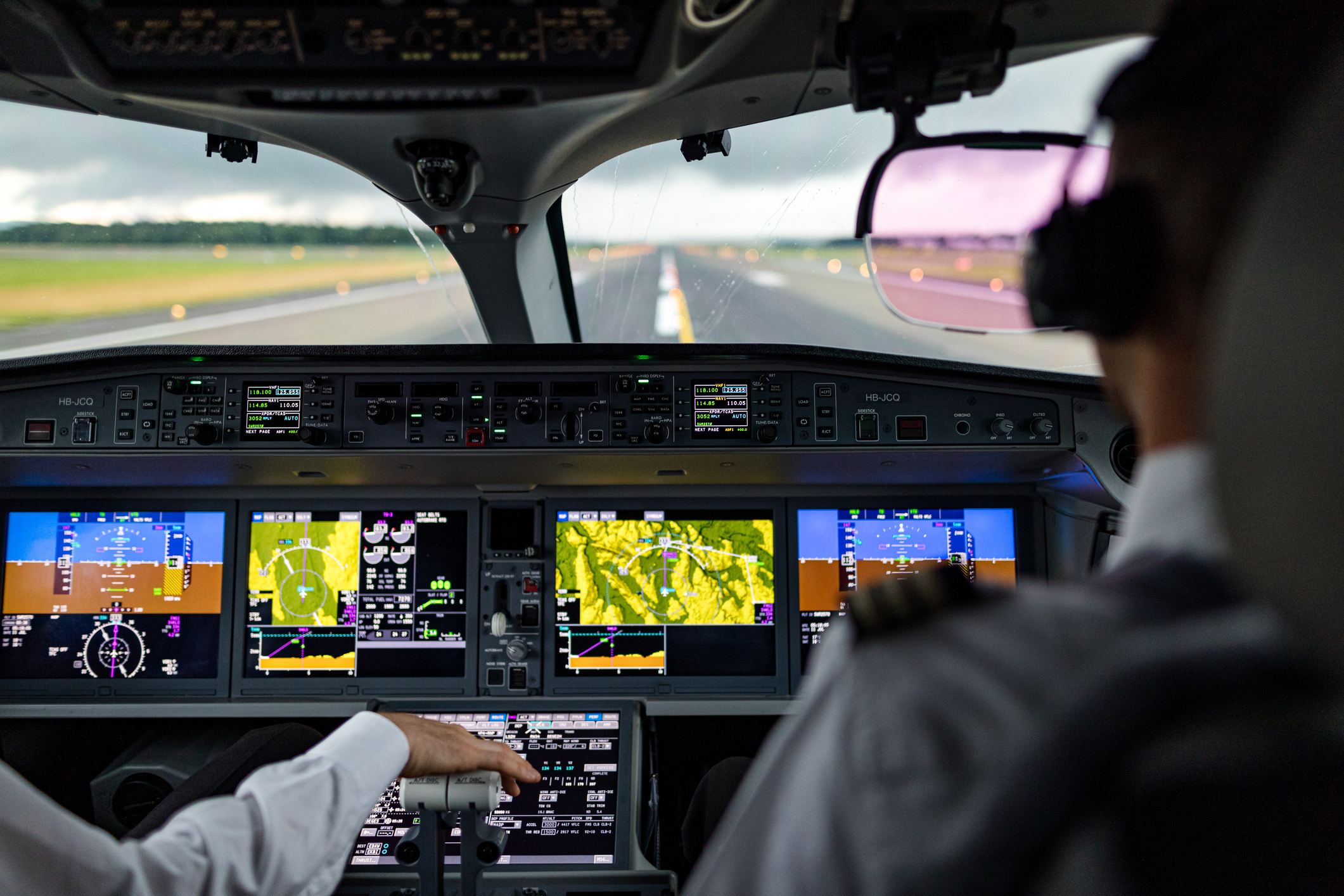
With aviation in the news, Florida Tech's Shem Malmquist offers insight and clarity
Recent news on the safety of airlines in America has detailed tragic fatalities, airplanes flipping over and some crashing into prominent city streets, which has shone a less than flattering light on what is supposed to be a safe industry. Given recent events, Florida Tech College of Aeronautics visiting assistant professor Shem Malmquist has appeared in high-profile interviews on both current and historic aviation incidents. Recently, he spoke with the Boston Globe, Rolling Stone and the news platform FedScoop to lend his insight and expertise as a pilot. Officials have repeatedly warned about a shortage of air traffic controllers. Pilots have made up for that gap by accepting visual approaches and separation from other airplanes to relieve some of the workloads off controllers, said Shem Malmquist, a pilot and visiting instructor at the Florida Institute of Technology, who teaches courses on aviation safety. He noted that was “part of the problem” with the D.C. collision. Still, flying remains safe because “pilots are overcoming the challenges in the system to prevent accidents,” Malmquist said. “Random distribution can create clusters like this. ... That doesn’t mean there’s more risk.” February 21 - Boston Globe One former pilot told FedScoop that the system can be overpopulated with notices, only some of which might be important for a pilot to understand before taking off. Still, there’s generally no automated way of sorting through these notices, which means they can be incredibly long and difficult to completely process before flights. The notices themselves are densely written and use terminology that is often not immediately discernible. An example provided by the FAA shows the notices’ unique format. Textual data can also limit the ability to modernize the NOTAM system, an FAA statement of objectives from 2023 noted. Shem Malmquist, a working pilot who also teaches at Florida Tech’s College of Aeronautics, said the entire NOTAM system “migrated from color pipe machines,” which locked in “certain abbreviations and codes” beyond their point of usefulness. “It’s really great for computers, which is kind of funny because it was created before computers,” Malmquist added. “But it’s … not really very user friendly for the way humans think.” February 21 -FedScoop Recently, Malmquist was featured on National Geographic's TV series, "Air Crash Investigation." There, he spoke about the China Eastern Airlines Flight 583 crash investigation from 1993. Looking to connect with Shem Malmquist regarding the airline industry? He's available. Click on his icon to arrange an interview today.

