Experts Matter. Find Yours.
Connect for media, speaking, professional opportunities & more.

I Was 33 Years Early to the ADU Party
The early 1990s were tough for many Canadians, including my partner and me. The recession of 1990-1991 hit us hard, leaving both of us without jobs and staring at an unemployment rate that had climbed to a record 10.23%. With bills piling up and options dwindling, we had to get creative—and fast. That’s when we found an unexpected lifeline in an unlikely place: my partner’s grandmother’s house. Grandma, a 90-year-old fireball from Newfoundland, was sharp as a tack and fiercely independent. However, her home was starting to feel too large for her to manage on her own. Meanwhile, we needed a place to live that wouldn’t drain our limited savings. Over cups of tea at her cozy kitchen table, a plan started to take shape: we would build a basement apartment in her house, move in, and exchange affordable rent for assistance around the house. It was a perfect win-win. I didn't know it, but I was an ADU pioneer Today, this living arrangement may be recognized as an Accessory Dwelling Unit (ADU), a secondary housing unit on a single-family property. However, in 1991, this concept was far from mainstream. For us, it was simply a matter of survival—a practical solution born from necessity. We rolled up our sleeves and got to work. With a few friends and determination, we transformed Grandma’s basement into a modest but functional living space. It was basic, even a bit wonky—you had to walk through the bedroom to get to the living room-kitchen combo—but it was ours. We managed most of the construction ourselves, and hired an electrician for the wiring and a plumber to handle the pipes. The rest was pure sweat equity. Living in that basement was an adjustment, to say the least. Space was tight, and our DIY craftsmanship wasn’t exactly HGTV-worthy. However, it provided us with a fresh start. But as ADU pioneers, we got much more than we could have imagined. A much closer connection to family. Grandma’s wit and energy were the heart of the house, and we grew closer to her than we ever imagined. Her stories about growing up in Newfoundland in the late 1800s mesmerized me. I would sit there, wide-eyed, as she recounted winters so cold that tea froze before it hit the cup and evenings illuminated by whale oil lamps. We laughed constantly, and she quickly became the grandmother I never had since my grandparents had passed before I was born. Grandma and I stayed close even after my relationship with my partner ended. I couldn’t imagine life without our Friday lunches, which became a cherished tradition. Every week, I’d visit, and she’d share more stories or critique my cooking attempts with her quick wit and that unmistakable Newfoundland twang. She continued to be a beacon of joy and wisdom in my life. Grandma thrived on independence, which she held onto with great determination. At 90 years old, she re-tarred her driveway by herself, much to the neighbours' surprise and my immense admiration. The tar application was as wrinkled as her skin, and she couldn't care less. She beamed with pride while I took her picture! She loved having visitors, and the parish clergy were frequent guests. She always welcomed them with a twinkle in her eye and a sharp sense of humour. Once, when the parish priest asked her if she ever thought about "the hereafter," she shot back, “Oh, I think about it every day when I go into the basement and ask myself, ‘What am I here after?’” That was Grandma: quick-witted, strong, and full of life. Our basement apartment was more than just a place to live; it was a lifeline. The benefits extended beyond us. Grandma stayed in the home she loved until she passed away peacefully at 96 years old, sitting at her kitchen table on my birthday. It was a poignant moment that reminded me how much she had shaped my life. The modest basement apartment not only sheltered us but also added value to her home. We inadvertently enhanced the property’s functionality and appeal by converting unused space into livable quarters. This represents a key advantage of ADUs in today’s economy. Given the housing shortages and rising costs, ADUs provide a practical solution by offering affordable rental options, increasing property values, and creating opportunities for intergenerational living. In recent years, governments have acknowledged the importance of ADUs, making it easier and more affordable for families to construct them. Changes to mortgage lending policies have been introduced to promote ADU construction. For instance, insured loans now cover up to $1.5 million, and the amortization period has been extended to 30 years, enhancing financing accessibility. Furthermore, the federal government has announced new refinancing options to allow up to 90% of the property’s value. At the same time, low-interest loans for ADU construction have doubled to $80,000, with repayment terms of 15 years. These welcome changes will lower financial barriers and assist homeowners in creating secondary housing units, addressing both affordability and housing shortages. This intergenerational arrangement we set up over three decades ago was a win-win in every way. It provided mutual support, strengthened family bonds, and created a housing solution that benefited both generations. Seniors can age in place with dignity and companionship while younger generations gain access to affordable housing and the chance to learn from their elders. The laughter, shared meals, and stories crafted memories that will last a lifetime. Moreover, ADUs can help ease housing shortages and increase the availability of affordable rentals. They represent a practical, cost-effective method to utilize existing properties better. For families, they offer flexibility—a space for aging parents, adult children, or even potential rental income. For communities, they supply essential housing stock without necessitating large-scale development. For a deeper dive into ADUs, here's a link to a post we shared last year https://expertfile.com/spotlight/10346/additional-dwelling-units--adus- What's Old is New Again It's often said that many things come back in style if you wait long enough. This may hold for ADUs, simply an old concept whose time has come again. Nonetheless, ADUs empower our younger generation to afford housing and achieve homeownership. They also provide vital support for our older generations, enabling them to age in place while generating much-needed income for a dignified retirement. Reflecting on the past, I often ponder who saved whom. Grandma’s indomitable spirit and sharp humour made every bump in the road worthwhile. She would tease me about the crooked shelves we installed and joke that our kitchen was so small we could stir the soup without getting off the couch. In truth, she gave me more than I ever gave her. Her strength, love, and unwavering sense of humour helped me navigate one of the most challenging times in my life. The quirky basement we built in 1991 may not have been perfect, but it served its purpose. Today, as ADUs gain popularity, they represent more than just housing; they embody connection, resilience, and finding creative solutions to life’s challenges. Whether it’s a basement apartment, a backyard cottage, or a garage conversion, ADUs can foster connection and help families thrive—just as we did all those years ago. And as for Grandma? She demonstrated that a touch of humour, plenty of love, and the occasional jab at a priest could keep anyone young at heart. Every time I think of her now, I can’t help but smile and wonder if, somewhere, she’s still re-tarring driveways and asking herself, ‘What am I here after?’ Don’t Retire … Re-Wire! Sue


Just before the holiday season, as he entered his final month as President of the United States, Joe Biden announced that he would be granting clemency to roughly 1,500 American citizens. The clemency acts, which included sentence commutations for individuals placed on home confinement during the pandemic and pardons for 39 individuals with non-violent offenses, were touted by the administration as the most ever in a single day in modern history. A month later, on January 17, he commuted the sentences of roughly 2,500 individuals convicted of non-violent drug offenses, shattering December's mark and giving him the most pardons and commutations of any president in United States history. The unprecedented size of the actions has been underscored throughout The White House’s press materials and has headlined most subsequent news coverage. But for Anton Robinson, JD, associate professor of law and director of Villanova’s Caritas Clemency Clinic in the Charles Widger School of Law, the importance of the clemency went far beyond the impressive scale. “Acts like these bring much needed awareness to the clemency process, and to the epidemic of excessive sentencing in United States courtrooms,” Professor Robinson said. “At our clinic, we are already having people call to ask about opportunities for pardons and additional support for their cases.” Public perception of presidential acts of clemency can, at times, be marred by partisan divisiveness. To some, these latest acts were overshadowed by President Biden’s earlier pardon of his son, Hunter, and eyes are already on incoming President Trump regarding how he might handle those charged in relation to the January 6 insurrection. Professor Robinson acknowledges that acts like these can cause people to “rightfully question the power that is being used,” but those are the outliers, not the norms, and steer the conversation away from the root purpose of clemency. “People deserve a second chance,” Professor Robinson said. “There’s a tendency for system actors to focus primarily on the crime committed when considering whether a person’s sentence should be cut short. But many are different people today—sometimes decades later—than they were at the time of the crime’s commission. “There is also no shortage of individuals in prison for whom a charge doesn’t tell the whole story. For example, a young person’s involvement in a crime, while sufficient for a legal conviction, might be weighed differently today, given increasing acceptance of scientific research on the portion of the human brain which controls decision-making, impulse control and executive function. Research shows all of that continues to develop well into adulthood.” Determining who fits the criteria for clemency, Professor Robinson says, is not always easy to do. Collecting records of good behavior that illustrate change while in a carceral setting is much more difficult than collecting records of bad behavior. That’s why entities like the Caritas Clemency Clinic, in which Villanova Law students work directly on behalf of such clients under Professor Robinson’s guidance, spend so much time talking to anyone who has had a relationship with the incarcerated person. “What we often find is that despite being incarcerated and having very little given opportunity, these individuals make their own opportunities to build community and rich relationships and try their best to contribute to society in a positive way,” Professor Robinson said. A military veteran who helped church members in poor health perform tasks. A nurse who spearheaded COVID vaccination efforts and natural disaster response. A counselor who helps guide youth away from destructive behavior and involvement with gangs. Those are the types of actions Professor Robinson references, all of which were highlighted specifically in the White House’s fact sheet for President Biden's December acts, just before the words “The United States is a nation of second chances.” “I'm hoping that these large acts of clemency encourage folks to think, ‘Hey, what about my loved one? What about me? I am a completely different person than I was 20 years ago, what can I do to try to secure my freedom and my ability to live the life that I've missed out on?’” Professor Robinson said. “It really is a great opportunity to remind ourselves that people are far better than the worst things that they've ever done, and that we have an opportunity to acknowledge that as a society and to encourage more of this action, both on a federal and state level.”

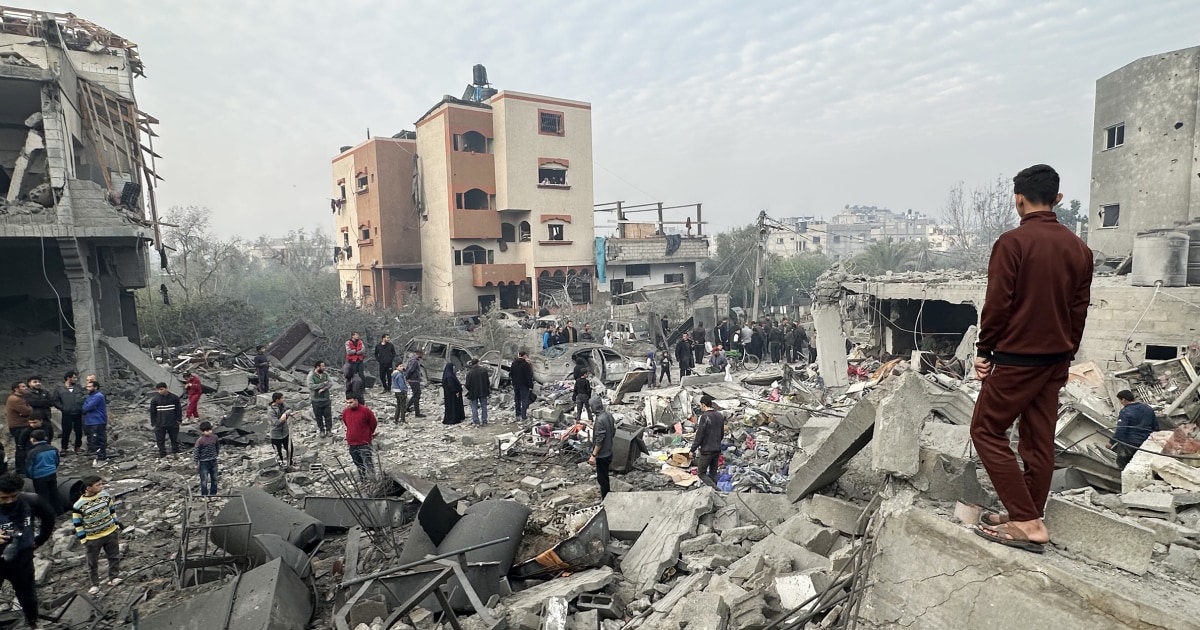
What does the Israel-Hamas ceasefire mean
After 15 months of war Israeli Prime Minister, Benjamin Netanyahu, announced Wednesday, January 15, his in the process of receiving approval for ceasefire from his security Cabinet in order to further the truce with Hamas. This ceasefire is not only expected to stop a war that has taken more that 46,500 lives, but also the phased release of dozens of American hostages and hundreds of Palestinians. Reports reveal that the ceasefire may be in effect by the end of the week. How will American citizens respond to what appears to be a resolution to the conflict in the middle east? International relations expert, Dr. Glen Duerr, has been a reliable source on the events occurring in the Middle East. Here are three valuable insights from a recent interview: Prime minister Benjamin Netanyahu needs the support from his security and full Cabinet to receive approval on will be a roughly six-week initial ceasefire phase. The Israel Supreme Court has up to 24 hours to approve The Prime Minister's ceasefire. It is estimated that the ceasefire will take full affect Sunday. What can we expect in the Middle East during the wait of the ceasefire? It was announced that there will be an emergency cabinet meeting held tomorrow renegotiating the deal after Prime Minister Netanyahu's office accused Hamas on reneging on part of the of the ceasefire. However a Hamas spokesperson Sami Abu Zuhri denied all accusations of Hamas reneging on the terms of the ceasefire. Is the conflict and delay of the ceasefire a prediction to the conflict that is to come? The first stage of the ceasefire will take about 6 weeks, allowing the phased release of American and Palestinian citizens. Hamas is expected to release at least 2 American citizens during the first phase and a a Senior administration official during the second phase. It is expected with each hostage released by Hamas a number of Palestinian detainees will be released. How will the phased release of Hamas hostages affect the culture of Americans? If you are a journalist covering the ceasefire between Israel and Hamas, look no further than our experts for valuable insight and expert knowledge. Dr. Duerr is an expert on this subject and is available to speak to media regarding this ongoing conflict in the Middle East and the ongoing the war between Israel and Hamas – simply click on his icon to arrange an interview. Or schedule an interview by contacting Mark Weinstein at mweinstein@cedarville.edu


Secretary Buttigeg makes one of his final DOT stops at CMU's Safety 21
U.S. Secretary of Transportation Pete Buttigieg visited Carnegie Mellon University in one of his final stops as Transportation Secretary. Raj Rajkumar, director of Safety21 and George Westinghouse Professor in the Department of Electrical and Computer Engineering, with Ph.D. candidates Nishad Sahu and Gregory Su, demonstrated research on the safe navigation of autonomous driving systems in designated work zones, leveraging high-definition mapping, computer perception and vehicle connectivity. “The sophistication of the safety work that’s going on goes well beyond any commercially available automated or advanced driver assistance system is really inspiring,” Buttigieg said. “We’ve got to make sure it develops the right way, we’ve got to be cautious about how it’s deployed, but you can tell a lot of thought and, of course, a lot of incredibly sophisticated research is going into that.”


What the 2025 Tax Season May Look Like According to the IRS
The 2025 tax filing season will begin on Jan. 27. The Internal Revenue Service warns it may not be functioning as adequately due to the Republican-controlled congress rescinding IRS designated funding, causing cuts in staffing and potential technological updates to become stagnant. During the Biden administration the IRS was granted extra funding as part of the Inflation Reduction Act, passed exclusively with Democratic votes. The Trump administration has introduced a new scanning technology allowing tax returns to be filed quicker, upon the cut in previous IRS funding. This online filing system will allow taxpayers to file electronically with IRS for free, cutting out any unnecessary third party. There are concerns that the cut in funding may cause Trump's IRS updates to delay. How will the cut in IRS funding affect the 2025 tax season? Economics expert, Dr. Jared Pincin weighs in on the discussion of how fund distribution will look under Trump administration in recent interview. Trump administration has cut funding for IRS from $80 Billion to $60 Billion through 2031. During his campaign for presidency Trump promised a reallocation for funding and distribution. How will we see Trump's policies redistribute funding? Trump's new system, Direct File, is available in 24 states with hopes to make the 2025 tax season smoother than ever. Concerns arise that Trump's cut in funding to reallocate elsewhere may make his system to be come stagnant, causing delays and longer wait times for tax payers. Will Trump's new tax filing system make the 2025 tax season smoother or another nightmare? President-elect Trump promised stricter tariffs on manufacturing industries and more aggressive industrial policies. Rescinding IRS funding is just the beginning of Trump's reallocation of funding. How will we see the change in funding affects businesses? If you are covering the the U.S. economy during the Trump administration and need to know more, let us help with your questions and stories. Dr. Jared Pincin is an expert on economics and is available to speak to media regarding the Trump administration and the economy – simply click on his icon or email mweinstein@cedarville.edu to arrange an interview.


More than half of U.S. states allow the sale of raw milk directly from farms to consumers, a number that would likely increase if Robert F. Kennedy Jr. – a raw milk advocate – is confirmed to lead the Department of Health and Human Services (DHHS). Kali Kniel, a professor of microbial food safety at the University of Delaware, can discuss the dangers and potential benefits of drinking raw milk. Some have celebrated the legalization of raw milk around the country, claiming it tastes better and has some nutritional benefits. Meanwhile, the U.S. Food and Drug Administration, one of the DHHS agencies Kennedy would lead, cautions against drinking raw milk, which comes directly from cows, sheep or goats and has been banned from being sold across state lines since the 1980s. Concerns regarding raw milk have been elevated as a deadly strain of bird flu is infecting dairy farms around the country. In the following Q&A, Kniel talks about the pathogens that may be present in raw milk, ways to communicate food safety to the public and other topics. Milk and other dairy products that sit on shelves at the grocery store are pasteurized. What does this process involve and why is it important for dairy products? Pasteurization of milk is a process of heating milk and passing it between heated stainless steel plates until it reaches 161 degrees Fahrenheit. It is held at that temperature for around 15 seconds before it is quickly cooled to 39 degrees Fahrenheit. This process is intended to kill the pathogenic bacteria that could make a person sick. How does this process affect milk’s quality and nutritional value? Scientific studies have shown that pasteurization does not significantly change the nutritional value of milk. Unpasteurized milk may have more vitamin C, which does not survive the pasteurization process, but milk is not considered a good source of vitamin C, as it contains less than 10% of the Recommended Dietary Allowance (RDA), the average amount of nutrients it takes to meet a healthy person’s needs. There are no beneficial bacteria in raw milk. Milk (pasteurized or raw) is not a good source of probiotic or potentially beneficial bacteria, so for that consumers should choose yogurt and other fermented dairy products as well as other fermented products. Scientific studies using animal models have shown no difference in how calcium in raw milk and pasteurized milk is absorbed by the human body. Popularity in drinking raw milk is increasing, despite the U.S. Food and Drug Administration advising that it’s not safe to drink. What are the health risks that come with drinking raw milk? Raw milk may contain pathogenic bacteria, including Campylobacter, Salmonella, pathogenic types of E. coli, Listeria and Brucella, as well as the protozoan parasite Cryptosporidium. These are all zoonotic microbes, which means they can be transmitted from animals to humans. Often the animal does not appear ill, so it is not possible to determine if an ill animal is shedding these pathogens in its feces that can contaminate milk. Microbial testing of the finished product and environmental monitoring programs may be helpful, but do not guarantee that the raw milk is absent of these pathogens. Milk can be contaminated with these pathogens from direct contamination with feces or from environmental conditions. Cross-contamination from dairy workers can also happen, even when people are trying their best to reduce the risk of cross-contamination. The likelihood of a disease outbreak occurring associated with a person consuming raw milk is relatively high given that others may also be exposed. Unpasteurized milk will have a relatively short shelf life and may not be available for testing. Following good hygiene practices on the farm and during milking such as biosecurity around the farm, appropriately sanitizing equipment and monitoring the health of animals can reduce the chance of milk contamination, but not eliminate it. There have been numerous outbreaks of illness associated with raw milk as well as cheese made from raw milk. Persons most at risk of illness associated with drinking raw milk include children, in particular 5 years of age and under, individuals aged 65 and over, pregnant women and immunocompromised individuals. It should be noted that all outbreaks of illness associated with raw milk have included individuals under 19 years of age. Children may be most vulnerable, as they cannot voice an opinion on consumption and risk of raw milk if it is in their household. The Center for Disease Control and Prevention (CDC) collects data on foodborne disease outbreaks voluntarily reported by state, local or territorial health departments. According to the CDC from 2013 to 2018 there were 75 outbreaks of illness linked to raw milk consumption. These outbreaks include 675 illnesses and 98 hospitalizations. Most of these illnesses were caused by Campylobacter, shiga-toxigenic E. coli, or Salmonella. An increase in outbreaks has been correlated with changes in the availability of raw milk. For example, between 2009 and 2023, there were 25 documented outbreaks in the state of Utah, which has 16 raw milk retailers licensed by the Utah Department of Agriculture and Food. In all of these outbreaks, the raw milk was contaminated with the bacteria Campylobacter, which typically causes gastroenteritis symptoms like diarrhea and nausea, but may also cause chronic illness, including Guillain-Barré syndrome which can cause paralysis. How likely are these illnesses to happen from drinking raw milk? It is difficult to say. Foodborne illness is often underreported, depending on how severe people’s symptoms are. According to one study, only about 3.2% of the U.S. population drinks raw milk, while about 1.6% eats cheese made from raw milk. But compared with consumers of pasteurized dairy products, they are 840 times more likely to experience an illness and 45 times more likely to be hospitalized. The authors of this work used the CDC’s national reporting system to analyze data from 2009 to 2014. Despite health risks, why do some people still drink raw milk? Some people feel a nostalgic connection to raw milk, and others may feel that foods that are not treated with heat retain certain nutrients and enzymatic activity. I am not aware of any peer-reviewed rigorous scientific studies that indicate the nutritional benefits of consuming raw milk over time, given the risks of potential for illness, combined with a well balanced diet full of healthful food choices. It remains that raw milk is particularly risky for children to consume, as children can get sick from consuming fewer bacterial cells compared to adults. More than 900 cases of highly pathogenic avian influenza — the disease commonly known as bird flu — have been detected in dairy cattle across 16 states, and at least 40 people have been infected with the disease from close contact with dairy cows. Raw milk is being tested for the virus. With raw milk gaining interest among consumers, what are the possible consequences? Does it elevate the risk of bird flu spreading further to people? There remain clear risks of transmission of pathogenic bacteria through consumption of raw milk, and now with the potential for contamination of raw milk with avian influenza, it is even more important that consumers protect themselves by drinking pasteurized milk. The people most at risk right now are those involved with the milking process and in the handling of dairy cattle. So it is important that those individuals be aware of the risks and take appropriate precautions, including hand washing and wearing appropriate personal protective equipment like protective clothing, gloves, face shields and eye protection. As of December, the U.S. Department of Agriculture is requiring 13 states to share raw milk samples so the agency can test for bird flu viruses. How could this testing better help us understand the virus? I think it is very smart that USDA is leading the National Milk Testing Strategy, which will help us understand the extent of infected herds. Surveillance of microorganisms is an important way to assess risk so we can develop appropriate strategies to reduce and control these risks.


Expert comment available - the Government's announcement for the AI Opportunities Action Plan
Expert comment is available on the the Government's announcement for the AI Opportunities Action Plan in which it is aims to roll out AI across the UK. In a speech setting out the government's plans to use AI across the UK to boost growth and deliver services more efficiently, the Prime Minister said the government had a responsibility to make AI "work for working people". The government claims that the AI Opportunities Action Plan is backed by leading tech firms, some of which have committed £14bn towards various projects, creating 13,250 jobs. It includes plans for growth zones where development will be focused, and the technology will be used to help tackle issues such as potholes. Expert comment: "The plan is a necessary step in the right direction with appropriate investment. It should be coupled with a major training programme at business and public levels to bridge the skill gap and develop essential capabilities. "It is important to specify the role that the higher education sector will play in the delivery of such a plan particularly with regards to innovation and knowledge transfer partnerships. "The government used stated that the technology will be used to help tackle issues such as potholes, however AI should be used not only in the detection of potholes, but also in their prediction. Using predictive analytics would significantly reduce the number of cameras that must be deployed to monitor road surface conditions up and down the country." Professor Abdul Hamid Sadka, Professor of Visual Media Technologies, Director, The Sir Peter Rigby Digital Futures Institute, Aston University For further details contact Nicola Jones, Head of Press & Communications (interim) on (+44) 7825 342091 or email: n.jones6@aston.ac.uk


Image Credit: Petrovich9/Getty Images Plus Although time is a set duration of hours, minutes and seconds, the perception of time can vary dramatically based on the individual and especially during times of high stress and uncertainty such as disasters, recessions and most recently the COVID-19 lockdown. For example, ask anyone when a specific event occurred during the pandemic and they are likely to respond with, “That happened three months ago. Or did that happen three years ago?” While there have been studies on the feeling that there is not enough time or experiencing time as moving too slowly, Baylor University sociologists Matthew Andersson, Ph.D., and Paul Froese, Ph.D., investigated this sense of multifaceted time perceptions during the pandemic and their effects on mental well-being. Their findings – using national Gallup data collected in spring 2021 in the middle of the pandemic – were published in the journal Time & Society. “We know from existing research that people often experience time in altered ways whenever disasters strike, and we wanted to see if that was true during the pandemic as well,” Andersson said. The Baylor researchers found that Americans during the pandemic generally reported some degree of feeling rushed while also perceiving multiple types of time distortion involving slowness, quickness and days and weeks blending together. This disorientation also was frequently reported alongside other pandemic-related stressors, including economic strain, working from home, homeschooling a child and severe household conflict. Together, they complicated how people perceive time by disrupting routines and creating experiences of trauma, adding to the decline in mental well-being and an increase in feelings of loneliness. Time disorientation and mental well-being The top three findings of the study all demonstrate the connection between altered time perception and the mental states of an individual. “If time does not seem to be moving ‘normally,’ it is generally related to lower levels of mental well-being, such as increased depressive, anxiety symptoms or a lessened sense of control,” Andersson said. “We think this is because people tend to feel grounded or calm when they feel like time is moving as it should.” Secondly, the researchers found that individuals can often experience these time disorientations in multiple and contradictory ways, which can be related to even lower well-being. “Feeling rushed and feeling that time is slow are kind of opposites, but they are both related to having this sense of multifaceted blending of time,” Froese said. “We can show very clearly how these new stresses that were brought on by the pandemic created heightened senses of disorientation in terms of time.” More importantly, they found these time disorientations were affected by social, familial, physical and work situations, which created lower levels of mental well-being. “Specific forms of stress we were seeing during the pandemic, such as financial hardship, homeschooling, working from home and severe household conflict, all had relationships to experiencing different kinds of time distortions,” said Andersson. This was more evident in younger people “because it [lockdown] probably upended their daily routines in a much more dramatic way than it would have in somebody who's retired,” said Froese. Experience of time The rushed pace of industrialized society existed before the COVID-19 pandemic, but the stressors associated with the pandemic added to the feelings of time being out of control. “Our approach to capturing experiences of time rests on the assumption that individuals relate to time in complex ways,” Froese said. “We found original evidence to suggest that experiences of quickness, being rushed, slowness and indistinct boundaries of days all coincide, and that these multiple disorientations each relate to diminished mental wellbeing, to objective work and family demands, and to widespread exposures to pandemic-related stressors.” The survey was conducted as part of the Baylor Religion Survey, one of the most extensive national surveys of American religious beliefs, values and behaviors that produces unique data concerning religion, health and community in America today. The 2021 data collection by Gallup contained a section devoted to how the pandemic affected Americans’ activities, including how the pandemic changed the emotional lives of Americans. Looking to know more? We can help. Dr. Paul Froese is a professor of sociology and a research fellow for the Institute for Studies of Religion. He has been teaching and researching at Baylor since 2002. Dr. Matthew Andersson’s research focuses on health inequality as it unfolds across the life course. Specifically, he researches educational and socioeconomic inequalities in mental and physical well-being as they relate to childhood, adolescent and adulthood factors. Both experts are available to speak with media about this important topic - simply click on either expert's icon to arrange an interview time today.


The History and Strategic Significance of Greenland
Greenland, the world's largest island, holds a fascinating history and a crucial role in global geopolitics. With its deep connections to Inuit heritage and colonial ties to Denmark, Greenland's past reflects a narrative of resilience, adaptation, and evolving autonomy. Today, it is not just a cultural and historical landmark but also a strategic asset in military and security considerations. Its location between North America and Europe, coupled with its rich natural resources, makes Greenland a focal point for Arctic sovereignty, climate research, and geopolitical maneuvering. Key story angles of interest include: Greenland's colonial history and its path to greater autonomy within the Kingdom of Denmark The island's role in World War II and the Cold War as a strategic military outpost Thule Air Base: the U.S. military presence and its implications for NATO Greenland’s vast natural resources and their impact on international relations The growing importance of Arctic territories in global security strategies How climate change is transforming Greenland's geopolitical and economic significance Connect with an expert about Greenland: To search our full list of experts visit www.expertfile.com


Nosferatu - Why Do Audiences Keep Coming Back for an Updated Classic?
It's the latest take on an old classic. Nosferatu took the Christmas box office by storm and might be the first time a vampire movie dominated the traditional holiday cinema season that's usually family friendly and purposely 'PG'. Even the critics agree that this new take on an old classic was worth the 'bite'. An adaptation of F.W. Murnau’s 1922 silent nightmare (which itself was based on Bram Stoker’s novel Dracula and remade once before, in 1979, by Werner Herzog), Nosferatu recounts the tale of a most devious Count: Orlok (Bill Skarsgård), who strives to reach Europe’s shores by purchasing an aged manor house by way of a deal solidified with real estate agent Thomas Hutter (Nicholas Hoult). Yet Orlok isn’t interested in seeing Germany’s tourist sights—his true goal is reuniting with Ellen Hutter (Lily-Rose Depp), Thomas’ bride, who called out to him as a girl and, in doing so, created a wicked bond that strengthens by the day. As imagined by Eggers and Skarsgård, the vampiric fiend is a towering figure of corruption and carnality who both resembles his predecessors and is a unique monster in his own right, and his reign of terror plays out via a series of lush, hypnotic set pieces that resound with unnerving malice and profane perversity. January - The Daily Beast Horror movies have always had a certain allure for audiences, but there a re a few questions to ask: What does this story have that makes it possible to be remade over and over and still stay entertaining? What is it about vampires in particular that are linked to romance? As well, why do we pay money to be scared and why is this genre so popular and lasting? If you're covering this particular film or movies in general - then let us help with your questions and stories. James Kendrick is a professor and undergraduate program director in the Department of Film & Digital Media at Baylor University, where he teaches about film theory/aesthetics, the history of motion pictures, media and society, the films of Steven Spielberg, violence in the media, and horror film. James Kendrick is available to speak with media. In fact, Nosferatu is James' favorite movie, so simply click on his icon now to arrange an interview time today.