
Experts Matter. Find Yours.
Connect for media, speaking, professional opportunities & more.
UF researchers aim to improve nutrition for cancer patients
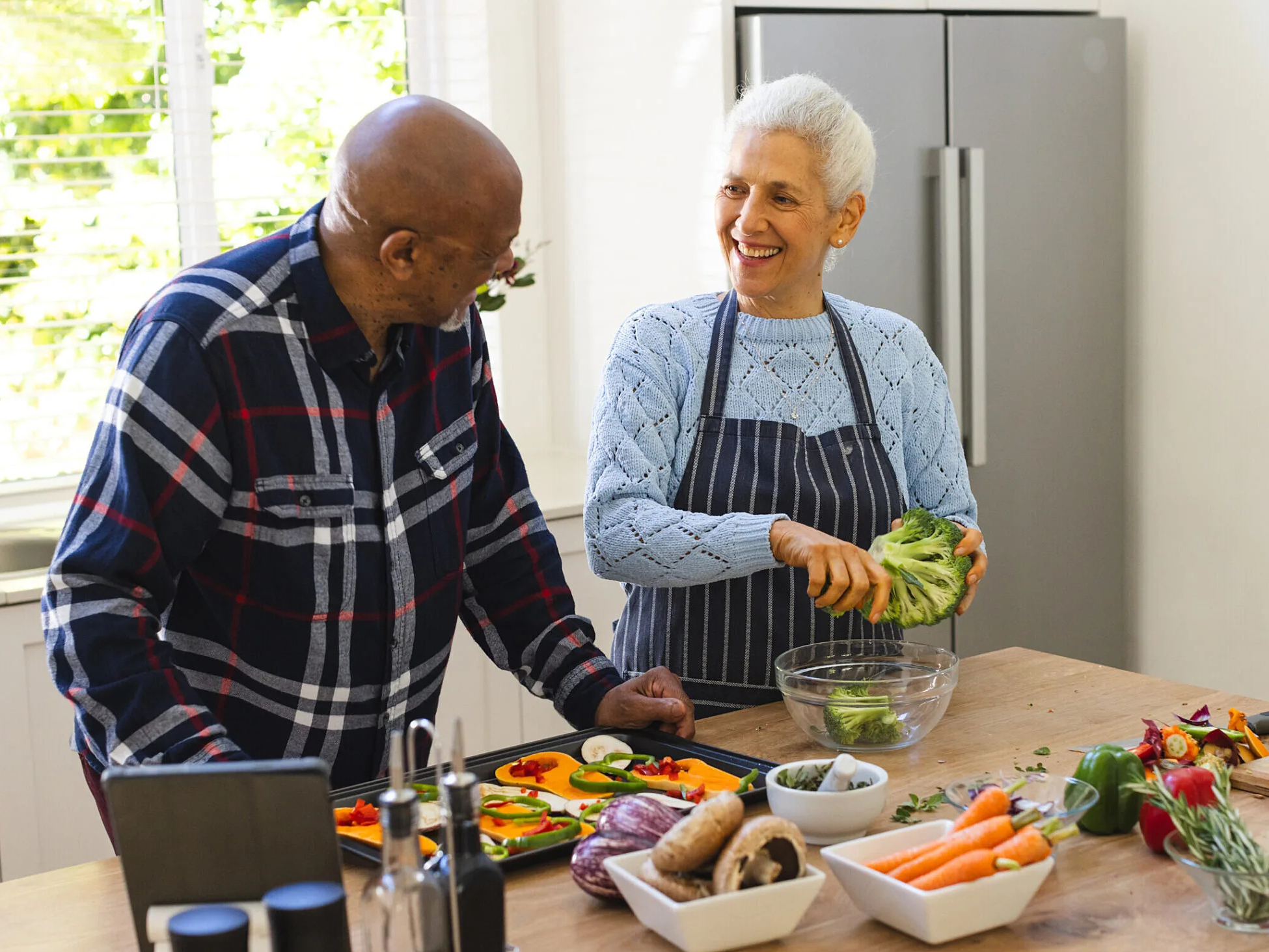
A new study and first-of-its-kind food pharmacy at UF aim to help patients with cancer access and eat nutritious foods, giving them the best possible shot at a healthy future. As many as a third of cancer patients face food challenges, particularly in rural areas. Good nutrition can improve outcomes during and after treatment. With a grant from the Florida Department of Health, a team of researchers at the University of Florida Health Cancer Center and Sylvester Comprehensive Cancer Center will first assess the community’s nutritional needs. Then they’ll test the usefulness of a food-focused digital tool designed to connect patients to helpful resources. An on-site food pharmacy will help patients not only get the food they need to thrive but also provide tools for lasting change. “We’re taking a community-based approach to holistic cancer care,” said Dejana Braithwaite, Ph.D., associate director for population sciences at the UF Health Cancer Center. “Patients consistently express that nutrition is an important issue for them during cancer treatment. We want to address nutritional needs from treatment through survivorship with a sustainable intervention. ASCENT brings science and community together to make that a reality in Florida.” Braithwaite, a professor and division chief in the UF Department of Surgery, is leading the multi-institution study with Tracy Crane, Ph.D., R.D.N., director of lifestyle medicine, prevention and digital health and co-lead of the Cancer Control Program at Sylvester, part of the University of Miami Health System. Researchers from the UF colleges of Journalism, Medicine, and Public Health and Health Professions and UF/IFAS Extension are participating. The Florida Partnership for Adding Social Context to Address Cancer Survivorship Outcomes study, which the researchers have nicknamed ASCENT, will focus on those affected by the most prevalent cancers in Florida, including breast, lung, colorectal, prostate and blood cancers. “Cancer survivors who follow a healthy dietary pattern have a lower risk of recurrence and death,” said Cora Best, Ph.D., R.D.N., an assistant professor of nutritional sciences in the UF College of Agricultural and Life Sciences and study team member. “Some cancer therapies have long-term or late side effects that increase the risk for chronic conditions, like osteoporosis, which can be alleviated with good nutrition. That means a healthy diet during and after oncologic treatment can enhance lifespan and quality of life.” Researchers will start by conducting interviews with patients, providers and community-based organizations. They want to understand how to best use resources to meet the nutritional needs of those with cancer, such as food security and diet quality. “Community outreach and engagement with various groups is a cornerstone of the study,” said Francis Dalisay, Ph.D., an associate professor in the UF College of Journalism and Communications who helped develop the interview guides. The team will use the information to build a diet intervention with online surveys and patient navigator support, which they will test in a randomized clinical study at UF Health and Sylvester. Patient navigators will connect patients with resources like community programs or specialist referrals. The food pharmacy, located at the UF Clinical and Translational Sciences Metabolic Kitchen, will help cancer patients get healthy, whole nutrient-dense foods like high-protein items, fruits, vegetables and pantry staples. It will also provide workshops, personalized recipes and meal plans. Although the United States is a wealthy nation, food insecurity remains common, including in Florida, Best said. “The ASCENT study pairs evidence-based dietary guidance for cancer survivors with innovative strategies to overcome barriers like food insecurity,” she said. Ultimately, the study aims to empower patients so they can address lifestyle factors in their control, boosting their well-being. “I am hopeful this study will provide patients with appropriate resources to improve their overall nutrition, especially those who are malnourished,” said Paul Crispen, M.D., the Cancer Center’s associate director for clinical research and a study adviser.



As Texas Democrats head toward a competitive 2026 U.S. Senate primary, conversations about race and representation are playing a visible role in the campaign. In a recent Spectrum News segment, Baylor University political analyst Dr. Mia Moody discusses how racial identity, voter perceptions, and candidate messaging are influencing the dynamics of the race. Mia Moody, Ph.D., is a professor and former chair of the Department of Journalism, Public Relations, and New Media in the Baylor University College of Arts & Sciences. She is a nationally recognized expert on mass media and image repair, intersectionality, critical race theory, and the media framing of women and people of color. View her profile The story explores how candidates are navigating issues of representation within a diverse Democratic electorate, and how those discussions could impact turnout and coalition-building ahead of the primary. Watch the full report for expert insight into how race is shaping one of Texas’ most closely watched political contests. The full story is available below:



Generative AI may help turn consumers into active collaborators and creators, study finds
In the advertising world, generative AI is transforming the way brands connect with consumers, turning audiences from passive viewers into active creators who can shape and personalize campaign content. A recent study in the International Journal of Advertising, conducted by researchers at the University of Florida’s College of Journalism and Communications, determined that by letting people use AI tools to create images that fit a brand’s style, companies can invite customers to take part in their campaigns. This hands-on approach makes consumers feel more empowered, which can lead to more positive feelings about the brand and a higher likelihood of buying its products. “I came across the Coca-Cola and Heinz campaigns and was amazed by how AI can be used to transform and empower consumers,” said Yang Feng, Ph.D., an associate professor in artificial intelligence in the UF Department of Advertising, who co-conducted the study with assistant professor Yuan Sun, Ph.D. “This inspired me to reach out to Yuan to explore a potential collaboration.” The project began in 2023 following the success of Coca-Cola’s “Create Real Magic” campaign and Heinz’s “AI Ketchup” campaign, both of which allowed customers to engage directly with the brands using generative AI. To test the effectiveness of these types of campaigns, Feng and Sun set up two surveys. The first was given to participants to evaluate their familiarity with generative AI tools and the ways participants used them. This survey illuminated three areas that users felt were enhanced by generative AI: collaboration, creation and communication, which Feng and Sun refer to as the 3C framework. For the second survey, Feng and Sun mocked up a website for Harbor Haven Coffee, a fictional coffee brand committed to sustainability and ethical coffee bean sourcing. “We wanted a company that resonated with as many people as possible,” Sun said. “One of the other goals of the first survey was to find what participants cared about most, which is how we came up with the brand’s eco-friendly mission.” Along with the company’s description and mission statement, a generative AI tool was added to the homepage, encouraging participants to utilize it to produce images using prompts that fell within the brand’s guidelines. While participants were free to put whatever they wanted into the prompt box, each participant got back the same pre-generated image in order to reduce confounding factors. Participants were then asked a final round of questions to get a sense of how participating in this campaign made them feel. Findings from the surveys showed that incorporating generative AI into advertising campaigns increased the chances of turning potential customers into empowered consumers, or individuals who actively participate in brand development rather than passively receive ad content. Feng and Sun found that the reasons behind this empowerment were tied to their 3C framework. First, the collaborative nature of these campaigns fosters a sense of agency in the advertising process. Second, the reciprocal nature of human-generative AI communications boosts consumer confidence by making people feel more in control. Finally, directly engaging consumers and facilitating their creativity through AI builds stronger consumer relationships and reinforces positive brand associations. “This sense of empowerment can be further strengthened with a user interface that facilitates seamless human-generative AI interaction, which is my specialty,” Sun said. “It should prioritize user-friendly features, clear instructions for prompting GenAI and intuitive navigation to enhance the user experience.” However, among the benefits, the researchers also found a potential downside that could limit the success of these kinds of campaigns in the future. “Once AI’s creation capacity surpasses a certain point, consumers may start to feel overwhelmed and no longer view the output as their own creation but rather as the work of the AI, which ultimately diminishes their sense of empowerment,” Feng said. To this end, Feng intends to continue researching the 3C framework. Generative AI could play a big role in advertising going forward, and she hopes to explore its interpretive power in new contexts.

Study finds widespread duplication of local television news
Viewers of "local" TV news in nearly 40% of markets nationwide are hearing the exact same thing found on a competitor’s channel, according to a new study co-authored by the University of Delaware's Danilo Yanich. This widespread word-for-word duplication could have major implications on local journalism and newscasts, which are a source of critical information for millions of Americans. Yanich and fellow UD researcher Benjamin E. Bagozzi analyzed three months of local TV news broadcasts from 861 stations nationwide — more than 400,000 programs in all. Using a high bar for what counts as duplication (at least half of the content being word-for-word identical, excluding sports, weather and ads), they found widespread story sharing. Other findings: In many cases, two stations in the same city aired nearly identical newscasts night after night. • Duplication is driven by service agreements and the gobbling up of stations by groups such as Nexstar, Gray, News-Press and Gazette and Sinclair. • Stations with service agreements had duplication rates twice as high as those that were simply co-owned. • Smaller markets were more likely to have these overlaps. In some cases, two stations in the same city aired nearly identical newscasts night after night. • The duplication usually happened within the same geographic market (86% of cases) rather than between different regions. On average, these station pairs had identical content 65% of the time. • Local TV remains America’s most trusted news source. Over three-quarters of Americans say they trust it more than newspapers, radio or online news. “In any other context, this would be plagiarism,” said Yanich, noting that he and Bagozzi intentionally examined stations over 91 days to cover a body of content large enough to provide meaningful results. The study’s authors stress that while consolidation may make financial sense for station owners, it raises important questions about the future of local journalism. If more and more markets see their “local” stations airing the same news, communities may lose the independent voices that help keep citizens informed and hold local leaders accountable. To reach Yanich directly and arrange an interview, visit his profile and click on the "contact" button. Email MediaRelations@udel.edu to set up an interview with Bagozzi.



The First Amendment: Foundations, Freedoms, and Why It Still Matters
The First Amendment is more than just words on paper — it’s a bedrock of American democracy. Adopted in 1791 as part of the Bill of Rights, it protects fundamental freedoms: speech, religion, press, assembly, and petition. Its influence ripples through every aspect of civic life, shaping what citizens can say, believe, hear, and demand from government. How It Started In the wake of the Revolutionary War and under the new Constitution, many Americans worried that the federal government could become too powerful — especially over individual rights. To allay those concerns, the Bill of Rights was proposed. The First Amendment was among those first protections ratified in December 1791, explicitly forbidding Congress from making laws that establish religion, restrain free speech or press, or curb the rights of people to assemble and petition their government. Over time, this compact set of protections has been tested, expanded, and clarified. Landmark court decisions and historical crises—from the Sedition Act era in the 1790s, World Wars, civil rights struggles, to modern debates—have shaped how these freedoms are understood in practice. What It Means Today For citizens, the First Amendment offers more than legal guarantees: it gives voice. It underpins political debate, dissent, journalism, artistic expression, religious diversity, protests—and it enables citizens to hold power accountable. At school, at work, on social media, in place of worship, or in the press, these freedoms allow Americans to share ideas, critique policy, and petition for change. But First Amendment rights are not unlimited. Legal doctrine has evolved to balance free speech with other social interests—such as national security, public safety, protection from defamation, or decency norms. The courts continue to adjudicate what constitutes protected speech, what kinds of regulations are permissible, and how emerging issues—like the internet, social media, and new forms of communication—fit into long-standing legal principles. Why This Matters The First Amendment remains essential because it shapes both the rights and responsibilities of citizenship. Without it, political dissent—vital to healthy democracy—can be stifled. Without free press, government actions may go unchecked. Without freedom of religion and conscience, personal beliefs may be coerced or marginalized. As society changes—through technology, demographic shifts, and cultural dialogues—these freedoms are continually negotiated. Understanding the First Amendment helps individuals understand their power and limits. It shows why protests matter, why journalism matters, why speaking up matters. It also frames why legal protection matters in areas such as whistleblowing, religious diversity, and minority rights. Connect with our experts about the history, protections, and current significance of the First Amendment for all Americans: Check out our experts here : www.expertfile.com


What's the True Story on the State of Tourism in Florida?
Tourism is one of the key economic drivers in Florida. The sector is responsible for approximately 10 percent of the Gross State Product (GSP), employs millions, and contributes billions to the state's economy. But how are things in the sector? It depends on the day, what you're reading or what you're watching: the industry in Florida is either booming or in a vulnerable situation. Here are two examples: Rising tariffs, visa delays, and shifting global travel trends have created a perfect storm, leading to a sharp drop in tourist numbers across Florida and several other U.S. states. The U.S. tourism industry is facing unprecedented challenges as international visitors choose alternative destinations amid political and economic shifts. According to recent data from the U.S. Travel Association, international visits to the U.S. saw a 14% decline in March, reflecting a broader global trend. However, the most significant impact has been felt among Canadian travelers, with a staggering 20.2% decrease in the number of Canadians visiting the U.S. This marks a troubling shift for the U.S., which has long relied on its neighboring country as a key source of international tourism. Florida, which has seen a decrease in tourism since the pandemic, is now facing a compounded crisis. The state, which historically attracted millions of international visitors, is seeing fewer long-term snowbirds, as well as a general decline in international arrivals. The state’s tourism sector, once a booming economic engine, is facing significant challenges. With both fewer foreign visitors and changes in local tourism trends, the state’s economy is under increasing strain. According to the World Travel & Journalism Council, the U.S. is on track to lose more than \$12 billion in international travel spending this year alone due to the decline in visitor numbers. June 06 - Travel and Tour World Whereas government officials are painting a very different picture. Florida welcomed 143 million visitors in 2024, setting a new tourism record for the state. State officials said this is the most visitors in a single year in Florida's history. The trend isn't slowing down, as more than 41 million people visited Florida in just the first three months of this year. May 21 - ABC News So there are questions that need to be answered: What is the current state of tourism in Florida? Have tariffs impacted visits from abroad? Does the high US dollar have anything to do with fewer people coming to the Sunshine State from outside of America? Has domestic travel increased with more Americans choosing Florida as a destination? If the sector is suffering from a decline in visitors, how can it adapt to be more attractive to tourists? If you are a reporter following the tourism industry - we're here to help. Peter Ricci is the Director of the Hospitality and Tourism Management program in Florida Atlantic University’s College of Business. He is a hospitality industry veteran with more than 20 years of managerial experience in segments including food service, lodging, incentive travel and destination marketing. Peter is available to speak with the media about tourism in Florida and the potential for gambling. Simply click on his icon to arrange an interview.



Rural health documentary earns Peabody Award for Georgia Southern professor
Georgia Southern University Professor Matthew Hashiguchi has won a Peabody Award for his documentary, “The Only Doctor,” which focuses on rural health and the services provided by a single doctor in southwest Georgia. The Peabody Awards are prestigious accolades in storytelling across television, radio, streaming and other digital mediums. Categories for winning a Peabody include journalism, social video, interactive documentary, gaming and more. The nearly hour-long feature received the award in the Public Service category, which recognizes projects that address or respond to public health concerns, enhance public engagement or educate the public. For Hashiguchi, the award represents a personal and career accolade. “This award isn’t just a professional achievement, but also represents a moment in my life where I became a father,” said Hashiguchi. “I started filming right before my first daughter was born, and finished right after the second. While this award is an incredible acknowledgment of my work, it means even more to me as a priceless moment from their childhood.” The documentary focuses on Karen Kinsell, M.D., the sole physician serving 3,000 citizens in Clay County, Georgia, near the Georgia-Alabama border. The film spotlights the plight of a community in need of medical assistance and the dedicated doctor fighting to keep her clinic’s doors open. Hashiguchi delves into Kinsell’s sacrifices for her clinic’s operations, revealing her commitment to her patients. “Dr. Kinsell gets calls at home at all hours of the day and night,” Hashiguchi said. “She, at times, has had to pay the bills from her own bank account. But I’d say the biggest sacrifice is that she’s a doctor who does not have breaks.” The final cut of “The Only Doctor” is a bit different from the angle Hashiguchi took when he began work on it several years ago. He initially started the project to better understand the risks associated with maternal health care and childbirth when he and his wife were expecting their first child. Through his work, he learned of a more complex issue of health care access in rural communities. The documentary first premiered on the PBS program Reel South and is now available internationally on Al Jazeera’s documentary series “Witness.” Hashigchi’s work earned him a 2019 Gucci Tribeca Documentary Fund award and a 2021 American Stories Documentary Fund award from Points North Institute. The film’s world premiere took place at the 2023 Hot Docs International Documentary Film Festival in Toronto, Canada, and was awarded Best Documentary Feature at the 2024 South Georgia Film Festival, Best Feature at the 2023 Newburyport Documentary Film Festival and Award of Merit at the 2023 University Film and Video Association Conference. His rise to media prominence wasn’t on his radar early in his academic career. He described himself as a “C student,” and still sees himself as that young boy struggling with math and science courses. With one of the nation’s highest media honors, he can show his students new paths to success as well as the skills it takes to win a Peabody. “I want my students to know how I failed and know that I struggled,” he said. “I tell them that if they want to excel, they really have to put in hard work. That’s very much who I am now as I devote myself to these films.” If you're interested in learning more and want to book time to talk or interview with Matthew Hashiguchi then let us help - simply contact Georgia Southern's Director of Communications Jennifer Wise at jwise@georgiasouthern.edu to arrange an interview today.


Best-selling author Kate Summerscale joins Writing Wrongs to explore true crime and justice
The true crime podcast Writing Wrongs continues its exploration of language and justice with a special bonus episode featuring best-selling author and historian Kate Summerscale. Kate is an award-winning historian, journalist and best-selling author known for her meticulous research into historical true crime cases. Her book The Suspicions of Mr. Whicher won the Samuel Johnson Prize for Non-Fiction and was adapted into a major ITV drama. Her latest book, The Peep Show: The Murders at 10 Rillington Place, revisits the infamous Christie case, shedding new light on the victims’ lives, the social conditions of post-war Britain and the power of the press in shaping public perceptions of crime. In this episode, hosts Professor Tim Grant and Dr Nicci MacLeod explore a fresh perspective on the Rillington Place murders, the wrongful execution of Timothy Evans and how forensic linguistics has helped uncover the truth in criminal cases. Following on from the first episode of the series, which examined the Timothy Evans case and the origins of forensic linguistics, this conversation with Kate Summerscale provides fresh historical insights into one of Britain’s most infamous miscarriages of justice. The episode revisits the horrifying crimes of John Christie, whose calculated murders led to one of the most infamous miscarriages of justice in British history. The wrongful conviction and execution of Timothy Evans cast a long shadow over the UK’s legal system and played a pivotal role in the eventual abolition of the death penalty. Through expert discussion, the episode examines how Evans’ case became a turning point for criminal justice reform. The conversation also looks at the role of the media in shaping crime narratives. Sensationalist reporting during the Rillington Place murders fuelled public perceptions, sometimes distorting the truth in favour of dramatic storytelling. The episode draws comparisons between 1950s tabloid journalism and today’s true crime media, examining how crime reporting has evolved - and the ethical challenges it still faces. A deeply unsettling aspect of this case is its gendered nature. The majority of John Christie's victims were vulnerable women, many facing financial and social instability. The episode delves into how structural inequalities, from the lack of legal abortion to economic dependence, made women more susceptible to predatory figures like Christie, a pattern that remains relevant in crime analysis today. Finally, the episode scrutinises government complicity in covering up a miscarriage of justice. The Brabin Inquiry, launched in the 1960s, sought to reexamine Evans’ conviction but delivered a highly controversial conclusion, failing to fully exonerate him. The discussion highlights how political interests and legal reputation management influenced the case’s outcome, leading to Evans’ eventual posthumous pardon - but not a full legal exoneration. Tim Grant, professor of forensic linguistics at Aston University, said: “It was wonderful to have Kate on Writing Wrongs. “Her work challenges the traditional true crime narrative, shifting focus from the murderer to the victims and the broader social structures that allow such crimes to happen. “Her insights in this episode provide a fresh and deeply researched perspective on a case that still haunts British legal history.” Writing Wrongs is available on Spotify, Apple Podcasts and all major streaming platforms. Listeners are encouraged to subscribe, share and engage with the hosts by submitting their forensic linguistics questions. Whether it’s about this case or broader forensic linguistic techniques, Professor Grant and Dr MacLeod welcome inquiries from listeners.


Georgia Southern cuts ribbon for Jack and Ruth Ann Hill Convocation Center
Georgia Southern University officials cut a ceremonial ribbon to open the Jack and Ruth Ann Hill Convocation Center, affectionately known as “The Hill,” in a celebration on Dec. 4. At 95,000 square feet, it is the largest event venue space between Savannah and Macon and serves as the signature building on the University’s south campus, fronting Veterans Memorial Parkway (US 301 Bypass). “It’s more than a building; it’s a place of opportunity,” said Georgia Southern President Kyle Marrero. “Inside ‘The Hill,’ our students will learn, our athletes will compete and our community will come together. From classrooms to research labs, from strength and conditioning spaces to media rooms, every inch of this facility is designed with our future in mind.” The exterior of the Jack and Ruth Ann Hill Convocation Center, which evokes the image of a soaring eagle’s wings, illustrates the University’s commitment to supporting students as they soar beyond. Inside the center, there is approximately 8,000 square feet of new space for a Waters College of Health Professions sports psychology lab, a satellite research lab, faculty offices, a conference room and classrooms. The community will be afforded space for community activities and access to a new strength and conditioning area for research and other programs. The arena, which will serve as the new home court for Georgia Southern Eagles NCAA basketball games, provides more than 5,500 in seating capacity, a 50% increase over Hanner Fieldhouse. The arena has chairback seats along both sidelines and behind one baseline, and allows future opportunities to add additional programming to the building, such as more premium seating, suites and club areas. “It is an honor to officially welcome all of Eagle Nation to the gorgeous Jack and Ruth Ann Hill Convocation Center with today’s ribbon-cutting ceremony,” Georgia Southern Director of Athletics Chris Davis told the crowd. “We look forward to christening the facility with women’s and men’s basketball games on Thursday and Saturday, respectively. I especially want to thank Gov. Kemp, the Georgia General Assembly, Dr. Kyle Marrero, the University leadership and our generous donors for this unprecedented opportunity to elevate the stature of our basketball programs with this outstanding facility that will provide an exciting venue to watch the Eagles soar on the court. Hail Southern!” The center also houses the men’s and women’s basketball program and includes spaces for coaches’ offices, locker rooms, laundry/training room, equipment room, strength and conditioning space, fueling station, media room, visiting team locker room and a media green room. Senior Grace Drawdy, who is a multimedia journalism major, member of the swimming and diving team and president of the Georgia Southern Student-Athlete Advisory Committee, is grateful for this contribution. “If I could describe my time here at Georgia Southern, both individually and as a student-athlete, the one word I would use is transformational,” said Drawdy. “Through the opportunities and resources provided to me by Georgia Southern, I have transformed from a young girl who was unsure of her future to a confident woman who is poised for success wherever she may go. I’ve also had the pleasure of watching the University transform while I’ve been here. And what I’m most excited for is the transformation of our athletic training and physical therapy programs. “This space will enhance athletic training and sports psychology for students within the major, but also the student-athletes who access these services every single day. I’m so thankful to be a part of the ribbon-cutting ceremony today, but I’m even more thankful to be a part of a University that continually helps me grow and be successful as a student, as an athlete, and most importantly, as a person.” The new Hall of Fame for Eagle Athletics is located in the building’s concourse. The seating capacity for the events space is more than 5,900 (including nearly 970 seats on the floor). Event-level space also includes a ticketing office, security command center, a Coca-Cola micro market featuring checkout-free technology, and four dividable classrooms that can convert into additional flexible spaces. Marrero thanked the partners who helped to make this impressive $64.4 million two-story complex a reality. “We express our deepest gratitude to Gov. Brian Kemp, the Georgia General Assembly, with the best legislative delegation in the state of Georgia, led by the Speaker of the House Jon Burns, the Board of Regents, and University System of Georgia leadership under Chancellor Sonny Perdue. Your vision and willingness made this project a reality.” He also thanked the University Foundation Board, the Athletic Foundation Board and donors for their generous gifts and unwavering support of such a meaningful addition to the institution. The building is named for Jack Hill (‘66), who was the longest-serving Georgia senator when he died in April 2020. He was a senator for 30 years, serving as chairman of several crucial committees, including Appropriations, which has broad jurisdiction over legislation involving budgeting and spending state and federal funds. With Hill’s support, Georgia Southern reached new heights as an institution serving the southeast region and the state of Georgia. Hill was instrumental in helping the University expand its programs and build several new state-of-the-art facilities, including the Engineering and Research Building, which opened for classes in January 2021. Hill’s wife of 48 years, Ruth Ann, focused her life on public education and retired as principal of Reidsville Elementary School. She was a Triple Eagle, earning degrees from Georgia Southern in 1973, 1990 and 1991. “We’re here to celebrate the great legacy of two individuals who made a difference,” Ga. Rep. Jon Burns enthusiastically shared with the audience. “They were both faithful public servants, because they cared more about their neighbors than they did about themselves. That was very clear. This University and this state could not be what it will be and what it is without the contributions and the foresight of people like Jack Hill. What he endowed this University with was an opportunity for a better life, for a better education for all Georgians and all people who wanted to attend this University. His fingerprints are all over this place. We all know that with the buildings, with the opportunities for these students, for these young people, they’re boundless. Because of the foresight and the work of Jack and Ruth in this place, we are privileged to sit here. Today was a dream of Senator Hill.” Marrero also reflected on the outstanding legacy of Jack and Ruth Ann Hill. “As Senator Hill once said, ‘The power of education is the ability to produce knowledge, character and skill in a way that is beneficial to society,’” Marrero shared.” His legacy embodies that ideal. Today is a celebration of what we’ve achieved together, but it’s also a look to the future. “The Hill” stands as a symbol of our University’s growth and commitment to providing exceptional opportunities for our students and community. “So, today, let us cut this ribbon and open the doors to a new era at Georgia Southern,” he concluded. “Together, we will continue to honor the legacy of Jack and Ruth Ann Hill while building a brighter future for Eagle Nation.” Construction for the Jack and Ruth Ann Hill Convocation Center began in early 2023 and finished late 2024. The program manager for the project is BDR Partners; the architect/engineer is LS3P-AECOM; the site/civil engineer is Hussey, Gay, Bell; the mechanical engineer is Dulohery Weeks; the general contractor is Whiting-Turner. Additional partners are GSFIC and Board of Regents USG. If you're interested in learning more about Georgia Southern University then let us help - simply contact Georgia Southern's Director of Communications Jennifer Wise at jwise@georgiasouthern.edu to arrange an interview today.

University of Delaware's Center for Political Communication unveils new vision, goals and leadership
The University of Delaware's Center for Political Communication (CPC) is excited to announce a transformative new chapter with the unveiling of its updated vision, goals and leadership for 2024 and beyond. Since its founding in 2010, the CPC has been at the forefront of innovative public opinion research on politics and media, always with an eye towards protecting and improving American democracy. With this new chapter, the CPC is actively integrating political psychology (the study of how and why people make political judgments and form political beliefs) into the study of public opinion and media effects. “Our vision is responsible democracy-centered journalism informed by our rigorous research on Americans’ thoughts, feelings, knowledge and behaviors,” says Dr. Dannagal Young, incoming Director of the Center for Political Communication. “In a few weeks, will be releasing new data on Americans’ knowledge and beliefs about abortion – an issue on which there are widespread misperceptions. Later this fall we are also launching an interdisciplinary initiative to understand the relationship between Americans’ personal wellbeing and their support for democratic institutions and norms.” By producing high-quality research at the intersection of media, politics and psychology, the CPC strives to elevate public conversations and inform news coverage to improve democratic health. Additionally, the Center seeks to serve as a vital resource for journalists, offering expert commentary and empirical data to encourage democratically responsible journalism. With this new direction comes new leadership, bringing together a team of esteemed scholars from Political Science, Communication and Journalism: Director Dr. Dannagal Young, Professor in the Departments of Communication and Political Science and International Relations, TED speaker, and author of Wrong: How Media, Politics, and Identity Drive our Appetite for Misinformation (Johns Hopkins, 2023) and Irony and Outrage: The Polarized Landscape of Rage, Fear, and Laugher in the U.S. (Oxford, 2020). Areas of Expertise: Misinformation, Political Satire, American Politics, the Psychology of Media Effects. Associate Director Dr. Erin Cassese, Professor in the Departments of Political Science and International Relations, Communication, and Women and Gender Studies, co-author of Abortion Attitudes and Polarization in the American Electorate (Cambridge, 2024). Areas of Expertise: Gender, Abortion, Public Opinion, Campaigns and Elections. Director of Research Dr. Phil Jones, Associate Professor in the Department of Political Science and International Relations, current Editor-in-Chief at Public Opinion Quarterly. Areas of Expertise: Electoral Politics and Public Opinion. Director of Engagement Dr. Lindsay Hoffman, Associate Professor in the Departments of Communication and Political Science and International Relations, and research leader for the American Council of Trustees and Alumni two-year Braver Angels project funded by the John Templeton Foundation. Areas of Expertise: Communication across Difference, Media Technologies, and Political Participation. Delaware Politics Director Dr. Paul Brewer, Professor in the Departments of Communication and Political Science and International Relations, co-author of Science in the Media: Popular Images and Public Perceptions (Routledge, 2021), former editor of the International Journal of Public Opinion Research. Areas of Expertise: Delaware Politics, Media effects, Political and Science Communication, Public Opinion, and Perceptions of Science. Delaware Debate Director: Nancy Karibjanian, Director of the University of Delaware’s Journalism program, faculty member in the Department of Communication, and former Director of the CPC with 30 years of broadcast experience. Areas of Expertise: Broadcast Journalism, and Delaware Debates. The CPC’s goals reflect its commitment to a vibrant and collaborative research environment that engages scholars and students at all levels. The CPC will continue to spearhead interdisciplinary research across the domains of communication, political psychology, public opinion, media effects, and public policy. The Center offers applied research opportunities for both graduate and undergraduate students in communication and political science, as well as an undergraduate minor in political communication, thus mentoring the next generation of scholars and practitioners. The CPC is proud to put its academic research to work in service of American democratic health.
