
Experts Matter. Find Yours.
Connect for media, speaking, professional opportunities & more.

#ExpertSpotlight: Who is Julian Assange?
In the ever-evolving landscape of digital information and cybersecurity, Julian Assange stands as a central figure, symbolizing the complex intersection of transparency, secrecy, and journalism in the modern world. This topic is not only newsworthy because of Assange’s controversial role in founding WikiLeaks and exposing classified information, but also due to the profound implications his actions have had on national security, international relations, and the ethics of journalism. Furthermore, Assange's ongoing legal battles and the broader debates they spark about freedom of speech, whistleblower protections, and government accountability are crucial for understanding the dynamics of information control in contemporary society. The story of Julian Assange offers multiple angles of interest, including: The Genesis of WikiLeaks: Exploring the foundation and mission of WikiLeaks, and how it has changed the landscape of journalism and whistleblowing. Major Leaks and Their Impact: Analyzing significant leaks published by WikiLeaks, such as the Iraq War Logs and the diplomatic cables, and their impact on global politics and public opinion. Legal Battles and Extradition: Investigating Assange’s legal challenges, including the charges against him, the extradition process, and the implications for international law and human rights. Freedom of Speech vs. National Security: Examining the debates surrounding Assange's actions, balancing the right to information with concerns over national security and the protection of sensitive information. Role of Journalism in the Digital Age: Discussing the ethical considerations and responsibilities of journalists and media organizations in handling leaked information. Assange’s Personal Journey: Delving into Assange’s personal life, his motivations, and the psychological and physical toll of his prolonged legal and diplomatic battles. The life and actions of Julian Assange provide journalists with a wealth of storylines that illuminate the complex and often contentious relationship between transparency, security, and the right to know in the digital age. Connect with an Expert about Julian Assange : Keith Werhan Professor Emeritus · Tulane University School of Law Samantha Bradshaw Doctor of Philosophy Candidate · Oxford Internet Institute Michael Moreland, JD, PhD University Professor of Law and Religion; Director, Eleanor H. McCullen Center for Law, Religion and Public Policy | Charles Widger School of Law · Villanova University Craig Albert, PhD Professor of Political Science and Graduate Director of the Master of Arts in Intelligence and Security Studies · Augusta University Michael S. Rogers Senior Advisor, Washington, D.C. · Brunswick Group Robert Anderson National Security Consultant & Intelligence Analyst · Altadena Group To search our full list of experts visit www.expertfile.com Photo credit: Markus Spiske


One week to go - Let's look at the role debates play in US Elections
US Presidential debates are a cornerstone of American democratic tradition, playing a critical role in shaping public perception and voter decision-making during election cycles. This topic is not only newsworthy because of its historical significance but also due to its influence on political discourse, media coverage, and the democratic process. The evolution of these debates reflects broader societal changes, technological advancements, and shifts in political strategy. Furthermore, presidential debates provide a platform for candidates to present their policies and personalities, thereby directly impacting election outcomes. Key story angles include: Historical Evolution of Presidential Debates: Exploring the origins, key moments, and changes in format and style of presidential debates from the Kennedy-Nixon debate in 1960 to the present day. Impact on Voter Perception and Behavior: Analyzing how debates influence public opinion, voter turnout, and the overall electoral process. Media's Role in Shaping Debates: Investigating the role of media in organizing, broadcasting, and moderating debates, including the influence of television, social media, and real-time fact-checking. Debate Strategies and Candidate Performance: Examining how candidates prepare for debates, notable performances, gaffes, and their impact on campaign momentum. Civic Engagement and Public Discourse: Discussing the role of debates in promoting civic engagement, political education, and public discourse on key issues facing the nation. Technological Advancements and Future Trends: Exploring how technology has transformed debates, from live streaming and interactive features to virtual debates and the use of AI in analysis. These angles offer journalists a comprehensive framework to explore the historical significance and ongoing impact of US Presidential debates on American politics and society. Connect with an Expert about the history of Presidential Debates: Jingsi Christina Wu Associate Professor of Journalism, Media Studies, and Public Relations · Hofstra University John Koch Senior Lecturer and Director of Debate · Vanderbilt University Kevin Wagner, Ph.D. Professor and Department Chair · Florida Atlantic University Juliana Fernandes Assistant Professor · University of Florida Sandra Pavelka, Ph.D. Expert in political science and justice · Florida Gulf Coast University To search our full list of experts visit www.expertfile.com Photo credit: Library of Congress

The anniversary of the Watergate arrests marks a pivotal moment in American political history, symbolizing the enduring importance of accountability, transparency, and the role of the media in a democratic society. This event matters to the public because it highlights the critical function of investigative journalism and its impact on government oversight. The Watergate scandal fundamentally transformed American politics and media, providing numerous compelling story angles for journalists to explore: The role of investigative journalism in uncovering the Watergate scandal The impact of Watergate on American political culture and public trust in government Personal accounts from journalists, political figures, and historians who lived through the era The evolution of political scandals and their handling in the media since Watergate The influence of Watergate on contemporary issues of government transparency and accountability Educational initiatives and resources for teaching the significance of Watergate to new generations As we commemorate the anniversary of the Watergate arrests, journalists have an opportunity to delve into these multifaceted narratives, shedding light on the historical significance and lasting impact of this monumental event in American history. Connect with an Expert about the history of Watergate: Stephen Griffin W.R. Irby Chair and Rutledge C. Clement Jr. Professor in Constitutional Law · Tulane University Thomas Schwartz Distinguished Professor of History · Vanderbilt University Michael A. Genovese Professor of Political Science and International Relations · Loyola Marymount University Jim Riddlesperger Professor · Texas Christian University Walter Isaacson University Professor · Tulane University To search our full list of experts visit www.expertfile.com Photo credit: Library of Congress

The anniversary of the approval of the 19th Amendment marks a pivotal moment in history when women in the United States were granted the right to vote, symbolizing a major victory in the women's suffrage movement. This event is newsworthy because it represents a fundamental shift towards gender equality and has had profound implications for democratic participation and women's rights. Celebrating this milestone also provides an opportunity to reflect on the progress made and the ongoing struggles for gender equity. Key story angles include: Historical Context: Exploring the history and significance of the women's suffrage movement and the efforts leading up to the ratification of the 19th Amendment. Impact on Women's Political Participation: Analyzing how the 19th Amendment has shaped women's involvement in politics and governance over the past century. Contemporary Gender Equality Issues: Investigating current challenges in achieving gender equality in various sectors, including the workplace, education, and politics. Role of Women in Social Movements: Highlighting the contributions of women to various social justice movements and their leadership in advocating for change. Legal and Policy Developments: Reviewing significant legal and policy changes since the 19th Amendment that have advanced or hindered women's rights. Global Perspective: Comparing the women's suffrage movement in the United States with similar movements around the world and their respective impacts on global gender equality. Connect with an Expert about the 19th Amendment and the women's suffrage movement : Carla Bittel Professor of History · Loyola Marymount University Kathy Roberts Forde Professor of Journalism · University of Massachusetts Amherst Catherine Cerulli Director, Susan B. Anthony Center · University of Rochester Christopher M. Curtis Professor of History · Georgia Southern University Mary Anne Trasciatti Professor of Writing Studies and Rhetoric · Hofstra University To search our full list of experts visit www.expertfile.com Photo Credit: Library of Congress

2024 presidential and Michigan state elections: MSU experts can comment
MSU experts can discuss national political issues to the Supreme Court and constitutional issues to Michigan's state politics and races The 2024 presidential election is in full swing. As President Joe Biden is set to cruise to the Democratic nomination and former President Donald Trump is likely poised to receive the Republican nomination, 2024 is setting up to be a rematch of 2020. Michigan’s primary is now earlier on the calendar, Feb. 27, with the Republicans holding a caucus to award their remaining delegates on March 2. Despite being a presidential election year, Michigan has important statewide elections. An open U.S. Senate seat, vacated by retiring Sen. Debbie Stabenow, could tip the balance of power in the Senate, potentially deciding which party holds the majority. Michigan’s seventh and eight congressional races have incumbents leaving office, making those set to be some of the most nationally watched and funded races nationally. The state House currently has an exact bipartisan split, setting up races with very high stakes. Michigan State University experts are available to comment on many issues of the presidential election including: political parties and their evolution, campaign strategy and polling, Trump’s legal troubles and the U.S. Supreme Court, political diversity and messaging and local elections and voting. Additionally, several of these experts can comment on Michigan’s federal and state elections. General presidential and Michigan election issues Corwin Smidt is an associate professor of American politics and research methods in the Department of Political Science in the College of Social Science. He can comment on national elections and polling for the presidential election as well as statewide elections. Contact: smidtc@msu.edu "Michigan continues to trend toward being a battleground state, but right now it looks like a battle of attrition. Donald Trump's poll numbers really haven't improved as much since 2021 as Joe Biden's have declined, but Governor Whitmer's popularity remains high. The state Republican party continues to have fights over its management and will have a contested and possibly divisive Senate primary. Despite this, Republicans have a chance to pick up seats in the US House and state legislature because of Democratic retirements and ongoing redistricting changes." Matt Grossmann is the director of MSU’s Institute for Public Policy and Social Research and a professor of political science. He is an expert on a broad range of topics surrounding the 2024 election, including political parties ,campaigns and elections. He also oversees survey research, candidate development and legislative training at MSU. Additionally, he can discuss Michigan’s primary and elections. Contact: grossm63@msu.edu “The presidential nomination process evolved out of reforms to the delegate selection process for those conventions, which now means delegates are overwhelmingly selected based on presidential primary results. From the voters’ perspective, it often looks like any other election where you select your preferred candidate. But the parties still have power to coordinate their rules and selection procedures. Michigan has an opportunity to set the terms for future elections, showing that it can become engaged, with diverse interests, and earn the right to vote early in the process in 2028. Since Michigan does not have party registration, voters will be able to participate in the primary of their choice, which has provided an incentive for individuals to vote in the contest that presents the most uncertainty.” Read more from Grossmann on MSUToday. Dante Chinni is a research specialist in MSU’s School of Journalism and is the director of the American Communities Project in the College of Communication Arts and Sciences. He can discuss polling and changes in the parties over time, as well as the voting patterns among groups in specific places. He can also comment on various Michigan political issues. Contact: chinni@msu.edu “In Michigan, and in other states, the 2024 election will be determined by the margin of victory in different kinds of places. Can the Democrats get what they need out of the big city and college town communities, like Wayne, Ingham and Washtenaw counties? Can the Republicans get the numbers they need out of blue-collar middle suburbs, such as Macomb? The turnout and margins in those kinds of places, and others, will determine who wins in November.” Constitutional issues and the Supreme Court Jordan Cash is an assistant professor of political theory and constitutional democracy in James Madison College. He can comment on general requests about the presidency and national elections as well as issues surrounding the Supreme Court. Contact: cashjor1@msu.edu “The 2024 election is already shaping up to be one of the most unusual elections in American history, but one of the most unique aspects is the role that the judiciary is likely to play in the process. With former president and likely Republican nominee Donald Trump facing indictments at both the state and federal levels, the election season is as likely to be punctuated with legal news and updates as it is with campaign speeches and negative advertising. Moreover, the Supreme Court will be critical as it has heard or will likely be hearing cases surrounding whether states can disqualify Trump from the ballot under the 14th Amendment and whether he has absolute immunity from when he was president. When we also consider that President Joe Biden is facing his own investigations from House Republicans, the election seems poised to not only raise the political stakes but also considerable constitutional and legal questions.” Read more from Cash about presidential elections on MSUToday. Brian Kalt is a professor of law and the Harold Norris Faculty Scholar in the College of Law. He can comment on 20th Amendment issues, the electoral college and presidential prosecution and immunities. Contact: kalt@law.msu.edu “A lot of constitutional law questions that seemed purely theoretical are now front and center in our election campaign. Hopefully, the Supreme Court will move quickly and provide some clarity and certainty on these issues so that when November rolls around, voters can make a fully informed choice.” Ryan Black is a professor of American politics in the Department of Political Science in the College of Social Science, and a faculty affiliate in the College of Law. His expertise includes public opinion and the Supreme Court, and he can speak to appointments and vacancies. Contact: rcblack@msu.edu “Results of the 2024 election have the potential to profoundly shift the center of gravity in the politics of appointments to the federal judiciary, which includes, most importantly, the Supreme Court. There is no doubt that a president's most enduring legacy is who they put on the High Court, but confirmation politics today make the partisan makeup of the Senate a prominent roadblock in a president’s path to success.” Erica Frantz is an associate professor of comparative politics in the Department of Political Science in the College of Social Science. She is a specialist on issues and themes relating to authoritarianism. Contact: frantzer@msu.edu “Today’s democracies typically fall apart at the hands of their elected leaders, such that elections are critical focal points for understanding democratic trajectories. Importantly, research shows that where leaders come to power backed by personalist parties – or parties that are synonymous with the leader’s persona – the risk of democratic erosion increases substantially. For the U.S., this implies that the more the Republican Party becomes indistinguishable from Trump, the more American democracy is vulnerable to collapse from within should Trump return to the presidency.” Political messaging and diversity Dustin Carnahan is an associate professor in the College of Communication Arts and Sciences. His work focuses on how exposure to political information influences people’s attitudes, beliefs and decisions. His recent research focuses on how people come to encounter and believe misinformation and the effectiveness of messages designed to correct misinformed beliefs. Contact: carnaha9@msu.edu “While research suggests that political misinformation does not have a profound impact on voters’ decisions, the proliferation of misinformation can have more subtle effects on voters and elections – such as fostering toxic discourse around issues and candidates, promoting political polarization and distracting from more substantive matters. Concerns around misinformation are likely to be of great interest during the upcoming election cycle as advances in AI technology pose significant challenges to voters’ ability to identify what is real and what is fake.” Eric Juenke is an associate professor of American politics in the Department of Political Science in the College of Social Science. He can comment on issues relating to minority candidates, specifically the candidacy and election of minority candidates. Additionally, he teaches in the Chicano/Latino Studies program. Contact: juenke@msu.edu “While we do seem to have a rematch at the top of the ticket, with a vice president who is a woman of color and another vice president who has yet to be announced but could also be a woman candidate, we will be seeing a continued diverse candidate pool this cycle, I expect. It’s still early yet in the congressional races, but there should be a number of high-profile races in the country and in Michigan that should highlight a more diverse candidate pool. While the parties still have a long, long way to go in recruiting and supporting women and racial and ethnic minority candidates to run for office, the trajectory is positive.” Daniel Bergan is an associate professor and the director of master’s studies in the College of Communication Arts and Sciences, who also has an appointment in James Madison College. His research focuses on constituent communications with policymakers. Contact: bergan@msu.edu “When communicating with a policymaker, especially one with whom you disagree, you want to prevent them from discounting your opinion. One way to do this is by citing quality evidence to support your position. When contacting a policymaker about an issue, be aware that they may discount your opinion if they disagree. But note also that carefully crafted communications can convey your position without being written off — and could improve how accurately the policymaker understands public attitudes about public policies.” Read more from Bergan on MSUToday. Importance of local elections Sarah Reckhow is a professor of American politics in the Department of Political Science in the College of Social Science. She can comment on topics related to education policy in the presidential election. She is a specialist on local elections and school board elections. Contact: reckhow@msu.edu “Partisan polarization is having a growing impact on education politics, and we can see growing disagreement between Democrats and Republicans on key issues such as school choice and curriculum. This polarization is playing a role in elections, even nonpartisan school board elections, and it will be an important trend to watch in 2024.” Erin Kramer is the community liaison coordinator for MSU Community and Student Relations. She also advises MSUVote to support students and the local community voting. She can comment on efforts to promote voting efforts and resources that can be offered by universities and municipalities. Contact: kramere6@msu.edu “Michigan State University is home to MSUvote, an Initiative that strives to support students in their civic engagement. Student participation in voting is both a right and a responsibility. MSUvote is committed to getting out the vote,getting out the vote, reducing barriers to registration, and supporting all educational initiatives. Over the years, Michigan State has been fortunate to work with the East Lansing, Lansing, Meridian Township, and Bath Clerks to support our students in exercising their right to vote. Participation is foundational to the function of democracy, and we are committed to supporting students in that activity. MSUvote has hosted registration rallies, absentee parties, and worked to facilitate awareness of elections through multiple campus channels over the years to support participation and education. This year, the MSU STEM Building will be home to one of East Lansing’s Early Voting Centers, it will be operating Saturday Feb. 17 through Sunday Feb. 25.” Top issues for voters David Ortega is an associate professor in the Department of Agricultural, Food and Resource Economics in the College of Agriculture and Natural Resources, where he is also a faculty laureate. He can comment on consumer, producer and agribusiness decisions that affect the agricultural and food sectors, including the cost of food, which remains a concern for many Americans. Contact: dlortega@msu.edu “Persistent high food prices are a constant reminder of the economic difficulties facing voters. Although overall inflation has cooled and grocery price increases have moderated, food costs 25% more today than it did four years ago. And given the frequent nature of grocery shopping, food costs have a disproportionate impact on how voters perceive inflation.” Robert Brathwaite is the associate dean for research and an associate professor with a specialization in international relations in James Madison College. He can comment on foreign conflict and relations, including how it will impact U.S. policy and the presidential election. Contact: brathwa1@msu.edu “As the war between Russia and Ukraine approaches it two-year mark, the political and economic ramifications of this conflict are becoming more profound. Some political dynamics to watch this year associated with this conflict include changes in NATO’s military posture, political unity of the European Union, deepening Sino-Russian strategic cooperation, and the 2024 US presidential election. This conflict will also impact important global economic trends this year that include global energy supplies, food security, technology export controls, and the role of the US dollar in the global economy. More importantly, this ongoing conflict is a catalyst to evolving changes in the global security architecture with costs and consequences that are unknown.” Jason Miller is the interim chairperson of them Department of Supply Chain Management and the Eli Broad Professor in Supply Chain Management in the Broad College of Business. He can comment on various supply chain issues such as the impact of Suez Canal diversions on disruptions and inflation as well as the impact of tariffs on U.S. firms and consumers, as foreign conflict and trade are top of mind this presidential election. Contact: mill2831@broad.msu.edu “Business leader across industries ranging from manufacturing and mining to retailing are closely watching the 2024 election cycle, as the outcome could substantially shape the business landscape in the form of tariffs, foreign policy toward China and Russia, and the extent of military escalation in the Mideast. All of these policies affect strategic, long-term decisions regarding global sourcing, market entry strategies, and capacity and demand planning.” Antonio Doblas Madrid is an associate professor in the Department of Economics in the College of Social Science. He can comment on the economy and the effect of inflation, which remains a top issue for voters this year. Contact: doblasma@msu.edu “The economy and inflation is an issue on the minds of many Americans.Forecasters and market-based measures of expectations both predict that inflation is likely to continue falling gradually in 2024, to about 2.5%. Thus, the inflation shock that hit the economy is expected to continue fading, although it may take some time to go that last mile from 3% to 2%. The Fed also appears to be quite optimistic on inflation, given its latest forward guidance.” Read more from Doblas Madrid on the economy and inflation on MSUToday.


Late last year, America was gripped with a shortage of frightening proportions and potential deadly consequences - baby formula was all but gone from store shelves and near impossible to find. Parents were panicked, newborns needed to eat and the government became desperate to source, import and distribute the baby formula to nervous mothers and children in need of nutrition. It's a topic that captured global attention and recently UMW's Sushma Subramanian - a journalist and assistant professor - looked to explain what was happening and how country's like Brazil might have found the natural way to solve this problem. Here's an excerpt from her piece in National Geographic: Five days after the early delivery of her baby last month at a municipal hospital, Talita Alves Araújo Lourenço sat in a chair while a nurse helped her express breast milk into a glass jar. Araújo, 20, had given birth at 32 weeks; she had known early delivery was likely because she had been diagnosed with preeclampsia. At first, her baby could only drink her milk through a tube, but even after developing the strength and coordination to feed from her breast, Araújo was producing too much. The nurse was helping her to empty her breasts so they would feel more comfortable and to donate the extra milk. “To know that my milk could be saving someone is very important to me,” says Araújo. While the ongoing formula shortage that began in February 2022 affected families of infants who couldn't find supplies at the store, it also renewed interest in donation of breast milk to milk banks that supply it to hospitals for vulnerable newborns. Brazil is widely considered the world’s leading example of milk banking because of a program started in the 1980s that combined promotion and training in breastfeeding with donation. The country today runs 228 of the world’s approximately 750 human milk banks. The United States, by comparison, has 28 that are members of the Human Milk Banking Association of North America. January 2023, National Geographic Magazine The rest of the article is attached and is well worth the read. If you are a journalist looking to speak with Sushma Subramanian about her latest book, then let us help. Simply click on Sushma’s icon now to arrange a time and interview. How breast milk banks could avert the next formula crisis (National Geographic) Sushma Subramanian, associate professor of journalism, published a story in National Geographic on how Brazil has become the world’s leader in breast milk banking, inspiring similar programs in other countries. https://www.nationalgeographic.com/science/article/brazil-breast-milk-banking-program-formula-crisis


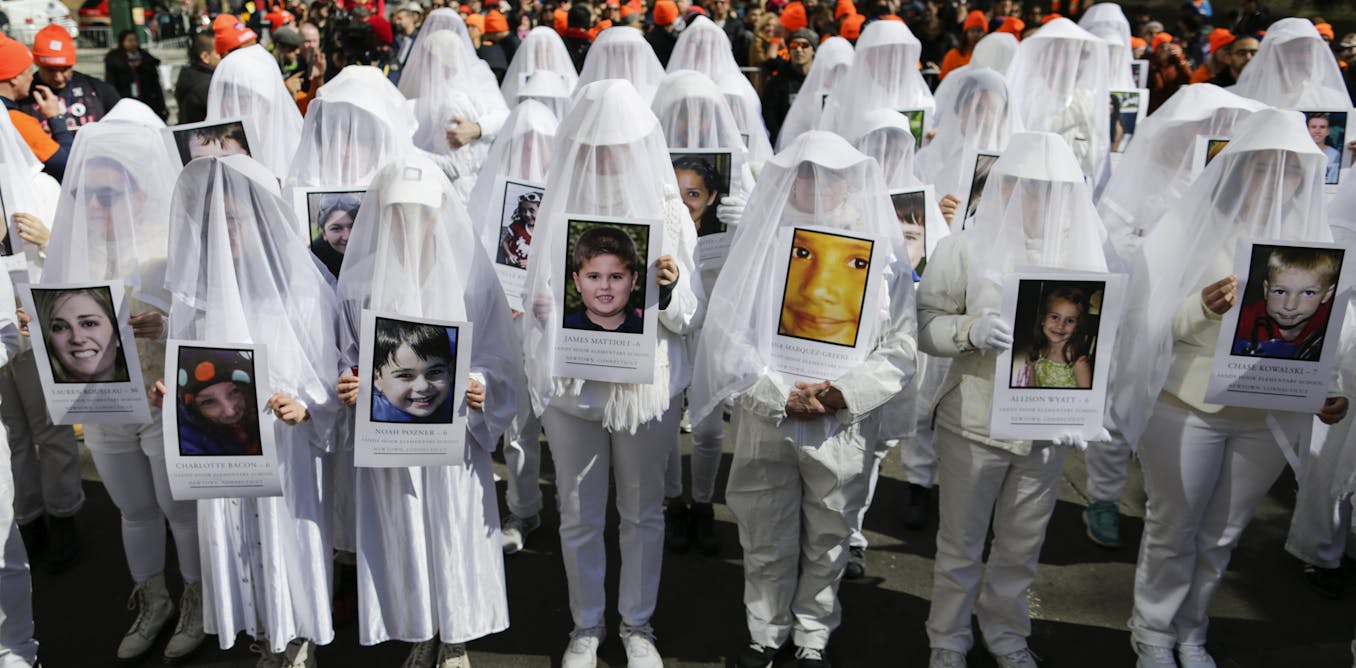
UConn Expert, 10 Years after Sandy Hook, on the Lies that 'Plague the U.S.'
UConn professor and journalist Amanda J. Crawford considers the misinformation that spread like wildfire after tragic school shooting at Sandy Hook Elementary School to be "the first major conspiracy theory of the modern social media age." Ten years after 26 young students and school staff were killed in the massacre, the impact of that day in 2012 continues to reverberate in America today. On this solemn anniversary, Crawford writes about the aftermath of Sandy Hook misinformation in a new essay for The Conversation: Conspiracy theories are powerful forces in the U.S. They have damaged public health amid a global pandemic, shaken faith in the democratic process and helped spark a violent assault on the U.S. Capitol in January 2021. These conspiracy theories are part of a dangerous misinformation crisis that has been building for years in the U.S. While American politics has long had a paranoid streak, and belief in conspiracy theories is nothing new, outlandish conspiracy theories born on social media now regularly achieve mainstream acceptance and are echoed by people in power. Recently, one of the most popular American conspiracy theorists faced consequences in court for his part in spreading viral lies. Right-wing radio host Alex Jones and his company, Infowars, were ordered by juries in Connecticut and Texas to pay nearly $1.5 billion in damages to relatives of victims killed in a mass shooting at Sandy Hook Elementary School a decade ago. Jones had falsely claimed that the shooting was a hoax. As a journalism professor at the University of Connecticut, I have studied the misinformation that surrounded the mass shooting in Newtown, Connecticut, on Dec. 14, 2012 – including Jones’ role in spreading it to his audience of millions. I consider it the first major conspiracy theory of the modern social media age, and I believe we can trace our current predicament to the tragedy’s aftermath. Ten years ago, the Sandy Hook shooting demonstrated how fringe ideas could quickly become mainstream on social media and win support from various establishment figures – even when the conspiracy theory targeted grieving families of young students and school staff killed during the massacre. Those who claimed the tragedy was a hoax showed up in Newtown and harassed people connected to the shooting. This provided an early example of how misinformation spread on social media could cause real-world harm. Amanda J. Crawford is a veteran political reporter, literary journalist, and expert in journalism ethics, misinformation, conspiracy theories, and the First Amendment. Click on her icon now to arrange an interview with her today.


UConn's Amanda J. Crawford on one Sandy Hook family's 'epic fight'
Since December 14, 2012, the families of 18 children and six adults murdered at Sandy Hook Elementary School have been forced to live amidst a tidal wave of conspiracy theorists and their constant lies, threats, and harassment. As lawsuits challenging some of the most vocal purveyors of that misinformation are working through the court system, the stories of the hardships faced by some of these families -- endured while they have tried to grieve their unimaginable loss -- have brought new attention to the profound and negative effects that the wildfire spread of misinformation has on the lives of the people most impacted. Amanda J. Crawford, an assistant professor with the UConn Department of Journalism who studies misinformation and conspiracy theories, offers the story of one family in an in-depth and heartbreaking, but critically important, story for the Boston Globe Magazine: Lenny knew online chatter about the shadow government or some such conspiracy was all but inevitable. When a neuroscience graduate student killed 12 and injured dozens of moviegoers with a semiautomatic assault rifle in Aurora in July, five months prior, there had been allegations about government mind control. When Lenny searched his son’s name in early January 2013, he was disgusted at the speculation about the shooting. People called it a false flag. Mistakes in news coverage had become “anomalies” that conspiracy theorists claimed as proof of a coverup. Why did the shooter’s name change? Why did the guns keep changing? Press conferences were analyzed for clues. Vance’s threat to prosecute purveyors of misinformation was taken as an indication they were onto something. But what concerned Lenny most was their callous scrutiny of the victims and their families. Some people claimed a photo of a victim’s little sister with Obama really showed the dead girl still alive. Others speculated the murdered children never existed at all. They called parents and other relatives “crisis actors” paid to perform a tragedy. And yet, they also criticized them for not performing their grief well enough. There were even claims specifically about Veronique. Lenny needed to warn her. “There are some really dark, twisted people out there calling this a hoax,” he told her. Veronique didn’t understand. There was so much news coverage, so many witnesses. “How could that possibly be?” “If you put yourself out there, people will question your story,” Lenny cautioned. Veronique thought he must be exaggerating a few comments from a dark corner of the Web. This can’t possibly gain traction, she thought. No, no, no! Truth matters. If I tell my story, people will be able to see that I am a mother who is grieving. Amanda J. Crawford is a veteran political reporter, literary journalist, and expert in journalism ethics, misinformation, conspiracy theories, and the First Amendment. Click on her icon now to arrange an interview with her today.

'I knew the men murdered in the Amazon—and their alleged killer'
On June 5, 2022, Indigenous expert Bruno Pereira of Brazil and freelance reporter Dom Phillips of Britain went missing while working in a remote part of the Amazon. Since then, a suspect in the case has confessed to their murders. But the story hasn't ended there. As journalists and experts take a closer look, the plot behind the story has thickened with politics, Indigenous rights, and organized crime. Scott Wallace, an associate professor of journalism at the University of Connecticut and author of The Unconquered: In Search of the Amazon’s Last Uncontacted Tribes, has worked extensively in Brazil's Javari Valley. He shared his perspective -- as someone who knew the victims as well as the alleged perpetrator, with National Geographic: The increasingly brazen intruders are no longer small-time players with a net or rifle seeking to put a meal on the family table. Members of the Indigenous patrols say that more and more, poaching crews appear to be highly-capitalized ventures, backed by a shadowy network of outside investors with suspected links to the illicit drug trade. Their fishing boats feature high-horsepower motors, and they carry large quantities of fuel, expensive gill nets, ice, and hundreds of kilos of salt to preserve bushmeat and critically endangered pirarucu, one of the world’s largest freshwater fish. In a rare police action, officers in March intercepted fishermen leaving the reserve with two dozen endangered river turtles, 650 pounds of salted bushmeat, and nearly 900 pounds of salted pirarucu. The evident outlays of cash create both the ability and the imperative for fishermen such as Oliveira to head deeper into the Javari territory, stay there longer, and return with hefty payloads to settle their debts. Unconfirmed reports indicate that Oliveira may have owed a Peruvian financier nicknamed “Colombia” more than $15,000 because a load of his contraband had been intercepted by the Indigenous patrols. As intruders penetrate into the depths of the Javari, Indigenous leaders and their allies fear the growing likelihood of a conflagration involving the uncontacted nomads roaming the forest. “They’re definitely putting the isolados—the isolated ones—at risk,” says Orlando Possuelo, Sydney’s son, who is based in Atalia do Norte and has been working alongside Pereira in advising the Indigenous patrols for the past two years. Poachers are pillaging the animals the isolated groups depend on for survival. And uncontacted groups remain highly vulnerable to contagious diseases, for which they have little to no immunological defense. Finally, and perhaps most immediately, there’s the very real danger of violence. “These fishermen don’t hesitate to shoot,” Orlando says. “If they’re willing to kill outside the reserve, there’s no doubt the lives of the isolated ones are in danger.” An uncontacted Indigenous group would have no way to peacefully communicate with interlopers entering their territory. Their likely first response would be to attack, which could provoke a bloodbath when intruders respond to spears or arrows with far more lethal bullets, says Paulo Marubo. “Anyone knows what the results will be between those carrying firearms and those who do not have them.” The hope of averting that alarming possibility was what led Pereira to risk his life. “The greatest concern that I have is the advance of outsiders—be they for projects authorized by the government or illegal players like loggers, miners, and land-grabbers—into the territories of the isolados,” Pereira told me in a phone call in 2019 after he was ousted from heading the isolated tribes department. “At the same time, you have the crippling of FUNAI and the department to protect the isolated tribes. It’s a very dangerous mix.” Scott Wallace is a bestselling author, photojournalist and educator who covers the environment and vanishing cultures worldwide. Scott is available to speak to media - simply click on his icon now to arrange an interview today.

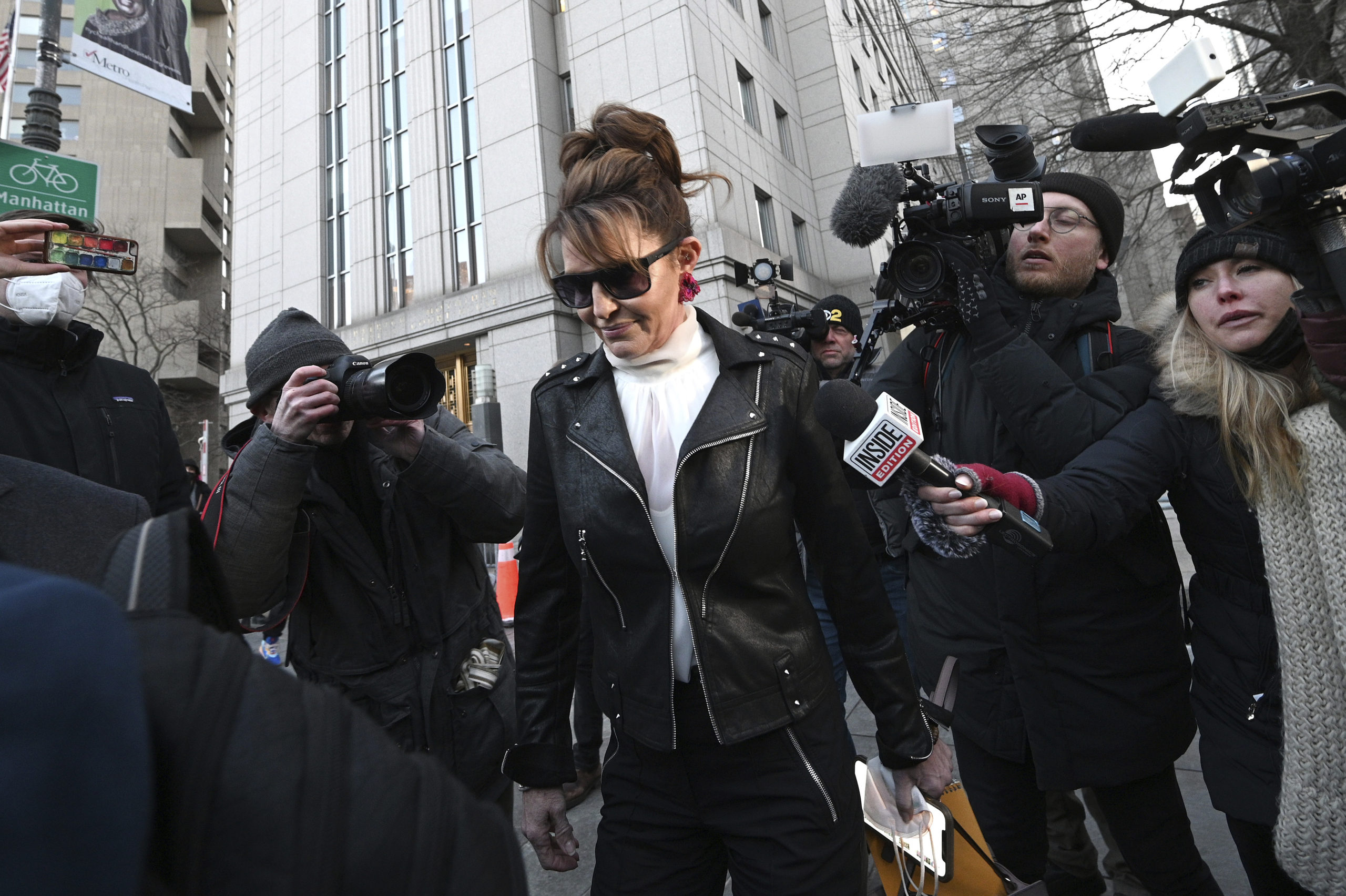
Journalism, Libel, and Political Messaging in America - UConn's Expert Weighs in
Former Alaska governor and vice presidential candidate Sarah Palin didn't cause the deadly 2011 shooting in Tuscon, Arizona, that injured Congresswoman Gabrielle Giffords, says former journalist and UConn expert Amanda Crawford in a new essay for Nieman Reports. Palin is asking for a new trial after a jury in February rejected her libel lawsuit against the New York Times. Palin sued the newspaper after it published a 2017 editorial that erroneously claimed she was responsible for the shooting. The Times quickly issued a correction. But Crawford says that, in her opinion, Palin has contributed to increased vitriol in American politics today, and that libel laws protecting freedom of the press need to be guarded: Palin, the 2008 Republican vice presidential nominee known for her gun-toting right-wing invective, is now asking for a new trial in the case that hinges on an error in a 2017 Times editorial, “America’s Lethal Politics.” The piece, which bemoaned the viciousness of political discourse and pondered links to acts of violence, was published after a man who had supported Sen. Bernie Sanders opened fire at congressional Republicans’ baseball practice, injuring House Majority Whip Steve Scalise. The Times editorial noted that Palin’s political action committee published a campaign map in 2010 that used a graphic resembling the crosshairs of a rifle’s scope to mark targeted districts. It incorrectly drew a link between the map and the shooting of Rep. Gabrielle Giffords, the Democratic incumbent in one of those districts, while she was at a constituent event in a grocery store parking lot in Tucson less than a year later. I was a political reporter in Arizona at the time, and I remember how Giffords herself had warned that the map could incite violence. “We’re on Sarah Palin’s targeted list,” she said in a 2010 interview, according to The Washington Post, “but the thing is that the way that she has it depicted has the crosshairs of a gun sight over our district, and when people do that, they’ve got to realize there are consequences to that action.” In the wake of the mass shooting in Tucson, some officials and members of the media suggested that political rhetoric, including Palin’s, may be to blame. In fact, no link between the campaign map and the shooting was ever established. As the judge said, the shooter’s own mental illness was to blame. That is where the Times blundered. An editor inserted language that said, “the link to political incitement was clear.” (The Times promptly issued a correction.) This was an egregious mistake and the product of sloppy journalism, but both the judge and the jury agreed that it was not done with actual malice or reckless disregard for the truth. That’s the standard that a public figure like Palin must meet because of the precedent set in the Sullivan case and subsequent decisions. Even if Palin is granted a new trial and loses again, she is likely to appeal. Her lawsuit is part of a concerted effort by critics of the “lamestream media,” including former President Donald Trump, to change the libel standard to make it easier for political figures to sue journalists and win judgments for unintentional mistakes. They want to inhibit free debate and make it harder for journalists to hold them accountable. -- Nieman Reports, March 14, 2022 If you are a reporter who is interested in covering this topic, or who would like to discuss the intersection between politics and media, let us help. Amanda Crawford is a veteran political reporter, literary journalist, and expert in journalism ethics, misinformation, conspiracy theories, and the First Amendment. Click on her icon now to arrange an interview today.