Experts Matter. Find Yours.
Connect for media, speaking, professional opportunities & more.

Baylor Black Gospel Music Expert Pens Dallas Morning News Column Remembering MLK
Robert Darden, professor of journalism, PR and new media at Baylor University, is a gospel music expert. He penned this column to commemorate the death of Martin Luther King, Jr. and to remember the music that carried people through the grief of the time. He writes: "In the days of rage and grief that followed the assassination of the Rev. Martin Luther King Jr. in Memphis on April 4, 1968, many Americans found, at least for a time, relief in music. Rosa Parks, whose brave stand on a Montgomery, Ala., bus just 13 years earlier was the inciting incident in the slow build of the civil rights movement after World War II, watched as Detroit erupted in violence. She sat in her room playing Sam Cooke's "A Change is Gonna Come" over and over. She said the song 'saved her sanity.'" Darden is the author of two dozen books, most recently: Nothing But Love in God’s Water, Volume II: Black Sacred Music from Sit-In to Resurrection City (Penn State University Press, 2016); Nothing But Love in God’s Water, Volume I: Black Sacred Music from the Civil War to the Civil Rights Movement (Penn State University Press, 2014); Jesus Laughed: The Redemptive Power of Humor (Abingdon Press, 2008); Reluctant Prophets and Clueless Disciples: Understanding the Bible by Telling Its Stories (Abingdon Press, 2006); and People Get Ready! A New History of Black Gospel Music (Continuum/Bloomsbury, 2004). He founded the Black Gospel Music Restoration Project, the world’s largest initiative to identify, acquire, digitize, categorize and make accessible gospel music from gospel’s Golden Age (1945-1970). The BGMRP provides the gospel music for the Smithsonian’s new National Museum of African American History & Culture. Source:


Robert F. Darden, professor of journalism and founder of Baylor’s Black Gospel Music Restoration Project, treasures the rich sounds of Christmas spirituals, which differ from Christmas carols. “So many of the spirituals are written in what has been performed as and what scholars call the ‘eternal now,’” Darden said. “If you read the lyrics as they were transcribed, many of them are in the present tense.” To illustrate his point, Darden referenced the spiritual “Were You There?” in which the lyrics read, “It causes me to tremble.” Darden said that since slaves in America were not book-educated and struggled with the concept of time, the Bible was a contemporary account of what was going on for them. In their minds, they conflated Abraham in the Bible with Father Abraham Lincoln who was going to free them, and associated Harriett Tubman with Moses and the Ohio River with the Jordan River. Darden said the powerful resonance in these spirituals is unmatched because of the passion of the people who sang them. “When you hear the Christmas spirituals, you’re hearing people who (believe) this is a real live event,” Darden said. “Go tell it on the mountain that Jesus Christ is born, not was born. That gives them more of an immediacy and a power than songs that are in the past tense.” Darden also said that slaves had a more intimate understanding of the nativity story because they identified with the conditions into which Christ was born. They understood what it was like to come from a foreign land to a place where they were despised and enslaved in the same way that Christ was born as a refugee child with people seeking to kill him. “The spirituals reflect a people who believe they’re in the middle of the Bible story. I think that gives them a power that’s hard for others to match and why the Gospel artists, who would later record these songs, tried to capture that and keep that immediacy and intimacy that I think a lot of Christmas carols don’t have,” Darden said. Darden said the modern world still needs Christmas spirituals. While commercialism gets people excited and inspired for the holidays, people in 2017 need something that will help them reflect on what truly matters about the season. They need something that will not only remind them of history but will also evoke the sensation of gratitude for a needed savior. “By noticing and listening to the words of the spirituals, you see how they focused on what really matters," he said. Source:

Done in by digital? What will the sale of Time mean for the industry?
On Monday, a once mighty media juggernaut was sold off for $2.8 billion dollars. Time Inc. – the publisher of Time, Fortune, Sports Illustrated and People was now property of the Meredith Corporation. The Des Moines, Iowa-based company better known for its Better Homes and Gardens, Family Circle, Parents and Family Fun magazines. It’s a bitter and sad end for Time. The company was once the industry leader in magazines and world-respected periodicals. The magazines were’ must-reads’ for the informed. But times have changed, and Time never did catch on or catch up with the digital wave that has transformed journalism as we know it. So, what will all of this mean? Can the world of print media survive and adapt to changing times and tastes? As well, with shrinking circles of media ownership – will regulators let this sale proceed? And what will this mean for the many journalists? More job cuts and shrinking news rooms? Will they move from NYC to Iowa? Has the lustre and allure of being a New York based journalist lost its shine? There are a lot of questions that still need to be addressed and answered. That’s where the experts from Cedarville University can help. Dr. Marc Clauson is a professor of history and law at Cedarville. Marc is an expert in the fields of anti-trust regulation and the economic impact of mergers and takeovers like this. Dr. Clauson is available to speak with media – simply click on his icon to arrange an interview. Source:

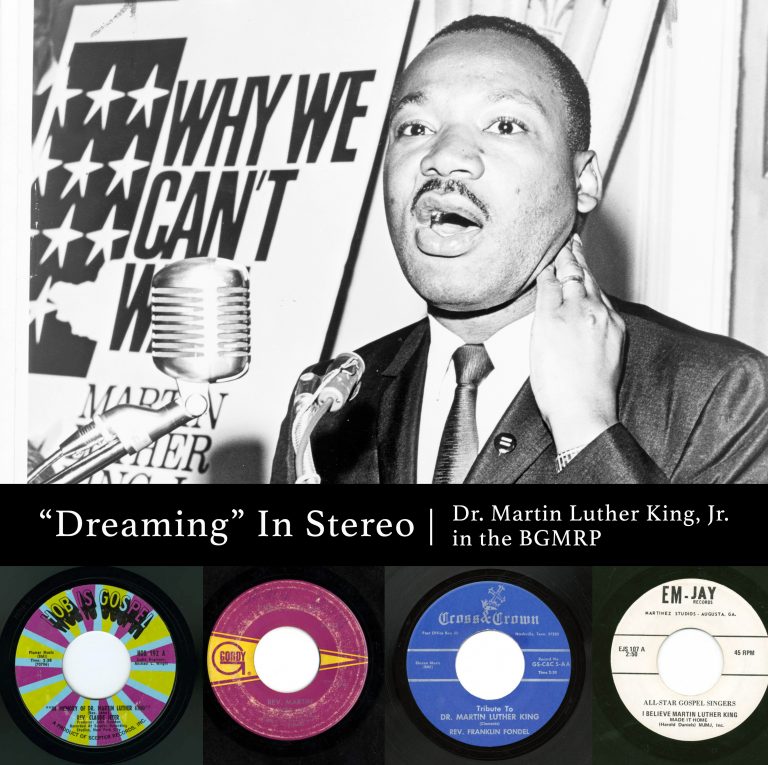
Baylor Gospel Expert: MLK’s ‘I Have a Dream’ Inspired Response from Black Gospel Artists
Fifty-four years ago this week. On Aug. 28, 1963, from the steps of the Lincoln Memorial in Washington, D.C., Dr. Martin Luther King Jr. delivered “I Have a Dream” – one of the most iconic speeches in American history and a defining moment of the Civil Rights Movement. For black gospel artists recording in the years after 1963, King’s speech was fertile ground for creative expression, said Robert Darden, professor of journalism and founder and director of Baylor’s Black Gospel Music Restoration Project (BGMRP). “These artists responded by creating songs that sampled portions of Dr. King’s recorded audio, drew inspiration from his words or supported the Civil Rights Movement in the wake of its delivery,” Darden said. Darden founded Baylor’s Black Gospel Music Restoration Project more than a decade ago in an effort to identify, acquire, preserve, digitize and catalog recordings from the black gospel music tradition. This music, from the Golden Age of Gospel from 1945 to 1975, was quickly vanishing as albums made the transition to CDs. Through the work of the Baylor Libraries’ Digital Projects Group, recordings from the BGMRP are available online in the Baylor Libraries Digital Collection, and in some cases includes other materials, such as taped interviews, photographs, press packets, tour books and programs, newspaper and magazine clippings, and sheet music. Music from the BGMRP also has been included in a permanent exhibit featuring African-American musical history at the Smithsonian Institution’s National Museum of African American History and Culture. Source:

Millennials who are pursuing careers in public relations do not feel prepared to offer advice on ethics to their companies — and in fact, they do not expect to face ethical dilemmas at work, according to a Baylor University study. Millennials or Generation Y — generally identified as people born between 1981 or 1982 through 2000 — are projected to make up one third to one half of the country’s workforce by 2025. They will shift from being “doers” to being “deciders” in businesses, and their ethical compass will set the course for subsequent generations of public relations professionals, said study author Marlene Neill, Ph.D., assistant professor of journalism, public relations and new media in Baylor’s College of Arts & Sciences. “The study findings about lack of ethical readiness are a cause for concern,” Neill said. “If Millennials don’t feel equipped, they may be misled by their superiors or used as instruments of unethical behavior.” Without mentoring or training, they must learn by trial and error. Researchers found that factors that have a positive impact on Millennials readiness to face ethics issues include ethics training in college, workplace training, training through professional associations and mentoring by someone inside or outside their organization. But while the majority (74 percent) had received ethics training in college, most had not received training in the workplace through such methods as videos, handbooks and learning modules; or through a professional organization such as PRSA. Besides lacking confidence, most appear to be overly optimistic that they will not have to confront such common dilemmas as truthfulness in communication, altering researching results, working with questionable clients or blurring of personal and professional speech online, Neill said. Source: