Experts Matter. Find Yours.
Connect for media, speaking, professional opportunities & more.

Epidemiologist: Winter Olympics fortunate to dodge norovirus outbreak
Finland's Olympic women's hockey team overcame a norovirus scare last week, but they couldn't get past Team USA, who shut them out 5-0 Saturday in Milan. The University of Delaware's Jennifer Horney can discuss the difficult-to-contain virus, which also hit the Winter Games in 2018. - Horney, a professor of epidemiology at UD, said that the outbreak – which forced Finland to cancel its first game after 13 players had either been infected or quarantined – is not surprising. Norovirus spreads rapidly in crowded environments through direct contact with surfaces or airborne droplets. - It is difficult to limit the spread of norovirus, as witnessed by the major outbreak that spread at the 2018 Winter Olympics in South Korea. - Consideration is often given for the potential of these types of outbreaks being intentional, which requires public health to work closely with law enforcement. To reach Horney directly and arrange an interview, visit her profile and click on the "contact" button. Interested journalists can also send an email to MediaRelations@udel.edu.


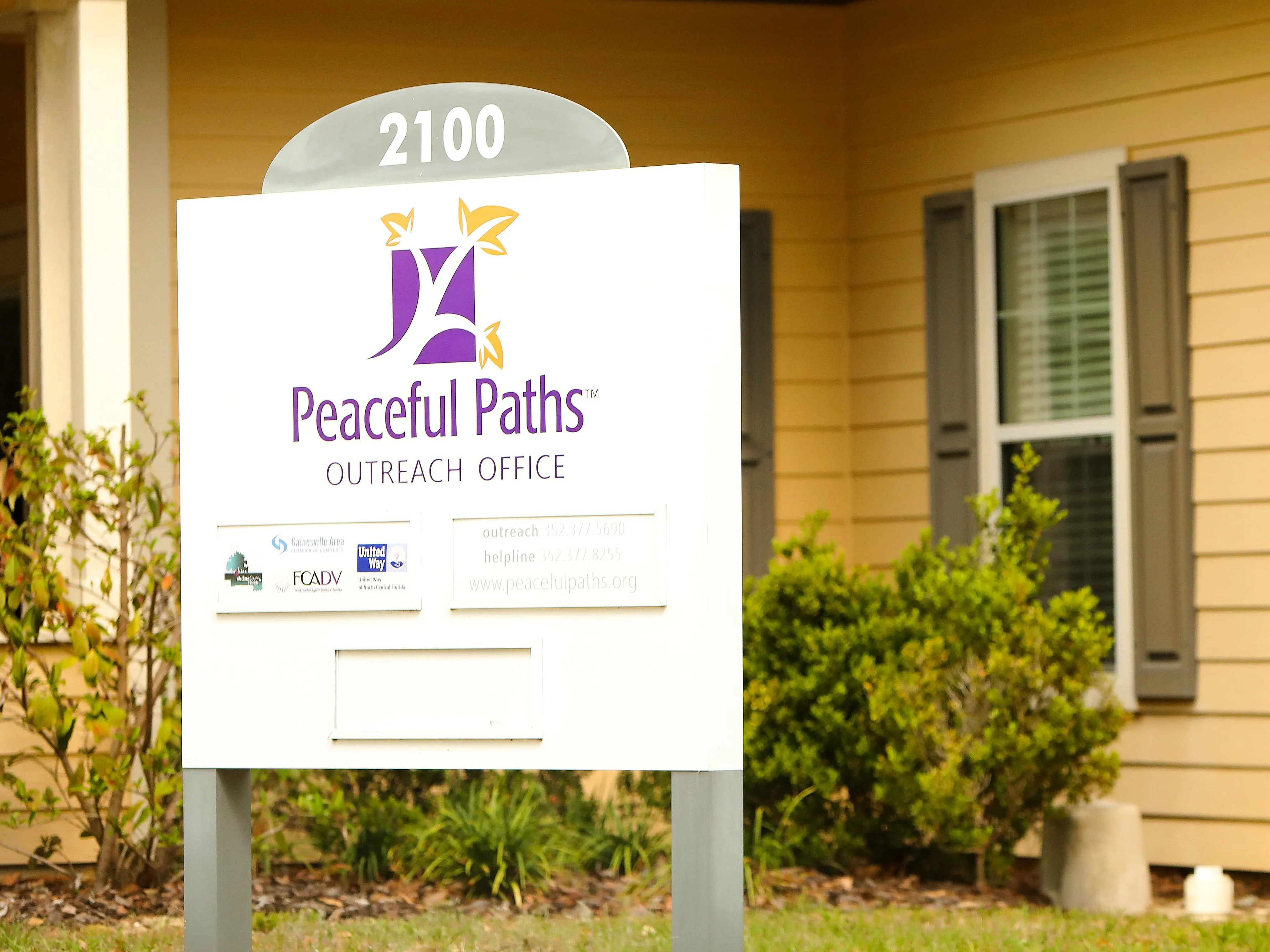
Domestic abuse affects millions of people every year, often in unseen and deeply personal ways, and online threats toward victims can be particularly harmful. To address this reality locally, the University of Florida’s Center for Privacy and Security for Marginalized and Vulnerable Populations, or PRISM, works with Gainesville-based domestic abuse support center Peaceful Paths to help people stay safe in the digital world. Kevin Butler, Ph.D., the director of PRISM and the Florida Institute for Cybersecurity Research at UF, has been researching issues related to security and privacy of technologies that affect survivors of intimate partner violence for years. He and his graduate students connected with Peaceful Paths in 2022, presenting their findings on cybersecurity and demonstrating how their research may help improve online safety for vulnerable populations. They developed a pilot study, a survey and interview protocols that are now helping those in need at the center. “[We aim to] develop principles of design that will allow for a robust technology design that really mitigates harms and improves benefits for all,” Butler said about PRISM. Educating abuse survivors has been a key component of the collaboration between UF and Peaceful Paths. For example, PRISM’s team has conducted research on the effects of stalkerware, also known as spyware, which is a type of software or app designed to be installed secretly on people’s devices to monitor their activities without their consent. Abusers may use this tool to track and harass victims, and stalkerware is regularly linked to domestic violence – a fact that is not widely known. "Even the first presentation [UF] gave enhanced our advocates' knowledge of security pieces, which helps them safety plan with survivors," said Peaceful Paths CEO Crystal Sorrow. “It actually increases the safety of everyone in the community we work with when we talk about red flags, digital dating abuse and healthy relationships.” While PRISM, which is supported by the National Science Foundation, is making an impact on the local community, its overall reach is much broader. PRISM was the first academic partner in the Coalition Against Stalkerware, which includes groups such as the National Network to End Domestic Violence, the Electronic Frontier Foundation, and law enforcement agencies throughout the United States and the world.

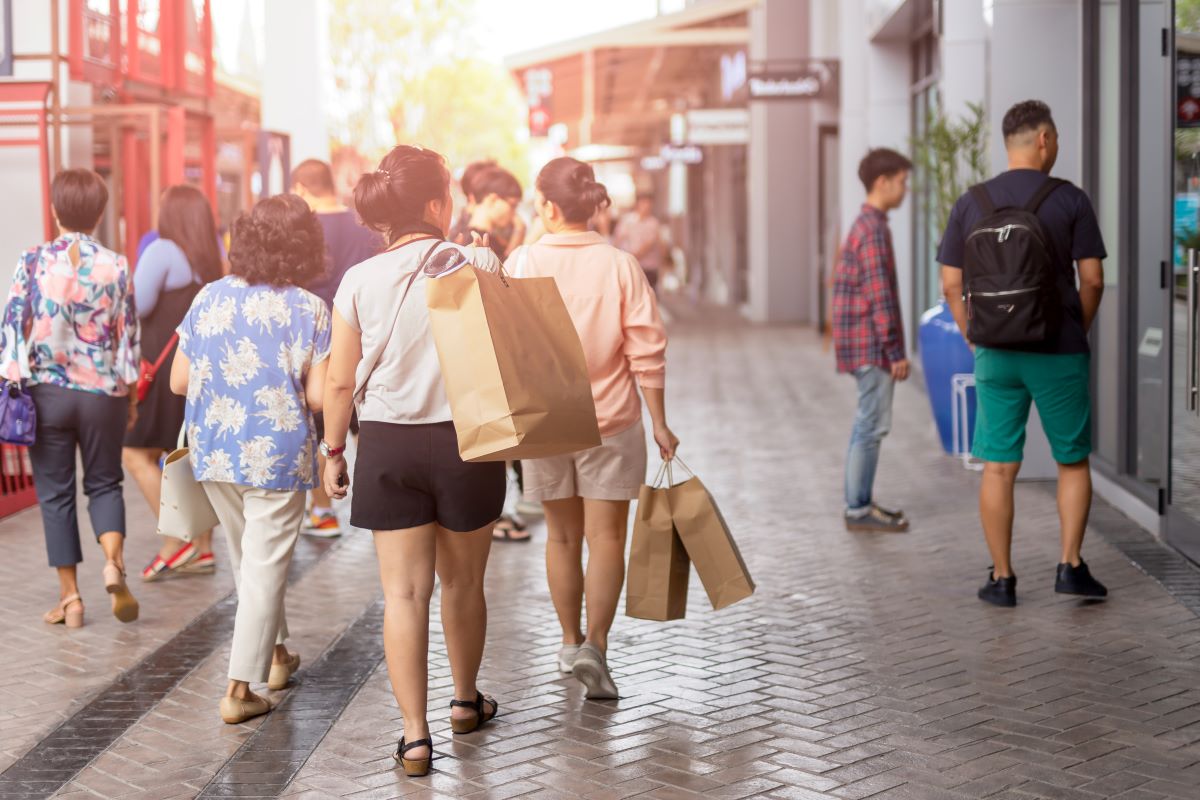
As holiday shopping season nears, UF experts warn retail theft is growing more sophisticated
With the busiest shopping season of the year approaching, new findings from the National Retail Federation’s Impact of Retail Theft and Violence 2025 report — developed by the University of Florida’s SaferPlaces Lab and the Loss Prevention Research Council — show retailers are facing increasingly complex and technology-driven threats. UF researchers say early preparation, better data and stronger collaboration will be essential as stores brace for heavier foot traffic and heightened safety risks. Despite public reports that retail theft is decreasing, Read Hayes, Ph.D., a UF research scientist and director of the LPRC at UF Innovate, said retailer surveys tell a different story: Incidents of shoplifting, organized retail crime, online fraud and other external theft continue to rise, even as some law enforcement statistics appear flat or declining. The gap, he said, reflects how much crime goes unreported or unrecorded. “Retailers have always had a difficult time reporting much of their crime, and if you look only at police data, like calls for service or arrests, it can look like retail crime is flat or even slightly down,” he said. “But when we survey retailers, who are the actual crime victims, they consistently report year-over-year increases in theft and violence.” Criminal groups are also becoming more sophisticated. Hayes said offenders are increasingly using technology to defeat protective systems, disrupt cameras and identify vulnerable stores. They also rely heavily on social media platforms such as TikTok and Reddit to coordinate attacks and share tactics. “It’s a little disconcerting how much criminals rely on social media now to scout stores, map out easy targets, learn from each other or just plain brag about how they did it,” he said. LPRC scientists monitor social media signals to help retailers and law enforcement understand emerging threats — not in real time, Hayes said, but to help build best practices organizations can use to defend themselves. Criminals continue to focus on high-demand items such as branded apparel and footwear, prompting retailers to rethink how those products are displayed and secured. Hayes said many companies are testing new approaches to better protect vulnerable merchandise without driving customers away. One example is automated self-service systems for locked items, where customers can retrieve a product by having a code sent to their phone without waiting for a store employee. Safety remains retailers’ top concern, Hayes said. LPRC’s latest report, developed in collaboration with the security technology company Verkada, found that frontline retail workers report feeling less safe than ever, a trend that typically intensifies during the holiday rush. Rising incidents of in-store violence, limited law enforcement support in some areas and increased guest-related confrontations are pushing retailers to reassess how they protect both employees and customers. “Nothing is more important than protecting the frontline retail associates who keep this industry running,” Hayes said. “This report helps reinforce what retailers need to do to ensure those workers feel safe.” LPRC teams are also studying ways to improve safety beyond store walls, testing parking lot technologies, including license plate readers and flashing deterrent systems designed to discourage potential offenders and reassure law-abiding shoppers. At the federal level, Hayes said he and partners across the country are urging Congress to pass a bill to address organized retail crime and establish a centralized platform for reporting retail theft threats. As the holiday season approaches, Hayes said the need for evidence-based solutions has never been clearer. “Retailers are under pressure to keep their stores safe, welcoming and competitive,” Hayes said. “The more we can understand offender behavior, customer expectations and emerging technologies, the better we can help retailers, communities and law enforcement reduce harm.” The LPRC, headquartered at UF Innovate, brings together more than 200 major retailers, technology companies and public safety agencies to conduct research that strengthens store safety, reduces loss and enhances the customer experience.


Motor vehicle crashes remain one of the leading causes of death among teenagers. For the youngest drivers, getting behind the wheel marks freedom but also comes with measurable risk. At the University of California, Irvine, Dr. Federico Vaca, professor and executive vice chair of emergency medicine, is determined to change that trajectory. “Driving licensure among our youngest drivers remains a major life milestone, and it allows for newfound freedom and opportunity for not only youth but their parents as well. At the same time, learning to drive and licensure come at a time when youth are rapidly moving through life with new transitions in school, with friends, and likely exposure to alcohol and drugs,” he says. “Our priority … is to examine the complexities of young driver behavior and to thoroughly understand crash injury risk and crash prevention among this special group of drivers.” Vaca’s work is at the intersection of health, transportation science and policy. A fellow of the Association for the Advancement of Automotive Medicine and a researcher at UC Irvine’s Institute of Transportation Studies, he previously served as a medical fellow at the U.S. Department of Transportation’s National Highway Traffic Safety Administration in Washington, D.C. His long-standing goal is to prevent the injuries he has seen and treated in emergency departments and trauma centers through rigorous research, using the findings to inform and advance evidence-based programs and policies that save lives on the road. Innovating safety science UC Irvine is home to a new hub for understanding and preventing crash injuries among young drivers, the Brain, Body & Behavior Driving Simulation Lab, founded by Vaca and his interdisciplinary team. At the heart of the B3DrivSim Lab is a high-fidelity, half-cab driving simulator capable of replicating real-world conditions with precision. It uses advanced software to design customized driving scenarios – from complex roadway environments to the inclusion of such human elements as distraction and fatigue – all while capturing real-time video and driving behavior as well as vehicle control metrics. This integration of medicine, behavioral science and engineering enables researchers to measure how developmental and socioecological factors shape driver decisions in unique and consequential ways. The B3DrivSim Lab also represents a growing mentorship ecosystem at UC Irvine. In mid-June, the facility welcomed Siwei Hu, a postdoctoral scholar who earned a Ph.D. in civil and environmental engineering, with a focus on transportation studies, at UC Irvine. Hu works closely with Vaca to combine engineering and modeling analytics with behavioral and crash risk insights. The half-cab driving simulator uses advanced software to replicate real-world conditions and design customized driving scenarios – from complex roadway environments to the inclusion of such human elements as distraction and fatigue – all while capturing real-time video and driving behavior as well as vehicle control metrics. Steve Zylius / UC Irvine From the lab to policy Beyond simulation, Vaca’s latest National Institutes of Health-funded study, separate from his lab’s work, takes this philosophy to the national level. His project, “Modeling a National Graduated-BAC Policy for 21- to 24-Year-Old Drivers,” explores whether lowering the legal blood alcohol limit for young adults could reduce alcohol-related crashes and deaths. “When you turn 21, at that very moment, the application of several alcohol-related prevention laws changes in the blink of an eye,” Vaca says. “Before that, the minimum legal drinking age and zero-tolerance laws are in place to protect young drivers from alcohol-impaired driving. Effectively, the second you turn 21, those prevention policies don’t apply, and you’re suddenly allowed to have a much higher blood alcohol concentration in your body that’s intimately tied to serious and fatal crash risk. It’s a very dangerous disconnect.” The study will use national crash data, behavioral surveys and system dynamics modeling to examine how a “graduated BAC policy” might bridge that gap, giving young adult drivers a safer transition into full legal responsibility and saving many more lives. Bridging science, education and prevention Earlier this year, Vaca and his B3DrivSim team joined prevention program educators, policymakers, engineers and law enforcement professionals in Anaheim at a Ford Driving Skills for Life event, part of a Ford Philanthropy-sponsored national effort teaching teens hands-on safe driving techniques – from hazard recognition to impaired-driving awareness. Speaking to more than 130 high school students and their parents from local and distant communities, Vaca emphasized the connection among driving, independence, opportunity and responsibility. That message aligns with his broader initiative, Youth Thriving in Life Transitions with Transportation, which introduces high school students to traffic safety and transportation science and their role in promoting health, education and employment in early adulthood. By linking research and real-world experience, the project empowers youth to see mobility as a foundation for opportunity with safety as its cornerstone. With overall young driver crash fatalities rising 25 percent nationally over the last decade and a 46 percent increase in fatal crashes where a young driver had a BAC of ≥ .01/dL, Vaca’s work represents a crucial step toward reversing that trend. Through a combination of clinical insight and prevention, transportation and data science underscored by community collaboration, he and his team are redefining how researchers and policymakers think about youth driver safety.


On Sunday, October 19, at 9:34 a.m., four masked individuals surged into the Louvre’s Galerie d’Apollon from a severed, second-floor window. Hurriedly, they smashed open two display cases, seized eight pieces of jewelry, then shimmied down a ladder and sped off on motorbikes toward Lyons. In seven minutes’ time, in broad daylight, they absconded with an estimated $102 million in valuables from the world’s most famous museum. This past Saturday, October 25, French authorities announced the first arrests in connection with the daring heist. However, despite the police’s progress, the country continues to litigate the matter—embroiled in discussions of heritage, history and national identity. Recently, Roderick Cooke, PhD, director of French and Francophone Studies at Villanova University, shared his perspective on the situation as well as the artifacts lost. Q: The Louvre heist has been described as “brazen,” “shocking” and a “terrible failure” on security’s part. Is there any sort of precedent for this event in the museum’s history? Dr. Cooke: Nothing on this scale has ever happened to the Louvre since its founding as a museum during the Revolution. The closest equivalent is the 1911 theft of the Mona Lisa by a former employee who claimed it should be returned to Italy. However, that was one painting, the heist was not committed by organized crime, and the Mona Lisa did not have the renown it enjoys today. The impact of the theft was thus lower, although it did cause major outrage and a sweeping law-enforcement response at the time. Ironically, that theft is often credited with making da Vinci’s painting the global icon it continues to be. Q: What has the reaction to this event been among the French people? DC: It’s harder to get a sense of reactions across French society, because so much of the aftermath has focused on the intellectual milieux’s opinions. And in those realms, it has immediately become a political football. Individuals positioning themselves as anti-elite or anti-status quo, such as Jordan Bardella of the National Rally party, have called the theft a “humiliation,” immediately tying it to French national prestige. Former President François Hollande has conversely and vainly called for the event to be de-polemicized, citing national solidarity. This is happening because the Louvre is one of the most visible manifestations of French soft power—the most-visited museum anywhere on Earth. As such, anything attacking its integrity becomes an attack on the nation, and how individual French citizens feel about the theft is closely tied to their broader view of the nation. Q: Several of the items stolen from the Louvre once belonged to Empress Eugénie. Could you share a bit of information on her story? DC: Eugénie de Montijo was a Spanish aristocrat who married the Emperor of the French, who ruled as Napoleon III between 1852 and 1870. It was a time of authoritarian repression and sham democracy—Napoleon III installed the Empire through a coup. Its clearest legacy is that Paris looks the way it does today largely because of the thorough modernizations overseen by Napoleon III’s appointee Baron Haussmann. So, Eugénie and her now-lost jewels represent a complex point in French history, when culture and the economy developed quickly, but did so in a climate of fear for any French person who opposed the regime too loudly (like Victor Hugo, who went into exile on the Channel Islands and wrote poems savaging Napoleon III and his deeds). Some accused the Empress of being responsible for the more hardline and conservative stances taken by her husband’s government. On a different note, she was a diligent patron of the arts and arguably the most significant figure in the contemporary fashion world, famous for setting trends such as the bustle that radiated across Europe. This explains the mix of anger and admiration that followed her depending on the sphere she was operating in. A new English-language biography argues that far from being a traditionalist, she was a pioneering feminist by the standards of the time. It looks like her historical importance will continue to be debated. Q: Interior Minister Laurent Nuñez described the stolen items as “of immeasurable heritage value.” How significant of a cultural loss do you consider this theft? DC: These jewels are referred to in French as “les Joyaux de la Couronne” (the Crown Jewels), but of course that phrase lands very differently in republican France than it does across the water in the United Kingdom. The items actually represent several different dynasties of French rulers, some of whom came to power through direct conflict with others. The now-ransacked display at the Louvre smoothed over these historical divisions, for which many French people died over the centuries. President Macron referred to the stolen items as embodying “our history,” which is emblematic of the French state’s work to create a conceptual present-day unity out of the clashes of the past. At a time when France is arguably more divided than at any point since World War II, any unitary symbol of identity takes on greater significance. Q: Do you have any closing thoughts on the artifacts taken and what they represent? DC: I’d reemphasize the previous point about the smoothing effect of the museum display on the violent history that made it possible. Much of the reporting on the stolen jewels lists off the different queens and empresses who owned them, without giving readers a sense of the complicated succession of regime changes and ideologies that put those women in power in the first place. The relative stability of the last 60-odd years is an anomaly in modern French history. This set of jewels and the names of their original owners may seem far removed from the concerns of an ordinary French citizen today, but just beneath their surface is a legacy of changing governments and tensions between social classes that survives in new forms in 2025.

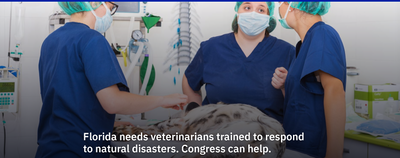
Florida needs veterinarians trained to respond to natural disasters. Congress can help.
When Hurricane Helene struck, we were on the frontlines in Florida’s Big Bend region, racing against time to support the Humane Society as they rescued animals displaced by the most powerful storm ever to hit this part of the state. Two weeks later, we were back in action, facing the devastating flooding from Hurricane Milton. These back-to-back disasters showcased the urgency and critical need for emergency-response veterinarians who can act fast to save lives. We lead one of the nation’s only three emergency veterinary response teams — the University of Florida Veterinary Emergency Treatment Service (UF VETS). Founded after the 2004 hurricane season and operating under the UF College of Veterinary Medicine, the UF VETS program hosts two distinct, yet complementary, branches: a medical response unit for disaster-affected animals and an animal technical rescue branch, which manages complex operations like overturned livestock trailers. Larry Garcia specializes in veterinary disaster preparedness and response, animal technical rescue/training and shelter medicine operations. View his profile here Our team is on call whenever disaster strikes, working alongside local and state veterinary organizations, animal rescues and law enforcement to save animals in crisis. But here’s the problem: Without a nationwide system for coordinating these efforts, it’s often chaotic, and animals suffer because of it. Now Congress has a golden opportunity to change that. As they return to Washington, they have the chance to make a game-changing impact by including funding in the final FY 2025 Homeland Security Appropriations bill to create a nationwide network of veterinary emergency teams. This funding could revolutionize how the U.S. handles animal care during national disasters — and it needs to happen, fast. Read more ... Looking to know more about this important topic or connect with Lawrence Garcia - simply click on his icon now to arrange an interview today.

Some interesting areas that I’ve seen in the press: "Consumer Sentiment was measured at the 7th lowest point (55.1) since its inception in 1952, yet we’re not seeing a huge decrease in spending (CNN). Part of the argument is the spending is an average measure and really wealthy consumers are not feeling the pinch and spending like normal or moreso, while less financially-well-off-individuals are pulling back their spending (Spectrum Local News). Presumably, the shutdown doesn’t help that figure. In terms of consumer groups affected, let’s look at government workers first. An article by the BBC claimed roughly 750,000 “non-essential” federal workers could be furloughed without pay. This means that many to most of those are going to struggle with paying for the necessities and this becomes more and more of a strain the longer the shutdown wears on. Furloughed Workers: Most furloughed workers are required to be paid back pay when the shutdown is over by law. That could in some ways create more purchases in the future if they can’t be bought currently, but could also lead to things like more credit card debt as people can put charges on a credit card to pay back later. While from a consumer psychology standpoint that might make sense, but it’s a very risky practical strategy. Gov’t contractors don’t get the same guarantee. Businesses that rely heavily on such groups (e.g., in a town where many fall into those segments) might suffer or shutter. This means other consumers that frequent those establishments have their routines disrupted , and force them to find other providers. Essential Workers: Then we have the group of “essential” workers that must go to work and still not be paid, Air Traffic Controllers, The military, TSA Agents, certain law enforcement groups, etc. that all might draw back spending with no immediate income. That can cause major issues for retailers and producers, which could lead to more layoffs in the private sector, putting more consumers into financial straits. If you’re someone that likes to visit national parks or zoo’s like the National Zoo, or the Smithsonian Museums (which has claimed they’ll have funding at least through October 6th), you could be disappointed to have reduced accessibility or outright closures due to the shutdown, again according to the BBC. Healthcare: Healthcare could definitely be affected, particularly for those on Medicaid and medicare (i.e., the elderly and poor). So if you view medical services as consumer good, then there will be issues there as well (increased wait times, decreased satisfaction, etc.), which is likely to add apprehension and anxiety to many consumers. Travel: If you’re a traveler, staffing shortages in the TSA and Air Traffic Controllers could lead to significant travel delays, which could disrupt leisure or business plans, or force people to cancel plans altogether. If you’re traveling abroad getting your passport updated could take longer. All these things (and many more) may happen or not depending on the length of the shutdown and the severity of the furloughs. Those in better financial positions will suffer less, while those already in less desirable financial situations might find that delays in some of their normally federally funded services (e.g., SNAP, WIC, etc.) create even bigger issues."
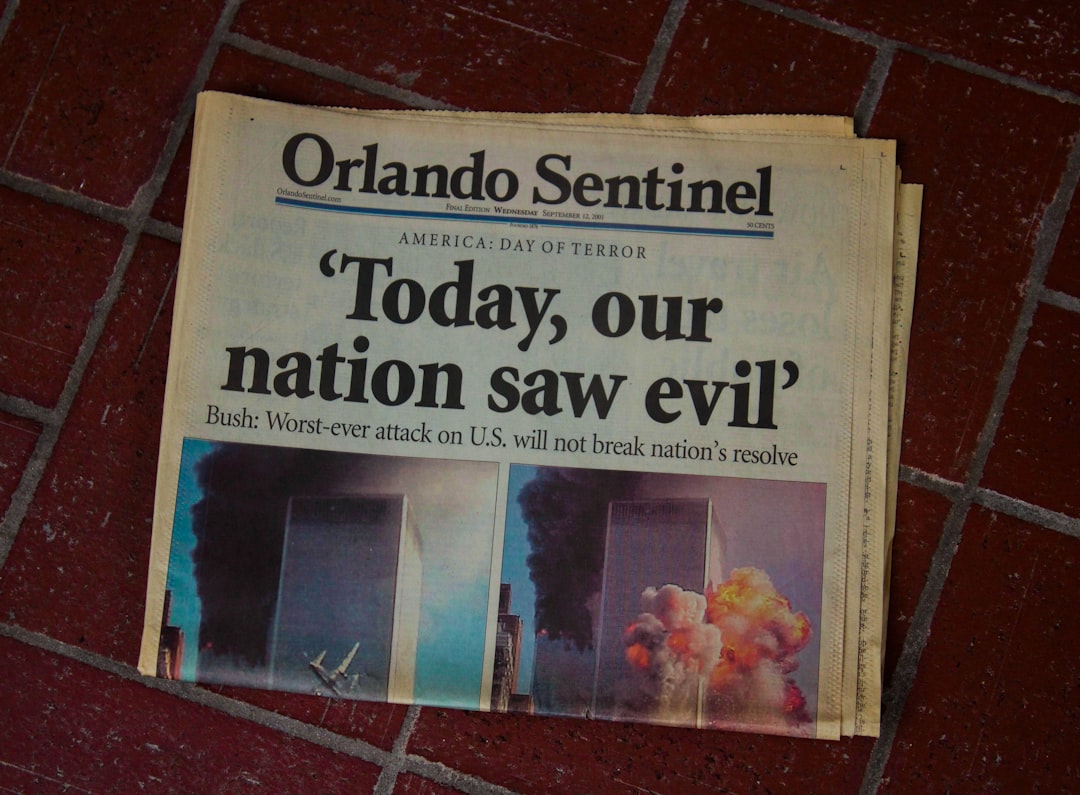
#ExpertSpotlight: The Day That Redefined America: 9/11 and Its Lasting Impact
September 11, 2001 marked a pivot in American history—a day when the nation’s sense of safety was shattered, and its collective identity reshaped. The attacks triggered sweeping changes in security, government authority, social behavior, and even cultural cohesion. Today, the legacy of 9/11 lives on in how we remember, govern, and connect. A Nation in Shock—and Unity On that fall morning, the U.S. witnessed a tragedy that killed nearly 3,000 people and devastated the nation’s psyche. In the immediate aftermath, grief turned into solidarity—as most Americans tuned into televised coverage, felt sadness, anger, and fear, yet paradoxically came together in an extraordinary show of patriotism and trust in institutions. In the months that followed, confidence in government reached levels unseen in decades—fueled by mourning, resolve, and a collective desire to heal. The Rise of “Homeland Security” & Executive Power Almost immediately, the U.S. government unleashed legal and structural transformations. The USA PATRIOT Act, passed just weeks later in October 2001, significantly expanded surveillance and law enforcement powers for domestic security—raising ongoing concerns about civil liberties. Alongside this, the Department of Homeland Security was created in 2002, bringing together 22 agencies to coordinate security against future threats and reinforcing a new era of national vigilance. Economic Shock and Air Travel Overhaul The attacks triggered immediate economic consequences: U.S. stock markets plunged, airlines and insurers suffered heavy losses, and GDP forecasts were revised downward. Meanwhile, the aviation sector underwent a rapid and lasting modernization in security protocols and flight routing. Notably, Canada’s Operation Yellow Ribbon absorbed diverted flights in the chaos, highlighting international cooperation amid crisis. Legal Precedents and Global Conflict Congress quickly approved the broad-ranging Authorization for Use of Military Force (AUMF), enabling the U.S. to pursue adversaries globally—a mandate that has since been interpreted far beyond its original context, shaping nearly two decades of “forever wars.” These legal expansions—and the accompanying conflicts in Afghanistan and Iraq—signaled a new global posture that redefined American foreign policy. Remembering, Serving, and the Legacy Continues In the years since, public memory of 9/11 has evolved—from solemn remembrance to proactive service. Patriot Day, proclaimed a national day of mourning and service, now encourages millions of Americans each year to volunteer in honor of those lost and the unity felt afterward. These acts of service continue to reflect the enduring spirit of resilience and community. Connect with our experts on the history, significance, and lasting impact of 9/11 on American life and policy. Check out our experts here : www.expertfile.com


University of Delaware, in close collaboration with Delaware State Police, the Delaware Association of Chiefs of Police, the Office of Highway Safety, and the Delaware DMV, has co-developed the Blue Envelope Program – now launched statewide as of Aug. 26, 2025. The program offers no-questions-asked, no-ID-required, free envelopes that drivers with disabilities (including communication differences, sensory needs, mobility limitations, or other differences) can keep in their vehicle. The envelope includes space for emergency contact or medical notes, instructions for law enforcement and tips to ensure safe, respectful, clear exchanges during traffic stops. The University of Delaware Center for Disabilities Studies helped review and approve the content and design to ensure inclusivity and accessibility. UD experts – including Sarah Mallory (Associate Director of the Center for Disabilities Studies) and Alisha Fletcher (Director, Delaware Network for Excellence in Autism) – are available to speak about how the program supports an underserved and underrepresented group and improves outcomes in law enforcement encounters. Why This Matters: Traffic stops can be stressful for drivers with disabilities and can lead to misinterpretations or heightened risk. The Blue Envelope helps reduce misunderstandings while preserving dignity and safety. Delaware joins around 10 other states (including Maine, Massachusetts, New Jersey, New York, Rhode Island, and Vermont) in adopting a traffic-stop communication aid for drivers with disabilities This is a practical, no-barrier solution that promotes equity, accessibility, and respectful law enforcement practices. To speak with either Mallory or Fletcher to learn more about the program's development, impact and what’s next, email mediarelations@udel.edu.
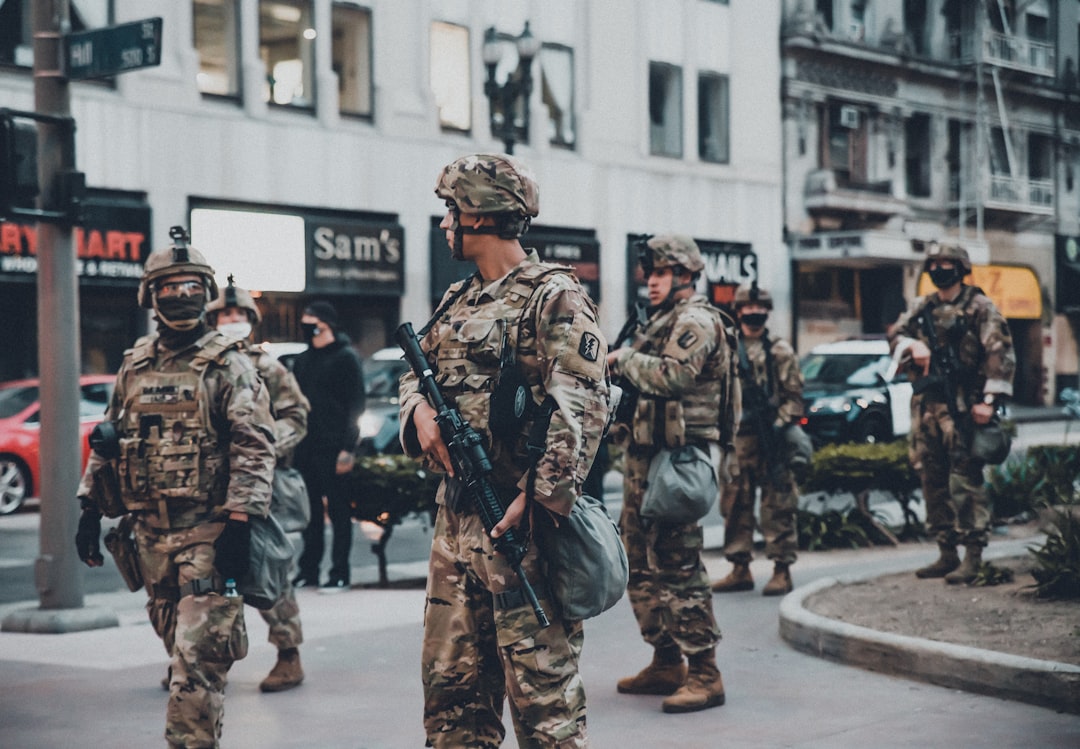
4 out of 5 US Troops Surveyed Understand the Duty to Disobey Illegal Orders
This article is republished from The Conversation under a Creative Commons license. Read the original article here. With his Aug. 11, 2025, announcement that he was sending the National Guard – along with federal law enforcement – into Washington, D.C. to fight crime, President Donald Trump edged U.S. troops closer to the kind of military-civilian confrontations that can cross ethical and legal lines. Indeed, since Trump returned to office, many of his actions have alarmed international human rights observers. His administration has deported immigrants without due process, held detainees in inhumane conditions, threatened the forcible removal of Palestinians from the Gaza Strip and deployed both the National Guard and federal military troops to Los Angeles to quell largely peaceful protests. When a sitting commander in chief authorizes acts like these, which many assert are clear violations of the law, men and women in uniform face an ethical dilemma: How should they respond to an order they believe is illegal? The question may already be affecting troop morale. “The moral injuries of this operation, I think, will be enduring,” a National Guard member who had been deployed to quell public unrest over immigration arrests in Los Angeles told The New York Times. “This is not what the military of our country was designed to do, at all.” Troops who are ordered to do something illegal are put in a bind – so much so that some argue that troops themselves are harmed when given such orders. They are not trained in legal nuances, and they are conditioned to obey. Yet if they obey “manifestly unlawful” orders, they can be prosecuted. Some analysts fear that U.S. troops are ill-equipped to recognize this threshold. We are scholars of international relations and international law. We conducted survey research at the University of Massachusetts Amherst’s Human Security Lab and discovered that many service members do understand the distinction between legal and illegal orders, the duty to disobey certain orders, and when they should do so. Compelled to disobey U.S. service members take an oath to uphold the Constitution. In addition, under Article 92 of the Uniform Code of Military Justice and the U.S. Manual for Courts-Martial, service members must obey lawful orders and disobey unlawful orders. Unlawful orders are those that clearly violate the U.S. Constitution, international human rights standards or the Geneva Conventions. Service members who follow an illegal order can be held liable and court-martialed or subject to prosecution by international tribunals. Following orders from a superior is no defense. Our poll, fielded between June 13 and June 30, 2025, shows that service members understand these rules. Of the 818 active-duty troops we surveyed, just 9% stated that they would “obey any order.” Only 9% “didn’t know,” and only 2% had “no comment.” When asked to describe unlawful orders in their own words, about 25% of respondents wrote about their duty to disobey orders that were “obviously wrong,” “obviously criminal” or “obviously unconstitutional.” Another 8% spoke of immoral orders. One respondent wrote that “orders that clearly break international law, such as targeting non-combatants, are not just illegal — they’re immoral. As military personnel, we have a duty to uphold the law and refuse commands that betray that duty.” Just over 40% of respondents listed specific examples of orders they would feel compelled to disobey. The most common unprompted response, cited by 26% of those surveyed, was “harming civilians,” while another 15% of respondents gave a variety of other examples of violations of duty and law, such as “torturing prisoners” and “harming U.S. troops.” One wrote that “an order would be obviously unlawful if it involved harming civilians, using torture, targeting people based on identity, or punishing others without legal process.” Soldiers, not lawyers But the open-ended answers pointed to another struggle troops face: Some no longer trust U.S. law as useful guidance. Writing in their own words about how they would know an illegal order when they saw it, more troops emphasized international law as a standard of illegality than emphasized U.S. law. Others implied that acts that are illegal under international law might become legal in the U.S. “Trump will issue illegal orders,” wrote one respondent. “The new laws will allow it,” wrote another. A third wrote, “We are not required to obey such laws.” Several emphasized the U.S. political situation directly in their remarks, stating they’d disobey “oppression or harming U.S. civilians that clearly goes against the Constitution” or an order for “use of the military to carry out deportations.” Still, the percentage of respondents who said they would disobey specific orders – such as torture – is lower than the percentage of respondents who recognized the responsibility to disobey in general. This is not surprising: Troops are trained to obey and face numerous social, psychological and institutional pressures to do so. By contrast, most troops receive relatively little training in the laws of war or human rights law. Political scientists have found, however, that having information on international law affects attitudes about the use of force among the general public. It can also affect decision-making by military personnel. This finding was also borne out in our survey. When we explicitly reminded troops that shooting civilians was a violation of international law, their willingness to disobey increased 8 percentage points. Drawing the line As my research with another scholar showed in 2020, even thinking about law and morality can make a difference in opposition to certain war crimes. The preliminary results from our survey led to a similar conclusion. Troops who answered questions on “manifestly unlawful orders” before they were asked questions on specific scenarios were much more likely to say they would refuse those specific illegal orders. When asked if they would follow an order to drop a nuclear bomb on a civilian city, for example, 69% of troops who received that question first said they would obey the order. But when the respondents were asked to think about and comment on the duty to disobey unlawful orders before being asked if they would follow the order to bomb, the percentage who would obey the order dropped 13 points to 56%. While many troops said they might obey questionable orders, the large number who would not is remarkable. Military culture makes disobedience difficult: Soldiers can be court-martialed for obeying an unlawful order, or for disobeying a lawful one. Yet between one-third to half of the U.S. troops we surveyed would be willing to disobey if ordered to shoot or starve civilians, torture prisoners or drop a nuclear bomb on a city. The service members described the methods they would use. Some would confront their superiors directly. Others imagined indirect methods: asking questions, creating diversions, going AWOL, “becoming violently ill.” Criminologist Eva Whitehead researched actual cases of troop disobedience of illegal orders and found that when some troops disobey – even indirectly – others can more easily find the courage to do the same. Whitehead’s research showed that those who refuse to follow illegal or immoral orders are most effective when they stand up for their actions openly. The initial results of our survey – coupled with a recent spike in calls to the GI Rights Hotline – suggest American men and women in uniform don’t want to obey unlawful orders. Some are standing up loudly. Many are thinking ahead to what they might do if confronted with unlawful orders. And those we surveyed are looking for guidance from the Constitution and international law to determine where they may have to draw that line. Zahra Marashi, an undergraduate research assistant at the University of Massachusetts Amherst, contributed to the research for this article.