
Experts Matter. Find Yours.
Connect for media, speaking, professional opportunities & more.

Researchers fight cybercrime with new digital forensic tools and techniques
Irfan Ahmed, Ph.D., associate professor of computer science, provides digital forensic tools — and the knowledge to use them — to the good guys fighting the never-ending cyber-security war. Ahmed is director of the Security and Forensics Engineering (SAFE) Lab within the Department of Computer Science and VCU Engineering. He leads a pair of interrelated projects funded by the U.S. Department of Homeland Security (DHS) aimed at keeping important industrial systems safe from the bad guys — and shows the same tools crafted for investigating cyber attacks can be used to probe other crimes. The goal of cyber attacks on physical infrastructure may be to cause chaos by disrupting systems and/or to hold systems for ransom. The SAFE lab focuses on protecting industrial control systems used in the operation of nuclear plants, dams, electricity delivery systems and a wide range of other elements of critical infrastructure in the U.S. The problem isn’t new: In 2010, the Stuxnet computer worm targeted centrifuges at Iranian nuclear facilities before getting loose and infecting “innocent” computers around the world. Cyber attacks often target a portion of the software architecture known as the control logic. Control logic is vulnerable in that one of its functions is to receive instructions from the user and hand them off to be executed by a programmable logic controller. For instance, the control logic monitoring a natural gas pipeline might be programmed to open a valve if the system detects pressure getting too high. Programmers can modify the control logic — but so can attackers. One of Ahmed’s DHS-supported projects, called “Digital Forensic Tools and Techniques for Investigating Control Logic Attacks in Industrial Control Systems,” allows him to craft devices and techniques that cyber detectives can use in their investigations of attacks on sensitive critical infrastructure. Their investigation capabilities, he explains, is an under-researched area, as most of the emphasis to date has been on the prevention and detection of their cyber attacks. “The best scenario is to prevent the attacks on industrial systems,” Ahmed said. “But if an attack does happen, then what? This is where we try to fill the gap at VCU. And the knowledge that we gain in a cyber attack investigation can further help us to detect or even prevent similar attacks.” In the cat-and-mouse world of cyber security, the way cybercriminals work is in constant evolution, and Ahmed’s SAFE lab pays close attention to the latest developments by malefactors. For instance, an attacker may go for a more subtle approach than modifying the original control logic. An attack method called return-oriented programming sees the malefactor using the existing control logic code, but artfully switching the execution sequence of the code. Other attackers might insert their malware into another area of the controller, programmed to run undetected until it can replace the function of the original control logic. Attackers are always coming up with new methods, but each attack leaves evidence behind. The SAFE lab examines possible attack scenarios through simulations. Scale models of physical systems, including an elevator and a belt conveyor system, are housed at the SAFE lab to help facilitate this. The elevator is a four-floor model with inside and outside buttons feeding into a programmable logic controller. The conveyor belt is more advanced, equipped with inductive, capacitive and photoelectric sensors and able to sort objects. The tools and methods applied in cybercrime can be useful in tracking down other malefactors. That’s where Ahmed’s second DHS-funded project comes in. It’s called “Data Science-integrated Experiential Digital Forensics Training based-on Real-world Case Studies of Cybercrime Artifacts.” Ahmed is the principal investigator, working with co-PI Kostadin Damevski, Ph.D., associate professor of computer science. The goal is to keep law enforcement personnel abreast of the latest trends in the field of cybercrime investigation and to equip them with the latest tools and techniques, including those developed in the SAFE lab. “For example, investigators often have to go through thousands of images, or emails or chats, looking for something very specific,” Ahmed said. “We believe the right data science tools can help them to narrow down that search.” The FBI and other law enforcement agencies already have dedicated cybersleuthing units; the Virginia State Police have a computer evidence recovery section in Richmond. Ahmed and Damevski are arranging sessions showing investigators how techniques from data science and machine learning can make investigations more efficient by sorting through the mounds of digital evidence that increasingly is a feature of modern crime.


Experts in the Media: Georgia Southern investing $1.2 million to upgrade campus security cameras
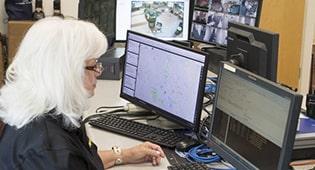
Georgia Southern University is planning a major upgrade to its campus security cameras and video technology. With approximately $1.2 million budgeted, the University will upgrade the cameras in the resident halls and other buildings in Statesboro, Savannah and Hinesville to bring the current cameras from analog to a digital platform. Additionally, new cameras will be placed at entrances to theirr campuses that can tie into those from other law enforcement agencies. The end result will be an interconnected network of cameras across the region. The new technology package includes state-of-the-art Flock cameras, which are motion-activated and record license plate numbers of any vehicle that comes into the hall parking lots. Flock Safety’s “Vehicle Fingerprint” technology lets police search the video by vehicle make, color, type, license plate, state of the license plate, missing plate, covered plate, paper plate, and unique vehicle details such as roof racks, bumper stickers, and more. The cameras can be used to look for a specific suspect or a vehicle that has been entered into law enforcement databases. Additionally, the University can use Flock for investigative purposes as well by going back and looking for any cars that fit a certain profile if it was associated with a crime or if there was a gunshot detected nearby. “This upgrade allows us to add more cameras, extend our reach, add storage and searching capabilities and better integrate our cameras into other video surveillance networks in use by local law enforcement,” said Georgia Southern University Police Chief Laura McCullough. “This is a major step forward in our ongoing work to keep our campus safe.” The new equipment will add to, and augment, Georgia Southern’s network of more than 1,800 video cameras on its three campuses. The project will begin in the coming weeks and is expected to be completed by the start of the fall 2023 semester. The announcement has garnered a lot of attention, especially with local media and publications covering security. If you're a journalist looking to know more about this announcement or speak to an expert about campus security and safety - then let us help with your coverage. Georgia Southern University Police Chief Laura McCullough is available - simply reach out to Georgia Southern Director of Communications Jennifer Wise at jwise@georgiasouthern.edu to arrange an interview today.


Approximately 30 University Police officers recognized for mental health training
Student mental health is a constant concern on a university campus. It is not uncommon for someone in distress to call 9-1-1. A police officer could be the first person to interact with a person who needs specialized attention. To help evaluate and properly handle such situations, every officer at Georgia Southern has completed Crisis Intervention Training (CIT), presented by the Georgia Public Safety Training Center in collaboration with the Georgia Department of Behavioral Health and Developmental Disabilities, and the Georgia Chapter of the National Alliance on Mental Illness. The training ensures that people with mental illnesses and other brain disorders will receive treatment in lieu of incarceration in most cases. On top of that training, the University System of Georgia offers two additional programs to law enforcement officers: QPR Suicide Prevention Training – QPR stands for Question, Persuade and Refer – the three simple steps anyone can learn to help save a life from suicide. Just as people trained in CPR and the Heimlich maneuver help save thousands of lives each year, people trained in QPR learn how to recognize the warning signs of a suicide crisis and how to question, persuade and refer someone to help. Adult Mental Health First Aid (MHFA) Training – MHFA is a skills-based training course that teaches people how to identify, understand and respond to signs of mental illness and substance use disorder. for police officers to help recognize and handle mental health issues and mental health disorders. So far, almost 30 police officers at Georgia Southern University have completed the three different training programs, earning each officer a Mental Health Initiative pin. “I am very proud of these officers, and appreciate them taking the time to better prepare for handling any situation they may encounter,” said Laura McCullough, chief of police at Georgia Southern. “The pins they now wear are a symbol of the care they invest in our community.” State and University officials lauded the officers’ achievements. “This law enforcement mental health certification program could not come at a better time for our university communities, given the state of mental health in our country and on our campuses,” said Jodi Caldwell, director of Georgia Southern’s Counseling Center. “Law enforcement personnel are increasingly the first responders to individuals experiencing mental health emergencies. It comes as no surprise to the staff of the Counseling Center that Georgia Southern’s University police department is leading the way in Georgia for law enforcement interest and willingness to become trained in recognizing and responding to individuals in mental health distress.” Caldwell spoke at a ceremony last month to present the pins and honor the officers. Also attending were Alexis Belvin, Georgia Southern’s SGA President and Chip Reese, Ed.D., former system project director for the University System of Georgia (USG) Mental Health Initiative. “The USG Mental Health Initiative was launched during COVID to allow us to focus more intentionally on the needs of our students,” Reese said. “We have expanded clinical counseling services and supported mental health and wellness resources and programming across the state. I’m particularly proud of the QPR and MHFA training and hope it will better equip the officers who are already on the first ones we call whenever someone needs help.” The following officers were awarded the Mental Health Initiative Pin: Tim Alderman, Josh Barker, Richard Bashlor, Charles Bowen, Ian Craig, Laurence Croy, Steven Cushner, Sam Derr, Christion Doyle, Bailey Dyches, Jonathan Finley, Danny Garrigus, Kenneth Glover, Clay Gracen, Sarah Grey, Lanier Griswold, Patrick Holloway, Tyrone McBride, Chris McBride, Erk McCurdy, BJ McKellar, Alex Morris, Todd Olsen, Kurt Purtee, Dexter Renfroe, Erick Riner, Lamar Stephens, and Crystal Thomas. Looking to know more - then let us help. Jodi Caldwell, director of Georgia Southern’s Counseling Center, is available to speak regarding this important topic - simply click on here icon here or simply reach out to Georgia Southern Director of Communications Jennifer Wise at jwise@georgiasouthern.edu to arrange an interview today.

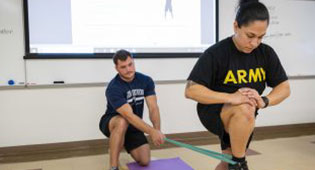
What began in 2016 as a partnership between Georgia Southern University and the Third Infantry Division at Fort Stewart has become a nationally recognized educational and research program with $5.68 million in federal funding to improve soldier health and performance to ensure force readiness. Now called the Soldier Performance and Readiness (SPAR) program, this Georgia Southern project aligns with the U.S. Army’s Holistic Health and Fitness (H2F) initiative and represents a multifaceted partnership with the Army to provide onsite training that decreases musculoskeletal injuries; deliver an online certificate program in tactical fitness for college credit; collaborate with the Army’s Research Institute for Environmental Medicine (USARIEM); and develop programs to enhance and assess cognitive performance in tactical situations. The initial partnership program to prevent musculoskeletal injuries was delivered at first to small cohorts to implement new practices in the physical training of their squads and platoons in a train-the-trainer model. Results were so encouraging, the program expanded at Fort Stewart and to training brigades at Fort Benning last year with the assistance of $1.5 million in Department of Defense funding. Studies show significant preparedness and financial benefits from reducing musculoskeletal injuries to soldiers during drilling and training exercises. In April 2020, officials determined that 58,000 soldiers (the equivalent of 13 Brigade Combat Teams) had injuries that classified them as non-deployable. In 2019, more than half of soldiers experienced a new injury, resulting in 10 million limited-duty days. Musculoskeletal injuries account for nearly 25% of all military injuries and approximately $557 million in acute patient care. Most of these injuries were associated with fitness training-related activities Georgia Southern’s online Tactical Athlete Certificate program was first offered in 2020 and is available exclusively to soldiers on active duty, in the National Guard or reserve. Through a series of three courses, the program teaches foundational exercise and biomechanical concepts, strength and conditioning principles, and rehabilitation. The coursework parallels the Army’s Master Fitness Trainer curriculum, with additional rehabilitation principles, and teaches soldiers how to develop evidence-based and well-rounded physical training programs while minimizing risk of musculoskeletal injury. Certificate completion provides soldiers with nine college credits with Georgia Southern, potential promotion opportunities in the Army, and preparation for the National Strength and Conditioning Association’s TSAC-F exam. “By sharing knowledge, expertise and experience between our faculty and doctoral students with soldiers, drill instructors, and brigade combat fitness teams to create aligned programs that improve tactical performance and force readiness, the SPAR program has become a national model of public-impact research,” said Christopher Curtis, Ph.D., Georgia Southern’s vice provost for research. “We are excited about the future of this partnership. We relish the significant support and encouragement we receive from the Army commands at Fort Stewart, Fort Benning, USARIEM, and the Training and Doctrine command (TRADOC), and we are grateful to Congressman Carter and his fellow members of the Georgia Congressional delegation who have advocated for the value of the partnership on our behalf.” The progress and continued success of this program would not have been possible without several years of support from the Georgia Congressional Delegation and especially the leadership and support of Congressman Buddy Carter, who represents Fort Stewart and the Armstrong Campus of Georgia Southern in Savannah. “Providing for our nation’s defense is the number one responsibility of the federal government. Innovation and research, which is what these dollars will fund at Georgia Southern, will improve working conditions for our brave servicemen and women by providing them with top-of-the-line training and resources,” said Rep. Buddy Carter (R-GA). “I am a proud supporter of Georgia’s military community and am happy that the federal government is investing in these necessary programs.” SPAR programming allocated in the FY23 federal budget will enable Georgia Southern to: Develop protocols and expand delivery of the onsite musculoskeletal injury prevention training and the Tactical Athlete Certificate to commands at Fort Gordon in Augusta and to the Georgia National Guard. Develop and deploy similar online certificate programs for soldiers in Cognitive Performance and Nutrition to further support the Army’s H2F program. Host a national conference on “Charting Future Readiness Needs” in partnership with the U.S. Army Training and Doctrine Command and U.S. Army Forces Command that will bring together other research universities who also work in partnership with the Army. Work with the Army commands to develop specific academic degree programs to meet the specific H2F professional workforce needs at the brigade level. Army officials estimate approximately 3,000 personnel will need graduate degrees or advanced certifications in the next six years. Develop a Tactical Performance Research Lab in Savannah to support the fundamental research and innovation activities of Georgia Southern’s Tactical Performance Group that supports the Army’s H2F program as well as translational research to apply the knowledge and practices broadly to law enforcement and other first responders. Looking to know more - then let us help. Christopher Curtis is available to speak to media - for more information simply click on his icon here or reach out to Georgia Southern Director of Communications Jennifer Wise at jwise@georgiasouthern.edu to arrange an interview today.


What the Roe V. Wade Reversal Means for Data Privacy
Following the US Supreme Court decision to overturn Roe V Wade on the 26th June 2022, abortion laws are now changing across states on an almost daily basis. The landmark decision and huge signifier for the rights of women in the United States and across the world of 1973, is now nothing but history. In 13 states with “trigger laws”, abortion laws will take immediate effect, with others being implemented about a month after the ruling. While ‘the patchwork of state laws and barrage of court filings mean that for half the country', the legal status of abortion remains ambiguous, a month on, one thing remains certain - concerns regarding tech companies and the protection of user privacy in regards to abortion cases are only growing. New questions have been raised and existing debates regarding data privacy have been reignited. Debates center on the extent to which tech companies should protect the information of users seeking abortions and the steps that both consumers and companies can take in line with current laws. While many large corporations, including tech companies Microsoft, Apple, Meta, Disney, Uber, Netflix and Amazon have announced they will provide travel expenses for abortions if they are not available in the state, the role of tech companies in protecting private users' information remains unclear. What are the concerns? Location Tracking On Tuesday May 24th, 42 Democratic lawmakers urged Google SEO Sundar Pirchai to stop collecting and keeping unnecessary or non-aggregated location data which could be used against people seeking abortions. Before the overruling, the lawmakers wrote “if abortion is made illegal…it is inevitable that right-wing prosecutors will obtain legal warrants to hunt down, prosecute and jail women for obtaining critical and reproductive health care.” In comparison to Apple, which has demonstrated that smartphone companies do not need to retain customer location data, Google ‘has created a new digital divide’, which makes ‘privacy and security a luxury’. Ultimately, privacy for Americans who cannot afford an iPhone is at greater risk. While Google sent a company-wide email stating they would cover out-of-state travel expenses for abortion, they have still made no statement in response to the Democratic lawmaker's request on customer location data since the rollback of Roe V Wade. Period-Tracking Apps Alongside concerns about location tracking data with companies such as Google, one of the newer sources of anxiety in terms of data privacy is the use of cycle tracking apps. Since the draft decision was leaked in early May, there have been widespread concerns over the use of period-tracking apps and calls for American women to delete them to avoid their data being used against them in court. Danielle Citron, Professor of Law at the University of Virginia School of Law expresses her concern that using such tracking apps could help build a legal case against a woman who has had an abortion. She states "you got your period on X date, you missed your period, then let's say, for example, 20 weeks later you got your period again, and that in that time period your location shows that you went to a clinic either in the state or out of the state — that in so many respects is the circumstantial evidence that a prosecutor needs.” Tech policy researcher Eva Blum-Dumontet tells Insider that if people find period-tracking apps genuinely useful they shouldn’t feel they have to get rid of them ‘because the risk of data being handed to law enforcement is low’. But at the same time, ‘it is not impossible.' One of the main period tracking apps, Flo, has issued a statement in response to Roe V Wade which reads ‘we will do everything in our power to protect the data and privacy of our users', with an additional feature to existing security measures including “anonymous mode”, which allows users to remove their personal identity from their Flo account. Flo has stated that more clarity will be given in the coming weeks and months. Limiting Online Discussion of Abortion Pills and Aid Since the Supreme Court’s verdict, online memes, statuses and posts have exploded, sharing resources and thoughts on the decision. Facebook and Instagram have started removing posts related to abortion pills, following the rise in the discussion of access to them and offers to mail them across the US. Media intelligence firm Zignal Labs records that general mentions of abortion pills, as well as posts mentioning specific versions such as mifepristone and misoprostol, suddenly spiked on Friday morning across Twitter, Facebook, Reddit and TV Broadcasts. Following the release of a screenshot obtained by the Associated Press of an Instagram post from a woman who offered to buy and send abortion pills through the mail, being taken down within a few minutes by Instagram, AP decided to test out how Meta would respond to a similar post on Facebook. On Monday, the AP reporter wrote “If you send me your address, I will mail you abortion pills.” The post was removed in under one minute. Interestingly, when the AP reporter made the same post but ‘swapped out the words “abortion pills” for “a gun”, the post remained untouched.’ Can past cases inform the future? While the response of tech companies in protecting public data regarding the concerns raised above is still relatively ambiguous, we can refer to past cases where smartphone data was used as evidence in cases against women. In 2018, Lattice Fisher was charged with second-degree murder after she experienced a ‘stillbirth at home and a state medical examiner claimed the baby had been born alive and died of asphyxiation, according to Oktibbeha County court records.’ Fisher’s mobile data records allegedly contained a search for “buy abortion pills”, and mifepristone and misoprostol, the two main forms of self-managed abortion medications. Although Fisher got out of jail later in 2018, Laurie Bertram Roberts, co-founder of the Mississippi Reproductive Freedom Fund and the executive director of Yellow Hammer Fund, who had been heavily involved with Fisher’s bail, said that the impact will forever taint Fisher’s life. “Anytime someone Googles her for a job that mugshot with a story of her being indicted for a second-degree murder will always be there.” In 2015, Purvi Patel was prosecuted in Indiana under the state’s feticide law after she took safe, well-known abortion medication. Prosecutors had claimed that the baby was born alive and did not survive. In this case, Patel’s text messages mentioning the abortion pills were the main evidence used against her. She was sentenced to 20 years in prison, but her conviction was overturned and she was released after serving 18 months. Many people had wondered how the case had happened when abortion was a protected right under the constitution. With the right to abortion in the US now only marking a historical moment, the role of tech companies in the protection of user data will only become increasingly pivotal in a post-Roe world.


Researchers in Georgia Southern University’s Tactical Athlete Readiness and Preparedness Program (TARP) have teamed up with the Georgia Public Safety Training Center (GPSTC) to ensure the readiness and resilience of Georgia’s public safety officials. Members of the TARP in the Waters College of Health Professions have worked to revise the fitness training standards for Georgia’s police cadets with a focus on functional fitness, mental resilience and injury prevention. In addition, the program has formed a partnership with the GPSTC, Georgia’s premier training facility for all state and local public safety related units to include police, fire and communication. Bridget Melton, Ed.D., professor of exercise science and lead faculty member of TARP, said that due to high stress and health concerns, some police and public safety officials are at high risk for cardiovascular disease or other fatal illnesses. “Our program provides state academies with fitness exercises that increase overall cadet fitness and focuses on injury prevention,” said Melton. “Our program focuses on occupational focused fitness to hopefully encourage a more positive view of exercise that will stick with cadets even after their academy training is done.” Richard Cleveland, Ed.D., associate professor of leadership, technology and human development, heads resilience and mental health for the TARP team, and has created a Mindfulness-Based Tactical Instruction curriculum for the state of Georgia. “Tactical athletes need training and support for resilience and mental health, but too often it’s only presented as a one-time workshop or seminar,” said Cleveland. “Our program dovetails into the state’s resilience curriculum for officers, but provides ‘bite-sized’ mindfulness practices within the fitness program. This gives cadets repeated practice at using mindfulness and embeds it within their context using police language, actions and behaviors.” The partnership was made possible due to a subgrant GPSTC was awarded from the Criminal Justice Coordinating Council to fund TARP at their facilities due to the program’s comprehensive view of officer wellness, which is aimed at improving de-escalation skills among recruits through mental and physical training. “We are pleased to form a partnership with the GPSTC and the Tactical Athlete Readiness and Preparedness Program,” stated Chris Wigginton, director of GPSTC. “This partnership will allow public safety professionals to be better prepared in their personal and professional lives. Some of the many benefits will be a reduction in injuries, being better prepared to use needed skills in rapidly evolving situations, and the resiliency and mental health component. As word has gotten out of the possibility of the GPSTC implementing this program we have already been contacted by several states regarding the initiative.” Additionally, graduate students in the Department of Health Sciences and Kinesiology participate in the program and gain firsthand and practical experience by performing training and assessment for state instructors. TARP is part of Georgia Southern’s Tactical Athlete Initiative, which aims to reduce the number of injuries and increase readiness and preparedness of tactical athletes. The interdisciplinary team consists of the following Georgia Southern faculty members: • Bridget Melton, Ed.D., Professor • Richard Cleveland, Ed.D., Associate Professor • Greg Grosicki, Ph.D., Assistant Professor • Haresh Rochani, DrPH, Associate Professor • Mary Beth Yarbrough, Lecturer • Sarah Davis, Lecturer TARP is just one example of the work coming from Georgia Southern University’s Tactical Athlete Initiative. The Tactical Athlete Initiative is a multi-discipline collaboration providing research, training and support for military, police, fire and EMS workers. The Tactical Athlete Initiative has partnered with multiple agencies including the Statesboro Police Department, Statesboro Fire Department, Bulloch County Sheriff’s Office, Forsyth County Sheriff’s Office, Waycross Fire Department, Georgia Public Safety Training Centers, Federal Law Enforcement Training Centers and the United States Army. If you're a reporter looking to know more about this partnership at Georgia Southern University - the let us help. Richard Cleveland, Ph.D., is an assistant professor in the Department of Leadership, Technology & Human Development at Georgia Southern - simply click on his icon to get in touch or contact Georgia Southern Director of Communications Jennifer Wise at jwise@georgiasouthern.edu to arrange an interview today.


Expert opinion: Why aren't mass shootings considered acts of terrorism?
With tragic news of a mass shooting in Buffalo this past weekend, and along with it evidence that the massacre was racially motivated, some leaders and citizens alike are calling to have this crime considered an act of terrorism. Though that may be the immediate reaction of some, Augusta University's Dr. Lance Hunter, associate professor of political science in the Katherine Reese Pamplin College of Arts, Humanities, and Social Sciences, explains why there's a lot to consider before rushing to brand an action as terrorism. “We argue that it’s very important to consider these acts of domestic terrorism if they fit the definition, because it’s easier for governments to monitor individuals that may possibly carry out these attacks,” said Hunter. “Looking at the incident in Buffalo, in my estimation and based on the evidence that I’ve seen, it fits all the criteria to be considered a form of domestic terrorism.” If that's the case, then why are people reluctant to consider mass shootings an act of terrorism? “I think individuals at times tend to have a preconception that terrorism tends to be something that’s carried out by ISIS or Al Qaeda, or a group of organizations such as that, and if it’s an individual outside of those organizations, it may not be considered terrorism. But when you look at the actions, they clearly fit the criteria for terrorism. Secondly, I think it’s the form of the attack type that does matter a lot, regarding people’s perceptions.” When it comes to domestic terrorism, what about privacy rights? What about an invasion of privacy? "We’re not arguing to create a policy saying we are constantly monitoring people for no reason at all," said Hunter. "What we’re arguing is someone who’s showing extremist tendencies and then also a tendency to possibly violently harm people, are there warning signs? In a lot of cases of mass murders, there are warning signs. If these individuals are monitored more closely, it’s not 100% guarantee these attacks will be prevented, but the likelihood will be much greater it could have possibly been prevented and we’ve seen this throughout a lot of cases and our research.” Dr. Lance Hunter is an assistant professor of political science with a background in international relations. His research focuses on how terrorist attacks influence politics in democratic countries and how political decisions within countries affect conflicts worldwide. Hunter is available to speak with media about this important topic - simply click on his icon to arrange an interview today.


UConn Expert Weighs In On 'What Drives a Black Mass Shooter?'
“We would be missing a critical moment," says Dr. Wizdom Powell, "for us to look at the systems that we have set up and ask ourselves, are we serving every person who has a mental health need well, and if we’re not, what are we going to do about it?” Director of the Health Disparities Institute and associate professor of psychiatry at UConn Health, Dr. Powell studies the impact of modern racism and gender norms on African American male health outcomes and healthcare inequities. In a recent interview with the Amsterdam News following a mass shooting incident involving an alleged Black suspect, Dr. Powell weighed in the ways in which implicit racism can frame how law enforcement classifies shootings, the importance of deconstructing harmful racial and gender stereotypes, and the delivery of mental health services to communities and individuals in need: “When you call something gang violence, I think people’s empathy goes down to zero because they think those people are killing themselves,” said Powell. “You know, it’s their problem. Nevermind the victims.” Powell said that in the event of a mass shooting incident there is usually a “sympathy” conveyed for a person as a “complicated human” as opposed to a person of color who was involved in a gang shooting. “When do you get a full picture of that person? Who they were as a child, all of the traumas they experienced, their lack of resources,” said Powell. Powell thinks there’s a conflation in general between individuals who are mentally ill and those who commit mass shootings. She said mass shootings are a massive public health crisis with many factors contributing, with mental illness being one of many. ********** Powell said that the emotionality or interior lives of Black men are always spoken about with an undue amount of concentrated attention on their anger. She strives to deconstruct the stereotype of the ‘angry Black male.’ She said that there is a prevailing presumption that anger is somehow bad or pathological when it’s actually a legitimate response to emotional suffering and injustice. So when an incident that fits the stereotype of the ‘angry Black male’ occurs, people hyper focus on it because it confirms their bias. “I think there is a disproportionality in our reporting about these incidents by race,” said Powell, “we also tend to paint the picture of these shooters more sympathetically, when the shooters are non-Hispanic white males as opposed to males from other socially marginalized groups.” In the 1960s, said Powell, there was a shift in the way that the field of psychology and psychiatry viewed Black men and their symptomatology while civil rights protests were erupting around the country. Prior to the ’60s “middle class, white housewives” were diagnosed with schizophrenia more often, but there was a sharp uptick among Black males afterwards. “Again, reminiscent of an earlier time where Black people’s quest for liberation was pathologized,” said Powell. Powell said that health and science is still at the “tip of the iceberg” in identifying symptoms of depression in Black men. She said her studies have found that societal racism or experiencing racism or secondary traumas of racial reckoning is definitively at the root of Black and Brown male depression. Dr. Powell is available to speak with media – simply click on her icon now to arrange an interview today.


A veteran police officer and a bystander were gunned down in a Denver suburb earlier this week in what authorities are saying was a targeted attack by someone who “expressed hatred” for police. A 19-year veteran of the force, Gordon Beesly was allegedly killed because he was simply wearing a uniform and a badge. The tragic fatality is getting massive coverage and UMW’s Laura C. Wilson was interviewed by The Washington Post to provide her expert perspective on the impact this incident will have on survivors. Laura C. Wilson, an associate professor of psychology at the University of Mary Washington in Virginia, said that years ago she might have thought about each mass shooting or shooting in a public place as having unique characteristics that affect survivors. But she now considers the trauma of multiple events. “When we start to see a lot of these events happening in a small community or within the country, we start to have these compounding impacts,” she said. “People now have more evidence that the world is unpredictable, more evidence that regardless of what I do I can’t keep myself safe.” But Wilson stressed that the effects of trauma are unique to every individual, every survivor. There will be extensive coverage of this killing and if you are a reporter looking to cover the issues survivors of mass shooting events will experience, then let us help. Dr. Laura C. Wilson is a clinical psychologist whose expertise focuses on post-trauma functioning, particularly in survivors of sexual violence or mass trauma (e.g., terrorism, mass shootings, combat). Her research interests extend to predictors of violence and aggression, including psychophysiological and personality factors, as well as indicators of PTSD following mass trauma, long-term functioning among first responders, outcomes among survivors of sexual violence and the influence of media on mental illness stigma. Dr. Wilson is available to speak with media, simply click on her icon to arrange an interview today.



Cyber attacks and ransomware are incidents that are happening more and more often. They are threatening America’s energy supply, food chain and critical infrastructure. Recently, two Georgia hospitals were victims of a recent attack. Media from across the country asked experts like Frank Katz, director of Georgia Southern University's Center for Applied Cyber Education, who is vulnerable and why. Katz, who directs the Center for Applied Cyber Education at Georgia Southern University’s Armstrong Campus in Savannah, said hospitals can be targets for extortion as well as sources of personal identifying information that can aid in further fraud. “They are more likely to pay than another type of business because it’s a life and death situation,” Katz told WSAV-TV. “It really has become a situation of money, pure and simple. These are thieves that know they can extort the money and often get it.” June 21 – Associated Press Frank Katz, director of the Center for Applied Cyber Education at Georgia Southern University, says hospitals are often easy targets. Having so many employees, he says user IDs and passwords can be easy to figure out. Plus, they’re dealing with emergency medical care. “They are more likely to pay than another type of business because it’s a life and death situation,” Katz said. June 21 – NBC News If you are a reporter looking to cover this subject and speak with Frank Katz, Georgia Southern’s Director of the Center for Applied Cyber Education – then let our experts help. Frank Katz, director of the Center for Applied Cyber Education is available, simply click on his icon or reach out to Georgia Southern Director of Communications Jennifer Wise at jwise@georgiasouthern.edu and she’ll assist with connecting you for an interview today.