Experts Matter. Find Yours.
Connect for media, speaking, professional opportunities & more.
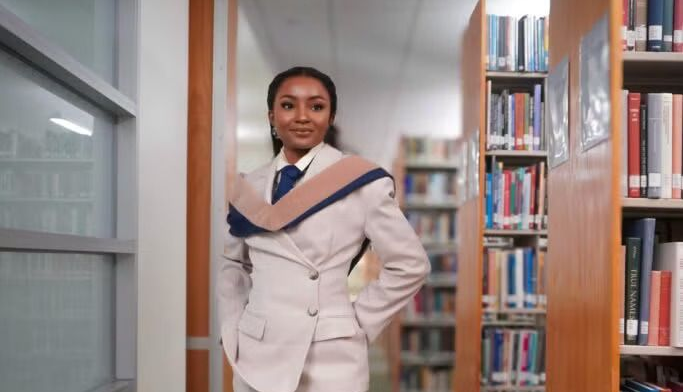
“Designing Her Own Future: A Georgia Southern MBA Story”
After earning her Master of Business Administration from Georgia Southern University, one graduate is charting a path that blends creativity with business discipline. With a background in dressmaking, she entered the MBA program already skilled in her craft, but looking to strengthen the operational side of her work. “So much goes into dressmaking,” she explained. “From developing the pattern to the fabric you use, getting the right measurements, and so on. You have to make sure your stitches are clean, that the zipper is sitting properly.” While her technical skills were well developed, she quickly recognized that sustaining and growing her work required more than creative talent alone. “I didn’t have that business background,” she explained. “So I wanted to find a university program that could teach me how to structure and operate my business efficiently. So I started doing my research.” That search led her to Georgia Southern’s MBA program, where she immersed herself in coursework focused on strategy, leadership, and practical decision-making. Through the program, she gained the tools to think more systematically about her business—learning how to plan, organize, and scale her operations with confidence. Her experience reflects how graduate business education can empower entrepreneurs and creatives alike, transforming passion into sustainable practice and helping graduates design futures that work both artistically and professionally. Want to learn more about Georgia Southern's Master of Business Administration program? Simply contact Georgia Southern's Director of Communications Jennifer Wise at jwise@georgiasouthern.edu to arrange an interview today.


Georgia Southern professor re-elected to board of world’s largest scientific society
Professor of chemistry and chair of the Department of Biochemistry, Chemistry and Physics Will Lynch, Ph.D., has been re-elected to the American Chemical Society’s (ACS) board of directors. This marks his second three-year term on the board. With ACS serving as the largest science organization in the world, Lynch says the society’s work impacts lives every day. “We support the scientific enterprise by advocating for everything from research funding to laboratory safety,” said Lynch. “That work strengthens scientific integrity that ACS champions and ultimately shows up in the things that people rely on daily. Bottled water, medicines, cellphones and computer screens all come from chemistry. Many people do not realize how deeply science shapes their world.” With a budget of nearly $900 million and a global community of over 200,000, planning is essential to the success of ACS. Lynch is proud to have chaired the committee that created the society’s next five-year strategic plan. He hopes that his work will continue to put the society’s vast resources to use helping advocate for scientists around the world. “My focus now is implementing ACS’ strategic plan, which envisions a world built on science and setting up the indicators to measure our success,” said Lynch. “We want to make sure we support chemists whether they are in academia, industry, government labs or retired.” Serving in a leadership role for a world-renowned scientific organization is part of Lynch’s calling to help others. He began his service with ACS over 40 years ago when he volunteered at a regional meeting while pursuing his bachelor’s degree. He started making connections immediately and grew his professional network from the local to the national level. Forming friendships in the scientific community and witnessing the ways their work changed lives inspired Lynch to continue to grow his own knowledge so he could do more for others. “Getting to do research as an undergraduate pulled me in, and I knew that chemistry was where I could make a difference. I realized I had a path to help society through science and I never looked back.” Looking to know more about Georgia Southern University or connect with Will Lynch? Simply contact Georgia Southern's Director of Communications Jennifer Wise at jwise@georgiasouthern.edu to arrange an interview today.

Power, Politics, and Petroleum: The Story of Venezuela
After gaining independence from Spain in the early 19th century under the leadership of Simón Bolívar, the country spent much of the next century marked by political instability and military rule. Everything changed in the early 20th century with the discovery of vast oil reserves, which rapidly transformed Venezuela into one of the world’s leading petroleum exporters and shifted power toward a centralized state funded almost entirely by oil revenue. By the mid-20th century, oil had become both Venezuela’s greatest asset and its greatest vulnerability. Democratic governments that emerged after 1958 used oil income to expand social programs and infrastructure, but also built an economy dangerously dependent on a single commodity. When oil prices fell in the 1980s and 1990s, economic inequality and public frustration surged, creating the conditions that brought Hugo Chávez to power in 1999. Chávez reoriented the political system around a state-controlled oil sector, using petroleum revenues to fund social initiatives while consolidating political authority and weakening independent institutions. Under Chávez and his successor Nicolás Maduro, oil remained the backbone of the state—but declining production, corruption, and mismanagement hollowed out the industry itself. As oil revenues collapsed, so did public services, democratic norms, and economic stability. Venezuela’s history illustrates a central paradox: immense natural wealth paired with fragile governance. Control of oil has repeatedly shaped political power, domestic policy, and Venezuela’s relationship with the world—making energy inseparable from the country’s political story. Journalists covering Venezuela, Latin American politics, energy markets, or resource-driven economies are encouraged to connect with experts who can provide historical context, explain the role of oil in shaping political outcomes, and assess how Venezuela’s past continues to influence its uncertain future. Our experts can help! Connect with more experts here: www.expertfile.com


Designing Reflection: An Expert’s View Inside Michigan’s Japanese Garden
As public gardens increasingly become spaces for artistic expression, cultural exchange, and mindful reflection, Steven LaWarre, Senior Vice President at Frederik Meijer Gardens & Sculpture Park, recently offered his expert insight to Homes and Gardens Magazine into how world-class garden design can shape human experience, invite contemplation, and connect visitors with nature in deeply meaningful ways. With decades of experience in professional horticulture and garden planning, LaWarre has played a central role in creating and nurturing Meijer Gardens' Richard & Helen DeVos Japanese Garden, guiding its interpretive programming, and curating visitor interaction with seasonal changes and design elements. Steve LaWarre is the Senior Vice President at Frederik Meijer Gardens & Sculpture Park, where his visionary leadership and passion for botanical excellence have been instrumental in shaping the Gardens' stunning landscapes and ensuring operational excellence. He leads efforts to sustain the Gardens' exceptional standards in landscape design, sustainable gardening practices, and the care of diverse plant collections. View his profile here The Richard & Helen DeVos Japanese Garden, an eight-acre landscape inspired by centuries-old Japanese horticultural principle, has rapidly evolved into one of the Midwest’s most beloved cultural destinations. Beyond aesthetic beauty, the garden embodies philosophical traditions that encourage visitors to slow down, observe impermanence, and appreciate harmony between the human spirit and the natural world. As audiences seek spaces that offer quiet reflection, seasonal observation, and cultural resonance, LaWarre’s expertise bridges horticulture, design intention, and visitor experience. Read the Homes and Garden Magazine article 'Beyond Wild Expectations: Michigan’s Very Own Slice of Japan – Where Ancient Garden Design Provides a Deep Connection to Nature' below: Expert Insight Steven LaWarre on the Japanese Garden Experience On Winter’s Quiet Presence “It’s just beautiful covered in snow. You hear the waterfalls differently, you see ice sweep over the pond. Everything feels a bit more muffled in the winter, but it somehow puts you at ease,” LaWarre explains, highlighting how seasonal change reveals structure, silence, and contemplative calm. On Spring’s Renewal “The first flush of leaves on the trees is a joyful sight after winter. The small chartreuse green buds contrast to the dark stems,” LaWarre observes, describing the ephemeral nature of bloom and the reminder of restoration that seasonal transformation offers visitors. On Core Garden Elements “The conifers create a backbone of the garden, recognizable in all four seasons… they have been pruned and shaped over time to really create the caricature of a tree,” LaWarre notes, outlining the horticultural artistry behind traditional practices like niwaki pruning. On Cultural Immersion and Mindful Reflection LaWarre describes the garden’s traditional teahouse experience as more than cultural spectacle: “It’s a way to really quiet the senses and participate in mindful reflection, aided by the serenity of garden views… It’s an opportunity to connect with the people you’re with, but also to connect with yourself.” On Design Intent and Human Experience “It’s taught me to look at things differently. As humans, we can be focused on achieving neat lines and symmetry, but taking a moment to observe your surroundings will reveal this isn’t usually how things are in the natural world,” LaWarre reflects, capturing how garden design can subtly reshape perception. In a cultural moment where audiences increasingly seek restorative outdoor experiences, cultural depth, and mindful engagement with public spaces, LaWarre offers perspective and insight into: How garden design influences perception, supports wellness, and fosters cross-cultural appreciation How public gardens are not solely as spaces of beauty, but also living environments that shape emotional and philosophical engagement with the natural world Steve can bring this perspective for media interviews and speaking engagements.


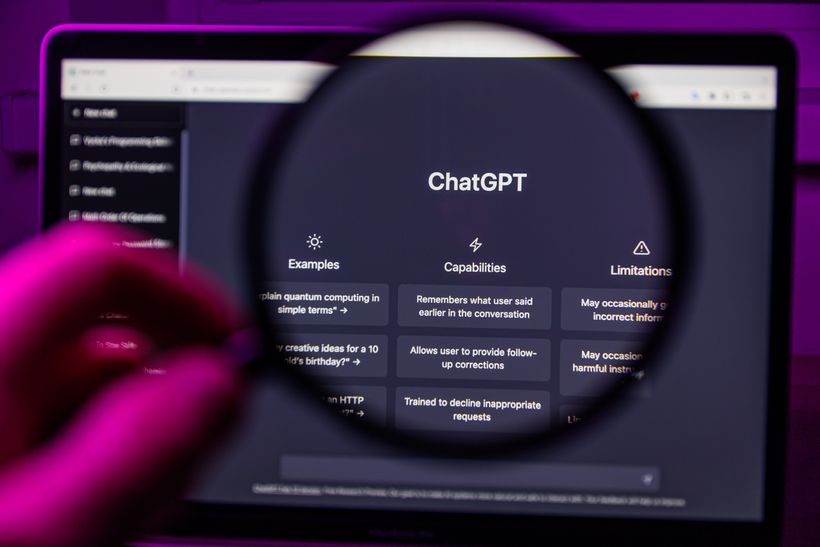
With OpenAI’s latest release, GPT-5.2, AI has crossed an important threshold in performance on professional knowledge-work benchmarks. Peter Evans, Co-Founder & CEO of ExpertFile, outlines how these technologies will fundamentally improve research communications and shares tips and prompts for PR pros. OpenAI has just launched GPT-5.2, describing it as its most capable AI model yet for professional knowledge work — with significantly improved accuracy on tasks like creating spreadsheets, building presentations, interpreting images, and handling complex multistep workflows. And based on our internal testing, we're really impressed. For communications professionals in higher education, non-profits, and R&D-focused industries, this isn’t just another tech upgrade — it’s a meaningful step forward in addressing the “research translation gap” that can slow storytelling and media outreach. According to OpenAI, GPT-5.2 represents measurable gains on benchmarks designed to mirror real work tasks. In many evaluations, it matches or exceeds the performance of human professionals. Also, before you hit reply with “Actually, the best model is…” — yes, we know. ChatGPT-5.2 isn’t the only game in town, and it’s definitely not the only tool we use. Our ExpertFile platform uses AI throughout, and I personally bounce between Claude 4.5, Gemini, Perplexity, NotebookLM, and more specialized models depending on the job to be done. LLM performance right now is a full-contact horserace — today’s winner can be tomorrow’s “remember when,” so we’re not trying to boil the ocean with endless comparisons. We’re spotlighting GPT-5.2 because it marks a meaningful step forward in the exact areas research comms teams care about: reliability, long-document work, multi-step tasks, and interpreting visuals and data. Most importantly, we want this info in your hands because a surprising number of comms pros we meet still carry real fear about AI — and long term, that’s not a good thing. Used responsibly, these tools can help you translate research faster, find stronger story angles, and ship more high-quality work without burning out. When "Too Much" AI Power Might Be Exactly What You Need AI expert Allie K. Miller's candid but positive review of an early testing version of ChatGPT 5.2 highlights what she sees as drawbacks for casual users: "outputs that are too long, too structured, and too exhaustive." She goes on to say that in her tests, she observed that ChatGPT-5,2 "stays with a line of thought longer and pushes into edge cases instead of skating on the surface." Fair enough. All good points that Allie Miller makes (see above). However, for communications professionals, these so-called "downsides" for casual users are precisely the capabilities we need. When you're assessing complex research and developing strategic messaging for a variety of important audiences, you want an AI that fits Miller's observation that GPT-5.2 feels like "AI as a serious analyst" rather than "a friendly companion." That's not a critique of our world—it's a job description for comms pros working in sectors like higher education and healthcare. Deep research tools that refuse to take shortcuts are exactly what research communicators need. So let's talk more specifically about how comms pros can think about these new capabilities: 1. AI is Your New Speed-Reading Superpower for Research That means you can upload an entire NIH grant, a full clinical trial protocol, or a complex environmental impact study and ask the model to highlight where key insights — like an unexpected finding — are discussed. It can do this in a fraction of the time it would take a human reader. This isn’t about being lazy. It’s about using AI to assemble a lot of tedious information you need to craft compelling stories while teams still parse dense text manually. 2. The Chart Whisperer You’ve Been Waiting For We’ve all been there — squinting at a graph of scientific data that looks like abstract art, waiting for the lead researcher to clarify what those error bars actually mean. Recent improvements in how GPT-5.2 handles scientific figures and charts show stronger performance on multimodal reasoning tasks, indicating better ability to interpret and describe visual information like graphs and diagrams. With these capabilities, you can unlock the data behind visuals and turn them into narrative elements that resonate with audiences. 3. A Connection Machine That Finds Stories Where Others See Statistics Great science communication isn’t about dumbing things down — it’s about building bridges between technical ideas and the broader public. GPT-5.2 shows notable improvements in abstract reasoning compared with earlier versions, based on internal evaluations on academic reasoning benchmarks. For example, teams working on novel materials science or emerging health technologies can use this reasoning capability to highlight connections between technical results and real-world impact — something that previously required hours of interpretive work. These gains help the AI spot patterns and relationships that can form the basis of compelling storytelling. 4. Accuracy That Gives You More Peace of Mind...When Coupled With Human Oversight Let’s address the elephant in the room: AI hallucinations. You’ve probably heard the horror stories — press releases that cited a study that didn’t exist, or a “quote” that was never said by an expert. GPT-5.2 has meaningfully reduced error rates compared with its predecessor, by a substantial margin, according to OpenAI Even with all these improvements, human review with your experts and careful editing remain essential, especially for anything that will be published or shared externally. 5. The Speed Factor: When “Urgent” Actually Means Urgent With the speed of media today, being second often means being irrelevant. GPT-5.2’s performance on workflow-oriented evaluations suggests it can synthesize information far more quickly than manual review, freeing up a lot more time for strategic work. While deeper reasoning and longer contexts — the kinds of tasks that matter most in research translation — require more processing time and costs continue to improve. Savvy communications teams will adopt a tiered approach: using faster models of AI for simple tasks such as social posts and routine responses, and using reasoning-optimized settings for deep research. Your Action Plan: The GPT-5.2 Playbook for Comms Pros Here’s a tactical checklist to help your team capitalize on these advances. #1 Select the Right AI Model for the Job: Lowers time and costs • Use fast, general configurations for routine content • Use reasoning-optimized configurations for complex synthesis and deep document understanding • Use higher-accuracy configurations for high-stakes projects #2 Find Hidden Ideas Beyond the Abstract: Deeper Reasoning Models do the Heavy Work • Upload complete PDFs — not just the 2-page summary you were given • Use deeper reasoning configurations to let the model work through the material Try these prompts in ChatGPT5.2 “What exactly did the researchers say about this unexpected discovery that would be of interest to my <target audience>? Provide quotes and page references where possible.” “Identify and explain the research methodology used in this study, with references to specific sections.” “Identify where the authors discuss limitations of the study.” “Explain how this research may lead to further studies or real-world benefits, in terms relatable to a general audience.” #3 Unlock Your Story Leverage improvements in pattern recognition and reasoning. Try these prompts: “Using abstract reasoning, find three unexpected analogies that explain this complex concept to a general audience.” “What questions could the researchers answer in an interview that would help us develop richer story angles?” #4 Change the Way You Write Captions Take advantage of the way ChatGPT-5.2 translates processes and reasons about images, charts, diagrams, and other visuals far more effectively. Try these prompts: Clinical Trial Graphs: “Analyze this uploaded trial results graph upload image. Identify key trends, and comparisons to controls, then draft a 150-word donor summary with plain-language explanations and suggested captions suitable for donor communications.” Medical Diagrams: “Interpret these uploaded images. Extract diagnostic insights, highlight innovations, and generate a patient-friendly explainer: bullet points plus one visual caption.” A Word of Caution: Keep Experts in the Loop to Verify Information Even with improved reliability, outputs should be treated as drafts. If your team does not yet have formal AI use policies, it's time to get started, because governance will be critical as AI use scales in 2026 and beyond. A trust-but-verify policy with experts treats AI as a co-pilot — helpful for heavy lifting — while humans remain accountable for approval and publication. The Importance of Humans (aka The Good News) Remember: the future of research communication isn’t about AI taking over — it’s about AI empowering us to do the strategic, human work that machines cannot. That includes: • Building relationships across your institution • Engaging researchers in storytelling • Discovering narrative opportunities • Turning discoveries into compelling narratives that influence audiences With improvements in speed, reasoning, and reliability, the question isn’t whether AI can help — it’s what research stories you’ll uncover next to shape public understanding and impact. FAQ How is AI changing expectations for accuracy in research and institutional communications? AI is shifting expectations from “fast output” to defensible accuracy. Better reasoning means fewer errors in research summaries, policy briefs, and expert content—especially when you’re working from long PDFs, complex methods, or dense results. The new baseline is: clear claims, traceable sources, and human review before publishing. ⸻ Why does deeper AI reasoning matter for communications teams working with experts and research content? Comms teams translate multi-disciplinary research into messaging that must withstand scrutiny. Deeper reasoning helps AI connect findings to real-world relevance, flag uncertainty, and maintain nuance instead of flattening meaning. The result is work that’s easier to defend with media, leadership, donors, and the public—when paired with expert verification. ⸻ When should communications professionals use advanced AI instead of lightweight AI tools? Use lightweight tools for brainstorming, social drafts, headlines, and quick rewrites. Use advanced, reasoning-optimized AI for high-stakes deliverables: executive briefings, research positioning, policy-sensitive messaging, media statements, and anything where a mistake could create reputational, compliance, or scientific credibility risk. Treat advanced AI as your “analyst,” not your autopilot. ⸻ How can media relations teams use AI to find stronger story angles beyond the abstract? AI can scan full papers, grants, protocols, and appendices to surface where the real story lives: unexpected findings, practical implications, limitations, and unanswered questions that prompt great interviews. Ask it to map angles by audience (public, policy, donors, clinicians) and to point to the exact sections that support each angle. ⸻ How should higher-ed comms teams use AI without breaking embargoes or media timing? AI can speed prep work—backgrounders, Q&A, lay summaries, caption drafts—before embargo lifts. The rule is simple: treat embargoed material like any sensitive document. Use approved tools, restrict sharing, and avoid pasting embargoed text into unapproved systems. Use AI to build assets early, then finalize post-approval at release time. ⸻ What’s the best way to keep faculty “in the loop” while still moving fast with AI? Use AI to produce review-friendly drafts that reduce load on researchers: short summaries, suggested quotes clearly marked as drafts, and a checklist of claims needing verification (numbers, methods, limitations). Then route to the expert with specific questions, not a wall of text. This keeps approvals faster while protecting scientific accuracy and trust. ⸻ How should teams handle charts, figures, and visual data in research communications? AI can turn “chart confusion” into narrative—if you prompt for precision. Ask it to identify trends, group comparisons, and what the figure does not show (limitations, missing context). Then verify with the researcher, especially anything involving significance, controls, effect size, or causality. Use the output to write captions that are accurate and accessible. ⸻ Do we need an AI Use policy in comms and media relations—and what should it include? Yes—because adoption scales faster than risk awareness. A practical policy should define: approved tools, what data is restricted, required human review steps, standards for citing sources/page references, rules for drafting quotes, and escalation paths for sensitive topics (health, legal, crisis). Clear guardrails reduce fear and prevent preventable reputational mistakes. If you’re using AI to move faster on research translation, the next bottleneck is usually the same one for many PR and Comm Pros: making your experts more discoverable in Generative Search, your website, and other media. ExpertFile helps media relations and digital teams organize their expert content by topics, keep detailed profiles current, and respond faster to source requests—so you can boost your AI citations and land more coverage with less work. For more information visit us at www.expertfile.com

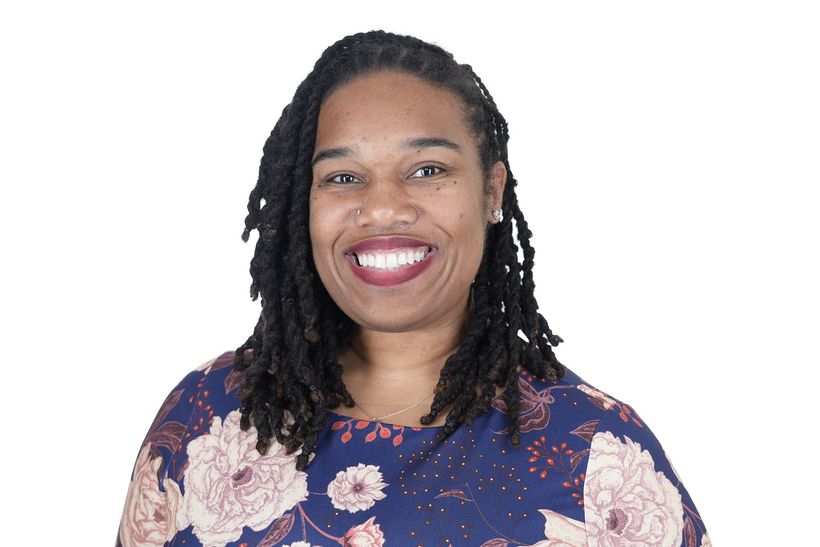
Nandi A. Marshall, DrPH, professor and associate dean for Georgia Southern University’s Jiann-Ping Hsu College of Public Health, has been named president of the American Public Health Association (APHA), the nation’s oldest and largest organization of public health professionals. Marshall began her presidential term on Nov. 5, following a year as president-elect. She will serve a three-year term on APHA’s executive board, including her current presidential year and a subsequent year as immediate past president. With more than two decades of experience in community-engaged public health, Marshall is widely recognized for her leadership in advancing maternal and child health equity, and for her dedication to preparing the next generation of the public health workforce. She holds a bachelor’s in religious studies from Spelman College, a master’s in public health from East Stroudsburg University and a Doctor of Public Health from Georgia Southern. “Dr. Marshall’s appointment to lead APHA is a tremendous national recognition of her contribution to public health — and a reflection of Georgia Southern’s growing impact on the global public health landscape,” said Avinandan Mukherjee, Ph.D., provost and executive vice president for Academic Affairs. “Her commitment to community partnership, workforce development and health equity exemplifies the values we strive to instill in every graduate of our distinctive public health college.” Marshall’s work has centered on bridging lived experience and scientific research to drive equitable health outcomes. “I’m deeply honored to serve as APHA president,” Marshall said. “Public health calls us to listen to communities, honor their wisdom and work together to build the equitable systems that recognize health as a human right. Equity is not an outcome — it’s a commitment. And I’m grateful to continue this work with purpose, courage and love alongside partners across the country.” Founded in 1872, APHA represents more than 25,000 members nationwide, serving as a convener, catalyst and advocate for equitable health and well-being for all. The association connects practitioners, researchers, educators and policymakers to advance evidence-based public health initiatives. Looking to know more about Georgia Southern University or connect with Dr. Marshall — simply contact Georgia Southern's Director of Communications Jennifer Wise at jwise@georgiasouthern.edu to arrange an interview today.
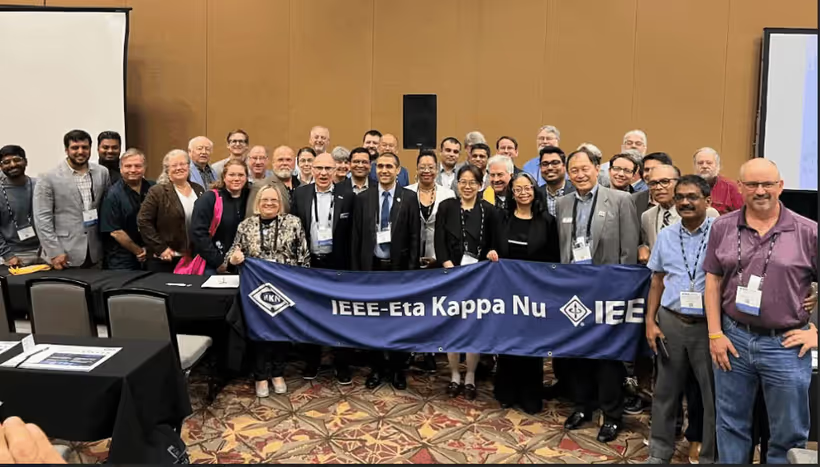
Masoud Davari, an associate professor in Electrical and Computer Engineering at Georgia Southern University, has been awarded the 2024 IEEE Region 3 Outstanding Engineer Award, making him the first faculty member in the university’s 55-year history to receive this honor. Davari was recognized for his contributions to reinforcement-learning optimal controls for power-electronic converters, his work on integrating power-electronic systems with cyber-attack considerations in modern power grids, and for his leadership in hardware-in-the-loop testing and standards development, including service on the IEEE P2004 standards working group. In addition to the award, Davari was inducted into the IEEE-Eta Kappa Nu (HKN) honor society. His research program at Georgia Southern has earned significant support, including more than $1.17 million in National Science Foundation funding, a 2024 Gulfstream Aerospace Research Fellowship, inclusion in the Stanford/Elsevier Top 2% Scientists list, and selection as a finalist for the 2024 Curtis W. McGraw Research Award. You can find out more about Davari's research by visiting his Georgia Southern Scholars profile below: To arrange an interview or to learn more about this award - Looking to know more about Georgia — simply contact Georgia Southern's Director of Communications Jennifer Wise at jwise@georgiasouthern.edu to arrange an interview today.

“Lake Health Under the Microscope: RPI Researcher Offers First Real-World Look at Herbicide Impact”
In a recent Rensselaer Polytechnic Institute news release “RPI Collaborates on First-of-its-Kind Research Study to Keep New York Lakes Healthy,” Dr. Kevin Rose is featured as the essential expert behind an unprecedented field study of the aquatic herbicide florpyrauxifen-benzyl (FPB / ProcellaCOR) in New York lakes. As Director of the Darrin Fresh Water Institute (DFWI) at RPI, Rose helped lead the research team that examined long-term, real-world behaviour of the herbicide—discovering that while it disappears rapidly from open water, it lingers in lake-bed sediments for over a year and even spreads beyond original treatment zones. Rose’s involvement highlights his role in translating cutting-edge freshwater science into actionable insights for lake managers, regulators and communities. “New products are occasionally introduced into ecosystems as we work to prevent harm from threats like invasive species,” says Rose. “Many of these tools can bring tangible benefits, but it’s essential to understand their long-term impacts and potential unintended consequences.” Dr. Rose’s leadership brings clarity to an issue that can easily be oversimplified in public debate. By grounding the study in real-world field data rather than controlled laboratory assumptions, he provides a more accurate picture of how aquatic herbicides travel, transform, and linger in lake systems. His work highlights why science-based lake management — informed by long-term monitoring — is critical for maintaining the health, resilience and recreational value of New York’s freshwater ecosystems. For journalists covering invasive species, lake health, climate resilience, herbicide use or the future of freshwater ecosystems, Dr. Kevin Rose is an essential source. He brings both scientific authority and real-world relevance to a topic that affects communities, policy decisions and environmental outcomes across the state. Click on his icon now to arrange an interview today.


When it comes to transforming how organisations produce, consume, and reuse resources, Dr Luciano Batista, professor of operations management at Aston University, is a global pioneer. His research sits at the crossroads of innovation, digital transformation, and sustainability, tackling one of humanity’s most pressing challenges: our overconsumption of the planet’s resources. Reimagining the economy around renewal Dr Batista’s work focuses on circular supply chains —a model he helped establish at a time when 'closed-loop' systems dominated sustainability thinking. His early research laid the foundation for how businesses could move beyond recycling and linear take-make-dispose models, instead designing systems that reuse, restore, and regenerate. View his profile here From theoretical frameworks to real-world applications, his studies—such as comparative analyses of circular systems implemented by Tetra Pak in China and Brazil—demonstrate the measurable economic and environmental benefits of circularity in action. His 2022 Emerald Literati Award-winning paper introduced a methodology for mapping sustainable alternatives in food supply chains, earning international recognition for its real-world impact. A global voice for industrial symbiosis and circular innovation The influence of Dr Batista’s work reaches far beyond academia. He has advised the European Commission’s Circular Cities and Regions Initiative (CCRI) and contributed insights to policymakers through the UK All-Party Parliamentary Manufacturing Group. His expertise continues to inform national and regional strategies for sustainable production and industrial symbiosis —where one company’s waste becomes another’s resource. Today, he extends that impact globally as a visiting professor at the Massachusetts Institute of Technology (MIT), conducting research at the MIT Center for Transportation & Logistics on circular supply chain innovations, supported by Aston University’s study-leave programme. He also mentors future leaders in sustainability as part of Cambridge University’s Institute for Sustainability Leadership (CISL). Driving the next wave of sustainable transformation Looking ahead, Dr Batista is spearheading collaborations through Aston’s Centre for Circular Economy & Advanced Sustainability (CEAS), working with the Energy & Bioproducts Research Institute (EBRI) and West Midlands Combined Authority (WMCA) on projects developing biochar-based clean energy systems for urban districts. He is also advancing the social dimension of the circular economy—ensuring that the move toward sustainable production is inclusive and equitable. His Symposium on the Socially Inclusive Circular Economy, held at the 2025 Academy of Management Conference, has sparked new international research partnerships with Monash University (Australia) and the Vienna University of Economics and Business. A vision for a regenerative future At the heart of Dr Batista’s work is a simple but urgent truth: humanity is consuming resources at a rate our planet cannot sustain. Through his research and global collaborations, he is helping organisations, policymakers, and communities move toward a future where growth and sustainability coexist. “The transition to a circular economy is not optional—it is essential,” says Dr Batista. “Our goal must be to redesign systems that allow people, businesses, and ecosystems to thrive together.”



A new national Unity Poll from Vanderbilt University shows overwhelming agreement among Americans on one core belief: colleges should teach students how to think, not what to think. At a time when higher education is under intense political and cultural scrutiny, this finding reveals an unexpected area of unity. Amid debates over free speech, curriculum design, and the purpose of a degree, Americans are signaling a shared expectation for colleges to cultivate critical thinking and reasoning — not ideological conformity. For journalists, observers or anyone keeping a close eye on post-secondary education, this is a rare lens into what the public actually wants from higher education, and a timely point of entry into stories about academic freedom, the value of a college degree, political polarization, and workforce readiness. “Many observers think current debates about the nature of higher education are relatively new but they are not,” said John Geer, co-director of the Vanderbilt Unity Poll and professor of political science. “The country, for example, was debating the purpose, value and direction of higher education in the 1940s when the federal government made major investments in research and teaching during and after World War II.” “People want colleges and professors to teach students how to think, not what to think,” added Vanderbilt Poll Co-Director Josh Clinton, who holds the Abby and Jon Winkelried Chair at Vanderbilt and is a professor of political science. “The public most highly values those parts of higher education that help students think critically, process information and contribute meaningfully to society. The closer you get to subjects and content that has associations with contemporary political divisions, the more you see public support fracture.” John Geer and Josh Clinton, Co-Directors of the Vanderbilt Unity Poll and Professors of Political Science, are among the nation’s leading experts on public opinion, political behavior and democratic attitudes. With decades of research experience and multiple national polls under their leadership, Geer and Clinton bring essential context to these findings. Their perspective helps media interpret not only the data itself, but the broader social forces shaping how Americans view higher education, institutional trust and the role of colleges in preparing the next generation. What the Data Reveals: 1. A Return to Fundamentals: The Public Wants Critical Thinking Above All Ninety percent of Americans say “the ability to think more logically” is extremely or very important for their children to gain from college. Factual knowledge matters too, but the public places higher value on reasoning, analysis and cognitive skill-building. Geer can help illuminate why this shift is resonating so strongly now — and what it suggests about the changing expectations placed on colleges and universities. 2. A Rare Point of Consensus in a Polarized Era The emphasis on teaching students how to think cuts across political, geographic and demographic lines. Geer notes that agreement of this magnitude is increasingly uncommon in today’s contentious climate. This story angle gives journalists a data-driven counterpoint to the typical “campus culture wars” narrative — showing where unity still exists and why. 3. Is College Worth It? Depends How You Ask When asked about long-term value, a majority of Americans say a college degree is worth the time because it opens better job prospects. But when the question focuses on financial cost, support drops significantly. Geer and Clinton can walk reporters through why perceptions differ depending on how “value” is framed — and how these attitudes influence choices about pursuing postsecondary education. 4. Americans Oppose Government Control of College Teaching Most respondents say the federal government should not direct how professors teach. This adds nuance to ongoing debates about curriculum oversight, classroom autonomy and political influence in higher education. Geer and Clinton’s expertise help explain how this preference aligns with longstanding public attitudes about institutional independence. 5. Curriculum Flashpoints Reveal Sharp Divides While many Americans agree on the need for core historical and civic content, support fragments around politically charged topics. Issues such as gender identity, sexual orientation, and certain cultural topics show much lower consensus. Read the full article and report here: