
Experts Matter. Find Yours.
Connect for media, speaking, professional opportunities & more.

What X chief executive's sudden exit means for the future of the social media giant
A sudden CEO departure almost always causes shockwaves. But the unexpected July 9 exit of X chief executive Linda Yaccarino after just two years – especially without a meaningful explanation – suggests instability or deeper dysfunction, says Lawrence Cunningham, director of the University of Delaware's Weinberg Center for Corporate Governance. Cunningham said the immediate questions are what was the succession plan, and is it now being executed? "Or was there no plan, which itself is a governance failure? Boards have a duty to prepare for transitions, especially in volatile environments. If succession planning was absent or inadequate, more departures may follow," he said. Cunningham can discuss the following topics in regards to Yaccarino's departure: • What a short CEO tenure signals about board oversight and strategic misalignment. • The role of succession planning – and what it means if none was in place. • Why reputational risk and cultural tone at the top matter in retaining leadership. • How boards should respond to external controversies affecting company values. To connect with Cunningham directly and arrange an interview, visit his profile and click on the "contact" button," or send an email to MediaRelations@udel.edu.


L to R: Professor Helen Wood, Annika Allen and Nadia Afiari (Image: Simon Roberts Photography) Aston University’s Professor Helen Wood led the research for Black Leaders in TV, a company championing Black TV professionals Black in Focus is the first report of its kind and highlights the prevalence, with 92% of respondents reporting prejudicial or discriminatory experiences Recommendations for improvements include mid-career support, changing how Black stories are commissioned and tackling racism and bullying. Black television professionals in the UK’s television industry continue to face persistent barriers to career progression, with progress towards equity and inclusion very slow, according to new research led by Aston University academics. The report, Black in Focus, was produced in partnership with Black Leaders in TV, a company set up to champion Black professionals in the UK television and content creation industry, committed to bridging the representation gap and creating a more inclusive and innovative industry. The research group was led by Professor Helen Wood, a professor of media and cultural studies at Aston University. It also included Aston University’s Dr Killian Mullen and Dr Priya Sharma, alongside Dr Jack Newsinger, associate professor in cultural industries and media at the University of Nottingham. The researchers surveyed 164 Black mid-career television professionals to learn about their experiences. While entry-level diversity efforts have sparked positive change, the researchers say that respondents generally see this as performative, with little genuine progress at mid and senior levels. Of those surveyed, 92% reported experienced microaggressions at work, defined as subtle, often unintentional, comments or actions that express prejudice or discrimination towards them, such as being mistaken for a taxi driver or colleagues continually mispronouncing a name. 80% stated that their careers in television have negatively impacted wellbeing. Almost three-quarters (74%) of respondents said they had been ignored or excluded at work One of the biggest problems highlighted is a persistent ‘club’ culture with career progression often based on informal networks and hires. 91% of the survey respondents reported having no friends or family in the industry, blocking wider access and opportunity. Many Black television professionals still report being labelled as ‘diversity hires’, which negatively impacts their confidence and feeling of belonging in the industry. Black-Caribbean respondents and those from working-class backgrounds report heightened feelings of exclusion. Another major problem found by the report is in programme commissioning, with Black stories often viewed as commercially risky, leading to missed opportunities for richer, more authentic storytelling. The recommendations for improvement are grouped into four categories - breaking the mid-career bottleneck, commission, diversity initiatives, and racism, bullying and inclusion failures. To help with career bottlenecks, the authors’ suggestions include developing a national fellowship scheme to offer structured leadership training, shadowing, and commissioning exposure for Black professionals, setting up a centralised database for Black talent and supporting Black creatives though industry showcases. The television industry could tackle the problems with commissioning for example by incentivising Black-led narratives and requiring commissioning teams to complete anti-bias training. Diversity initiatives should move away from entry-level programmes towards structural change. This includes moving away from informal, network-based recruitment to structured, clear processes, and formalising promotion pathways. The television industry can tackle racism and bullying through zero-tolerance harassment policies, independent reporting mechanisms and sanctions, inclusive leadership training and developing mental health resources specifically tailored to Black professionals. Professor Wood said: “We can hear the voices of frustration in this survey and the data is clear about the problems. It’s time for the industry to use this evidence to take the next steps to deliver real, systemic change.” Black Leaders in TV founders Nadia Afiari and Annika Allen Gray said: “The findings make clear that, for UK television to truly reflect its diverse audiences and unlock creative innovation, the industry must move beyond surface-level diversity efforts. There needs to be support in place for Black professionals, greater transparency in recruitment and progression, and a fundamental shift towards inclusive, equitable workplace cultures.” Visit https://www.aston.ac.uk/sites/default/files/2025-07/Black_in_Focus_report.pdf to read Black in Focus in full.


Taming "The Bear": Villanova Professor Examines Workplace Toxicity in FX's Acclaimed Series
In the latest season of FX’s award-winning series “The Bear,” lead character and chef Carmen “Carmy” Berzatto finds himself at a crossroads. A culinary genius, Carmy has successfully overseen the reinvention of his family’s Italian beef shop as a high-end restaurant—shepherding a dedicated, if unpolished, crew of sandwich makers into a world of haute cuisine, fine wine and elevated service. However, over the course of this transition, his exacting standards have contributed to a culture of anxiety, dysfunction and resentment in the workplace. Despite staff members’ professional and personal growth, tempers still flare like burners on a range, with Carmy’s obsessive attention to detail and single-minded pursuit of perfection spurring conflict. By season’s end, grappling with the fallout from a mixed review seemingly influenced by the back-of-house “chaos,” the chef is forced to confront a complicated and thorny question: Am I getting in the way of my own restaurant’s success? Carmy’s dilemma, while fictional, reflects the very real challenges many modern businesses face when excellence is prioritized at the expense of psychological safety and workplace harmony. Per Manuela Priesemuth, PhD, who researches toxic work climates, aggression on the job and organizational fairness, the warning signs are all too frequently overlooked in high-pressure environments like restaurants. “Some high-stakes industries have a characteristic of having toxic behavior more accepted,” says Dr. Priesemuth. “When it’s more accepted or normed, it’s a real problem.” As she explains, workers in the food service industry, much like medical professionals in an operating room or military personnel in a combat zone, have a tendency to view measured communication and thoughtful interaction as a luxury or even, in some cases, a hindrance. Essentially, there’s a common misconception that working with an edge—yelling orders, avoiding dialogue and berating “underperformers”—gets the job done. “In all of these high-stakes environments where it’s thought there’s leeway to talk negatively or disparagingly, people are mistaken in the productivity result,” Dr. Priesemuth says. “It actually changes for the better in positive climates, because people who are treated with dignity and respect are better performers than those who are mistreated.” To Dr. Priesemuth’s point, research increasingly shows that workplace culture, not just talent or technical ability, is an essential driver of organizational success. In an environment like Carmy’s kitchen, where pride and passion often give way to personal attacks and shouting matches, the on-the-job dynamic can effectively undermine productivity. What may begin as an intended push for excellence can instead result in burnout, high turnover and weakened trust—outcomes that are especially problematic in collaborative, fast-paced industries like hospitality. “There’s even evidence that abusive behavior in restaurant settings can lead to food loss,” shares Dr. Priesemuth. “So, there is a sort of retaliation from the employees who are going through this experience, whether it’s measured [in profit margins] or impact on the customer.” In order to prevent these less-than-ideal outcomes, businesses should take steps proactively, says Dr. Priesemuth. More specifically, they should clearly articulate their values and expectations, considerately engage with their staff’s opinions and concerns and consistently invest in their employees’ growth and development. In the world of “The Bear,” a few of Carmy’s managerial decisions in the second season could be seen as moves in the right direction. At that juncture, he was leveraging his industry connections to provide his restaurant’s staff with the tools and training necessary to thrive in Chicago’s fine dining scene, building skills, confidence and goodwill. “If you give people voice—such as input on the menu, for example, or more autonomy in completing a certain task—it boosts morale,” says Dr. Priesemuth. “It helps people feel that they have input and that they are valued members of the team; it’s this sort of collaborative, positive relationship that increases commitment and performance.” Establishing this type of work culture, grounded in open communication, mutual respect and a shared sense of mission, takes concerted effort and constant maintenance. In situations in which toxicity has already become an issue, as it has in Carmy’s kitchen, the task becomes decidedly more difficult. Typically, it demands a long-term commitment to organizational change at the business’ highest levels. “Adjusting the tone at the top really matters,” says Dr. Priesemuth. “So, if the owner were to treat their chefs and waiters with the dignity and respect that they deserve as workers, that also trickles down to, for example, the customer.” A leader’s influence on workplace morale, she contends, is nuanced and far-reaching. When those in charge model a lack of empathy or emotional distance, for instance, a sort of toxicity can take root. Likewise, when they repeatedly show anger, animosity or frustration, those same feelings and attitudes can have an ingrained effect—regardless of a staff’s talent or ability. Given the outsized role owners, supervisors and managers play in shaping organizational culture, Dr. Priesemuth further notes, “Leaders must also feel that they’re being supported. You can’t have someone who’s exhausted, works 80 hours a week and has relationship and money issues and expect them to say, ‘What are your problems? What do you need?’” In many ways, her insights speak directly to the struggles Carmy faces and prompts throughout “The Bear’s” run. At every turn, he’s dogged by family and relationship troubles, mounting financial pressures and unresolved trauma from a past role. Ultimately, as would happen in real life, his difficulty in healthily processing and addressing these issues doesn’t just harm him; it affects his staff, manifesting itself as a need for control and a crusade for perfection. “There are spillover effects from your own personal life into your job role. In the management field, that has become increasingly clear,” says Dr. Priesemuth. “Whatever you’re going through, whether it’s from an old job or something personal, it will automatically spill over into your current work life and your interactions. And, vice versa, what’s happening to you at work will [impact you off the clock].” In dramatic fashion, the fourth season of “The Bear” concludes with Carmy acknowledging as much. Determining that there are other aspects of his life desperately in need of attention, he surrenders the reins of his business to chef de cuisine Sydney “Syd” Adamu and maître d’hôtel Richard “Richie” Jerimovich, appointing them part-owners. While the soundness of this decision remains a subject for the show’s next season, Carmy justifies the move with a blunt admission: “It’s the best thing for the restaurant. We have to put the restaurant first… I don’t have anything to pull from.” In the end, in both “The Bear” and management studies, there’s an understanding that building healthy and productive work environments requires active engagement and positive reinforcement on the part of leadership. In a sense, creating a strong work culture is shown to be a lot like preparing a phenomenal meal; it’s a matter of attentiveness, patience and care. Without those ingredients, the result could very well be a recipe for disaster.


ChristianaCare and Children’s Hospital of Philadelphia (CHOP) today announce a new strategic affiliation to expand access to world-class pediatric care in Delaware and surrounding communities. The collaboration, which is expected to begin in spring 2026, will enhance access to specialized pediatric care by bringing CHOP’s renowned expertise closer to home for families in the communities ChristianaCare serves in Delaware, Maryland, Pennsylvania and New Jersey. By integrating CHOP’s services with ChristianaCare’s established network, the collaboration will improve care delivery, making advanced pediatric treatments more accessible and reducing the need for families to travel long distances for care. A Bold Step Forward in Pediatric Care “This collaboration brings together two amazing organizations that are already nationally recognized for clinical excellence—and we’re going to be even better together,” said Janice E. Nevin, M.D., MPH, president and CEO of ChristianaCare. “Our affiliation with CHOP marks a bold step forward in our mission to provide the highest quality care to children and families across the communities we serve. These are uncertain times for many parents with young children in need of routine or complex medical care. ChristianaCare and CHOP are joining forces to provide world-class care, close to home, at a time when it’s needed most.” “Bringing seamless, family-centered care to our patients is a priority at Children’s Hospital of Philadelphia,” said Madeline Bell, CEO at Children’s Hospital of Philadelphia. “As one of the region’s most dynamic health systems, ChristianaCare has earned a national reputation for its bold approaches to both clinical care and innovation. Our new affiliation is driven by a shared vision: redefining what is possible in health care and ensuring that every patient — at every stage of life — receives the highest standards of care, from infancy through adulthood.” “Our team at ChristianaCare is excited to work closely with Children’s Hospital of Philadelphia to bring even more specialized care to our community,” said Megan Mickley, M.D., chair of Pediatrics at ChristianaCare. “CHOP’s leadership in pediatric medicine will complement the outstanding care already provided at ChristianaCare, ensuring that our youngest patients receive the most advanced treatments in a compassionate and supportive environment.” Initial Focus and Future Growth This affiliation between ChristianaCare and CHOP represents a significant increase in access to world-class pediatric care for communities in Delaware, Maryland, southeast Pennsylvania and southern New Jersey. CHOP, a global leader in pediatric care and research for over 165 years, is consistently ranked among the top children’s hospitals in the country, known for pioneering breakthroughs across a breadth of pediatric care areas. The affiliation will include all ChristianaCare hospitals and locations where pediatric emergency and inpatients are cared for. The collaboration will initially focus on pediatric and neonatal services. Patients at ChristianaCare will have access to CHOP’s expertise in rare and complex diseases and a wide range of newborn and pediatric services, including surgery, cardiology, neurology, radiology, ophthalmology and genetics, as well as educational and research opportunities. As the collaboration grows, it will explore further opportunities to expand pediatric care and improve health care delivery in the region.



As Senate debates Trump's 'Big, Beautiful Bill,' expert Gerald Gamm offers insight
President Donald Trump’s agenda hangs in the balance this week as Senate Republicans race to lock down the votes to pass their major tax and domestic policy bill by the president’s July 4 deadline. Republicans are holding firm against Democrats’ efforts to challenge elements of the measure, particularly its cuts to Medicaid and federal nutrition programs, as well as tax cuts for the wealthy. But the G.O.P. is also witnessing nagging reservations within its own ranks, as fiscal hawks are upset that the bill could pile more than $3 trillion onto the national debt. University of Rochester political scientist Gerald Gamm is watching the deliberations and political maneuverings closely, and is in a unique position to lend insight to reportage on the negotiations. Gamm is a co-author of Steering the Senate (Cambridge University Press, June 2025). The book has received high praise from a multitude of sources, and has been called "essential reading for all who care — or worry — about the past and future of institutional leadership and capacity on Capitol Hill," "the best book we have about the organizational development of the Senate," and "a masterpiece . . . that unearths new information on the emergence of leadership institutions and the role of parties and showing their relevance for the Senate of today." Gamm is available for interviews and can be contacted by email at gerald.gamm@rochester.edu or by clicking on his profile.


Augusta University named NIH Specialized Center of Research Excellence on Sex Differences
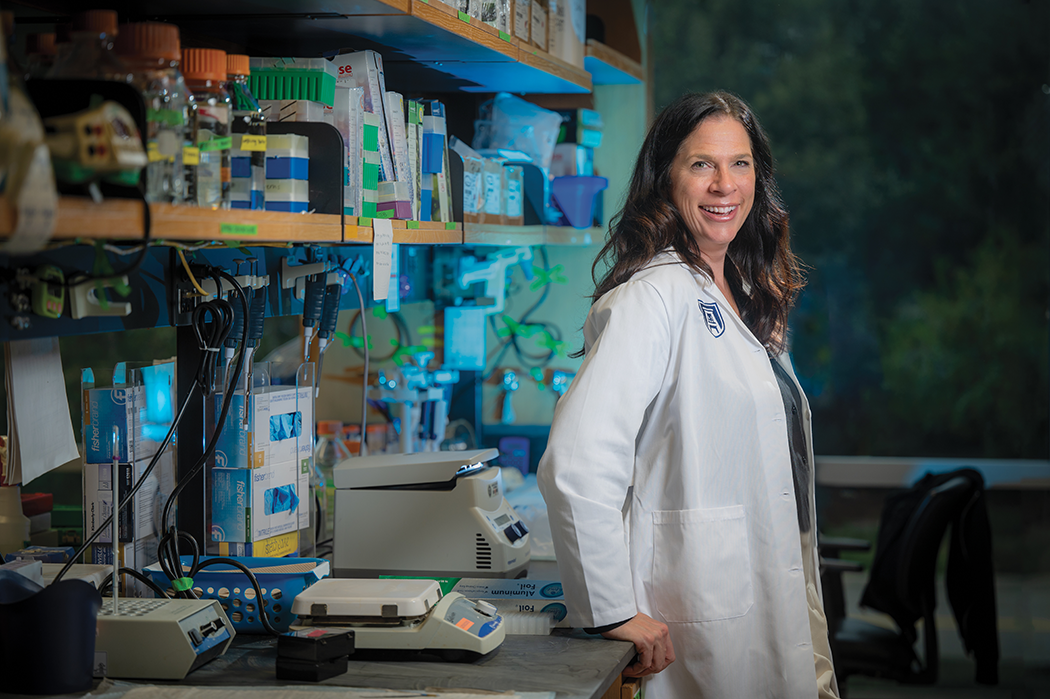
Jennifer C. Sullivan, PhD, dean of The Graduate School at Augusta University, has dedicated her research to better understand why blood pressure increases in hypertension and raising awareness to the dangers of not paying attention to heart health, particularly among women. Throughout her career, Sullivan has been continuously funded by the National Institutes of Health (NIH) and the American Heart Association since becoming a tenure-track faculty member in 2008, and now she has a chance to take her research further after securing a five-year, $7.5 million grant to have Augusta University designated as a Specialized Center of Research Excellence on Sex Differences (SCORE) by the NIH’s Office of Research on Women’s Health. It’s a distinction that places AU among 10 other leaders in research for the field, including Brigham and Women’s Hospital, Cedars-Sinai Medical Center, Emory University, Johns Hopkins University, Massachusetts General Hospital and Harvard Medical School, the Mayo Clinic, the Medical University of South Carolina, the University of Colorado and Yale University. The University of California, Los Angeles has two SCORE programs. “I’m so proud and excited for this opportunity because this has been what I have focused my research program on for my entire career, and to be able to advance it with a program like this, where we can actually build a unique program focused on an area that can make a difference, is just so much fun,” Sullivan said. “Just the fact that Augusta will be included on this list, attached to an organization of the caliber of NIH, will provide opportunities that we’ve never had before, especially for our students and younger researchers.” Sullivan’s SCORE project, “Improving awareness of women with hypertension: ROAR (Rural, Obese, At Risk),” focuses primarily on the fact that, while young women are considered “protected” from hypertension and the associated cardiovascular risk relative to age-matched men, the elimination of hypertension is projected to have a larger impact on cardiovascular disease (CVD) mortality in women. “The group of people with the highest risk of death from hypertension is in the rural South of the U.S., specifically Black women are particularly vulnerable to developing hypertension and CVD,” Sullivan said. According to Sullivan’s research and information available from the American Heart Association (AHA), approximately 19 million deaths were attributed to CVD globally in 2020, an increase of about 20% from 2010. Both Sullivan and the AHA state that cardiovascular disease remains the leading cause of death for both men and women in the United States, and that hypertension is a major modifiable risk factor for CVD. Sullivan said, “It has been suggested that eliminating hypertension would reduce CVD mortality by over 30% in men and 38% in women, but a critical barrier to limiting premature death from CVD is lack of awareness surrounding the risks of CVD. Our overall goal in this new funded project is to transform academic and community understanding of sex as a biological variable in the consideration of hypertension.” The three research projects include Sullivan’s lead project on high fat diets, a project on systemic lupus erythematosus (SLE) disproportionately affects young women led by Erin Taylor, PhD, at the University of Mississippi Medical Center, and another project looking at the role of inflammation and how immune cells are activated in SLE led by Michael Ryan, PhD, at the University of South Carlina’s School of Medicine. But there is more to SCORE than just conducting research. Each SCORE team is also responsible for a career enhancement core and a leadership administrative core. “What really sets these grants apart are the emphasis on the career enhancement and leadership administrative cores. The Career Enhancement Core is designed to be a bit open ended for each SCORE, but in talking to the NIH, what they were most excited about in our project is the community outreach piece we designed. “Our grant includes people across the entire campus, including Augusta University’s Medical College of Georgia, the College of Allied Health Sciences, the College of Education and Human Development and multiple campus partners including some of our sororities on campus and the Center for Writing Excellence,” Sullivan said. “More specifically, the COEHD is able to extend our outreach efforts to our local schools to begin educating children on the importance of screening, and our sororities are obviously connected with other chapters across the southeast which helps us spread our message, as well.” Sullivan notes that, through this portion of the project alone, there will be numerous opportunities to include students from Augusta University’s CAHS, College of Nursing, Department of Kinesiology, the Biomedical Sciences PhD program and the proposed School of Public Health. Marlo Vernon, PhD, associate professor at MCG and researcher for the Georgia Cancer Center, and Amanda Behr, chair of the Medical Illustration Program in CAHS, are also involved in various stages of the project. “The other thing the Career Enhancement Core will do is provide pilot grants to three research projects each year for early-stage investigators. We’ll also be able to fund sabbaticals for graduate students or postdocs to go someplace else and learn cutting edge techniques from other experts, so there is a lot built in that will help us support up-and-coming researchers,” Sullivan said. “We’re now part of this consortium, and they have a once-a-year, in-person meeting at the NIH offices, so we’ll go to that for the first time this year, and what’s neat about it is they’re really promoting young investigators. Each grant can bring up to eight people, the our hope is that we will have the investigators funded by the pilot projects attend next year, giving those folks the opportunity to present and talk to program officers with the NIH and develop a pipeline of investigators committed to studying women’s health and sex as a biological variable.” Sullivan is also looking to designate some of her summer graduate and undergraduate research positions to the project beginning next summer. “The Graduate School already has a summer program to support undergraduates that we will be able to piggyback off of. We have set aside five slots in that program for this that will go to students studying the sex as a biological variable, and the applications for that program, STAR, is already open,” Sullivan said. “We’re also planning a symposium in collaboration with the Physiology Department in April 2024. This is an annual event sponsored by the department, and this year they selected sex differences as the topic, so we are hoping to help increase exposure and attendance.” Looking to know more about the amazing research happening at Augusta? To connect with Jennifer Sullivan, simply click on her icon ow to arrange an interview today.


Meet “The Beast”: The Rare Flower That Smells Like Death and Draws Crowds
When a corpse flower, one of the world’s rarest and most extraordinary blooming plants, bursts into bloom, it’s more than a quirky spectacle. It’s a moment that invites deeper stories about plant biology, conservation, biodiversity, and the science that helps preserve rare species. Last season, Wendy Overbeck Dunham, Senior Horticulture Manager at Frederik Meijer Gardens & Sculpture Park, was interviewed by reporters from ABC News and ARC West Michigan (CBS News) covering this rare event. Wendy Overbeck Dunham is the Director of Horticulture at Frederik Meijer Gardens & Sculpture Park in Grand Rapids, Michigan. She leads the horticulture team that oversees the care and presentation of the organization’s living collections - ranging from tropical conservatories and outdoor gardens to seasonal displays - connecting guests to art, design, and the natural environment. View her profile Why This Bloom Is So Rare and Newsworthy Corpse flowers (Amorphophallus titanum) are famous for their massive size, unpredictable bloom cycles, and powerful odor that mimics rotting flesh , an evolutionary strategy for attracting specific pollinators. These blooms can take many years to develop, and their spectacular emergence - open only for a short window -attracts crowds and widespread attention. Last year, as one such plant prepared to bloom at Frederik Meijer Gardens, anticipation built across West Michigan and beyond, with extended visiting hours so the public could witness, and smell, this rare phenomenon. Wendy Overbeck Dunham offered a vivid description of what made this bloom such an unforgettable experience and also showed both the humor and educational value of the moment, a reminder that science can be fun, fascinating, and even a bit funky. “No matter how you describe it, this plant, which we've nicknamed ‘The Beast,’ is definitely going to stink here in the next few days.” Wendy Overbeck Dunham leads horticultural strategy and rare plant cultivation at Frederik Meijer Gardens & Sculpture Park. Her leadership focuses on nurturing exceptional plant specimens, interpreting botanical phenomena for the public, and providing an expert voice on topics ranging from plant biology to conservation and ecological storytelling.



J.S. Held Announces the First Global Consulting Company Chief Intellectual Property Officer
Global consulting firm J.S. Held proudly announces the appointment of intellectual property (IP) expert James E. Malackowski as the first Chief Intellectual Property Officer (CIPO) of a global consulting company. J.S. Held Chief Executive Officer Lee Spirer observes, “In today's knowledge-based economy, the role of CIPO serves an important strategic and operational role both internally and in support of clients.” Protecting J.S. Held Intellectual Property and Other Intangible Assets J.S. Held experts have developed methodologies, frameworks, proprietary tools, and research that support client work. The CIPO partners across the business to ensure that these intangible assets are identified, protected, and leveraged to benefit the business. “Having dedicated IP leadership will help the company move faster in developing and deploying new methodologies, while ensuring reasonable measures of protecting our innovations,” noted James E. Malackowski. Managing J.S. Held Intellectual Property and Other Intangible Assets J.S. Held maintains a robust portfolio of patents including a “System and Method for Financing an Insurance Transaction”, trademarks, data, trade secrets, and other proprietary technologies that support client work. “As CIPO, I intend to partner with company leadership and our professional experts across the globe to manage and monetize the many patent, trademark, data, and other proprietary assets that set J.S. Held apart among our competitors, benefitting clients and our investors,” added James E. Malackowski. Industry’s Most Comprehensive Global Intellectual Property Consulting Group Ocean Tomo, a part of J.S. Held, is rooted in an expansive understanding of intellectual property (IP) value and risk, providing a foundation of Expertise for the Innovation Economy™. Built upon more than three decades of experience assessing IP in the most rigorous of venues - state, federal, and international courts, Ocean Tomo clients benefit from continuous feedback between litigation economic damage outcomes, transaction pricing, capital market valuations, debt financing terms, equity assessments, and deep technical insight. The team possesses the most comprehensive and market-tested understanding of IP value. Financial, market, and technical experts uniquely understand the contributory value of patented inventions, know-how, brands, and copyrights that permeate every business, viewing IP not simply as an isolated asset, but as an integral component of enterprise value. Multidimensional Intellectual Property-Informed Experts Benefit J.S. Held Clients Intellectual property expertise permeates the global organization. Beyond the expertise within J.S. Held’s dedicated IP practice Ocean Tomo, a part of J.S. Held, multidisciplinary experts across J.S. Held combine intellectual property expertise to core specializations, including: • Artificial Intelligence (AI) • Business Intelligence • Construction Advisory • Enterprise Risk Management • Fraud Investigations • Forensic Accounting • Insurance Claims Consulting • Restructuring, Turnaround, Receivership, and Bankruptcy Tangible and Intangible Asset Value Understanding The depth and breadth of J.S. Held’s work in the property and casualty insurance market and Ocean Tomo’s work across all forms of intellectual property and other intangible assets uniquely combine to create a strong foundation in risk assessment, data analysis, global awareness, regulatory compliance, technological adaptability, and risk mitigation. Collectively, these skills better equip J.S. Held experts to assess business risk across diverse geographies, geopolitical landscapes, regulatory frameworks, and technological advancements for the benefit of our clients. Learn more about the new J.S. Held Chief Intellectual Property Officer, James E. Malackowski: Looking to know more or connect with James E. Malackowski? Simply click on the expert's icon now to arrange an interview today. For any other media inquiries - contact : Kristi L. Stathis, J.S. Held +1 786 833 4864 Kristi.Stathis@JSHeld.com


5 Reasons "Expertise Marketing" Programs Fail.
As a company dedicated to “Expertise Marketing” we work with some of the largest organizations from higher education and healthcare, to top global corporate brands. What these organizations have in common are smart, educated professionals…and a lot of them. The types of individuals that would be valuable ambassadors, true thought leaders, helping you deliver on your organization’s reputational and revenue goals. Instinctively marketing and communications teams recognize the intrinsic value of this human capital and have created a variety of “Thought Leadership” and “Expert Marketing and Directory” initiatives. The overriding objective is how to best connect their experts to audiences that matter. Seeking opportunities ranging from acting as media sources to event speakers to providing a valuable entry-point for research and business collaboration, even lead generation. To execute on this goal, one of the most effective approaches, and starting points for any expertise marketing program starts with better profiling their experts and related insights on their website. Building out and leveraging this expert content is at the core of most expertise marketing efforts. Despite the promises these web initiatives offer, most programs don’t deliver organizations the results they were hoping for. Success most often has nothing to do with how smart your people are. Some of the largest organizations with deep rosters of expertise fail where smaller organizations consistently punch above their weight. When creating an expertise presence on your website there are important areas to consider. The following represents the top 5 reasons many expertise marketing programs fail and how to maximize your success. Reason #1 You’re missing critical team members There is no “going it alone” when starting a program like this. Having the following individuals onboard at the start is crucial. Don't worry, these aren't all full-time resources by any means. As your program progresses, these individuals may come in and out in terms of importance, but having access to them over the lifetime of your program will positively impact your success. At the core, you need access to the following individuals. Program Champion - Having a senior leader as a champion is pretty much table stakes for any successful company-wide initiative such as this. Someone who can articulate to others, both up and down in the organization as to how this initiative fits into the broader long-term goals of the organization is imperative. Failure to establish this individual upfront puts your program's future at the whim of shifting priorities and budget cuts. Marketing/Communications - You need someone with ongoing responsibility for maintaining and promoting your roster of experts and their content. This ensures your most relevant experts are showcased at the right time to meet the changing demands of your audiences and the news cycle. Digital/Web - You need someone with the keys to the website/CMS. Ensure you have connections to people who control not only your small area of the website such as a newsroom or department level webpages but also those that have access to the layouts and navigation of the broader website. The latter is important as it helps prevent your expert content from combing isolated and disconnected from the rest of your website. IT - The level of involvement of IT is highly dependent on how you’re looking to implement your expert content on your website. By leveraging a variety of content implementation tools from simple "cut and paste" embeds to WordPress plugins you can severely limit the necessity to involve IT. However, depending on your budget and goals, IT can leverage a platform's API, accessing advanced layouts and functionality, including integrating with other systems your organization may already be using. Engaged Experts - Last but not least, having your experts on board is critical. By properly communicating upfront and ongoing with your experts around the goals of the program, you're helping ensure your content best represents the talents that lie within. We realize it is often difficult and sometimes cost-prohibitive to assemble such a team. It is important if you don’t have access to all these members in-house that you access them through an external partner's professional services offerings. This could include assisting with building out content such as profiles and posts or providing technical assistance in integrating this content into your website. Reason #2 You’re relying too much on IT for implementation or updating. To be successful long term, it is important that key owners of the expertise marketing program feel empowered to take control of their expert content. From creation to ongoing management, those with marketing communications roles and others closest to their organization’s expertise need the flexibility to update content in real-time to remain relevant and up-to-date. Being able to quickly log into an external platform that syncs content with your website is key. It eliminates the need for special access to your CMS or the possible requirement for IT to be in control of your updates. It also allows for a mix of individual expert and administrator access providing the highest level of flexibility. Often left out in IT-focused builds is how you will effectively handle inquiries. Simply showing emails and phone numbers is a recipe for missed opportunities (and SPAM) as these experts are some of the most time-constrained individuals in your organization. Ensuring you have access to a customizable workflow feature is essential in ensuring your organization doesn't miss potential time-sensitive inquiries. When working with IT to implement an Expertise Marketing Program on your website, you will often be presented with a “we’ll build it for you option” vs using a purpose-built platform. Understanding the tradeoffs of this approach is critical. One of the greatest benefits of using a SaaS platform, besides costs, is that you constantly have the most up-to-date software, with the latest features and functionality to best showcase your expertise. To learn more, download the “True Costs of DIY” to better understand the tradeoffs and functional requirements needed for success. Reason #3 Your expert content is siloed, one-dimensional, and rarely updated. This is by far one of the biggest reasons programs fail. Well, it's actually a number of reasons, but it all relates back to how your content will be perceived and ultimately drive connections with interested audiences. By addressing the following you'll present not only better but more easily discoverable expert content that drives inquiries. You have boring, not engaging profiles for your experts - Before people feel comfortable reaching out they need a good sense of the person. Profiles that lack media assets such as video, publications and even podcasts are one-dimensional. Furthermore, showcasing past media and event appearances provides an enhanced level of credibility. Focused solely on a directory & profiles - Your expertise is more than just showcased through a profile found in a directory. Adding long-form posts where experts can share their insights and even expert focussed Q&A (download report on "The Power of Q&A") provides audiences additional ways to connect with your experts. Ensuring all these additional assets connect back to your profiles provides more insight into the person behind the expertise. No main website navigation - Despite adding menu navigation on a specific web page, such as a newsroom or About Us page, most organizations neglect to add navigation to their main website’s menu structure. You can never assume visitors will know where this content resides. We recommend multiple links in both headers and footers to your expert content. Names such as “Find Experts”, “Media Sources” or “Research Experts” are some of the most common, accessible from overall menu items like “About Us”, “News” or “Research”. Expert content stuck to one small area of your website - If you restrict your expert content to just one area, you’re just making discovery that much harder and limiting exposing the breadth of expertise you have in-house. Highlight your experts and expertise on your homepage or in key sections of your website. Refine your experts and their insights found in posts or Q&A by tagging them based on specific topics and showcasing just those experts in various areas of your website. Using a dedicated SaaS platform means that when you update content it updates everywhere, making changes quick and easy. Expert content never gets updated - This is a big issue for organizations that build in-house or through their CMS. Visitors can quickly understand that the content isn’t fresh and it reflects poorly on the individual and the organization as a whole. The key to ensuring content is maintained is to provide multiple access capabilities where admins (internal or external) and the experts can maintain the content. Failure to respond in a timely manner to inquiries - Displaying content that exposes phone numbers and emails of your experts is not the best approach...both from a privacy and timely communications standpoint. Without an advanced inquiry workflow that alerts multiple members of your team, you risk missing out on time-sensitive requests such as those from journalists. Reason #4 You haven’t considered everything needed to win the SEO game. Building out content on the web without having a plan for how external and internal search engines will interact with your pages is a big mistake. Organic search can play a big role in discovery leading to valuable opportunities. Before you consider your new expert content pages ready, ensure you've taken into account the following. Proper Meta Data - Do your expert profile pages have dynamically created titles, descriptions and keywords that automatically adjust to changes in areas such as an individual's expertise? Schema Data - Do you have proper schema tags that indicate to Google and other search engines the type of content displayed as well as the credibility of both the individual and organization behind it. Sitemaps - Have you ensured all your pages have been added to your sitemap. Is it automatically updated when new experts or pieces of expert content are added? Google Search Console - Are you pushing pages directly to Google by requesting important new content is updated in the search index. For more info on better SEO read my Spotlight "Why Expertise Ranks Higher". Reason #5 You’re not doing enough to actively promote your expertise… a “they’ll just find us” approach usually fails. It's like owning a Porsche and leaving it in the garage…pretty to look at but you’re not realizing its full potential. Simply putting your expert content on a web page is only the start. Successful organizations actively distribute these assets, sharing links to profiles and other content elements like news posts or Q&A in a variety of ways. Social Media Channels - They start by promoting these assets on their social media channels, from their Twitter feeds to Facebook and LinkedIn posts. Media Distribution Software - Whether it is systems like Cision or Meltwater, including links to expert profiles and related content when reaching out to journalists adds a layer of depth to your pitches. Press Releases - Every time you reference your organization's expertise, include links to additional content and individual experts for more insights and pathways to connect with real people. It sounds like a lot, but with a bit of planning and some ongoing maintenance, a properly constructed expertise marketing program can deliver incredible results for many years. To be successful it's more than just firing up a few new web pages. However, with the advent of specialized platforms specifically designed for these programs, and a bit of guidance, it is easier than ever to create an expert content footprint on your website and deliver valuable connections for your organization.



Hidden in plain sight: UD researcher exposes gaps in college application process
In a groundbreaking study in the American Educational Research Journal, University of Delaware Associate Professor Dominique Baker and others has unveiled significant disparities in how students report extracurricular activities on college applications, highlighting inequities in the admissions process. Analyzing over 6 million Common App submissions using natural language processing, the researchers discovered that white, Asian, wealthier, and private-school students tend to list more activities, leadership roles, and unique accomplishments compared to their peers from underrepresented racial, ethnic, and socioeconomic backgrounds. However, when underrepresented minority students did report leadership roles, they did so at rates comparable to their white and Asian American counterparts. “All students do not have the ability to sign up for eight, 10 or 15 extracurricular activities,” Baker noted, emphasizing that many students must work to support their families, limiting their participation in extracurriculars. To address these disparities, the researchers recommend reducing the number of activities students can list on applications—suggesting a cap of four or five—to encourage a focus on the quality and intensity of involvement rather than quantity. This approach aims to level the playing field, ensuring that students with limited opportunities can still showcase their potential effectively. Baker and her colleagues draw attention to Lafayette College, which has recently reduced the number of extracurricular activities it reviews from 10 to six. While data on the impact of such changes is still forthcoming, the move aligns with the researchers’ recommendations and signals a shift toward more fair admissions practices. Other institutions are beginning to take note. If you wish to delve deeper into this research and explore its implications for college admissions, Baker is available for interviews and has been in a number of national outlets like The Wall Street Journal, ABC News, and Inside Higher Ed. Her insights could provide valuable perspectives on creating a more fair admissions landscape.