Experts Matter. Find Yours.
Connect for media, speaking, professional opportunities & more.

Spotlighting Success: How ExpertFile Amplifies Organizational Expertise
Whether you are an industry leader looking to maintain your reputational advantage or smaller organization looking to enhance your reputation, a structured expertise marketing program should be a critical component of your marketing strategy. Traditional thought leadership programs that often focus on a few key executives are now being broadened by a more strategic approach that leverages the hidden expertise within your entire team. Global research conducted by Ogilvy in its recent report “The Global Rise of B2B Influencer Marketing” shows that many organizations are now setting up programs with their employees as Brand Ambassadors to demonstrate thought leadership in specific niches where they have skills and insights that appeal to their audiences. These employees have expertise that is often more relatable and authentic. Using social media platforms like LinkedIn, and networks such as ExpertFile, they can further amplify expert content to cut through the content marketing noise and drive more targeted engagement with media, sales prospects and other audiences. “Your employees are typically your most valuable resource. Identifying your employees that can be influencers themselves is a huge missed opportunity for one of the biggest ROI’s of all time.” James Baldwin Global B2B Influence Lead, Ogilvy To capitalize on this trend, many organizations are turning to more advanced solutions that deliver new digital publishing, distribution and workflow capabilities that extend the capabilities of their CMS (Content Marketing Systems). This also empowers clients and their agencies to achieve more efficiency and scale by better managing of employee content and audience interactions. The results include improved SEO PageRank and improved generative search results, increased site traffic and more qualified media inquiries and sales leads. Here are a few examples: With the ExpertFile platform, Vanderbilt University has streamlined its media interactions and presented more comprehensive information on their faculty enabling journalists to discover the depth of research and expertise that Vanderbilt has to offer for their stories. This provides a valuable boost of inbound inquires that help Vanderbilt stay top of mind, going beyond outbound media pitches. View Expert Center About Vanderbilt University is a distinguished private research institution known for academic excellence and innovation. With a rich history spanning over a century, it cultivates leaders, conducts pioneering research, and contributes significantly to society. Seeking to enhance its reputation and broaden its influence, ChristianaCare completely revamped its approach to showcasing their medical experts. Their Media Expert Center powered by ExpertFile doubled national media coverage,, earning the esteemed IABC Silver and Gold Awards for this exceptional communications strategy. ChristianaCare later established a Speakers Bureau to expand its program with ExpertFile, saving hundreds of operational hours and surpassing engagement targets by 400%. This innovative approach reinforced ChristianaCare's brand visibility, reputation while demonstrating its commitment to community service. View Experts Center View Speakers Bureau About ChristianaCare is a leading healthcare institution committed to delivering exceptional patient care and advancing medical research. With a focus on innovation and compassion, they strive to empower healthier lives and transform healthcare experiences for individuals and families across the region. With a goal of driving market visibility and increasing media coverage, University of Delaware leveraged the ExpertFile platform to regularly published research and insights related to topical news events, while also making it easy for journalists to connect with their faculty as media sources. Within the first 90 days, the university garnered 80 inquiries, capturing the interest of prestigious media outlets such as CNN, NBC, Newsweek, AP, Bloomberg, among others. This activity was made possible with ExpertFile’s automation, distribution and workflow features and seamless no-code integration with the client website. It all added up to massive results with no need to add internal resources to the University of Delaware team. View Expert Center About The University of Delaware is a renowned institution committed to academic excellence, innovation and community engagement. With a rich history and dedication to student success, it strives to advance knowledge and foster global citizenship through transformative education and research. Amidst a competitive educational market in the US Northeast, the University of Connecticut (UCONN) chose ExpertFile to help it amplify its faculty expertise and boost inbound inquiries from media, conferences, researchers and student prospects. The result is a more intuitive way to discover expertise and research across the UCONN campus that helps drive valuable connections that are vital to building institutional reputation and communicating the UCONN mission. View Expert Center About Amidst a competitive educational market in the US Northeast, the University of Connecticut (UCONN) chose ExpertFile to help it amplify its faculty expertise and boost inbound inquiries from media, conferences, researchers and student prospects. The result is a more intuitive way to discover expertise and research across the UCONN campus that helps drive valuable connections that are vital to building institutional reputation and communicating the UCONN mission. The Canadian Automobile Association (CAA) has consistently been rated as one of the most valued brands in the country. It’s focus on thought leadership by sharing its unique expertise on topics including “Canada’s Worst Roads” and “Cannabis at the Wheel” have helped them educate their membership, boost media visibility and advocate for important policy changes with government. The ExpertFile platform provides a central content platform enabling CAA to cost-effectively publish news releases and publish stories and expert profiles to multiple regional websites, all from a intuitive, centralized dashboard. View Expert Center About The Canadian Automobile Association (CAA) advocates for motorists and offers essential services to members nationwide, ensuring safer and more convenient travel. With a trusted legacy, CAA remains committed to enhancing drivers' experiences across Canada. ExpertFile has streamlined the presentation and management of faculty directories with integration into over 20 sections of the Loyola Marymount University LMU website. With a robust collection of over 1,000 faculty profiles, this integration has not only provided a better way to present faculty directories but also delivered over 1 million expert views and generated thousands of media, academic collaboration and student prospect inquiries while enhancing engagement and accessibility to expertise across the university community. Faculty Directories About Loyola Marymount University (LMU) is a private university located in Los Angeles, California. Known for its rigorous academic programs, diverse community, and commitment to social justice. With a goal to attaining R1 research institution status, Villanova University aimed to boost the visibility of its faculty experts and showcase its commitment to academic excellence and knowledge advancement. It needed a way to better manage and leverage a lot of expert faculty research and information. With ExpertFile, the Villanova communications team now has a much easier way to publish and update faculty content that seamlessly integrates with the University website and also appears on the ExpertFile network searched by thousands of journalists looking for credible media sources. It all adds up to more market visibility and brand reputation with valuable audiences connecting with Villanova experts. View Expert Center About Villanova University, founded on Catholic principles, is a renowned research institution committed to academic excellence and ethical leadership. Grounded in its rich heritage, Villanova fosters a community of learning that embraces diversity and promotes the pursuit of truth and social justice. Carnegie Mellon University needed a better way to profile their expert faculty in the best possible way to meet the highest standards and researchers by launching a new Experts Center within 30 days. Their objective was to enhance both the appearance and functionality of underperforming faculty expert content areas, thereby better aligning them with the institution's prominence. Through use of the ExpertFile platform and collaboration with ExpertFile team, profiles were developed and integrated, meeting tight deadlines and resulting in a more polished and easily discoverable experience for those seeking expertise. Expert Center About Carnegie Mellon University is a prestigious institution celebrated for its pioneering research and interdisciplinary education. With a legacy of innovation, it remains at the forefront of shaping global education and technology. As a leading public research institution, the University of Florida aimed to enhance its capacity to connect experts with media opportunities. Faced with a challenging and proprietary content platform , the institution needed to provide a more user-friendly way for journalists to engage with faculty and research experts. Aligned with its mission of fostering academic collaboration and knowledge dissemination, University of Florida communications and digital team completely transformed its online presence using the ExpertFile platform. By prioritizing discovery, accessibility and user experience, their team has elevated the visibility and impact of their faculty research and expertise. View Expert Center About The University of Florida, a Top 10 public research institution in the US, fosters excellence in research, education, and service within a diverse community of scholars. Through collaboration and interdisciplinary initiatives, UF empowers students to drive positive change. Aston University in the UK aimed to elevate its online presence and showcase its faculty expertise effectively across various communities. Seeking to enhance SEO, generate valuable inquiries, humanize research and ultimately improve reputation and ranking, they turned to ExpertFile. Aston University now has a more intuitive, efficient way to profile its faculty and research and increase the awareness of its research with a more diverse global audience through ExpertFile. View Research Experts About Aston University is a prestigious institution renowned for its dedication to innovation and academic excellence. With a rich history of shaping future leaders and conducting cutting-edge research, Aston University continues to inspire and empower students to thrive in a globalized world To build more market visibility and engagement with its target audience, Western Carolina University (WCU) needed a more intuitive way to present its expertise. ExpertFile enabled them to quickly deploy a searchable directory of faculty experts and then focus on creating shareable expert content on their website and on the broader ExpertFile network to boost visibility. To further boost engagement, WCU has published regular posts complete with faculty interviews and vertical video clips for social media. These programs have helped raise the profile of WCU. boosted internal and external engagement and has been very well received by faculty. . View Expert Center About Western Carolina University (WCU) is dedicated to delivering outstanding higher education, fostering innovation, and inspiring students to realize their full potential through academic excellence and community engagement. In California's competitive academic environment, UC Irvine needed to boost the visibility of its strong expert faculty while leverage the resources of a small communications team. ExpertFile’s user-friendly platform including customizable workflows and automated tools for adding expert content to their website made showcasing experts easy. Being able to create detailed media-rich profiles and quickly share expert insights allowed UC Irvine to stand out among larger rivals and increase their media coverage. All without straining their resources. View Expert Center About UC Irvine is a leading public research institution known for its top-ranked academic programs and cutting-edge research initiatives. With a focus on innovation and diversity, UC Irvine is committed to advancing knowledge and addressing society's most pressing challenges. Multiple integrations across research and newsroom sections have significantly streamlined the presentation and management of expert content at Goizueta Business School at Emory University. A more efficient system with delegated permissions has increased internal collaboration, and custom training resources for faculty and staff boost engagement on the platform. The ExpertFile team also provides a range of services such as content updates to save Goizueta valuable time while ensuring its website remains current and engaging, for students, faculty, and visitors alike. View Expert Center About Emory University's Goizueta Business School is a prestigious institution renowned for its innovative curriculum and exceptional faculty. With a focus on experiential learning and global perspective, Goizueta prepares students to become transformative business. Showcasing the expertise at Southern Utah University has been a key strategy for its marketing team. While not having the advantage of being in a major media market, SUU understood they needed to be more innovative in developing thought leadership and positioning their expertise to build their brand. The ExpertFile platform with its advanced content features allows the SUU team to present a more engaging view of their faculty and their research. It’s helped them boost search rank and garner national media attention, plus it has also helped them engage student prospects. View Expert Center About Southern Utah University fosters student success and personal development through diverse academic programs and resources. Emphasizing innovation, inclusivity, and community engagement, SUU creates a dynamic learning environment for student achievement and societal contributions. As a top ranked institution, The Virginia Commonwealth University (VCU) School of Engineering wanted to make its faculty research and insights stand out. Just designing a standard faculty directory didn’t meet the mark. ExpertFile enabled VCU to optimize its content resulting in a major improvement in SEO PageRank and website engagement. This improved experience has also boosted inbound inquiries for media sources, academic collaborations and student prospects looking for information on the VCU’s programs. View Expert Center About Virginia Commonwealth University (VCU) is a premier urban, public research university committed to advancing knowledge and improving the human experience. With a diverse community of students, faculty, and staff, VCU fosters innovation, creativity and collaboration. As a recognized R1 research university, the communications team at Michigan State had the goal to better convey the strength of its faculty research in an effort to boost regional and national media coverage. With the ExpertFile platform their team was able to design a custom implementation fully integrated into the MSU website and streamline the content management and updates to hundreds of faculty profiles - all managed from an intuitive centralized dashboard that saves time for the MSU team. View Expert Center About Michigan State University, a leading public research institution, top in graduate school rankings, is dedicated to advancing knowledge and transforming lives through its commitment to excellence in education, research, and outreach. As a relatively new institution, Augusta University, the fourth largest university in the state of Georgia had a goal stand out by showcasing the expertise of its faculty and the medical staff within Augusta Healthcare - one of the state’s largest integrated health systems. The communications team at Augusta leveraged the ExpertFile platform, publishing more comprehensive expert profiles. Plus they released regular expert updates that demonstrated the relevance of their experts on topical news stories. The result was a huge boost in SEO PageRank plus regional and national media coverage. All without the need to add resources to their communications team. View Expert Center About Augusta University, a leading academic institution, combines excellence in education, research, and healthcare. With an integrated health system, it fosters innovation, advances knowledge, and improves the well-being of communities locally and globally. As an R1 institution based in New Orleans, Tulane University has many specialized programs led by their world-class researchers and faculty. The Tulane marketing team wanted to better showcase this faculty expertise to drive media coverage while designing a system that worked best for their faculty. Leveraging the ExpertFile Platform, they created a searchable online hub showcasing participating faculty experts offering more engaging faculty profiles complete with multimedia features and a more intuitive way for journalists to connect to Tulane media sources. View Expert Center About Tulane University, a renowned institution in New Orleans, fosters innovative research, academic excellence, and community engagement. With a rich history of interdisciplinary collaboration, it prepares students to lead and serve in a complex global society. Are you looking to join the many organizations that are leveraging their employee subject-matter experts as part of a thought leadership and content marketing program? Then consider how you will manage and scale this effort with solutions designed specifically for expertise marketing. ExpertFile has advanced content creation and management tools, customizable workflows, powerful search capabilities, AI features, and flexible integration options, all connected to a broad network of media and speaking opportunities. By streamlining the management and promotion of online expert profiles, we ensure each organization connects with their key audiences like journalists, potential clients, event organizers and many others. Tailored for various industries, ExpertFile addresses each client's unique needs, driving meaningful engagement and visibility for the organization. The spotlights above are just a small sample of how ExpertFile works with leading organizations every day to enhance expertise and broaden their market reach. Explore industry-specific benefits to learn how ExpertFile can help your organization enhance its market presence and thought leadership. Want to learn more? Visit expertfile.com/getstarted.



Climate change research trailblazer elected to prestigious list of AAAS Fellows
University of Delaware professor Rodrigo Vargas has been elected as a fellow of the American Association for the Advancement of Science (AAAS) — one of the largest scientific societies in the world and publisher of the Science family of journals. The new class of AAAS Fellows includes 502 scientists, engineers and innovators across 24 disciplines, who are being honored for their scientifically and socially distinguished achievements. Vargas, professor of ecosystem ecology and environmental change in UD’s College of Agriculture and Natural Resources, is recognized "for distinguished contributions to carbon dynamics across the terrestrial-aquatic interface, development of environmental networks, novel data analysis tools and his leadership in creating a more diverse scientific workforce." Deborah Allen, who retired from UD in 2019 as a professor of biological sciences, was also names as a fellow. She was cited “for transformational contributions to STEM education nationally and internationally, particularly for developments in problem-based learning and faculty development.” Vargas is an ecosystem ecologist who studies how nature-based solutions can help address global environmental change in both terrestrial and coastal ecosystems, Vargas uses a variety of research methods, including data mining, machine learning, remote sensing, measurements of greenhouse gas fluxes and modeling techniques for forecasting applications.


Exploring the Link Between Student Engagement and Deeper Learning
When students are engaged in their learning, they are more likely to dive deeper into the material. This is because they are actively participating in the process, asking questions, and seeking out answers. This is a concept that was recently explored by Amanda Jansen, a University of Delaware professor in the College of Education and Human Development. With attention to teachers’ first-person narratives and reflections, her study offers educators a model for understanding student engagement so that they can better facilitate deeper learning in their classrooms. Funded by the National Science Foundation (NSF), it was found that the majority of the teachers in Jansen’s study understood the primary function of student engagement to be deeper learning about a mathematics concept rather than classroom performance. These teachers talked more about engagement in terms of cognitive, affective and social processes, and they often spoke about more than one dimension. Jansen also emphasizes that how educators ask students to be engaged often reveals helpful information about educators’ instructional practices and their own assumptions. It can also send a message to students about their role in the learning process. These more engaged students are more likely to analyze and evaluate information, rather than just passively accepting it. This higher level of thinking leads to a deeper understanding of the material and allows students to apply their knowledge in real-world situations. To speak to Jansen about the study and its impact, click her "View Profile" button.

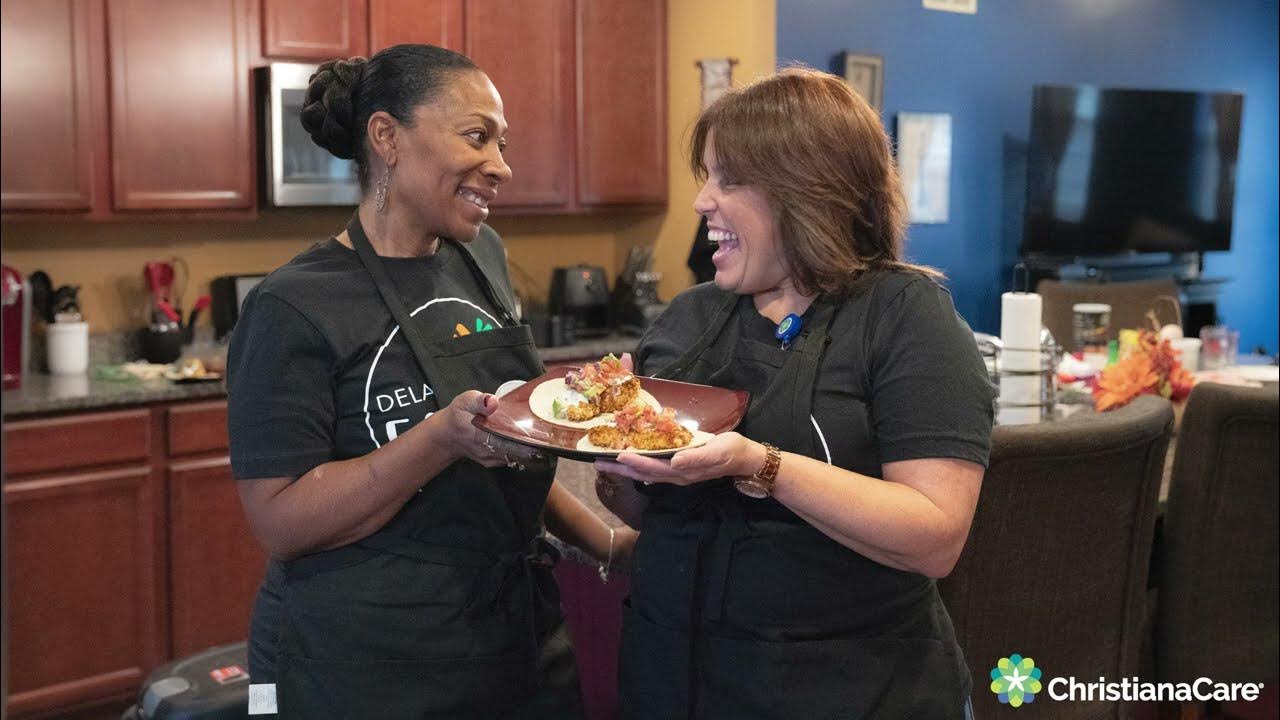
Food is Medicine: ‘It’s Not Just About Food–It’s About Friendship
Kim Solomon’s kitchen showed all the signs of a good lunch in the making – chopped veggies on the counter, a few dirty dishes in the sink and two people laughing as they cooked. “Don’t worry, we’re going to clean all this up,” ChristianaCare community health worker Michelle Torres, BBA-HM, said as she sliced tilapia for the heart-healthy fish tacos she was making with Solomon. “I’m not worried about the mess, especially when it tastes this yummy,” Solomon said as she watched Torres place the raw fish – coated with panko crumbs, spices and an egg wash – into the air fryer. A few years earlier, Solomon’s lunch would have been something quick from the pantry after cooking for her sons or helping a neighbor. But after dealing with the life-threatening effects of high blood pressure, she is learning – with Torres’ help – how to prioritize her own nutrition and health. Solomon is one of more than 225 patients enrolled in the Delaware Food Farmacy, a ChristianaCare partnership with Lutheran Community Services that provides weekly deliveries of locally sourced produce, meat and other foods, along with one-on-one support from a community health worker. Delaware Food Farmacy participants report lower A1C blood glucose levels, healthier blood pressure readings and reduced body mass index. Dishing out good health “It took me getting very sick to finally make my own health a priority in my life, and that’s a humbling experience,” said Solomon, who lives in Bear, Delaware. “This is not just about food – it is about friendship, and Michelle’s support really gives me motivation. It keeps me excited to hear her voice and know that she’s there for me.” Kim Solomon (left) finds prioritizing her own nutrition and health can be delicious, as she prepares panko-crusted tilapia for fish tacos with community health worker Michelle Torres. ChristianaCare is expanding efforts to reduce food insecurity among patients in an ongoing commitment to ending disparities and in recognition that access to nutritious food is critical to overall health. In addition to the Delaware Food Farmacy, over 100 Maryland Primary Care Program (MDPCP) patients are participating in Healthy Food, Healthy Hearts, a 12-week program that delivers fresh groceries to under-resourced Medicare patients with complex health needs. “Our focus is empowering people to maintain their health by giving them the resources they need for whole-person care, including healthy food and education related to meal preparation and living with a chronic health condition,” said Erin Booker, LPC, chief biopsychosocial officer for ChristianaCare. “Through our work with our community partners in the Food Farmacy program in Delaware and our Healthy Food, Healthy Hearts program in Maryland, we are acknowledging the intersection of nutrition and health care and the importance of creating a more equitable food system.” Food is Medicine Both programs operate on the Food Is Medicine model, which recognizes that nutritious foods are essential for good health – and they must be accessible in the community, particularly in under-resourced areas. Studies have shown that evidence-based, tailored food interventions can lead to improved health outcomes and better use of health care services among participants while also reducing food insecurity, said Michelle Axe, MS, CHES, program manager of Food and Social Care Initiatives for ChristianaCare. The Centers for Disease Control and Prevention estimated in 2023 that food insecurity results in nearly $77 billion in excess health care spending. Veggie power: Much of the food in the Food Farmacy is sourced locally through a cooperative agreement with Delaware’s Department of Agriculture and the Farm-to-Community Program, which connects local farms with organizations distributing food to the community. Among Food Farmacy graduates, 26% report a decrease in food insecurity and 18% said they experience less anxiety. “With these programs, we’re offering participants an opportunity to make a change in their life, not only for them as individuals, but for the entire family,” Axe said. “This is about more than food.” From farm to table Getting health care professionals to prescribe healthier food options – and then making it possible for the patients to obtain them – helps close the gap between medical nutrition and financial health, said Rob Gurnee, executive director of Lutheran Community Services. “Providing food – that’s our core competency,” Gurnee said. “What really makes this program different and incredibly valuable is that ChristianaCare can funnel the right people into the program and then maintain these relationships to help patients make changes that are sustainable. Together, we utilize the strengths of our organizations with the goal of improving health outcomes.” Each week, Delaware Food Farmacy participants select from a menu of fresh produce, lean meats and fish, whole grains, low-fat dairy, snacks and other healthy items, all of which fall under the Dietary Approach to Stop Hypertension (DASH) diet. Fresh-picked: With Delaware Food Farmacy, patients are getting local produce that is typically picked within 24 to 48 hours. Much of the food distributed through Delaware Food Farmacy is sourced locally through a cooperative agreement with Delaware’s Department of Agriculture and the Farm-to-Community Program, which connects local farms with organizations distributing food to the community. Solomon’s refrigerator is filled with local produce, eggs and lean meats from the Food Farmacy program, but it’s Torres who keeps Solomon on the path to good health with her encouraging personality and a tasty supply of easy-to-make recipes. A recipe for healthy eating: Air Fryer Fish Tacos. Kim Solomon’s review? “Yummy.” “She’s there to support you and help you understand it’s going to be OK,” Solomon said. “She goes above and beyond every time. We need more Michelles in our world.”



New research shines a light on how expert mapmakers at Ordnance Survey see the world differently
OS Remote Sensing Services survey team updating OS MasterMap using the latest aerial imagery (Image credit: OS) Aston University psychologists worked with Ordnance Survey to assess how surveyors use 3D aerial images when making maps Humans naturally assume light comes from above, but experienced surveyors can interpret visual cues to assess topography regardless of the light direction It is the first time it has been shown that experience can radically alter natural human assumptions about lighting and could improve surveyor training. Researchers at Aston University have found differences between experienced Ordnance Survey (OS) mapmakers and novices in the way that they interpret aerial images for mapmaking, which could lead to improved training processes for new recruits. OS is well known for its travel and walking maps, but is also responsible for maintaining Great Britain’s national geographic database. Every time a building is demolished or developed, or a new road and path built, the map must be updated. Aerial photographs are taken of the area that has changed, either from a plane or using drones, and expert mapmakers, known as remote sensing surveyors, will examine the images to identify change and accurately redraw the map of the area. Image pairs are presented stereoscopically, one to each eye, allowing the remote sensing surveyors to see in 3D and correctly assess the topography, such as ditches, hills and hedges. Led by Professor Andrew Schofield, a team from Aston University’s College of Health and Life Sciences, together with Dr Isabel Sargent, previously at OS, carried out a study to understand how remote sensing surveyors interpret the shadows and highlights in images. The researchers asked six trained remote sensing surveyors and six novices to assess 10,000 stereoscopic aerial images of hedges and ditches, which had been heavily masked with image distortions. The stereoscopic images the aerial surveyors use for mapmaking are usually taken on sunny days. The human brain is naturally wired to interpret light as coming from above. However, the light does not come from above in the OS aerial images, it depends on the position of the sun. In the UK, north of the equator, light comes slightly from the south, thus appearing to come from below in images viewed by the surveyors. The researchers wanted to see how manipulating the direction of the light would affect the surveyors. Professor Schofield and the team swapped the image pairs between the eyes in half of the trials, so that hedges might look like ditches, and ditches look like hedges. The images were also flipped vertically on half the trials, changing the direction of the light source. Expert surveyors were found to rely on the stereoscopic cues – the difference in images seen by the two eyes – when performing the task. Novices were more likely to rely on lighting cues – highlights and shadows – to judge the shape and relief of an object, and assumed, as is natural, that the lighting came from above. With the manipulated images, this meant that novices frequently made mistakes. Experts were more accurate, even when the images had been turned upside down, and some had learnt to assume that the light source came from the south, or below. This is the first time anyone has shown that the natural assumption that light comes from above, which is common amongst many animal species, can be changed through long term experience. The researchers say that it could be used to develop new visual training techniques for remote sensing surveyors. For example, intensive exposure to repeated, difficult images can improve performance via a process called perceptual learning. Professor Schofield said: “This is a very exciting result. Others have shown that the light-from-above assumption can be altered by a few degrees, but no one has ever found complete reversals following long term experience. Dr Sargent said: “This result will help Ordnance Survey to understand the expertise of their staff and improve surveyor training and procedures.” Remote sensing surveyor Andy Ormerod, who worked on the study, said: “This research proves that experienced remote sensing surveyors can see the world differently. Whereas non-surveyors are used to seeing the world from one perspective, our brains have learned to view the world as seen from aerial imagery.” Journal of Vision DOI:10.1167/jov.24.4.11


Professor Roslyn Bill discusses her research into brain cell membranes with Dr Matt Derry Serious brain injuries and dementia are affected by the flow of water through a protein called aquaporin-4 in brain cell membranes Aquaporins are responsible for clearing the build-up of waste products in brain cells in a process Professor Bill likens to a ‘dishwasher for your brain’. Professor Roslyn Bill, co-founder of Aston Institute for Membrane Excellence (AIME), joins Dr Matt Derry to discuss her research into brain cell membranes in the latest Aston Originals podcast. Water moves in and out of brain cells through tiny protein channels in the cell membrane called aquaporins. One in particular, aquaporin-4, is the focus of Professor Bill’s research. In 2020, she was lead author on a paper published in prestigious journal Cell on how the channels open and close and how this can be controlled. Uncontrolled water entry into brain cells can occur after head trauma, causing swelling which leads to severe brain injuries of the type suffered by racing driver Michael Schumacher after a skiing accident. Finding drugs to control this water movement could lead to treatments to prevent brain swelling in the first place. This research into brain swelling and the contribution of aquaporins led Professor Bill to research into Alzheimer’s, a common form of dementia, which is also related to the action of aquaporins. Alzheimer’s is caused by a build-up of waste products in brain cells. In a process Professor Bill likened to a ‘dishwasher for your brain’, aquaporins are responsible for clearing this waste as we sleep. Professor Bill was selected for an Advanced Grant by the European Research Council (ERC) in 2023, which is being funded by UK Research and Innovation (UKRI). The funded project will further investigate the process, and whether it might be possible to develop a drug to boost the ‘brain dishwasher’, which could be taken to slow or even prevent cognitive decline due to ageing. Bringing together this biological research with the polymer research of AIME, chemists like Dr Derry will help in the drug development and could also lead to totally different applications. Professor Bill said in the podcast to Dr Derry: “We can take the knowledge that we have of how these proteins work in cells and try and apply them to interesting applications in biotechnology. And this is where the sort of work that you (Dr Derry) do comes in, where you can develop plastic membranes, polymer membranes, and then take learning from the biology and try and make really, really good ways of purifying water, for example.” For more information about AIME, visit the webpage. The website also includes links to the previous AIME podcast and details about open positions.

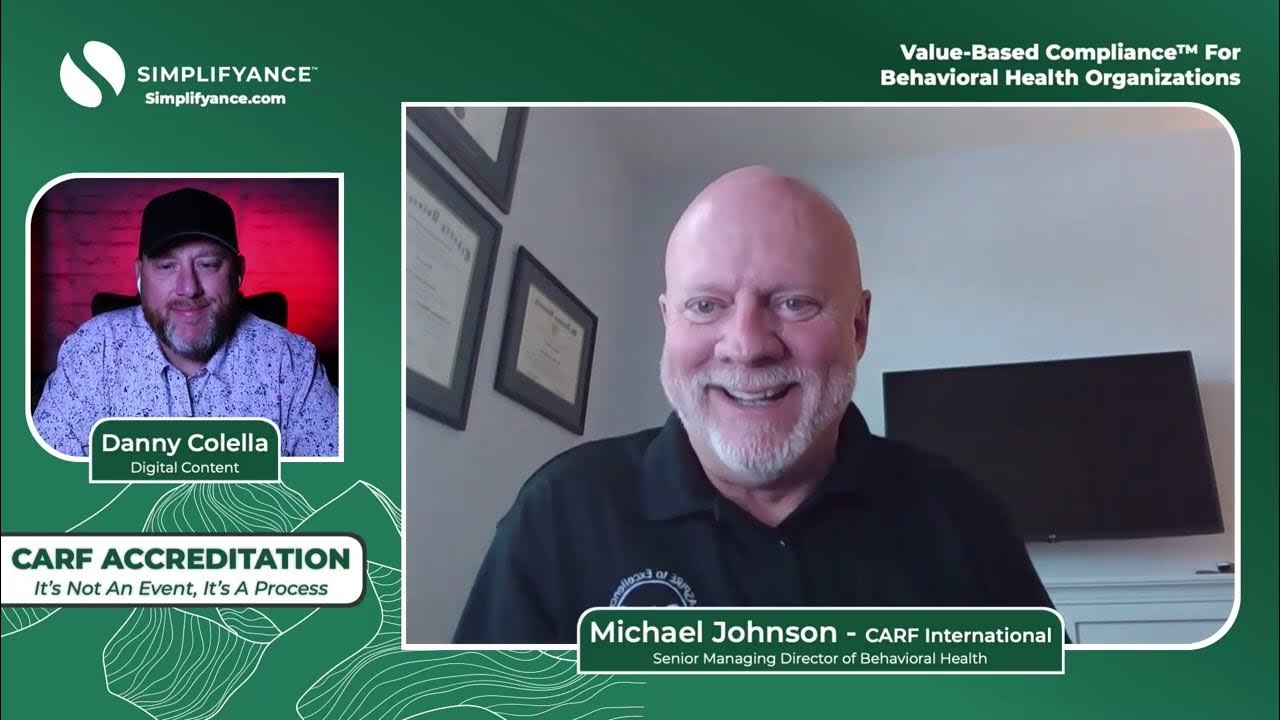
#Expert Podcasts: CARF Accreditation is a process, not an event
Recently, CARF International's Michael Johnson sat down with Simplifyance™ for a great conversation of all things accreditation. The podcast link is provided below. Simplifyance™ had the privilege of speaking with Michael Johnson, Senior Managing Director of Behavioral Health for CARF International. We delved into the world of accreditation, discussing its immense value, the supportive process for organizations during surveys, and uncovering key best practices. CARF is renowned for its commitment to ensuring excellence in healthcare delivery and service outcomes. Michael shared valuable insights into the accreditation process and shed light on how CARF assists organizations in achieving survey success. Michael emphasized the importance of person-centered care, evidence-based practices, and fostering a culture of accountability and learning. These elements are crucial in driving positive outcomes and delivering compassionate, effective care to those in need. And if you're a interested in knowing more about accreditation or the work CARF International does — let us help with your questions. Michael Johnson is Senior Managing Director of Behavioral Health at CARF and is an expert in treatment strategies for mental health and substance use disorder. View his profile below to arrange an interview today.


Rethinking Caregiving Support for the Sandwich Generation
The "sandwich generation" refers to adults who are simultaneously caring for their children as well as older parents or relatives. This places unique strains on caregivers, who must balance their family responsibilities with work and their own self-care. As Guy Weissinger, PhD, MPhil, RN, the Diane Foley Parrett Endowed Assistant Professor at Villanova University's M. Louise Fitzpatrick College of Nursing, notes, many feel like they are being "shortchanged" on both sides—unable to fully support their children or their aging relatives. The result is stress, guilt and difficult decisions about how to allocate limited time and resources. "Hard decisions are also a psychological tax," Dr. Weissinger says. "You have to use the resource of time and brain energy to weigh the options, so it compounds on itself every time they intersect. And that's complicated and hard." These challenges have only increased due to larger societal shifts, according to Melissa O'Connor, PhD, MBA, RN, FGSA, FAAN, the M. Louise Fitzpatrick Endowed Professor in Community and Home Health Nursing in the College of Nursing. "For the first time in the history of the world, older adults will outnumber children in the United States by 2035," said Dr. O'Connor. This rise in numbers of older adults foreshadows a looming caregiving crisis, as more seniors will require care without enough nurses and family caregivers to meet the need. The sandwich generation can also feel overwhelmed due to lack of training in managing complex care needs. As Dr. O'Connor states, there is "no caregiver school"—instead it's "baptism by fire." Learning wound care, managing feeding tubes, giving medications and handling dementia behaviors on the fly can take an emotional toll. Caregiver stress and burnout have also been linked to declines in physical and mental health, and financial strain, as well as increased elder abuse (though unintentional), she says. Dr. O'Connor believes that home health services can serve as a critical resource for supporting overwhelmed sandwich generation caregivers. Home health nurses, aides, therapists and social workers can provide skilled care, educate family members, assess safety and coordinate services. "Home health can make or break someone's success at staying home,” Dr. O'Connor says. "It can also make or break the stress levels of patients and caregivers. If caregivers have support, they can do a really good job." However, misconceptions about home health care persist. Many do not understand what home health services entail or worry about strangers entering their home. Although refusing home health may seem like the safer option to some, the consequences of caregivers trying to provide care without assistance can be dire. Isolated and overwhelmed caregivers who don't have support oftentimes end up seeing their older adult parents experience health declines that necessitate nursing home placement, which takes a financial toll on families as well. From Dr. Weissinger's perspective, the caregiving crisis is a "family and a systems issue." "This is a systematic problem, so we need policy changes at the state, national and organizational levels to address it. We can't solve society-level problems through individual responses," he says. Supporting caregivers and easing this crisis will require policy changes at the highest levels along with a societal shift in how we view and assist caregivers. Though individual families feel the squeeze, truly addressing the caregiving crisis demands broad, systemic solutions. With an aging population, the need for action in the form of policy change is more urgent than ever.


Research finds video games improve mobility for children with autism
University of Delaware professor Anjana Bhat has a long history of finding creative ways to keep autistic children engaged with the added benefit of improving their flexibility and gross motor skills. She’s used dance and play in the past but is now testing video games to see if they’re a viable intervention to promote movement in this population. Bhat and her team in the Move to 2 Learn Innovation Lab at UD's STAR Campus have been using Ring Fit on Nintendo Switch to help children with autism get their daily dose of exercise. “Children love video games, and they’re fun,” said Bhat, professor of physical therapy in UD's College of Health Sciences. “But there’s also a lot of evidence that video games with an exercise component have positive effects on cognition, social interactions and general physical activity levels.” She added that children with autism have a predilection for technology with a love of computers and robots, but exergaming hasn’t been studied in this population. “Technologies that have been tested and studied in children with autism mainly target sedentary functions that look at improvement in executive function and decision-making, but not necessarily exergaming,” Bhat said. “Exergaming has been studied in older populations and healthy children, but not so much in children with autism, so this study is unique.” After testing the intervention on a dozen children with autism over eight weeks, the consensus is that it works. “I’ve never seen anything grab their attention so much. Across the board, this tool is far more engaging than any other tool we’ve used before, including music and movement, yoga, general exercise, and outdoor play, which do not always work for every child,” Bhat said. “With exergaming and the variety of content that exists, most children remain engaged, and that’s what’s so unusual about this intervention compared to past interventions.” Games like tennis, volleyball, badminton, golf, sword fighting and bowling focus on the upper extremities, while soccer focuses on the lower extremities. Bhat receives accurate measures of improvement in a child’s ability through accelerometers in the video game controllers. “This is one place where children with autism shine,” Bhat said. “Their visual learning and sensory enhancements help them excel. This gives them a sense of self-efficacy and self-assurance that — they’re good at this,” she said. “It also gives them a sense of connection to the community because they can make friends and feel empowered. Video games are a great equalizer.” Bhat’s innovative pilot study was funded through a $50,000 award from the donor-created Maggie E. Neumann Health Sciences Research Fund, which targets research and innovation that aims to improve the lives of people with disabilities. Equipped with data from this study, Bhat hopes to expand access to the intervention and test it in the community. It’s already available at D-Fit Plus, an inclusive fitness center in New Castle that aims to help those with special needs explore fitness to build social skills and confidence, grow cognition, and manage stress. “It’s relatively low cost,” Bhat said. “Another advantage of this intervention is that you don’t need a highly skilled person present to work the intervention because the game leads the activity, making it accessible if embedded in the community.” This also provides a social outlet for the child’s parents. “Community settings bring a sense of connection for the child’s parents, who are always looking for community-based activities, and many environments aren’t suitable for children with autism,” Bhat said. “Many environments are too noisy or distracting. Exergaming removes those barriers and allows the child to engage with the game and maybe another partner.” Bhat’s previously published research has shown that 80% of people with autism face motor challenges. Her research is so compelling that she’s made a case to change the definition of autism to include motor impairments so those on the spectrum can get the proper physical therapy or gross motor interventions that could dramatically improve their quality of life.

#Expert Q&A: NJIT’s David Bader on AI, Data Science, Quantum Computing
Artificial intelligence, data science and the emerging field of quantum computing are among the hottest research topics in computing today. David Bader, a distinguished professor at New Jersey Institute of Technology’s Ying Wu College of Computing and the director of the university’s Institute for Data Science, offers his take on each. The Computer History Museum has recognized you for developing a Linux supercomputer using commodity hardware. Was that a life-shaping lesson? It was a venture into the unknown, leveraging the emerging potential of Linux and commodity hardware to build something that was both accessible and powerful. This experience taught me the importance of embracing risk and the value of resilience. There were technical hurdles, skepticism from peers and the daunting task of venturing beyond established norms. Also, the Linux supercomputer project was not just about the technology. It was about building a community around an idea. How do user-friendly AI systems like ChatGPT impact your work? It enriches the palette of methodologies and technologies at our disposal, enabling us to tackle more ambitious projects with greater efficiency and creativity. By integrating these AI systems into our research and educational programs, we're not just enhancing our ability to process and analyze data. We're also empowering students and researchers with the means to innovate and explore new horizons in data science without being hindered by the technical complexities that once acted as barriers. Some information workers fear that AI will make their careers obsolete. But tech progress can’t be stopped, so how should people adapt? By embracing these technologies, learning to work alongside them and leveraging their capabilities to enhance our own skill sets and productivity. Also, it's important to focus on the uniquely human skills that AI cannot replicate, such as creativity, emotional intelligence and critical thinking. By honing these abilities, workers can ensure they remain irreplaceable components of the workforce, capable of tasks that require a human touch — from complex decision-making to empathetic interactions with customers or clients. What should non-programmers learn about AI? It’s important to be aware of how AI decisions are made, the potential biases in AI systems and the ethical considerations of AI use. Additionally, developing data literacy is crucial, as it enables individuals to evaluate AI outputs and understand the importance of data quality and biases. A basic grasp of AI and machine learning concepts — even without programming skills — can demystify AI technologies and reveal their potential applications. Staying informed about AI advancements across various sectors can also inspire innovative ideas and foster interdisciplinary collaborations. There’s a sci-fi plot where computers get so smart that people lose control. The new class of user-friendly AI is making people excited but also nervous. Should we be afraid? While it’s natural to harbor concerns about the rapid progression of AI, allowing fear to dominate the discourse would be a disservice to the potential benefits these technologies can offer. Instead, this moment calls for proactive engagement with AI and an investment in understanding its inner workings, limitations and the ethical dilemmas it presents. By advocating for responsible AI development, emphasizing education and promoting transparency, we can foster an environment where AI serves as a tool for societal advancement. This approach ensures that we remain at the helm of AI's trajectory, steering it toward outcomes that uplift humanity rather than scenarios that fuel dystopian fears. What other emerging technologies excite you in their potential to transform computing? Quantum computing. This technology, with its potential to solve complex problems exponentially faster than classical computers, could revolutionize fields ranging from cryptography to drug discovery, climate modeling and beyond. Quantum computing's promise to tackle challenges currently beyond our reach, due to its fundamentally different approach to processing information, represents a leap forward in our computational capabilities. Its convergence with AI could lead to unprecedented advancements, making this era an incredibly thrilling time to be at the forefront of computing and data science. Looking to know more? We can help. David Bader is available to discuss AI, quantum computing and data science with media. Simply click on his icon to arrange an interview.