
Experts Matter. Find Yours.
Connect for media, speaking, professional opportunities & more.

Unattainably Perfect: Idealized Images of Influencers Negatively Affect Users’ Mental Health
Filters, Adobe Photoshop, and other digital tools are commonly used by social media “influencers.” These celebrities or individuals have a large follower base and “influence” or hold sway over online audiences. This digital enhancement of images is well-documented anecdotally. Instagram, in particular, has come under growing scrutiny by the media in recent years for promoting and popularizing unattainably perfect or unrealistic representations of its influencers. What’s less understood is the appeal and the actual effect that these digitally enhanced images have on followers–particularly in terms of people’s feelings of self-worth and their mental wellbeing. A ground-breaking study by Goizueta Business School’s David Schweidel and Morgan Ward sheds new light on the real-world impact of digital enhancement, and what they find should be cause for significant concern. Downstream Consequences: Impressions Have Lasting Impact Across a series of five studies with a broad sample of participants and using AI-powered deep learning data analysis to parse individuals’ responses, Schweidel and Ward have unearthed a series of insights around the lure of these kinds of idealized images, and the negative “downstream consequences” that they have on other users’ self-esteem. “Going into the research, we hypothesized that micro-influencers who digitally manipulate their images, offering unrealistic versions of themselves, would be more successful at engaging with other users–getting more follows, likes, and comments from them. And we do find this to be the case, but that’s not all,” says Schweidel. He and Ward also discover that when users are exposed to these kinds of images, they make comparisons between themselves and the enhanced influencers; comparisons that leave them feeling lacking, envious, and often inadequate in some way. In terms of mental health and wellbeing, this is alarming, says Ward. Our research shows unequivocally that when followers consume idealized versions of popular figures on social media there is a social comparison process that results in these users experiencing negative feelings and a substantial decline in their state of self-esteem. On the basis of these insights, is Meta–the owner of Facebook and Instagram–likely to take action to limit the use of digital enhancement on its platforms and apps any time soon? Unlikely, say Schweidel and Ward. “Meta seems to be fully aware of the deleterious effects that Instagram has on its users. However, the success of Instagram–and that of the brands and influencers that appear on the app–is fueled by increased consumer engagement: the very engagement that this kind of digital enhancement of images drives. So the incentive is there to maintain the practices that keep users engaged, even if there’s a trade-off in their emotional and mental health.” This is a fascinating and important topic - and if you're a reporter looking to know, then let us help. David A. Schweidel is professor of marketing at Emory University’s Goizueta Business School. He is an expert in the areas of customer relationship management and social media analytics. Morgan Ward is an assistant professor of marketing at Emory University’s Goizueta Business School and is an expert in consumer behavior. Both experts are available to speak with media - simply click on an icon to arrange a discussion today.



Professor Jun Du and Dr Oleksandr Shepotylo from Aston University analysed the effects of the end of the Brexit transition period on UK exports This equals to a nearly 16% of UK total exports in the first half of 2019 and 70% of the documented total reduction in the EU exports in the same period The research suggests non-tariff measures (NTMs) are responsible for the fall in trade between the UK and EU. New research by experts at Aston University for the Enterprise Research Centre (ERC) has found that UK exports experienced a large, negative, statistically significant decline in 2021 at the end of transition after the EU-UK Trade and Cooperation Agreement (TCA) was put in force. The TCA is a free trade agreement signed on 30 December 2020 between the European Union (EU), the European Atomic Energy Community (Euratom) and the United Kingdom (UK). Professor Jun Du and Dr Oleksandr Shepotylo used a Synthetic Difference in Differences (SDID) estimator to construct a counterfactual of the UK had it not exited the EU and entered the TCA, to compare its trading performance. This was done by comparing the actual performance of the UK with the modelled performance in 2021 with the same periods of 2018-2020. They also examined the extent to which the overall TCA effect has been due to the increased frictions due to non-tariff measures (NTMs). They estimate that this amounts to a 22 per cent reduction in exports to the EU and a 26 per cent reduction in imports from the EU over the first half of 2021, relative to the counterfactual scenario of the UK remaining in the EU. The research confirmed that NTMs are responsible for the adverse TCA effect on UK trade with the EU and that the magnitude of loss was significant. It was equivalent to a reduction of £12.4 billion in UK exports over the first six months period of 2021, notably in food and drink, wood and chemicals sectors. This equals to 15.6% of UK total exports in the first half of 2019, and 70% of the documented total reduction in the EU exports in the same period. Jun Du, professor of economics at Aston University, lead on internationalisation research at the ERC and director of the Centre for Business Prosperity (CBP), said: “These results underscore the heavy costs of erecting trade barriers on the UK’s side with its largest trade partner. “Trade frictions, due to sanitary and phytosanitary (SPS) measures (measures to protect humans, animals, and plants from diseases, pests, or contaminants), are acute problems due to the EU exit. “Reducing some of the NTMs between the EU-UK, by exploring mechanisms such as equivalence in SPS measures or other ways to reduce businesses’ burden to the minimum level possible. “More complicated and challenging are the technical barriers to trade, but they could potentially cause significant damage to the UK economy. Maintaining and broadening the established arrangements of the current TCA provision, despite being limited, through some form of mutual recognition of specific practices or international regulations for selected sectors, should be the ambition of UK government to ease the TBT (technical barriers to trade). “Future EU-UK co-operation is critical and mutually beneficial but requires political will and strong leadership.” Dr Oleksandr Shepotylo, a senior lecturer in Economics, Finance and Entrepreneurship Department at Aston Business School, co-wrote the working paper and said: “Continued alignment with the EU regulations was a demand from many businesses throughout the Brexit process, and it is expected to be still important post Brexit. This must be conveyed to policy makers. “In the short term, preparedness and adaptability have rewarded and will continue to reward businesses facing challenges and disruptions. The need for learning and training remains paramount. “In the medium and longer term, businesses will have to stay competitive to retain access to the global market, to perform better in it, and to gain more benefit from it. This is the case for all firms even if the ways to achieve it may differ. In addition, businesses need to consider adopting new business models through which they can balance the need for lean production with resilience, as well as weighing up economic, social, and environmental gains. Despite the many considerable challenges, there are boundless avenues where opportunities for breaking through are present.” You can read the full report on the ERC website here.


Looking for a 'real' expert to explain the latest advances in virtual reality? We're here to help!
Virtual reality is quickly becoming an actual necessity in all facets of technology, education, entertainment and the workplace. It's a popular topic, and Augusta University's Lynsey Steinberg sat down to answer a few questions about how far VR has come and where it's going. VR is changing everyday life for many. What are the biggest advances you've seen in VR use? Virtual reality is rapidly evolving and expanding. It wasn’t too long ago we were excited for the idea of a wireless head set. Now there are companies such as Virtuix creating 360-degree treadmills to interact with your experience in VR and Hypnos VR (a product which releases scents in the air based on the experience in VR). There have been advances of adaptive and stress response simulations based on pupillometry measurements or even integration of physiological sensors for behavioral research. The biggest advancements are solutions that have been unimaginable before that are now entirely possible. It seems the medical field has been a big benefactor of VR. Is this giving students a better way to "learn" about anatomy and other aspects of the field? I believe all experience is valuable to learning. VR is unique in allowing an individual to view as if from their own perspective for virtual experiential learning. We often hear the phrase, “If you could imagine walking a mile in someone else’s shoes,” and now we can provide perspective, allowing another person to view the world as someone with a particular disease or simulate training in a low-risk environment. One example, Fire in the OR, is a VR simulation allowing medical professionals to train safely on how to remove fire danger in the operating room. I believe simulations like these are remarkable examples of how valuable VR can be in education, to remove elements of danger in everyday life. Their research showed 250% improvement rate on fire safety in the OR. A huge industry leader in surgical simulations is Osso VR, creating surgical training procedures for surgeons and hiring some of our Augusta University medical illustration graduates. How is this being applied at Augusta University? The Center for Instructional Innovation created modules with the Medical College of Georgia on handwashing hygiene health and end-of-life care scenarios with the College of Nursing. We encourage faculty to develop multiple methods of interactive modules for the benefit of all learning styles. VR certainly provides engaging and enriching materials for a low-risk environment in instruction. The Center for Instructional Innovation is currently working with the Academic Student Success Center to implement Oculus Quest head sets for anatomy and physiology students to benefit from application use in VR. Augusta University student Henry Oh and his 3D printed pottery from VR sculpture. How else has VR and its use changed the way we go about our daily lives? VR head sets are known in robotics, manufacturing, therapeutic modalities, gaming capabilities, technology in research and education. Any scene you can film in 360 degrees you can now watch in a headset and be fully immersed in the scene (ie: a theater production, a museum tour, an art exhibit, a temple historically preserved, etc). We have gone from telling a story to being immersed in a story. We have been able to utilize VR technology integration and innovation on campus to create enriching learning experiences. We collaborated with our Ceramics department (with Brian McGrath and Raoul Pachecho) to support students in virtual clay sculpting with Adobe Medium. Students 3D printed their works of art after exporting the files from the VR simulation. Where do you see the future of VR? The future developments for integrating systems for haptic feedback will be remarkable integrations. The continued development of behavioral research and integration of gamification is an exciting opportunity in VR as well as the continued development for protocols and appropriate safety procedures. The cross-platform and cross-disciplinary possibilities will allow for creativity to blossom in new world solutions. It is clear, the ongoing need for technical workforce required to create and support more VR and other high-impact technology is rapidly growing. VR is a fascinating topic and if you're a journalist looking to know more by speaking with Steinberg, then let us help. Steinberg is one of the 300 board-certified medical illustrators with experience in hands-on surgery in the operating room, utilizing development in virtual reality, 3D printing, animation, gamification and graphic design while working directly with students, faculty and physicians. Steinberg is available to speak with media -- simply click on her icon now to arrange an interview today.


Georgia Southern students expand communication disorder awareness amidst Deaf Culture Renaissance
At Georgia Southern, a group of students is taking courses to grow the number of interpreters in their communities and their fields. Each student comes to class with their own motivations to learn ASL. “Most of the deaf people, myself included, feel kind of depressed,” signed Angellia Burnett, a volunteer assistant in Georgia Southern University’s American Sign Language (ASL) course. “We miss a lot of things in life, because it has always been a struggle with communication.” Burnett grew up deaf, and is the only person in her family who is deaf. Members of her family speak ASL, but she said many in the Deaf community continue to be left out of family conversations because not everyone will sign all of the time. This leaves Deaf family members feeling isolated even within their own homes. “Not everyone accepts my deafness,” Burnett signed. “They need to know Deaf culture. They need to accept that.” One of the most effective ways of accepting someone is by understanding the challenges they face. Over the past few years, the world has experienced a Deaf culture renaissance, where the inclusion of people who are deaf becomes more mainstream. Recently, the film “CODA,” which stands for “children of deaf adults,” won the 2022 Academy Award for Best Picture. This brought Deaf culture further into the spotlight, opening many eyes into the lives of those with hearing impairments. “What that means is it embraces the entire community,” said Dana Taylor, Ph.D., Georgia Southern adjunct professor and sign language interpreter. “It’s not isolating one group as being different. Individuals get to see the struggles and challenges and the triumphs that people experience.” At Georgia Southern, a group of students is taking courses to grow the number of interpreters in their communities and their fields. Each student comes to class with their own motivations to learn ASL. Some are learning sign language because they have people in their lives with hearing impairments or other communication disorders where sign can be advantageous. Others are there to develop their Sign skills as a professional tool. “If I had a client who spoke ASL, I’d be able to communicate with them better or make them feel more comfortable,” said Ricki Botsford, speech pathology student. “I’ve learned a lot about how broad communication can be, because there are so many ways to communicate outside of the verbal option.” When the students were asked if they had tried learning other languages like Spanish or French, every hand was raised. When asked if they stuck to learning them, all but a few went down. So what makes Sign different? “It’s a lot easier to integrate into every day,” said Adia Greer who’s studying to be an athletic trainer for Deaf athletes. “I can speak it verbally, but I can also sign it. I’ve picked up signing to my cat a lot. She doesn’t understand it, but it allows me to practice.” While the students practice Sign with their pets and favorite TV shows, Burnett continues to come to class to help show her students the world they share, but not the one they see. Georgia Southern has a network of Student Accessibility Resource Centers on the Statesboro and Savannah campuses providing interpreters for students who want to attend classes and interact with their environment, as well as many other resources for students who are hard of hearing. “The whole world needs to learn Sign,” Burnett signed. “I want to see people motivated to learn. I see a lot of Hearing people who are motivated to learn, and a lot of Deaf people that want to help make them successful. I’m really proud that I can help in that.” If you're a reporter looking to know more about this important topic - then let us help with your coverage and stories. Dana Taylor, Ph.D., is available to answer your questions - simply reach out to Georgia Southern Director of Communications Jennifer Wise at jwise@georgiasouthern.edu to arrange an interview today.

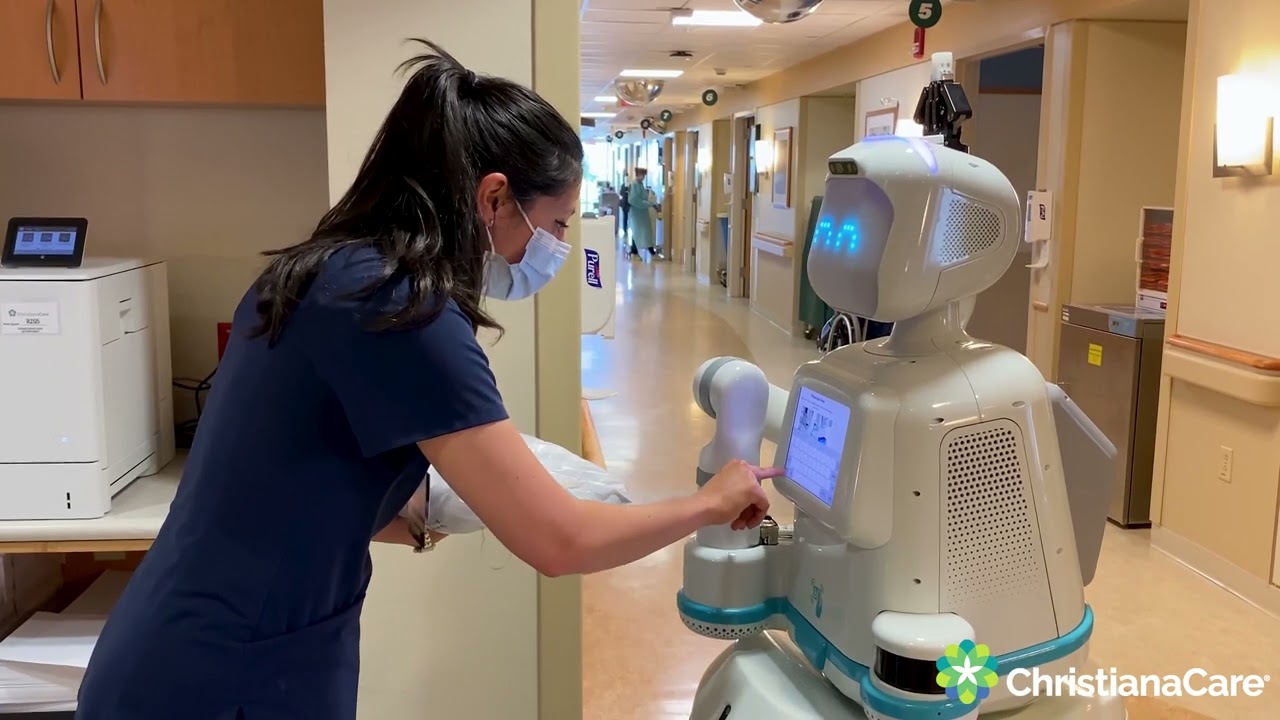
ChristianaCare is the first health system in the Philadelphia region piloting an innovative tool called Moxi, a collaborative robot — or “cobot”— that can assist in the hospital by making deliveries and performing other non-clinical tasks so that nurses and other clinical staff can spend more time focused on what they do best—caring for patients. With a landmark $1.5 million grant from the American Nurses Foundation, ChristianaCare will deploy a total of five Moxi cobots at Christiana Hospital. It is the largest single grant in the history of Nursing at ChristianaCare. Research published in the Journal of Nursing Management shows that nurses spend a significant amount of time — up to 33% of their shifts — on time-consuming but simple tasks such as dropping off lab specimens, collecting supplies or picking up medications from the pharmacy. By taking over these time-consuming but simple tasks, Moxi enables nurses to focus on patient care, where their skills are most needed. “Nurses need the time and space to deliver care and patient education at the top of their license,” said Ric Cuming, Ed.D., MSN, RN, NEA-BC, FAAN, chief nurse executive and president, ChristianaCare HomeHealth. “Moxi will be doing those hunting and gathering tasks such as getting equipment and supplies, which nurses are doing today but don’t need to be doing.” Cobots are designed to share workspace and interact directly with people. In ChristianaCare’s initiative, the Moxi cobots will be integrated with the Cerner Corporation electronic health record (EHR) platform and use artificial intelligence to proactively identify when nurses will need equipment, supplies, medications and lab tests. The Moxi cobots will be deployed to 11 inpatient units, partnering with more than 400 nurses. The American Nurses Foundation grant will enable ChristianaCare to evaluate the impact of cobots on nursing practice with the goal of scaling the technology if successful. “Moxi is not a replacement for a nurse or nursing position — or any position,” Cuming said. “It is an additional resource for nurses and their teams. “With robotic technology, we are using resources wisely and effectively, creating more efficient workflows, reducing repetitive tasks and freeing up nurses’ time for the complex clinical work that they excel at doing.” Reimagining Nursing ChristianaCare is one of 10 grant recipients from the American Nurses Foundation Reimagining Nursing (RN) Initiative. “We are proud that the American Nurses Foundation has the confidence in bold nurse-led ideas that will lead to large-scale, replicable change,” said Katherine Collard, MS, RN-BC, chief nursing informatics officer at ChristianaCare. “This grant will support nurses at ChristianaCare and our nursing colleagues across the nation in realizing their full potential, giving them the tools, resources and power to improve health care now and in the future.” With the American Nurses Foundation grant, ChristianaCare will conduct research on driving nursing outcomes through robotics. “We have a transformative opportunity to generate new knowledge and to move the science forward around robotics in nursing and in health care,” said Susan Birkhoff, Ph.D., RN, nurse scientist at ChristianaCare. “Through research, we will study Moxi’s impact to nursing caregivers that will have broad implications for nursing practice, workforce and education,” she said. ChristianaCare began exploring the potential of robotics to support Nursing with two Moxi cobots acquired in February, funded through the generosity of donors including Good Samaritan, Inc. and E.J. “Woody” Rice. With the grant, said Birkhoff, ChristianaCare will take Moxi to the next “bold frontier,” adding three more cobots with the goal of automating and optimizing nurses’ workflow without interrupting care. With five total cobots, ChristianaCare will be home to the largest number of Moxi robots in health care. The Little Bot That Can Before Moxi can become fully part of the care team, it must learn to navigate the hospital and respond to the nurses’ needs. Using artificial intelligence, Moxi is mapping out Christiana Hospital through sensors and other machine-learning technology so that the cobots can ultimately navigate and work autonomously. “When the Moxi cobots are fully integrated, we anticipate that they will complete up to 200 delivery tasks a day,” Collard said. “By making point-to-point deliveries, Moxi can save nurses hours of time and thousands of steps.” Designed to be compatible with the busy environments of hospitals, Moxi’s features include: Social intelligence: Moxi won’t bump into people or objects in hallways, waves when it sees someone new and happily poses for selfies. Mobile manipulation: Moxi can learn to use its robotic arm to operate existing automatic doors and elevator panels. Human-guided learning: The more Moxi is used, the more Moxi learns and adapts to the environment and specific ways of doing things. Friendly and safe design: With heart-shaped eyes and a friendly appearance, Moxi is designed to navigate safely and get the job done so nurses can focus on patient care. “What Moxi is doing in health systems like ChristianaCare is really transforming the way we think about health care and allowing staff to focus on the people in the hospital as opposed to the tasks,” said Dr. Andrea Thomaz, CEO and co-founder of Diligent Robotics, which created Moxi. “Robots are not something way in the future. Our robots work side-by-side with humans to ease the stress and workload of one of the most demanding jobs in society, nursing. The partnership between Diligent and ChristianaCare shows that the future is now.” Hospital Helper Directly from the Cerner EHR, Moxi will be able to anticipate clinician and patient needs and perform tasks without human involvement. Examples could include: Delivering items to patients based on nurses’ order requests. Making rounds across units to deliver lab samples on collections completed in the electronic health record. Making just-in-time deliveries of pharmaceuticals not stocked on the floor. Prioritizing tasks based on the nursing workload in a unit, so that the busiest nurses will get help first. “Connecting Moxi to the existing technology that clinicians use on a daily basis is key to making it easier to anticipate needs so clinicians can spend more time on patient care,” says Eva Karp, DHA, MBA, RN-BC, senior vice president, chief clinical and patient safety, Cerner. “Moxi could make a real difference in a nurse’s day — alleviating burnout and staffing shortages, which have become especially prevalent since the pandemic.” Incorporating the electronic health record into Moxi is part of the study funded by the American Nurses Foundation. “It’s absolutely in the best interest of our patients that Moxi can work alongside nurses so we can spend more time working directly with our patients to do what we do best,” said Pam Owen, MSN, RN-BC, nurse manager on 7E, one of the pilot units. “And Moxi brings a smile to people’s faces.” Fast Facts About Moxi Works in 22-hour shifts. Needs only two hours of charging time. Weighs about 300 pounds. Can carry a total weight of 70 pounds. Gender-neutral. Pronouns are “it” for a single Moxi cobot and “they” for more than one. Named one of America’s Greatest Disruptors in 2021 by Newsweek and one of the Best Inventions of 2019 by Time Magazine. About ChristianaCare Headquartered in Wilmington, Delaware, ChristianaCare is one of the country’s most dynamic health care organizations, centered on improving health outcomes, making high-quality care more accessible and lowering health care costs. ChristianaCare includes an extensive network of primary care and outpatient services, home health care, urgent care centers, three hospitals (1,299 beds), a freestanding emergency department, a Level I trauma center and a Level III neonatal intensive care unit, a comprehensive stroke center and regional centers of excellence in heart and vascular care, cancer care and women’s health. It also includes the pioneering Gene Editing Institute. ChristianaCare is nationally recognized as a great place to work, rated by Forbes as the 2nd best health system for diversity and inclusion, and the 29th best health system to work for in the United States, and by IDG Computerworld as one of the nation’s Best Places to Work in IT. ChristianaCare is rated by Healthgrades as one of America’s 50 Best Hospitals and continually ranked among the nation’s best by U.S. News & World Report, Newsweek and other national quality ratings. ChristianaCare is a nonprofit teaching health system with more than 260 residents and fellows. With its groundbreaking Center for Virtual Health and a focus on population health and value-based care, ChristianaCare is shaping the future of health care.



Studying glaciers . . . from Florida
By Emma Richards On the surface, the University of Florida seems an unlikely place to find cutting-edge research on ice sheets. But Emma “Mickey” MacKie says this is the perfect place for her work — thanks in large part to HiPerGator, one of the fastest supercomputers in higher education. MacKie, an assistant professor of geological sciences and glaciologist, joined UF in August 2021 and said her decision hinged largely on access to HiPerGator and the university’s focus on machine learning and artificial intelligence technologies. MacKie uses machine learning methods to study subsurface conditions of glaciers in polar regions and access to a powerful supercomputer is crucial given the large data sets her research generates. “I'm very happy to be in a place with lots of people who are working on different types of problems and are interested in developing these different tools,” MacKie said. “There are a number of members of my department in geology who are studying glacial geology through different lenses. And so, there's all of this complementary geological and machine learning knowledge at UF that I'm very excited to bring together.” MacKie has set up the Gator Glaciology Lab, where she and a team of seven undergraduate students from the fields of geology, computer science, physics, math and data science are using AI to analyze what lies beneath glaciers and how they are moving and melting. “Our work is part of a bigger effort in the glaciology community to start working on quantifying our uncertainty in future sea-level rise projections so that we can give policy makers this information.” It’s a very difficult challenge, MacKie said, because of limited access to polar regions and the miles-thick ice covering the ground. Then there is the scale of ice sheets; Antarctica, for example, is the size of U.S. and Mexico combined. Measurements of the topography below such glaciers are gathered using radars mounted on airplanes to “see” through ice. Her team then uses HiPerGator to simulate realistic looking topography in places where there are gaps or blank spots in the measurements. They generate hundreds of maps to represent different possible ice sheet conditions, which could be used to determine numerous possible sea level rise scenarios. “Our work is part of a bigger effort in the glaciology community to start working on quantifying our uncertainty in future sea-level rise projections so that we can give policy makers this information,” she said. Earlier this spring, MacKie swapped out her flip-flops for snow boots to study subsurface glacial conditions in Svalbard, which is next to northeastern Greenland. Visiting Svalbard will help her test and develop data collection and analysis techniques that could be applied to Antarctica or Greenland, which both contain large ice sheets that could have serious environmental impacts if they experience significant melting. In Svalbard, MacKie and Norwegian researchers from the University of Bergen and the University Centre in Svalbard took seismic and radar measurements of glaciers that will be used to make estimates about conditions beneath the ice. Among glaciers of concern is the Thwaites “Doomsday Glacier,” which is losing the most ice of any glacier in Antarctica. There are signs showing Thwaites’ ice shelf could start to break in the next few years. MacKie said it will likely be a few hundred years before the glacier could undergo significant collapse and jeopardize the West Antarctica Ice Sheet, leading to several meters of sea level rise. The effects of Thwaites and other ice sheet melts in Antarctica and Greenland will become apparent in decades to come, with the potential for a meter of sea level rise by the end of the century, which MacKie and other researchers hope to predict more accurately. “The state of Florida has the most to lose when sea level rises,” she said in an episode of the From Florida podcast. “And so, I think we have a lot of skin in the game and it’s really important to be studying this question here in Florida.” To hear more about MacKie’s work, listen to From Florida at this link.


Join RealTime Medical at SIIM 2022!
Join RealTime Medical at Society for Imaging Informatics in Medicine (SIIM) Virtual Annual Meeting, where we will be announcing our latest advancements in how we empower radiologists to work more efficiently, improve quality and deliver better patient care. RTM operates one of Canada’s largest teleradiology networks covering over 30 hospital sites. This network is powered by the RealTime Medical AICloudSuite solution offering, delivering AI-enabled diagnostic workload balancing and first of a kind, multi-dimensional peer learning experience. The platform’s standards-based messaging enables ease of compatibility with existing HIS/RIS/PACS systems. RTM's co-founder, Dr. David Koff is a chair of SIIM’s session on advanced peer learning techniques and solutions. Visit our virtual booth via GRIP June 9-11. Access to the platform is already available! For more information about the event and to register, visit the official SIIM event website. Book your consultation today: https://realtimemedical.com/contact/


School to provide increased access to preventative health services for young students so they can learn, grow and thrive To address health issues at the earliest and most preventable stages, provide whole child health, and advance health equity in the community, ChristianaCare opened a new school-based health center at Kuumba Academy Charter School in Wilmington on Friday, May 6th. The creation of the center, made possible through ChristianaCare’s partnership with the Community Education Building (CEB), which houses Kuumba Academy, means that students at the kindergarten-through-8th grade school will have increased access to an array of health services. “At ChristianaCare, we recognize the comprehensive health needs of adolescents in our community and are committed to partnering and using our resources wisely and effectively to expand our school-based health centers,” said Bettina Tweardy Riveros, J.D., chief health equity officer and senior vice president of Government Affairs and Community Engagement at ChristianaCare. “We know that childhood trauma adversely affects the ability of children to learn and build healthy relationships and it increases their risk of mental health issues and lifelong chronic disease. The opening of our school-based health center at Kuumba Academy means that ChristianaCare can support medical and behavioral health services and wraparound social care our children need, so we can positively influence their health, their education and their futures.” With the latest opening, ChristianaCare now operates 21 school-based health centers throughout the First State, in partnership with the Delaware Department of Health & Social Services, the Delaware Division of Public Health and several school districts. Kuumba Academy students, who spoke at an event Friday to celebrate the grand opening, will have access through its school-based health center to the following: Comprehensive behavioral health services. Crisis intervention and suicide prevention. Substance use disorder treatment. Tobacco cessation. Nutrition and weight management. Physical examinations. Health screenings. Treatment for minor illnesses and injuries. Reproductive health. In addition, Kuumba Academy students also will have access to resources that help their families surmount obstacles such as transportation, challenging appointment times, and worries about cost and confidentiality. “Kuumba Academy remains committed to meeting the needs of the whole child and family,” said Sally Maldonado, head of school at Kuumba Academy, the mission of which is to provide an innovative learning environment for the whole child from kindergarten through eighth grade. “The opening of this school-based health center means that our students and families will have daily access to the high-quality behavior and health services that they deserve, and we are grateful to ChristianaCare and CEB for their partnership. We are beginning to see ourselves on the other side of this pandemic and we are energized to emerge with these newfound partnerships focused on health and wellness for our village.” ChristianaCare has partnered with CEB and Kuumba Academy on community-focused health initiatives in the past. In February 2021, ChristianaCare provided more than 800 vaccinations to community members and staff at CEB. On February 7th of this year, ChristianaCare vaccinated 38 people, including 19 children, against COVID-19. This added to the more than 6,000 vaccinations that ChristianaCare Community Health has administered since 2021. “At CEB, we understand the importance that health plays on a child’s ability to learn and succeed,” said Linda Jennings, CEO at CEB. “We are beyond excited to partner with Kuumba and ChristianaCare to launch the Kuumba Academy School-Based Health Center at CEB and add to the list of holistic and integrated support we provide to students and their families.” Today’s event coincides with Better World Day, an annual, national event on the first Friday in May. During Better World Day, students showcase their learning about initiatives that they believe will have a positive impact on their community and the world. Through collaboration and acts of service, students learn the power of their voice to make change. About ChristianaCare Headquartered in Wilmington, Delaware, ChristianaCare is one of the country’s most dynamic health care organizations, centered on improving health outcomes, making high-quality care more accessible and lowering health care costs. ChristianaCare includes an extensive network of primary care and outpatient services, home health care, urgent care centers, three hospitals (1,299 beds), a freestanding emergency department, a Level I trauma center and a Level III neonatal intensive care unit, a comprehensive stroke center and regional centers of excellence in heart and vascular care, cancer care and women’s health. It also includes the pioneering Gene Editing Institute. ChristianaCare is nationally recognized as a great place to work, rated by Forbes as the 2nd best health system for diversity and inclusion, and the 29th best health system to work for in the United States, and by IDG Computerworld as one of the nation’s Best Places to Work in IT. ChristianaCare is rated by Healthgrades as one of America’s 50 Best Hospitals and continually ranked among the nation’s best by U.S. News & World Report, Newsweek and other national quality ratings. ChristianaCare is a nonprofit teaching health system with more than 260 residents and fellows. With its groundbreaking Center for Virtual Health and a focus on population health and value-based care, ChristianaCare is shaping the future of health care. About Kuumba Academy Charter School Kuumba Academy Charter School’s mission is to provide an innovative learning environment for the whole child from kindergarten through eighth grade. Our directors, staff, and families share the core belief that parents are children’s primary educators. KACS parents, in partnership with teachers and administrators, believe that every child can maximize his or her learning potential given the opportunity to do so. In response to the outcry from Wilmington parents looking for a high-quality public education and increased access to arts education for their children, Christina Cultural Arts Center leaders, parents, and community supporters took action and were granted a Department of Education charter to create Kuumba Academy Charter School (KACS) in 2001. KACS was the first school model in the state that partnered a public charter school with a nonprofit community organization. Christina Cultural Arts Center (CCAC) and KACS form a unique nonprofit/public school partnership committed to educational excellence. Through the innovative union of academics, arts, technology, and family engagement, each KACS student’s individual learning style is nurtured—resulting in creative learners who are agents of positive change in the community. The CCAC/KACS model is regarded by many as the single most significant achievement in Wilmington’s post public school desegregation history. About the Community Education Building (CEB) CEB was established in 2012 after Bank of America donated the former MBNA Bracebridge IV building to The Longwood Foundation. Living up to its commitment of increasing access to education, the Longwood Foundation created CEB as an independent entity, and transformed the space into an ecosystem to support the social, emotional, physical, and academic development of Wilmington’s youth. CEB is an innovative co-location and shared services model. Focused on supporting the entire family, CEB offers vibrant programs and support systems that provide a sound foundation for each student. It serves as a hub for families by offering services such as healthy meals, life coaches, and mental health services. This model leads to deeper family engagement in their child’s learning and allows schools to focus on teaching and learning, not operations and overhead. CEB is an educational ecosystem that holistically integrates programs and resources for students and their families, ensuring that every student has an equitable opportunity to succeed.


INNOVATORS BRING AI INTO IMAGING SKILLS DEVELOPMENT
Originally from CHT Magazine By Jerry Zeidenberg October 30, 2019 Two Ontario hospital organizations – encompassing six sites – will soon deploy artificial intelligence to help with continuous learning and peer review in their imaging departments. By automatically detecting the types of cases being read by radiologists at St. Joseph’s Healthcare Hamilton and Hamilton Health Sciences, the system will deliver the latest journal findings, as well as personal pattern recognition and error avoidance, direct to their desktops. While radiologists at all Canadian hospitals are experts in their field, with years of education and experience, our understanding of diseases and illnesses is rapidly expanding and new insights are constantly appearing. To ensure that they’re aware of the latest research and best practices, many radiologists conduct journal and web searches while they’re reading cases at the hospital, or at night, from home. “Our radiologists and physicians spend a lot of time reading and searching for literature,” said Shairoz Kherani, who until recently was Director of Diagnostic Services at HHS. (She has since moved to Halton Health Care, in nearby Oakville, Ont., where she is Director of Diagnostic Services and Laboratory.) “Finding the right information can be a daunting process. Now it will be readily available.” “There are hundreds of new findings every day,” said Ian Maynard, CEO of RealTime Medical, of Mississauga, Ont., the company that’s providing the AI-powered solution, called AICloudQA™. “Radiologists can spend two or more hours a day searching independent medical data sources,” said Maynard. “Our solution saves radiologists a significant amount of time and effort by searching multiple data sources simultaneously, relative to the case at hand. We’re like a Google search on steroids for relevant medical data, helping radiologists apply the latest findings to their patient care”. Indeed, RealTime Medical is collaborating with Google Cloud and Sightline Innovation to deliver its AI-fueled solutions. The project is also supported by the National Research Council of Canada’s Industrial Research Assistance Program (NRC IRAP), resulting in a collaboration between these organizations and the hospitals using the solution. Not only does the automated searching save time and contribute to better medical outcomes for patients, but it helps reduce radiologist “burnout”, a serious issue today as radiologists feel overloaded by the demands placed on them, Maynard said. St. Joseph’s Healthcare Hamilton and Hamilton Health Sciences will introduce AICloudQA for peer learning and skills development across their sites by the end of this year. The hospitals will probably start with one site, or one physician group across all sites, and then steadily roll out the solution. The context-sensitive provision of journal articles and other sources of medical information is expected to be of great help to the radiologists, nuclear medicine physicians, cardiologists and other clinicians who use the system. There are 70 to 80 radiologists and medical imaging experts at Hamilton Health Sciences and St. Joseph’s Healthcare Hamilton who will be the prime users of AICloudQA. RealTime Medical’s Ian Maynard said the importance of timely and accurate information cannot be underestimated. As they’re reading cases, radiologists want the latest literature and personal pattern recognition notifications of what to be on the lookout for. “What they don’t want our patients and their families coming back to them later, asking why they didn’t know about the latest finding from Cleveland Clinic for example,” said Maynard. Dr. Karen Finlay, radiologist and Interim Chief of Radiology at Hamilton Health Sciences, agreed that radiologists are currently taking “a lot of time for research”. “If a radiologist steps off a case for five to 10 minutes to go to Google Scholar, that can really add up over the course of a day,” she said. Additionally, for those familiar with the impact of interruptions on the efficiency of the diagnostic process, that time impact can be significantly magnified to the detriment of diagnostic efficiency, which collectively impacts system-wide efficiency. The feed from AICloudQA, by contrast, is instantaneous, meaning the radiologist doesn’t have to stop what they are doing. Notably, the RealTime Medical system also uses AI to scan the readings done by radiologists, and to provide feedback on areas where they might want to focus on or look more closely in future. “It’s like the blind-spot warning system in your car, only it’s anonymously helping you avoid possible gaps in your own reading patterns,” said Maynard. “This is very valuable,” said Kherani. “The system can do intelligent sampling and note where a radiologist may want to improve. It can even spot patterns, time of day and other conditions when they may be more vulnerable.” Dr. Finlay observed that AICloudQA will also transform the process of peer learning at Hamilton Health Sciences and St. Joseph’s Healthcare Hamilton. It will do this, in one way, by increasing the pool of radiologists participating. One of the limitations of current peer review methods is that there’s often a limited number of potential reviewers, especially when a sub-specialty is involved – such as breast or neuro-imaging. RealTime Medical’s cloud-based solution offers the potential to connect with other hospitals across the province and the country, creating a critical mass of peers with a cross-section of experiences in each sub-speciality. This will enable a level of peer learning and best practice sharing that’s simply not possible with site-based systems. Increasing the number of radiologists in the peer learning pool also helps with the issue of anonymity. With site-based solutions, it’s sometimes possible to guess the identity of the radiologist or clinician being assisted, as physicians are often familiar with the reporting styles of their peers. Like all physicians – and people in general – radiologists don’t like to be judged. By making the system more anonymous, the Real Time Medical system makes peer learning more objective, valid and hence palatable for participants. This part of what is being called a “just culture” approach, that physicians are calling for in such solutions. AICloudQA embraces the “just culture” principles that physicians want and deserve. It is not punitive, and the information is not shared. Instead, it’s sent privately to the participating radiologist or clinicians, who can use it for self-improvement. At Hamilton Health Sciences and St. Joseph’s Healthcare Hamilton, the peer-reviewing will be prospective – that is, it’s done before the results are reported to the referring physician. Of course, there are only so many cases that can be reviewed before the process becomes counter-productive. The need for continuous learning must be balanced with the extra burden that’s placed on reviewers. “The trick is to make it a rich and rewarding learning experience, but not burdensome,” said Dr. Finlay. Hamilton Health Sciences and St. Joseph’s Healthcare Hamilton currently aim to review 2 percent of the cases, which is in keeping with other Canadian programs. Kherani noted there are other potential benefits to the AICloudQA platform. It has a workload balancing function, where it uses its intelligence to feed cases to the appropriate radiologist – based on availability and expertise. That not only offers the organization advantages with workflow and wait times, but it also benefits patients, as they obtain the most expert radiologist available. She said the system can eventually support different types of physicians involved in imaging, such as cardiologists, and not only radiologists. “It’s a multi-ology solution.” Dr. Finlay noted the system also supports critical results reporting – so that urgent findings are quickly sent to referring doctors. It can also be tweaked to include notification of unexpected findings – flagging colleagues about problems that were unanticipated, but should be addressed.
Aston MBA students take top prize at Universities Business Challenge Global Masters 2022
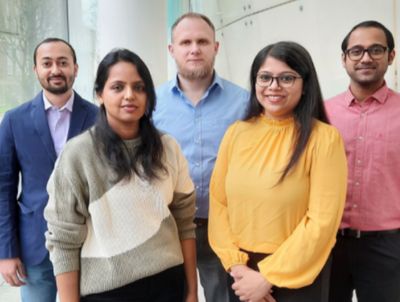
The competition helps develop the skills needed to move into corporate/public sector life The Grand Final took place in Liverpool where 10 teams from different universities competed for the title They were assessed on their team strengths and presented a one-minute pitch on a creative social business idea to an entrepreneur. A team of Aston MBA students has taken the top prize at the Universities Business Challenge (UBC) Global Masters 2022. Team GE7, which included Aishwarya Nagath Menon, Nashit Khalifa, Vasilijs Garbacevics, Divya Krisitipati led by Mithun Joy and mentored by Aston Business School’s Dr Julius Stephan, will receive a trophy on campus on 12 May. The competition offers postgraduate students a unique opportunity to develop the skills that you will need when moving into the working world and consists of 80 teams, drawn from a wide range of UK and Irish universities. The UBC Global Masters is a team-based business simulation event that provides participants with the opportunity to act as a board of directors, who have taken responsibility for improving the performance of a company. The finals took place in Liverpool where 10 teams from different universities, including two from Aston University, competed against each other tasked to run a simulated business under difficult trading conditions and also introduce an innovative idea to link the business to a social or environmental cause. The teams were assessed on their team strengths and presented a one-minute pitch on a creative social business idea to an entrepreneur. Mithun Joy, an Aston MBA student and team winner, said: “I am really proud to be part of the first Aston Business School team to win this competition. “It was a really competitive event against other universities, including the UBC's defending champion.” Clive Kerridge, course director at Aston Business School, said: “Although an Aston University MSc team made the podium in 2022, we are delighted to have our first ever winners of this excellent competition. “Taking part in the UBC Global Masters Challenge has been a great opportunity for our students to apply their theoretical knowledge to a complex, yet highly practical and topical business setting. “It allows for personal and professional development that is intellectually challenging and practically relevant, equipping participants with essential skills. Working in competitive teams enables peer to peer learning and interaction.” Find out more about the competition here.