
Experts Matter. Find Yours.
Connect for media, speaking, professional opportunities & more.

When Religiosity Competes with Materialism, Charitable Giving Takes a Hit, Baylor Study Shows
Baylor researchers suggest fundraisers can use study results to boost giving Religious people tend to be more charitable than their nonreligious counterparts, but they’ll think twice about opening their wallets if it prolongs their next big purchase, according to new research from Baylor University’s Hankamer School of Business. Baylor researchers James A. Roberts, Ph.D., professor of marketing, and Meredith David, Ph.D., assistant professor of marketing, partnered on a study that examined the relationship between religiosity and charitable giving, and what drives the latter. They found that religiosity – the way people live out their lives based on their faith – can drive donors to give. But when materialism – that self-serving want for more money or material possessions – enters the equation, giving decreases. “At once, we want to help others, but at the same time, we desire the money and possessions that we all cherish to a greater or lesser degree,” the researchers wrote. “It is the result of such give-and-take between opposing values that drives our behavior as donors to charitable causes.” A total of 180 adults participated in the study, which is published in International Journal of Nonprofit and Voluntary Sector Marketing. Roberts and David looked specifically at religiosity’s effect on peoples’ attitudes toward helping others (AHO) and attitudes toward charitable organizations (ACO). Religiosity, they explained, is different from religious affiliation; it “is something that individuals experience outside of their place of worship and constitutes a way of viewing and experiencing the world that is different from their less religious (or nonreligious) counterparts.” They said they approached the study with the idea that helping others is a common rule among major religions. In general, the research showed that those expressing higher levels of religiosity were found to possess more favorable attitudes toward helping others and to charitable organizations. And those with stronger attitudes toward helping others also expressed a greater breadth in their giving. But higher levels of religiosity do not guarantee open wallets, David said. “We can’t always assume that religiosity ensures charitable giving,” she said. “Our study results suggest that increasing materialism lessened the positive effect of AHO on the breadth of giving.” Roberts, a nationally recognized expert on consumerism, said he and David, a nationally recognized expert on consumer behavior and well-being, weren’t too surprised by the study’s findings, given a basic understanding of human nature and the self-centeredness that accompanies materialism. However, they believe that understanding these dynamics can benefit charitable organizations as they identify potential donors and prepare for “the ask.” “Although materialism was found to reduce the breadth and likelihood of charitable giving in the present study, it could spur charitable giving if it is driven by self-serving motivations,” they wrote in the “managerial implications” section of the study. In other words, appeal to the donors’ inclination to give and their desire for public acknowledgment. “Large donations that come with naming rights, spur news coverage or exceed the donations of other prominent individuals are all examples of how materialism can be used to drive charitable donations,” they wrote. ABOUT THE STUDY “Holier than thou: Investigating the relationship between religiosity and charitable giving,” published in the June 2018 issue of International Journal of Nonprofit and Voluntary Sector Marketing, is authored by James A. Roberts, Ph.D., The Ben H. Williams Professor of Marketing, Hankamer School of Business, Baylor University, and Meredith David, Ph.D., assistant professor of marketing, Hankamer School of Business, Baylor University. ABOUT BAYLOR UNIVERSITY Baylor University is a private Christian University and a nationally ranked research institution. The University provides a vibrant campus community for more than 17,000 students by blending interdisciplinary research with an international reputation for educational excellence and a faculty commitment to teaching and scholarship. Chartered in 1845 by the Republic of Texas through the efforts of Baptist pioneers, Baylor is the oldest continually operating University in Texas. Located in Waco, Baylor welcomes students from all 50 states and more than 80 countries to study a broad range of degrees among its 12 nationally recognized academic divisions. ABOUT HANKAMER SCHOOL OF BUSINESS Baylor University’s Hankamer School of Business provides a rigorous academic experience, consisting of classroom and hands-on learning, guided by Christian commitment and a global perspective. Recognized nationally for several programs, including Entrepreneurship and Accounting, the school offers 24 undergraduate and 13 graduate areas of study. Visit www.baylor.edu/businessand follow on Twitter at twitter.com/Baylor_Business.


The next threat to election meddling? Brain Hacking
Almost 15 percent of Americans have reported changing their opinion on political or social issues because of a social media post, according to a recent Pew Research Center survey. “What if, immediately before spreading polarizing social media posts, our adversaries flashed subliminal images known to induce a type of anxiety called state anxiety? Evidence suggests people would perceive those posts in a more emotional way. Those images could, in turn, influence their voting behavior,” said Dr. Jay Heslen, an expert in intelligence and cybersecurity policy and assistant professor of political science with a joint appointment in the Katherine Reese Pamplin College of Arts, Humanities, and Social Sciences and the School of Computer and Cyber Sciences at Augusta University. “Successfully manipulating the cognition of a few thousand people in order to influence their perception of events could be enough to change the result of an election.” Heslen’s current research project focuses on whether exposure to certain visuals or sounds, including subliminal prompts, can induce a negative emotional arousal on people. He’s interested in learning whether that emotional state, called state anxiety, can then influence behavior in a specific, predefined way – a concept he calls neurocognitive hacking. Although research using subliminal prompts is not new and has had mixed results, Heslen’s approach is novel. He uses a specific kind of visuals previously shown to trigger people’s unconscious discriminatory behaviors toward outsiders. “Neurocognitive hacking could potentially be used as a weapon in cyberwarfare,” said Heslen, who worked as an intelligence officer with the Defense Intelligence Agency and the United States Air Force for more than 20 years, specializing in combatting terrorism, counterintelligence and strategic cyber intelligence. “We need to study these capabilities not only for our own understanding but to create sound policies and countermeasures to defend ourselves against others who may use them on us.” With 68 percent of Americans on Facebook and 73 percent on YouTube, according to another Pew Research Center survey, neurocognitive hacking could be a national security problem, Heslen said. “As we advance our understanding of the brain and its processes, including how to manipulate it, we will need to provide neurocognitive cybersecurity to people who use information and communication technologies,” Heslen said. “This will be especially true as we spend more time in virtual worlds.” Heslen is available to discuss: · How neurocognitive hacking can influence people’s behavior · Why neurocognitive hacking is a powerful weapon of cyberwar · What kinds of policies should the government create to protect itself and its citizens from neurocognitive hacking Heslen is a Lieutenant Colonel in the United States Air Force Reserve and has served in military operations on four continents to include humanitarian relief operations in Mozambique and South Africa as well as an operational tour in Afghanistan. In his capacity as a reservist, he is currently assigned to the National Intelligence University pursuing an advanced degree in strategic intelligence. Contact us to schedule an interview with Dr. Heslen or learn more about his expertise.


Out of Office: New Baylor Management Study Examines Relationship Between Stress and Remote Work
Researchers say people with high emotional stability and autonomy are best suited for remote-work opportunities Many U.S. employees believe working from home – or at least away from the office – can bring freedom and stress-free job satisfaction. A new Baylor University study says, “Not so fast.” The study, published recently in the European Journal of Work and Organizational Psychology, examines the impact of remote work on employee well-being and offers several strategies to help managers provide remote-work opportunities that are valuable to the employee and the company. “Any organization, regardless of the extent to which people work remotely, needs to consider well-being of their employees as they implement more flexible working practices,” the researchers wrote. A total of 403 working adults were surveyed for the two studies that made up the research, said lead author Sara Perry, Ph.D., assistant professor of management in Baylor University’s Hankamer School of Business. The research team measured each employee’s autonomy (the level of a worker’s independence), strain (defined in this study as exhaustion, disengagement and dissatisfaction) and emotional stability. Emotional stability, Perry explained, “captures how even keeled someone is or, on the opposite end, how malleable their emotions are. An example would be if something stressful happens at work, a person who is high on emotional stability would take it in stride, remain positive and figure out how to address it. A person low on emotional stability might get frustrated and discouraged, expending energy with those emotions instead of on the issue at hand.” The research found that: • Autonomy is critical to protecting remote employees’ well-being and helping them avoid strain. • Employees reporting high levels of autonomy and emotional stability appear to be the most able to thrive in remote-work positions. • Employees reporting high levels of job autonomy with lower levels of emotional stability appear to be more susceptible to strain. Perry said the study contradicts past research that says autonomy is a universal need that everyone possesses. Per this research, those who are lower in emotional stability may not need or want as much autonomy in their work. “This lower need for autonomy may explain why less emotionally stable employees don’t do as well when working remotely, even when they have autonomy,” researchers wrote. In addition to their findings, the researchers offered several recommendations for managers who design or oversee remote-work arrangements. The research team advised managers to consider their employees’ behavior when deciding who will work remotely. “I would suggest managers look at employee behaviors, rather than for personality traits, per se,” Perry said. “For example, if someone does not handle stress well in the office, they are not likely to handle it well at home either. If someone gets overwhelmed easily, or reacts in big ways to requests or issues in the office, they are likely less well positioned to work remotely and handle that responsibility and stress.” Based on this study, individuals with high emotional stability and high levels of autonomy are better suited for remote work, but such candidates might not always be available. “If less emotionally stable individuals must work remotely, managers should take care to provide more resources, other than autonomy, including support to help foster strong relationships with coworkers and avoid strain,” they wrote. Managers might also consider providing proper training and equipment for remote work, including proper separation of work and family spaces, clear procedural and performance expectations and regular contact (virtual or face-to-face) with coworkers and managers. ABOUT THE STUDY “Stress in Remote Work: Two Studies Testing The Demand-Control-Person Model,” published in the European Journal of Work and Organizational Psychology, is authored by Sara Perry, Ph.D., assistant professor of management, Hankamer School of Business, Baylor University, Emily Hunter, Ph.D., associate professor of management, Hankamer School of Business, Baylor Univeersity, and Cristina Rubino, professor of management, David Nazarian College of Business and Economics, California State University Northridge. ABOUT BAYLOR UNIVERSITY Baylor University is a private Christian University and a nationally ranked research institution. The University provides a vibrant campus community for more than 17,000 students by blending interdisciplinary research with an international reputation for educational excellence and a faculty commitment to teaching and scholarship. Chartered in 1845 by the Republic of Texas through the efforts of Baptist pioneers, Baylor is the oldest continually operating University in Texas. Located in Waco, Baylor welcomes students from all 50 states and more than 80 countries to study a broad range of degrees among its 12 nationally recognized academic divisions. ABOUT HANKAMER SCHOOL OF BUSINESS Baylor University’s Hankamer School of Business provides a rigorous academic experience, consisting of classroom and hands-on learning, guided by Christian commitment and a global perspective. Recognized nationally for several programs, including Entrepreneurship and Accounting, the school offers 24 undergraduate and 13 graduate areas of study. Visit www.baylor.edu/business and follow on Twitter at www.twitter.com/Baylor_Business.



Ethical Leadership Can Have Negative Consequences, Baylor University Researchers Say
Coupled with stress, ethical leadership can lead to employee deviance and turnover Ethical leadership is a good thing, right? Certainly, management experts say. But ethical leadership can have negative consequences, too, according to new research from management faculty in Baylor University’s Hankamer School of Business. A 2018 Baylor study published in the Journal of Business Ethics reveals that ethical leadership compounded by job-hindrance stress and supervisor-induced stress can lead to employee deviance and turnover. The research reflects the thoughts of 609 employees who were surveyed across two studies. “If someone is an ethical leader but induces stress, our research shows that his or her employees will feel less support,” said lead author Matthew Quade, Ph.D., assistant professor of management. “Thus, employees who do not feel supported are more likely to consider leaving their jobs or engage in workplace deviance – things like coming in late to work, daydreaming, not following instructions or failing to be as productive as they could be.” Quade said that ethical leadership is a good thing and often beneficial in terms of employee resources. An example would be a trusted supervisor who listens to her employees and has her employees’ best interests in mind. The trouble comes, he said, when supervisor-induced stress or job-hindrance stress enters the picture. “When those stressors are added, there is a depletion of resources,” Quade explained. “Many of the gains or benefits from ethical leadership are negated.” What does stress-inducing ethical leadership look like? Quade said it could be as simple as supervisors setting expectations too high or, in the interest of “following all the rules,” not allowing for any deviation from a process, even if a shortcut, still within the bounds of behaving ethically, would deliver a desired result. The researchers wrote: “Ethical leadership can be an exacting process of sustaining high ethical standards, ensuring careful practice and enforcement of all rules and meeting leaders’ lofty expectations, all of which can consume time and energy and be perceived by employees as overly demanding or an obstacle to job performance.” As part of the study, those surveyed were asked to what extent they agreed or disagreed with the following statements: My supervisor makes it so that I have to go through a lot of red tape to get my job done. Working with my supervisor makes it hard to understand what is expected of me. I receive conflicting requests from my supervisor. My supervisor creates many hassles to go through to get projects/assignments done. Working with him/her thwarts my personal growth and well-being. In general, I feel that my supervisor hinders my personal accomplishment. I feel that my supervisor constrains my achievement of personal goals and development. Quade said his team in no way wants to discourage ethical leadership. Research consistently shows such leadership is very beneficial, he said. But this new research shows that there are boundaries to those benefits. “This places quite an onus on appropriately managing the stress that comes from the leader and the job, in efforts to most fully realize the potential of ethical leadership,” the researchers wrote. The study listed some tips and takeaways for organizations and leaders. They include: Strike a balance between promoting ethical behavior and providing resources to help employees meet those standards. Encourage employees in word and deed by reducing ambiguity in ethical dilemmas that might otherwise drain resources. Model fair and ethical behavior. Communicate efficient methods to meet standards and reduce unnecessary steps or procedures. Equip and train leaders to balance the demands of leading ethically while not overburdening their employees. ABOUT THE STUDY “Boundary Conditions of Ethical Leadership: Exploring Supervisor-Induced and Job Hindrance Stress as Potential Inhibitors” is published in the Journal of Business Ethics. Study authors are Baylor University Hankamer School of Business faculty members Matthew Quade, Ph.D., assistant professor of management; Sara Perry, Ph.D., assistant professor of management; and Emily Hunter, Ph.D., associate professor of management. ABOUT BAYLOR UNIVERSITY Baylor University is a private Christian University and a nationally ranked research institution. The University provides a vibrant campus community for more than 17,000 students by blending interdisciplinary research with an international reputation for educational excellence and a faculty commitment to teaching and scholarship. Chartered in 1845 by the Republic of Texas through the efforts of Baptist pioneers, Baylor is the oldest continually operating University in Texas. Located in Waco, Baylor welcomes students from all 50 states and more than 80 countries to study a broad range of degrees among its 12 nationally recognized academic divisions. ABOUT HANKAMER SCHOOL OF BUSINESS Baylor University’s Hankamer School of Business provides a rigorous academic experience, consisting of classroom and hands-on learning, guided by Christian commitment and a global perspective. Recognized nationally for several programs, including Entrepreneurship and Accounting, the school offers 24 undergraduate and 13 graduate areas of study. Visit www.baylor.edu/businessand follow on Twitter at twitter.com/Baylor_Business.

MEDIA RELEASE: CAA rolling out new predictive technology
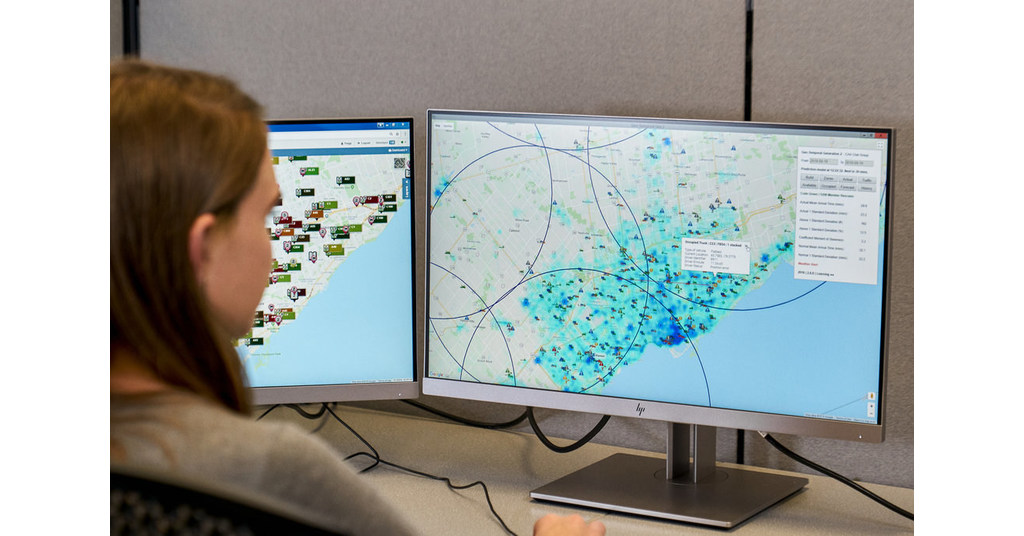
New predictive technology, created in-house at CAA South Central Ontario (CAA SCO) can now predict the likelihood of a roadside event occurring in a specific geographic area, and send a truck to that area before a breakdown occurs. CAA's new Gen 2 predictive technology gets the right truck, to the right place, at the right time. Gen 2 is a proprietary machine-learning algorithm that leverages data from 115 years of roadside assistance service. It layers on weather and humidity indicators, along with real-time traffic and GPS information to predict roadside needs. Gen 2 was developed in-house by CAA in late 2017 and piloted in the London area in January 2018. Initial results during the pilot period showed a promising reduction in the average time of arrival for roadside service vehicles. CAA SCO was able to rescue members an average of 11 minutes faster during the summer of 2018, when compared to the summer months of 2017. The service improvement is directly tied to the roll out of CAA's new predictive technology. The system learns over time, so CAA SCO expects average wait times will continue to improve. The technology has already garnered interest from roadside assistance clubs from around the world. CAA Gen 2 is currently being operationalized across CAA SCO's territory. Source:



Consumer word-of-mouth and social media
Certainly, marketers are well aware of the value of the consumers’ word-of-mouth (WOM) endorsements of a product or service. But the ubiquitous nature of social media demands that advertisers find new ways to tap into how consumers interact and communicate to leverage the power of WOM online. Panagiotis Adamopoulos, assistant professor of information systems & operations management; Vilma Todri, assistant professor of information systems & operations management; and Anindya Ghose (NYU-Stern) take a close look at the role of hidden personality traits of online users and how they play into the effectiveness of product WOM on Twitter. The trio used big data, machine learning methods, and causal inference econometric techniques to study consumer purchases made through Twitter accounts. The research showed an increase in the likelihood of a purchase by 47.58% when there was exposure to WOM tweets from a sender who had similar personality traits to the recipient of the information. The trio found that introvert users were much more accepting of WOM versus extrovert users. They also noted agreeable, conscientious, and open social media users are more effective influencers. The combinations of personality traits of disseminators and recipients of WOM impacted the decision to buy a product, with the researchers noting that a “WOM message from an extrovert user to an introvert peer increases the likelihood of a subsequent purchase by 71.28%.” Source:




Unconventional Tech Conference Brings International Audience to UMW
Join us July 30 – August 3! Educators from Canada to Cairo, the UK and across the U.S. will attend the University of Mary Washington’s Digital Pedagogy Lab. Dynamic keynote speakers like NPR’s lead education blogger, Anya Kamenetz, and Columbia University’s Jade E. Davis will ask participants to re-imagine technology’s role in higher education, finding the best ways to teach with and about it. Hosted by UMW’s trend-setting Division of Teaching and Learning Technologies (think ground-breaking initiatives like Domain of One's Own), DPL delves deep into digital pedagogy, covering everything from cultural humility to “mad genius” storytelling. We’re also on Twitter – so follow along and join in on the conversation - @DigPedLab and #digped. Source:


"Forcible separation of families inflicts severe trauma on children and parents. The bond between caregiver and child is critical for the child’s sense of safety and well-being. When that bond is interrupted through a violent or forcible separation, the child experiences severe neurobiological stress causing the child to feel intense fear, helplessness, or horror. Such stress is particularly acute for children who have experienced other traumas, such as witnessing violence, sexual abuse, or forced detention, which are common experiences for migrant children fleeing violence and persecution. Prolonged exposure to such stress has a debilitating effect on children even after the particular traumatic event is over. Children separated from their parents exhibit the behaviors detailed above typical of children experiencing the symptoms of traumatic stress. They can suffer anxiety, sleep disturbances, emotional changes such as aggression, withdrawal, and fear. They also suffer difficulties in reasoning, thinking, learning, and communication, and a decline in educational achievement." Source:


A whole lot of problems facing Whole Foods?
In August, Amazon went on a binge and acquired high-end grocer Whole Foods for 13.6 billion dollars. Many wondered what changes would come and how the high-tech and modernized Amazon approach to retail would impact the grocery chain. A few months late, a look inside some stores shows the results aren't good. Shelves that once showed off fresh fruit and vegetables at a premium price are bare. And customers aren't happy. A new food ordering system called Order-to-shelf, or OTS may be the leading culprit. OTS is a tightly controlled system designed to streamline and track product. It allows outlets to carry items that move almost literally from daily delivery trucks to store shelves. Its goal is to reduce storage costs, waste and provide a cheaper and more efficient system of managing products. But is this effort for an almost militaristic efficiency costing Whole Foods customers, demoralizing employees and hurting the store's brand? Is this a matter of a learning curve that will sort itself out? Or did Amazon make a mistake implementing OTS? And will these empty shelves leave a lasting and negative impression on customers? There are a lot of scenarios and questions - that's where the experts from can help. Ryan Hamilton is a is a consumer psychologist and an expert in marketing, branding and consumer decision making. Ryan is available to speak with media regarding Whole Foods and the OTS system. Simply click on his icon to arrange an interview. Source:


Another planet discovered by NASA – 2,545 light-years from Earth
Today, the scientific world was watching as NASA made a big announcement. Its Kepler Space Telescope, which has been conducting an intensive planet-hunting mission since 2009, had new results to share with the public. A media release from NASA states: “Our solar system now is tied for most number of planets around a single star, with the recent discovery of an eighth planet circling Kepler-90, a Sun-like star 2,545 light years from Earth. The planet was discovered in data from NASA’s Kepler Space Telescope. The newly-discovered Kepler-90i – a sizzling hot, rocky planet that orbits its star once every 14.4 days – was found using machine learning from Google. Machine learning is an approach to artificial intelligence in which computers “learn.” In this case, computers learned to identify planets by finding in Kepler data instances where the telescope recorded signals from planets beyond our solar system, known as exoplanets." There are some very technical and scientific data and information here. As well, a lot of questions to be asked and answered. That’s where experts like Dr. Michael Reed from Missouri State University can help. Dr. Reed is a professor of astronomy at Missouri State. He researches extrasolar planets and pulsating stars. Dr. Reed is available to speak to the media and can explain what this all means for science, the study of space and if there might actually be life out there. Click on his icon to connect with him. Source:
