
Experts Matter. Find Yours.
Connect for media, speaking, professional opportunities & more.

When an invitation to sit on the Georgia Governor’s Council of Economic Advisers arrived in an informal email from a colleague, Michael Toma, Ph.D., welcomed the chance to share his ongoing research on the economic health of southeastern Georgia with Gov. Brian Kemp, the Georgia House of Representatives and Senate leadership and their constituents. However, when he joined a small group of colleagues from around the state in a legislative office near the capitol in Atlanta late last year, the opportunity felt far from casual. “It does seem like it’s an honor because I looked around the table and there were only 10 or so of us from the entire state of Georgia,” said Toma, the Fuller E. Callaway professor of economics in Georgia Southern University’s Parker College of Business. “It’s nice to be invited to join this council informing the executive and legislative branches of government about economic conditions in the state of Georgia. I know the southeastern part of the state, so it’s nice to be recognized and be invited to speak about this region to a state-level audience.” The Governor’s Council of Economic Advisers is a select group of mostly higher education economists from various University System of Georgia institutions, in addition to the chief economist from Georgia Power, who meet annually. Toma, who specializes in macroeconomics and regional economics, is well known for his expertise throughout Savannah and the surrounding region. Since 2000, he has written and distributed The Economic Monitor, a quarterly publication housed within Georgia Southern’s Economics Department and Center for Business Analytics and Economic Research. The economic analysis offers a snapshot of the Savannah Metropolitan Statistical Area economy, including Bryan, Chatham and Effingham counties, and informs business owners across the Coastal Empire. He also regularly speaks to chambers of commerce and business groups in the region. In the governor’s council meeting, which was televised to state legislators, the economists took turns speaking about their respective areas of expertise to Gov. Kemp as part of an educational process and annual update for the executive and legislative branches. “The academics from the different institutions discussed economic conditions in their regions of the state,” Toma said. “I highlighted the activity here in Savannah, the growing manufacturing base and the wages associated with the Hyundai plant being injected into the regional economy, and the build-out of the supply chain for the Hyundai plant. “I discussed manufacturing development in the context of broader economic growth within the region that’s layered on top of our normal growth pattern, and that the economic development initiative is starting to pay the dividends it was anticipated to pay.” Following each individual presentation, the governor held an open forum for all in attendance to speak more fluidly with the group. “He had questions for the panel in general about small business activity,” stated Toma. “So I was able to characterize the ecosystem for small businesses in Chatham County. “He said that was a great report.” Toma holds a Ph.D. in economics from George Mason University. He joined Georgia Southern on the Armstrong Campus in Savannah in 1997. If you're interested in learning more about this topic and want to book time to talk or interview with Michael Toma then let us help - simply click on his icon now or contact Georgia Southern's Director of Communications Jennifer Wise at jwise@georgiasouthern.edu to arrange an interview today.


Georgia Southern’s Shainaz Landge receives Regents’ Scholarship of Teaching and Learning Award
For Shainaz Landge, Ph.D., pushing boundaries in the classroom and the laboratory isn’t just a professional pursuit, it’s a passion. As an associate professor of organic chemistry at Georgia Southern University, Landge has spent more than a decade inspiring students to soar beyond traditional learning by blending research, mentorship and hands-on experiences that extend far beyond textbooks. That commitment to innovation has earned Landge the Regents’ Scholarship of Teaching and Learning Award, an honor from the University System of Georgia (USG) that recognizes faculty who contribute to the scholarship of teaching and learning through research, leadership and instructional excellence. “Receiving the Regents’ Scholarship of Teaching and Learning Award is a true honor,” said Landge. “It reinforces my passion for teaching and research, inspiring me to strive for excellence every day. My goal is to cultivate an engaging, positive learning environment where students are actively involved and genuinely excited about the learning process.” Landge’s work is grounded in synthetic organic, medicinal and supramolecular chemistry. Her research focuses on developing novel synthetic methodologies with applications in medicinal chemistry and materials science, creating compounds with potential therapeutic properties and supramolecular systems with unique functionalities. “This award is a reflection of Dr. Landge’s deep passion for education and research, and her ability to inspire students to think critically and engage meaningfully with the world around them,” said Provost and Executive Vice President for Academic Affairs Carl Reiber, Ph.D. “At Georgia Southern, we are dedicated to fostering an environment of discovery and innovation, and her work continues to elevate that mission, both in and out of the classroom. We are fortunate to have her as part of our academic community.” This isn’t the first time Landge’s dedication to student engagement and scientific inquiry has garnered recognition. Previously, she earned a University Award of Excellence for Student Success in 2021 and the College of Science and Mathematics Award of Excellence in Research in 2023. “This award is a testament to Dr. Landge’s exceptional contributions to the Scholarship of Teaching and Learning,” said Michael Huggins, Ph.D., dean of the College of Science and Mathematics. “Her innovative approach has not only deepened our understanding of effective teaching but has also led to measurable improvements in student outcomes across the College of Science and Mathematics.” In addition to her research and teaching, Landge has served as a Service-Learning Faculty Fellow (2023-2024) and is a current Research Advocate, reinforcing her commitment to bridging the gap between academic learning and real-world problem-solving. For more information about the Regents’ Scholarship of Teaching and Learning Award, visit : If you're interested in connecting with Shainaz Landge and learning more about her work then let us help - simply contact Georgia Southern's Director of Communications Jennifer Wise at jwise@georgiasouthern.edu to arrange an interview today.

When Luis Quiroga-Nuñez, Ph.D was appointed director of Florida Tech’s Ortega Observatory and its primary tenant – a non-functioning, 32-inch telescope – in 2023, he decided it was time to provide astronomy students and others a window to space. The observatory is already a base for research across a spectrum of cosmic exploration through disciplines such as astronomy and astrophysics, heliophysics, planetary science and astrobiology. However, current students have yet to see the stars up close, as the aging telescope, commissioned in 2008, has sat dormant for the last several years. With restoration, the telescope could be a powerful tool to train students to use professional telescopes and make observations – critical skills that will help prepare them for their future careers. It soon became apparent, however, that this was no simple task. The restoration would necessitate reverse engineering on a large scale to even understand how to fix and upgrade the telescope, much less actually repair it. It would also, as Quiroga-Nuñez wisely recognized, be its own powerful educational opportunity, providing unique hands-on learning opportunities for students in the College of Engineering and Science. “We are an institute of technology. We have perfectly capable people, like these young students, ready to join hands-on projects, get crazy and start to be creative.” Luis Quiroga-Nuñez With various issues to tackle and eager to support home-grown expertise, Quiroga-Nuñez and Lee Caraway, Ph.D, an instructor in the department of electrical engineering and computer science, recruited students with varied backgrounds, from astronomy to electrical engineering and computer science. Students could apply what they learned in class and grow their portfolios with a real-world project, the sort of experiential learning that is a hallmark of a Florida Tech education. Some improvements have been made, but the project remains an exciting puzzle for students and faculty alike. Here’s how they are doing it. An Interdisciplinary Project In January 2023, Quiroga-Nuñez partnered with Caraway to rebuild the telescope from the inside out. They say the conversation started over lunch, sketching ideas on a napkin. With various issues to tackle and eager to support home-grown expertise, Caraway and Quiroga-Nuñez recruited students with varied backgrounds, from astronomy to engineering to computer science. “This is about as real-world as you can get without leaving school. We have this giant piece of technology that is not working. Figure out why,” said recent graduate Adrianna Agustin ’24, who helped update the telescope’s communication system. “All of those problem-solving skills will directly translate to wherever we go in the future.” The project’s multidisciplinary nature also boosts collaboration between both sides of the college. “We keep integrating different parts of the university and involving students in a project that we were blinded by,” Quiroga-Nuñez says. “We sit between the scientists and the engineers.” And there’s no shortage of tasks. In addition to the refurbishment, Quiroga-Nuñez and Caraway are also completing routine telescope maintenance, with students taking on adjacent projects around the observatory. With the telescope repair, each student is given their own task, such as redesigning a small clip that supports the dome’s electric current, reviewing the conditions of the finder’s lens or understanding how analog devices control the telescope’s focus. This allocation allows each student to claim their own individual contribution to the greater telescope puzzle. Opening a Time Capsule The telescope’s biggest issues were mechanical and electrical, all exacerbated by age. Its motors were decades old and naturally failing, Caraway said. These motors controlled the telescope’s right ascension and declination – essentially, its ability to move. The chaotic interior also involved multiple individual systems with dozens of wires. And the circuits controlling the motors, which dated back to the 1980s, were also failing due to age. As Caraway noted, his students are sweeping off “dust older than them.” “The technology back then simply did not exist to control the motors, run the diagnostics and make it all happen,” Caraway explained. “They’re not designed to run 30 years.” Additionally, the computer program that controlled the motors was outdated and did not meet to the university’s security requirements. Given all this, the team needed to develop a new communication system for the telescope, starting with the computer software. They decided instead of purchasing an upgraded computer system, they could build and program their own in-house from scratch. Next, once the new computer was up and running, it needed motors to command. Marisa Guerra ’24 worked on a senior design project involving a robotic arm whose motor structure was the same as the telescope’s. She crafted a blueprint for the telescope’s new motors using what she learned for her capstone project. At the same time, Agustin worked on developing a cleaner communication system between the computer to the motors. Her senior design research focused on electric vehicles and their internal circuit systems, and she could replicate something similar within the telescope – but not without digging through the decaying electronics first. “We had to reverse engineer and actually redraw the circuits, which was good practice because a lot of the time, for senior design at least, you don’t really have to design a new circuit. You are just kind of puzzle-piecing it together,” Agustin said. “But with this circuit, all of them were bad.” Using Guerra’s and Agustin’s senior design research, the team reprogrammed the telescope’s circuits. What once took 20 wires to operate now only takes two. They also reduced the weight of the telescope’s motors from 40 pounds to just 2 pounds. Once the communication system was finished, the team was just waiting for mobility. And on a day in Spring 2024, thanks to the refurbished system, they were able to create movement within the telescope for the first time in years. “I didn’t even know if that device could move internally,” Quiroga-Nuñez says. The moment was celebrated, but the team knew this success triggered a new challenge. It was time to tackle high astrometric precision – a crucial element of properly tracking movement in space. “We are pointing to tiny points in the sky. If we do not track that properly, we are going to be lost in the universe,” Quiroga-Nuñez says. The Value of Time Perfecting precise movement is expected to take some time, but that’s not a bad thing, Quiroga-Nuñez says. He believes that a lengthy timeline will offer more value in the long run because it will give even more students a chance to get involved. Besides, its primary purpose will be to teach students how to use a telescope and allow them to make observations and prepare for their future careers. Ultimately, Quiroga-Nuñez predicts that the telescope could pick up its first image from space in about a year if everything stays on track. However, the team still has a lot of ground within the telescope to uncover, with an unpredictable number of potential troubleshooting challenges. For example, while rebuilding the motor, they discovered that the internal mirror that illuminates the telescope’s visuals was in poor condition – it needed cleaning and new aluminum to reflect enough light to see the telescope’s imagery, Agustin explains. So, the team had to remove the mirror and ship it to New York for refurbishment – a process that took several months. Once the mirror is reinstalled, they can return to their quest for better precision. The mirror is just one example of unpredictability in reverse-engineering. Ultimately, dedicating more time to understanding and solving the unforeseen challenges allows more students to participate in the telescope’s journey, Quiroga-Nuñez says. “This is like a big Lego for them,” he says. “They are learning the process, and the students, I think, will have found a very valuable life experience.” If you're interested in connecting with Luis Quiroga-Nuñez, director of Florida Tech’s Ortega Observatory - simply contact Adam Lowenstein, Director of Media Communications at Florida Institute of Technology at adam@fit.edu to arrange an interview today.


University-wide mental health services strengthened by Georgia Southern’s JED Campus initiative
As a result of Georgia Southern’s commitment to increasing student awareness and access to mental health resources, the University has recently been named a full JED Campus (JED) Member university. Georgia Southern recently completed a four-year partnership with JED, a national collegiate mental health program that guides colleges through a collaborative process of building comprehensive systems, programs and policy development with customized support to build upon existing student mental health, substance use and suicide prevention efforts. Along with the JED efforts, Georgia Southern has significantly increased student awareness and access to mental health resources. A recent report shows that 83% of Georgia Southern University students agree that the administration is listening to the concerns of students around health and wellness. This is a 15% increase since 2020. In 2020, the University System of Georgia launched several system-wide initiatives and resources to increase the mental health awareness and resources for all of its institutions. One of these initiatives was to fund the enrollment of all institutions in the JED Campus program. This included the creation of a JED campus team, an initial campus mental health climate study conducted by the Healthy Minds Institute on behalf of JED, the completion of a Georgia Southern self-study, a campus site visit by JED and the development and completion of a four-year strategic plan. “Engaging in the four-year JED Campus process has enabled Georgia Southern to strengthen and expand its university-wide commitment to the mental health of our students, faculty and staff,” said Jodi K. Caldwell, Ph.D., Counseling Center executive director & JED Campus team lead. “The JED team remains committed to growing Georgia Southern’s efforts in providing awareness, education, resources and support for the well-being of our community. We are grateful to the University System of Georgia, whose support funded this opportunity for all USG institutions and to the support of our Georgia Southern administration.” Recently, the University has increased awareness and resources through programs like the H.E.R.O. Folder. Students aware of mental health outreach efforts grew from 40% to 60%, and those knowing where to seek professional help increased from 78% to 84%, according to the JED feedback report. Additional findings can be found in the full report at the bottom of this article. Georgia Southern will now be considered an alumni of the program, and will continue several of the programs and initiatives launched with JED. If you're interested in learning more about Georgia Southern's partnership with JED and want to book time to talk or interview with Jodi Caldwell then let us help - simply click on her icon now contact Georgia Southern's Director of Communications Jennifer Wise at jwise@georgiasouthern.edu to arrange an interview today.

NASA Asks Researchers to Help Define Trustworthiness in Autonomous Systems
A Florida Tech-led group of researchers was selected to help NASA solve challenges in aviation through its prestigious University Leadership Initiative (ULI) program. Over the next three years, associate professor of computer science and software engineering Siddhartha Bhattacharyya and professor of aviation human factors Meredith Carroll will work to understand the vital role of trust in autonomy. Their project, “Trustworthy Resilient Autonomous Agents for Safe City Transportation in the Evolving New Decade” (TRANSCEND), aims to establish a common framework for engineers and human operators to determine the trustworthiness of machine-learning-enabled autonomous aviation safety systems. Autonomous systems are those that can perform independent tasks without requiring human control. The autonomy of these systems is expected to be enhanced with intelligence gained from machine learning. As a result, intelligence-based software is expected to be increasingly used in airplanes and drones. It may also be utilized in airports and to manage air traffic in the future. Learning-enabled autonomous technology can also act as contingency management when used in safety applications, proactively addressing potential disruptions and unexpected aviation events. TRANSCEND was one of three projects chosen for the latest ULI awards. The others hail from Embry-Riddle Aeronautical University in Daytona Beach – researching continuously updating, self-diagnostic vehicle health management to enhance the safety and reliability of Advanced Air Mobility vehicles – and University of Colorado Boulder – investigating tools for understanding and leveraging the complex communications environment of collaborative, autonomous airspace systems. Florida Tech’s team includes nine faculty members from five universities: Penn State; North Carolina A&T State University; University of Florida; Stanford University; Santa Fe College. It also involves the companies Collins Aerospace in Cedar Rapids, Iowa and ResilienX of Syracuse, New York. Carroll and Bhattacharyya will also involve students throughout the project. Human operators are an essential component of aviation technology – they monitor independent software systems and associated data and intervene when those systems fail. They may include flight crew members, air traffic controllers, maintenance personnel or safety staff monitoring overall system safety. A challenge in implementing independent software is that engineers and operators have different interpretations of what makes a system “trustworthy,” Carroll and Bhattacharyya explained. Engineers who develop autonomous software measure trustworthiness by the system’s ability to perform as designed. Human operators, however, trust and rely on systems to perform as they expect – they want to feel comfortable relying on a system to make an aeronautical decision in flight, such as how to avoid a traffic conflict or a weather event. Sometimes, that reliance won’t align with design specifications. Equally important, operators also need to trust that the software will alert them when it needs a human to take over. This may happen if the algorithm driving the software encounters a scenario it wasn’t trained for. “We are looking at how we can integrate trust from different communities – from human factors, from formal methods, from autonomy, from AI…” Bhattacharyya said. “How do we convey assumptions for trust, from design time to operation, as the intelligent systems are being deployed, so that we can trust them and know when they’re going to fail, especially those that are learning-enabled, meaning they adapt based on machine learning algorithms?” With Bhattacharyya leading the engineering side and Carroll leading the human factors side, the research group will begin bridging the trust gap by integrating theories, principles, methods, measures, visualizations, explainability and practices from different domains – this will build the TRANSCEND framework. Then, they’ll test the framework using a diverse range of tools, flight simulators and intelligent decision-making to demonstrate trustworthiness in practice. This and other data will help them develop a safety case toolkit of guidelines for development processes, recommendations and suggested safety measures for engineers to reference when designing “trustworthy,” learning-enabled autonomous systems. Ultimately, Bhattacharyya and Carroll hope their toolkit will lay the groundwork for a future learning-enabled autonomous systems certification process. “The goal is to combine all our research capabilities and pull together a unified story that outputs unified products to the industry,” Carroll said. “We want products for the industry to utilize when implementing learning-enabled autonomy for more effective safety management systems.” The researchers also plan to use this toolkit to teach future engineers about the nuances of trust in the products they develop. Once developed, they will hold outreach events, such as lectures and camps, for STEM-minded students in the community. If you're interested in connecting with Meredith Carroll or Siddhartha Bhattacharyya - simply click on the expert's profile or contact Adam Lowenstein, Director of Media Communications at Florida Institute of Technology at adam@fit.edu to arrange an interview today.


Expert Perspective: Mitigating Bias in AI: Sharing the Burden of Bias When it Counts Most
Whether getting directions from Google Maps, personalized job recommendations from LinkedIn, or nudges from a bank for new products based on our data-rich profiles, we have grown accustomed to having artificial intelligence (AI) systems in our lives. But are AI systems fair? The answer to this question, in short—not completely. Further complicating the matter is the fact that today’s AI systems are far from transparent. Think about it: The uncomfortable truth is that generative AI tools like ChatGPT—based on sophisticated architectures such as deep learning or large language models—are fed vast amounts of training data which then interact in unpredictable ways. And while the principles of how these methods operate are well-understood (at least by those who created them), ChatGPT’s decisions are likened to an airplane’s black box: They are not easy to penetrate. So, how can we determine if “black box AI” is fair? Some dedicated data scientists are working around the clock to tackle this big issue. One of those data scientists is Gareth James, who also serves as the Dean of Goizueta Business School as his day job. In a recent paper titled “A Burden Shared is a Burden Halved: A Fairness-Adjusted Approach to Classification” Dean James—along with coauthors Bradley Rava, Wenguang Sun, and Xin Tong—have proposed a new framework to help ensure AI decision-making is as fair as possible in high-stakes decisions where certain individuals—for example, racial minority groups and other protected groups—may be more prone to AI bias, even without our realizing it. In other words, their new approach to fairness makes adjustments that work out better when some are getting the short shrift of AI. Gareth James became the John H. Harland Dean of Goizueta Business School in July 2022. Renowned for his visionary leadership, statistical mastery, and commitment to the future of business education, James brings vast and versatile experience to the role. His collaborative nature and data-driven scholarship offer fresh energy and focus aimed at furthering Goizueta’s mission: to prepare principled leaders to have a positive influence on business and society. Unpacking Bias in High-Stakes Scenarios Dean James and his coauthors set their sights on high-stakes decisions in their work. What counts as high stakes? Examples include hospitals’ medical diagnoses, banks’ credit-worthiness assessments, and state justice systems’ bail and sentencing decisions. On the one hand, these areas are ripe for AI-interventions, with ample data available. On the other hand, biased decision-making here has the potential to negatively impact a person’s life in a significant way. In the case of justice systems, in the United States, there’s a data-driven, decision-support tool known as COMPAS (which stands for Correctional Offender Management Profiling for Alternative Sanctions) in active use. The idea behind COMPAS is to crunch available data (including age, sex, and criminal history) to help determine a criminal-court defendant’s likelihood of committing a crime as they await trial. Supporters of COMPAS note that statistical predictions are helping courts make better decisions about bail than humans did on their own. At the same time, detractors have argued that COMPAS is better at predicting recidivism for some racial groups than for others. And since we can’t control which group we belong to, that bias needs to be corrected. It’s high time for guardrails. A Step Toward Fairer AI Decisions Enter Dean James and colleagues’ algorithm. Designed to make the outputs of AI decisions fairer, even without having to know the AI model’s inner workings, they call it “fairness-adjusted selective inference” (FASI). It works to flag specific decisions that would be better handled by a human being in order to avoid systemic bias. That is to say, if the AI cannot yield an acceptably clear (1/0 or binary) answer, a human review is recommended. To test the results for their “fairness-adjusted selective inference,” the researchers turn to both simulated and real data. For the real data, the COMPAS dataset enabled a look at predicted and actual recidivism rates for two minority groups, as seen in the chart below. In the figures above, the researchers set an “acceptable level of mistakes” – seen as the dotted line – at 0.25 (25%). They then compared “minority group 1” and “minority group 2” results before and after applying their FASI framework. Especially if you were born into “minority group 2,” which graph seems fairer to you? Professional ethicists will note there is a slight dip to overall accuracy, as seen in the green “all groups” category. And yet the treatment between the two groups is fairer. That is why the researchers titled their paper “a burden shared is a burdened halved.” Practical Applications for the Greater Social Good “To be honest, I was surprised by how well our framework worked without sacrificing much overall accuracy,” Dean James notes. By selecting cases where human beings should review a criminal history – or credit history or medical charts – AI discrimination that would have significant quality-of-life consequences can be reduced. Reducing protected groups’ burden of bias is also a matter of following the laws. For example, in the financial industry, the United States’ Equal Credit Opportunity Act (ECOA) makes it “illegal for a company to use a biased algorithm that results in credit discrimination on the basis of race, color, religion, national origin, sex, marital status, age, or because a person receives public assistance,” as the Federal Trade Commission explains on its website. If AI-powered programs fail to correct for AI bias, the company utilizing it can run into trouble with the law. In these cases, human reviews are well worth the extra effort for all stakeholders. The paper grew from Dean James’ ongoing work as a data scientist when time allows. “Many of us data scientists are worried about bias in AI and we’re trying to improve the output,” he notes. And as new versions of ChatGPT continue to roll out, “new guardrails are being added – some better than others.” “I’m optimistic about AI,” Dean James says. “And one thing that makes me optimistic is the fact that AI will learn and learn – there’s no going back. In education, we think a lot about formal training and lifelong learning. But then that learning journey has to end,” Dean James notes. “With AI, it never ends.” Gareth James is the John H. Harland Dean of Goizueta Business School. If you're looking to connect with him - simply click on his icon now to arrange an interview today.


Most companies around the world have a leader, whether that title is a President, CEO, or Founder. There’s almost always someone at the very top of a corporate food chain, and from that position down, the company is structured hierarchically, with multiple levels of leadership supervising other employees. It’s a structure with which most people in the working world are familiar, and it dates back as long as one can remember. The word itself—leader—dates back to as far as the 12th Century and is derived from the Old English word “laedere,” or one who leads. But in 2001, a group of software engineers developed the Agile Workflow Methodology, a project development process that puts a priority on egalitarian teamwork and individual independence in searching for solutions. A number of businesses are trying to embrace a flatter internal structure, like the agile workflow. But is it necessarily the best way to develop business processes? That’s the question posed by researchers, including Goizueta Business School’s Özgecan Koçak, associate professor of organization and management, and fellow researchers Daniel A. Levinthal and Phanish Puranam in their recently published paper on organizational hierarchies. “Realistically, we don’t see a lot of non-hierarchical organizations,” says Koçak. “But there is actually a big push to have less hierarchy in organizations.” Part of it is due to the demotivating effects of working in authoritarian workplaces. People don’t necessarily like to have a boss. We place value in being more egalitarian, more participatory. Özgecan Koçak, Associate Professor of Organization & Management “So there is some push to try and design organizations with flatter hierarchies. That is specifically so in the context of knowledge-based work, and especially in the context of discovery and search.” Decoding Organizational Dynamics While the idea of an egalitarian workplace is attractive to many people, Koçak and her colleagues wanted to know if, or when, hierarchies were actually beneficial to the health of organizations. They developed a computational agent-based model, or simulation, to explore the relationships between structures of influence and organizational adaptation. The groups in the simulation mimicked real business team structures and consisted of two types of teams. In the first type, one agent had influence over the beliefs of rest of the team. For the second type, no one individual had any influence over the beliefs of the team. The hierarchical team vs. the flat structured team. “When you do simulations, you want to make sure that your findings are robust to those kinds of things like the scale of the group, or the how fast the agents are learning and so forth,” says Koçak. What’s innovative about this particular simulation is that all the agents are learning from their environment. They are learning through trial and error. They are trying out different alternatives and finding out their value. Özgecan Koçak Koçak is very clear that the hierarchies in the simulation are not exactly like hierarchies in a business organization. Every agent was purposefully made to be the same without any difference in wisdom or knowledge. “It’s really nothing like the kinds of hierarchies you would see in organizations where there is somebody who has a corner office, or somebody who is has a management title, or somebody’s making more than the others. In the simulation, it’s nothing to do with those distributional aspects or control, and nobody has the ability to control what others do in (the simulation). All control comes through influence of beliefs.” Speed vs. Optimal Solutions What they found in the simulation was that while both teams solved the same problems presented to them, they achieved different results at different speeds. We find that hierarchical teams don’t necessarily find the best solution, but they find the good enough solution in the shorter term. So if you are looking at the really long term, crowds do better. The crowds where individuals are all learning separately, they find the best solution in the long run, even though they are not learning from each other. Özgecan Koçak Özgecan Koçak (pronounced as ohz-gay-john ko-chuck) is associate professor of Organization & Management at Emory University’s Goizueta Business School. She holds a Ph.D. in organizational behavior from the Graduate School of Business at Stanford University. For example, teams of scientists looking for cures or innovative treatments for diseases work best with a flat structure. Each individual works on their own timeline, with their own search methodologies. The team only comes together for status updates or to discuss their projects without necessarily getting influence or direction from colleagues. The long-term success of the result is more important in some cases than the speed at which they arrive to their conclusion. That won’t work for an organization that answers to a board of directors or shareholders. Such parties want to see rapid results that will quickly impact the bottom line of the company. This is why the agile methodology is not beneficial to large-scale corporations. Koçak says, “When you try to think about an entire organization, not just teams, it gets more complicated. If you have many people in an organization, you can’t have everybody just be on the same team. And then you have to worry about how to coordinate the efforts of multiple teams. That’s the big question for scaling up agile. We know that the agile methodology works pretty well at the team level. However, when firms try to scale it up applied to the entire organization, then you have more coordination problems. Özgecan Koçak “You need some way to coordinate the efforts with multiple teams.” The Catch: Compensation Makes a Difference The simulation did not take into account one of the biggest parts of a corporate hierarchical structure—incentives and reward. The teams in the simulation received no monetary compensation for their leadership or influence. That is not something that happens in real life. Koçak says, “If you built up an organization with just influence, you just say we’re not going to have any authority, and we’re not going to give anybody the right to control anybody else’s actions. If we’re not going to be rewarding anyone more than the other, there’s not going to be any marks of status, etc. We’re just going to have some people influence others more. I would guess that would automatically lead to a prestige hierarchy right away. The person with more influence, you would start respecting more.” It’s almost like we’re incapable of working in a flat society, because somebody always wants to be or naturally becomes a leader and an influencer whether they planned on it or not. Özgecan Koçak The paper concludes that both methodologies, with either hierarchical and flat organization of teams, reach their goals. They just arrive at different times with different end results. If an organization has the luxury of time and money, a flat, agile methodology organization might be the right structure for that company. However, even agile workflow needs some coordination, according to Koçak. “There are also some search tasks that require coordination. You can’t always be searching on your own independently of others. There are some situations in which search needs to be done in a coordinated fashion by more than one person in teams. That’s because many of the knowledge-based settings where we do discovery require some division of labor, some specialization by expertise.” Communication is Key The key to any successful workflow, whether it be agile or hierarchical, is coordination and communication. Looking back to the example of scientific researchers, Koçak said, “You have scientific teams working independently of one another without a common boss dictating what they do research on or how they do it. Instead, they explore and experiment on their own. They write up their results, share their results, and learn from each other, because they are in the long-term game. The goal is to find the truth, however long it takes. “But when you look closely at a scientific team where everybody’s exploring, there is still some need for coordination. A lot of that happens through communication, and a lot of times projects will have a lead. Not necessarily somebody who knows better than the others, but somebody who’s going to help with coordination.” The leaner, flatter organizational structures in businesses might be gaining popularity. This simulation done by Koçak and colleagues, however, shows that it isn’t a perfect fit for every company, Further, some form of hierarchical workflow is necessary to maintain communication and coordination. Hierarchical structures don’t always find the best solution to a problem, but it’s almost always a good solution in a timelier fashion. Looking to know more? Özgecan Koçak is associate professor of Organization & Management at Emory University’s Goizueta Business School. She is available to speak with media about this topic - simply click on her icon now to arrange an interview today.

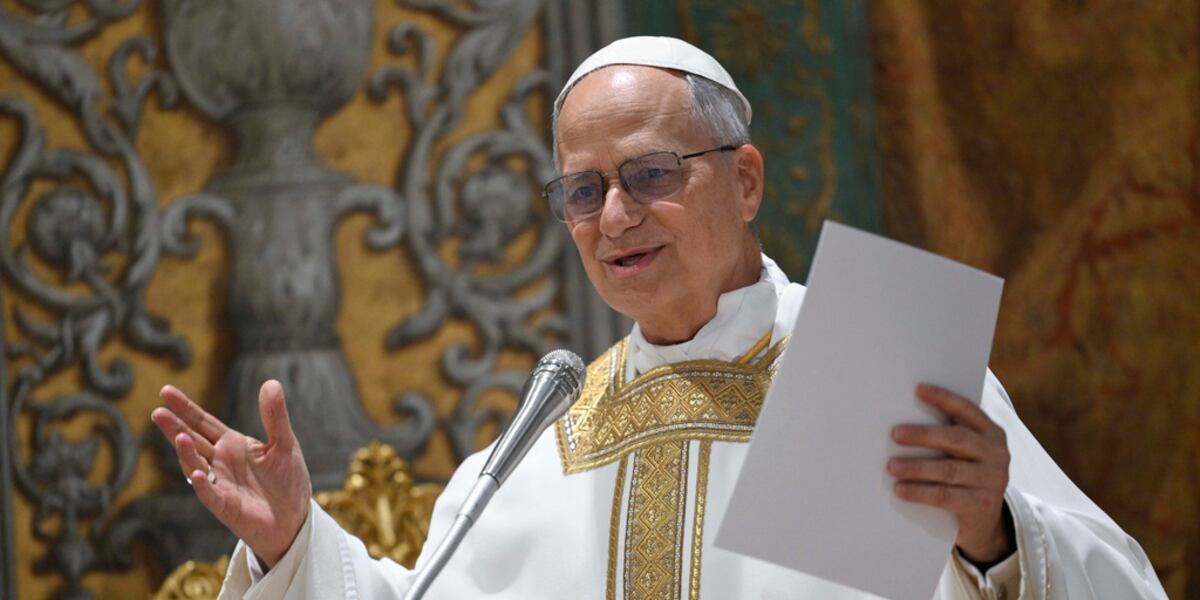
Expert Q& A: ‘The Pope is also a monarch’
Kathleen Comerford, Ph.D., professor of history at Georgia Southern University, specializes in Catholic history in the 16th and 17th centuries. She is also an associate editor for the Journal of Jesuit Studies, which focuses on the work of the Society of Jesus (Jesuits), a religious order within the Catholic Church. Pope Francis was the church’s first Jesuit pope. With the global significance and rarity of the conclave, Comerford answered frequently asked questions about how the conclave works, how the conclave process has evolved over time, and what the passing of a pope means for the Catholic Church and the world. Question: What does the passing of a pope mean for the world? Comerford: Multiple things! First of all, there are 1.4 billion Catholics in the world scattered in many different countries. The pope is a unifying figure for all of the Catholics. He represents something immediate in the sense that he’s the head of the church and is a recognizable figure. The pope is also a monarch. I was just talking with my classes about this. He is the head of the government of the Vatican City State, which is the smallest independent state in the world. It has a very long history itself. Pretty much everybody who lives in Vatican City works for the Vatican. The pope is one of the few elected monarchs in history. He is responsible for financial and political decisions, and he has ambassadors around the world as a result of his role in global policy. Question: How is a new pope selected? Comerford: The College of Cardinals will meet for an election called a conclave, and they actually stay in a dormitory-like place in Vatican City for it. They are sequestered from the public, and they take some time to meet, pray and vote. The cardinals aren’t supposed to be sitting around talking about who would be a really good pope, but we don’t know whether they do because they’re sequestered and nobody is supposed to talk about it. They will likely take a vote on the first day, but that’s not required. Every subsequent day, they can take a maximum of four votes; two in the morning and two in the afternoon until a candidate gets a two-thirds majority. Question: What does the voting look like? Comerford: There are ballots, and the cardinals write their preferred candidate on the ballot, and then they put their vote in a chalice. To count the votes, there’s a group of three people who are in charge of counting and then announcing the results to the fellow cardinals. There are 252 cardinals, but only 135 of them are eligible to vote because anyone over the age of 80 is ineligible. The procedure where only cardinals can elect the pope dates from 1059. The secret ballot and the two-thirds majority requirement is from 1621. The sequestration for the process dates from 1271 because they argued about who the new pope would be for two years and nine months; a total of 33 months. And so, they decided that the only way to make sure that this didn’t happen again would be to create this scenario with the cardinals locked in a room with a key. Question: When one of the candidates receives a two-thirds majority and becomes the next pope, how will it be announced? Comerford: Well, this is kind of fun, because they have four votes every day until one of the candidates receives a two-thirds majority. After they take the votes, the papers used to vote are burned. How the news is shared to the crowds outside is based on the color of smoke. If the smoke is black, that means no one received the majority and there’s no new pope yet. If there’s white smoke, it means there’s a new pope. This practice really only dates to the early 19th century. At first, it was just if there was smoke, there was no pope; if there was no smoke, then there was a pope. In 1914, they changed this aspect of the election so that black smoke means “no pope” and white smoke means “new pope.” Question: It’s expected that the next pope will be one of the cardinals in the room when they vote, yes? Comerford: Yes, but it doesn’t have to be. There have been a lot of popes, but in the last 200-300 years, there hasn’t been somebody who wasn’t in the conclave that was elected. Theoretically, they could nominate somebody who’s not a cardinal and the whole room could say, “yes, that’s the person we want as pope.” However, they don’t vote by acclamation anymore. They stopped doing that in the 19th century. Question: Pope Francis appointed 108 of the cardinals, so that’s a total of 80% of those eligible to vote for the next pope. How likely is it that we see a pope similar to the late Francis, considering he provided the electorate for his successor? Comerford: First of all, he deliberately went out and created cardinals in places where there had never been cardinals before. And he didn’t do that by saying, “I’m going to find somebody who’s like-minded to me.” He just said, “There are a lot of Catholics in Myanmar and they’ve never had a cardinal. So I’m going to make sure that there’s a cardinal now.” Most of these new cardinals are in places like Rwanda, Cape Verde, Tonga, Myanmar, Mongolia and so on. So these are non-European cardinals. Now, less than 40% of the voting cardinals are European. So to speculate on how similar they are to Francis, you have to break down what Francis was. There has been his entire pontificate about how he’s the first American pope, but his parents were born in Italy. He didn’t grow up speaking Italian, but it was a dialect of Italian as well as Spanish, because he grew up in Argentina. He was the most European you can get and still be an American. Another part of the question is, will the new pope be somebody who is of a similar mind to Francis in terms of his governance, which was very devolved. He introduced this idea of “synodality,” which is about fairly consistent communication with groups of people. Pope Francis was not particularly monarchical or hierarchical. There is also the aspect of his thinking that leans more to the left than the right on a number of social issues like immigration, women’s rights, the rights of minorities and immigration. He opened a lot of conversations, which the very right leaning portions of the church have been very uncomfortable with. If you're interested in learning more about this topic and want to book time to talk or interview with Kathleen Comerford then let us help - simply contact Georgia Southern's Director of Communications Jennifer Wise at jwise@georgiasouthern.edu to arrange an interview today.

Rural health documentary earns Peabody Award for Georgia Southern professor
Georgia Southern University Professor Matthew Hashiguchi has won a Peabody Award for his documentary, “The Only Doctor,” which focuses on rural health and the services provided by a single doctor in southwest Georgia. The Peabody Awards are prestigious accolades in storytelling across television, radio, streaming and other digital mediums. Categories for winning a Peabody include journalism, social video, interactive documentary, gaming and more. The nearly hour-long feature received the award in the Public Service category, which recognizes projects that address or respond to public health concerns, enhance public engagement or educate the public. For Hashiguchi, the award represents a personal and career accolade. “This award isn’t just a professional achievement, but also represents a moment in my life where I became a father,” said Hashiguchi. “I started filming right before my first daughter was born, and finished right after the second. While this award is an incredible acknowledgment of my work, it means even more to me as a priceless moment from their childhood.” The documentary focuses on Karen Kinsell, M.D., the sole physician serving 3,000 citizens in Clay County, Georgia, near the Georgia-Alabama border. The film spotlights the plight of a community in need of medical assistance and the dedicated doctor fighting to keep her clinic’s doors open. Hashiguchi delves into Kinsell’s sacrifices for her clinic’s operations, revealing her commitment to her patients. “Dr. Kinsell gets calls at home at all hours of the day and night,” Hashiguchi said. “She, at times, has had to pay the bills from her own bank account. But I’d say the biggest sacrifice is that she’s a doctor who does not have breaks.” The final cut of “The Only Doctor” is a bit different from the angle Hashiguchi took when he began work on it several years ago. He initially started the project to better understand the risks associated with maternal health care and childbirth when he and his wife were expecting their first child. Through his work, he learned of a more complex issue of health care access in rural communities. The documentary first premiered on the PBS program Reel South and is now available internationally on Al Jazeera’s documentary series “Witness.” Hashigchi’s work earned him a 2019 Gucci Tribeca Documentary Fund award and a 2021 American Stories Documentary Fund award from Points North Institute. The film’s world premiere took place at the 2023 Hot Docs International Documentary Film Festival in Toronto, Canada, and was awarded Best Documentary Feature at the 2024 South Georgia Film Festival, Best Feature at the 2023 Newburyport Documentary Film Festival and Award of Merit at the 2023 University Film and Video Association Conference. His rise to media prominence wasn’t on his radar early in his academic career. He described himself as a “C student,” and still sees himself as that young boy struggling with math and science courses. With one of the nation’s highest media honors, he can show his students new paths to success as well as the skills it takes to win a Peabody. “I want my students to know how I failed and know that I struggled,” he said. “I tell them that if they want to excel, they really have to put in hard work. That’s very much who I am now as I devote myself to these films.” If you're interested in learning more and want to book time to talk or interview with Matthew Hashiguchi then let us help - simply contact Georgia Southern's Director of Communications Jennifer Wise at jwise@georgiasouthern.edu to arrange an interview today.

Historical Significance of the Papal Name
In the wake of the historic election of Pope Leo XIV, the first American to ascend to the papacy, scholars and observers alike are reflecting on the global, historical and theological implications of his early statements and symbolic choices. His decision to take the name Leo – a name not used for over a century – immediately evokes comparisons to both Leo XIII and Leo I (Leo the Great), popes known for their firm leadership and dynamic engagement with the world. Baylor University’s Elisabeth Rain Kincaid, J.D., Ph.D., director of the Institute for Faith and Learning and an expert on early modern theology and Catholic Social Thought, said choosing the name Leo is significant, especially in today’s world. Through his choice of name, rhetorical style and theological references, the new pope is signaling a clear vision for a Church that is simultaneously grounded in tradition and open to global dialogue, Kincaid said. Kincaid is currently at work on a monograph – “Business Ethics for a Flourishing Life: Catholic Social Thought in the Modern Workplace” – in which she argues for the continued importance of Leo XIII’s thought for modern life. If you're covering the news about Pope Leo XIV and are looking to know why Cardinal Robert Prevost chose that name - we can help. Elisabeth Rain Kincaid is an author, speaker, teacher, and theologian. She has published broadly in peer-reviewed journals and popular publications. She is a frequent speaker at conferences, churches, and professional events on topics including business ethics, virtue and character, Christian engagement with law and politics, and work and vocation. She is currently the Director for the Institute for Faith and Learning at Baylor University. In her teaching, she draws upon her years of experience as a white-collar criminal defense attorney and a private equity professional, along with her ministry experience. Elisabeth is available to speak with media about this topic - simply contact Shelby Cefaratti-Bertin, M.A., Assistant Director of Media and Public Relations at Baylor University, Shelby_Cefaratti@baylor.edu or 254-327-8012 to arrange an interview today.
