
Experts Matter. Find Yours.
Connect for media, speaking, professional opportunities & more.

After four years of scandals, gaffes, hearings, indictments and even an impeachment – President Donald Trump seemed to be coasting on a coating of Teflon that kept him virtually unscathed as nothing ever stuck or shook his grasp on evading trouble. But that might have come to an end this week as The Washington Post dropped a bombshell of a story that including a recording of Trump allegedly seeking to interfere with the results in the recent election. President Trump urged fellow Republican Brad Raffensperger, the Georgia secretary of state, to “find” enough votes to overturn his defeat in an extraordinary one-hour phone call Saturday that legal scholars described as a flagrant abuse of power and a potential criminal act. The Washington Post obtained a recording of the conversation in which Trump alternately berated Raffensperger, tried to flatter him, begged him to act and threatened him with vague criminal consequences if the secretary of state refused to pursue his false claims, at one point warning that Raffensperger was taking “a big risk.” January 03 - The Washington Post No doubt the president was passionate – but did he cross the line? And if so – what are the consequences? There’s a lot of questions to be asked about what is next and that’s where our experts can help if you are covering. The University of Mary Washington has one of the foremost political experts in the country who can help with your stories. Dr. Stephen Farnsworth is a sought-after political commentator on presidential politics. He has been widely featured in national media, including The Washington Post, Reuters, The Chicago Tribune and MSNBC. Dr. Farnsworth is available to speak with media any time regarding the election and its aftermath – simply click on his icon to arrange an interview today.



COVID-19 has raised the stakes for boards, argues Brunswick’s Paddy McGuinness, former UK Deputy National Security Adviser. We now live with COVID-19. Fewer business leaders are making the mistake of talking about “post-COVID” or “when this is over.” The better of them have factored in COVID-19 related constraints to their medium-term plans and are even thinking about how the world may change in the long-term. They are building capacity to take advantage of an early recovery within months, yet they are modeling and encouraging grit for current and indeed harder conditions to last much longer. In the past, when health emergencies—say the Spanish Flu pandemic of a century ago—subsided, there was a greater return to economic normality than had been expected during the crisis. Extreme events often heighten or even distort our perception of wider risks. That old journalistic cliché “one thing is certain, nothing will be the same again” is rarely true. But the pandemic has created the expectation that businesses will be resilient—that they will be able to respond to an event and recover to the state prior to the event, incorporating the lessons learned into business practice. Many business leaders feel they have not done too badly responding to a once-in-a-hundred-years event. Business Continuity Plans (BCPs), which were understandably sketchy for pandemics, were pulled out of second-line risk management and owned and improved in real-time by executive committees. The transition to remote working and, at least in Asia and some of Europe, the gradual return to offices again, has been managed. Services and even vital production have been maintained. Leaders have absorbed the personal and collective strain of this. Good reason then for some satisfaction as they delegate certain COVID-19 responses and focus on the economic tsunami that follows the pandemic. The public seems to largely agree with business leaders’ assessments. While many national and scientific leaders find themselves beset by “blamestorming,” corporate executives have been given more slack. They weren’t expected to have foreseen a pandemic. Their sometimes scrabbling responses are understood. However, behind this lucky pass lurks an expectation that businesses will now be more prepared for crises and foreseeable risks. Resilience cannot be relegated to BCPs and traditional risk-management structures. It is categorically a board issue—regulators, lawyers, politicians and the public say so. The reputations of individual board members and the collective are at stake. Think how fast leaders have been expected to respond to the issues raised by the Black Lives Matter movement. Alacrity will be required. The speed and scale of decisions in response to the pandemic leaves board committees playing catch up to assure themselves that risks have been managed. The move to working from home has been rapid, so too the digitization of the business. Some see these as new, streamlined ways of working, yet the negative consequences are not yet fully apparent. Working from home, for instance, is attractive to some employees as well as chief financial officers, who may relish the chance to reduce fixed costs. Concerns about the impact on the coherence of the business’s culture, its productivity and innovation, the security of data held at home, hardships for those in difficult home conditions, and, indeed, the needs of the younger demographic who seem to favor a return to the office, need to be given due consideration. It may be a case of “decide in haste, repent at leisure.” Resilience is categorically a board issue—regulators, lawyers, politicians and the public say so. The reputations of individual board members and the collective are at stake. Boards also need assurance that the business has regained its balance and can manage parallel or interrelated crises. In recent weeks we have been helping several clients respond to major cyber events unrelated to the COVID-19 outbreak. They have probably needed more external support than otherwise because their leadership capacity was inevitably denuded by pandemic response. And they have benefitted from us already knowing each other and having experience of how to work together in crisis. After the Great Financial Crash there was a heavy focus on balance-sheet resilience and having the requisite finance skills on boards. Business leaders are now beset by advice on the heightened obligation to be resilient in much a broader sense of the word. Regulators, lawyers and risk consultants are sharing checklists of factors for executive committees to take into account when managing risks and for boards to oversee. The challenge here is defining what changes your specific business needs and how to actually bring those about. Shareholders will be expecting a judicious move away from “just in time” systems to ones that can endure foreseeable risks. This isn’t just about potential legal liability or reputational risk. This is about setting your business culture for success. Undermanage risks and the business is wide open to damage from foreseeable shocks with all the loss of confidence and capability that follows. Overmanage and the business losses its competitive edge just when there is opportunity in the recovery. In order to track broader resilience, boards and their committees will need access to a wider set of skills and insight. Board membership emerges as an obvious area of focus. Yet each board will take more time and belonging to too many—“over boarding”—may well be unacceptable. Risk methodology and information flows will also have to be reviewed, alongside how to strengthen board members’ awareness and skills. Before the pandemic, chairs and CEOs were already wrestling with this for their difficult-to-price risks, such as data, technology risks and cyber. Individual experts on boards created siloed responsibility for what should have been a shared risk. A focus on process and method often led to a focus on the management, rather than genuine oversight of, risks. External advice didn’t always help (as we have learned from the plethora of competing advice around COVID-19). No single intervention will meet the new standard for resilience. Nor will simple prescription. A broader and more articulated approach is required if governance is to maintain stakeholder confidence and corporate reputation.



Criminals are opportunists, and the COVID-19 global onslaught has brought with it not just health threats but cybersecurity risks, too. Within weeks of the COVID-19 outbreak, hackers have already commandeered the virus to unleash cyberattacks, sending emails purporting to provide coronavirus guidance laced with cyberattack software. In one more alarming case, they appear to have attacked a hospital and forced it to cancel operations and take key systems offline. As the outbreak continues to intensify, the UK National Cyber Security Centre (NCSC) warned that the volume of these attacks will likely increase, pointing to the increased registration of coronavirus-related webpages. Criminals are opportunists, and the COVID-19 global onslaught has brought with it not just health threats but cybersecurity risks, too. As companies move to protect the health of their workforce, it’s also important to protect the systems they’re using to run their businesses. It’s especially important for hospitals to shore-up their cyber defenses. If they don’t, just as they are racing to respond to COVID-19, they could face situations like University Hospital Brno in the Czech Republic, which earlier this month was forced to divert patients and cancel planned operations while it worked to address an attack. The most likely cyber threats are email “phishing” campaigns that use the coronavirus as a lure to get the recipient to open an attachment that contains malware. According to the NCSC, such “phishing” attempts are happening on a global scale in multiple countries, which has led to both a theft of money and sensitive data. Similarly, known hacker groups have been launching websites purporting to sell masks or other safety-related measures for coronavirus, possibly to use them as another vector for cyberattacks. The NCSC has also cautioned that these attacks are “versatile and can be conducted through various media, adapted to different sectors and monetized via multiple means, including ransomware, credential theft, bitcoin or fraud.” The cybersecurity firm ProofPoint has seen a rise in these cyberattack emails with COVID-19 themes since January. Both ProofPoint and IBM’s X-Force cybersecurity unit identified a campaign that targeted users in Japan with an email masquerading as a coronavirus information email that carries with it a potent type of cybercrime software. In the US, the Secret Service recently warned of scams from online criminals posing as sellers of high-demand medical supplies to prevent coronavirus. They’ll require payment upfront and not send the products. Cyber criminals have also been posing as the World Health Organization and the US Centers for Disease Control and Prevention (CDC), sending fraudulent emails from the former and “creating domain names similar to the CDC’s web address to request passwords and even bitcoin donations to fund a vaccine” for the latter. In addition to the use of the coronavirus as a cyberattack vector, the growing need for working remotely to mitigate the spread of COVID-19 has increased companies’ exposure to cyber threats. The increase in remote work creates more opportunities for hackers to make inroads from less secure locations. Companies should also ensure they can provide adequate security when their whole workforce is remote. They should quickly work through the security implications of workers choosing to switch to insecure personal devices. With national-level pressures on home broadband, staff will also resort to mobile hotspots, which are often less secure. And enabling remote connectivity at scale, with the right security configurations, can be a challenge even with months of preparation time. A recent US Department of Homeland Security COVID-19 cybersecurity notice pointed to the importance of making sure that security measures are up to date for companies’ remote access systems. Additional measures to consider include enabling multifactor authentication—which can require two or more steps to verify a user’s identity before granting access to corporate networks. The NCSC is also working to identify malicious sites responsible for phishing and cyberattack software. A final looming cyberthreat related to Covid-19 is disinformation. The World Health Organization and other agencies have for months been combatting disinformation campaigns spreading false information about the origins of and treatments for COVID-19—reports that seed more confusion and increase risks to society. All of that means that computer virus risks are emerging as the biological virus spreads—and both are a threat to business. Cyber risk mitigation efforts should account for the different ways that a company can be affected, including impacts on the technical, operational, legal and reputational aspects of a business. Often, the reputational effects of a cyberattack are more significant than direct the business or technical impact. To mitigate all of the potential impacts of cyberattacks taking advantage of the Covid-19 outbreak, companies should: Review and update crisis and cybersecurity response plans, and ensure internal and external communications response plans are robust. Confirm that members of the crisis management team understand their roles and responsibilities. Make sure all communications channels have the latest security patches. Review and update access controls, particularly when remote access is used heavily, to make sure that only those who require access to sensitive systems to do their jobs have it. Take extra care when handling medical information. For companies managing employees who have contracted Covid-19, it’s important that personal health information is handled with strong security measures, including encryption. Educate employees about the cyber risks that may attempt to capitalize on fear of the Covid-19 virus—whether it be phishing email or disinformation. Covid-19 poses a number of short- and long-term challenges to business resilience, and the virus’s trajectory is quick and unpredictable. But it’s possible to anticipate and mitigate a number of the cyber threats that will try to ride the virus’s coattails. The companies that do will be more resilient and better positioned to withstand the direct health and operational effects of the virus.

When will we know the outcome of the 2020 White House race?
Dr Trevor McCrisken comments: "Election Day is upon us. With an unprecedented 90 million Americans already having cast their votes early, the final push is all about getting as many supporters as possible to turnout to vote. "Early indications are that Biden and the Democrats are doing very well but they'll be trying to convince their remaining supporters not to be complacent and to get to the polling stations; for Trump and the Republicans turnout is also crucial as they hope for a late surge of support to secure four more years in the White House and to retain control of the Senate in the US Congress. "One big question is how long it will take to know the results. Different states have different rules about when they can count postal votes and the millions of in-person votes cast early. Others will accept postal votes that are postmarked up to and including Election Day itself. Many states will be declared overnight on Tuesday into Wednesday as per usual, but several crucial states may take much longer to be decided if no clear winner emerges and the vote counts and recounts go on for days or even weeks. "If one candidate or other emerges with a strong lead across 25 to 30 states then we're likely to know the winner of the presidential race on Wednesday. But if the margins are as close as they have been in recent elections in crucial swing states then it could take much longer for the results to become clear. Legal challenges to swing state results are very likely, especially if Biden or Trump has only won those states by relatively small numbers. We may not know the winner for several days - if not weeks or even a couple of months! "The last disputed presidential election in 2000 was not decided until the US Supreme Court intervened in mid-December to stop recounts in Florida, meaning that George W. Bush defeated Al Gore. The courts could again be crucial in settling the contests this year, not only in Florida but in other swing states if the voting margins are very close. With Trump and Senate Republicans having successfully tipped the balance to conservatives on the Supreme Court, newly appointed Justice Amy Coney Barrett could prove a significant character in this year's election battle." 3 November 2020


The Legacy of Ruth Bader Ginsburg, Associate Justice of the U.S. Supreme Court
"With her passing, feminist icon and jurist Ruth Bader Ginsburg leaves a legacy in both her formal role as a Supreme Court justice and author of some of the most important legal opinions during her service as well as her advocacy for gender equity," says Teresa Boyer, EdD, founding director of Villanova University's Anne Welsh McNulty Institute for Women's Leadership. In her personal and professional life, Ginsburg created a map for women to be the equals of the most powerful leaders in our nation. "By all accounts she was a brilliant legal mind, and from the start of her career she leveraged that mind to fight for the rights of those she felt were denied them, especially women," says Dr. Boyer. "Despite her decidedly liberal stance, she held a close personal friendship with her strongest conservative opposition on the Supreme Court, Antonin Scalia. Even with their intellectual differences, they held each other as equals, respecting each other's work. In a time when cross-gender friendships were rare, especially where a woman was as powerful as a man, Ginsburg once again showed that gender needn't dictate one's status in life." "Although Sandra Day O'Connor was the first woman to sit on the nation's highest court, Ruth Bader Ginsburg was the one that became a literal feminist icon," notes Dr. Boyer. "Ginsburg was unapologetically fierce in her opinions, both legal and otherwise. It is this ferocity which earned her the status 'Notorious RBG.' Especially in the early days of Ginsburg's career (and some would argue even today), women could hold opinions, but to be fierce and unapologetic about them was distinctly unfeminine." The images of Ginsburg wearing her lace collar, lipstick and jewelry were a deliberate contrast, owning her femininity at the same time she owned her power. "That iconic image will be upheld for decades to come—and I suspect a run on black robes and lace collars for Halloween this year," says Dr. Boyer.


Cancellation of non-conference college football games may lead to a new battle in the courtroom
The Big Ten Conference's decision to cancel all non-conference football games for the upcoming season -- and the possibility that schools in other major conferences may soon follow -- raises a number of potential legal issues, says Nathaniel Grow, associate professor of business law and ethics at the Indiana University Kelley School of Business. “Depending on the terms of the schools' college football scheduling agreement, the university cancelling the game may still owe the other school some level of compensation for breaking the agreement,” Grow said. “If the cancelling university refuses to pay, then it would not be surprising if the other school would elect to file a lawsuit.” A nationally recognized expert in the field of sports law, Grow studied has studied this issue, the subject of a 2010 article in the Journal of College and University Law. "The ultimate outcome of such a lawsuit would hinge largely on the specific terms of two affected schools' contract. In general, though, two provisions of the contract would likely prove to be the most important. First, most scheduling agreements will include some sort of liquidated damages provision, a clause that specifies that one side of the agreement must pay the other party a certain amount of money should the contract be broken. Often times, these contracts will provide that the breaching party must only pay the other school in the event that the opponent is unable to replace the cancelled game on its schedule with one against a sufficiently suitable alternative opponent. "The other relevant clause in these scheduling agreements is likely to be the force majeure provision, sometimes referred to as an ‘Act of God’ clause. Under these provisions, schools may be excused from cancelling a game without penalty if circumstances arise that make playing the game unduly difficult or impossible (for instance, a hurricane or other major weather event). The applicability of such a provision will also vary depending on the specific wording employed in the contract, and whether the clause permits a team to cancel a game on the basis of either a pandemic or a change in conference policy regarding the playing of non-conference games." Grow can be reached at 812-855-8191 or grown@iu.edu.


What will the extradition of Meng Wanzhou mean for relations between Canada, China, and the U.S.?
There is the rule of law, and there’s politics – but what happens when you are a country like Canada stuck in the middle of an ugly legal battle between China and America? This Monday, in Vancouver – a hearing is underway that will see one of the world’s titans victorious and the other, probably quite angry. Legal arguments at the B.C. Supreme Court in the extradition case of Huawei executive Meng Wanzhou may stretch into next year. Crown lawyer Robert Frater told the court Wednesday that lawyers for both sides will propose a new schedule later this month that would bring the hearings to a close in early 2021 at the latest, instead of this fall. The Unites States wants Canada to extradite Meng over allegations she misrepresented the company’s relationship with Skycom Tech Co., putting HSBC at risk of violating U.S. sanction against Iran, a charge both she and Huawei deny. Associate Chief Justice Heather Holmes dismissed the first phase of arguments last week by Meng’s lawyers who claimed the case should be thrown out because the U.S. allegations against her wouldn’t be a crime in Canada. Global News - June 03 It has been a long and drawn out process and will likely stretch into this year, and odds are patience is wearing thin. Can any of the countries expect retaliation and what would that look like? Is the United State right seeking extradition of this official? Will a change at the Whitehouse see this effort dropped? And what are the underlying issues at play that may be attributing to this drama? If you are a journalist covering this topic – then let our experts help. Dr. Glen Duerr's research interests include comparative politics and international relations theory. Glen is an expert on this subject and is available to speak to media regarding this topic– simply click on his icon to arrange an interview.


Harvey Weinstein Found Guilty. What's Next?
Harvey Weinstein was found guilty on two charges but acquitted on three of the more serious charges in a New York courtroom on February 23. He will be sentenced on March 11, facing five to 29 years in prison. He also awaits criminal charges of sexual assault in Los Angeles. Michelle Madden Dempsey, professor of law at Villanova University's Charles Widger School of Law, says there are three main takeaways from this verdict: Prosecutors were right to take this case to a jury, and even if the jury had acquitted, it still would've been an important "win" simply because it went to trial. The jury seems to have taken the case seriously and delivered a fair verdict. We can't read too much into this verdict (as far as #MeToo is concerned). When women and girls of color, socio-economically marginalized women and girls, prostituted people and others who lack relative structural power receive justice from the criminal legal system, then we can start to celebrate. That is to say, there's still a lot of work to be done before all sexual assaults are taken seriously in our criminal justice system. Prof. Dempsey also says we shouldn't be too quick to assume that a social movement is driving this verdict. "The social movement, I think, is driving prosecutors to take these cases to a jury—which is a good thing. But I think juries typically try to reach verdicts based on the fact and particular law of the jurisdiction in which the alleged offense occurred."

Soundgarden, Chris Cornell's Widow Spar Over Royalties and Recordings
It's been a "Black Hole Sun" set of months for the members of Soundgarden, who are in a legal fight with the widow of the band's former lead singer, Chris Cornell, who died in 2017. Cornell's wife, Vicky, filed suit against the band in December 2019, claiming that her husband's estate was owed "hundreds of thousands of dollars" in royalties for unreleased recordings prior to his death. Now, the band has filed a motion to dismiss the lawsuit. Intellectual property expert and law professor Michael Risch says it's an interesting decision on the band's part. "The allegations in the lawsuit are heavily fact-bound, as are the defenses," Prof. Risch says. "A motion to dismiss assumes that all the facts in the complaint are true, but the band's motion asserts that the facts are false." He says that band members usually always work things out. When you see lawsuits for copyright or other reasons, it's usually always heirs that are involved.

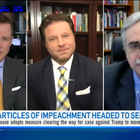
If anyone thought 2020 was going to come in quietly – that theory was likely proven wrong in less than a week. With the DNC primaries in high gear, impeachment trials with testimonies, witnesses and wall to wall rhetoric and now 2nd Amendment rallies capturing national attention in Virginia – political reporters are being pulled in many different directions, and all at the same time it seems. Dr. Stephen Farnsworth is a sought-after political commentator on subjects ranging from presidential politics to the local Virginia congressional races. He has been widely featured in national media, including The Washington Post, Reuters, The Chicago Tribune and MSNBC. He is author or co-author of multiple books on presidential communication. His latest work, "Late Night with Trump - Political Humor and the American Presidency," examines how the treatment of President Trump differs from previous presidents, and how the Trump era is likely to shape the future of political humor. He recently delivered an invited lecture entitled, “A Review of the 2019 Virginia Midterm Elections and a Preview of the 2020 Legislative Session,” at the Virginia Executive Institute Alumni Association Meeting in Chesterfield, VA. An expert on more than just state politics, Farnsworth has also been recently contacted by national and international media for his keen perspective and expert opinion on political matters that are affecting issues across all of America. Dr. Farnsworth is available to speak with media – simply click on his icon to arrange an interview today.