
Experts Matter. Find Yours.
Connect for media, speaking, professional opportunities & more.

One AI-based advancement at a time, UF leaders are transforming the sports industry
As emerging technologies like AI reshape sport industries and professional demands evolve, it is essential for students to graduate with the expertise to thrive in their future careers. To ensure that these students are set up for success, the UF College of Health & Human Performance has launched a new sports analytics program. Led by Scott Nestler, Ph.D., CAP, PStat, a professor of practice in the Department of Sport Management and a national analytics and data science expert, the program ties back to the UF & Sport Collaborative – a five-part project intended to elevate UF’s presence on the global stage in sports performance, healthcare and communication. “Tools and insights that previously were only available to professional sports teams are now coming to the college level, and it makes sense for universities to begin using these data, technologies and new analytic methods,” Nestler said. The sports analytics program fosters collaboration between academic units, such as the Warrington College of Business and the University Athletic Association, helping bridge the gap between sport research and innovation and empowering students to address real-world challenges through data and AI. For example, the program offers opportunities to leverage technology and analytics for strategic decision making in player acquisition, team formation and in-game decisions. Beyond performance metrics, the program also explores marketing strategies and revenue analytics, providing a well-rounded understanding of the field. “When you have enough data and a large enough sample of individuals, AI can help make predictions that otherwise would take prohibitively longer for a human to accomplish with traditional methods,” said Garrett Beatty, Ph.D., the assistant dean for innovation and entrepreneurship and an instructional associate professor in the College of Health & Human Performance’s Department of Applied Physiology and Kinesiology. “Because those data volumes are getting so large, AI models, machine learning, deep learning and other strategies can be leveraged to make sense and glean insights from sport and human performance data in ways that have never been done before.” The program seeks to offer several educational opportunities, such as individual courses, certificate programs and potentially a full degree program. In the long term, Nestler envisions the program evolving into a center or institute, beginning with establishing a research lab in the spring. Additionally, the program will leverage the university’s supercomputer, HiPerGator, to analyze larger data sets and use newer predictive modeling machine learning algorithms. “As faculty and staff move from working with box score and play-by-play data to using tracking data, which contains coordinates of all players and the ball on the field or court tens of times per second, the size of data files in sports analytics has grown tremendously,” Nestler said. “HiPerGator, with its large storage capacity and multiple central processing units/graphic processing units, is ideal for using in sports analytics work in 2025.” Nestler also aims to increase student involvement by enhancing UF’s Sport Analytics Club and hiring research assistants to work on projects for the University Athletic Association. “We need to take a broader view of what AI is and realize that it incorporates a lot of what we’ve been calling data science and analytics in the form of machine learning models, which came more out of statistics and computer science. Those are types of AI and those that I think will largely continue to be used in the coming years within the sports space,” Nestler said. “Also, we’re continuing to see growth in the number of people interested in working in this space, and I don’t foresee that changing. Fortunately, we are also seeing the number of opportunities available to those with the appropriate skills increase as well.”



Self-Guided Hypnosis Significantly Reduces Menopausal Hot Flashes
Can a simple daily audio hypnosis session help women find relief from one of menopause’s most disruptive symptoms – hot flashes – without medication? A new clinical trial led by Baylor University’s Gary R. Elkins, Ph.D., professor of psychology and neuroscience and director of the Mind-Body Medicine Research Laboratory, suggests it can. By decreasing hot flash frequency and intensity by over 50%, self-guided hypnosis offers a nonhormonal option for the millions of women whose hot flashes interfere with sleep, mood and quality of life. Published in the journal JAMA Network Open, the multicenter randomized clinical trial evaluated the effectiveness of a six-week, self-administered hypnosis program compared to a sham control using white noise. The study enrolled 250 postmenopausal women experiencing frequent hot flashes, including nearly 25% with a history of breast cancer – a group often excluded from hormone-based treatments. “It is estimated that over 25 million women in the United States have hot flashes, with up to 80% of women in the general population reporting hot flashes during the menopause transition, and 96% of women with breast cancer report hot flashes soon after beginning anti-cancer therapy,” Elkins said. “While hormone replacement therapy is highly effective in reducing hot flashes, it is not a safe choice for everyone, and therefore, women need additional safe and effective alternatives.” After six weeks of daily self-hypnosis audio recordings, participants reported a 53.4% reduction in both frequency and intensity of hot flashes, and at the 3-month follow-up, hot flashes were reduced by 60.9% compared to a 40.9% reduction for women in the control group. The guided self-hypnosis intervention had an even larger treatment effect on reducing hot flashes in women with a history of breast cancer (64% reduction after six weeks). Self-guided hypnosis: A breakthrough approach The study is the first to compare self-guided hypnosis with an active control condition (i.e. sham white noise control group), allowing researchers to better understand how much of the benefit came from people’s expectations or the placebo effect. “This was a major breakthrough and innovation, as almost all prior studies of mind-body interventions have only used wait-list, psycho-education or simple relaxation to compare the active hypnotherapy intervention,” Elkins said. “Also, all sessions were self-administered hypnosis, which demonstrated that women could learn how to use hypnosis for hot flashes on their own with support and guidance. Elkins emphasized that self-hypnosis provides benefits that are easily learned and practiced using audio recordings or app-delivered hypnotherapy. “It can be practiced at home without needing to travel for doctor visits, and it is relatively inexpensive compared to in-person sessions,” Elkins said. “Once a person learns how to use self-hypnosis to reduce hot flashes and improve sleep, it can be used for other purposes such as managing anxiety, coping with pain and for stress management.” At the 12-week follow-up, participants in the self-guided hypnosis group showed a 60.9% reduction in hot flashes as well as significantly greater improvements in sleep, mood, concentration and overall quality of life. Nearly 90% of participants in the hypnosis group reported feeling better, compared to 64% in the control group. “We are very excited about the findings from this important study,” Elkins said. “Our ongoing research aims to further determine how self-hypnosis can significantly improve sleep for breast cancer survivors and women in the peri- to post-menopause transition.” Through this and other studies, Elkins and his team have been able to determine that hypnotherapy is the only behavioral intervention consistently shown to reduce the frequency and severity of hot flashes to a clinically significant amount among both post-menopausal women and breast cancer survivors.



Holiday Anxiety Is Real — Here’s How People Can Actually Stay Sane This Season
The holidays promise joy, warmth, and “quality time,” but for many people they also deliver a cocktail of stress, expectations, forced cheer, family politics, and receipts longer than a CVS bill. Between travel chaos, financial pressure, social burnout, and attempting to assemble toys designed by engineers who clearly hate humans, holiday anxiety is soaring. The good news: experts who study mental health, behaviour, and stress management say there are ways to keep your nerves intact — and maybe even enjoy yourself along the way. Why the Holidays Stress People Out (Science Says It’s Not Just You) Adults report higher levels of stress in November and December than almost any other time of year. Common triggers include: Financial expectations: gifts, gatherings, travel, meals, and the sudden belief that every present needs to be “meaningful.” Time pressure: too much to do, too few days on the calendar. Social overload: introverts, extroverts, and “I’m-just-here-for-the-food-verts” all feel it. Family dynamics: every family has at least one person who always “starts something.” Nostalgia vs. reality: the pressure to create a “perfect holiday,” despite the fact that perfect holidays only exist in movies and greeting cards. Experts note that people often skip their routines (sleep, exercise, healthy meals) and then wonder why their stress spikes. The season demands more of people while simultaneously removing their coping mechanisms. Practical Ways to Reduce Holiday Anxiety — Backed by Psychology (and Common Sense) 1. Lower the Bar: “Good Enough” Is a Holiday Gift to Yourself Researchers consistently find that perfectionism fuels anxiety. A store-bought pie, a slightly messy house, or wrapping gifts in whatever paper you can find at 11 p.m. will not derail the season. 2. Set Boundaries (Even With the Loud Relatives) Experts often emphasize that saying “no” is one of the most effective stress-management tools. Fewer events, fewer obligations, fewer emotional landmines. 3. Budget Before You Shop Financial therapists note that anxiety drops when people pre-set limits and stick to them. You don’t need a MasterCard bill that arrives in January carrying the emotional weight of a Greek tragedy. 4. Protect Your Recharge Time A short walk, fresh air, or 10 minutes of solitude is not selfish — it’s psychological maintenance. Mental-health researchers recommend intentionally scheduling downtime before the calendar fills itself. 5. Keep Expectations Realistic Not every moment will be magical. Not every conversation will be smooth. Not every plan will unfold as imagined. Experts say acceptance, not forced positivity, lowers stress significantly. 6. Focus on Meaning, Not Perfection Studies show that people feel calmer when they shift their focus toward connection, gratitude, and small moments rather than elaborate performances of holiday cheer. Holiday Angles for Journalists The psychology behind holiday anxiety — what triggers it and why it’s so universal How family systems and old patterns surface at holiday gatherings The economics of holiday stress — debt, spending pressure, and emotional spending How introverts (and extroverts) navigate holiday overload differently Why holiday nostalgia makes people emotionally sensitive Healthy boundary-setting during family events How immigrant, multicultural, and blended families are reshaping holiday expectations Let's get you connected to an expert. The holiday season is increasingly fast-paced, commercialized, and socially demanding. Many people feel pressure to present a perfect life at a time when burnout, financial strain, and mental-health challenges are higher than ever. Helping audiences understand holiday stress — and giving them practical, research-grounded strategies — can make a measurable difference in their emotional well-being. For journalists covering mental health, family dynamics, holiday culture, or stress-management trends, ExpertFile’s roster of psychologists, counsellors, behavioural scientists, and wellness experts can offer insights, interviews, and real-world advice to support your reporting. Find your expert here: www.expertfile.com


“Lake Health Under the Microscope: RPI Researcher Offers First Real-World Look at Herbicide Impact”
In a recent Rensselaer Polytechnic Institute news release “RPI Collaborates on First-of-its-Kind Research Study to Keep New York Lakes Healthy,” Dr. Kevin Rose is featured as the essential expert behind an unprecedented field study of the aquatic herbicide florpyrauxifen-benzyl (FPB / ProcellaCOR) in New York lakes. As Director of the Darrin Fresh Water Institute (DFWI) at RPI, Rose helped lead the research team that examined long-term, real-world behaviour of the herbicide—discovering that while it disappears rapidly from open water, it lingers in lake-bed sediments for over a year and even spreads beyond original treatment zones. Rose’s involvement highlights his role in translating cutting-edge freshwater science into actionable insights for lake managers, regulators and communities. “New products are occasionally introduced into ecosystems as we work to prevent harm from threats like invasive species,” says Rose. “Many of these tools can bring tangible benefits, but it’s essential to understand their long-term impacts and potential unintended consequences.” Dr. Rose’s leadership brings clarity to an issue that can easily be oversimplified in public debate. By grounding the study in real-world field data rather than controlled laboratory assumptions, he provides a more accurate picture of how aquatic herbicides travel, transform, and linger in lake systems. His work highlights why science-based lake management — informed by long-term monitoring — is critical for maintaining the health, resilience and recreational value of New York’s freshwater ecosystems. For journalists covering invasive species, lake health, climate resilience, herbicide use or the future of freshwater ecosystems, Dr. Kevin Rose is an essential source. He brings both scientific authority and real-world relevance to a topic that affects communities, policy decisions and environmental outcomes across the state. Click on his icon now to arrange an interview today.


When it comes to transforming how organisations produce, consume, and reuse resources, Dr Luciano Batista, professor of operations management at Aston University, is a global pioneer. His research sits at the crossroads of innovation, digital transformation, and sustainability, tackling one of humanity’s most pressing challenges: our overconsumption of the planet’s resources. Reimagining the economy around renewal Dr Batista’s work focuses on circular supply chains —a model he helped establish at a time when 'closed-loop' systems dominated sustainability thinking. His early research laid the foundation for how businesses could move beyond recycling and linear take-make-dispose models, instead designing systems that reuse, restore, and regenerate. View his profile here From theoretical frameworks to real-world applications, his studies—such as comparative analyses of circular systems implemented by Tetra Pak in China and Brazil—demonstrate the measurable economic and environmental benefits of circularity in action. His 2022 Emerald Literati Award-winning paper introduced a methodology for mapping sustainable alternatives in food supply chains, earning international recognition for its real-world impact. A global voice for industrial symbiosis and circular innovation The influence of Dr Batista’s work reaches far beyond academia. He has advised the European Commission’s Circular Cities and Regions Initiative (CCRI) and contributed insights to policymakers through the UK All-Party Parliamentary Manufacturing Group. His expertise continues to inform national and regional strategies for sustainable production and industrial symbiosis —where one company’s waste becomes another’s resource. Today, he extends that impact globally as a visiting professor at the Massachusetts Institute of Technology (MIT), conducting research at the MIT Center for Transportation & Logistics on circular supply chain innovations, supported by Aston University’s study-leave programme. He also mentors future leaders in sustainability as part of Cambridge University’s Institute for Sustainability Leadership (CISL). Driving the next wave of sustainable transformation Looking ahead, Dr Batista is spearheading collaborations through Aston’s Centre for Circular Economy & Advanced Sustainability (CEAS), working with the Energy & Bioproducts Research Institute (EBRI) and West Midlands Combined Authority (WMCA) on projects developing biochar-based clean energy systems for urban districts. He is also advancing the social dimension of the circular economy—ensuring that the move toward sustainable production is inclusive and equitable. His Symposium on the Socially Inclusive Circular Economy, held at the 2025 Academy of Management Conference, has sparked new international research partnerships with Monash University (Australia) and the Vienna University of Economics and Business. A vision for a regenerative future At the heart of Dr Batista’s work is a simple but urgent truth: humanity is consuming resources at a rate our planet cannot sustain. Through his research and global collaborations, he is helping organisations, policymakers, and communities move toward a future where growth and sustainability coexist. “The transition to a circular economy is not optional—it is essential,” says Dr Batista. “Our goal must be to redesign systems that allow people, businesses, and ecosystems to thrive together.”


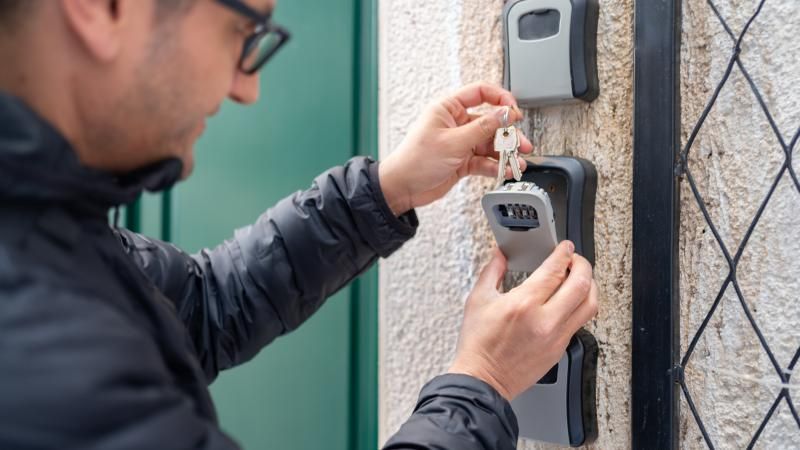
Five Million Airbnb Reviews Illuminate Guests’ Crime and Safety Concerns
Concerns about crime and safety have a dramatic impact on the behavior of Airbnb customers, according to new research co-authored by Liad Wagman, Ph.D., Dean of the RPI Lally School of Management. In an analysis of nearly 5 million reviews left by Airbnb guests, Wagman and his colleagues found that a short-term rental property’s occupancy rate and rental price dropped by significant amounts after a guest left a review mentioning safety concerns at or around the property: occupancy rates fell by anywhere from 1.5 to 2.4 percent, while average nightly prices dropped by roughly 1.5 percent. These negative safety reviews influenced the behavior not only of potential future customers, but also of the people who wrote them. A customer who mentioned concerns about crime and safety in the neighborhood around a property, for instance, became 60 percent less likely to ever use Airbnb again. “To see the effect of these dynamics play out in action is always fascinating to me," Wagman said. “Given that humans have different preferences, and that information transmittal is imperfect, it’s unsurprising that the effect of self-experience is larger than that of reading a critical review that resulted from it.” Worries about safety within a property — say, a broken step or a slippery tub — also reduced customers’ willingness to return to the platform, but by a more modest amount. The study also found that when people with neighborhood safety concerns did return to the platform, they tended to book properties in areas with lower rates of crime. The study, co-authored by Aron Culotta of Tulane, Ginger Zhe Jin of the University of Maryland, and Yidan Sun of Binghamton University, was published in the journal Marketing Science. Overall, the researchers found that safety-oriented reviews were rare: only about 0.5 percent of customer reviews mentioned safety concerns. But those reviews tend to be more negative in sentiment than the typical customer review, giving them an outsize impact on the behavior of subsequent would-be customers. The findings illustrate a delicate balancing act digital platforms have to perform, particularly those that rely heavily on user reviews: while highlighting negative experiences can help consumers make more informed choices, too much emphasis can drive customers away completely. The team ran several simulations calibrated by their empirical analysis to test how these dynamics play out in the market. They found that if a platform suppressed negative safety reviews completely, customers might assume that safety information was being hidden, and become more wary of using the platform in general. Conversely, while more transparency around safety issues could lead to fewer bookings of impacted properties in the short term, in the long run such a policy could boost user trust and draw more people to the platform, offsetting the short-term losses. “Platforms with the competitive space to focus on long-term objectives may benefit from a higher level of transparency, which can be facilitated by making information that is relevant to their buyers’ decision-making more readily available,” Wagman said. “Doing so facilitates trust and helps incentivize sellers to work to improve the quality of their offerings, as well as help shape sellers' decisions to enter a market (e.g., offer their listings) in the first place.”

Worked Through Thanksgiving? That’s a Burnout Red Flag, Not a Badge of Honor
If your Thanksgiving weekend included answering work emails from a guest room, sneaking Slack replies between courses, or “just finishing one thing” while your family watched a movie, you’re not alone. But Craig Selinger, an executive function coach who works with high achievers, says it’s a warning sign, not proof of commitment. “More and more of my clients tell me they ‘took time off’ - but then admit they were checking in on everything from their phones,” Selinger says. “They come back to work exhausted, frustrated with their families, and confused about why they don’t feel refreshed.” He doesn’t see this as a time-management failure. He sees it as a boundary failure fueled by an always-on culture. “Old technology stayed in one place,” he explains. “A desktop in a home office was easy to walk away from. Now, work follows you onto the couch, into your in-laws’ living room, and onto the plane ride home. Unless you deliberately decide when you’re not available, the default is ‘always working, never actually off.’” After holidays like Thanksgiving, Selinger helps clients reflect on a few key questions: Did you actually have any fully work-free hours or days? Did your phone stay with you during meals and family time - and did you feel pulled to check it? Do you feel like you rested, or like you just changed locations while staying on call? “If the honest answers are uncomfortable, that’s valuable data,” he says. “It means your relationship with availability needs attention.” Instead of telling high performers to “just unplug,” Selinger works with them to redesign their availability ahead of the next holiday crunch: Setting clear out-of-office messages that specify when they’ll be offline and when they’ll check in. Agreeing with their team on what counts as a true emergency and which channel should be used for it. Creating short, non-negotiable deep-rest windows - for example, no work apps from 5-9 p.m. on certain days, or one weekend day that’s completely work-free. “When people see that they can set smart boundaries and still be respected and effective, that’s usually the turning point,” Selinger says. “They stop confusing constant responsiveness with real value.” With December’s year-end push approaching, he believes now is the time for high performers to recalibrate. “Treat this past Thanksgiving as a test run,” he suggests. “If you didn’t get the rest you needed, don’t just shrug it off. Use it as the moment you decide to draw a clearer line before the next holiday - for your performance and for the people who actually sat across the table from you.” About the Expert Craig Selinger is an executive function coach who works with founders, executives, families, and high-achieving students. He specializes in digital distraction, productivity, and helping people build realistic boundaries in an always-on work culture. Craig is part of the Executive Function Coaching Community at Offline.now

Life-changing study abroad experiences help students find themselves, UF research shows
Studying abroad is about more than just enrichment for college students; it’s often about personal transformation, UF researchers have found. Every year, UF sends nearly 2,600 students overseas to become immersed in diverse cultures, gain international perspectives, and create social bonds with fellow Gators – experiences so profound that UF researchers recently published a study about their long-term impact in Leisure Sciences. And this week, the UF International Center is hosting a Study Abroad Fair from 10 a.m. to 3 p.m. Wednesday, Jan. 29 on the Reitz North Lawn to generate even more interest in these life-changing programs. “You’ve got to look at travel as not a frivolous thing because it’s part of your life story,” said Heather Gibson, Ph.D., a professor in the UF College of Health & Human Performance’s Department of Tourism, Hospitality & Event Management, who co-authored the study. “The impact isn’t just for the semester when they return; it’s now shown to be over 20 years or more. Very few studies focus on this formative phase of adult development, and these emerging adults are very malleable to be shaped. They’re searching for different sources of identity and different directions.” Conducting this research with Gibson was Hongping (HP) Zhang, Ph.D., a UF graduate of 2020 and clinical assistant professor at the University of Tennessee, Knoxville’s Department of Retail, Hospitality, and Tourism Management. Zhang said that, in 2019, tourism literature began focusing on memory theories, but research primarily looked at memorable tourism experiences and how to better attract tourists. Zhang wanted to dive deeper into how travel memories affect a person’s development and identity. This retrospective longitudinal study examined 115 alumni who traveled as part of the College of Health & Human Performance’s South Pacific program, or the Florida Down Under Program, from 2007 to 2019. The program, led by Gibson, brings students to Australia for four weeks, New Zealand for four weeks, and/or Fiji for 10 days to study sustainability, with trips including a snorkeling expedition to the Great Barrier Reef and to Mungalla Station (a land occupied by the Nywaigi Aboriginal Land Corporation). These students’ memories of studying abroad proved to be positive and an “important building block to enhance the existing feeling of self,” Zhang said. For example, one study participant shared that reflecting on her experience in Australia was a conversation starter that sparked an initial social connection with her now husband, who had also traveled to Australia on a separate trip. Other students said the program impacted their travel behaviors such as spending money, as well as their eco-conscious behaviors like using coral-reef-friendly sunscreen. Overall, Gibson believes that experiential learning like studying abroad plays a significant role in helping students find themselves at pivotal times in their lives. In fact, research from the Consortium for Analysis of Student Success through International Education shows that students who participate in study abroad programs may earn higher grades, be more likely to graduate, and be better positioned for the global workforce. “Getting students out of the classroom and pushing them out of their comfort zone is where they learn,” Gibson said. “We need to think about the undergraduate experience as more than earning credits for a degree. Study abroad provides students with friends, experience, and direction, and that’s very crucial, especially at a large university. Study abroad allows students to find their tribe.”


Do the math: We’re awake roughly 16 hours a day. We spend 10 of those hours staring at screens – phones, tablets, computers, TV, gaming devices. That’s 63% of our waking life. The first platform dedicated entirely to digital balance launching today reveals something even more startling: It's not that we lack willpower to change our behavior. It's that we lack confidence. New proprietary research from Offline.now shows that 8 in 10 people are ready to change their relationship with technology, but more than half are so overwhelmed with their digital habits, they don’t know where to start. “If you don’t learn how to manage the screens in your life, they will manage you,” says Eli Singer, Founder of Offline.now and author of Offline.now: A Practical Guide to Healthy Digital Balance. “When people tell us they feel overwhelmed, it’s not laziness. It’s a crisis of confidence. And confidence is something that can be built.” Digital Wellness Experts Address the Struggles No One Else Will These insights come from digital wellness experts in the Offline.now Digital Wellness Directory – a growing community of licensed professionals across North America specializing in ADHD, relationships, family dynamics, high-achievers, and sustainable behavior change. They’re not offering generic advice. They’re addressing specific digital struggles that define contemporary life. Psychotherapist Harshi Sritharan, who specializes in modern anxiety and ADHD, explains: “The biggest mistake people make is reaching for their phone or turning on their computer first thing in the morning. It injects your dopamine full of uncertainty. You’ve essentially told your brain the most important thing you have to do today is put out fires. I tell clients to delay that first scroll as long as possible and never hit ‘snooze’. You’re fragmenting your REM sleep and making yourself more exhausted. These aren’t willpower issues; they’re about understanding how blue light disrupts your circadian rhythm, especially for those with ADHD who already struggle with sleep regulation.” According to Sritharan, the breakthrough happens when people understand the dopamine cycles driving their dependence and “reframe how they connect with all their screens, whether it’s their phone, gaming console, or streaming TV.” High Achievers Can’t Unplug. The ‘Always-On’ Trap is Killing Productivity, Not Boosting It “A lot of high performers think they need better time management,” says Executive Function Coach, Craig Selinger. “But what they actually need are boundaries. They’ve built empires by being available 24/7, and their phones have become permission slips to say yes to everything.” The difference between old and new technology matters,” he explains. “Back in the day with TV, there was a clear demarcation of beginning and end, right? The episode ends and you move on. Now it’s like Minecraft or TikTok – there’s no ending. And mobility makes it sticky, because you’re physically carrying the drug with you, versus a TV that stayed in one room.” The breakthrough happens when they realize being unavailable on purpose isn’t a weakness. “Things like turning off notifications during deep work, or setting ‘do not disturb’ windows? Those aren’t luxuries. They’re the competitive advantages they’ve been missing.” Digital Dependency as a Third Party in a Relationship Licensed Marriage and Family Therapist Gaea Woods says digital devices are killing interpersonal relationships, not because tech is evil, but because “we use it unconsciously at the moments when connection matters most. When you’re scrolling at dinner, you’re telling your partner ‘my phone is more interesting and important than you’.” The breakthrough happens when couples set explicit agreements: response times, when devices go off-limits – and even what’s it’s OK with AI companions. “We’ve exited the era of meaningful communication without realizing it, and now we must deliberately rebuild it. Nature isn’t ‘Nice to Have’. It’s the Antidote to Screen Fatigue No One is Talking About After running a tech-free camp for 25 years, Personal Development Coach Mark Diamond says he’s seen what happens when kids get genuine face-to-face time interaction outdoors. “Their brains reset. The beauty and physical activity provide perspective that screens can never replicate. Digital dependency has eroded our ability to develop real human connections across all ages, not just teenagers. Screens should not replace the moments that define our wellbeing.” Why This Matters Now The stakes extend beyond personal frustration. Unchecked screen dependency is linked to rising rates of anxiety, deteriorating sleep quality, relationship breakdown, and what mental health experts call “continuous partial attention”, a state where we’re always connected, but never fully present. The Data Reveals When Change is Possible Beyond the confidence divide, Offline.now’s research uncovers the precise moments when users are most open to shifting their digital habits: Evenings from 6 pm-11:59 pm emerge as the “Go Time” window. 40% of self-assessment responders peak readiness to act. Sunday is “Reset Day, when 43% want to set boundaries for the week ahead. Saturdays offer natural opportunities for self-compassion and rest. Afternoons become the “Overwhelm Window”, with 57% feeling consumed by their screens. Critically, Fridays – despite having the highest overwhelm factor – are the worst time for interventions. Users are depleted and change rarely sticks. The Framework That Powers the Platform At the platform’s core is the Offline.now Matrix, a behavioral framework that maps the confidence and motivation levels of users to reveal their starting point: Overwhelmed, Ready, Stuck, or Unconcerned. Based on Singer’s book, Offline.now: A Practical Guide to Healthy Digital Balance, the approach replaces willpower-based advice with microlearning strategies – each taking 20 minutes or less – that track emotional triggers rather than just screen time totals. It offers 100 real-world alternatives to scrolling, from reorganizing a drawer to visiting a thrift shop, and reframes slip-ups as data, not disasters. “The books shows that lasting change doesn’t require deleting Instagram or TikTok tomorrow,” says Singer. “You need to win one personal victory today, and then another tomorrow. That’s how confidence rebuilds.” Propelled by University of Toronto’s Innovation Ecosystem Offline.now is a University of Toronto-affiliated startup, leveraging one of the world’s most powerful innovation networks. U of T is ranked among the top five university-managed business incubators globally and has helped create more than 1,500 venture-backed companies and secured more than CAD$14 billion in investment over the past decade. How Offline.now Works For individuals and families: Take the free self-assessment quiz using the Offline.now Matrix to map your motivation and confidence levels in under three minutes. Receive instant access to practical strategies, curated resources, and a searchable directory of digital wellness experts organized by specialty, location, and insurance coverage. For digital wellness professionals: Join a growing community of licensed mental health practitioners, certified behaviorial coaches, and registered social workers by creating your profile at Offline.now. The platform provides new client leads, professional development opportunities, and visibility in a rapidly expanding market. About Offline.now Offline.now is the first global platform dedicated entirely to achieving digital balance. Founder and author Eli Singer built one of North America’s first social media agencies before seeing technology shift from community-building to attention-harvesting. As a parent, he experienced firsthand the struggle to maintain digital balance. The platform combines proprietary behavioral research, expert guidance and counselling from licensed professionals, and science-backed strategies to help individuals and families build healthier relationships with their screens. Visit Offline.now at https://offline.now Expert Interview Availability Offline.now can arrange interviews with: Eli Singer, Founder – Vision for digital wellness; behavioral data insights Harshi Sritharan, Psychotherapist – Dopamine cycles, ADHD, anxiety and intentional tech use Craig Selinger, Executive Function Coach – Digital distraction in high achievers, family dynamics, ADHD Mark Diamond, Personal Development Coach – Outdoor wellness, sustainable behavior change, happiness, connection Gaea Woods, Licensed Marriage and Family Therapist – Communication, digital third-party relationships, phubbing Additional Resources Free self-assessment quiz - The Offline.now Matrix: https://offline.now/quiz Expert directory and booking: https://offline.now/experts/ Join the directory: https://offline.now/join/ Order Offline.now: A Practical Guide to Healthy Digital Balance: https://offline.now/book/


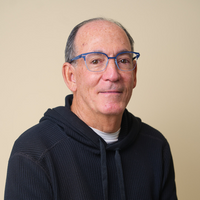


As sustainability moves from niche topic to boardroom central, companies face an increasingly complex global environment of regulatory divergence, disclosure demands and reputational risk. A recent article by J.S. Held's John Peiserich examines how multinational firms can respond effectively to the “crosscurrents” of ESG compliance, litigation exposure and evolving definitions of corporate responsibility. John Peiserich specializes in environmental risk and compliance. With over 30 years of experience, John provides consulting and expert services for heavy industry and law firms throughout the country with a focus on Oil & Gas, Energy, and Public Utilities, including serving as an expert witness in arbitration proceedings and in state and federal courts. View his profile here Key Insights: Sustainability now touches every major business function — environmental, social, and governance — and must be embedded in strategy rather than treated as an add-on. Regulatory landscapes are diverging: while the U.S. federal approach remains fragmented, individual states like California are moving ahead with mandatory climate and emissions-related corporate disclosures. In contrast, the European Union’s Green Deal and related frameworks promote a more unified regulatory model, creating operational tension for multinational corporations. Litigation and disclosure risk are increasing, with “greenwashing” (overstating sustainability achievements) and “greenhushing” (avoiding or under-reporting ESG performance) emerging as major board-level concerns. Effective risk management now requires scalable data systems, transparent communication, strong governance, and agility to adapt across multiple regulatory regimes. Why this matters: The widening divide between jurisdictions — and intensifying scrutiny of corporate sustainability claims — means ESG compliance can no longer be treated as a checkbox exercise. Organizations that fail to anticipate regulatory expectations or align ESG strategy with business goals risk legal exposure, reputational harm, and missed opportunities for value creation. Strategic Insights for Corporate Leadership on Sustainability Boards and executives must adjust their mindset, seeing sustainability not as a burden but as a catalyst for growth and differentiation. Proactive investment in research, development, and stakeholder engagement will help organizations seize new opportunities and maintain credibility in a fast-changing world. Documentation and transparency are vital defenses against legal challenges, while ongoing monitoring of policy and market trends ensures adaptability. Ultimately, the most successful companies will treat sustainability as an essential tenet of strategy—aligning profit, purpose, and governance to secure their position in the global marketplace. Navigating the crosscurrents of sustainability requires courage, judgment, and a commitment to continuous learning. By embracing these principles, corporations can build a future that is not only profitable but also just, resilient, and worthy of the trust placed in them by shareholders and society alike. Looking to know more or connect with John Peiserich about this important topic? Simply click on his icon now to arrange an interview today.

