
Experts Matter. Find Yours.
Connect for media, speaking, professional opportunities & more.

Expert perspective on a trade war with China and how it could impact a Trump presidency
Trade negotiations between the United States and China have continued to deteriorate over the last few weeks. In efforts to pressure the Chinese to make reforms to trade-related issues such as forced technology transfer and intellectual property rights, the United States has raised tariffs on nearly all Chinese exports. While there is a consensus among experts that these trade issues harm U.S. producers and must be dealt with, there is not universal agreement that a trade war is the best way to make it happen. Who will feel the effects? It is apparent that both consumers and producers in the U.S. will feel the effects of the trade war. Producers will not be able to absorb the increased costs from the raising tariffs and will need to pass them along to consumers. Consumers will begin to see the prices increase on a host of retail goods, such as clothing and apparel, toys, and home goods. Partners replaced? In addition, as the Chinese retaliate with increased tariffs on U.S. exports, such as agricultural goods, producers from other countries with lower tariffs are stepping in to take the place of the U.S. exporters. For example, Brazilian soybean producers are more than happy to sell their product to China at a lower cost. Once lost, it may be difficult for U.S. farmers to regain these important Chinese markets. A political price to pay? It appears that the effects of the trade war may hit the Trump administrations base, in agricultural and manufacturing regions, disproportionately. However, the administration may see the trade war as beneficial to Trump’s 2020 reelection campaign, as Trump is being perceived as being tough with the Chinese and holding them accountable to unfair trade practices. That appears to resonate with his base. However, it remains to be seen how long his base will continue to support this approach as both producers and consumers continue to feel the economic pinch of the growing trade war with China. There’s a lot to know about the short and long-term impacts of a trade war with China and that’s where or experts can help. Matt has taught business and marketing courses at Saint Mary’s University of Minnesota since 2008. Prior to Saint Mary’s, he worked in both the banking and the non-profit sectors, most recently with a non-governmental organization (NGO) with operations in more than a dozen countries. Matt is an expert in political and economic development and is available to speak with media. Simply click on his icon to arrange an interview.


The return on measles and how this once eradicated disease is making an epic comeback
Once long gone and considered a thing of the past – measles is back in America. The childhood disease that was usually easily contained by a simple shot along with vaccinations for mumps and rubella, used to ensure that our communities and the general population enjoyed herd immunity and remained for the most part safe from these once dangerous and highly-contagious diseases. But things have changed, and this year America has set a record … unfortunately taking public health a few steps back along with it. “Less than two weeks ago, the number of measles cases reported in 2019 broke the previous recent annual record, beating 667 cases reported in 2014. At the time, that was the highest number of cases reported since the disease was eliminated in the U.S.” May 06, 2019 – ABC News It’s a two-pronged problem and not so easy to unravel, first of all: Is it a matter of effective communication? Is public health losing the battle to online fake news? Are parents taking for granted the value of vaccinations? Does government need to intervene with mandatory immunizations? As well, there’s the bigger picture to consider… Who isn’t getting vaccinated and why? What’s the risk to the general population? And who are the compromised people who justifiably can’t be immunized and what threat does this pose to them? There are a lot of questions out there as well as a lot of false information – and that’s where our experts can help. Dr. Jessica Smith Schwind researches emerging infectious diseases in global health settings. She is an expert in the areas of epidemiology and disease detection. Dr. Melissa Carrion is an Assistant Professor in Women, Gender and Sexuality Studies and her current research is focused on maternal vaccine refusal and what are the common messages and experiences that influence these decisions. Both are available to speak with media regarding this issue – simply click on either icon to arrange an interview.


Trump, tariffs and the long game
He said he’d get tough on China and make sure America was getting the better end of any trade deal – and President Trump seems bound and determined, despite the critics and advice from his own cabinet, that massive tariffs and a trade war with China is a good thing for America. Last week Trump more than doubled tariffs on $200 billion in Chinese goods. China reacted with tariffs on American agricultural and other products. The response, Trump is now looking at approximately $300 billion in import levies on more Chinese goods. As far as trade wars go, this one could be epic in its scale and economic proportions. But who will blink first, who will win and ultimately – who is paying the costs and taking on the burden of all the financial collateral damage at the end of the day? Is this a matter of short-term pain for long-term gain for America’s economy? Or is this political posturing that will at the end of the day hurt the country’s bottom line? There are a lot of questions to be asked and that’s where two of the experts from Cedarville can help. Dr. Glen Deurr's research interests include nationalism and secessionism, comparative politics, and international relations theory. Jeff Haymond, Ph.D. is Dean, School of Business Administration at Cedarville ad is an expert in finance and trade. Glen and are both available to speak to media regarding the current trade war with China – simply click on either expert’s icon to arrange an interview.


WACO, Texas (May 13, 2019) – The movie-watching experience continues to evolve. And while directors wish all people could experience their movies on the silver screens in theaters, they know most people these days will be watching on the big screens in their living rooms or on the small screens in their hands. The movie-watching experience and the takeaways matter, said award-winning filmmaker Chris Hansen, M.F.A., who serves as professor and chair of the film and digital media department in Baylor University’s College of Arts & Sciences. “As a director, I want people to engage with the story and the characters. I want you to be able to put yourself in the characters’ shoes and see the world from their points of view so that, whether you agree or disagree with their actions, you understand where they’re coming from,” Hansen said. Hansen has directed five independent films. His most recent project, Seven Short Films About (Our) Marriage, is now in post-production. In the following Q&A, Hansen shares thoughts on how we – as audience members – can do our part to get the best movie-watching experience and what he – as the director – hopes we take away from that experience. Q: As a director who puts in countless hours and organizes a team that puts in countless hours on a project, what do you hope audiences take away from your film? A: Film critic Roger Ebert once called films “a machine that generates empathy.” I see my films falling within that description. I want to generate empathy in the viewer for these characters and their situations, and I want audiences to come away talking about and thinking about their struggles. Q: So much goes into making a movie. There’s the script, cinematography, setting, dialogue, music, costumes, etc. Is there any one thing you hope your audiences notice? A: I hope that I, along with the other artists who have collaborated on the film, have created an experience where none of those things stands out above the other, except that they create a moment or moments that move people. If you’re thinking, “That was great dialogue,” then that can take you out of the world of the movie. Q: Your films are all available on various streaming platforms, which means that people are most likely watching them on televisions in their homes. What are your thoughts on the home viewing experience? A: The quality of the home viewing experience has gotten better and better over the years. We now have (or have access to) better and larger television screens, terrific audio systems and movies available in high-resolution formats. On the flip side, the home does not afford the best viewing environment because it’s not immersive the way a theater is. The experience of the theater provides fewer interruptions and allows the viewer to be fully immersed in the world of the movie, although even that environment is being disrupted by people using their cell phones in the middle of a movie. Still, it’s better than the home viewing experience, which gives the viewer many distractions and interruptions. Q: When you watch films at home, what steps do you take to limit distractions? A: As a person with a wife and children, I try to plan viewings of movies around their schedules, so I can watch uninterrupted when I know people won’t be home. And I try to control my own distraction level, but the “always on” nature of email and texting are hard to resist. My preference would always be to have people turn the phone off, turn the lights off and turn their attention solely to the screen. That’s hard to get people to do at home. Q: What are your thoughts about people watching movies on their smartphones or tablets? A: Very few filmmakers I know would express a preference that people watch their work on smaller screens. It’s just not ideal, and there are so many carefully planned details that can be missed. Having said that, I’ll admit to having watched films and TV shows on my tablet, especially when I’m traveling. The truth is, given the changing nature of the world we live in, people are going to watch in whatever way is most convenient for them. But watching on a screen as small as a phone means you’re getting a much more utilitarian experience of the film. You can say you watched it and can probably recount the plot accurately. But you will often have missed the fuller experience of seeing the film on a larger screen. Q: When students come to you and say, ‘I want to make movies!’ what’s the first thing you say to them? A: One of the first things I tell people is that the best way to learn how to make movies is to make movies. You learn by doing and getting critical feedback from someone who has done it and understands the form. And of course, in our program at Baylor, we also teach the theory side of things. We believe in a solid balance between theory and practice. We teach our students how this is done, but then they just actually have to do it and learn from their successes and their failures. Q: Do students in Baylor’s film and digital media program have the opportunity to work on your films? If so, in what ways? A: Students in our program do indeed have the opportunity to work on faculty-led projects. We make our films in the summer and offer the opportunity as a credited course so that they can have a lab-like learning experience. Students rotate through crew roles while working under professionals who help them understand their jobs. Some of our students have called this one of their best learning experiences in our major because it takes all the things they learn in the classroom and puts those to the test on a project that’s much larger in scope than what they’ve been able to experience before. And being a crew member on a film set can be a stressful experience. We’re dependent on the weather and limitations of time and money. It’s a great way for them to understand the ups and downs of the process and how they’ll respond to the pressure. Q: What can you share about your newest project and where can people find your previous films? A: My latest film, currently in post-production, is a feature film called Seven Short Films About (Our) Marriage. It’s the story of one marriage that unfolds over seven episodes over a number of years, as this couple struggles with the common issues that marriages face and try to make their love last. My films are currently all available on various streaming platforms. You can find Blur Circle, Where We Started, Endings, and The Proper Care & Feeding of an American Messiah either on Amazon Prime, iTunes, and in some cases, on Blu-ray disc via Amazon and other outlets.


Watch your step…snake season is in full swing! Let our experts help with your questions!
In Georgia there are sure signs of spring - flowers are in bloom…and snakes are back in the grass. Now before you shriek or shirk away at the sound or sign of a snake, it is important to know that snakes play and important and vital role in the local ecosystem. They’re essentially nature’s pest control - keeping rats, mice, moles and other rodents at bay. In fact, seeing a snake is usually a sign of good environmental health for your garden, property or local environment. And now for the less than good news. Some snakes in Georgia are dangerous. In fact, there are six different venomous snakes slithering around the state. And it’s not just in the forests and countryside, copperheads are all part of the metropolitan urban landscape too. So, what precautions do people need to take? What are the simple do’s and don’ts if you encounter a snake? Are there easy ways to identify dangerous and non-dangerous snakes? And – this season seems to be producing a much more pronounced snake population– why is that? There are a lot of questions to be asked – and that’s where our experts can help. Lance McBrayer from Georgia Southern University is an expert in organismal ecology and snakes. He’s happy to talk with media - simply click on his icon to arrange an interview.

/arc-anglerfish-arc2-prod-mco.s3.amazonaws.com/public/L6SURNCQV5FBDM3EJRPWVSETNU.jpg)
Modern times call for modern solutions. In these days of digital transformation – the new trenches of warfare are dug in cyberspace. In fact, just recently NATO ran a four-day drill where the exercise simulated a cyber attack on a country’s infrastructure and election process. Cyber-warfare is the new reality across the globe. It’s with these advancements that the Georgia Southern University Center for Applied Cyber Education (CACE) signed an Education Partnership Agreement (EPA) with the 688th Cyberspace Wing (688 CW). “As of now, we are the only academic organization in the country that has a direct EPA with the 688 CW,” said CACE Executive Director Scott Scheidt. “The collaboration supports research and development activities for Georgia Southern faculty and students across multiple disciplines, allowing them access to defense laboratory projects that would not otherwise be available in an educational environment.” Are you interested in cyber-warfare or covering this topic? Do you need to know more? Just how vulnerable is America? What are the likely targets? And who are the actual likely perpetrators? There’s still a lot to learn about this topic and that’s where an #expert from Georgia Southern University can help with your coverage. Scott Scheidt is the executive director of the Center for Applied Cyber Education at Georgia Southern University. He is an expert in cyber security and cyber workforce development. Scott is available to speak with media regarding this topic – simply click on his icon to arrange an interview.
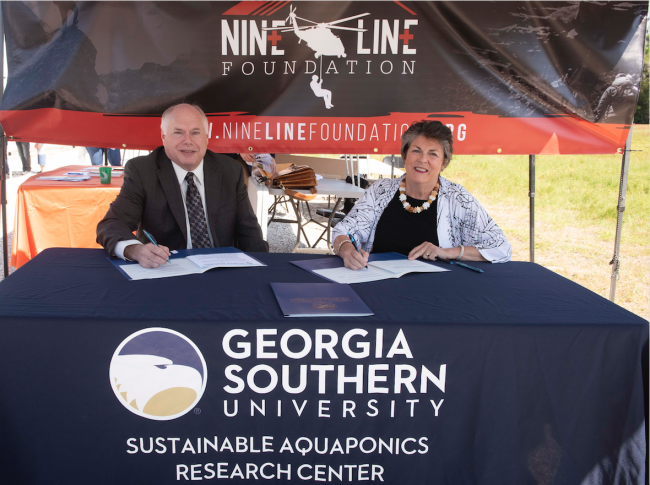
Working together to promote veteran education
Georgia Southern University recently signed an agreement (see attached) with Nine Line Foundation that will assist veterans as they transition back into civilian life. Veterans will be enrolled in an aquaponics training program with the University’s Armstrong Campus’ Sustainable Aquaponics Research Center (SARC) at a compound at Nine Line Apparel in Savannah, Georgia. Aquaponics, or soilless farming, mixes aquaculture, the farming of fish, and hydroponics, to fuel the growth of plants in water. The SARC, a 4,100 square-foot greenhouse, has four independent recirculating systems, each containing 900-gallon tanks capable of holding more than 100 mature tilapia. Working within the College of Science and Mathematics, the SARC is focused on providing students, faculty and volunteers with the opportunity to conduct fundamental, interdisciplinary research in the area of aquaponics. The partnership with Nine Line Foundation will extend education opportunities to area homeless veterans and provide faculty and students an opportunity to engage with the veterans. Are you interested in learning more about his project and how Nine Line Foundation and Georgia Southern University are working together to provide opportunities and training to veterans? SARC’s director, Brent Feske available to speak with media – simply click on his icon to arrange an interview.

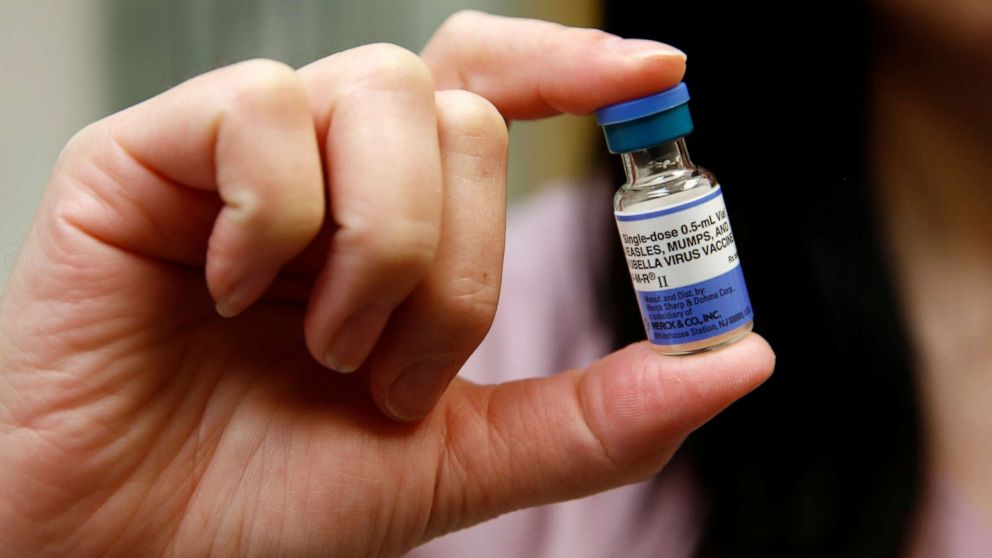
Measles is back…and our experts want people to leave the facts about vaccinations to the experts
Last week, America hit a record. Confirmed cases of measles eclipsed 700 cases. The disease that was once considered eradicated is now back and it has public health officials concerned. Dr. Todd Reinhart is the Dean of Sciences and Health Professions at Saint Mary’s University of Minnesota, and he has more than two decades of experience in infectious disease research. He’s a strong proponent of vaccinations and weighed in with his thoughts and perspective. “I’m not shocked,” says Reinhart. “I know there’s been a strong anti-vaccination movement and there’s a lot of misinformation out there.” He believes social media has been largely responsible for this movement to not vaccinate. The publication of the “Wakefield” paper, which suggested that the measles-mumps-rubella (MMR) vaccine might be linked to autism — even though retracted — got a lot of attention. However, that research that vaccinations cause autism has been debunked and even most recently there’s a study out of Denmark that covered 5,000,000 person years and there was no association with immunization and developing autism. Reinhart wants the public to look at the bigger picture and consequences. “It’s important to protect that child but also the broader society. Vaccines have been the strongest public health success story over the last few centuries. Measles is one of the most highly contagious viruses that we know. The odds of your getting it, if you’re exposed to it and you haven’t been immunized, is 90 percent. Part of the concern is for infants who aren’t immunized, the elderly because their immune systems are weaker, and those who are immunocompromised.” But there is also the matter of rights to be considered and that is playing a big part in all of this. “The problem is that individuals’ rights intersect with medicine, public health practice, and collective rights. If my infant, who couldn’t be immunized, contracts it through a carrier who could have been immunized, who has the higher ground because of rights? The problem is that even with clear data and clear information, people have been allowed the right, for the most part, to make the decisions they want,” Reinhart reiterates. If you are looking for answers and facts when it comes to vaccinations – it’s best to visit credible sources like the Centers for Disease Control and Prevention or local public health websites. If you need to speak with an expert about this topic for your news coverage – let us help. Dr. Todd Reinhart is Dean of Sciences and Health Professions, Professor, Biology and Health Professions at Saint Mary’s University of Minnesota. He has a degree in cancer biology from Harvard University’s School of Public Health and is an expert in the areas of infectious diseases. Simply click on his icon to arrange an interview.

5G: The Next Wave of Wireless – Are you ready for it? Join our Experts on May 2 to Find Out!
It’s coming and it is going to change the shape of wireless communications. On May 2 join IDC Canada’s Lawrence Surtees & Jean Philippe Bouchard to discuss potential consumer and enterprise use cases of 5G. Lawrence Surtees manages IDC Canada's communications research agenda and is IDC's lead analyst covering the Canadian communications services sector. Jean Philippe Bouchard is Vice-President, Mobility and Consumer Research, Canada. They will be speaking about how wireless providers throughout the world are gearing up for the next generation of wireless communications. As well, they will discuss the significance of 5G, the status of spectrum allocation in Canada and provide an update on service provider plans and how the importance of 5G wireless transcends mobility Join us at IDC Directions 2019 in Toronto on May 2 to learn more. Location: St. James Cathedral Centre: Snell Hall, 65 Church Street | Toronto Date: May 2, 2019 Time: 8:00 AM - 8:30 AM - Registration & Networking Breakfast | 8:30 AM - 3:30 PM Conference Program Register Today before it's too late! If you're a member of the media and would like to attend this event, please contact Cristina Santander at csantander@idc.com


Just how big of a deal is AI? At this year’s Directions 2019, IDC Canada experts will be speaking to a variety of topics that are reshaping the digital visions and tactics modern companies are using to compete. Explore how AI encompasses a huge spectrum of technologies for the enterprise and how at the center of it all is data. On May 02, join Warren Shiau, Research Vice-President with IDC Canada as he presents a highly anticipated talk on AI: Process Animation at 11:20 AM. Warren will look at what’s being adopted by Canadian enterprise under the banner of AI; and why AI can generate significant business value even in the absence of large data science teams and enterprise-wide high-quality data. Deep learning may rule the future but “small AI” targeting things like process automation rules the day. Organizations are rethinking digital transformation – join us May 02 to learn more. Location: St. James Cathedral Centre: Snell Hall, 65 Church Street | Toronto Date: May 2, 2019 Time: 8:00 AM - 8:30 AM - Registration & Networking Breakfast | 8:30 AM - 3:30 PM Conference Program Register Today before it's too late! If you're a member of the media and would like to attend this event, please contact Cristina Santander at csantander@idc.com