
Experts Matter. Find Yours.
Connect for media, speaking, professional opportunities & more.

It's Pride Month - We have experts who can help with all your coverage.
Pride Month stands as a vital commemoration of the LGBTQ+ community's ongoing fight for equality, acceptance, and visibility. Rooted in the historic Stonewall Riots of 1969, Pride Month not only celebrates the progress made in LGBTQ+ rights but also highlights the persistent struggles faced by the community. This topic is newsworthy due to its significant social, cultural, and political implications, reflecting broader societal issues of human rights, diversity, and inclusion. Furthermore, Pride Month's impact on public discourse, policy changes, and cultural awareness underscores its relevance. Key story angles include: The Evolution of Pride: Tracing the history of Pride Month from the Stonewall Riots to its current global celebrations, and its role in shaping LGBTQ+ rights. Intersectionality in the LGBTQ+ Community: Exploring the experiences and challenges faced by LGBTQ+ individuals who belong to multiple marginalized groups. Policy and Legal Milestones: Reviewing significant legal and policy advancements in LGBTQ+ rights and the ongoing legislative battles. Corporate and Community Engagement: Analyzing how businesses and local communities are participating in Pride Month, including corporate responsibility and support for LGBTQ+ causes. Media Representation: Investigating the portrayal of LGBTQ+ individuals in media and entertainment, and its impact on public perception and acceptance. Mental Health and Well-being: Discussing the mental health challenges within the LGBTQ+ community and the resources available to support them. Connect with an Expert about the History of Pride Month: Margaret Galvan Assistant Professor · University of Florida Genny Beemyn Director of The Stonewall Center · University of Massachusetts Amherst Melanie Wilcox, PhD Assistant Professor and Researcher · Department of Psychological Sciences, the Institute of Public and Preventive Health, and the Department of Psychiatry · Augusta University Emily Fisher Professor · Loyola Marymount University Ryan J. Watson, Ph.D. Ryan J. Watson, Ph.D. Assistant Professor of Human Development and Family Studies · University of Connecticut To search our full list of experts visit www.expertfile.com Photo credit: Sara Rampazzo

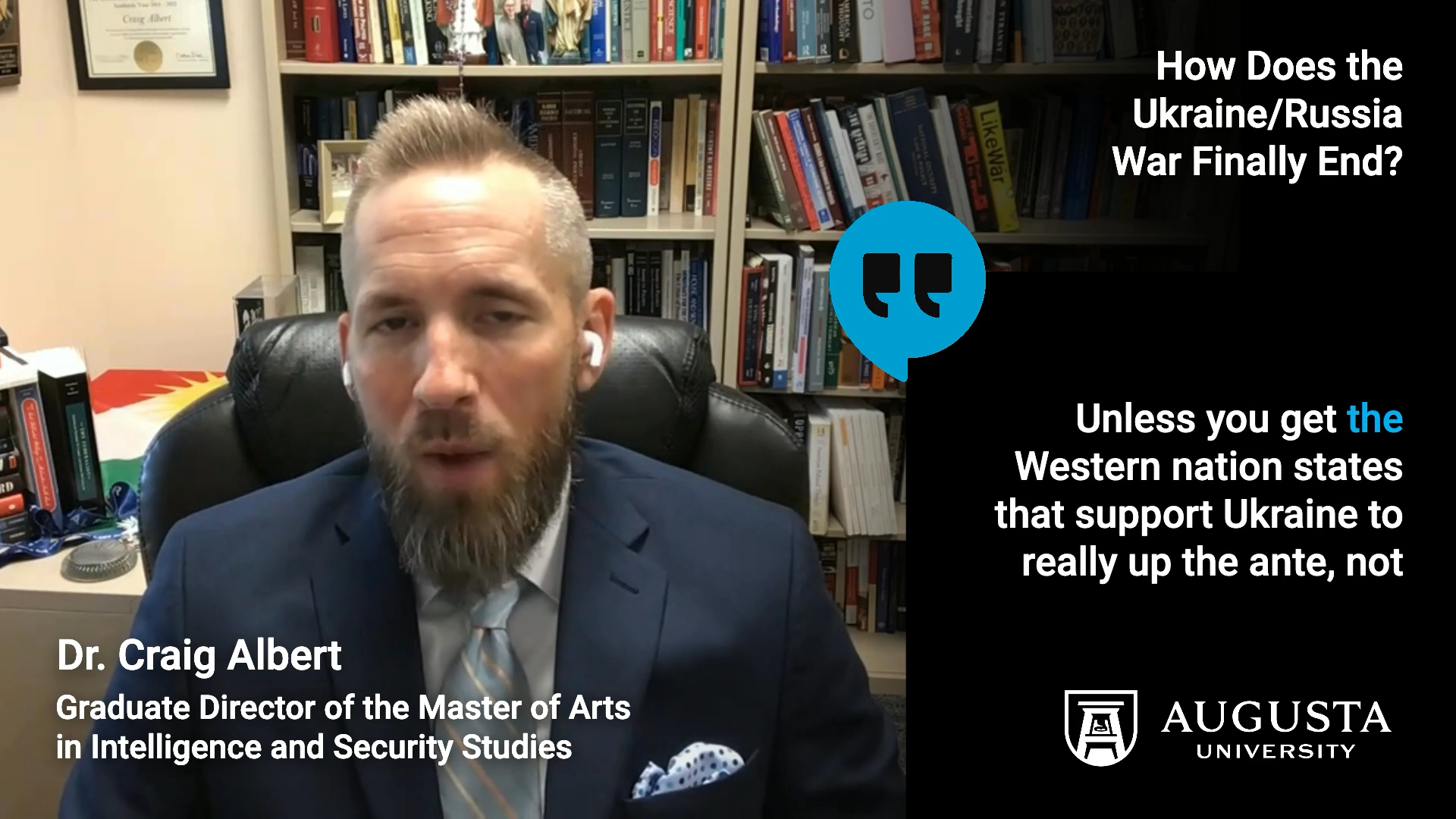
#ExpertSpot: How Does the Ukraine/Russia War Finally End?
With the war between Russia and Ukraine now approaching two and a half years - there's no end in sight. How does it end? Check out this ExpertSpot from Augusta's Dr. Craig Albert for some insight and perspective. Craig Albert, PhD, is director of the Master of Arts in Intelligence and Security Studies at Augusta University. He is a leading expert on war, terrorism and American politics. AI and the upcoming election is a serious topic. Albert is available to speak with media – simply click on his name to arrange an interview today.


#Expert Perspective: Where did all the medical appointments go?
Dr. Martine Hackett, associate professor and chair of Hofstra’s Department of Population Health, spoke to Newsday about why patients are finding it more difficult to make medical appointments and what options they have. Dr. Hackett noted over the past decade, more people have enrolled in insurance plans and sought a wider array of treatments because of the Affordable Care Act and policies that expanded the reach of Medicaid. The Medicaid and Medicare acceptance rates are plunging raising concerns as doctors tend to drop these insurance plans first because they pay lower rates. Setup is becoming illusive in an industry that has undergone immense changes in recent years, Dr. Hackett added. New Yorkers with Medicaid may want to find federally-qualified health centers, which are designed for Medicaid patients, Dr. Hackett said. People may also be able to get appointments more quickly if they see non-physician providers like nurse practitioners or midwives instead of OB-GYNs, she added. Healthcare is an important topic - and if you're covering, let us help. Dr. Martine Hackett's research focuses on public health and health inequities, particularly in the American suburbs and minority communities. She's available to speak with media - simply click on her icon now to arrange an interview today.


How the Trump verdict will impact the election
When members of the jury handed down their guilty verdict in NY v. Donald J. Trump, they had simply completed their nearly three-month stint of civic duty. At the same time, they had set in motion a seismic shift in the 2024 election. What's not clear is which way that shift will go, said David Redlawsk, professor and chair of the Department of Political Science and International Relations at the University of Delaware. Redlawsk is a political psychologist with expertise in campaigns, voter behavior, decision making and emotion. His research focuses on how voters process political information to make their decisions. In addition to publishing volumes of research and writing several books on politics, Redlawsk also has years of experience on the frontlines. He's worked behind the scenes on campaigns and ran for local office – winning and losing as a member of both major parties. To arrange an interview with Redlawsk, visit his profile and click on the contact button. These messages will go directly to Redlawsk and a member of the UD media relations team.


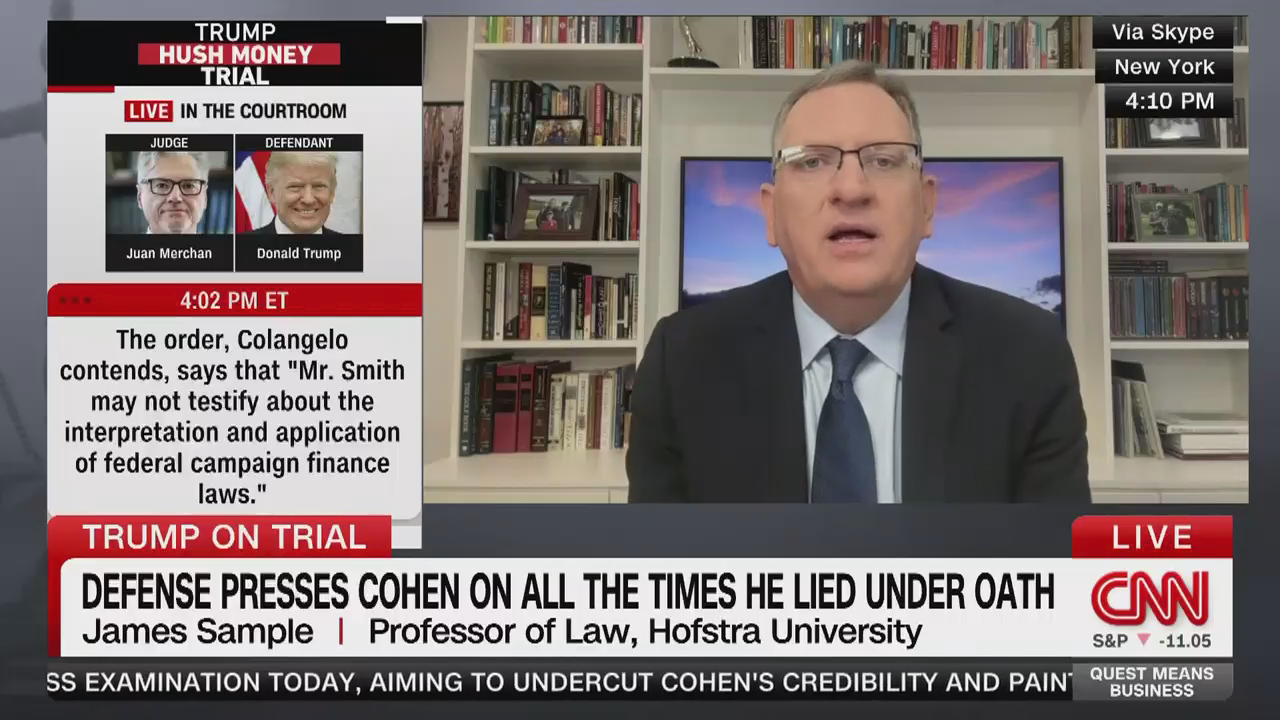
#Experts in the Media: Cohen Testifies in “Hush Money” Trial
The trials of Donald Trump are making headlines across the country and media are looking for key experts to offer opinion, perspective and insight to just about every angle and witness that's playing a part of this legal and political narrative day after day. Professor of Law James Sample was interviewed on CNN International’s Quest Means Business and in The Atlantic about the Michael Cohen’s testimony in former President Trump’s criminal trial in New York. These trials are daily news and if you're a journalist working this story - then let us help. James Sample is a Professor of Law at Hofstra University and previously served as an attorney in the Democracy Program at the Brennan Center for Justice at New York University School of Law. James is available to speak with media - simply click on his icon now to arrange an interview today.


Changes in college football continue to be driven by dollars (and sense?)
The landscape of college sports, and particularly that of college football, has changed significantly in recent years. First, we have seen an almost constant realignment of collegiate athletic conferences, resulting in a few major mega-conferences, such as the SEC and ACC, Big Ten and Big 12, and the disintegration of a former major conference, the Pac 12. Most of the other changes related to the athletes, such as the ease with which student-athletes could transfer from one school to another and the ability for them to be paid for their name, image and likeness. All of these issues were potentially pointing to new business models in college sports, but within the last week, that landscape was shaken even further. Last week, the NCAA and its five major conferences settled multiple lawsuits to pay past and present student-athletes a total of $2.8 billion. The settlement also laid the foundation for the payments of college athletes starting in fall 2025. “The major unresolved questions are who will get paid and how much,” said Rick Franza, PhD, professor in the Hull College of Business at Augusta University. “If we ‘follow the money,’ we see that football and basketball (particularly men’s basketball) generate almost all of the revenues, and most of the revenues comes from major conferences. Therefore, most of the player payments are going to go to football and basketball, and given the size of the relative rosters, football teams will be much more costly.” Franza added that the settlement will further exasperate the revenue and cost differences between major conferences and their smaller conferences as well as between football and the so-called Olympic sports which generate little, if any revenue. It was always clear that from both a revenue and cost perspective, college football is very different from other sports. Revenues are much higher for the major conferences in football, and there is not the same extent of revenue sharing as there is in basketball due to the NCAA Tournament. On the cost side, with the new realignment of the mega conferences and expanded geographic footprints, there is a significant increase in travel costs for the Olympic sports. “While those expanded conferences were mainly driven by football revenues, they are also making all other sports more costly. Therefore, the time has come to separate football from other sports,” said Franza. One solution was first proposed by Chip Kelly, former Oregon and UCLA head football coach and now Ohio State offensive coordinator. He proposed a 64-school football conference in which the members would share all revenues, including television, which would more easily cover the NIL, and player pay costs. In recent months, similar proposals have been made for a college football “Super League,” which would include up to 80 schools. “This makes too much sense not to happen,” Franza said. “It allows the bigger football schools to share the plentiful available revenues while being able to pay the players what they will demand. At the same time, the other college sports would be able to revert to their traditional, geographical conferences and reduce travel costs driven up by the realigned mega- conferences.” He added that two conferences, the SEC and Big Ten, the most successful under the current alignment, could delay the implementation. Franza also predicts that an agreement taking the first steps toward such a structure will be reached sometime in 2024. “While it makes a lot of sense to go in this direction prior to the player settlement, it makes even more dollars and ‘sense’ now given the settlement,” said Franza. “While the SEC and BigTen currently make more money than any other conference, I think they will see the light for what is best for the future of college football.” Covering the business of sports and looking to know more? Then let us help. Richard Franza, PhD, is available to speak with media about trending issues like inflation, small business and the economy – simply click on his icon now to arrange an interview today.

MEDIA RELEASE: CAA survey reveals an increase in distracted drivers across Ontario
A recent survey conducted on behalf of CAA South Central Ontario (CAA SCO) indicates 44 per cent of Ontario drivers admit to driving distracted at one point – up four per cent compared to last year. The most concerning distractions drivers noted include: Holding a mobile device. Grooming. Making a video call. Typing in a destination. Watching TV. Eating and drinking while driving is also a growing concern. In-vehicle features, including connected apps and console screens, are another source of distraction for drivers, especially if adjusted while on the road. “Anything that can divert a driver’s eyes and mind off the road will always pose a threat while driving,” says Teresa Di Felice, assistant vice president for CAA SCO. Distracted driving remains a significant concern among 90 per cent of drivers in Ontario. Despite the growing number of self-identified distracted drivers, only three per cent admit to being charged for distracted driving. “While a vast majority of drivers recognize fines and penalties, including increased insurance rates, as the most effective ways to reduce distracted driving, our data shows that drivers have become less supportive of penalties that currently exist for distracted driving convictions,” says Di Felice. Of those surveyed, 57 per cent support increasing fines and stricter penalties for distracted driving convictions. “Currently, a driver can face a minimum fine of $615 up to $1,000, three demerit points and a three-day licence suspension for their first conviction of distracted driving,” says Di Felice. “But that’s not the only way it can cost you. A brief moment of distraction is all it takes for a collision.” Almost two-thirds of drivers in Ontario (63 per cent) have witnessed close-call collisions or traffic violations caused by distracted drivers – up four per cent compared to last year. Meanwhile, 12 per cent of drivers reported being involved in a collision due to distracted driving, mainly because of using a mobile device. “Whatever it is that you need to do – whether it’s sending that text, inputting your destination or setting up your playlist – do it all before you drive,” says Di Felice. “The risks of distracted driving are simply not worth it.”


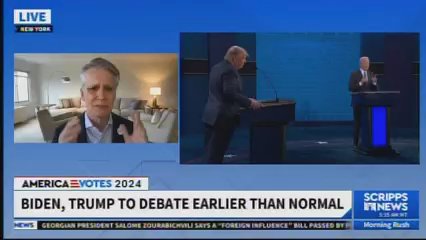
#Expert Insight: Biden and Trump Agree to Early Debates
Dean of the Lawrence Herbert School of Communication Mark Lukasiewicz was interviewed by Scripps Morning News about President Biden and former President Trump agreeing to debates on June 27 (CNN) and September 10 (ABC), to connect with voters ahead of traditional timelines. Dean Lukasiewicz shed light on how early voting influenced this development. This strategic move offers a unique advantage to both candidates and provides voters with unprecedented early access to the electoral discourse. The first debate is less than a month away - and if you're covering what might be the most watched political event this century - then let us help. Mark Lukasiewicz is a veteran producer, journalist, and media executive who has spent his professional career telling important stories to worldwide audiences and helping media organizations deal with transformational change. He's also the Dean at the The Lawrence Herbert School of Communication at Hofstra University and is available to speak with media regarding this important debate. Simply click on his icon now to arrange an interview today.

Newly Announced Debates are Uncharted Territory - Our Experts can Help Explain Why?
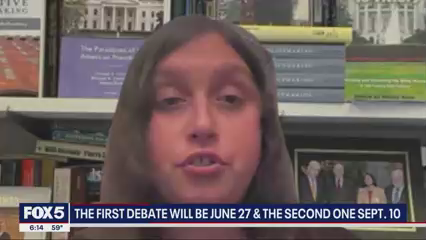
Dr. Meena Bose, professor of political science, executive dean of the Public Policy and Public Service program, and executive director of the Kalikow Center for the Study of the American Presidency, appeared on WNYW Fox 5 to discuss the debates agreed upon by President Biden and former President Trump and and how they will differ from those that have been produced by the Commission on Presidential Debates since 1988. Covering the June 27 debate? Let our experts help. Dr. Meena Bose is Executive Dean of Hofstra University’s Peter S. Kalikow School of Government, Public Policy and International Affairs. She is available to speak with media - simply click on her icon now to arrange an interview today.


Expert Spotlight: Cities Ranked for Climate Resiliency
USA Today Homefront interviewed Jase Bernhardt, associate professor and director of Sustainability Studies in the Department of Geology, Environment and Sustainability, for its feature on the top-ranking cities for climate resiliency. Dr. Bernhardt was asked to explain initiatives or incentives that can be implemented by cities to address vulnerabilities to climate change. He said, “Cities in the U.S. should be most concerned with investing in solutions to the unique challenges they face in a changing climate. Such initiatives might include green roofs to reduce the urban heat island effect and planting more trees to absorb excess water and limit flooding.” Covering our changing climate and how we're adapting ? We're here to help. Jase Bernhardt is an associate professor in the Department of the Geology, Environment and Sustainability at Hofstra University and also director of the department's MA Sustainability program. He's also an expert on hurricane preparedness. Jase is available to speak with media about these topics - simply click on his icon now to arrange an interview today.
