
Experts Matter. Find Yours.
Connect for media, speaking, professional opportunities & more.

It was a train running full speed and showed no signs of stopping – but America’s economy hit a bump last week and it sent a lot of people from Wall Street and beyond into a panic. The 800-point drop in the Dow Jones seemed to be the first sign of another severe recession. But before everyone cashes out, experts from Western Governors University are hoping we take a look back through the ages before rushing to worry. “What does history teach us? Even before the Great Depression of the 1930s, Nicolai Kondratieff discovered that the capitalist economy, going back to the 18th century was characterized by waves, or business cycles,” says Dr. Rashmi Prasad, Dean and Academic Vice President of Western Governors University's College of Business. “The Federal Reserve, under leadership of Ben Bernanke, claimed that while the business cycle had not been repealed, a ‘Great Moderation’ had emerged in the world post-1982. Independent central banking and the rise of the service economy were among the reasons cited. In a great irony of history, Bernanke was front and center as Chairman of the Federal Reserve during the ‘Great Recession’ of 2008-2009. Business cycles seem to be inevitable for capitalist economies. Will we return to the Great Moderation of 1982-2007, or are we in a new period of regular Great Recessions? Central Banks stabilize and soften the down-cycles of recessions, but the price of managing the Great Recession of 2008-09 has been the dramatic expansion of central bank balance sheets–no new investment cycles–property or finance often leads to recession.” So, where do we stand and what can we expect in the short-term? Prasad adds this perspective: “Conventional economic thinking indicated inflation by now, which may have added to interest rates and constrained the amount of debt that was sustainable. Rapidly rising interest rates posed the risk of a deep and extended downturn. If interest rates can be managed and kept low, then the next down-cycle could be shallowed and prolonged as monetary policy has little scope and fiscal deficits are already very high. Risks for a major downturn exist in extremely high debt levels and central bank balance sheets, but still may be a decade or two away, awaiting triggers that we cannot yet predict.” Are you a journalist covering the economy and do you need expert perspective and opinion for your stories? That’s where Western Governor’s University can help. Dr. Rashmi Prasad is Dean and Academic Vice President of Western Governors University's College of Business. He is an expert in the fields of economic and financial data and business analytics. Dr. Prasad is available to speak with media regarding the state of America’s economy – simply click on his icon to arrange an interview.

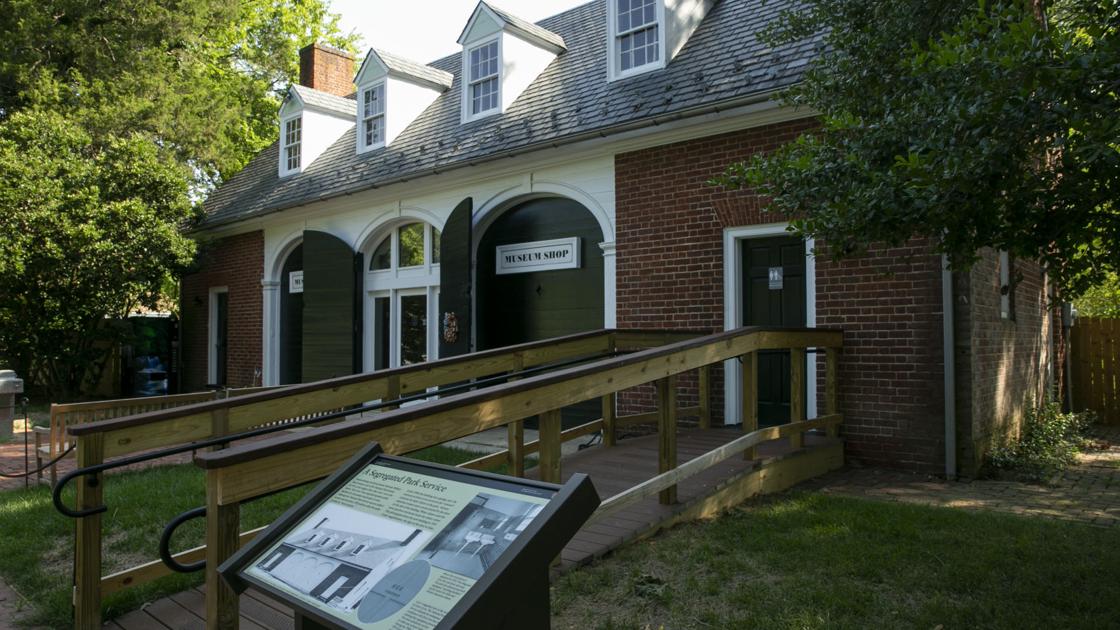
Racial segregation and National Parks – UMW experts are lending their expertise to the project
It’s a time of American history that is still raw and painful – segregation. It is, however, even more important to remember and preserve these moments so the country can move forward and learn from its past. It’s a project that University of Mary’s Washington’s Erin Devlin has taken on in collaboration with federal government. “The National Park Service has installed a wayside exhibit outside the Fredericksburg Battlefield Visitor Center on the history of segregation at Fredericksburg and Spotsylvania National Military Park. The exhibit highlights a former garage that in the 1930s and 1940s housed segregated restrooms for African American visitors. One of those restrooms is still in use and retains the original tile and fixtures. The larger building is now the park’s gift shop and bookstore. The new exhibit was a collaborative effort between the National Park Service and the University of Mary Washington to highlight surviving historic resources related to the local and national story of racial segregation at national parks. Erin Devlin, assistant professor of history and American studies at UMW, is working with the NPS to develop a historic resource study that will examine the practice of racial segregation in Virginia’s national parks during the first half of the 20th century.” August 06 – Fredericksburg.com Are you a journalist covering American history, or the place racial segregation has played in our country’s history? If so – let our experts assist with your stories. Erin Devlin's research focuses on race, public memory, and social justice, and she offers courses in both history and American studies. She is currently working on a historic resource study with the National Park Service focused on segregation and African-American visitation in Virginia’s national parks. Dr. Devlin is available to speak with media regarding this topic – simply click on her icon to arrange an interview.



High tensions in Hong Kong. Let our experts help with your ongoing coverage
It’s been more than 10 weeks of protests in Hong Kong and tensions are rising. With thousands taking to the streets, airports closed and clashes between protesters and police escalating – the world is watching to see just how patient the Chinese government will be with those demanding freedom and democracy. This isn’t the first time descent has taken place in China. But looking back 30 years to The Tiananmen Square, some are wondering if much has changed when it comes to actual calls for change in the new world power that is China? If you are a reporter covering this story and need a supporting source, expert opinion or global perspective on what is going on, why and what the potential outcomes may be – then let our experts help. Mark Caleb Smith is the Director of the Center for Political Studies at Cedarville University. Mark is available to speak with media regarding the current situation in Hong Kong, simply click on his icon to arrange an interview.


Conspiracy Theories & Social Media
A recent Rolling Stone article examining an FBI memo focused on the spread of conspiracy theories includes analysis from Kathleen Stansberry, assistant professor of strategic communications. The article was prompted by reporting by Yahoo News on the memo, which cited a number of violent incidents believed to be linked to conspiracy theories and offered that "these conspiracy theories very likely will emerge, spread, and evolve in the modern information marketplace, occasionally driving both groups and individual extremists to carry out criminal or violent acts." In the Rolling Stone article, reporter EJ Dickson focused specifically on the activity of QAnon, a far-right conspiracy theory about a supposed "deep state" effort targeting President Donald Trump and his supporters. In the article, Stansberry explains the role that social media — in particular the YouTube and Twitter platforms — have played in propagating these theories and why conspiracy theories can be so dangerous. This, says Stansberry, is precisely what makes conspiracy theories so dangerous: because they are impossible to disprove, any outsider attempt to poke holes in them is always viewed as just another sign, just another breadcrumb, just another reason for you to keep fighting to get the real story out into the world. “You’re trying to share the truth as you see it, and there’s some reason why that truth is being hidden,” she explains. “If you truly believe in the conspiracy theory, then you’re David against Goliath.” She suggests that the memo “could certainly have stoked some of the desire for people to push what they see as their truth out.” If Dr. Stansberry can assist with your reporting about social media and the spread of conspiracy theories, please reach out to News Bureau Director Owen Covington at ocovington@elon.edu or (336) 278-7413. Dr. Stansberry is available for phone, email and broadcast interviews.


August is National Breastfeeding Month – Let our Experts Help with Your Coverage
It’s August…a month that celebrates breastfeeding and all the benefits that come with it. Breastfeeding is natural, healthy and cost-effective – and the American public is beginning to recognize a mother’s right to feed her child wherever and whenever she wants. Breastfeeding is a great benefit to the environment and society, according to the American Academy of Pediatrics. Breastfeeding families are sick less often and the parents miss less work. It does not require the use of energy for manufacturing or create waste or air pollution. There is no risk of contamination and it is always at the right temperature and ready to feed. A new website developed by researchers in Canada and Asia showed that the world could have saved $341 billion each year if mothers breastfeed their children for longer, helping prevent early deaths and various diseases, according to a July 12 article from Reuters. Known as the “Cost of Not Breastfeeding,” the online tool used data from a six-year study supported by the U.S.-based maternal and child nutrition initiative, Alive & Thrive. According to Augusta University Health’s Dr. Kathryn Strickler McLeod, breastfeeding protects against a variety of diseases and conditions in the infant, including diarrhea, respiratory tract infection, childhood obesity and much more. Additionally, there are also maternal health benefits to breastfeeding, including a decreased risk of breast and ovarian cancers. If you are covering this topic – let us help with your stories and questions. Dr. Kathryn Strickler McLeod is a nationally recognized expert in pediatric general and adolescent medicine. McLeod is available to speak with media – simply click on the icon to arrange an interview.


As Europe’s heatwave moves north toward the Arctic…just how worried do we need to be?
There’s no easier way to say it – Europe is baking. Record high temperatures are breaking the mercury in London, France, Germany and elsewhere across the continent. And, that warm air is not pushing north toward the Arctic. Greenland’s ice sheet is feeling the heat and it has some scientists worried. “So far this year, Arctic sea ice extent has hovered at record lows during the melt season. Weather patterns favorable for increased melt have predominated in this region, and an unusually mild summer has also increased melting of the Greenland ice sheet. Unlike with sea ice melt, runoff from the Greenland ice sheet increases sea levels, since it adds new water to the oceans. If the entire ice sheet were to melt, it would raise global average sea levels by 23 feet.” Washington Post, July 26 Are you a reporter covering climate change or weather? If so – we have an expert who can help with your stories. Dr. Pamela Grothe is an assistant professor in the Department of Earth and Environmental Sciences as the University of Mary Washington. She recently completed a Ph.D. in the Paleoclimatology Lab at the Earth and Atmospheric Sciences department at Georgia Institute of Technology. She’s an #expert in climate change and is available to speak with media – simply click on her icon to arrange an interview.


Detroit Rock City – Did any Rock Stars Emerge from Day 1 of the DNC Debates?
It was the first of two crucial days for anyone looking to lead the DNC into the 2020 election next fall. The reality is, with more candidates on the field than a World Cup soccer match, it’s too crowded for the very limited amount of airtime, fundraising and attention needed to win this race. Quite soon, there will need to be a substantial culling of this herd. Odds are, come the end of summer the field will be whittled down to three or four from the current two dozen (or so) currently contesting. Last night was Day 1 of the DNC debates in Detroit. Here were the key takeaways: Bernie Sanders came out spitting fire about health care and tried to reassert his prominence. Sanders has receded recently, was this the resurgence he needed? Pete Buttigieg made it clear he is the young, fresh and non-Washington choice – will it stick and can he gain traction? Montana Governor Steve Bullock knew this was his shot to get the attention a campaign needs. Late to the game, can he emerge as a credible candidate? And Elizabeth Warren and Beto O’Rourke seemed to fade into the crowd – is this a death knell for a campaign at this point? It was a long night and another one happens tonight. So, who emerged as the winner and who fell hard on Day 1? Who needs to leave? And what were the key policy planks that are starting to stick There is still a long way to go until the first Iowa primary in February, but if you are a journalist covering this long road – let us help. Dr. Stephen Farnsworth is professor of political science and international affairs at the University of Mary Washington. A published author and a media ‘go-to’ on U.S. politics, he is available to speak with media regarding the long journey to lead the DNC in 2020. Simply click on his icon to arrange an interview.

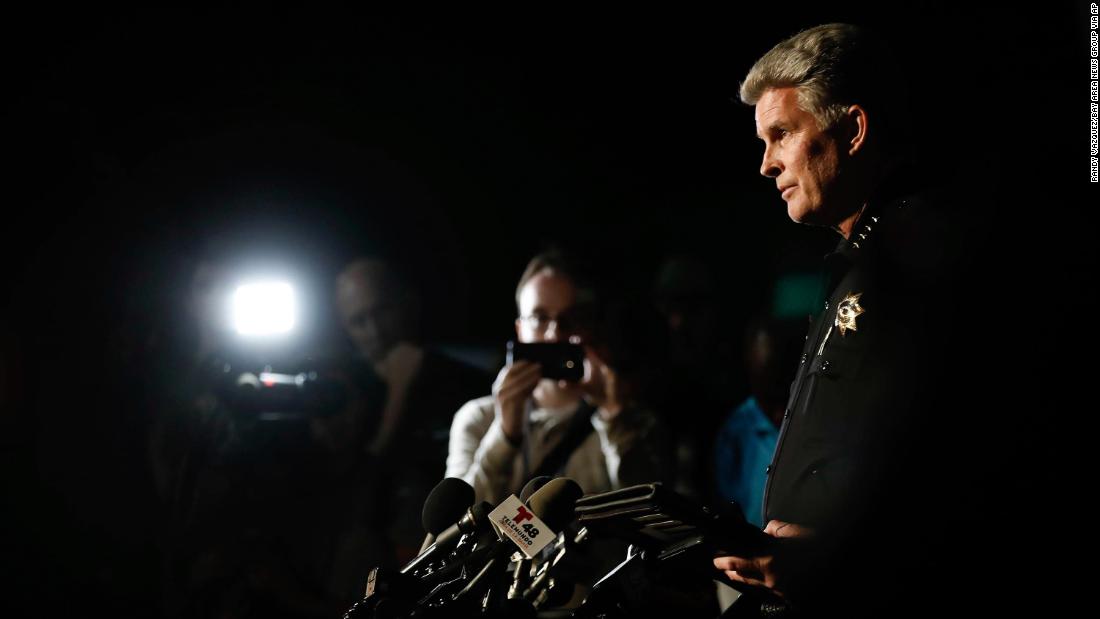
Surviving a mass shooting – let our experts help with your coverage and understand what’s next
At least 15 people were injured and three were killed, including a six-year-old boy, when a gunman opened fire on a crowded festival in California on Sunday. Investigators are still left searching for a motive and reason. But in the wake of any tragedy there lies countless numbers of witnesses, relatives and first responders who will be impacted mentally, physically and psychologically from this event. Those wounds are often deep and difficult to treat. If you are a reporter covering this shooting or any other incident of this magnitude – that’s where our experts can help with your questions and coverage. Dr. Laura C. Wilson is a clinical psychologist whose expertise focuses on post-trauma functioning, particularly in survivors of sexual violence or mass trauma (e.g., terrorism, mass shootings, combat). Her research interests extend to predictors of violence and aggression, including psychophysiological and personality factors, as well as indicators of PTSD following mass trauma, long-term functioning among first responders, outcomes among survivors of sexual violence, and the influence of media on mental illness stigma. Dr. Wilson is available to speak with media – simply click on her icon to arrange an interview today.

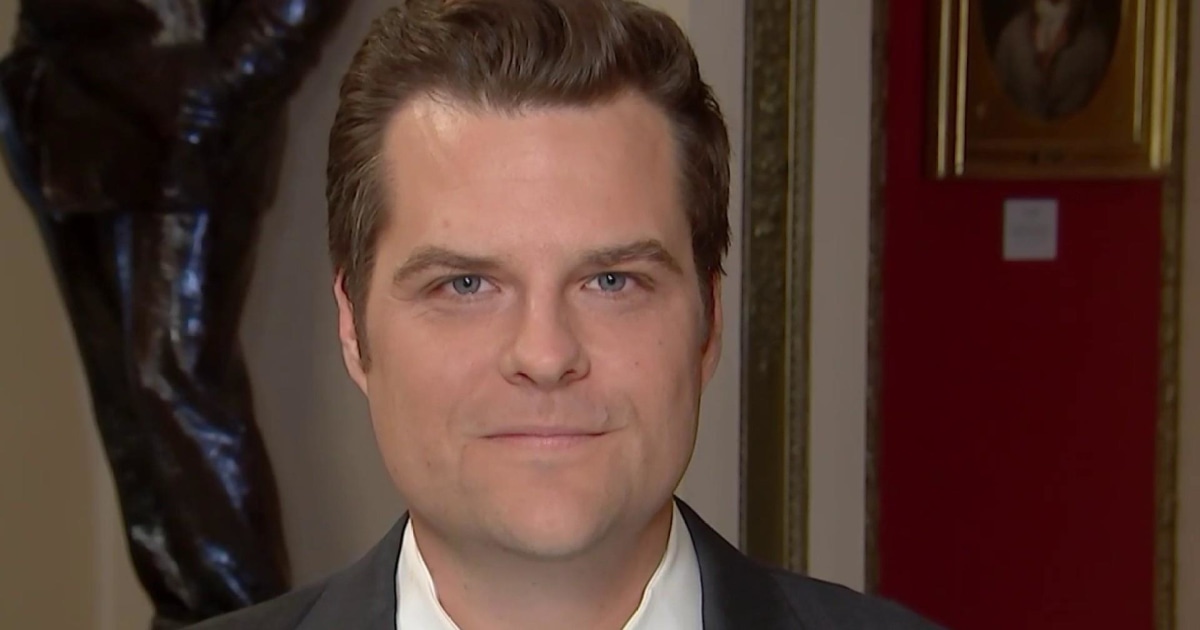
It was the testimony that had as much ramp up and hype as a Superbowl or a Star Wars movie. But last week, after Robert Mueller gave hours of testimony in front of lawmakers in Washington…not much has changed. The Democrats are still crying for impeachment over the obvious intonations of collusion and cooperation with the Russians. On the other side, the Republicans are calling it vindication – a truth they knew all along. So, two years later and 16 months before the next election – where to know? Is impeachment the right path for Democrats still looking for blood? Do both sides need to focus on governing and ensuring the economy doesn’t turn? Is it time no for policy and ideas as we all look towards 2020? We are living in interesting times, and if you are a journalist covering this topic – let us help! Mark Caleb Smith is the Director of the Center for Political Studies at Cedarville University. Mark is available to speak with media, simply click on his icon to arrange an interview.

Central American Aid & Immigration
Assistant Professor Carmen Monico recently penned an article examining the Trump administration’s plan to use cuts in aid to El Salvador, Guatemala and Honduras to pressure those countries into curtailing the migration of their citizens to the U.S. The article, “Is Cutting Central American aid going to help stop the flow of migrants,” was first published by The Conversation, and has been picked up by a variety of media outlets. In her research and as a media resource, Monico draws from her work in Guatemala examining how programs to reduce crime and violence in the country can help retain at-risk youth who may feel pressured to leave their home country. She has extensively examined the forces that have compelled unaccompanied children and teens from Guatemala, Honduras and El Salvador to leave behind their homes and families. If Dr. Monico can assist with your reporting about these complex immigration issues, please reach out to Owen Covington, director of the Elon University News Bureau, at ocovington@elon.edu or (336) 278-7413. Dr. Monico is available for phone, email and broadcast interviews.