
Experts Matter. Find Yours.
Connect for media, speaking, professional opportunities & more.

Experts in the Media: Eating Habits of People Who Grew Up Poor
Sarah Hill, Ph.D, professor of psychology, contributed insights to an AOL article, “Eating Habits of People Who Grew Up Poor,” exploring how early life poverty continues to foster food preferences and mental associations around eating. The piece examines why many adults raised in low-income households feel “unnatural” when switching from inexpensive comfort foods to fresh produce and how habits formed in scarcity can linger long after financial hardships subside. Hill emphasizes that these patterns aren’t just personal quirks but deeply ingrained coping strategies. “For someone who rarely saw fresh fruits or vegetables growing up, the cost, smell, even the way they cut or cook produce, can feel foreign,” she wrote. The article also discusses how scarcity conditioning can lead to behaviors like eating beyond fullness to avoid waste, attachment to “cheap staples” or resistance to change in diet, even when healthy choices are available. Hill argues that recognizing these habits with compassion, as adaptations rather than flaws, is key to promoting lasting healthy change. Sarah Hill is currently a researcher and professor at TCU, lead research advisor at 28, and a thought leader in the area of women’s hormones and sexual psychology. Sarah’s groundbreaking research has resulted in more than 80 research publications. Her work has been featured in The New York Times, The Washington Post, Scientific American, The Economist, and on television shows like Good Morning and The Today Show. See her profile here. The full article is available here: Looking to know more - simply click on Sarah's icon below to arrange an interview time today.



Expert Research: The Fourth Industrial Revolution, Artificial Intelligence and Domestic Conflict
Artificial Intelligence is often framed as a driver of innovation. But it also has the power to disrupt the very foundations of our societies. In a recent study, experts Craig Albert, PhD, and Lance Hunter, PhD, from Augusta University explored how AI, as part of the Fourth Industrial Revolution, could reshape economies, politics and security within states. Here are three key takeaways from the research: AI brings breakthroughs in health care, logistics and engineering, but also disrupts jobs and economies. Unmanaged disruption can fuel instability, widening inequality and increasing risks of unrest or domestic conflict. Governments must act now with retraining, adaptive policies and strong governance to harness AI’s benefits while reducing risks. Lance Hunter, PhD, is an assistant professor of political science with a background in international relations. His research focuses on how terrorist attacks influence politics in democratic countries and how political decisions within countries affect conflicts worldwide. Hunter teaches courses in international relations, security studies and research methods. He received his PhD in Political Science from Texas Tech University in 2011. View his profile here. Craig Albert, PhD, is a professor of Political Science and the graduate director of the PhD in Intelligence, Defense, and Cybersecurity Policy and the Master of Arts in Intelligence and Security Studies at Augusta University. His areas of concentration include international security studies, cybersecurity policy, information warfare/influence operations/propaganda, ethnic conflict, cyberterrorism and cyberwar, and political philosophy. View his profile here. The question we face is not whether AI will transform society (it already is!) but how we will manage that transformation to strengthen rather than destabilize. What steps do you think policymakers should prioritize to prepare for this future? Here's the abstract from the paper in Research Gate: An emerging field of scholarship in Artificial Intelligence (AI) and computing posits that AI has the potential to significantly alter political and economic landscapes within states by reconfiguring labor markets, economies and political alliances, leading to possible societal disruptions. Thus, this study examines the potential destabilizing economic and political effects AI technology can have on societies and the resulting implications for domestic conflict based on research within the fields of political science, sociology, economics and artificial intelligence. In addition, we conduct interviews with 10 international AI experts from think tanks, academia, multinational technology companies, the military and cyber to assess the possible disruptive effects of AI and how they can affect domestic conflict. Lastly, the study offers steps governments can take to mitigate the potentially destabilizing effects of AI technology to reduce the likelihood of civil conflict and domestic terrorism within states. Read the full report here: Looking to know more? Let us help. Both Albert and Hunter are available to speak with media. Simply click on either experts icon now to arrange an interview today.



The First Amendment: Foundations, Freedoms, and Why It Still Matters
The First Amendment is more than just words on paper — it’s a bedrock of American democracy. Adopted in 1791 as part of the Bill of Rights, it protects fundamental freedoms: speech, religion, press, assembly, and petition. Its influence ripples through every aspect of civic life, shaping what citizens can say, believe, hear, and demand from government. How It Started In the wake of the Revolutionary War and under the new Constitution, many Americans worried that the federal government could become too powerful — especially over individual rights. To allay those concerns, the Bill of Rights was proposed. The First Amendment was among those first protections ratified in December 1791, explicitly forbidding Congress from making laws that establish religion, restrain free speech or press, or curb the rights of people to assemble and petition their government. Over time, this compact set of protections has been tested, expanded, and clarified. Landmark court decisions and historical crises—from the Sedition Act era in the 1790s, World Wars, civil rights struggles, to modern debates—have shaped how these freedoms are understood in practice. What It Means Today For citizens, the First Amendment offers more than legal guarantees: it gives voice. It underpins political debate, dissent, journalism, artistic expression, religious diversity, protests—and it enables citizens to hold power accountable. At school, at work, on social media, in place of worship, or in the press, these freedoms allow Americans to share ideas, critique policy, and petition for change. But First Amendment rights are not unlimited. Legal doctrine has evolved to balance free speech with other social interests—such as national security, public safety, protection from defamation, or decency norms. The courts continue to adjudicate what constitutes protected speech, what kinds of regulations are permissible, and how emerging issues—like the internet, social media, and new forms of communication—fit into long-standing legal principles. Why This Matters The First Amendment remains essential because it shapes both the rights and responsibilities of citizenship. Without it, political dissent—vital to healthy democracy—can be stifled. Without free press, government actions may go unchecked. Without freedom of religion and conscience, personal beliefs may be coerced or marginalized. As society changes—through technology, demographic shifts, and cultural dialogues—these freedoms are continually negotiated. Understanding the First Amendment helps individuals understand their power and limits. It shows why protests matter, why journalism matters, why speaking up matters. It also frames why legal protection matters in areas such as whistleblowing, religious diversity, and minority rights. Connect with our experts about the history, protections, and current significance of the First Amendment for all Americans: Check out our experts here : www.expertfile.com

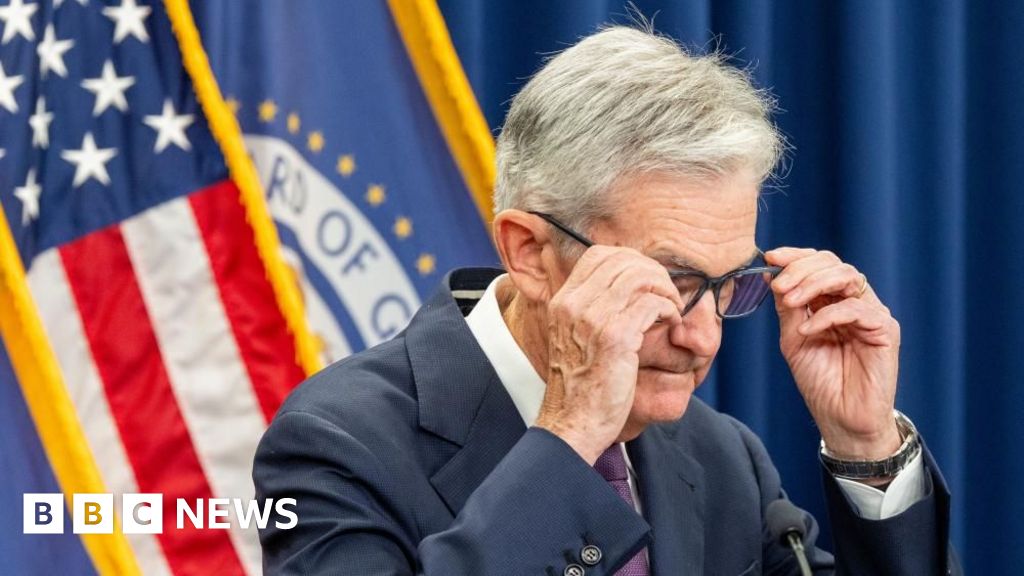
The Fed Just Cut interest Rates - What's Mean for Americans and What Does it Say about the Economy?
For the first time since December interest rates are being cut and all indicators point to even more signaled more cuts coming this year. The reactions so far have been mixed. The markets held steady but made no bold moves. And the opinions on how this will impact housing and home sales was also mixed with President Trump raving that housing will "soar" and others concerned about volatility. The announcement is getting a lot of media attention with reporters looking for angles, answers and what to expect for the future. And to get those answers - they need experts who understand every aspect of the economy. Dr. Jared Pincin's primary research interests explore the intersection of public choice economics with foreign aid as well as issues in sports economics. Pincin has published in popular publications such as The Hill, Real Clear Markets, Foxnews.com, and USA Today and scholarly journals such as Oxford Development Studies, Applied Economic Letters, and the Journal of Sport and Social Issues. View his profile here Dr. Haymond joined the faculty at Cedarville University in 2010 after a 29-year career in the United States Air Force. He taught at the United States Air Force Academy and was an Air Force Fellow at The Brookings Institution. His research has been published in scholarly journals such as the Quarterly Journal of Austrian Economics, Public Choice, the Journal of Public Choice and Public Finance, and Journal of Faith and Economics. His current research interests include economics and religion, as well as monetary theory. View his profile here Looking to know more? We can help. Jared Pincin and Jeff Haymond are both available to speak with media - simply click on either expert's icon to arrange an interview today.


As the Gaza City ground offensive has begun - FAU has a leading expert on the region
Israel has launched a massive ground incursion into Gaza City. Aiming to destroy what the Israeli government has said is one of the last remaining Hamas strongholds. The offensive will escalate further fighting as the Israeli military indicated this current attempt to remove Hamas strongholds could take months. The attack on Gaza City has drawn criticism from allies of Israel who are seeking to see a stop the fighting and see peace in a region. Media are also watching - and looking looking for experts like Florida Atlantic's Robert Rabil who has been commenting and contributing on this topic since the conflict began almost two years ago. Florida Atlantic University's political science professor, Robert Rabil Ph. D. is a star expert in political Islam, terrorism, U.S. foreign policy, and U.S.-Arab relations. His expertise has appeared in major newspapers and academic journals, including the Wall Street Journal, Chicago-Sun Times, Daily Star (Beirut), History News Network, National Interest, CNN, Middle East Journal, Middle East Policy, the Journal of International Security Affairs, Middle East Quarterly, and Middle East Review of International Affairs. He has also contributed several book chapters on political Islam and Middle Eastern politics. Rabil is available to speak with media. Simply click on Rabil’s icon now to arrange an interview today.


Augusta University's Lance Hunter, PhD, was recently published in the highly acclaimed World Affairs. His article “The polarization paradox: How state wealth and online media consumption affect polarization” highlights his expertise and insight on this very important topic, especially as America faces division and tension. Here's the abstract: Previous valuable scholarship has found that wealth inequality can affect political polarization within states. However, less is known regarding how overall levels of state wealth and online media consumption affect polarization. Thus, this study examines how state wealth and online media consumption affect polarization in 157 states from multiple regions and levels of development from 2000 to 2022. When including standard controls and controlling for potential endogeneity, the findings reveal that greater state wealth and online media consumption are associated with increased polarization. The rationale for the findings is that greater state wealth and online media consumption increase the prevalence of postmaterialist values within states that often clash with materialist values, leading to heightened polarization. These findings have important implications in considering how state wealth and online media consumption interact to influence polarization cross-nationally. Hunter is an assistant professor of political science with a background in international relations. His research focuses on how terrorist attacks influence politics in democratic countries and how political decisions within countries affect conflicts worldwide. His work has appeared in journals such as: Journal of Peace Research, Terrorism and Political Violence, Party Politics, Studies in Conflict and Terrorism, Armed Forces and Society, Conflict, Security and Development and the International Journal of Data Analysis Techniques and Strategies. Hunter teaches courses in international relations, security studies and research methods. Interested in learning more - let us help. Lance Hunter, PhD, is available to speak with media about this important topic - simply click on his icon to arrange an interview today.

Viqtory Media recognizes Georgia Southern University as a top military-friendly college
Georgia Southern University continues to be a leading institution in providing military-connected students with exceptional opportunities, earning the 2025-2026 Top Ten Military Friendly® distinction by Viqtory Media. The University achieved gold recognition for its support of military students, veterans and families as they pursue their academic and career goals. “At Georgia Southern, we are deeply committed to honoring the service and sacrifice of our military-connected students by providing them with a student-centered experience rooted in flexibility, support and excellence,” said Alejandra Sosa Pieroni, Ed. D., Executive Vice President for the Division of Enrollment, Marketing and Student Success. “This continued recognition as a Military Friendly School reflects the intentional work of our faculty and staff to ensure that service members, veterans, and their families have the resources they need to succeed in the classroom, in their careers, and in life.” Georgia Southern is used to being named a Military Friendly School, having earned this distinction for 13 consecutive years. Military-connected students at Georgia Southern have access to a variety of services and flexible academic programs both on campus and online. Select graduate programs, including the MBA, are conveniently offered at the Army Education Centers on Fort Stewart and Hunter Army Airfield. In addition, all three campuses and offices located at the Fort Stewart and Hunter Airfield Education Centers feature resource centers to assist military students, veterans and families. “Georgia Southern University is dedicated to providing the best service to our service members, Veterans and their families,” said William Gammon, director of Military and Veteran Services. “We consider it a privilege to serve this special student population. The continued recognition as a Military Friendly School is a testament to our dedication to our military services and their families.” The annual Military Friendly School list is compiled by Viqtory, a service-disabled, veteran-owned company, with input from the Military Friendly Advisory Council, a group of independent experts in higher education and military recruitment. The list is published in the May and October issues of G.I. Jobs magazine and can be found at www.militaryfriendly.com. Visit Georgia Southern’s website to learn more information about the Military and Veterans program: Looking to know more about Georgia Southern University and it's programming and support for military-connected students — simply contact Georgia Southern's Director of Communications Jennifer Wise at jwise@georgiasouthern.edu to arrange an interview today.


Georgia Southern University’s Allen E. Paulson College of Engineering and Computing and College of Education are teaming up to bring the latest innovative research on renewable energy to STEM educators and their classrooms across Georgia. That’s all thanks to a $600,000 grant from the National Science Foundation to establish the Engaging Educators in Renewable Energy (ENERGY) program. The funds will support a three-year-long initiative that will bring Valentin Soloiu, Ph.D.’s energy research into high school and technical college classrooms. Soloiu and engineering graduate students from Georgia Southern will conduct research related to renewable energy, reducing greenhouse gas emissions, and mitigating climate change, covering topics like renewable and alternative energy (solar and wind), climate change, enhanced energy technologies and the development of sensors and controls for energy applications and smart grids. Soloiu, the Allen E. Paulson Distinguished Chair of Renewable Energy, will be joined by mechanical engineering professor Mosfequr Rahman, Ph.D. and Elise Cain, Ph.D., director of the Educational Leadership Program in the College of Education, in developing the program. “The core requirement is to conduct state-of-the-art, transformative research in science and engineering,” explained Soloiu. “After that is complete, we bring high school and technical college teachers in to translate this research into classroom-ready modules.” Teachers will be selected from a large pool of statewide applicants to work alongside faculty and graduate students from the College of Engineering and Computing. They’ll also receive funds to incorporate that research into their curriculum. Soloiu will oversee the program as the principal investigator, with Cain serving as the education lead, bringing a multidisciplinary approach to the program. “I think interdisciplinary collaborations are vital in academic work,” noted Cain. “Faculty from the Allen E. Paulson College of Engineering and Computing contribute their technical knowledge and skills related to renewable energy, while I bring my College of Education perspectives on educational contexts and pedagogy. Working together allows us to create a robust program with immediate and lasting impacts.” Educators will visit local companies and interact with leaders in renewable energy, such as Gulfstream Aerospace in Savannah, Georgia, and Rolls-Royce Power Systems in Aiken, South Carolina. These experiences are designed to help teachers share career opportunities with students they might not otherwise encounter. “This program reflects the essence of our institutional mission,” said Cain. “It’s about discovery, teaching, and community engagement—all grounded in excellence and innovation.” Soloiu echoed those sentiments. “Many teachers and students in rural areas don’t even know what we do here at Georgia Southern,” explained Soloiu. “By engaging with educators directly, we’re creating awareness, inspiration, and pipelines to higher education and high-tech careers. This is reflective of the University’s dedication to our communities as we move towards R1 status.” Looking to know more about this important research happening at Georgia Southern - Valentin Soloiu is available to speak with media. Simply click on his icon now to arrange an interview today.


Spitting image: What the blunder by Philadelphia Eagles' Carter can teach us about teams
Social media caught fire when Philadelphia Eagles' defensive tackle Jalen Carter got tossed for spitting on Dallas Cowboys' quarterback Dak Prescott before the first snap of this year's NFL season opener. While the impact on the game was obvious, what unfolded on the field of play has lessons for the workplace and the boardroom. The University of Delaware's Kyle Emich can talk about the parallels between the two worlds when individuals let their teams down. Emich, a professor of management in UD's Lerner College of Business and Economics, said emotional events occur all the time in the workplace, especially in board rooms, where the atmosphere is often competitive. "Emotion regulation is a key part of harnessing motivation appropriately in a competitive context," Emich said. • Early on, the Cowboys were able to regulate their emotions to tap into the incident when they roared out to several seamless offensive drives. • Emich says the Eagles' young, inexperienced and not-yet-gelled defensive unit was unable to regulate their emotions and preserve their confidence (collective efficacy) after the incident. They were unable to stop Dallas in the first half. • Carter's act could also have served as an emotion regulation cue for both teams. The Eagles defense was unable to regulate and maintain stability, leading to a number of costly penalties. But the Cowboys seemed to have had the same issue when they retaliated with personal fouls of their own. • In the end, the Eagles were able to come together under the leadership of their coach, Nick Sirianni, and quarterback, Jalen Hurts, to secure a 24-20 victory. To connect with Emich for an interview, visit his profile page and click on the "contact" button.



Are you ready for some football?
From its modest beginnings in the late 19th century to becoming America’s most-watched sport, professional football has not only entertained generations but also transformed communities, economies, and culture. Today, the National Football League (NFL) stands as a global brand, symbolizing both the triumphs and tensions of American life. Early Beginnings Professional football took root in the 1890s, when athletic clubs in Pennsylvania began paying players under the table. In 1920, a group of teams formed the American Professional Football Association, later renamed the NFL in 1922. Early decades were marked by instability, but the league grew steadily, and by the 1950s, with the rise of television, football began capturing national attention. The 1958 NFL Championship Game—dubbed the “Greatest Game Ever Played”—cemented football as America’s sport of the future, setting the stage for the AFL-NFL rivalry of the 1960s and the eventual Super Bowl, first played in 1967. Economic Impact Football is now one of the most powerful economic engines in American sports. The NFL generates more than $18 billion annually, with billions flowing into local economies through stadium construction, tourism, and broadcasting rights. Super Bowl weekend alone can inject hundreds of millions of dollars into host cities. The game has also reshaped industries—from sports broadcasting and advertising to fantasy leagues and legalized sports betting. It drives sponsorships, merchandise sales, and jobs connected to media, hospitality, and infrastructure. Social and Cultural Significance Football’s reach extends beyond the field. It has served as a stage for some of America’s most important social conversations—from racial integration in the 1940s, to gender roles in sports media, to the modern debates over player safety and activism. Figures like Jackie Robinson in baseball broke barriers, but in football, trailblazers such as Kenny Washington (first African American to reintegrate the NFL in 1946) helped reshape opportunity and inclusion. In more recent years, high-profile advocacy by players on issues ranging from racial justice to mental health has placed the sport squarely in the middle of national debates. At the same time, concerns about concussions and long-term health risks have fueled public dialogue on workplace safety and medical ethics, echoing issues seen across many industries. A Lasting Legacy Football is more than a game. It has become a unifying tradition—whether through Friday night lights in small towns, college rivalries that galvanize entire states, or Super Bowl Sunday as an unofficial national holiday. Its economic and cultural significance continues to expand, reflecting both America’s passion for competition and its ongoing social evolution. Connect with our experts about the history and significance of professional football in America: Check out our experts here : www.expertfile.com