
Experts Matter. Find Yours.
Connect for media, speaking, professional opportunities & more.

#NeverAgain - Students Taking Matters Into Their Own Hands
On April 20, 2018, the 19th anniversary of the Columbine High School shooting, students across the nation will walk out of their classrooms in protest of their leaders’ failure to pass laws protecting them from gun violence. Just last month, hundreds of thousands of students, teachers, and supporters rallied in Washington DC, for March for Our Lives, led by a group of students from Marjory Stoneman Douglas High School. These students, some of the latest to be affected by gun violence in schools, are using their voices to inspire change. John Meisner, Assistant Professor of Education at Southern Utah University and advocate for students on and off campus, recently voiced his concerns and support. “As a voting adult, I’m horrified that this problem has only been getting worse since the Columbine High School tragedy, and our elected leaders pretend that there is nothing that can be done. We have countless laws that have been enacted regarding public safety, and yet for this one, we do nothing.” Meisner recommends that as parents, mentors, and peers, we should support the efforts of these students. “I’m hugely proud of these students for refusing to accept this inaction and taking matters into their own hands. I don’t know that we’ve ever seen such organization and movement by high school and junior high school students. They’re often disrespected as ‘entitled’ and ‘lazy,’ but this latest tragedy has mobilized this population into action. We’re seeing youthfulness and enthusiasm combined with a social media savvy that is a powerful force. I think that as adults we should be proud of these efforts and support them fully.” Students crave relevance in their school work and lives. According to Meisner, the walkout is a perfect example of this. “I’m hopeful that they will not relent on the pressure until something is done. Maybe with this new movement, the Parkland tragedy will be the last.” “As educators, we should not only be concerned about the physical well-being of our students but should also see that their academic wellbeing is important too. They will be fully invested in topics that matter to them.” John Meisner has a deep love of education and a passion for teaching. Meisner also serves on the Allies on Campus committee working to support LBGTQ+ students and faculty through social events and educational outreach. He is familiar with the media and available for an interview. Simply visit his profile. Source:


Time with family or time to make some distance?
It’s news that didn’t come as much of a surprise to a lot of political insiders – but it still has all of Washington talking. Paul Ryan, the popular Speaker of the House and a leading Republican is retiring. Though he has been on the Hill for more than two decades, Ryan, who is only 48 is calling it a career. Or is he? Some wonder if he’s just putting enough political distance between himself and Donald Trump in an effort to preserve his reputation and potentially mount a campaign for 2020. With speculation of a contested GOP primary or Trump not seeking re-election – Ryan may be the safe-bet Republicans are looking for? There is a lot of speculation about Ryan’s next move. Will he take a tour of the private sector and opt for a career with a lot more money? What’s next is anyone’s guess – and that’s where our experts can help. Mark Caleb Smith is the Director of the Center for Political Studies at Cedarville University. Mark is available to speak with media regarding Paul Ryan and his announced retirement. Simply click on his icon to arrange an interview. Source:


Who's the best gift-giver? Baylor marketing expert shares her research findings
Meredith David, Ph.D., assistant professor of marketing, studies marketing strategies with an emphasis on consumer behavior and well-being. Her newest study on gift-giving centers on "social projection" -- making choices on behalf of others based on your own preferences. The research reveals that people who are “secure” in interpersonal settings are the ones most likely to engage in social projection (making choices on behalf of others based on their own preferences). Conversely, those who are “anxious” in such settings are less likely to assume that others share their own preferences and less likely to make choices for others based on their personal attitudes. “You’d think that secure people with lots of friends and healthy personal relationships would have a better idea of what someone would like as a gift, but that’s not the case,” David said. “This research shows that individuals who are anxious in interpersonal situations and who have fewer close, personal relationships are better at predicting what a person may like.” Dr. David’s research focuses on marketing strategies with an emphasis on consumer behavior and well-being. Recently, her research has explored how new media technologies, including smartphones, impact personal and workplace relationships. Dr. David has also published research related to customized pricing tactics, interpersonal attachment styles, and the pursuit of health goals. Her research appears in numerous journals including the Journal of Business Research, Journal of the Association for Consumer Research, Journal of Advertising, European Journal of Marketing, and Psychology & Marketing, among others. Dr. David has been interviewed and quoted for her research in many national and international news outlets, including ABC News, Fox News, Oprah.com, Redbook Magazine, Consumer Reports and Health Magazine. Source:


Baylor Black Gospel Music Expert Pens Dallas Morning News Column Remembering MLK
Robert Darden, professor of journalism, PR and new media at Baylor University, is a gospel music expert. He penned this column to commemorate the death of Martin Luther King, Jr. and to remember the music that carried people through the grief of the time. He writes: "In the days of rage and grief that followed the assassination of the Rev. Martin Luther King Jr. in Memphis on April 4, 1968, many Americans found, at least for a time, relief in music. Rosa Parks, whose brave stand on a Montgomery, Ala., bus just 13 years earlier was the inciting incident in the slow build of the civil rights movement after World War II, watched as Detroit erupted in violence. She sat in her room playing Sam Cooke's "A Change is Gonna Come" over and over. She said the song 'saved her sanity.'" Darden is the author of two dozen books, most recently: Nothing But Love in God’s Water, Volume II: Black Sacred Music from Sit-In to Resurrection City (Penn State University Press, 2016); Nothing But Love in God’s Water, Volume I: Black Sacred Music from the Civil War to the Civil Rights Movement (Penn State University Press, 2014); Jesus Laughed: The Redemptive Power of Humor (Abingdon Press, 2008); Reluctant Prophets and Clueless Disciples: Understanding the Bible by Telling Its Stories (Abingdon Press, 2006); and People Get Ready! A New History of Black Gospel Music (Continuum/Bloomsbury, 2004). He founded the Black Gospel Music Restoration Project, the world’s largest initiative to identify, acquire, digitize, categorize and make accessible gospel music from gospel’s Golden Age (1945-1970). The BGMRP provides the gospel music for the Smithsonian’s new National Museum of African American History & Culture. Source:

Cedar Crest College fights food insecurity with food pantry
It’s a topic that isn’t often talked about, but it’s reaching near epidemic proportions: Food insecurity on America’s college and university campuses. With the costs of education rising – students are having to make the unfortunate and unhealthy choice of deciding whether to pay for school or pay for food. Some are scrounging, some are going hungry and it’s a trend that needs to stop. Cedar Crest College was one of dozens of schools to participate in a recent survey conducted by Temple University and the Wisconsin HOPE Lab assessing the basic needs of university students across the nation. The study determined that 36 percent of students on U.S. College campuses suffer from food insecurity. You can read the full report here. In light of that shocking report, Cedar Crest College is continuing to work diligently to combat hunger on campus. The college currently operates a food pantry on campus that is open to all students – traditional undergrads, adult learners and graduate students. The pantry operates solely on donations and gifts, and the college hosts two food drives each year to stock it. It offers non-perishable food items, toiletries and frozen meals. “It is harder to concentrate on your academic work when you are hungry,” said Mary Alice Ozechoski, Vice President of Student Affairs & Traditional Enrollment. “We believe that students who are food insecure need assistance so they can focus on what matters: completing their education.” Mary Alice Ozechoski is available to speak with media regarding this issue. Simply click on her icon to arrange an interview. Source:


‘Internet’ Presidents and the evolving art of communicating
There’s no question the first four presidents of the internet age are different, but Bill Clinton, George W. Bush, Barack Obama and Donald Trump share one thing in common: They have emphasized their personal character to win office and to fight back against critics. In his new book Presidential Communication and Character: White House News Management from Clinton and Cable to Twitter and Trump, University of Mary Washington Political Science Professor Stephen J. Farnsworth examines how presidents sell themselves and their policies in an ever-expanding and sometimes precarious media environment. “Character conversations are ideal for a modern media system that gives rise to short-attention-span politics,” said Farnsworth, a sought-after political commentator who has spent decades researching presidential communications and the media. “They also serve the politicians’ interests, as constantly distracted news consumers may not remember when politicians said one thing yesterday and a different thing today, much less punish them for inconsistency. With the various modern media cocoons that exist today, a person may never hear a president called to account for a comment that turned out to be false.” Dr. Farnsworth is professor of political science and international affairs at the University of Mary Washington. A published author and a media ‘go-to’ on presidential politics, he is available to speak with media regarding this issue. Simply click on his icon to arrange an interview. Source:



The increasing reaction to sexual harrasment
Dean Erika James published research on how firms respond to sexual harassment in 2006. She has updated her findings to include the influence of social media and how industry, especially Hollywood, responds to maintain reputation. Source:


Will an accident investigation sideline Tesla and ground its autopilot technology?
A fatal accident has left one person dead and Tesla in a bit of a freefall. Share prices are dropping, and people are talking about the future of the once untouchable Elon Musk and Tesla. It has been a tough month, especially since days earlier a fatal accident involved Uber Technologies Inc., and this has now raised questions about the self-driving features Tesla has become famous for. So, what will be the future of autonomous driving vehicles? And can a company like Tesla recover not only its reputation but its value? There are a lot of questions and that's where Kevin McFall, assistant professor of mechatronics engineering at Kennesaw State University, can help. His current research involves artificial intelligence and self-driving vehicles. Kevin is available to speak with media regarding this topic -- simply click on his icon to arrange an interview. Source:


Is repealing the Second Amendment possible or easier said than done?
On Tuesday, retired Supreme Court justice John Paul Stevens called for the repeal of the Second Amendment. It appeared an Op-Ed in the New York Times and has been taking the news and political worlds by storm. It’s not often a justice leaves his position of objectivity, even if retired. But at the age of 97, the former justice who was first appointed to the Supreme Court in 1975 by then President Gerald Ford weighed in calling the amendment a “relic of the 18th century.” However, it takes more than just a stroke of the pen or a simple impassioned vote to accomplish this. In fact, to repeal the Second Amendment would be require both houses of Congress proposing the amendment with a two-thirds vote, or two thirds of state legislatures calling on Congress to hold a constitutional convention. It would then have to be ratified by three-fourths of the states or state legislatures. There’s a lot of math involved there. As well, an equal amount of legal and constitutional perspective required. That’s where the experts from the UC Hastings College of Law can help. Joel Paul is an expert in the field of constitutional law. He is available to speak with media regarding just what it might take to repeal a constitutional amendment. Simply click on his icon to arrange an interview. Source:


Microsoft Working to Close the STEM Gap
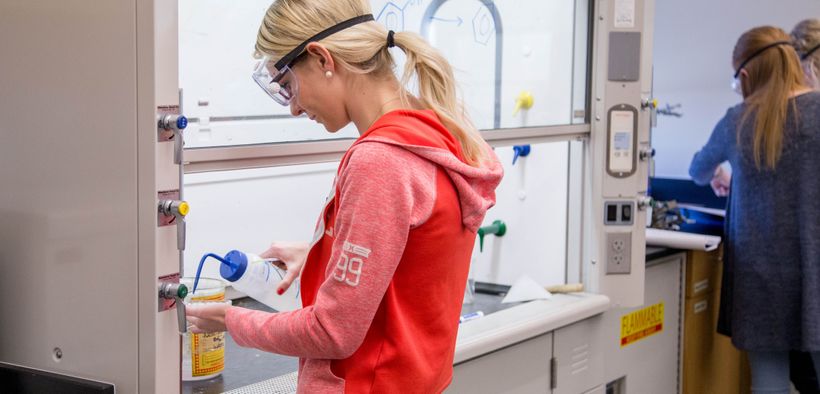
Even with a higher priority placed on science, technology, engineering, and math (STEM) throughout education in the US, only a fraction of girls are likely to pursue a STEM career. According to the National Center for Education Statistics, while more than 57 percent of college undergraduates are women, only 18 percent progress into STEM careers. With a clear gap, Microsoft set out to better understand what causes girls and women to lose interest in STEM subjects and careers, as well as what strategies have the greatest potential to reverse the trend. According to Microsoft, the goal of the study “was to inform our work in this area and to share learnings with schools, government leaders, nonprofits, employers and others. What we learned is that conditions and context can make a significant difference to girls, young women and their interest in STEM. And the solution doesn’t necessarily require a curricula overhaul.” Dr. Shalini Kesar, Associate Professor of Information Systems at Southern Utah University and advocate for women in technology, has known for years that girls and young women are a critical missing part of STEM studies and careers. “The stubborn gender disparity in STEM fields has sparked important debates on the underlying reasons,” said Kesar. “Some attribute the gender disparity to social and infrastructural factors, lack of mentors and role models, and lack of awareness about what these fields offer in terms of educational and career opportunities. Others point to studies that indicate traditional mindsets of computing as ‘boring’ and ‘only for boys’ as a major reason why girls and young women do not consider a degree or career in this field.” The study found that “we may be able to make significant strides just by showing girls and young women how STEM knowledge is applicable outside of the classroom, and how it can power their aspirations to make the world a better place.” “Recently, I was invited to collaborate with Microsoft on research which quantifies many of my observations from over 20 years of working to reduce the gender gap in STEM and computing,” said Kesar. “This work is an essential step forward in helping us learn more about how girls and young women currently perceive STEM.” Dr. Kesar was recently recognized by the Women Tech Council, receiving the Education Excellence Award at the 2016 Women Tech Awards. She is familiar with the media and available for an interview. Simply visit her profile.
