
Experts Matter. Find Yours.
Connect for media, speaking, professional opportunities & more.

Lingam, Mirsayar, van Woesik Recognized as ‘Top Scholars’ by ScholarGPS
Florida Tech faculty members Manasvi Lingam, Mirmilad Mirsayar and Robert van Woesik were named “Top Scholars” by ScholarGPS for their contributions to academia over the last five years. Lingam, who studies astrobiology in the Department of Aerospace, Physics and Space Sciences, was ranked No. 9,562 in the world across all disciplines and nearly 15 million ranked scholars, placing him in the top 0.06% of the platform’s scholars globally. He faired strongly in other areas, including: No. 1,919 (0.1%) among 1.9 million scholars in physical sciences and mathematics No. 491 (0.09%) among 545,000 scholars in physics No. 42 (0.31%) among 13,590 scholars in the specialty area planets ScholarGPS cited Lingam’s strong publication record, the impact of his work and the notable quality of his scholarly contributions. He’s published 50 times since 2020, exploring the possible origins, evolution and future of life in the universe. Mirsayar, who studies aerospace engineering, was ranked No. 35,155 across all disciplines and nearly 15 million ranked scholars, placing him in the top 0.24% of scholars globally. He’s published 11 times between 2020-2023, covering topics such as fracture mechanics and solid mechanics. Other highlights include: No. 6 (0.06%) among 8,601 scholars in fracture mechanics No. 49 (1.7%) among 2,879 scholars in solid mechanics No. 315 (1.8%) among 16,847 scholars in reinforced concrete Van Woesik, who studies coral reef ecology, was ranked No. 58,081 across disciplines, putting him in the top 0.39% of nearly 15 million scholars globally. He’s had 22 publications since 2020, covering topics such as coral bleaching, thermal stress and climate change. Van Woesik, who studies coral reef ecology, was ranked No. 58,081 across disciplines, putting him in the top 0.39% of nearly 15 million scholars globally. He’s had 22 publications since 2020, covering topics such as coral bleaching, thermal stress and climate change. Other highlights include: No. 5,282 (0.32%) among 1.7 million scholars in life sciences No. 336 (0.38%) among 88,930 scholars of ecology and evolutionary biology No. 191 (0.95%) among 19,998 scholars of global change. ScholarGPS uses artificial intelligence and data mining technologies to rank individuals, academic institutions and programs. Scholars are ranked by their number of publications, their citations, their h-index and their ScholarGPS® Ranks, which includes all three metrics. If you're interested in connecting with Manasvi Lingam, Robert van Woesik and Mirmilad Mirsayar- simply contact Adam Lowenstein, Director of Media Communications at Florida Institute of Technology at adam@fit.edu to arrange an interview today.


Who will be the Canadian Prime Minister's Successor
On January 6th, 2025 Prime Minister of Canada, Justin Trudeau announced his intentions of stepping down. Prime Minister Justin Trudeau has be leading the Liberal Party of Canada for the past 12 years. Since his announcement of resignation there has been many prominent individuals stepping up to enter the race of being his successor. In Canada's political system the leader of the largest party in the House of Commons will act as primer minister. The successor of Mr. Trudeau’s role as party leader will then go to general elections against the leader of the Conservative party. Elections must be held no later than October. What will the change in Prime Ministers look like for the future of Canada's government. International relations expert, Dr. Glen Duerr, has been a reliable source on the events occurring in the Canada. Here are three valuable insights from a recent interview Earning the vote to be Prime Minister Trudeau's successor is not a guarantee of permanently keeping the role of Prime Minister. Once Canada's Liberal Party elects their candidate to replace Trudeau they will run against the leader of Conservative Party, Pierre Poilievre, in a general election. The winner of this election will then maintain the role of Prime Minister. How will the general election impact the Liberal Party? Recently Conservatives and the leader of the party has been dominating public opinion polls. Experts believe that the vote in the House of Commons will cause a drastic shift in the government under a new prime minister long before the general election. Will the shift in popular opinion end the over decade long rule of the Liberal Party? Prime Minister Trudeau explains the Liberal Party will be choosing his successor through votes by the parties members, which has become a minority in Canada's population. Successor candidates include: Chrystia Freeland, Mark Carney, Karina Gould. All of whom have had a succesful political career in the Liberal Party, serving under Primer Minister Trudeau. Are these candidates enough to keep the decade long power in the Liberal party? If you are a journalist covering the change in Canada's leadership, look no further than our experts for valuable insight and expert knowledge. Dr. Duerr is an expert on this subject and is available to speak to media regarding Canadian politics– simply click on his icon to arrange an interview.


Return to Office Mandates: Top 3 Challenges for Employers and Employees
Full time return-to-office (RTO) mandates – most recently from JPMorgan Chase, Amazon and now the U.S. federal government – have made headlines across the country and caused consternation among remote and hybrid employees. Whether one is – or is not – a supporter of remote and hybrid work, the challenges that arise with RTO and with remote/hybrid arrangements are important to consider from both sides – employers and employees. Baylor University management expert Sara Jansen Perry, Ph.D., who studies employee stress and well-being, including the role of remote/hybrid work and leadership, said working from home has existed in some form for decades, and research suggests it will continue to be an option for many workers and organizations. "We know many employees value remote work so much as a benefit that they will choose jobs based on whether it is an option,” Perry said. “Fortunately, we have seen many benefits of remote work as well, including employee productivity, cost savings, enhanced work-life balance and well-being, to name a few. Even if employees return to the office a few days a week, these benefits can still be realized, including longer term organizational benefits in terms of retention and applicant attraction. However, if an organization is set on returning to office full time, there are some challenges they should consider and proactively address.” Perry highlights 3 key challenges about Return to Office mandates from the perspectives of both employers and employees, applying foundational topics in organizational psychology, among them leadership, trust, culture, performance management and retention. Those three key challenges are a must read and part of the entire article attached below: Are you a journalist looking to know more? The let us help. Sara Jansen Perry, Ph.D., The Ben Williams Professor of Management in the Hankamer School of Business at Baylor University, is a nationally recognized researcher on employee stress and well-being, including the role of remote/hybrid work and leadership. Sara is available to speak with media about the recent Return to Work announcement for the federal bureaucracy. Simply click on her icon now to arrange an interview today.


Expansion Plans? What's Behind Donald Trump's Approach to Canada, Greenland and Panama?
With the inauguration of President Donald Trump just days away, there are many people in America and abroad who are watching and waiting on the first moves of the incoming Trump administration. President Trump has been giving some bold suggestions about the importance of places like Greenland, Canada and Panama to America's national and economic security. Some are explaining Trump's approach as a negotiating tactic to spur on deeper conversations. Others are concerned there's some seriousness to his plans for expansion. Either way, it's getting a lot of coverage as the countdown is on to his resumption of the country's leadership. Last week, Trump waded boldly into global affairs — but he barely touched on those purported priorities. Instead, at a news conference at Mar-a-Lago, he focused on a list of obscure, arguably eccentric goals: acquiring Greenland from Denmark, absorbing Canada as a very large 51st state, and retaking control of the Panama Canal. The president-elect said he would bring all three territories under U.S. control through economic coercion, but did not rule out using force to seize Greenland and the canal. January 13 - Los Angeles Times “That would really be something,” Trump said of the United States' taking control of Canada. “You get rid of that artificially drawn line, and you take a look at what that looks like. And it would also be much better for national security,” Trump said. “They’re great, but we’re spending hundreds of billions here to protect it.” Trump said that the subsidies include substantial military support and that the United States loses out through trade deficits. January 07 - NBC News President-elect Donald Trump has reiterated his desire for the US to acquire Greenland and the Panama Canal, calling both critical to American national security. Asked if he would rule out using military or economic force in order to take over the autonomous Danish territory or the Canal, he responded: "No, I can't assure you on either of those two. "But I can say this, we need them for economic security," he told reporters during a wide-ranging news conference at his Mar-a-Lago estate in Florida. Both Denmark and Panama have rejected any suggestion that they would give up territory. January 08 - BBC The coverage has been intense, but there are still some questions to be asked: How would the world and America's allies react if President Trump applies pressure or force to make any of these countries comply? How might relations between Trump and the U.S. military and intelligence community change in his second term? And, is this just a tactic or could President Trump possibly be serious about his plans? Looking to know more? Professor Peter Campbell studies international security, civil-military relations, international relations and policy relevance. Peter is available to speak with media about this ongoing topic - simply click on is icon now to arrange an interview today.


The Rev. Randall Meissen, LC, Florida Tech’s chaplain and director of the Catholic Campus Ministry and an adjunct faculty member of the College of Psychology and Liberal Arts, has published a new book chapter, “Contemplating Bats and Bees,” in the academic compendium, “In The Dominicans in the Americas and the Philippines (c. 1500-c. 1820),” edited by David Thomas Orique, Rady Roldán-Figueroa and Cynthia Folquer. The book was published online in August by Routledge. Meissen’s chapter examines the man credited with preserving the only surviving Mayan language texts, Friar Francisco Ximenez, and examples of the influences of Dominican spirituality on natural history. He conducted research in the rare book archives of Guatemala and Spain, and the chapter developed from a presentation Meissen gave at the International Conference on the History of the Order of the Preachers in the Americas several years ago. Ximenez was an 18th century Dominican priest and missionary linguist known for his preservation of the Maya–K’iche’ creation myth the Popol Vuh. He also had a keen interest in the plants and animals of Guatemala during his ministry, Meissen highlights, and recorded observations in his manuscript, “La historia natural del reino de Guatemala.” Meissen’s chapter examines Ximenez’s observations of nature and explores the cultural factors inspiring Ximenez’s research of the region. Those include: “the Dominican tradition of collecting anecdotes about animals as exempla for use in preaching, the expansive highland Mayan vocabulary for naming native organisms, the Mayan religious myths about animals in the Popol Vuh, the practice of using mission churches as spatial reference points and the material need of the Order of Preachers in Guatemala for items such as beeswax,” the abstract reads. Meissen’s research also connects back to the classroom. He is teaching a World Religions course this spring. If you're interested in learning more or a reporter looking to speak with Father Randall Meissen - simply contact Adam Lowenstein, Director of Media Communications at Florida Institute of Technology at adam@fit.edu to arrange an interview today.

Peer-To-Peer Borrowing Surged During Pandemic, Research Finds
New research by Florida Tech assistant professor of business Alina Malkova, Ph.D explores how small businesses sought financing amid the COVID-19 pandemic’s unstable economic environment. Her paper, “Beyond banks: Navigating the shift to peer-to-peer lending for small enterprises,” published in the journal Research in Economics, developed a model to find whether the COVID-19 pandemic affected small-business owners’ demand for peer-to-peer (P2P) lending. Malkova found that more small business owners turned to P2P platforms during this time, primarily because they were more accessible and flexible than traditional banks. Borrowers could access P2P platforms online for convenient use, and the platforms’ advanced algorithms gave lenders more information about borrowers, such as neighborhood demographics, leading to a better understanding of their financial situation. “If you are an owner or borrower and you have short-term financial problems, it may help you,” Malkova says. “It helps you signal your situation.” Ultimately, Malkova says P2P platforms played critical role in overcoming financial barriers that inhibited small businesses in times of limited access to traditional funding. If you're interested in learning more or a reporter looking to speak with Alina Malkova - simply contact Adam Lowenstein, Director of Media Communications at Florida Institute of Technology at adam@fit.edu to arrange an interview today.
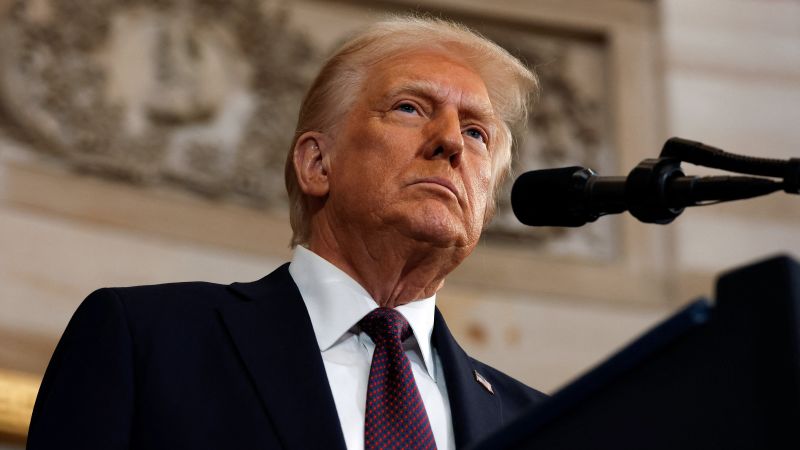
Trump, Trade and Tariffs What to Expect, Will They Work and Who Benefits?
The threat of 25 % tariffs on Canada and Mexico had newsrooms buzzing, politicians scrambling and economists calculating who wins and who loses when trade wars break out among usually amicable neighbors. Factor in Greenland and China - and the story went global. It was a topic that headlined the news as many have watched and waited since the election for President Trump's first days in office to see what the country can expect with incoming policy changes. President Donald Trump said in an Oval Office signing ceremony Monday evening that his administration will impose 25% tariffs on Mexico and Canada on February 1, an extraordinary change in North American trade policy that could raise prices for American consumers. Trump still outlined his broader trade policy for his second term in an executive action Monday. But that action — described by sources as a “placeholder” — doesn’t institute new global tariffs that Trump promised on Day One. As a candidate, Trump proposed sweeping and across-the-board tariffs: up to 20% on imports from all countries, with a 25% tax on goods from Mexico and Canada, plus a punishing 60% levy on goods from China. He also pledged to use tariffs as a negotiating tool on other countries, including, for example, Denmark — putting pressure on the European nation to give control of Greenland to the United States. Asked Monday at an Oval Office signing ceremony about tariffs on China, Trump noted extensive tariffs he imposed during his first administration were still in effect after former President Joe Biden largely left them in place. And on universal tariffs, Trump punted, saying, “We may, but we’re not ready for that just yet.” The executive action signed Monday directed the secretaries of Commerce and Treasury and the United States Trade Representative to investigate the causes of America’s trade deficits with foreign nations, to determine how to build an “External Revenue Service” to collect tariffs, to identify unfair trade practices and to review existing trade agreements for potential improvements. It also directs the government agencies to analyze how the US-Mexico-Canada trade agreement (the USMCA) signed by Trump in his first term is affecting American workers and businesses — and whether America should remain in the free trade agreement. January 21 - CNN As business and political leaders in many countries, especially North America wait for what's ahead, there are questions to be asked: What industries will be targeted? Will tariffs cause higher prices for consumers and increased inflation? Who wins if an all-out trade war happens? How will interwoven sectors like the auto industry and agriculture be impacted? If you're a journalist covering this ongoing story - then let us help. William J. Luther, Ph.D., is an associate professor of economics at Florida Atlantic University, director of the American Institute for Economic Research’s Sound Money Project, and an adjunct scholar with the Cato Institute’s Center for Monetary and Financial Alternatives William is available to speak with media. Simply click on his icon now to arrange an interview today.


Researchers Seek Understanding of Early Life on Earth Following Chilean Expedition
In a discovery that may further our understanding of the early evolution of life on Earth, a research team, including associate professor Andrew Palmer and master’s student Caitlyn Hubric, identified Chile’s deepest and most northern cold seeps—openings in the ocean floor that emit gases and fluids— about 100 miles off the Chilean coast and thousands of feet below the surface. This most terrestrial of discoveries may also yield insights that could benefit future space exploration, Palmer said. Palmer, who runs the astrobiology and chemical ecology lab at Florida Tech, and Hubric, who has studied with him for the last three years, represented the university on Schmidt Ocean Institute’s (SOI) expedition through the Atacama Trench. The trench is a nearly 5-mile-deep oceanic trench in the eastern Pacific Ocean that has remained at the same latitude for the last 150 million years, suggesting an extremely stable and potentially ancient ecosystem. The trench’s seeps, found at a depth of 2,836 meters (9,304 feet), provide chemical energy for deep sea animals living without sunlight, according to SOI. Seeps like this one can help astrobiologists understand how life developed on Earth and how those survival strategies and chemical conditions might sustain life on other planets. Palmer and Hubric were members of the expedition’s microbiology team and were specifically searching for biosignatures. That meant looking out for novel microbes and chemical signatures, like proteins or carbohydrates, which may have existed in the region for millions of years. The benefits of their research extend beyond life on Earth. They could also shape future space exploration. A big part of why they’re investigating water ecosystems is because of the popularity around Saturn’s moon Enceladus and Jupiter’s Europa, Hubric said. She said it’s not a perfect analog, but it’s close enough that they can look for patterns in how life’s chemical processes might operate at these sites. “We hope that some of the questions we answer here find will help us in future endeavors when we do finally go explore the solar system,” Hubric said. Back on campus after the expedition, which ran from May 24 to June 6, they’ve started working to solve those questions by both identifying molecules that guide the search for life and by understanding the limitations of the instruments that can detect metabolites, or early signatures of life, Palmer said. “If [the instruments] can’t successfully identify traces of life on Earth, where we know there’s lots of life, how are they going to be successful in a place where it’s less likely than a needle in a haystack?” Palmer said. “It’s the bigger question of, what do we need to do in order to be successful in the search for life?” For Palmer and Hubric, research has only just begun. They’ll test water and sediment samples and the filtrate that they’ll remove from their water filters and investigate for microbes of interest. Searching for novel metabolisms will be an even more extensive process, Palmer said. “It’s weird doing something where you won’t be able to see the results for weeks or months,” Palmer said. “This is just the beginning.” Looking to know more about the Schmidt Ocean Institute’s (SOI) expedition through the Atacama Trench and Dr. Palmer's research? Then let us help. Dr. Andrew Palmer is an associate professor of biological sciences at Florida Tech and a go-to expert in the field of Martian farming. He is available to speak with media regarding this and related topics. Simply click on his icon now to arrange an interview.


Astrobiologist Manasvi Lingam, assistant professor of aerospace, physics and space sciences at Florida Tech, authored a new astrobiology textbook to serve as a resource for the rapidly growing multidisciplinary field. “From Stars to Life: A Quantitative Approach to Astrobiology,” published by Cambridge University Press, is primarily geared toward upper-level undergraduate and graduate students studying astrobiology, Lingam says. Co-authored by astrophysicist Amedeo Balbi (University of Rome), the book’s 15 chapters cover topics from the Big Bang theory to planetary habitability to the future of humankind. The book also includes practice problems that involve modern developments like GenerativeAI (e.g., ChatGPT). Lingam explained how he came up with the new textbook and why it can help shape astrobiology programs like Florida Tech’s. What inspired this textbook? Manasvi Lingam: [Florida Tech] was the first university in the whole world to start an undergraduate astrobiology major. We have a strong connection to the field. But it turns out, every time I teach the subject, I don’t have a textbook to use. I have my first book, which is “Life in the Cosmos,” but it’s 1,100 pages. It’s for graduate students. It’s not going to work for them. Every time I was trying to cobble together resources from different places. My co-author has the same problem except that he’s been teaching [astrobiology] for even longer, for 20 years. He doesn’t have a textbook either. There’s this old saying in English: if you want something done right, do it yourself. We decided, well, might as well just try to write it ourselves. That’s how it came to be. How does this textbook bridge the gap between introductory readings and graduate-level material? ML: Right now, there’s pretty much only one class of textbooks for astrobiology, and those are written for freshman- or sophomore-level undergraduates. There’s this emphasis on a broad overview but at an extremely qualitative level and sometimes offering somewhat weak explanations for various specific phenomena, such as, “Why did Mars lose its atmosphere? It just got eroded over time.” These kinds of limitations. Graduate literature is very specialized, oriented towards whatever subfield one is studying in astrobiology. You can have a whole book on the origin of life. You can have a whole book on just Mars. You can have a whole book on Titan and so on. The aforementioned introductory textbooks that exist are very broad, but they don’t really offer a tool to actually get started doing research in the more specialized field. There was this vital need to bridge the gap. That’s what this book is meant to do. How did you decide what content to include and what not to include? ML: This field begins almost with the Big Bang – the start of the universe – which is when the first elements were formed, including elements that are widespread in life like hydrogen. This tale begins almost with the beginning of the universe. It is a tale that is still ongoing and is going to unfold for trillions of years into the future. But, there was so much material to include in principle. We had to be quite selective about what topics to include. There are a number of courses that are taught around the world on this topic. We looked at dozens of them to find the common core within all of them, and then expanded on that core. That’s what constitutes our table of contents. While writing the textbook, how did you grow as a researcher and an educator? ML: There’s this implicit understanding in academia that if you can write something down clearly, and if you can articulate something clearly, that’s when you can really say you understand it. Often you can’t articulate what you need to say coherently and succinctly if it’s something very big. That’s what, of course, astrobiology is. In the process of writing the book as an educator, I think I was really able to see how various domains linked to each other. For instance, modulations of, say, the Earth’s climate that were driven not just by changes on Earth (including life itself!), but also by changes in the sun, by changes in the orbits of other solar system planets, but also phenomena that were taking place hundreds of light years away in the galaxy. You really see that everything is connected – there are hidden links to each other. I think that helped me discover the magic of the universe, so to speak, even more. From a research standpoint, there were some areas that I have not worked in a lot, but by writing this book, I’ve gotten a better understanding of those areas, like, say, Mars, and also certain microbiological and astrophysical aspects as well. I think that has provided new ideas that I hope to explore in the future. What do you want readers to learn throughout the book, and what should they walk away with? ML: What we want to do is build a holistic integrated understanding of different phenomena pertaining to life in the universe, but at a quantitative level, and still retain breadth without sacrificing depth in the process. It won’t necessarily make students ready for research because it’s still primarily an undergrad textbook, but it will give them a comprehensive understanding of how various processes are intertwined with each other. We want people to see the big picture without missing out on the detail, and to appreciate the beauty of life, Earth, the solar system, the Milky Way and the universe. Lingam plans to start teaching from this textbook in Spring 2025. The textbook is available for purchase on Amazon. Looking to know more about Astrobiology and the work Manasvi Lingam is doing at Florida Tech? Then let us help. Astrobiologist Manasvi Lingam, assistant professor of aerospace, physics and space sciences at Florida Tech and author is available to speak with media regarding this and related topics. Simply click on his icon now to arrange an interview.

J.S. Held Releases 2025 Global Risk Report Addressing Critical Risks Amid Uncertainty
On the first day of the new presidential administration in the United States, global consulting firm J.S. Held unveils its annual report focused on critical areas impacting industries and economies worldwide. Explore the 2025 J.S. Held Global Risk Report here: In an increasingly uncertain and volatile global landscape, businesses, governments, and investors face a growing array of challenges that demand immediate attention and innovative solutions. The 2025 J.S. Held Global Risk Report explores five interconnected topics that organizations must consider in managing risk and opportunity in the year ahead. These include: 1. Sustainability Investments & Headwinds: With various ESG regulations across jurisdictions and increasing scrutiny over corporate environmental and social practices, experts explore how organizations can align with evolving frameworks while driving innovation. 2. Global Supply Chain Challenges: From geopolitical conflicts to climate disruptions, the report analyzes how companies can build more resilient and sustainable supply chains. 3. Crypto & Digital Asset Intensification: As the crypto landscape transitions through regulatory shifts and technological advancements, the report highlights both the risks and opportunities for businesses and investors. 4. Artificial Intelligence, Data & Digital Regulatory Response: With Artificial Intelligence (AI) systems reshaping industries, experts examine the regulatory, ethical, and operational challenges, as well as the competitive advantages for organizations that harness this transformative technology responsibly. 5. Cybersecurity Complexities: From AI-powered cyberattacks to evolving data protection laws, the report provides insights into how organizations can safeguard operations and maintain customer trust in a rapidly shifting digital environment. The 2025 J.S. Held Global Risk Report includes an analysis of these categories of risk and actionable opportunities for companies to gain a competitive edge while addressing critical vulnerabilities. “The 25 technical, scientific, financial, and strategic advisory experts who contributed to the J.S. Held Global Risk Report have collaboratively parsed not only each risk independently but also at their unique points of intersection to create a framework to support business decision-making,” noted Greg Esslinger, Executive Vice President and Global Investigations Practice Leader. “Our experts’ deep understanding of the external factors related to the topics that keep CEOs, CFOs, COOs, CLOs, and Boards of Directors up at night drives the curated insights shared in the report and helps clients navigate risks and capitalize on emerging opportunities in the year ahead,” adds John Peiserich, Esq., Executive Vice President and Environmental, Health, & Safety Practice Leader. The depth and breadth of J.S. Held’s work in the insurance market provides a strong foundation in risk assessment, data analysis, global awareness, regulatory compliance, technological adaptability, and risk mitigation. Collectively, these skills better equip the firm’s experts to assess business risk across diverse geographies, geopolitical landscapes, compliance frameworks, and digital advancements. "In a world where uncertainty is the only constant, there is a need for something solid you can hold onto," observes J.S. Held Chief Executive Officer Jonathon Held. "Our name is our promise," he adds. "Our role as strategic advisor is emblematic of this promise, even in the face of the most daunting risks, clients have the expertise and guidance to act with confidence" "Agile, collaborative, and creative client-centric teams provide solution-forward advisory to our clients across the globe, no matter the scope or complexity of a project; the J.S. Held Global Risk Report is reflective of the trusted advisor role we have earned over the last 50 years," noted J.S. Held President and Chief Operating Officer Lee Spirer. J.S. Held's expertise in strategic advisory is built upon five decades of experience in the most rigorous venues – state, federal, and international courts – and spans more than 150 different industry segments. If you have any questions or would like to further discuss the risks and opportunities outlined in the report, please email GlobalRiskReport@jsheld.com. To connect with John Peiserich simply click on the expert's icon now. For any other media inquiries - simply contact : Kristi L. Stathis, J.S. Held +1 786 833 4864 Kristi.Stathis@JSHeld.com

