
Experts Matter. Find Yours.
Connect for media, speaking, professional opportunities & more.
We've all been there. A relationship ends and the rebound begins. Now since the beginning of time it seems everyone from friends, family and advice columnists have had different opinions and perspectives on how each of us should approach 'the rebound.' And earlier this month, The Atlantic decided to connect with Georgia Southern's Amy Hackney, Ph.D., a psychology professor, to weigh in with her expert opinion. “Rebound relationships” have a terrible reputation. A romance ignited shortly after another ends seems chaotic—like an opportunistic ricochet rather than an intentional search for compatibility. After a breakup, people are commonly told to take their time grieving before they start dating again. And people dating someone who’s fresh off a breakup are told to be wary—of being used as a distraction, or being treated carelessly by someone fumbling through their own heartache. But research doesn’t seem to support the idea that rebound relationships are inherently toxic or doomed to fail. When someone fresh from a split starts dating, it’s true that they might not be totally over their ex. But new relationships can help people move on from old ones. In one study of participants recovering from breakups, those who’d found a new partner were more confident in their own desirability, more trusting of other people, and less likely to say that they still had feelings for their old partner. Another examined rebounders who’d been in their new relationships for a year and a half on average. The quicker those subjects had jumped into that rebound, the higher they rated on measures of well-being and self-esteem. Amy Hackney, a psychology professor at Georgia Southern University, found something similar when she investigated what helped college students get over breakups. “The sooner they began dating someone new, the faster that they felt that they had recovered from that prior relationship,” she told me. Although that might conflict with conventional wisdom, she thinks it fits with basic social psychology: A partner provides validation, care, and companionship, and when they go away, there’s no reason someone else can’t take their place. Perhaps that sounds unromantic, but according to Hackney, it’s healthy to be reminded—promptly—“how many people we really can have fulfilling relationships with.” As Neil Sedaka would sing 'Breaking up is hard to do' and so too is getting back into the dating game. If you're a journalist looking to know more about this topic - then let our experts help. To connect with Amy Hackney — simply reach out to Georgia Southern's Director of Communications Jennifer Wise at jwise@georgiasouthern.edu to arrange an interview today.


Summer is about a week away and many Manitobans are gearing up for cottage getaways and local road trips. But with inflation impacting gas prices and the overall cost of living, CAA Manitoba (CAA MB) has compiled a list of the simple ways motorists can maximize their fuel economy. “While Manitobans love getting out on the road and exploring with friends and family during the summer months, high gas prices have made motorists more mindful of their fuel economy,” says Ewald Friesen, Manager Government and Community Relations, CAA MB. “Luckily, the easiest and most effective way to improve the fuel economy of any car is to modify your driving habits.” Motorists can maximize their fuel economy as they hit the road this summer by incorporating the following tips: Plan your route. Plan the most efficient route to your destination and avoid backtracking and unnecessary mileage. Remove unnecessary items from your vehicle. An extra 100 pounds can reduce fuel economy up to 1 per cent. Try to also avoid the use of rooftop luggage carriers as items transported on top of the car significantly increase aerodynamic drag, which reduces fuel economy. Control your speed. Fuel consumption starts to increase when you hit 90km/h. For long stretches of road ahead, use cruise control to maintain your speed to save fuel. Drive conservatively. If you find yourself stuck in long weekend traffic, avoid "jack rabbit" starts, rapid acceleration and hard braking, which can lower fuel economy by 15 to 30 per cent at highway speeds and 10 to 40 per cent in stop-and-go traffic. Keep up with regular car maintenance. Underinflated tires increase fuel consumption by up to four percent. With regular maintenance services you can help your vehicle run more efficiently. Savings can also start while fueling up, as CAA members save 3 cents per litre when they load their membership card in the Shell app or use it at the pump. While keeping fuel economy top of mind can help make your next road trip more affordable, you won’t be able to get much far with a dead battery. “Manitoba summers may be short, but they are mighty. A car battery can lose its charge 33 per cent faster in extreme heat compared to the frigid winter, draining the power necessary to start the car,” says Friesen. “The one thing you shouldn’t skip when preparing your car for your next road trip is having your car battery tested by a professional to ensure it is in good condition.” If you are a CAA member you can call CAA’s Mobile Battery Service at 1-866-740-6421 and a trained CAA Battery Service Representative will come to you to test, replace and dispose of your old battery.



Summer is about a week away and many Ontarians are gearing up for cottage getaways and local road trips. But with inflation impacting gas prices and the overall cost of living, CAA South Central Ontario (CAA SCO) has compiled a list of the simple ways motorists can maximize their fuel economy. “While Ontarians love getting out on the road and exploring with friends and family during the summer months, high gas prices have made motorists more mindful of their fuel economy,” says Nadia Matos, manager external communications, CAA SCO. “Luckily, the easiest and most effective way to improve the fuel economy of any car is to modify your driving habits.” Motorists can maximize their fuel economy as they hit the road this summer by incorporating the following tips: Plan your route. Plan the most efficient route to your destination and avoid backtracking and unnecessary mileage. Remove unnecessary items from your vehicle. An extra 100 pounds can reduce fuel economy up to 1 percent. Try to also avoid the use of rooftop luggage carriers as items transported on top of the car significantly increase aerodynamic drag, which reduces fuel economy. Control your speed. Fuel consumption starts to increase when you hit 90km/h. For long stretches of road ahead, use cruise control to maintain your speed to save fuel. Drive conservatively. If you find yourself stuck in long weekend traffic, avoid "jack rabbit" starts, rapid acceleration and hard braking, which can lower fuel economy by 15 to 30 percent at highway speeds and 10 to 40 percent in stop-and-go traffic. Keep up with regular car maintenance. Underinflated tires increase fuel consumption by up to four percent. With regular maintenance services you can help your vehicle run more efficiently. Savings can also start while fueling up, as CAA members save 3 cents per litre when they load their membership card in the Shell app or use it at the pump. While keeping fuel economy top of mind can help make your next road trip more affordable, you won’t be able to get much far with a dead battery. “Ontario summers may be short, but they are mighty. A car battery can lose its charge 33 per cent faster in extreme heat compared to the frigid winter, draining the power necessary to start the car,” says Matos. “The one thing you shouldn’t skip when preparing your car for your next road trip is having your car battery tested by a professional to ensure it is in good condition.” If you are a CAA member you can call CAA’s Mobile Battery Service at *222 and a trained CAA Battery Service Representative will come to you to test, replace and dispose of your old battery.


Pioneering UConn Researcher Regrows Human Bone Using a Biodegradable Implant
A pioneer in the field of regenerative engineering, UConn's Dr. Cato T. Laurencin is charging toward his goal of regenerating a human limb by the year 2030. In a step toward reaching that goal, Dr. Laurencin and his team have detailed their success in regrowing bone using a plant-derived molecule in a recent study published by PNAS, marking a major step toward affordable, safe bone regeneration and growing replacement limbs. Dr. Laurencin discussed this impressive breakthrough this week with Hearst Connecticut Media: Most bone fractures heal reasonably well with care. But in severe breaks, where sections of bones are missing, or in crush injuries bones don’t always heal very well. In those cases, self-grafts or donated grafts of healthy bone from other, non-broken bones can be used to help close the gaps. But bone grafts don’t always take. Since about 2001, recombinant bone morphogenic proteins have been used to help stimulate bone growth in injuries where bone wouldn’t otherwise heal but their use has limits. While they work on long bone fractures, like those in your limbs, they’re not used on more complex bones. In some experimental treatments with fractured pelvises, recombinant bone protein caused bone tissue to form outside the skeleton. Forming bone tissue outside the skeleton is one of the more troubling side effects of this treatment. Bone tissue engineering seeks to get around this by developing implants that use adult stem cells to direct the growth of new bone across breaks that bones could not heal on their own. Some of this work involves building custom implants designed to mimic the missing bone to guide bone healing. Others attempt to deliver the bone protein in an implant, stopping it from leaving the injury area, to prevent side effects. These bone treatments are also expensive. In a meta-analysis from 2006, researchers found that they cost more than standard care for severe fractures. But UConn team took a different approach, using the drug forskolin, a molecule derived from a plant in the mint family. Forskolin triggers cells to make something called “cyclic AMP” a messenger molecule that is normally made in response to hormones. This messenger molecule turns on a wide variety of cell functions depending on what cells in which locations it stimulates. “We were intrigued by being able to find some natural material that people were already consuming in quantity,” said Dr. Laurencin, “But obviously there’s a difference between ingesting it and putting it on one location, like a bone site.” Dr. Laurencin’s team created a biodegradable plastic implant impregnated with forskolin, testing this on rabbits. The implants guided the creation of new bone tissue after 12 weeks. If you're a journalist looking to know more about this groundbreaking research taking place at UConn, let us help with your questions and coverage. Dr. Cato Laurencin, CEO of the Cato T. Laurencin Institute for Regenerative Engineering at UConn, is available to for interviews. Simply click on his icon now to arrange a time to talk today.



ChristianaCare Earns IABC Gold Quill Award for Innovation in Media Relations
ExpertFile-powered “Our Experts” site wins top international industry award for program that helps journalists reach health experts – fast ChristianaCare, with its collaborative partner ExpertFile, has been recognized with a 2023 Gold Quill Award from the International Association of Business Communicators (IABC) for its “Our Experts” media database. Designed to easily and quickly connect journalists to subject-matter experts, this online resource has been recognized with the top prize — “Award of Excellence” in the Communications Management, Media Relations category. “Good communication is foundational to our mission of serving as expert, caring partners in the health of our neighbors,” said Karen Browne, vice president of marketing and communications at ChristianaCare. “Through the development of our online database as a resource for journalists, we are making our experts more accessible to provide timely, accurate health information to the diverse communities we serve.” The IABC Gold Quill Awards showcase business communication excellence and are among the most prestigious awards programs in the communications industry. Each entry is scored independently by evaluators who judge the award submission on criteria that include stakeholder analysis, strategic and tactical planning, quality of execution and measurable results. “It’s impressive to see how ChristianaCare has reimagined how it can more proactively serve the community by being more approachable to journalists,” said Peter Evans, co-founder and CEO of ExpertFile. “We’re excited to share this prestigious industry award with them.” ChristianaCare’s innovation was driven out of a desire to improve the reach, impact and efficiency of its media relations efforts — amid rapidly increasing demand — without the need to add more resources. In just two years, ChristianaCare’s “Our Experts” media database has received more than 20,000 online visits and helped to generate more than 200 news stories. The IABC Gold Quill Awards showcase business communication excellence and are among the most prestigious awards programs in the communications industry. Each entry is scored independently by evaluators who judge the award submission on criteria that include stakeholder analysis, strategic and tactical planning, quality of execution and measurable results. “It’s impressive to see how ChristianaCare has reimagined how it can more proactively serve the community by being more approachable to journalists,” said Peter Evans, co-founder and CEO of ExpertFile. “We’re excited to share this prestigious industry award with them.” ChristianaCare’s innovation was driven out of a desire to improve the reach, impact and efficiency of its media relations efforts — amid rapidly increasing demand — without the need to add more resources. In just two years, ChristianaCare’s “Our Experts” media database has received more than 20,000 online visits and helped to generate more than 200 news stories. Powered by the ExpertFile software platform, the ChristianaCare “Our Experts” site provides a digital media toolkit with advanced search and digital content features to help journalists discover experts and access resources that make it easier for them to complete stories and meet their deadlines. Nearly 140 ChristianaCare experts are featured in the database today, and that figure continues to grow. On the heels of the success of “Our Experts,” ChristianaCare is planning to launch later this year a new Speakers Bureau that will leverage the ExpertFile technology to strengthen and support local community engagement. “As a nonprofit health care organization, ChristianaCare makes it a priority to ensure we’re using our resources wisely and effectively,” said Shane Hoffman, communications director. “By using technology to streamline processes and make it easier to connect our experts to the media and community organizations who need their expertise, we’re working smarter — not harder — in service of our mission.”


The Loneliness Epidemic: Fathoming Feelings and Emotions
Last month, United States surgeon general Vivek Murthy released an advisory to address a budding "public health crisis." The culprit is not immediately visible, like the shutdown-spurring COVID-19 pandemic, but it is currently affecting nearly half of all adults in the U.S. It's our widespread senses of loneliness and isolation, and Murthy says addressing these feelings is "critical" to addressing issues of mental health in America. Assistant professor Guy Weissinger, PhD, MPhil, RN, is a nurse, scientist and educator focusing on mental health and health systems at Villanova University's M. Louise Fitzpatrick College of Nursing. Dr. Weissinger believes, despite the difficult nature of navigating unseen nemeses, there are ways to quell this epidemic and save lives. Q: Why is the feeling of loneliness now seen as a crisis? Dr. Weissinger: It's important to understand that loneliness is not just a person not having friends or not having good relationships. Loneliness is a feeling, the sense that one is distant from others while yearning to feel connected. These two sides make loneliness hard to understand sometimes because there are people who are happy with low amounts of social engagement and there are people who feel lonely even when they are surrounded by friends. Like hunger saying it's time to eat, loneliness is a message that we are not fulfilling a social and psychological need—and it's a big problem because so many parts of our mental and physical health are tied to having active social engagement. Q: In an increasingly connected world, why are these feelings of isolation also increasing? DW: Interacting with other people doesn't actually make us less lonely, especially through things like social media. A sense of being emotionally close to others—reciprocity of attention and care—is what makes people less lonely. It's clear that people are spending less time focused on social relationships than in the past. The "connection" that we have through social media is not the connection that addresses our deeper psychological needs. Upvotes and clicks feel good, but they do not make us feel understood and appreciated for our whole selves. In-depth conversations, shared projects and laughing about inside jokes—the kind of things that happen over extended interactions—are what actually make us feel less lonely. This isn't to say that people don't connect and get less lonely when they engage digitally. It's about the quality and depth of interactions, not the modality. Q: What are some ways loneliness and isolation can be addressed? DW: If you are lonely, reach out to someone. Often, we wait for others to initiate because we don't want to be a bother or fear rejection. If they say no, move on to another person. It's hard not to take it personally, but if you are feeling lonely, the worst thing to do is to dwell on why it's hard to schedule with "Friend A" and instead focus on finding another person to connect with. And when you are with people, try to focus your attention on them. Put away your phone or other distractions and ask open-ended questions like, "What's the best thing that happened this week?" or "How has [thing you know they enjoy] been recently?" Even if it's not a person that you are super close to, both listening to them and opening up yourself helps you feel more connected. If you are worried that someone else is lonely, ask them to do something, especially if it's something you know they like. Asking a person who loves movies to go see a movie with you will make them feel like you care more than asking them to a yarn festival, even if you'd prefer the yarn festival. Dr. Weissinger says people who report that they have a regular social connection with others, especially in person, are more physically active, less likely to be depressed and are better able to better navigate difficult circumstances. "While we often talk about resilience as being an individual trait, having good social support is one of the most powerful kinds of resilience," mentions Dr. Weissinger. "When times are hard, we can rely on our friends, family and larger social network to help with problem solving, resources, emotional support and even just simple distraction." Dr. Weissinger says that a crisis as large as loneliness and isolation can't be solved through the recommendations of one person, but says connection and unity are key to fighting back against this epidemic. "People with more and more varied connections don't have simpler lives or less bad things happen to them, but they get through them easier because they can rely on others to help them manage in the ways they need."


It has been a tense and stressful couple of weeks in Washington as the negotiations about raising America's debt went from the usual political arm-wrestling to facing the reality that the United States may actually default on its debt. The very concept left reporters and experts scrambling to explain what this could mean for the country's economy, civil service and global financial reputation. And when answers, explanations and expert perspective was needed, Georgia Southern University's Michael Toma, Ph.D., was sought out to talk about the effect of a looming U.S. debt default. Georgia Public Broadcasting spoke to Toma, who explained the situation and the impact of not reaching a deal could have locally and on a broader spectrum. If you're a reporter looking to know more about important topics like this - then let us help. Michael Toma, Ph.D., researches regional economics and public choice at Georgia Southern. He's available to speak with reporters simply click on his icon now to arrange an interview today.

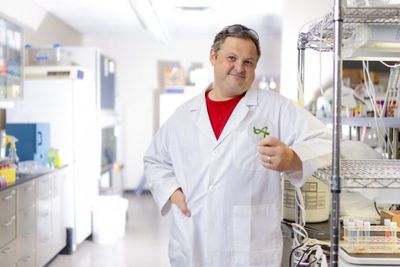
Florida Tech Scientist to Study Deep-Space Agriculture After Planetary Society Grant Award
No matter where humans travel, sustenance remains a necessity. Finding a bite to eat during a visit to New York, for example, is no problem. When the destination is a bit farther away, such as Mars, the options are not as plentiful there or on the long journey to get there. That’s where Florida Tech’s Andrew Palmer comes in. He and other scientists are exploring ways to feed our explorers, and a new competitive grant from the Planetary Society will fund work that examines the two most likely ways to produce food during travel to these far-flung spots: in soil or something like soil, or in water. Palmer and his team were awarded a $50,000 Science and Technology Empowered by the Public (STEP) grant, the Planetary Society recently announced. Their project: “Evaluation of food production systems for lunar and Martian agriculture.” For the next year, they will grow radish microgreens, lettuce and tomatoes in identical environmental conditions with one major exception: one batch will be grown hydroponically, and another will be grown in regolith – like lunar or Martian soil. The aim of the experiment is to characterize and compare the two methods, both of which have merits and shortcomings. “It may be that a combination of these approaches, tailored to the diverse needs of different crops, is the best way to provide sustainable and productive agriculture,” Palmer said. “Until now, there have been no direct comparison studies between hydroponic and regolith-based systems for any crop targeted for space applications. We are excited to address this knowledge gap.” The team, which includes experts in plant physiology and biochemistry as well as space agriculture and systems efficiency analysis, will test their hypothesis that faster growing crops like microgreens will be better suited for hydroponic systems even in the long term, while slower-growing crops like tomatoes may favor a regolith-based production system. Palmer and his co-investigator, Rafael Loureiro from Winston-Salem University, are joined by collaborators J. Travis Hunsucker and Thiara Bento from Florida Tech, Laura E. Fackrell at the Jet Propulsion Laboratory and Jéssica Carneiro Oliveira at Universidade Federal do Estado do Rio de Janeiro, Brazil. Care to delve a little deeper? Palmer and a second STEP grant recipient, Dartmouth College professor Jacob Buffo, spoke to the Planetary Society senior communications advisor Mat Kaplan about their respective projects. The segment with Palmer begins at the 23:57 mark and the piece is linked above. Looking to know more about what it will take to feed our deep-space explorers? Then let us help with your questions and coverage. Dr. Andrew Palmer is an associate professor of biological sciences at Florida Tech and a go-to expert in the field of Martian farming. He is available to speak with media regarding this and related topics. Simply click on his icon now to arrange an interview.


Why does Alabama have more gun deaths than New York? UConn expert explains.
Only five million people live in Alabama, but the state has the fourth highest firearms death rate in the country. In 2021, the state had 26.4 firearm deaths per 100,000 people, according to the Centers for Disease Control and Prevention. Compared to New York -- a state with about 20 million people and a rate of 5.4 gun deaths per 100,000 in 2021 -- the question becomes: Why does such a small state rank so high for gun violence? UConn expert Kerri Raissian offered perspective and insight on the causes and reasons why these tragic incidents occur in specific regions and states more often across America in an interview with the Alabama Reflector: A 2019 brief published by the Rockefeller Institute of Government, a nonprofit research center for the State University of New York (SUNY) system, said universal background checks, concealed carry permits and laws prohibiting people who have committed violent misdemeanors reduce gun homicides. “One policy that has come up against legal challenges recently has been not allowing people under the age of 21 years old to have certain guns or types of weapons,” Raissian said. “It is helpful. That age group has the highest risk of perpetuating homicides of any age group in the U.S.” Social policies can also deter gun violence. “It is laws, it is access to guns, it is also poverty,” Raissian said. “We have a lot of evidence that laws that you wouldn’t think have anything to do with gun violence, like Medicaid access, summer school for kids, employment opportunities for kids, are really good at reducing gun violence.” Raissian cited a randomized controlled trial of a youth summer employment program that was established in Chicago that had reduced incidents of gun violence compared to a control group. “It is not just about keeping them busy because these differences persist,” Raissian said. “It is also learning conflict resolution. It is also learning communication skills — all those things that come from employment and positive interactions tend to reduce violence of any form.” But Raissian and Grant Reeher, a professor of political science at Syracuse University, both said no single law will solve the issues of gun violence. The full article is attached above, and well worth the read. Kerri Raissian is an associate professor in the School of Public Policy at the University of Connecticut, director of the University of Connecticut's UConn’s Center for Advancing Research, Methods, and Scholarship (ARMS) in Gun Violence Prevention, and co-director of the Institute for Collaboration on Health, Intervention, and Policy (InCHIP) Gun Violence Prevention Research Interest Group. She is available to speak to media about this important topic - simply click on her icon now to arrange an interview today.

CEO Compensation: What's the Limit of 'A Lot'?
Should corporate executives be paid a lot? Yes, says management expert David Souder, a professor in the UConn School of Business Boucher Management & Entrepreneurship Department. But, he says, "What's the limit of 'a lot'?" “It’s proven very hard to determine where it stops being the appropriate amount of ‘a lot,'" says Souder in an interview with Hearst Connecticut Media. The highest-paid CEO in this year’s Equilar 100 was Peloton Interactive’s Barry McCarthy, whose awarded compensation totaled about $168 million. At No. 2 was Apple’s Tim Cook, whose awarded remuneration amounted to about $99 million. Equilar’s survey also highlighted the huge gap between CEO compensation and the income of rank-and-file workers. Last year, there was a median ratio of 288 between CEO compensation and median worker pay; the ratio was 254 in 2021. The compensation awarded last year to Cigna’s Cordani equated to about 277 times his company’s median worker pay of $75,627, according to Equilar. Including several thousand employees based in Connecticut, Cigna operates globally with more than 70,000 employees. At many companies, shareholders weigh in on executive compensation through “say on pay” proposals that let them cast advisory votes. Shareholders typically endorse remuneration, as seen in the results of Cigna’s 2023 shareholders meeting that was held on April 26. About 221 million votes were cast in support of the company's executive compensation, compared with nearly 30 million votes against, about 18 million “broker non votes” and nearly 612,000 abstentions. Some progressive elected officials such as Sen. Bernie Sanders, I-Vermont, and Sen. Elizabeth Warren, D-Massachusetts, are unhappy with CEO compensation levels at large companies because they believe their pay constitutes corporate greed that hurts rank-and-file workers. Among their proposals, they have sought to pass legislation that would increase taxes on companies that pay their CEOs more than 50 times the median level. “The pay disparities raise questions that are very hard to answer,” Souder said. “If you want an experienced chief executive, and they’ve been paid at these (exceptionally high) levels, then you have to also pay at these levels. And nobody wants a below-average CEO. So you end up with these subtle underlying pressures that cause CEO pay to rise.” David Souder specializes in strategic management and is available to speak with the media. Click his icon to arrange an interview today.